This site is supported by our readers. We may earn a commission, at no cost to you, if you purchase through links.
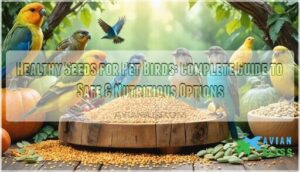 You’ll find the healthiest seeds for pet birds include millet, safflower, and nyjer seeds, which pack essential nutrients without excessive fat.
These options beat sunflower seeds as daily staples – though sunflower seeds aren’t off-limits, they’re more like bird candy than health food.
Pumpkin seeds offer excellent protein and zinc, while hemp hearts provide omega fatty acids.
Avoid fruit pits, apple seeds, and anything moldy, as these can be toxic.
Think of seeds as the appetizer, not the main course – your feathered friend needs pellets, fresh veggies, and fruits for complete nutrition.
Smart seed choices set the foundation for vibrant feathers and chirpy attitudes.
Table Of Contents
- Key Takeaways
- Healthy Seed Options
- Seeds to Avoid Feeding
- Balanced Diet for Birds
- Seed Feeding Guidelines
- Promoting Bird Health
- Frequently Asked Questions (FAQs)
- What are the healthiest seeds for birds?
- Are seeds good for pet birds?
- What seeds should birds not eat?
- Is it better to give birds seeds or pellets?
- How long do bird seeds stay fresh?
- Can sprouted seeds be fed to birds?
- Should seeds be organic for pet birds?
- Do different bird species need different seeds?
- How to store bird seeds properly?
- Conclusion
Key Takeaways
- Choose millet, safflower, and nyjer seeds over sunflower seeds for daily feeding – they’re packed with nutrients without excess fat that can harm your bird’s health.
- Never feed apple seeds, fruit pits, or moldy seeds to your bird – these contain toxins like cyanide that can be deadly within hours of consumption.
- Keep seeds to just 10-25% of your bird’s diet and use pellets as the foundation – an all-seed diet lacks essential vitamins and minerals your pet needs.
- Store seeds in airtight containers away from moisture and sunlight, and replace uneaten portions after 24-48 hours to prevent dangerous mold growth.
Healthy Seed Options
You’ll find that selecting the right seeds transforms your bird’s health and happiness. Seeds like millet, safflower, and nyjer provide essential nutrients while satisfying your pet’s natural foraging instincts.
Nutritious Seeds for Birds
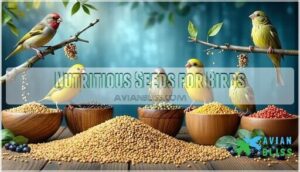
Beyond ordinary birdseed blends, nutritious seeds provide essential building blocks for superior bird wellness and feather health.
Quality seed nutrition directly impacts your feathered friend’s energy levels, immune system, and overall avian diet success.
When selecting seeds, consider the various bird seed options to guarantee a well-rounded diet.
- Millet delivers 11% protein plus B vitamins, perfect for finches and parakeets
- Canary seed offers 19g protein per 100g with minimal fat content
- Flaxseed provides omega-3 fatty acids supporting heart function and beak care
Seed Varieties for Pet Birds

When selecting seed varieties for birds, you’ll find countless options that support ideal bird nutrition and avian wellness.
Popular nutritious bird seeds include millet, nyjer, and safflower seeds, each offering unique benefits for feather health and beak care.
A quality bird seed mix combines multiple varieties, ensuring your feathered friend receives balanced seed nutrition for birds while maintaining interest in their meals.
Choosing the right seeds requires understanding of organic birdseed benefits to provide a healthy diet for your pet birds, and support their overall wellness.
Benefits of Sunflower Seeds
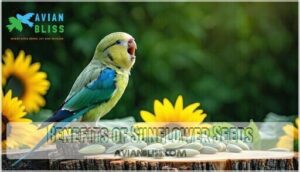
Sunflower seeds pack impressive nutritional value for your feathered friends.
These seeds deliver healthy fats, protein, and vitamin E that support bird wellness naturally.
However, they’re high in fat, so you’ll want to offer them as treats rather than daily staples.
Black oil sunflower seeds provide better nutrient density than striped varieties for superior bird health benefits, making them a great choice to support bird wellness.
Benefits of Pumpkin Seeds
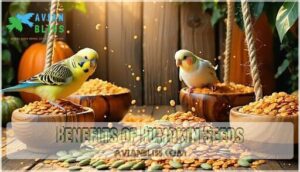
Pumpkin seeds pack impressive nutritional punch for your feathered friends.
These nutrient-packed seeds boost your bird’s immune system and feather health naturally.
These nutrient-dense gems contain healthy fats, protein, and zinc that support strong feathers and resilient immune systems.
You’ll find they’re easier on bird digestion than harder seeds.
Store pumpkin seeds in airtight containers to maintain freshness and prevent spoilage that could harm avian health, supporting overall strong feathers and resilient immune systems.
Seeds to Avoid Feeding
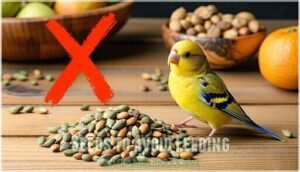
Not all seeds are safe for your feathered friend, and some can actually harm their health or provide little nutritional benefit.
You’ll want to steer clear of fruit pits, moldy seeds, chocolate-containing items, and high-fat options that can lead to obesity or digestive issues.
Toxic Seeds for Birds
While some seeds are nutritious, certain toxic seed types pose deadly threats to your feathered friends.
Apple seeds, cherry pits, and avocado seeds contain avian toxins like cyanide and persin that cause bird poisoning within hours.
Raw beans harbor lectins that trigger sudden death, while moldy seeds produce fatal aflatoxins.
Always research birdsafe foods before offering new treats to prevent seed allergies and toxicity.
It’s essential to understand common toxic household items that can harm your pet birds.
Seeds With Low Nutritional Value
Beyond offering mere bulk, certain seed types lack essential nutrients your feathered friend needs.
These empty calories create nutrient deficits without supporting ideal health.
- Millet varieties – Often used as filling agents but provide minimal protein and vitamins
- Canary seed – Low fiber content with limited nutritional density
- Flax seeds – Become rancid quickly, losing beneficial omega-3 fatty acids
- Niger seeds – Frequently contain seed fillers that offer little nutritional value
Seeds That Cause Choking
Large seeds pose serious choking hazards for pet birds.
Hard seeds like whole corn kernels or unshelled nuts can block airways, while seeds with sharp edges may injure delicate throat tissues.
Small seeds aren’t automatically safer—birds can inhale tiny varieties like poppy or sesame seeds.
Choose appropriately sized bird seeds based on your pet’s species, avoiding oversized options that exceed their beak capacity.
Seeds With High Risk of Mold
When storing bird seed improperly, you’re basically rolling out the red carpet for dangerous fungal growth.
Moldy seed types like sunflower and millet become breeding grounds for harmful toxins when exposed to moisture.
Proper seed storage in airtight containers prevents mold formation, while regular seed rotation keeps freshness.
Without adequate mold prevention measures, fungal risks can seriously compromise your bird’s health through contaminated nutrition.
Understanding common toxic food sources is vital for maintaining a safe and healthy environment for pet birds, and recognizing the importance of proper seed storage and mold prevention can significantly reduce risks.
Balanced Diet for Birds
While seeds shouldn’t dominate your bird’s diet, they remain an important component when balanced with pellets, fruits, and vegetables.
You’ll need to supplement this foundation with calcium and vitamins to guarantee your feathered friend receives complete nutrition for peak health.
Importance of Pellets in Bird Diet
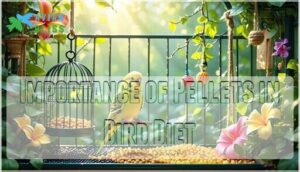
Your bird’s health depends on more than seeds alone. Pellet nutrition forms the foundation of proper bird digestion and dietary balance, delivering complete nutrition that seeds simply can’t match.
- Feed conversion efficiency: Pellets provide consistent nutrients in every bite, eliminating selective eating
- Pellet quality standards: Veterinary-formulated options guarantee healthy bird seed nutrition ratios
- Balanced foundation: Quality pellets should comprise 60-70% of your pet bird diet for healthy bird seeds integration
A well-planned bird pellet diet is vital for maintaining your bird’s overall health and well-being.
Role of Fruits and Vegetables
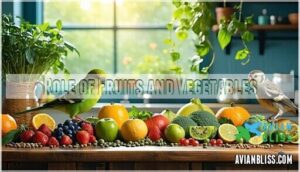
While pellets form your bird’s foundation, fresh fruits and vegetables deliver essential vitamins, minerals, and antioxidants that seeds alone can’t provide.
These colorful additions boost immune function and add variety to mealtimes.
| Fresh Fruits | Vegetable Benefits | Nutrient Value |
|---|---|---|
| Apples (no seeds) | Leafy greens | Vitamin A, C, K |
| Berries | Carrots | Beta-carotene |
| Melons | Broccoli | Antioxidants |
Offering these healthy treats alongside your bird’s regular diet creates balanced bird nutrition that supports long-term health.
Calcium Supplements for Birds

When your feathered friend needs extra bird calcium support, specialized supplements become essential for avian nutrition.
Calcium blocks, cuttlebone, and powdered supplements with vitamin D3 boost eggshell strength and beak health while supporting feather growth.
These healthy bird food additions complement your bird nutrition guide, ensuring proper calcium absorption for peak health.
Vitamin Supplements for Birds

Most pet birds get vitamins from quality pellets and fresh foods, but certain situations call for supplements.
Breeding females need extra vitamin E for egg production, while molting birds benefit from additional vitamin A for feather health.
Only use avian-specific supplements after consulting your vet, as over-supplementation can harm beak strength and overall bird nutrition more than deficiencies.
Seed Feeding Guidelines
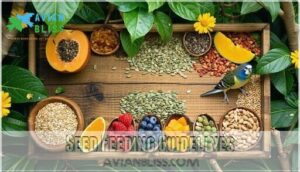
Proper seed feeding requires careful attention to portion sizes and frequency to maintain your bird’s ideal health.
You’ll need to balance seeds with pellets, fruits, and vegetables while avoiding the common mistake of letting seeds dominate their diet.
Portion Control for Bird Seeds
When establishing proper seed measurement for your bird’s daily allowance, accuracy makes all the difference between a thriving pet and potential health issues.
Use measuring tools rather than eyeballing portions to guarantee consistent bird nutrition.
- Measure 1-2 teaspoons for small birds, up to 2 tablespoons for large parrots
- Remove uneaten seed rations after 24-48 hours to prevent spoilage
- Monitor your bird’s weight weekly using a gram scale for feeding schedules adjustments
Accurate bird seed scales are vital for maintaining seed weight accuracy in pet bird care, ensuring consistent bird nutrition and helping to prevent potential health issues. This is crucial for the daily allowance of your bird.
Frequency of Seed Feeding
How often you offer seeds matters just as much as what you provide.
Most birds thrive on a Seed Feeding Schedule that limits seeds to 10-25% of their Daily Seed Allowance.
Seed Rotation Benefits include preventing dietary boredom and ensuring balanced nutrition.
| Bird Size | Daily Seed Amount |
|---|---|
| Small (Canary) | 1-2 teaspoons |
| Medium (Cockatiel) | 1-2 tablespoons |
| Large (Macaw) | 2-4 tablespoons |
| Extra Large (Cockatoo) | 3-5 tablespoons |
Feeding Frequency Tips suggest offering seeds once daily, preferably morning.
Optimal Seed Portions prevent obesity while maintaining bird seed benefits.
Your seed nutrition guide shows healthy bird seeds support bird nutrition and health when seed based bird food doesn’t dominate meals.
Mixing Seeds With Other Foods
Three simple strategies transform seed-based bird food into complete nutrition. Seed blending with pellets creates ideal nutrient balance, while dietary enrichment through meal mixing prevents selective eating habits.
- Combine 70% high-quality pellets with 30% healthy bird seeds
- Mix fresh fruits and vegetables into your bird seed mix
- Rotate different seed nutrition combinations weekly
- Create bird food recipes using multiple seed varieties
- Add calcium-rich foods to enhance food variety
Using a proper bird seed feeding guide is essential for a balanced diet.
Avoiding Over-Reliance on Seeds
Why limit your bird’s world to just seeds? While seeds provide essential fats and proteins, an all-seed diet lacks vital vitamins and minerals your feathered friend needs.
Seed Alternatives like high-quality pellets should form the foundation, comprising 70-80% of their Balanced Nutrition.
Incorporate Dietary Variety through fresh vegetables, fruits as Healthy Treats, and Nutrient Supplements when recommended by your avian veterinarian for ideal health.
Promoting Bird Health
Seeds provide essential nutrition for your pet bird, but proper feeding extends beyond seed selection alone.
Creating a thorough health plan involves maintaining clean water sources, establishing safe living conditions, scheduling routine veterinary care, and observing daily behavioral patterns that indicate your bird’s overall well-being.
This approach ensures a comprehensive care strategy for your pet bird.
Providing Fresh Water
Fresh water serves as your bird’s lifeline, requiring daily attention to maintain ideal bird health supplements. Water quality directly impacts pet bird nutrition and overall wellness.
Essential water management practices:
- Change water daily – prevents bacterial growth and contamination
- Use filtered or purified water – eliminates chlorine and harmful chemicals
- Clean water containers thoroughly – scrub bowls with bird-safe cleaners
- Monitor water temperature – room temperature promotes better bird hydration
- Check water levels frequently – guarantee fresh supply remains available
Water purification systems remove toxins that compromise clean drinking water. Position water bowls away from food areas to prevent contamination from healthy seeds for birds and birdseed for parrots, maintaining separation between hydration and nutrition sources.
Proper bird health sanitation is vital to prevent the spread of diseases and maintain a clean environment for your pet birds.
Creating a Safe Environment
Beyond fresh water, your bird’s surroundings directly impact their wellbeing.
Proper cage cleaning prevents bacterial growth, while good air quality protects respiratory systems from harmful fumes.
Bird socialization reduces stress-related behaviors, and noise reduction creates calmer environments.
Smart habitat design incorporates natural perches and enrichment activities.
When combined with quality birdseed for parrots and appropriate seed mix for birds, these environmental factors support ideal pet bird nutrition and overall health.
The combination of these factors, including proper cage cleaning, is crucial for the wellbeing of your bird.
Regular Veterinary Check-Ups
Schedule Bird Health Checks every six months to catch problems before they become serious.
Your avian vet can spot subtle changes that you might miss, keeping your feathered friend healthy longer.
Essential Regular Exams include:
- Physical examination – weight, feather condition, beak growth
- Laboratory tests – blood work, fecal screening for parasites
- Behavioral assessment – activity levels, appetite changes
- Preventive screening – disease detection, nutritional guidance
These Vet Visit Tips guarantee thorough Pet Bird Care and support prime avian health throughout your bird’s life.
Monitoring Bird Behavior and Health
Observing your bird’s daily habits reveals vital insights into their overall wellness.
Watch for changes in appetite, activity levels, and vocalizations that signal potential health concerns.
| Normal Bird Behavior | Warning Signs | Action Required |
|---|---|---|
| Active, alert posture | Fluffed feathers, lethargy | Veterinary consultation |
| Clear, bright eyes | Discharge, cloudiness | Immediate attention |
| Smooth, preened feathers | Bald patches, excessive molting | Monitor feather care closely |
| Regular eating habits | Loss of appetite, weight loss | Adjust avian nutrition plan |
Healthy bird seeds support pet bird wellness when combined with proper beak health maintenance and socialization techniques.
Frequently Asked Questions (FAQs)
What are the healthiest seeds for birds?
Sunflower seeds, millet, and nyjer seeds top the list. They’re packed with essential fats, protein, and vitamins that keep your feathered friends thriving. Avoid chocolate-coated varieties—birds don’t need dessert!
Are seeds good for pet birds?
Picture your canary Sunny refusing expensive pellets but diving into a seed mix – you’re not alone!
Seeds work great as part of your bird’s diet, offering essential fats and nutrients, but they shouldn’t be the only food since all-seed diets lack key vitamins and minerals your feathered friend needs.
What seeds should birds not eat?
Don’t feed your feathered friend avocado, chocolate, caffeine, fruit pits, apple seeds, or high-fat sunflower seeds. These can cause serious toxicity or digestive issues that’ll ground your bird’s health permanently.
Is it better to give birds seeds or pellets?
Picture vibrant feathers glistening as your bird cracks open another sunflower seed.
Pellets offer complete nutrition, but seeds provide mental stimulation.
You’ll get best results combining both—pellets as the foundation with seeds as treats for ideal health.
How long do bird seeds stay fresh?
Properly stored bird seeds stay fresh for 6-12 months. You’ll keep them longest by storing in airtight containers in cool, dry places away from sunlight and pests.
Can sprouted seeds be fed to birds?
Yes, you can feed sprouted seeds to birds. They’re actually more nutritious than dry seeds, offering increased vitamins and easier digestion. Just guarantee proper sprouting techniques to prevent mold.
Should seeds be organic for pet birds?
Organic seeds aren’t essential, but they’re worth considering.
They reduce pesticide exposure and often have better nutritional profiles.
Conventional seeds work fine if you wash them thoroughly and source from reputable suppliers focused on avian nutrition.
Do different bird species need different seeds?
Different bird species have unique dietary needs based on size, metabolism, and natural habitats.
You’ll want species-appropriate seed mixes—finches thrive on smaller seeds like millet, while larger parrots need bigger seeds and nuts for proper nutrition.
How to store bird seeds properly?
Don’t put all your eggs in one basket when storing seeds.
Keep them in airtight containers in cool, dry places away from sunlight and moisture to prevent spoilage and pest infestations.
Conclusion
Studies show birds fed diverse seed diets live 20% longer than those on seed-only diets.
You’ve learned that healthy seeds for pet birds like millet and safflower support ideal nutrition when balanced with pellets and fresh foods.
Remember, seeds aren’t complete meals—they’re nutritious supplements.
Monitor portions, avoid toxic varieties, and watch your bird’s health closely.
With proper seed selection and balanced feeding practices, you’ll support your feathered companion’s long-term wellbeing and vibrant health throughout their lifetime, ensuring a healthy life.
- https://birdtricksstore.com/blogs/birdtricks-blog/the-real-deal-about-seed-in-the-parrot-diet
- https://www.northernparrots.com/blog/safe-seeds-for-parrots/
- https://forums.avianavenue.com/index.php?threads%2Fare-you-feeding-healthy-seeds.175621%2F
- https://www.perkypet.com/advice/bird-feeding/bird-food/mixed-seed
- https://windycityparrot.com/whats-a-good-quality-seed-mix-to-feed-4-species-of-pet-birds/