This site is supported by our readers. We may earn a commission, at no cost to you, if you purchase through links.
Most people know chickens come in flocks—but that’s barely scratching the surface. A group of newly hatched chicks has its own name. So does a group of roosters living without hens. Even a set of unhatched eggs gets a specific term.
The vocabulary around chickens is surprisingly precise, shaped by centuries of farming, science, and careful observation. Whether you’re setting up a backyard coop or just lost a trivia round to a chicken enthusiast, understanding these terms gives you a clearer picture of how chickens actually live and behave together.
Table Of Contents
- Key Takeaways
- A Group of Chickens is a Flock
- Other Chicken Group Names
- Group of Hens
- Group of Roosters
- Group of Baby Chicks
- Chickens, Hens, and Roosters
- How Many Chickens Make a Flock?
- Why Chickens Flock Together
- Chicken Flock Pecking Order
- Frequently Asked Questions (FAQs)
- What is a group of hens called?
- What is a group of Roosters called?
- What is a flock of chickens called?
- What is a group of baby chickens called?
- What is a group of chickens?
- What is a group of chicks called?
- What is a pack of chickens called?
- What is a clan of chickens?
- What word is used to describe a group of hens?
- What is a number of chickens together called?
- Conclusion
Key Takeaways
- A group of chickens is called a flock, but specific situations get their own names — newly hatched chicks form a "brood" or "peep," rooster-only groups go by "bachelor flock," and a set of unhatched eggs is called a "clutch."
- The pecking order isn’t just drama — it’s a real social structure that determines who eats first, claims the best roost, and keeps the whole flock running smoothly.
- Chickens stick together for good reasons: more eyes spot predators faster, huddling conserves body heat, and stable social bonds actually reduce stress and behavioral problems.
- Flock size matters more than most people think — three birds are the minimum for healthy social behavior, backyard setups thrive with 6–10, and commercial farms can run over 100,000 birds using automation and strict biosecurity.
A Group of Chickens is a Flock
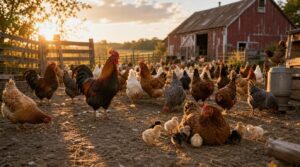
If someone asks you what a group of chickens is called, the short answer is a flock. But depending on the age, sex, and situation, there are a few other terms worth knowing. Here’s a quick breakdown of how each one works.
Beyond "flock," English has a surprisingly rich vocabulary for bird groups—explore the full list of collective nouns for birds to see just how specific things can get.
Standard Collective Noun
The word "flock" is the standard collective noun for a group of chickens. It’s the go-to term across farms, backyards, and poultry science alike — clean, simple, and universally understood.
Whether you’re chatting with a neighbor about their backyard birds or reading a veterinary guide, flock is the word everyone reaches for. When a group of chickens acts as one, the collective noun follows singular verb agreement, as described in collective noun verb rules.
Any Age or Sex
Flock" works for every chicken you own — young or old, hen or rooster. That’s what makes it such a reliable term. Whether your group is a mixed age integration of chicks and mature birds or a sex balanced flock with both roosters and hens, "flock" covers them all without question.
Here’s what that means practically:
- Newly hatched chicks and adult hens can share the same flock label from day one.
- Roosters and hens together? Still a flock — no separate term needed.
- A brood or clutch of babies raised alongside older birds stays part of the flock.
- Cross generational interaction between juveniles and adults happens naturally within a single flock.
- Inclusive feeding plans and universal coop design support every age and sex under one roof.
Backyard Flock Usage
If you keep chickens at home, you’re already using backyard flock terminology — probably without thinking about it.
Most backyard setups run 6–10 birds, which is the sweet spot for managing a coop, collecting eggs daily, and keeping your chickens socially happy without turning your yard into a full-time farm operation.
Poultry Industry Usage
Scale that up a thousand times, and you’re in commercial poultry territory. Here, a flock isn’t a backyard hobby — it’s a business system.
Vertical integration means one company controls everything from hatchery to grocery shelf. Automated monitoring tracks temperature and air quality around the clock, while HACCP procedures keep food safe. Even waste gets repurposed.
Honestly, flock management at this scale is basically logistics with feathers.
Other Chicken Group Names
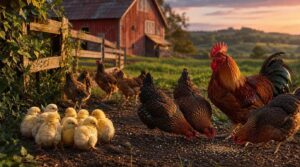
Flock" covers most situations, but the chicken world has a few other group names worth knowing. Each one refers to something specific — age, sex, or even what stage of life the birds are in. Here are the terms you’ll actually come across.
Brood of Chicks
A brood of chicks is a family group of recently hatched baby chickens, usually cared for by a mother hen or an artificial heat source during the early brooding period.
These young birds rely on warmth, staying near 95°F in their first week, while learning to forage by watching each other — basically copying their siblings until they figure out how the world works.
Peep of Chicks
Peep" is actually the collective noun for baby chickens — and yes, it comes straight from the sound they make. Peep calls are loudest in the first week, helping chicks locate their mother and siblings.
A peep of chicks gets noticeably noisier when one biddy wanders off — isolation triggers faster, louder calls until the juvenile rejoins the group.
Clutch of Eggs
A clutch of eggs is the full set a hen lays before she settles in to incubate them. Here’s what shapes a clutch:
- Clutch size usually runs 5–12 eggs
- Incubation period lasts about 21 days
- Calcium requirements directly affect shell strength
- Egg collection timing protects clutch quality
Once she starts sitting, that clutch becomes the start of a potential brood.
Bachelor Flock
A bachelor flock is a group of roosters living together without any hens. It’s exactly what it sounds like — boys only.
Keepers use this setup to house surplus roosters humanely, keeping aggression in check while preserving hens for laying flocks. Think of it as a holding crew with a pecking order of its own.
Group of Hens
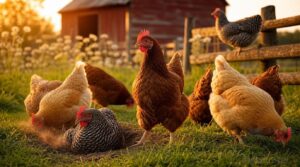
A group of hens is still called a flock — no special term needed. But hen-only flocks have their own quirks worth knowing, especially around social order and egg production. Here’s what actually happens when roosters are out of the picture.
Called a Flock
A group of hens is still called a flock. The term applies whether you’ve got roosters in the mix or not — hens-only groups carry the same name.
It’s simple, universal chicken group terminology that works across backyard coops and commercial farms alike. So if someone asks what to call your all-girl crew, "flock" is always the right answer.
Hen-only Flock
Many backyard keepers skip the rooster entirely — and honestly, it works out great. A hen-only flock focuses purely on egg production without the complications roosters bring. No fertilized eggs, no noise complaints, no spur injuries during introductions.
Hens manage themselves surprisingly well. They establish their own social pecking order and maintain flock cohesion through mutual preening and shared routines.
Dominant Hen Behavior
Every hen-only flock has a boss. She’s called the alpha hen, and she runs things with quiet authority — claiming the best feeding spots, occupying the prime nesting boxes, and setting the pace for the whole group.
Other hens read her visual dominance cues: erect posture, puffed neck feathers, direct eye contact. They step aside. No drama needed.
Egg-laying Groups
When the alpha hen leads, the rest of the flock takes notes — especially at the nest boxes.
Layer hens naturally cooperate around egg laying, clustering near the same preferred sites and often syncing their laying cycles to the same time of day.
That shared rhythm makes egg collection predictable and efficient, which is a quiet win for any backyard keeper.
Group of Roosters
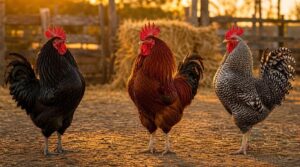
A group of roosters has its own special name — and a few rules that come with it. Roosters aren’t exactly known for playing nice together, so how you group them actually matters. Here’s what you need to know.
Bachelor Flock Meaning
A bachelor flock is simply a group of roosters living together without any hens around. Keepers often use this setup to house surplus males peacefully.
When given enough space and multiple feed stations, roosters can coexist surprisingly well — establishing their own pecking order through posture and crowing rather than constant fighting.
Rooster Aggression Risks
That peaceful bachelor flock setup sounds ideal — until hormones enter the picture. As roosters mature, testosterone-driven aggression rises sharply, especially in cramped spaces.
A dominant rooster will test his rank constantly through chest-puffing, hackle-raising, and charging. Subordinate roosters absorb most of that pressure.
Without enough room, territorial defense escalates fast — from posturing into real injuries.
Hen-to-rooster Ratio
Most backyard keepers settle on one rooster per ten hens — and there’s real science behind that number. Here’s what the ratio actually affects:
- Fertility rates improve with balanced mating access
- Hen injuries drop when roosters aren’t competing
- Rooster aggression stays manageable with enough hens
- Hatch consistency relies on even egg fertilization
Younger roosters need more hens; older ones handle slightly smaller flocks.
Subordinate Roosters
Not every rooster in a group of roosters is top dog. Subordinate birds show submissive behavior — lowered heads, quieter crowing, stepping aside — to avoid fights. They still find mating opportunities when the dominant male is distracted.
| Role | Behavior |
|---|---|
| Aggression Reduction | Retreats from challenges |
| Social Integration | Forages with the group |
| Mating | Mates when dominant is occupied |
| Health Management | Needs space and escape routes |
Group of Baby Chicks
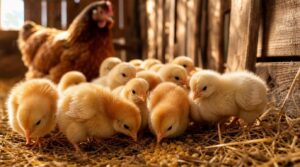
Baby chicks have their own special group names — and yes, there’s more than one. The terms you use can actually depend on their age and who’s looking after them. Here are the key ones worth knowing.
Brood Definition
A brood is a group of baby chicks hatched together from the same set of eggs. Think of it as a family unit — same nest, same timing, raised together. Brood size usually ranges from 3 to 12 chicks, depending on how many eggs were in the clutch and incubation conditions.
In farming, brood management means grouping chicks by age for consistent feeding and temperature care.
Hatchling Versus Chick
People use "hatchling" and "chick" interchangeably, but they’re not the same thing. A hatchling is a bird in its first hours — still wet, wobbly, and absorbing its yolk sac for nutrition. A chick has dried off, fluffed up, and started pecking at feed. It’s a small window, but developmentally, it’s a big leap.
Mother Hen Care
Once those chicks hatch, the mother hen shifts into full-time guardian mode. She keeps the brood warm, leads them to food and water, and calls out with soft clucks to signal where it’s safe to peck. She’s teaching them to forage without saying a word — just pattern and instinct doing all the heavy lifting.
Chickens, Hens, and Roosters
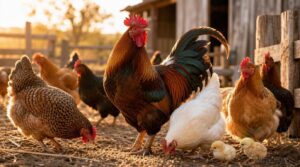
Chickens go by different names depending on their age and sex — and it’s not just trivia. Knowing the right term helps you talk about your flock with confidence and understand what you’re reading in poultry guides. Here’s a quick breakdown of the five key terms you’ll want to know.
Chick Meaning
The word "chick" has a surprisingly long history — it’s been shorthand for a young chicken since the 14th century, clipped straight from the word chicken. Today it carries a few different meanings depending on context:
- Newly hatched bird of any species — ducks, eagles, you name it
- A just-hatched chicken specifically in poultry farming
- Casual slang for a young woman
- A fluffy, downy hatchling still in its earliest days
- The starting point of every chicken’s growth journey
Pullet Meaning
So you’ve got your chick — now what comes next? Meet the pullet: a young female chicken that hasn’t started laying eggs yet. Think of her as a teenager in chicken terms.
| Stage | Age Range |
|---|---|
| Chick | 0–6 weeks |
| Pullet | 6–20 weeks |
| Near-mature pullet | 16–20 weeks |
| Hen | 20+ weeks |
Within your flock, spotting the pullets helps you manage their care properly.
Hen Meaning
Once a pullet hits sexual maturity — usually around 20 weeks — she earns her official title: a hen. She’s now an adult female bird, ready to lay eggs and hold her place in the flock’s social order.
- Lays roughly one egg per day at peak production
- Leads foraging in hen-only groups
- Symbolizes motherhood in folklore worldwide
- Recognized across English-speaking regions as mature female poultry
Cockerel Meaning
If hens are the adult females of the flock, cockerels are their male counterparts — just younger. A cockerel is a young male chicken under one year old, not yet fully mature.
Think of him as a rooster-in-training. In British English, "cockerel" is the go-to term, while Americans usually just say rooster from the start.
Rooster Meaning
Once a cockerel hits sexual maturity — around four to five months old — he earns the title of rooster. He’s the full-grown male of the flock.
Loud, bold, and hard to ignore.
Across cultures, the rooster symbolizes dawn, courage, and protection.
Not bad for a bird whose main job is crowing at sunrise and keeping the flock in line.
How Many Chickens Make a Flock?
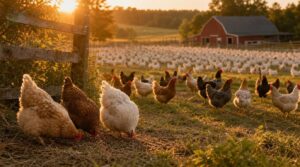
So, how many chickens does it actually take to call something a flock? There’s no official rulebook, but size does matter — for the birds’ happiness and your sanity. Here’s how flock sizes commonly break down, from a small backyard setup to a full commercial operation.
Minimum Three Chickens
Three is the magic number for chickens. It’s the minimum socially stable group they need to thrive.
With fewer birds, loneliness creeps in fast — and a lonely chicken is a stressed chicken. Three gives your flock enough social interaction to establish a pecking order, reduce anxiety, and support healthy behaviors like foraging and dust bathing.
Small Backyard Flocks
Most backyard keepers do well with 6 to 10 chickens. It’s enough to keep things social without overwhelming your space or schedule. A flock that size lets you enjoy:
- Steady egg production from a reliable laying group
- Natural dust bathing and foraging without overcrowding
- Easier mite prevention and coop ventilation management
Each bird needs at least 3 sq ft inside the coop and 10 in the run.
Medium Chicken Flocks
Step up from a small backyard setup, and a medium-sized flock of 9 to 20 birds hits a sweet spot.
You get 6 to 12 eggs daily, enough variety to mix 2 to 4 breeds for different temperaments and shell colors.
Plan for 3 to 4 square feet indoors per bird, plus a solid health management routine to keep everyone thriving.
Commercial Flock Sizes
Commercial flocks operate on a completely different scale. A single laying house can hold 20,000 to 100,000 hens, while broiler farms often run 20,000 to 60,000 birds per house. Here’s what makes that possible:
- Economies of scale cut cost per egg dramatically
- Stocking density is carefully monitored — around 9–12 hens per square meter
- Automation benefits reduce labor through self-feeding and watering systems
- Biosecurity protocols and lighting programs keep massive flocks healthy and productive
Space and Care Needs
Flock size and space per bird go hand in hand. Each chicken needs at least 0.5 square meters inside the coop and up to 3 square meters in the run.
Your chicken coop should have proper ventilation, clean litter, and one nesting box per five hens.
Space multiple feed and water stations, to keep pecking-order squabbles from turning into an all-day drama.
Why Chickens Flock Together
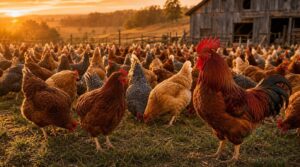
Chickens don’t flock together by accident — there are real reasons behind it. It’s actually one of their most natural survival instincts, shaped over thousands of years. Here’s what keeps them sticking close to each other.
Safety From Predators
There’s safety in numbers — and chickens seem to know this instinctively. A group of chickens naturally sticks together because more eyes mean better chances of spotting danger early. Here’s how smart predator protection reinforces that instinct:
- Secure latches keep the chicken coop locked tight at night
- Hardware cloth blocks digging predators at ground level
- Auto doors seal the flock in before dusk
- Motion lights startle nocturnal threats approaching the perimeter
- A buried apron stops anything tunneling underneath
Good chicken coop design turns predator avoidance from luck into a system.
Shared Body Warmth
Predator awareness keeps the flock alert — but warmth keeps them alive through cold nights.
Chickens practice thermal huddling naturally, pressing together on the roost to share body heat. This group thermoregulation isn’t just cozy; it cuts the energy each bird burns to stay warm. Tighter clusters mean warmer birds, better digestion, and more energy left for the next morning’s foraging.
Social Interaction
Warmth bonds the flock physically — but social interaction is what keeps it emotionally glued together.
Chickens are surprisingly chatty. Through vocal communication like clucks and alarm calls, they coordinate movement, share food discoveries, and warn each other of danger. Watch a hen spot something suspicious — her call ripples through the flock instantly.
Body posturing conveys what words can’t. A spread wing or deliberate head bob signals dominance, submission, or readiness to compete for space.
Reduced Stress
All that socializing does more than entertain — it actively lowers stress. Chickens in a stable flock show calmer behavior, less feather picking, and fewer signs of anxiety than isolated birds.
Living together gives them social support, much like how regular connection with friends helps humans shake off a rough day faster. A flock, it turns out, is its own kind of therapy.
For chickens as for humans, belonging to a stable social group is its own kind of therapy
Natural Bird Behavior
Flocking isn’t just a chicken thing — it’s hardwired into birds as a species. From coordinated group movement to shared alarm calls that ripple through the flock in seconds, these behaviors run deep.
Your chickens aren’t being clingy. They’re simply doing what birds have always done: watching out for each other, foraging together, and making sense of the world as a group.
Chicken Flock Pecking Order
Every flock has a social ladder, and chickens take it seriously. It shapes who eats first, who gets the best roosting spot, and how smoothly the group runs day to day. Here’s what that pecking order actually looks like from top to bottom.
Social Hierarchy
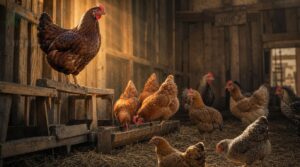
Every flock has a social hierarchy — a clear chain of rank that determines who eats first, drinks first, and claims the best roost. Chickens establish this pecking order through repeated interactions, posture displays, and occasional chases.
Once rank is settled, constant fighting drops off. It’s not chaos — it’s structure, and it actually keeps the flock stable.
Dominant Birds
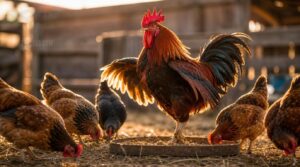
The alpha sits at the top of the social hierarchy — and you’ll know who it is almost instantly. This bird eats first, roosts in the prime spot, and uses dominance displays like raised feathers and wing spreads to remind everyone else of its rank.
Here’s what dominant birds actually do in a flock:
- Send alpha bird signals through loud calls and posture to establish authority without constant fighting
- Control resource priority by occupying feeding and watering stations before lower-ranked birds get access
- Initiate flock movement, deciding where the group forages or perches throughout the day
- Maintain the pecking order through repeated visual displays rather than repeated physical aggression
- Shape the collective noun group’s behavior by attracting followers to high-value areas
Physical condition matters too. Healthier, larger birds tend to climb higher in the hierarchy — because rank determination often comes down to who looks and acts the strongest.
Subordinate Birds
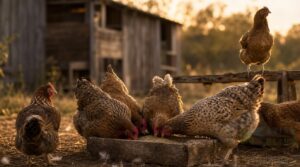
While the alpha commands the spotlight, subordinate birds quietly keep the flock running. They wait their turn at feeders, use lowered postures to avoid conflict, and stick to peripheral perches when dominant birds are nearby.
| Behavior | Purpose | Example |
|---|---|---|
| Appeasement displays | Avoid aggression | Crouching near dominant birds |
| Soft contact calls | Maintain group cohesion | Low vocalizations during foraging |
| Peripheral positioning | Reduce confrontation risk | Moving to edge feeders |
They’re not pushovers, though — subordinates watch for predators, alert the flock, and even form alliances with kin to hold their ground.
Food and Roost Access
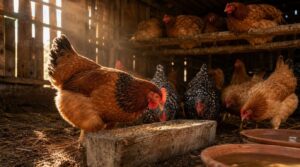
Food and roost access is where the pecking order gets real. In a flock of chickens, dominant birds reach the feeding station design first — subordinates wait or slip to edge spots. Elevated roost benefits matter too: top birds claim the highest roosting bars in the chicken coop, while lower-ranked birds settle below.
Here’s what that daily competition looks like:
- Dominant hens eat first, leaving subordinates the scraps — or the wait
- Group feeding dynamics mean crowded feeders trigger more pecking and stress
- Water near feed cuts unnecessary travel, helping all birds stay hydrated
- Foraging route planning shifts naturally based on rank — leaders go first
- Higher roosts mean warmer, safer sleep — a real perk worth fighting for
Smart foraging behavior and good coop layout reduce that tension considerably.
Introducing New Chickens
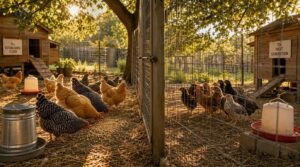
Adding new birds to a flock of chickens isn’t as simple as opening the gate. Start with a 14–30 day quarantine — separate coop, separate tools, no contact.
Then introduce them gradually, letting both groups see and hear each other first. Expect pecking order reshuffling for one to two weeks.
Multiple feeders help keep the peace.
Frequently Asked Questions (FAQs)
What is a group of hens called?
Like hens themselves, their name is simple and social — a group of hens is called a flock. That’s the standard collective noun in poultry terminology, whether you’ve got three birds or thirty.
What is a group of Roosters called?
There’s no official collective noun for roosters. Most people simply call them a bachelor flock. Hobbyists occasionally use "a riot of roosters" — which, honestly, sounds about right given how quickly things escalate.
What is a flock of chickens called?
There’s an old saying: "Birds of a feather flock together." That holds true here. A group of chickens is simply called a flock — the go-to term for any mix of ages or sexes.
What is a group of baby chickens called?
A group of baby chickens is called a brood or a peep. Brood refers to chicks raised together under a hen, while peep is named for their soft, chirping vocalizations.
What is a group of chickens?
A flock of chickens can range from three backyard birds to thousands in commercial farms. This collective noun applies to any mix of ages or sexes — hens, roosters, and chicks alike.
What is a group of chicks called?
Baby chicks go by a few charming names. A brood covers chicks raised together, a peep captures their chirping energy, and a clutch refers to hatchlings from the same nest.
What is a pack of chickens called?
Chickens don’t actually travel in packs — that’s wolves. The right word is a flock. It’s the universal term used by backyard keepers and the poultry industry alike, covering any mix of ages or sexes.
What is a clan of chickens?
Casually coined in hobbyist circles, a "clan" describes a tightly related maternal line kept together for genetic diversity and rotational breeding. It’s not official poultry science — just a folk term farmers find useful.
What word is used to describe a group of hens?
A group of hens is called a flock. That’s the go-to term whether you’ve got three hens or thirty. Simple, universal, and used by backyard keepers and commercial farmers alike.
What is a number of chickens together called?
When a number of chickens gather together, they’re called a flock. It’s the go-to collective noun — used for any mix of hens, roosters, or chicks, whether you’ve got three birds or three hundred.
Conclusion
Chicken terminology could fill a library—but honestly, you just need the essentials. A group of chickens is a flock, plain and simple.
New chicks form a brood, rooster-only groups are bachelor flocks, and unhatched eggs sit in a clutch.
Knowing what’s a group of chickens called isn’t just trivia—it changes how you see the birds themselves. Language shapes understanding.
And understanding your flock? That makes you a genuinely better keeper.
- https://www.animalsandenglish.com/collective-nouns-etc56.html
- https://blog.meyerhatchery.com/2024/04/understanding-poultry-terminology
- https://blog.gardenwildlifedirect.co.uk/collective-nouns-for-birds
- https://www.mypetchicken.com/blogs/faqs/there-are-so-many-different-terms-for-chickens-juvenile-cockerel-pullet-chick-hen-rooster-peep-biddy-started-pullet-point-of-lay-pullet-broody-brood-flock-what-do-they-all-mean
- https://www.merriam-webster.com/dictionary/brood