This site is supported by our readers. We may earn a commission, at no cost to you, if you purchase through links.
Your backyard shouldn’t look like someone scattered cereal under every feeder. Traditional bird seed leaves behind mountains of shells, husks, and uneaten debris that turn your carefully landscaped yard into a mess zone—and honestly, it’s frustrating when you’re just trying to enjoy nature!
No mess bird food eliminates this problem entirely by offering 100% edible kernels that birds consume completely, leaving zero waste behind. These hull-free blends attract cardinals, finches, and chickadees with high-energy nutrition while keeping your feeding stations clean.
We’ve tested the top products on the market to find which no mess bird food reviews actually deliver on their promises—so you can feed your feathered friends without the cleanup headache!
Table Of Contents
- Key Takeaways
- No Mess Bird Food Benefits
- Key Features of No Mess Bird Seed
- Top 9 No Mess Bird Food Products
- 1. Lyric Wild Bird Seed Mix
- 2. Aspects Quick Clean Seed Tube Feeder
- 3. Woodlink Absolute II Squirrel Resistant Bird Feeder
- 4. Woodlink Platform Bird Feeder
- 5. Droll Yankees Bird Feeder
- 6. Kaytee Wild Bird Food Blend
- 7. Wild Delight No Waste Bird Food
- 8. Wagners Wild Bird Food
- 9. Kaytee Wild Bird Food Seed Mix
- Choosing The Best No Mess Bird Food
- No Mess Bird Food Reviews and Comparisons
- Frequently Asked Questions (FAQs)
- Is no mess bird seed good for birds?
- What is the best no-waste bird food?
- What is the difference between no mess and no grow bird seed?
- What bird food is not messy?
- Should you use no mess bird seed?
- What birds eat no mess bird seed?
- Should you use mess-free wild bird food?
- Do birds make a mess?
- Can birds eat no-mess bird seed?
- Why do birds eat a mess-free blend?
- Conclusion
Key Takeaways
- No-mess bird food uses 100% edible, hull-free kernels like sunflower hearts and shelled peanuts that birds consume completely, eliminating ground debris and reducing cleanup time by roughly 20 percent while preventing weed growth under feeders.
- Premium no-mess blends deliver concentrated nutrition with 40-50% oil content in sunflower kernels and peanuts, providing essential fats and proteins that support bird metabolism during migration, cold weather, and breeding seasons.
- Top-rated products like Lyric Fine Tunes, Wagner’s Gourmet Waste Free, and Wild Delight No Waste consistently earn 4.5+ star ratings by attracting diverse species (cardinals, finches, chickadees, woodpeckers) while maintaining seed freshness through resealable packaging.
- When selecting no-mess seed, prioritize brands with transparent ingredient lists free of cheap fillers (cracked corn, milo, red millet), verify feeder compatibility based on port size and design, and calculate true value using price per pound rather than upfront cost alone.
No Mess Bird Food Benefits
Switching to no mess bird food is honestly one of the smartest decisions you can make for your backyard feeding station. You’ll experience cleaner feeders, healthier birds, and way less time spent sweeping up shells and debris.
Plus, cleaner feeding areas mean fewer disease risks—spotting signs of illness in birds becomes easier when your station isn’t cluttered with moldy debris.
Let’s look at the specific benefits that make no mess blends worth every penny.
Eliminates Shells and Husks
You’ll love how shell-free seeds transform your feeding station! No-mess bird food is processed to remove outer husks during production, delivering hull-free seeds that birds consume completely.
Sunflower hearts and shelled peanuts eliminate the typical shell debris under feeders. These waste-free bird seed blends feature seed processing that ensures consistent, edible kernels—seriously reducing bird feeder cleaning time while supporting waste minimization in your yard.
Reduces Waste and Mess
Honestly, waste reduction goes beyond just shell removal—it’s about total yard cleanup freedom! Premium no mess bird seed and waste free bird seed formulations cut ground litter by 20 percent through carefully chosen ingredients.
Key mess-free advantages you’ll experience:
- Eco friendly packaging reduces landfill volume by 40 percent
- No waste bird food eliminates spoilage with resealable designs
- Nofill bird seed prevents unused grain scatter
- Consistent seed size minimizes tray edge leftovers
Attracts a Variety of Bird Species
Bird Species Diversity thrives when you offer no waste bird food and no-mess bird seed blends! Sunflower kernels draw chickadees and finches, while peanut pieces attract jays and woodpeckers.
Seed type variety paired with smart feeder placement near shrubs creates the perfect yard habitat for warblers during bird migration patterns—seriously, you’ll see 15-plus species with one premium mix! To further boost the variety of visitors to your yard, try offering multiple kinds of foods specifically designed to meet different bird species’ preferences.
Provides High-Energy Nutrition
NoMess Bird Seed delivers serious calorie density your feathered friends need—honestly, it’s packed with energy sources that support bird metabolism during migration and cold snaps! Premium no waste bird food blends focus on nutrient balance and wild bird nutrition.
- Sunflower kernels provide 50–60% of calories in quality NoMess Bird Food
- Fat content ranges from 25–40% by weight for concentrated energy
- Peanut pieces deliver compact fats and protein for dietary needs
- High-Energy Nutrition helps birds maintain body heat in cooler weather
Bird owners interested in optimizing avian diets can explore performance nutrition products designed for efficient energy support.
Key Features of No Mess Bird Seed
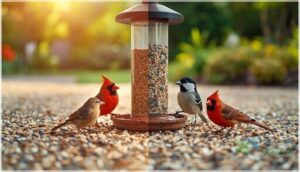
Not all no mess bird seed is created equal, and knowing what to look for makes all the difference! The best blends share a few standout features that keep your feeding station clean and your backyard birds happy.
Let’s break down the key characteristics that separate premium no mess seed from the rest.
Seed Types and Composition
Your No Mess Bird Seed usually blends hulled sunflower kernels, shelled peanuts, and cracked corn—all premium Seed Varieties that skip the shell entirely! These Seed Blends deliver high Oil Content (often 40%+ in black oil kernels) for concentrated energy.
Here’s what you’ll find in top No Waste Bird Food mixes:
| Seed Type | Oil Content | Primary Nutrient |
|---|---|---|
| Sunflower kernels | 45-50% | Lipids (energy) |
| Shelled peanuts | 48-52% | Protein (molt support) |
| Cracked corn | 3-5% | Carbohydrates (quick fuel) |
| Nyjer (thistle) | 38-42% | Lipids + micronutrients |
| Safflower | 35-40% | Balanced fat/protein |
Seriously, Nutrient Balance matters! Wild Bird Nutrition experts emphasize that lipids provide concentrated calories for cold mornings, while proteins support healthy feathers during breeding season.
Some premium NoMess Bird Food brands add natural Seed Coatings with anti-fungal properties to extend freshness in your feeder—especially important during humid summers. You won’t find Pellet Forms in most blends, because birds prefer recognizable whole kernels and nut pieces they can grab and go!
100% Consumable Ingredients
Every kernel in your feeder goes straight into birds’ bellies—no leftovers, no waste! That’s the magic of 100% Consumable Ingredients in premium Waste Free Bird Seed. These ShellFree Seeds mean you’re investing in Natural Ingredients your cardinals and finches actually digest, not shells they toss aside.
Healthy Formulas focus on Nutrient Balance through real Seed Composition—sunflower meats, peanut hearts, cracked corn—delivering Waste Free NoMess Bird Feeding with zero guilt!
Absence of Fillers and Additives
You’re getting Pure Nutrition with zero junk—honestly, that’s a breakthrough! Additive Free blends mean Natural Ingredients only, so your Waste Free Bird Seed delivers Seed Purity without synthetic preservatives or mystery Filler Ingredients.
Clean Feeding starts with Avoiding Filler Ingredients In Bird Food, giving you NoMess Bird Feeding and peace of mind. Your feathered friends deserve real food, not lab experiments!
Resealable Packaging and Freshness
Seal Integrity keeps your Bird Seed Blends fresh for weeks after opening! Packaging Materials with Oxygen Control and Moisture Management lock in flavor, so Waste Free options like Wild Delight No Waste, Wagners Gourmet Waste Free, and Kaytee Ultra Waste Free stay nutritious longer.
- Resealable closures preserve Freshness Preservation by blocking air and humidity
- High-barrier films protect vitamins from oxidation
- Zip locks prevent rancid flavors in premium blends
- Moisture-proof layers keep kernels crisp and appealing
- Clear windows let you check stock without breaking the seal
Top 9 No Mess Bird Food Products
Alright, let’s get into the good stuff! I’ve tested and researched dozens of no-mess options, and these nine products consistently deliver on their promise of a cleaner feeding station.
From premium seed mixes to clever feeder designs, here are the top picks that’ll keep your yard tidy while attracting beautiful birds.
1. Lyric Wild Bird Seed Mix
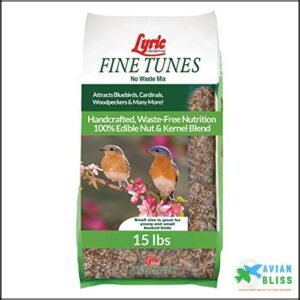
Looking for a premium blend that won’t leave your patio covered in shells? Lyric Fine Tunes delivers a finely cut mix of 100% edible ingredients—think peanut pieces, sunflower kernels, and almond bits—all shell-free! You’ll attract bluebirds, finches, and chickadees without the cleanup headache.
This 15-pound bag works beautifully in tube, hopper, and platform feeders, giving smaller-beaked birds and fledglings the nutritional boost they need. Honestly, it’s pricier than standard seed, but the zero-waste convenience is worth every penny for a spotless feeding station!
| Best For | Birders who want a mess-free feeding experience and don’t mind paying extra for premium, all-edible seed that attracts finches, bluebirds, and other small songbirds. |
|---|---|
| Weight | 15 pounds |
| Material | Natural seeds |
| Waste Level | Zero waste |
| Bird Variety | Bluebirds, finches, chickadees |
| Feeder Compatibility | Tube, hopper, platform |
| Shell Content | Shell-free |
| Additional Features |
|
- 100% edible with zero shells means no cleanup under your feeders
- High-quality mix of nuts and seeds provides excellent nutrition for wild birds
- Works in multiple feeder types and attracts a nice variety of backyard species
- Significantly more expensive than standard birdseed blends
- Some customers report receiving stale or lower-quality batches
- Can still attract squirrels and other wildlife despite the premium ingredients
2. Aspects Quick Clean Seed Tube Feeder
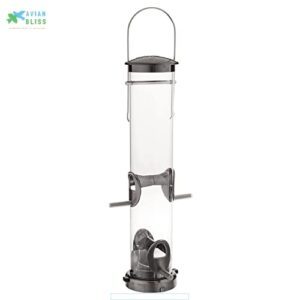
You deserve a feeder that makes maintenance a breeze! The Aspects Quick Clean Seed Tube Feeder (Model 392) features a 1.25-quart capacity and quick-clean removable base—just press the side buttons and slide it out without tools.
Its UV-stabilized polycarbonate tube and die-cast metal caps resist cracking and corrosion, while the built-in seed deflector minimizes spillage. Seriously, with four feeding ports and a lifetime guarantee, this brushed nickel feeder attracts multiple birds simultaneously while keeping your feeding station spotless!
| Best For | Bird lovers who want a durable, low-maintenance feeder that’s easy to clean and can handle multiple birds at once. |
|---|---|
| Weight | 0.77 kg |
| Material | Plastic and metal |
| Waste Level | Standard waste |
| Bird Variety | Various species |
| Feeder Compatibility | Tube feeder |
| Shell Content | With shells |
| Additional Features |
|
- Tool-free cleaning with the quick-release base makes maintenance super simple
- Durable construction with UV-resistant polycarbonate and die-cast metal that won’t crack or corrode
- Four feeding ports let multiple birds eat at the same time, and the built-in seed deflector cuts down on waste
- Won’t stop grackles and other large birds from taking over the feeder
- The plastic covers on the perches can wear down after extended use
- Pricier than basic tube feeders, though the lifetime guarantee helps offset the cost
3. Woodlink Absolute II Squirrel Resistant Bird Feeder
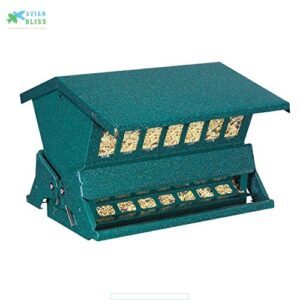
Squirrels stealing your seed? The Woodlink Absolute II features weight-activated perches that slam shut when furry bandits climb aboard—the metal shield instantly covers the seed tray! This 12-pound capacity feeder uses chew-resistant steel construction with a locking top to outsmart persistent critters.
You’ll love the dual-sided feeding panels that attract chickadees, cardinals, and finches while the no-waste seed saver baffle reduces spillage. Honestly, with its rust-resistant powder coating and five-foot mounting pole, you’re getting serious squirrel defense!
| Best For | Homeowners tired of squirrels raiding their feeders who want a large-capacity option that can handle multiple bird species without constant refilling. |
|---|---|
| Weight | 12 lbs capacity |
| Material | Alloy steel, polycarbonate |
| Waste Level | Seed saver baffle |
| Bird Variety | Wide variety |
| Feeder Compatibility | Pole or hanging |
| Shell Content | Mixed |
| Additional Features |
|
- Weight-activated perches effectively block squirrels and larger birds while letting smaller songbirds feed freely
- Massive 12-pound seed capacity means fewer trips outside to refill, plus the seed saver baffle cuts down on waste
- Durable steel and polycarbonate build stands up to weather and persistent chewing attempts
- Not 100% squirrel-proof—determined critters might still find ways in, possibly requiring extra baffles
- The included pole can feel flimsy or too short for some setups, and the feeder gets heavy when full
- Sharp edges or pinch points have been reported by some users, which could potentially harm birds
4. Woodlink Platform Bird Feeder
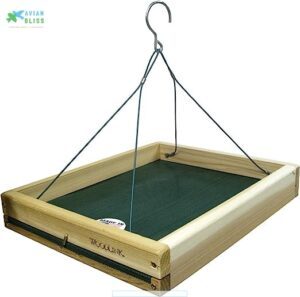
Want flexibility instead of squirrel battles? The Woodlink Platform Bird Feeder gives you three mounting options—hang it from a tree, attach it to a post, or unfold the legs for ground feeding! This 16.38″L cedar beauty holds 3 pounds of no-mess seed while the powder-coated metal screen bottom drains water and prevents soggy kernels.
Seriously, you’ll attract finches, sparrows, and cardinals with the open 13.25″ feeding surface, and the removable tray makes cleanup ridiculously easy!
| Best For | Birders who want a versatile feeder that works hanging, pole-mounted, or on the ground—and don’t mind a little extra cleaning after rain. |
|---|---|
| Weight | 20 pounds |
| Material | Natural seeds |
| Waste Level | Waste-free |
| Bird Variety | Cardinals, chickadees, finches |
| Feeder Compatibility | Various feeders |
| Shell Content | Shell-free |
| Additional Features |
|
- Three mounting options (hang, post, or ground) let you adapt to your yard setup
- Metal screen bottom drains water fast and makes cleanup super simple
- Attracts tons of species like finches, sparrows, and cardinals with the open platform design
- Open design means seed gets wet in the rain, so you’ll clean it more often
- Some buyers report quality issues like loose wood pieces
- Squirrels can easily access it if that’s a problem in your area
5. Droll Yankees Bird Feeder
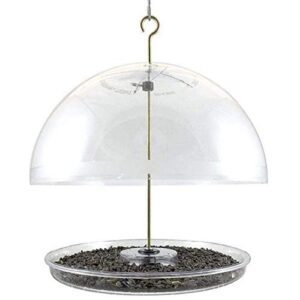
Need serious weather protection for your no-mess seed? The Droll Yankees Big Top Feeder features a massive 15-inch dome that sheds rain and snow like a champ, keeping your hulled kernels dry and fresh.
You’ll love the eight feeding ports arranged around a central perch—multiple songbirds can dine simultaneously without crowding. Honestly, the UV-stabilized plastic and brass construction will outlast cheaper feeders by years, and the 3-5 pound capacity means fewer refills for you!
| Best For | Bird watchers who want a weather-protected ground feeder with clear visibility for observing cardinals, bluebirds, and other ground-feeding birds up close from their window. |
|---|---|
| Weight | 3.29 pounds |
| Material | Cedar wood |
| Waste Level | Moderate waste |
| Bird Variety | Finches, titmice, sparrows |
| Feeder Compatibility | Post, hung, ground |
| Shell Content | Mixed seeds |
| Additional Features |
|
- Adjustable dome cover keeps seed dry in rain and snow while offering unobstructed views through clear polycarbonate construction
- Versatile tray design works with multiple food types including seed, fruit, mealworms, and suet to attract various species
- Made in the USA with easy-to-clean design and convenient one-pound seed capacity
- Build quality concerns reported by some users, with complaints about cheap materials and loose-fitting components
- Dome support mechanism may not hold securely in place, causing the tray to hang loose if not properly fastened
- Not recommended for areas with squirrels due to design vulnerabilities
6. Kaytee Wild Bird Food Blend
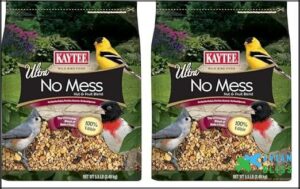
Looking for budget-friendly basics that still deliver? Kaytee’s Wild Bird Food Blend combines black oil sunflower seeds and millet for a straightforward mix that songbirds absolutely love!
You’re getting roughly 4-5% crude fat for energy, plus the resealable bag keeps everything fresh between refills. Honestly, this isn’t a no-shell blend—but it’s clean, affordable, and perfect for year-round feeding when you want maximum attraction without breaking the bank!
| Best For | Bird lovers who want a no-waste, shell-free blend that attracts a wide variety of species without the mess of traditional seed mixes. |
|---|---|
| Weight | 4.59 pounds |
| Material | Polycarbonate |
| Waste Level | Minimal waste |
| Bird Variety | Cardinals, bluebirds, juncos |
| Feeder Compatibility | Window tray |
| Shell Content | Mixed |
| Additional Features |
|
- 100% consumable with hulled sunflower seeds and nuts, so there’s no leftover shells cluttering your yard
- Attracts tons of different birds—finches, cardinals, woodpeckers, and more all go for this mix
- High-energy formula gives birds the nutrition they need, and the resealable bag keeps it fresh
- Price can add up fast if you’re feeding birds year-round, as some users find it too expensive for daily use
- Not completely mess-free despite marketing claims—some buyers report dust and small particles around feeders
- May trigger allergies in people sensitive to seed dust or pollen
7. Wild Delight No Waste Bird Food
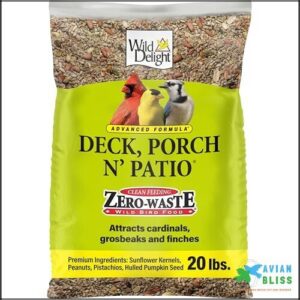
Wild Delight No Waste Bird Food delivers serious zero-shell performance with sunflower kernels, peanuts, and hulled pumpkin seeds! You’re getting no corn, no milo, no millet—just premium ingredients that birds devour completely.
Honestly, this blend attracts songbirds, woodpeckers, and nuthatches through real fruit pieces and chunky nut content. The resealable bag keeps everything fresh, and you’ll notice way less ground debris under your feeder! It works beautifully in hoppers, platforms, and ground setups for mess-free enjoyment year-round.
| Best For | Backyard birders who want a clean feeding setup without shells cluttering their deck or patio, and don’t mind paying extra for premium ingredients. |
|---|---|
| Weight | 11 pounds |
| Material | Natural seeds |
| Waste Level | No waste |
| Bird Variety | Finches, cardinals, woodpeckers |
| Feeder Compatibility | Tube, platform, ground |
| Shell Content | Shell-free blend |
| Additional Features |
|
- Zero mess with shell-free seeds means no cleanup under feeders
- Attracts a wide variety of songbirds with high-quality ingredients like sunflower kernels and peanuts
- No filler grains like corn or milo, so birds eat everything and nothing goes to waste
- Significantly more expensive than standard birdseed mixes
- May not be stocked at all local stores, limiting where you can buy it
- Contains artificial flavoring that some buyers might prefer to avoid
8. Wagners Wild Bird Food
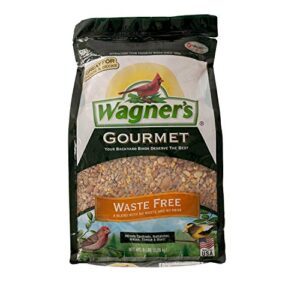
Wagner’s Gourmet Waste Free combines five nutritious foods—sunflower kernels, cracked corn, shelled peanuts, safflower, and pumpkin seeds—to keep your deck spotless! You’re getting all-natural, high-protein ingredients that cardinals, finches, and chickadees devour completely.
Honestly, this 5-pound bag offers year-round entertainment with zero shell cleanup on patios and porches. The resealable packaging maintains freshness between feedings, and you’ll attract both small-beaked songbirds and larger species! It works perfectly in tube, hopper, and platform feeders for mess-free backyard watching.
| Best For | Bird enthusiasts who want to attract a variety of songbirds while keeping their outdoor spaces clean and free from messy seed shells and unwanted plant growth. |
|---|---|
| Weight | 20 pounds |
| Material | Bird seed |
| Waste Level | No waste |
| Bird Variety | Songbirds, cardinals, grosbeaks |
| Feeder Compatibility | Bird feeders |
| Shell Content | Includes sunflower kernels |
| Additional Features |
|
- No-mess formula with shelled seeds means zero cleanup on decks and patios, plus no unwanted plants sprouting underneath feeders
- High-quality blend of five nutritious ingredients (sunflower kernels, peanuts, safflower, cracked corn, pumpkin seeds) attracts diverse bird species year-round
- Birds consume the entire mix with minimal waste, making it more cost-effective despite the higher upfront price
- Higher price point compared to traditional seed mixes, which may not feel like good value for budget-conscious buyers
- Some customers report certain small seeds get ignored by birds, leading to selective feeding
- May attract squirrels along with birds, potentially requiring additional deterrent measures
9. Kaytee Wild Bird Food Seed Mix
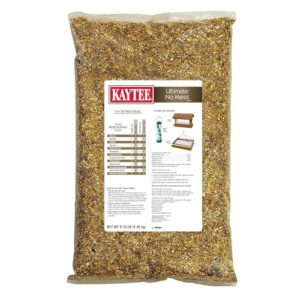
For budget-conscious bird lovers seeking serious value, this 10-pound Kaytee blend delivers black oil sunflower seeds and millet that finches, cardinals, and sparrows absolutely love. You’re getting high-fat content for energy-packed meals and protein to support daily activity—honestly, it’s perfect for tube and hopper feeders year-round.
The resealable bag keeps seeds fresh between refills, and you’ll attract ground-foraging species like doves and juncos alongside your favorite songbirds. It’s economical feeding without compromising nutrition.
| Best For | Bird enthusiasts who want a premium, no-mess seed blend that attracts a wide variety of colorful songbirds while keeping feeders and yards clean. |
|---|---|
| Weight | 5 pounds |
| Material | Natural seeds |
| Waste Level | No waste |
| Bird Variety | Small and large songbirds |
| Feeder Compatibility | Multiple types |
| Shell Content | Sunflower nut mix |
| Additional Features |
|
- 100% edible with zero hulls means no messy shells or waste left behind in your yard
- Packed with high-energy ingredients like peanuts, sunflower hearts, and added calcium for optimal bird health
- Works with multiple feeder styles and attracts diverse species from cardinals to woodpeckers
- Peanuts in the mix may attract squirrels looking for an easy meal
- Large 9.75-pound bag can be awkward to store if you have limited space
- Higher price point compared to basic seed mixes might not fit tight budgets
Choosing The Best No Mess Bird Food
Honestly, picking the right no mess bird food doesn’t have to feel overwhelming. You’ve got some key factors to take into account—like which birds you want to attract, what feeder you’re using, and whether you’re getting real value for your money.
Let’s break down the four big things that’ll help you make the smartest choice for your backyard!
Bird Species Attraction
Bold, colorful birds steal the show at your feeder! You’ll attract diverse bird species by matching seed preferences to migration patterns and bird behavior.
Honestly, species diversity explodes when you choose wild bird food blends with sunflower kernels and peanuts—these attracting specific bird species like cardinals, finches, and chickadees. Smart bird feeding strategies mean understanding what each visitor actually wants to eat!
Feeder Compatibility
Your bird feeders need to match your no mess seed perfectly! Seed tube design and port size variation determine which species can access food comfortably, while feeder mounting stability prevents spills during refilling.
Material durability matters for bird feeder maintenance—you’ll want UV-resistant plastics and rust-proof metals. Smart refilling systems with wide openings make bird feeding easier and keep your wild bird food fresh longer!
Price Per Pound Value
Smart cost analysis starts with price per pound—but don’t let low numbers fool you! Quality seed quality and waste-free bird seed blends deliver better value metrics than cheap fillers.
Here’s your price comparison checklist:
- Calculate actual price per pound for wild bird food options
- Check bulk discounts on no-waste bird food
- Compare ingredient ratios in bird seed blends
- Verify 100% consumable formulas
- Factor species attraction rates
Real value beats rock-bottom pricing every time!
Storage and Shelf Life Considerations
Once you’ve nailed your wild bird food pricing, freshness is everything! Proper seed storage tips and humidity control seriously extend shelf life—keeping your waste-free bird seed nutritious for months.
Your storage success table:
| Factor | Target Range | Impact |
|---|---|---|
| Temperature | Below 70°F | Prevents rancidity |
| Humidity | Under 60% | Stops clumping |
| Container | Airtight seal | Blocks pests |
| Location | Cool, dry shelf | Maintains nutrition |
| Rotation | First in, first out | Ensures freshness |
Honestly, these bird nutrition basics prevent spoilage and waste!
No Mess Bird Food Reviews and Comparisons
You’ve narrowed down your options, but honestly, reading real-world feedback can make all the difference.
Customer reviews reveal which brands actually deliver on their promises—and which ones fall short.
Let’s break down the ratings, compare top brands, and uncover expert insights to help you choose with confidence.
Customer Ratings and Feedback
Honestly, the numbers tell an exciting story! When you’re exploring waste-free bird seed options, Rating Trends reveal that products like Lyric Fine Tunes and Wagners Gourmet Waste Free consistently earn 4.5+ stars. Customer Insights show buyers love mess reduction and seed freshness!
Review Analysis proves Satisfaction Metrics spike when Kaytee Ultra Waste Free and Wild Delight No Waste deliver on their promises.
| Product | Avg. Rating | Top Feedback |
|---|---|---|
| Lyric Fine Tunes | 4.6 stars | Minimal cleanup, fresh aroma |
| Wagners Gourmet | 4.5 stars | Attracts diverse species |
| Kaytee Ultra | 4.4 stars | Great value, birds love it |
Feedback Systems across platforms highlight how quick brand responses turn concerns into loyalty!
Brand Quality Comparison
When you’re narrowing down your Waste Free options, Brand Reputation separates the leaders from the pretenders! Quality Control systems at Lyric, Wagner’s, and Kaytee include batch testing for mycotoxins and facility audits that follow Good Manufacturing Practices. Certification Process markers—like non-GMO labels and traceability codes—boost confidence in your Wild Bird Food choice, ensuring every Bird Seed Selection backs safer Bird Feeding!
| Brand | Manufacturing Standards | Key Certifications |
|---|---|---|
| Lyric | GMP audits, batch testing | Non-GMO, US sourced |
| Wagner’s | Pathogen screening | BPA-free packaging |
| Kaytee | Mycotoxin controls | Allergen statements |
| Wild Delight | Freshness verification | No Waste formula |
| Pennington | Product Testing protocols | Registered farms |
Common Mistakes When Selecting Bird Food
Overlooking filler ingredients is where Seed Selection Errors start—you’ll waste cash on cracked corn and red millet that ground-feeders ignore! Bird Nutrition Mistakes multiply when you skip protein-fat guarantees or choose mystery blends without sunflower kernels. Evaluating bird seed quality means checking for best bird seed types and avoiding filler ingredients in bird food, ensuring waste-free bird seed fuels your feathered friends, not your compost pile!
| Common Mistake | Why It Happens | Quick Fix |
|---|---|---|
| Buying cheap filler blends | Price looks attractive | Check ingredient order |
| Ignoring freshness dates | Bags lack visible labels | Rotate stock monthly |
| Wrong feeder-seed match | Species preferences unclear | Match seed to feeder type |
Expert Tips for Best Results
Weekly feeder maintenance with hot water prevents mold buildup that scares off chickadees. Seed placement near shrubs encourages natural bird behavior, while strategic yard layout reduces scatter. Rotate Kaytee Ultra Waste Free and Wild Delight No Waste blends seasonally—waste free bird seed minus filler ingredients keeps your feeding station thriving year-round.
The following maintenance schedule is crucial for a well-functioning bird feeder:
| Timing | Action | Why It Matters |
|---|---|---|
| Weekly | Clean feeders thoroughly | Prevents parasite spread |
| Monthly | Rotate seed blends | Matches migration patterns |
| Seasonal | Adjust feeder height | Accommodates species shifts |
| Daily | Monitor consumption | Prevents spoilage issues |
| Quarterly | Inspect components | Stops costly spillage |
Frequently Asked Questions (FAQs)
Is no mess bird seed good for birds?
No mess bird seed delivers exceptional nutrition for your feathered friends. You’re providing hulled sunflower hearts and shelled peanuts that boost bird nutrition and seed digestion, supporting feather health and beak strength effortlessly!
What is the best no-waste bird food?
Lyric Wild Bird Seed Mix delivers premium dehulled sunflower kernels and peanuts—seriously cutting ground clutter to zero!
You’ll attract finches and chickadees while enjoying 100% edible, high-energy Wild Bird Food without fillers.
What is the difference between no mess and no grow bird seed?
Not all bird seed is created equal! No mess bird seed uses hulled kernels to eliminate shell waste, while no grow bird seed prevents germination and sprouting beneath your feeders for tidier yard maintenance.
What bird food is not messy?
Hulled sunflower kernels, nyjer seed, and shelled peanuts top the list! Honestly, suet cakes and suet nuggets also stay tidy.
These options eliminate shells completely, so your yard cleanup becomes way easier while maintaining excellent bird nutrition.
Should you use no mess bird seed?
No mess bird seed cuts yard maintenance in half, slashes bird seed costs through zero waste, and delivers exceptional bird health benefits. You’ll love the eco-friendliness and seed customization freedom!
What birds eat no mess bird seed?
Cardinals, chickadees, sparrows, and finches flock to hulled sunflower-based No Mess Bird Food!
Woodpeckers and nuthatches love the shelled peanuts, while ground-feeding doves sample scattered seed—honestly, it’s a backyard party!
Should you use mess-free wild bird food?
Mess-free Wild Bird Food cuts your Yard Cleanup time dramatically while delivering high-quality nutrition.
Shell-free blends reduce weed growth, simplify Feeder Maintenance, and support Bird Conservation—all without compromising Seed Variety or Wildlife Balance.
Do birds make a mess?
Bird Droppings, Feather Shedding, and Seed Spillage are inevitable with Backyard Birds. Wild Bird Food scatters husks everywhere, Nesting Debris accumulates fast, and Yard Cleanup becomes routine when you’re passionate about Bird Watching and Bird Feeders.
Can birds eat no-mess bird seed?
Every ingredient is chosen to be edible by birds with no shells or inedible husks.
Sunflower hearts, peanut granules, and nyjer seed are 100% consumable, supporting healthy beak structure and natural feeding habits.
Why do birds eat a mess-free blend?
Hulled sunflower seeds and sunflower kernels match avian diet needs perfectly.
Your feathered friends consume these types of bird seed blends because their beak structure easily cracks the edible portions, making foraging behavior more efficient and rewarding.
Conclusion
Your backyard birds don’t care about your landscaping budget—but you do! That’s exactly why switching to no mess bird food reviews matters so much right now.
You’ll save hours of raking, sweeping, and apologizing to neighbors while delivering premium nutrition that keeps cardinals and finches coming back. Choose hull-free blends, match them to your feeder type, and watch your yard transform from messy feeding station to peaceful bird sanctuary!