This site is supported by our readers. We may earn a commission, at no cost to you, if you purchase through links.

The difference between a feeder that sits empty and one that draws a steady crowd of cardinals, finches, and chickadees often comes down to what’s inside it.
Most hobbyists start with a generic bargain mix, watch half of it end up on the ground, and wonder why. The birds aren’t being picky—they’re being efficient, sorting through filler to reach the seeds that actually fuel them.
Once you understand which ingredients match which species, and how seasonal demands shift those needs, choosing bird seed mixes for hobbyist bird enthusiasts becomes less guesswork and more strategy.
The right blend, paired with the right feeder, turns a quiet backyard into a reliable destination.
Table Of Contents
- Key Takeaways
- Top 10 Bird Seed Mixes
- 1. Wagner’s Cherry Wild Bird Seed
- 2. Kaytee Wild Bird Nut Fruit Seed
- 3. Wagners Songbird Banquet Bird Seed
- 4. Kaytee All American Wild Bird Seed
- 5. Audubon Park Cardinal Bird Seed
- 6. Pennington Wild Finch Bird Seed
- 7. More Birds Abundance Bird Feeder
- 8. iBorn Metal Six Port Bird Feeder
- 9. Pennington Pride Songbird Nut Fruit Seed
- 10. Morning Song Shell Free Bird Seed
- Choosing Mixes by Bird Species
- Key Ingredients Worth Buying
- Matching Seeds to Feeders
- Seasonal Feeding and Freshness
- Buying Guide for Hobbyists
- Frequently Asked Questions (FAQs)
- What is the best bird seed mix for small birds?
- Why put a potato in your bird feeder?
- How do I attract multiple species simultaneously?
- Can I mix different seed types together?
- Which seeds are safe for ground-feeding birds?
- How do weather conditions affect seed quality?
- Are homemade seed blends effective for wild birds?
- Conclusion
Key Takeaways
- Matching seed to species — black oil sunflower for cardinals, nyjer for finches, white millet for juncos — does more to fill your feeder than any premium blend on its own.
- Shell-free mixes cost more upfront but cut cleanup time and reduce waste significantly, making them a smarter long-term choice for high-traffic feeders.
- Safflower and nyjer naturally discourage squirrels through bitter taste and tiny seed size, so building your mix around them saves you the hassle of extra deterrents.
- Seasonal feeding matters: high-fat blends fuel birds through winter cold snaps, while proper airtight storage prevents mold and rancidity from quietly ruining your supply.
Top 10 Bird Seed Mixes
Not every seed mix pulls its weight at the feeder, and the wrong one can leave you with a pile of rejected hulls and no birds to show for it. The ten options below cover a solid range of blends, from fruit-forward mixes that draw cardinals to shell‑free formulas that keep cleanup simple.
If you want one blend that does it all, a wild bird seed mix for attracting diverse backyard species can save you from juggling three separate feeders.
Here’s what’s worth your attention in 2026.
1. Wagner’s Cherry Wild Bird Seed
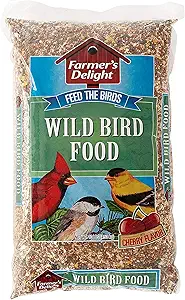
Wagner’s Cherry Wild Bird Seed earns its spot at the top for good reason.
At $12.48 for a 10-lb bag, you’re getting a cherry-flavored blend of sunflower seeds, white millet, and cracked corn that pulls in cardinals, finches, doves, and ground feeders without breaking the bank.
The cherry-scented oil coating is what sets it apart — birds respond to it quickly. It works well in hopper or tube feeders and leaves minimal dust behind.
| Best For | Backyard bird enthusiasts who want to attract a wide variety of species without spending a lot. |
|---|---|
| Price | $12.48 |
| Net Weight | 10 lb |
| Target Species | Cardinals, finches, doves |
| Squirrel Risk | Not addressed |
| All Life Stages | Yes |
| Allergen-Free | Yes |
| Additional Features |
|
- Great value at $12.48 for 10 lbs — keeps your feeder full without constant restocking
- Attracts a solid mix of birds including cardinals, finches, doves, and ground feeders
- Leaves minimal dust and waste behind, so cleanup is easy
- Some buyers have reported finding weevil bugs in the bag
- The cherry flavor isn’t a hit with every species, so results may vary
- Shipping to remote areas can take a while, which could affect freshness
2. Kaytee Wild Bird Nut Fruit Seed
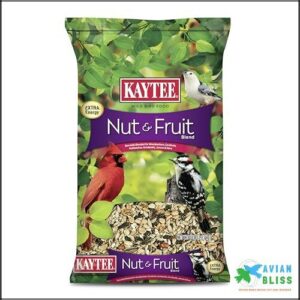
If you want to step things up a notch, the Kaytee Wild Bird Nut Fruit Seed is worth the extra dollar.
At $12.59 for a 5 lb bag, it’s a denser blend — hulled sunflower seeds, shelled peanuts, mixed nuts, raisins, and dried cherries all in one mix.
That combination pulls in cardinals, woodpeckers, chickadees, and nuthatches reliably.
The added fruit pieces give foraging birds something to work with, and the elevated fat content helps during colder months when birds need it most.
| Best For | Backyard birdwatchers who want to attract a wide variety of songbirds and don’t mind paying a bit more for a premium, fruit-and-nut blend. |
|---|---|
| Price | $12.59 |
| Net Weight | 5 lb |
| Target Species | Cardinals, chickadees, woodpeckers |
| Squirrel Risk | High |
| All Life Stages | Yes |
| Allergen-Free | Yes |
| Additional Features |
|
- Pulls in a solid variety of birds — cardinals, woodpeckers, chickadees, nuthatches, and more
- The dried fruit and mixed nuts give birds more to forage, which means longer feeder visits
- High fat content is especially useful in winter when birds need the extra energy
- At $12.59 for 5 lbs, it’s pricier than most basic seed mixes
- Squirrels and crows are drawn to it too, so you may need a squirrel-proof feeder
- Ingredient ratios can vary bag to bag, which might disappoint birds like blue jays who are picky about peanuts
3. Wagners Songbird Banquet Bird Seed
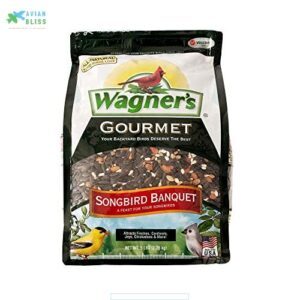
no‑fuss option that still delivers, Wagner’s Songbird Banquet covers a lot of ground.
The 5 lb bag runs $12.98 and packs black oil sunflower, striped sunflower, peanuts, safflower, and tree nuts into one ready‑to‑pour mix.
That combination accommodates both small beaks like chickadees and larger visitors like cardinals or jays without any guesswork.
The high fat and protein content keeps birds coming back through winter.
Fair warning — squirrels find it just as appealing, so a baffle is a smart add.
| Best For | Backyard bird watchers who want one bag that attracts a wide mix of songbirds without having to build their own blend. |
|---|---|
| Price | $12.98 |
| Net Weight | 5 lb |
| Target Species | Chickadees, cardinals, jays |
| Squirrel Risk | High |
| All Life Stages | Not specified |
| Allergen-Free | No |
| Additional Features |
|
- Pulls in both small and large beaked birds, so you get real variety at the feeder
- High fat and protein content keeps birds fueled through winter and breeding season
- Pre-mixed and ready to pour — no measuring or combining required
- Black oil sunflower dominates the mix, so variety isn’t as broad as it looks
- A little pricey compared to generic blends, especially if you refill often
- Squirrels love it too, so you’ll likely need a baffle or squirrel-proof feeder
4. Kaytee All American Wild Bird Seed
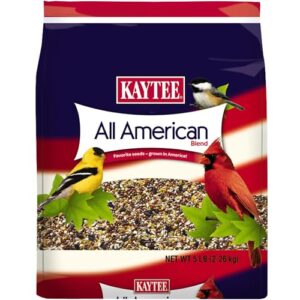
If you’re after something more straightforward, Kaytee All American Wild Bird Seed keeps things simple without sacrificing results. Its grain-and-sunflower base, boosted with Vitamin A, Vitamin D3, and calcium carbonate, gives common backyard visitors — cardinals, finches, sparrows — the nutritional support they actually need year-round.
The allergen-free formula works across hopper, tray, and ground feeders, so setup isn’t complicated.
One thing to note: there’s some filler dust, which means a little extra cleanup around the feeder.
| Best For | Casual backyard bird watchers who want a reliable, no-fuss seed blend that attracts a wide variety of common birds year-round. |
|---|---|
| Price | Not listed |
| Net Weight | 5 lb |
| Target Species | Cardinals, blue jays, finches |
| Squirrel Risk | Not addressed |
| All Life Stages | Not specified |
| Allergen-Free | Yes |
| Additional Features |
|
- High black oil sunflower content keeps cardinals, finches, and sparrows coming back regularly
- Added vitamins and calcium carbonate give birds real nutritional value, not just filler
- Works in hopper, tray, and ground feeders with low spoilage even in light moisture
- Contains some filler dust, so expect a bit more cleanup around the feeder
- Costs more than basic bulk seed, which adds up fast at busy feeding stations
- Not tailored for specialty or rare species — you’ll mostly attract common backyard birds
5. Audubon Park Cardinal Bird Seed
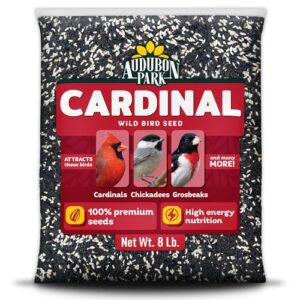
Audubon Park Cardinal Bird Seed keeps it focused—black oil sunflower and safflower, nothing else.
That tight ingredient list is actually the point.
A simple mix of high-fat seeds goes a long way in cold weather, as these seasonal bird feeding and feeder tips explain.
Safflower’s natural bitterness works as a quiet squirrel deterrent, so you’re not constantly chasing them off.
Cardinals, grosbeaks, and chickadees handle the rest.
It works in hopper, tray, platform, and tube feeders, making it flexible for most setups.
The trade-off is a higher price tag, but less waste and fewer squirrel headaches often balance that out.
| Best For | Backyard birders who want to attract cardinals and songbirds without constantly fighting off squirrels. |
|---|---|
| Price | Not listed |
| Net Weight | 8 lb |
| Target Species | Cardinals, grosbeaks, chickadees |
| Squirrel Risk | Low (safflower deters) |
| All Life Stages | Yes |
| Allergen-Free | No |
| Additional Features |
|
- Just two clean ingredients—no filler seeds that birds toss aside and waste
- Safflower naturally discourages squirrels, so you’re not babysitting the feeder
- Works with pretty much any feeder you already own—hopper, tray, tube, platform
- Costs more than your average big-bag seed mix
- Species that love corn or millet won’t be as interested
- Safflower slows squirrels down but won’t stop the determined ones
6. Pennington Wild Finch Bird Seed
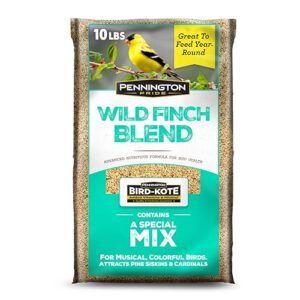
Pennington Wild Finch Bird Seed earns its spot if your backyard regulars lean toward goldfinches, purple finches, and pine siskins.
The blend combines nyjer, white proso millet, sunflower chips, and canary grass seed — small seeds that finches naturally gravitate toward.
What sets it apart is the BIRD-KOTE coating, which adds vitamins A and D-3 plus potassium iodide for genuine nutritional support, not just marketing.
At $15.99 for 10 lbs, it fits a reasonable budget and works in tube, hopper, and gazebo feeders without modification.
| Best For | Backyard bird watchers who want to attract finches, pine siskins, and other small songbirds with a nutrient-enriched seed mix. |
|---|---|
| Price | $15.99 |
| Net Weight | 10 lb |
| Target Species | Finches, siskins, cardinals |
| Squirrel Risk | High |
| All Life Stages | Yes |
| Allergen-Free | No |
| Additional Features |
|
- The BIRD-KOTE coating adds real vitamins and minerals — it’s actual nutritional support, not just a gimmick.
- Works with tube, hopper, and gazebo feeders, so no extra equipment needed.
- At $15.99 for 10 lbs, it’s a solid value for year-round feeding without constant restocking.
- Some finches and sparrows may pick around the smaller black seeds, leaving waste behind.
- Ingredient listings have been inconsistent — some bags contain whole black-oil sunflower seeds that aren’t listed on the label.
- The mix can pull in squirrels and other backyard crashers, so you may need a deterrent to keep things bird-only.
7. More Birds Abundance Bird Feeder
More Birds Abundance blend leans into what backyard birds actually need — black oil sunflower seeds, nuts, and dried fruits that deliver real caloric value across seasons.
It’s not filler-heavy, which means less mess under your feeder and more birds returning consistently. The mix suits year-round feeding well, attracting cardinals, chickadees, and woodpeckers without requiring you to stock multiple specialty bags.
If you want a reliable all-in-one option that pulls genuine variety to your yard, this one earns its shelf space.
| Best For | Backyard birders who want to attract a wide variety of birds year-round without constantly refilling or swapping out multiple feeders. |
|---|---|
| Price | Not listed |
| Net Weight | 3.5 lb capacity |
| Target Species | Finches, chickadees, cardinals |
| Squirrel Risk | High |
| All Life Stages | N/A |
| Allergen-Free | N/A |
| Additional Features |
|
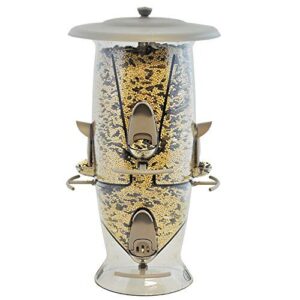
- Six adjustable ports let multiple birds feed at once, and you can tweak perch size to favor smaller species like finches and chickadees
- The "Stay Full" baffle system keeps seed flowing to every port even as the reservoir empties, so birds don’t get shut out between refills
- Splits completely in half for a proper deep clean, which cuts down on mold and bacteria buildup
- Squirrels can lift the lid or pry off port pieces, so if your yard has active squirrel traffic, you’ll need a separate deterrent
- A few buyers have received units with missing port covers or a cracked top right out of the box
- The adjustable perch arms are a bit thin and can wear down with heavy, repeated use over time
8. iBorn Metal Six Port Bird Feeder
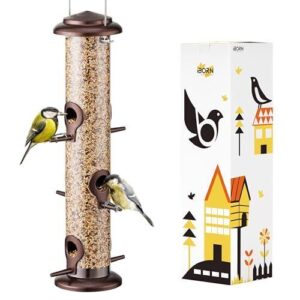
The iBorn Metal Six Port Bird Feeder isn’t just a place to put seed — it’s a small hub of activity. Six ports mean multiple birds feed at once, cutting down on the pecking-order chaos that single-port feeders create.
The all-metal aluminum build with a coffee-powder coating withstands outdoor wear without rusting, and squirrels can’t chew through it easily. The flip-top lid and transparent compartment make refilling and monitoring quick, so you spend less time fussing and more time watching.
| Best For | Bird-watching enthusiasts who want to attract multiple small songbirds — like chickadees, finches, and nuthatches — to their garden year-round. |
|---|---|
| Price | Not listed |
| Net Weight | Not specified |
| Target Species | Chickadees, finches, nuthatches |
| Squirrel Risk | Moderate |
| All Life Stages | N/A |
| Allergen-Free | N/A |
| Additional Features |
|
- Six feeding ports let several birds eat at the same time, so there’s less fighting over spots
- All-metal build with rust-resistant coating holds up outside and keeps squirrels from chewing through it
- Flip-top lid and clear seed compartment make refilling and checking seed levels quick and easy
- Not fully squirrel-proof — they can still get into the top or snag seeds off the ground
- Small perches mean larger birds can’t really use it comfortably
- Seeds can get stuck near the bottom of the compartment, so you may not get full use out of every fill
9. Pennington Pride Songbird Nut Fruit Seed
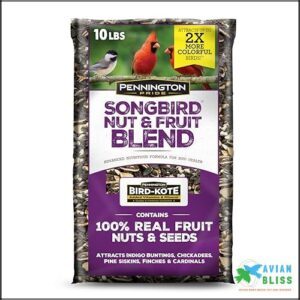
Think of this blend as a full meal rather than a snack. Pennington Pride Songbird Nut Fruit Seed packs black oil sunflower, safflower, peanuts, raisins, and dried cherries into one 10 lb bag — covering fat, protein, and natural sweetness in a single pour.
The BIRD-KOTE vitamin enrichment adds A, D-3, and potassium iodide for plumage and bone support you won’t find in basic mixes. It works across hopper, gazebo, and tray feeders, though you’ll want to watch for occasional debris in the bag.
| Best For | Backyard birders who want to attract a wide variety of songbirds and don’t mind paying a little more for a nutrient-rich, vitamin-fortified blend. |
|---|---|
| Price | $19.97 |
| Net Weight | 10 lb |
| Target Species | Buntings, chickadees, cardinals |
| Squirrel Risk | High |
| All Life Stages | Not specified |
| Allergen-Free | No |
| Additional Features |
|
- Packed with real fruit, nuts, and seeds — a genuinely varied mix that draws cardinals, finches, chickadees, and more
- BIRD-KOTE enrichment adds vitamins A and D-3, so you’re not just feeding birds, you’re supporting their health
- Works with most common feeder styles and the spent shells can double as garden mulch
- Some bags contain noticeable debris like twigs and bark mixed in with the seed
- At $19.97 for 10 lbs, it’s pricier per pound than basic seed mixes
- Squirrels love it too, so you’ll want a squirrel-proof feeder to get the most out of it
10. Morning Song Shell Free Bird Seed
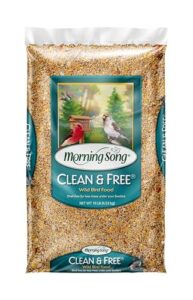
No shells means no mess — and Morning Song leans hard into that promise. This 10 lb blend packs sunflower chips, peanuts, white proso millet, canary seed, and cracked corn into a fully edible mix that works across tube, hopper, tray, and platform feeders.
Chickadees, cardinals, finches, nuthatches, and grosbeaks all find something worth staying for.
The protein-rich peanuts and fat-dense sunflower chips carry birds through cold snaps especially well.
Store it sealed and cool, and it stays fresh well into the season.
| Best For | Bird watchers who want a low-mess, high-variety seed blend that draws a wide mix of backyard species without the hassle of shell cleanup. |
|---|---|
| Price | $19.24 |
| Net Weight | 10 lb |
| Target Species | Finches, cardinals, nuthatches |
| Squirrel Risk | Not addressed |
| All Life Stages | Yes |
| Allergen-Free | No |
| Additional Features |
|
- No shells means no mess on the ground or in your feeder — way less cleanup.
- Protein-packed peanuts and sunflower chips give birds real fuel, especially in cold weather.
- Works with almost any feeder style, so you’re not locked into one setup.
- Some birds skip the red millet, so you may end up with leftover seed on the ground anyway.
- The cost adds up fast if you’re running a high-traffic feeder setup.
- Packaging can be awkward to open, and spillage during refills is a real possibility.
Choosing Mixes by Bird Species
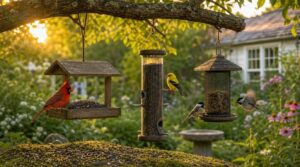
different birds want different things, and knowing that changes everything about how you stock your feeders.
A cardinal won’t compete with a goldfinch for the same seed, and that’s actually good news for you.
Here’s how to match the right mix to the birds you want visiting your yard.
Cardinals and Sunflower Seeds
If there’s one bird that rewards a little extra attention, it’s the cardinal.
Black oil sunflower seeds are their clear favorite — thin shells, high fat content, and solid nutrition for cardinals through every cold snap. Hulled sunflower hearts skip the mess entirely.
Cardinals rely on high‑fat seed energy during winter months to sustain activity. The Audubon Park Cardinal Blend delivers exactly this, making it the best cardinal wild bird seed mix for winter feeding strategies.
Finches and Nyjer Seed
Finches are wired differently than cardinals — they zero in on Nyjer seeds with single-minded focus. That sky-high Nyjer oil content, roughly 40% per seed, delivers the migration energy boost finches need during peak travel and molt.
The Pennington Pride Wild Finch Blend makes finch feeding straightforward.
For Nyjer storage tips, keep thistle seeds cool and dry; they spoil faster than most. Tube feeders or mesh socks work best as finch-friendly Nyjer seed dispensers.
Chickadees and Sunflower Chips
Chickadees take a different approach than finches — their foraging skills are built for speed and precision. These birds favor hulled black oil sunflower seeds because cracking whole shells wastes energy they can’t afford in winter. That high energy fat content gives them a real winter energy boost during cold mornings.
Their urban feeding habits and natural caching strategies reduce seed waste noticeably, making tube feeders and platform setups equally effective here.
Juncos and White Millet
Dark-eyed juncos are classic ground foraging birds — they don’t visit hanging feeders much.
Scatter white millet directly on the ground or in a shallow tray, and they’ll show up fast.
Their winter survival strategies depend heavily on small, easy-to-husk seeds with solid nutritional profiles.
- White proso millet is the clear seed preference for juncos
- Ground feeding birds benefit from early morning millet placement
- Millet’s B vitamins and phosphorus support cold-weather health
Woodpeckers and Peanuts
Woodpeckers rely on energy-dense ingredients like peanuts to get through cold snaps, and their peanut caching habits mean they’ll return to reliable feeders regularly. Offer a nut and seed-rich mix with a high-protein formula across platform or suet-style setups, and consider squirrel-proof peanut feeders to protect your supply.
Peanut butter feeds work well on log surfaces too — just keep everything fresh to avoid aflatoxin risks.
Key Ingredients Worth Buying
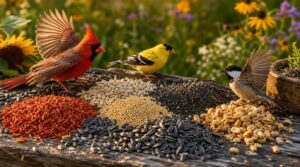
Not all seeds pull equal weight for attracting a steady crowd of birds. Some ingredients do most of the heavy lifting — drawing in more species, discouraging squirrels, and keeping your feeder busy through every season.
Here’s a closer look at the ones worth adding to your mix.
Black Oil Sunflower Seeds
Black oil sunflower seeds are the backbone of almost every quality wild bird mix — and for good reason. These oil‑rich seeds pack 40–50% fat content with thin shells that nearly any backyard bird can crack open.
Black oil sunflower seeds lead every quality bird mix — 40–50% fat, thin shells, and nearly universal appeal
Their energy density comparison to other seeds is striking.
- High oil content fuels birds through cold nights
- Thin shells suit small birds like chickadees and nuthatches
- Antioxidant health benefits from vitamin E support plumage condition
- Natural pest resistance makes them a clean, low-waste option
Nyjer for High Energy
Nyjer seeds are about as energy-dense as it gets for small birds. With roughly 35–40% oil by weight, these tiny powerhouses fuel finches and goldfinches through cold snaps and migration stopovers alike.
Their Tiny Seed Efficiency means minimal waste at feeders.
They also deliver Nyjer Antioxidant Boost benefits, Juvenile Growth Fuel for late-summer fledglings, and Egg Production Support in spring — just keep Summer Storage Tips in mind and store them cool and dry.
Safflower for Squirrel Deterrence
Safflower’s Bitter Chemistry is its secret weapon — squirrels find the taste genuinely off‑putting, so they’ll usually move on without much fuss. That makes it one of the most reliable squirrel deterrent methods you can use.
Its Cardinal Compatibility is strong, and Deterrence Longevity holds across seasons.
Choose pure safflower for maximum Purity Impact, and Regional Success follows naturally.
Peanuts and Tree Nuts
Peanuts punch above their weight as a protein-dense option — roughly 25 grams of protein per 100 grams makes them a cornerstone of any high protein diet for winter birds.
A nut and seed-rich mix like Kaytee Nut Fruit Wild Bird Seed delivers those nutritional benefits reliably.
Mind storage practices to prevent rancidity, and note allergen risks if household sensitivities apply.
Fruit Blends for Variety
Fruit brings something different to the feeder — dried fruits like raisins, cherries, and cranberries give birds a quick fruit energy boost, especially during active feeding windows. Kaytee Nut Fruit Wild Bird Seed blends this fruit ingredient variety into a balanced nut and seed‑rich mix that broadens your feeder traffic considerably.
Three reasons to add fruit blends:
- Wider appeal — custom fruit mixes attract cardinals, grosbeaks, and woodpeckers simultaneously.
- Seasonal fruit rotations keep offerings fresh and matched to local species cycles.
- Exotic fruit options like juniper berries transform premium seed mixes beyond the ordinary.
Matching Seeds to Feeders
The right feeder makes a bigger difference than most people realize. Different seeds flow, dispense, and attract birds best when paired with the feeder style they were designed for.
Here’s how the most common feeder types match up with the seeds you’re already buying.
Hopper Feeders for Blends
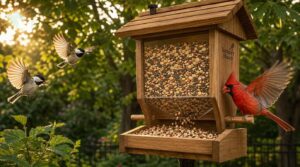
Hopper feeders are the workhorses of any backyard setup, and for good reason. Their Durable Builds and Flow Control mechanisms handle a nut- and seed‑rich mix without clogging, making feeder compatibility almost seamless.
Cleaning Ease and Squirrel Defense features keep things running smoothly season after season.
| Hopper Innovations | Blend Benefit |
|---|---|
| Gravity-fed outlet | Steady high energy seed flow |
| Weight-activated mechanism | Squirrel Defense built in |
| Adjustable dispensing port | Accommodates any seed mix size |
| Easy-disassembly design | Cleaning Ease between fills |
| UV-resistant hopper housing | Durable Builds that last |
Tube Feeders for Nyjer
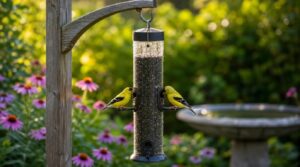
While hopper feeders handle bulky mixes well, tube feeders are built for something far more precise.
Nyjer’s tiny seed size demands narrow ports — usually 1 to 2 mm — where Port Size Importance becomes obvious: too wide and seed spills fast.
UV-Resistant Materials and Seed Flow Control keep things tidy, while Finch Perching Design places goldfinches perfectly.
Clear tubes support Mold Prevention Methods by making seed freshness visible at a glance.
Platform Feeders for Nuts
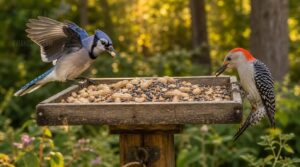
tube feeders excel at precision, platform feeders open things up for bigger visitors.
Blue jays and woodpeckers gravitate naturally toward flat, open surfaces loaded with a nut and seed-rich mix. Weatherproof materials and anti-waste innovations keep things clean and functional through any season.
Compartment design benefits every visit:
- Dividers guide foraging behavior insights into balanced feeding.
- Predator avoidance setup improves with open sightlines.
- Feeder compatibility expands across nut varieties.
Six-port Feeder Benefits
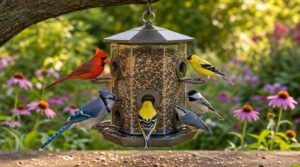
Where platform feeders open things up, a six-port feeder brings order back.
Six ports give you Dedicated Seed Channels for true Multi-Species Access — cardinals at sunflower, finches at Nyjer, no competition.
Individual Port Cleaning keeps hygiene simple, and Adjustable Seed Dispensing lets you swap blends seasonally.
Weather-Resistant Design and a Stay Full Port System mean fewer refills, better feeder compatibility overall.
No-mess Feeder Setups
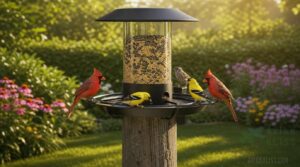
No-mess feeder setups are honestly a breakthrough for keeping your yard clean without constant maintenance.
A seed containment tray alone cuts floor cleanup by up to 70 percent, and pairing it with a shell-free seed mix eliminates hull debris entirely.
Smart feeder tech like gravity-fed systems and port-controlled dispensing manages seed spillage reduction naturally, while cost-effective models with eco-friendly materials make mess‑free bird food accessible for any budget.
Seasonal Feeding and Freshness
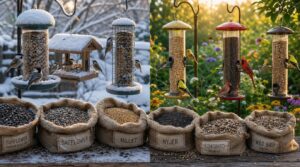
Birds don’t eat the same way in January as they do in July, and your feeding setup should reflect that.
Freshness matters just as much as what’s in the bag, especially when heat and humidity can quietly ruin a good seed mix.
Here’s what to know about keeping your feeders stocked right through every season.
Winter High-fat Blends
Cold weather hits birds hard, and that’s where high fat winter seed earns its keep. Quality premium seed mixes built around black oil sunflower seeds and peanut kernels hit 40–60% fat content — serious fuel for serious cold.
Fat Optimization and Vitamin Fortification work together here, while varied Foraging Textures slow feeding and support Climate Adaptation.
Watch for Rancidity Prevention: rotate energy-dense ingredients every 60–90 days.
Migration Energy Support
Migration pulls serious energy from birds — and timing your feeders around Pre-migration Timing windows makes a real difference. Fatty Acid Profiles in black oil sunflower seeds and suet blends deliver Metabolic Fuel Sources that birds tap before long flights. Electrolyte Balance matters too, since dehydration quietly undermines endurance.
Stock these migration energy needs essentials:
- Suet Blend Benefits: concentrated fat calories for dawn departures
- Energy-dense ingredients like peanut chips for muscle recovery
- High-fat winter seed mixes bridging seasonal transitions
- Migration support blends with controlled salt for Electrolyte Balance
Summer Mold Prevention
Summer heat turns your feeder into a mold incubator fast.
Humidity Control starts with keeping indoor seed storage between 40–50% relative humidity, while Airflow Strategies — like placing feeders in shaded, well‑ventilated spots — slow moisture‑elimination challenges outdoors.
Practice Seed Drying before refilling, swap out clumped seed immediately, and commit to weekly Feeder Sanitization.
That routine is your best humid climate mold prevention plan.
Airtight Seed Storage
Good seed storage is half the battle. Use airtight containers — glass jars, BPA‑free plastic, or stainless steel canisters, all work well as container types.
Tuck in desiccant packs to keep humidity below 20%, and consider vacuum storage for long‑term seed longevity.
Stable temperatures and darkness do the rest.
Smart seed moisture control means fresher seed, healthier birds, and less waste at the feeder.
Buying Guide for Hobbyists
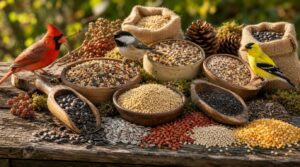
Picking the right bird seed mix comes down to a few practical decisions that make a real difference in who shows up at your feeder.
Before you buy, it helps to think through what you actually want — which birds, how much cleanup you’re willing to do, and what fits your budget. Here’s what to think about as you work through your options.
Species Attraction Goals
Start by asking yourself birds you actually want in your yard.
Cardinals flock to black oil sunflower seeds, while finches won’t settle for anything but nyjer seeds.
Each species follows distinct habitat preferences and reacts to visual auditory cues from nearby conspecifics — a natural conspecific attraction that shapes foraging behavior.
Matching your seed choice to a target species reduces competition and brings the right visitors consistently.
Shell-free Versus Traditional Mixes
Once you’ve narrowed down your target species, the next call is choosing between a shellfree seed mix and a traditional blend.
Shell-free options offer higher energy density, easier feeder compatibility, and a no mess cleanup — though their shelf life is shorter and the cost comparison tends slightly higher.
Traditional mixes store longer but can cause feeder clogging over time.
Budget and Bag Size
Cost Comparisons get clearer once you know your feeder traffic. A 5 lb bag suits casual setups, but bulk purchasing unlocks real Bulk Savings — cost per pound drops noticeably at 35 pounds of seed or more.
- A 10lb bag usually balances Freshness Balance and value best.
- Storage Costs rise with larger quantities if conditions aren’t controlled.
- Shipping Impact can erase bulk discounts on online orders.
Waste Reduction Benefits
Buying in bulk helps, but Bulk Purchasing only pays off when you’re also cutting waste on the other end.
shellfree seed mix eliminates seed fallout and feeder waste reduction becomes almost automatic.
Try a no mess blend, commit to Seed Rotation every four to six weeks, and consider Composting Scraps or Community Donations for leftovers.
Don’t overlook Packaging Recycling either.
Squirrel-resistant Seed Options
Squirrels are persistent, but the right seed works against their foraging habits.
Safflower’s thick seed coat barriers and bitter taste make it a natural deterrent, and Nyjer’s tiny size does the same.
Spicy seed blends use capsaicin to discourage mammals without bothering birds.
Wild Delight Squirrel Away and Kaytee No Mess Premium Mix are solid squirrelproof picks using natural bitter seeds and regional resistance strategies built in.
Frequently Asked Questions (FAQs)
What is the best bird seed mix for small birds?
Regarding small birds, black oil sunflower seeds, nyjer seeds, and millet hit the sweet spot.
Finches, chickadees, and warblers all respond well to energy-rich mixes with high nutrient density and easy feeder access.
Why put a potato in your bird feeder?
Cooked potatoes offer a surprising energy boost — starchy, vitamin-rich, and easy to prepare safely.
Dice them small, skip the salt, and place near ground feeders to attract doves and foraging birds.
How do I attract multiple species simultaneously?
variety of seeds — sunflower, nyjer, millet, and safflower — at different feeder heights,
and you’ll naturally draw cardinals, finches, sparrows, and chickadees without any single species crowding the others out.
Can I mix different seed types together?
Yes, you can mix different seed types together.
Combining black oil sunflower, nyjer, and safflower in a custom blend boosts species diversity while keeping nutritional balance and spoilage prevention in mind.
Which seeds are safe for ground-feeding birds?
White proso millet, cracked corn, and sunflower chips are your safest ground seed options.
They match foraging bird preferences naturally, resist mold buildup quickly, and suit the seed size impact ground-feeding birds need.
How do weather conditions affect seed quality?
Weather, warmth, and wetness all quietly compromise seed quality.
Heat stress impacts oil content, rain‑induced mold threatens stored blends, humidity seed damage accelerates spoilage, and drought seed viability drops — making temperature and humidity control essential for seed longevity.
Are homemade seed blends effective for wild birds?
Homemade blends absolutely work. You control the ingredients, skip fillers, and tailor ratios to local species.
Fresh custom mixes also retain better nutritional profiles than many store-bought options sitting on shelves.
Conclusion
Studies show that feeders stocked with high-quality seed attract up to 40% more bird species than those filled with generic mixes.
That kind of difference isn’t luck—it’s the result of matching the right ingredients to the birds already visiting your yard.
Choosing the best bird seed mixes for hobbyist bird enthusiasts comes down to knowing what each species actually needs.
Get that right, and your backyard stops being a pit stop and becomes a destination.