This site is supported by our readers. We may earn a commission, at no cost to you, if you purchase through links.
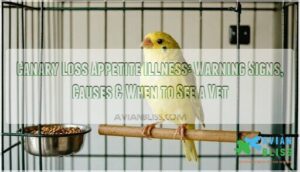 When your canary stops eating, it’s usually the first warning sign of illness and requires immediate attention. A healthy canary consumes 15-20% of its body weight daily, so any sudden rejection of favorite seeds or treats signals trouble. You’ll notice sick birds stop actively cracking seeds, fluff their feathers, and show changes in posture or breathing.
Stress from environmental changes, infections, parasites, or nutritional deficiencies commonly trigger this canary loss appetite illness. Unlike humans who might skip meals casually, birds can’t afford to fast—their high metabolism means appetite loss lasting over 24 hours becomes dangerous quickly.
There’s a specific technique for evaluating whether your bird needs emergency care.
Table Of Contents
Key Takeaways
- Monitor your canary’s eating habits daily – You’ll catch appetite loss within 24 hours since healthy canaries consume 15-20% of their body weight daily, and any sudden rejection of favorite foods signals trouble.
- Watch for early warning signs beyond appetite changes – Look for fluffed feathers, breathing difficulties, posture changes, and reduced activity levels that often appear before complete food refusal occurs.
- Act quickly when appetite loss occurs – You can’t afford to wait since your canary’s high metabolism makes fasting dangerous after just 24 hours, requiring immediate veterinary attention.
- Prevent illness through proper care and environment – Reduce appetite loss risks by maintaining cage hygiene, providing balanced nutrition with seed variety, and creating a calm, stress-free environment.
Why is My Canary Not Eating?
A canary that suddenly stops eating often signals an underlying health issue that requires immediate attention. Understanding the difference between normal appetite fluctuations and concerning changes can help you respond quickly to protect your feathered friend’s wellbeing.
Normal Vs. Concerning Appetite Changes
Canaries naturally experience appetite fluctuations throughout the day, but recognizing illness requires monitoring specific eating patterns. Normal appetite varies with seasonal changes, molting periods, and daily routines.
Appetite changes in canaries signal the difference between normal daily rhythms and serious health concerns requiring immediate action
- Daily eating patterns: Healthy canaries eat small amounts frequently, consuming 15-20% of their body weight daily
- Weight monitoring: Weekly weigh-ins help detect gradual appetite changes before they become concerning
- Food preferences: Sudden rejection of favorite seeds or treats often signals underlying health issues
- Behavioral eating cues: Normal canaries actively crack seeds, while sick birds may just pick at food
- Duration matters: Loss of appetite lasting more than 24 hours requires immediate veterinary attention
Watch for concerning canary symptoms like reduced tail movement, fluffed feathers, or sitting at the cage bottom—these red flags distinguish normal appetite loss from serious illness requiring prompt intervention.
Early Signs of Illness in Canaries
Beyond obvious appetite changes, watch for subtle shifts that signal trouble. Feather abnormalities like fluffing or dullness, breathing difficulties, eye discharge, and posture changes reveal early illness. These canary symptoms often appear before complete loss of appetite.
Your bird might seem slightly "off" – perhaps perching differently or showing less interest in surroundings. Recognizing illness early makes intervention more effective, preventing minor issues from becoming serious health crises.
Behavioral Clues to Watch For
Watch your canary’s activity levels closely—healthy birds stay active throughout the day. Vocalizations changes signal trouble; males who stop singing or birds making unusual sounds need attention. **Feather plucking often indicates stress or illness.
**
Social isolation from their usual perch spots suggests discomfort. **Disrupted sleep patterns, excessive rest, and changes in feces consistency accompany loss of appetite.
** Early intervention prevents serious health issues.
Common Causes of Appetite Loss in Canaries
Understanding why your canary won’t eat requires looking at several potential triggers that can disrupt their normal feeding patterns. Common culprits include stress from environmental changes, infectious diseases, parasitic infestations, and nutritional deficiencies that can quickly turn a healthy bird into a worried pet owner’s concern.
Stress and Environmental Changes
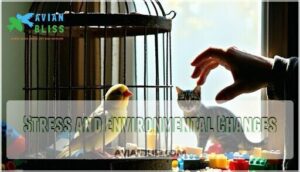
If you’ve noticed canary appetite changes, don’t overlook environmental changes. Loss of appetite concerns often start with stress from
- Sudden Relocation
- Loud Noises
- New Pets
Temperature Fluctuations and poor Cage Placement can also upset your bird’s routine. Early intervention and supportive care suggestions can help your canary feel safe and settle back into their normal eating habits.
Infectious and Contagious Diseases
If your bird’s appetite drops off suddenly, infectious and contagious diseases might be the culprit. Bacterial infections, viral outbreaks, and fungal diseases can hit fast, causing lethargy and food refusal. Disease prevention is key—watch for rapid changes and act quickly. One potential cause could be stress and anxiety, often triggered by environmental changes.
Here’s a table showing common symptoms linked to canary disease:
Parasitic Infestations
If your canary’s appetite drops, parasites could be the culprit. Mite identification is key, as these pests cause feather damage, itching, and secondary infections. Lice treatment and prevention methods help keep things under control. Look for:
- Patchy feathers or skin redness
- Persistent scratching or restlessness
- Labored breathing in severe cases
Treating diseases early prevents long-term canary disease.
Nutritional Deficiencies

If you’re relying on seed-only diets, your canary may face Vitamin Deficiencies or Mineral Imbalance, which can quickly sap its appetite. Nutritional deficiencies are common health issues that lead to diseases.
To prevent this, offer fortified foods and consider dietary supplementation. A proper diet keeps your pet healthy, alert, and singing—not silently suffering from lack of nutrition.
Illnesses Linked to Appetite Loss
You’ll notice your canary’s appetite drops when certain illnesses affect its body, such as respiratory infections or digestive problems. It’s important to recognize these health issues early, so you can get your bird the right care before symptoms get worse.
Respiratory Infections
Stress isn’t the only culprit—respiratory infections can sneak up fast. Watch for Pneumonia Symptoms and Air Sac Mites, which cause breathing trouble and appetite loss. Aspergillosis and Sinus Infections also trigger changes in Canary Health. Here’s what to look for:
- Labored breathing
- Fluffed feathers
- Watery eyes
- Reduced singing
Explore Treatment Options to address these diseases.
Digestive and Liver Disorders
Ever wondered why your canary’s appetite suddenly drops? Digestive and liver disorders like Liver Hemochromatosis, Malabsorption Issues, Toxin Exposure, and Organ Failure can cause diarrhea, constipation, or odd-smelling feces. Spotting these signs early helps. If symptoms persist, consult an avian veterinarian for guidance.
| Symptom | Possible Cause |
|---|---|
| Diarrhea | Malabsorption |
| Constipation | Organ Failure |
| Odd feces | Liver Hemochromatosis |
| Appetite loss | Toxin Exposure |
Avian Gastric Yeast and Trichomoniasis
Amid cage routines, yeast symptoms like weight loss, undigested seeds in feces, and Trichomoniasis lesions—those yellow mouth patches—signal real trouble. Here’s what to watch for:
- Reduced appetite or weight loss
- AGY Diagnosis with lab tests
- Difficulty swallowing or drooling
- Quick care: Treating Trichomoniasis and follow all preventative measures with an avian veterinarian’s guidance.
Birds may also experience frequent watery droppings, indicating potential digestive issues.
Other Common Canary Diseases
Switching gears from yeast infections, let’s talk about other diseases that can confuse even seasoned bird owners. Watch for symptoms like Feather Problems, Beak Deformities, or classic Bumblefoot. Egg Binding and Heavy Metal exposure also threaten appetite and health. It’s also important to be aware of common respiratory diseases in canaries, such as pneumonia. Quick veterinary care can prevent small issues from becoming big health problems—keep a close eye on your canary.
| Disease | Key Symptom | Urgency |
|---|---|---|
| Bumblefoot | Swollen feet | High |
| Egg Binding | Loss of appetite | Very High |
| Feather Problems | Patchy feathers | Moderate |
How to Assess Your Canary’s Health
You can spot health problems early by watching your canary’s appearance, droppings, and daily habits. Knowing what’s normal for your bird helps you act fast if you notice any worrying changes.
Physical Symptoms to Monitor
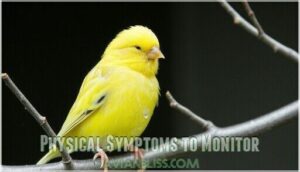
When checking your canary’s health, look for Feather Changes, Breathing Difficulties, sudden Weight Loss, Eye Discharge, or Mobility Issues. These physical symptoms can signal appetite loss, diseases, or other Health Problems.
Don’t ignore subtle clues—catching issues early can make a big difference. Quick action and proper veterinary care protect your bird’s well-being in the long run.
Changes in Droppings and Behavior

After checking your canary’s physical symptoms, watch for unusual droppings. Dropping analysis helps spot diseases early—look for changes in color, texture, or frequency of feces.
Notice shifts in behavior, like reduced activity levels or altered vocalization. Dull feather condition or sudden quietness also indicate trouble. Consistent behavioral changes often signal your canary needs supportive care and careful Canary Care.
When to Seek Veterinary Care
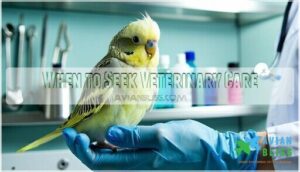
If your canary’s droppings suddenly change or its behavior seems off, you shouldn’t wait and see. Reaching out for specialist referrals gives your bird the best shot at timely, supportive care. Watch for:
- Emergency Symptoms like rapid breathing
- Ongoing loss of appetite
- Signs of new diseases
- Cost considerations versus Diagnostic Urgency
Good canary healthcare is solid preventative care—act fast.
Supporting a Sick or Stressed Canary
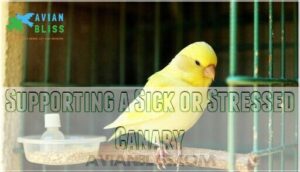
If your canary is sick or stressed, it needs a calm space, fresh water, and gentle care.
You can help it recover by keeping its area peaceful, watching its appetite, and making sure it stays hydrated.
Creating a Calm Environment
One simple way to boost canary healthcare is by creating a calm environment. Reduce stressors by placing the cage in a quiet location and keeping a consistent routine. Secure the cage to avoid sudden frights, and introduce any habitat changes gradually.
Supportive care like this protects against diseases and makes a big difference in your canary’s overall well-being.
Assisted Feeding and Hydration
A tiny syringe can be a lifeline when you’re handfeeding canaries during illness. Assisted feeding and hydration methods support recovery, especially if your bird refuses food or water. Use a high-quality seed mash or soft food, balanced with proper hydration. A balanced diet, including fresh fruits, is essential for maintaining good health.
Monitor progress daily and consult a vet for specialized canary feeding and supportive care, including supplementation options.
- Feeding Techniques
- Hydration Methods
- Nutritional Support
- Recovery Monitoring
Environmental Enrichment for Recovery
After assisted feeding and hydration, it helps to brighten your canary’s spirits with environmental enrichment. Rotate toys, offer foraging opportunities with new foods, and try different cage placement for a fresh view. Gentle auditory stimulation encourages social interaction, while a varied canary diet bolsters health. Recognizing signs of bird stress is key for a canary’s well-being during recovery.
Here’s a quick guide:
| Toy Rotation | Auditory Stimulation | Foraging Opportunities |
|---|---|---|
| Weekly Change | Soft Music or Nature | Scatter Favorite Seeds |
| New Perches | Whistling Sessions | Hidden Treats |
| Puzzle Feeders | Bird Calls | Leafy Greens Mix |
Preventing Appetite Loss and Illness
You can help your canary avoid appetite loss and illness by keeping its food balanced, its cage clean, and watching for early signs of trouble.
With a little attention each day, you’ll give your bird the best chance to stay healthy and energetic.
Proper Nutrition and Diet Variety
Foundation matters when building your canary’s health defenses. A Balanced Diet with high-quality seed or pellets forms the cornerstone, while Fresh Supplements like apples and carrots add essential nutrients.
Consider these essential elements:
- Seed Variety prevents nutritional gaps and boredom
- Vitamin supplement boosts immune system strength
- Mineral Intake through cuttlefish maintains beak health
- Gradual Dietary Changes reduce digestive stress
A diverse selection of seeds ensures complete nutrition; you can even find a preferred seed variety online. Your Canary Diet directly impacts appetite stability and overall wellness.
Cage Hygiene and Maintenance
Maintaining a clean cage prevents disease and keeps your canary healthy. **Clean cage liners and remove feces plus seed hulls every three days.
** Disinfect the entire cage quarterly using bird-safe cleaners. Replace worn perches monthly and rotate toys weekly to prevent bacterial buildup. Consider using a specialized cage cleaner for superior hygiene.
**Daily water sanitation stops harmful microbes from multiplying in your canary’s habitat.
Regular Health Checks and Early Intervention
Before and after each vet visit, you’ll want to establish routine examinations that catch diseases early. Proactive wellness through preventative measures means checking your canary’s weight, feathers, and behavior weekly. Early detection during regular canary care prevents serious illness, making veterinary importance clear when maintaining your canary habitat through consistent canary habitat cleaning and monitoring.
A key indicator can be changes in droppings, which may signal underlying health problems.
Frequently Asked Questions (FAQs)
Can canaries recover from severe appetite loss completely?
Like a wilted flower awaiting spring rain, your canary’s appetite can bloom again with proper care. Canaries can recover completely from severe appetite loss when you identify the underlying cause and provide appropriate treatment promptly.
Do canaries fake illness to get attention?
No, canaries don’t fake illness for attention. Unlike some mammals, birds lack the cognitive complexity to manipulate humans through deceptive behavior. **When you notice changes in your canary’s appetite or activity, it’s genuine illness requiring prompt veterinary care.
Which medications are safest for canary appetite issues?
You’ll want to consult an avian veterinarian immediately for proper medication selection. They’ll usually prescribe antibiotics or antifungals based on diagnostic tests, ensuring safe treatment for your bird’s specific condition.
Can hand-feeding become permanently necessary for some canaries?
Hand-feeding can become a long-term necessity for canaries with chronic conditions like neurological damage or severe digestive disorders.
However, most birds regain normal eating habits once you’ve addressed underlying health issues and provided proper veterinary treatment.
Conclusion
While some dismiss brief appetite changes as normal, even 12 hours without eating signals potential canary loss appetite illness requiring attention. You’ve learned to recognize warning signs like fluffed feathers, breathing changes, and seed avoidance that indicate serious health concerns. Quick action makes the difference between recovery and tragedy.
Monitor your canary’s eating habits daily, maintain proper nutrition and cage hygiene, and don’t hesitate to contact an avian veterinarian when appetite loss occurs**.