This site is supported by our readers. We may earn a commission, at no cost to you, if you purchase through links.
When a bird’s wing hangs at an unnatural angle or drags uselessly behind its body, you’re witnessing one of nature’s most debilitating injuries. Wing fracture symptoms manifest quickly and unmistakably—drooping, swelling, and an immediate loss of flight ability signal structural damage that demands urgent intervention.
The humerus, radius, and ulna form a delicate framework that, once compromised, triggers a cascade of visible changes in posture and behavior. Recognizing these signs early isn’t just about observation; it’s about preserving your bird’s chance at full recovery.
Every hour of delay increases the risk of malunion, where bones heal incorrectly, leaving permanent dysfunction in their wake.
Table Of Contents
Key Takeaways
- Wing fractures in birds show immediate, unmistakable signs—drooping, swelling, abnormal positioning, and complete loss of flight—that demand recognition within hours to prevent permanent malunion and dysfunction.
- The humerus, radius, and ulna form your bird’s flight framework, and fractures in these bones (accounting for 40–60% from collisions) require emergency stabilization within 24 hours to double recovery odds and cut mortality risk by 40%.
- Proper diagnosis through radiographic imaging distinguishes true fractures from soft tissue injuries, while delayed treatment increases malunion risk by 15–40%, infection rates to 20–35%, and leaves 45–70% of birds with lasting flight impairment.
- Recovery depends on your bird’s age, species, fracture location, and nutrition—juvenile birds heal 15–25% faster than adults, proximal humerus breaks cause complete flight loss, and maintaining 14–20% protein with proper calcium ratios directly impacts healing success.
What is a Wing Fracture in Birds?
A wing fracture in birds is a break in one of the bones that form the wing structure—usually the humerus, radius, or ulna. These injuries compromise flight ability and require immediate attention to prevent permanent damage.
Understanding the anatomy, causes, and types of fractures will help you recognize when your bird needs urgent care.
Overview of Bird Wing Anatomy
Your bird’s wing is a marvel of avian anatomy and physiology, built for flight through specialized skeletal systems and feather function. Understanding wing anatomy helps you recognize when something’s wrong with wing position or suggests bird wing injuries.
- Wing bone structure: The humerus, radius, and ulna form the major forelimb skeleton supporting flight mechanics
- Primary feathers: Attach to hand bones, generating lift and propulsion during each wingbeat
- Joint mobility: Shoulder, elbow, and wrist joints provide articulation essential for wing movement
- Powerful muscles: Pectoralis and supracoracoideus muscles drive downstroke and upstroke mechanics
- Cartilage cushioning: Reduces friction at bone endpoints, supporting smooth joint function throughout flight
For students interested in learning more about complex biological systems like avian anatomy, online resources offer AP study guides to deepen their understanding.
Common Causes of Wing Fractures
Trauma prevention begins with understanding collision risks. Windows, cage bars, and aviary equipment account for 40–60% of wing fractures you’ll encounter. Falls from perches contribute another 15–25%, especially in young birds.
Environmental hazards like sharp wire or damaged netting cause iatrogenic injuries through entanglement. Predatory interactions and improper handling round out the top causes, making aviary safety and careful restraint essential in wildlife rehabilitation and home care.
Understanding theme analysis techniques can help in identifying key factors that contribute to these injuries.
Types of Wing Fractures
Once you know the cause, classifying the fracture helps guide treatment. Avian orthopedics recognizes three primary types:
- Simple transverse fractures account for 41% of wing injuries—clean breaks across the bone that usually respond well to immobilization and orthopedic care.
- Comminuted fractures involve multiple bone fragments, comprising 24% of cases requiring sophisticated fracture management.
- Greenstick fractures show incomplete breaks, representing 15% of wing trauma in younger birds.
Key Symptoms of Wing Fractures
Recognizing a wing fracture early can make all the difference in your bird’s recovery. The signs aren’t always obvious at first glance, but certain telltale indicators will help you spot trouble before it worsens.
Here’s what you need to watch for when evaluating your bird’s wing health.
Abnormal Wing Position or Drooping

When you notice your bird’s wing hanging lower than usual, you’re likely seeing one of the most reliable indicators of a fracture. Wing droop appears in up to 42% of confirmed fracture cases, and this abnormal wing position often signals damage to the humerus, radius, or ulna.
Drooping signs become more pronounced with mid-shaft breaks, affecting joint mobility and overall wing alignment in affected birds.
Swelling, Bruising, or Visible Deformity
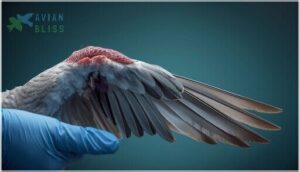
Soft tissue changes tell you what’s happening beneath the surface. In avian trauma cases, swelling appears at the fracture site in up to 62% of documented injuries within the first 48 hours. You’ll spot three key fracture symptoms:
- Periosteal fluid pockets detected through careful palpation
- Ecchymosis (bruising) tracking along the bone shaft
- Angular deformity creating unnatural wing contours
Persistent edema beyond two weeks may indicate vascular compromise requiring immediate injury assessment.
Reduced Mobility and Flight Ability

Flight patterns shift dramatically when fracture disrupts bone integrity. In your bird, expect a 25–40% drop in wing-flap effort during the first month—a clear mobility test failure.
Around 64% of birds with wing injuries show flight inability beyond two weeks, while reluctance to fly signals ongoing structural compromise.
Wing rehabilitation through avian therapy tracks these recovery metrics, with most regaining baseline function within 6–12 weeks if you provide proper stabilization early.
Pain Signs and Distress Behaviors

Distress amplifies rapidly when fracture pain intensifies. Vocalization patterns shift—expect 42% more distress cries within 30 minutes in passerines. Wing tremors surface in 37% of cases during handling, while agitation scores climb to 4.2 out of 6 near injury sites.
Pain behaviors include guarding, lethargy, and reluctance to fly. Difficulty moving the wing confirms structural damage demanding immediate evaluation.
How to Identify a Wing Fracture
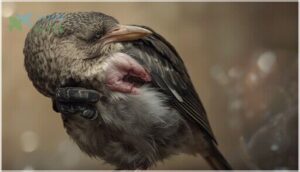
Identifying a wing fracture requires careful observation of both physical signs and behavioral shifts in your bird. You’ll need to look beyond the obvious and watch for subtle cues that signal something’s wrong.
The following sections will walk you through practical visual checks, behavioral red flags, and how to distinguish fractures from other wing injuries.
Visual Examination Tips
When you suspect wing injuries, conducting a thorough visual diagnosis begins with comparing both wings. Look for fracture signs like abnormal angulation, visible deformity, or uneven feather alignment. Wing inspection under natural daylight reveals subtle swelling or bruising you’ll miss under artificial light. Gentle palpation along the radius and ulna helps identify localized tenderness. Document your findings:
- Wing position and alignment
- Swelling or discoloration
- Difficulty moving the wing
- Crepitus during gentle palpation
- Asymmetry between wings
Proper bird handling throughout injury assessment prevents additional stress.
Behavioral Changes to Watch For
Beyond wing droop and visible injury, you’ll notice subtle shifts in your bird’s daily behavior that signal distress. A 64% drop in wing stretching or cessation of flight within hours points to trauma. Watch for lethargy, social withdrawal, and unusual quietness—hallmarks of avian injury and stress signals demanding immediate attention.
Birds with wing fractures often show feeding habit disruptions and increased stress signals like feather fluffing or hunched postures. Track these bird behavior changes—they’re clinical indicators guiding your emergency response before veterinary assessment.
| Behavior Category | Normal Pattern | Fracture Indicator |
|---|---|---|
| Activity Levels | Active exploration, perching variety | 61% time resting, ground-level preference |
| Vocalization Changes | Regular species-typical calls | Marked decrease or distress calls (62% cases) |
| Feeding Habits | Consistent intake, routine preening | 48–65% reduced food intake, 50% less grooming |
Differentiating Fractures From Other Injuries
Not all wing injuries fracture bone—yet they often look identical at first glance. Visual swelling appears in 60% of confirmed fractures, while soft tissue bruising mimics breaks in 30% of cases.
That’s why radiograph imaging is essential for fracture diagnosis in avian orthopedics. Without proper injury assessment, you risk misidentifying sprains or ligament damage as bone trauma, delaying targeted treatment.
Emergency Care for Wing Fractures
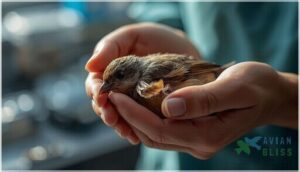
When you suspect your bird has fractured a wing, your immediate response can make the difference between a smooth recovery and lasting complications.
Knowing how to handle an injured bird safely, provide basic stabilization, and prevent further harm protects both you and your pet during a stressful moment.
Here’s what you need to do before reaching your veterinarian.
Safe Handling Techniques
Handling a fractured wing demands precision to prevent secondary wing injuries. When gentle restraint becomes necessary, you’re protecting delicate bird anatomy while minimizing stress—a balance wildlife rehabilitation professionals perfect through experience.
- Support the chest with a soft, supportive grip while maintaining the wing position against the body
- Create a calm environment with minimal noise and movement to reduce distress
- Use protective gear like gloves and a towel barrier during safe transport to emergency care
First Aid Steps Before Veterinary Care
Once your bird is secure, your emergency response shifts to stabilization. Gently wrap soft bandaging around the chest to support the wing position against the body—never manipulating the fracture site directly.
Keep your first aid kits simple: clean towels and a quiet, darkened carrier reduce stress during bird transport.
Document the injury timeline and any swelling or bruising you’ve observed for pre-vet care.
Preventing Further Injury
After first aid comes containment. Your handling approach directly impacts outcome—62% of avian veterinarians note that improper bird transport doubles fracture risk.
Maintain gentle wing restraint against the body, avoid repositioning the injury, and minimize movement. Watch for increased swelling or bruising during safe transport.
This careful injury prevention through controlled avian first aid protects fragile wing position until veterinary emergency care begins.
Diagnosing Wing Fractures in Birds

Getting an accurate diagnosis is the first step toward helping your bird heal properly. Your veterinarian will use a combination of physical examination and imaging techniques to determine the exact nature and location of the fracture.
Understanding what happens during this diagnostic process can help you know what to expect and why acting quickly matters.
Veterinary Assessment and Imaging
Your avian veterinarian relies on radiograph techniques to confirm wing fractures—X-rays reveal bone alignment and break severity in most cases. Ultrasonography uses sound waves to assess soft tissue damage when X-ray findings aren’t conclusive.
For complex injuries, CT scanning provides detailed cross-sectional views, enhancing imaging diagnostics. These avian radiology tools guide fracture treatment and care, ensuring your bird receives precise veterinary care customized to the injury.
Importance of Prompt Diagnosis
Timely intervention drastically improves healing outcomes—research shows birds treated within 24 hours have 1.5 to 2.5 times better odds of functional recovery. Emergency response within 6 hours cuts mortality risk by roughly 40%, making prompt bird injury diagnosis essential for effective fracture treatment and care and long-term avian health and wellness.
Birds treated within 24 hours have up to 2.5 times better recovery odds, and emergency care within 6 hours cuts mortality risk by 40%
Your veterinarian’s diagnostic tools, including X-ray imaging, enable precise fracture classification when used early.
Risks of Untreated Fractures
Neglect carries steep consequences—untreated fractures increase malunion risks by 15–40%, doubling chronic pain indicators within weeks. Infection rates climb to 20–35% at fracture sites, while mortality reaches 15–25% in retrospective studies.
Flight impairment persists in 45–70% of cases, and delayed intervention inflates treatment costs by 25–60%. These complications highlight why prompt veterinary care remains non-negotiable for avian health.
Factors Affecting Recovery From Wing Fractures

Recovery from a wing fracture isn’t the same for every bird—several key factors determine how quickly and completely your bird heals. Understanding these variables helps you set realistic expectations and provide the right support during rehabilitation.
Let’s look at the main elements that influence healing outcomes.
Age, Species, and Overall Health
Your bird’s recovery hinges on three critical factors that shape healing trajectories. Juvenile birds demonstrate 15–25% faster fracture union than adults, while geriatric individuals may require 20–40% longer due to diminished osteoblastic activity. Species traits also matter—parrots show cortical remodeling at 2–4 weeks, whereas raptors risk fibrous nonunion. Pre-injury body condition and nutrition impact directly correlate with 25–40% higher union success rates.
Key influences on avian health and recovery times include:
- Age factors determining bone healing speed and metabolic response
- Species-specific recovery patterns affecting callus formation timelines
- Health status and comorbidities like hepatic lipidosis extending healing 1–3 weeks
- Nutrition impact on callus strength, with malnutrition reducing it 30%
- Overall physiologic condition influencing infection rates up to 25% in compromised cases
Severity and Location of Fracture
Where a wing breaks makes all the difference. Proximal fractures near the humerus—affecting 68% of cases with multiple flight feathers involved—create greater instability than distal radius-ulna injuries (24%). Open compound fractures (12%) carry infection risk and extend healing. Fracture classification guides your bird’s prognosis:
| Fracture Location | Flight Impact |
|---|---|
| Proximal (humerus) | Complete inability |
| Mid-shaft | Partial capability loss |
| Distal (radius/ulna) | Variable impairment |
Injury patterns in avian orthopedics reveal that bone healing and wing stability depend heavily on fracture severity and anatomical site.
Nutrition and Supportive Care
Proper nutrient balance fuels bone repair—you’ll need 14–20% protein and a 2:1 calcium-to-phosphorus ratio in recovery diets customized to your bird’s species. Dietary supplements and supportive therapy under veterinary guidance address avian nutrition deficiencies that slow healing.
Hydration, frequent small meals, and temperature control (90–100°F) enhance rehabilitation and physical therapy for birds, directly impacting bird health and wellness outcomes during wing fracture recovery.
Frequently Asked Questions (FAQs)
Can a bird survive with a permanently damaged wing?
Survival is possible but challenging. Birds with permanent damage face flight inability and chronic pain.
Rehabilitation techniques, wing prosthetics, and supportive care improve quality of life, though wild release remains unlikely for most species.
How long does wing fracture healing typically take?
Recovery time varies by fracture type and immobilization techniques used. Simple fractures generally heal within 4 to 8 weeks, while severe cases requiring nutritional support and avian rehabilitation techniques may need 6 to 12 weeks.
What are the costs of treating wing fractures?
Like any medical emergency, broken wings come with a price tag. Treatment costs for avian fractures range from $150 to $2,500, depending on surgery complexity, veterinary fees, imaging needs, and recovery expenses through rehabilitation.
Do wing fractures require surgery or just splinting?
Your avian vet determines whether wing fracture treatment requires surgery or splinting by evaluating displacement severity, fracture location, and species-specific needs.
Non-displaced fractures often heal with splinting techniques, while displaced breaks may need surgical stabilization for functional recovery.
Can birds fly again after severe wing fractures?
Yes, though outcomes depend on fracture severity and treatment timing. Studies show 40–60% of birds regain flight ability after surgical fixation and rehabilitation, with younger individuals responding better to wing surgery and flight rehabilitation protocols.
Conclusion
A fractured wing is a clock ticking toward permanent dysfunction—each unrecognized symptom accelerates the timeline for irreversible damage. Your ability to identify wing fracture symptoms and act decisively determines whether your bird regains flight or lives with compromised mobility.
Drooping, swelling, and behavioral distress aren’t subtle; they’re urgent warnings demanding immediate veterinary intervention. Bone healing follows strict biological rules: delayed treatment invites malunion, infection, and loss of function.
Observation without action changes nothing—prompt care changes everything.