This site is supported by our readers. We may earn a commission, at no cost to you, if you purchase through links.
Your macaw’s feet weren’t designed for smooth wooden dowels. In the wild, parrots spend their entire lives gripping irregular branches, shifting their grip hundreds of times a day across surfaces that change diameter, texture, and angle with every step. That constant variation keeps their feet strong, their joints flexible, and their circulation healthy.
But in captivity, the wrong perch becomes a cage within a cage, forcing your bird into repetitive strain that leads to pressure sores, arthritis, and weakened grip strength.
The right bird perches for large parrots transform your parrot’s home into something that honors their anatomy, offering the diameter variations, material diversity, and ergonomic support their feet desperately need. Choosing wisely means the difference between a bird who perches in comfort and one who develops foot problems that could have been completely avoided.
Table Of Contents
Key Takeaways
- Smooth wooden dowels force parrots into repetitive strain that causes pressure sores and arthritis, while natural branches with varying diameters (1.5-3 inches for large parrots) mimic wild conditions and keep feet healthy through constant grip adjustments.
- You need at least four different perch types in your macaw’s cage—natural wood for grip strength, sand-textured for nail maintenance, rope for pressure relief, and flat platforms for full foot relaxation—rotating them weekly to prevent localized foot damage.
- Toxic woods like cedar, redwood, treated pine, azalea, and cherry release harmful compounds that damage your parrot’s respiratory system, so stick with safe hardwoods like apple, elm, manzanita, maple, and birch from trusted suppliers.
- Weekly perch inspections catch cracks, splinters, and frayed rope before they injure your bird, while proper placement (away from food dishes, staggered at different heights) and regular cleaning with mild soap prevent contamination and support long-term foot health.
Key Features of Perches for Large Parrots
When you’re choosing perches for your macaw, cockatoo, or other large parrot, you can’t just grab any branch and call it a day. The right perch needs to match your bird’s size, support their feet properly, and give them a safe place to rest without causing injuries or discomfort.
While large parrots need thicker, sturdier branches, the same principles of natural perches for small birds apply—choosing safe wood types and varying textures to promote healthy feet.
Let’s look at the key features that separate a great perch from one that could actually harm your feathered companion.
Ideal Perch Sizes and Dimensions
Your parrot’s feet deserve precision, and that starts with the right perch diameter. For large bird perches, you’ll want 1.5 to 2.5 inches for standard feet and up to 3 inches for oversized species, ensuring comfortable perches that prevent pressure sores.
Proper cage layout means at least 12 inches of length with two to three inches of clearance, supporting bird ergonomics and bird footcare while promoting safe perches that reduce foot fatigue!
Recommended Materials for Safety and Comfort
Once you’ve nailed the diameter, turn your attention to the material itself—because not all woods are created equal. Natural wood from untreated hardwood branches brings comfort materials and perch durability together, while toxic wood species like azalea or treated pine can poison your bird. Safe perches made from apple, elm, or Manzanita bird perches offer trusted strength, and natural fibers in rope accessories provide foot relief without the risk of synthetic materials fraying into hazards!
- Choose untreated hardwood like apple, elm, or ash for natural wood safety
- Avoid toxic wood species including azalea, apricot, and treated lumber
- Select Manzanita bird perches for outstanding durability and strength
- Use natural fibers in rope perches, steering clear of synthetic materials
- Verify durable perches resist cracking with food-grade vegetable oil finishes
Importance of Perch Texture and Shape
Beyond the material, perch surface texture and shape determine how your parrot’s feet grip, balance, and stay healthy through daily use. Textured bark helps prevent slipping during climbing while exercising foot muscles to reduce overgrown claws—smooth surfaces create pressure points that lead to sores.
Natural wood with varied diameters mimics wild branches, encouraging active toe gripping that fosters beak health and overall bird balance!
Placement Strategies in Cages and Play Areas
Where you place perches in parrot cages matters just as much as their texture. Stagger perches at different heights to optimize vertical space and encourage climbing, but keep them away from food dishes to reduce contamination risk.
In your play area, position enrichment toys at varying distances to sustain curiosity while ensuring enough legroom under overhead toys—proper cage layout promotes bird safety and balanced exercise!
Types of Perches Suitable for Large Parrots
Regarding creating the ideal comfort zone for your large parrot, not all perches are made alike. You’ll want to offer a variety of perch styles to keep those powerful feet healthy, comfortable, and engaged throughout the day.
Let’s explore the four essential perch types that every macaw, cockatoo, or Amazon owner should consider adding to their bird’s cage and play areas.
Natural Wood and Branch Perches
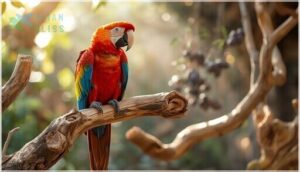
When you choose natural wood bird perches, you’re giving your parrot the perfect grip your feathered friend craves! Branch selection matters—safe wood species like manzanita, grape, and willow offer perch durability while varied diameters exercise foot muscles.
Natural textures also reduce pressure sores, and you’ll find more guidance on safe bird cage perch options to keep your parrot’s feet healthy and happy.
Wooden perches mimic wild tree branches, encouraging natural grip patterns that keep toes strong and healthy. These parrot perches provide textural variety your bird instinctively needs for comfort and well-being. Many owners appreciate the benefits of designed specifically for bird safety and comfort.
Sand and Mineral Perches for Nail Health
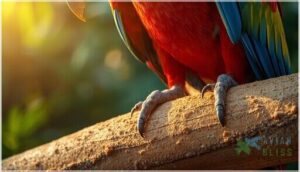
Sand texture perches give your parrot a gentle nail file with every step, using quartz sand to naturally shape overgrown claws while supporting beak health through safe chewing. These parrot perches deliver mineral balance for stronger nails:
- Nail abrasion removes keratin buildup without harsh grinding
- Calcium infusion strengthens nail plates during molt cycles
- Controlled wear prevents curling and splintering
- Natural nail shaping encourages straight growth paths
Choose food-grade options for ideal pet bird care and nail health!
Rope and Fabric Perches for Foot Relief
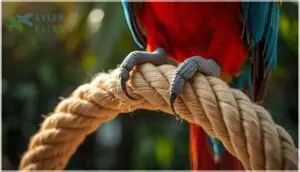
Soft rope perches wrapped in cotton or sisal fibers cushion pressure points on your parrot’s feet, offering serious foot relief after hours of gripping hard surfaces. These flexible designs bend into curves that encourage natural toe positioning while promoting circulation, and fabric wrap safety means you’ll avoid chemical irritants—just inspect knots weekly and trim frayed ends to maintain bird perch hygiene and prevent injury!
Platform and Flat Perches for Resting
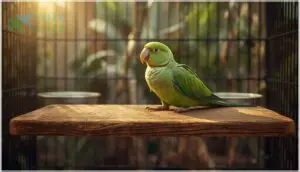
Your large parrot’s feet need a break from constant gripping, and platform perches deliver that relief with their broad, flat resting areas that let toes stretch out completely. These essential resting areas support bird health while reducing pressure sores, and smart perch design keeps your flock comfortable in large parrot cages!
- Flat surfaces measuring 6 to 12 inches let feet relax fully
- Natural hardwoods with rounded edges protect tender toe pads
- Strategic placement near feeding stations encourages regular use
- Textured grip prevents slipping while maintaining bird comfort
- Weekly cleaning with bird-safe soap preserves foot health
Top 5 Bird Perches for Large Parrots
You want your large parrot to have perches that support their physical health while keeping them comfortable and entertained throughout the day. The right perch isn’t just about giving your bird a place to sit—it’s about promoting proper foot health, encouraging natural behaviors, and creating a safe environment they’ll actually enjoy using.
The right perch promotes your parrot’s foot health, natural behaviors, and comfort—not just a place to sit
Here are five trusted perch options that deliver on safety, durability, and comfort for macaws, cockatoos, and other large parrot species.
1. Natural Wood Bird Perch Stand
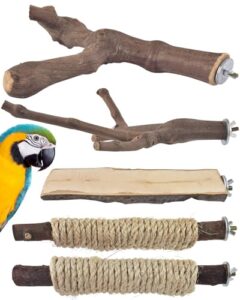
You want your parrot to stand naturally, and this perch delivers exactly that with FSC-certified wood and grapevines that mimic real tree branches.
The set includes five different perches—two Y-shaped grapevines, two solid wood stands wrapped in sisal rope, and one wooden platform—giving your bird varied surfaces to exercise their feet and keep those toes strong.
Installation is straightforward with built-in bolts and wing nuts, so you don’t need a toolbox. The natural textures also satisfy your bird’s need to chew safely!
| Best For | Bird owners with medium to large parrots who want a natural perch that mimics real branches and gives their birds different textures for foot health and entertainment. |
|---|---|
| Material | Wood and grapevines |
| Installation | Built-in bolts and wing nuts |
| Bird Size | Medium to large birds |
| Foot Exercise | Yes |
| Color | Natural |
| Toxicity | Non-toxic |
| Additional Features |
|
- Five different perch styles in one set give your bird variety and help exercise their feet naturally
- Made from FSC-certified wood and natural grapevines that are safe for chewing and non-toxic
- Easy to install with built-in hardware—no extra tools needed
- Some perches may be too thin for very large birds like Macaws or Cockatoos
- Natural materials mean each piece varies in shape and size, so you can’t predict exact dimensions
- The sisal rope wrapping might not hold up well with aggressive chewers
2. Rypet Parrot Sand Perch
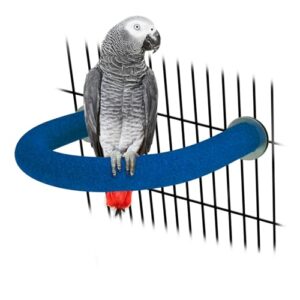
If you need a perch that manages overgrown nails naturally, the Rypet Sand Perch does the job with its rough quartz sand coating on a sturdy PVC core. Measuring 6.7″ x 7.9″, it’s built for medium to large parrots like African Greys and Amazons, offering foot exercise while trimming beaks and nails through daily use.
The U-shaped design installs easily with a metal wing nut, and the non-toxic materials mean you won’t worry about chewing damage—just pure, functional comfort!
| Best For | Bird owners with medium to large parrots who want a natural way to keep nails and beaks trimmed without frequent vet visits. |
|---|---|
| Material | PVC with quartz sand |
| Installation | Metal wing nut and bolt |
| Bird Size | Medium to large birds |
| Foot Exercise | Yes |
| Color | Blue |
| Toxicity | Non-toxic |
| Additional Features |
|
- Rough quartz sand surface naturally files down overgrown nails and beaks during regular perching
- U-shaped design with simple wing nut installation makes setup quick and hassle-free
- Non-toxic, food-grade materials mean it’s safe even if your bird decides to chew on it
- Smaller than many buyers expect at just 6.7″ x 7.9″, which may disappoint if you have a larger cage
- Rough surface might be too abrasive for birds with sensitive feet or those not used to textured perches
- Durability concerns reported by some users, with construction quality not always matching the price point
3. Jw Pet Comfy Bird Perch
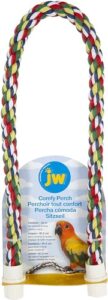
When foot health meets flexibility, the JW Pet Comfy Bird Perch delivers with its bendable multi-color rope design that twists into any shape your cage demands. At 16.9 inches, it’s perfect for macaws and cockatoos, providing a soft, rounded grip that reduces pressure sores while encouraging natural foot movement.
The easy-twist attachments secure to wire bars without tools, and the quick-drying rope stays clean between cage maintenance sessions. Just watch for chewing—some birds love fraying the fibers, so wrap it with vet wrap if needed!
| Best For | Bird owners looking for a customizable, flexible perch that promotes foot health and provides enrichment for medium to large birds like cockatiels, conures, and parrots. |
|---|---|
| Material | Flexible rope |
| Installation | Easy-twist attachments |
| Bird Size | All sizes |
| Foot Exercise | Yes |
| Color | Multi |
| Toxicity | Not specified |
| Additional Features |
|
- Bends into any shape to fit your cage layout and create custom perching spots
- Soft, rounded rope design reduces pressure on birds’ feet and helps prevent sores
- Tool-free installation with easy-twist attachments that secure to cage bars quickly
- Rope can fray if birds chew on it, potentially requiring vet wrap to prevent loose strings
- Harder to clean than solid perches, especially without protective wrapping
- Quality control issues reported, including missing parts or insufficient length for wider cages
4. Parrot U Shape Sand Perch Stand
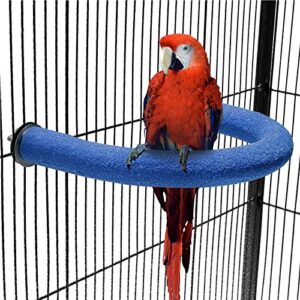
The U-shaped design brings serious space-saving power to your aviary, measuring 16 inches across with a gritty sand coating that naturally files down overgrown nails while your parrot perches.
This PVC stand grips cage bars securely with included metal fixings, working equally well indoors or outdoors for macaws and cockatoos who need that extra texture underfoot.
The 3 cm diameter gives large feet proper grip, and cleanup takes seconds—just wipe it down between cage cleanings!
| Best For | Bird owners with medium to large parrots who need a space-efficient perch that naturally trims nails and provides textured foot exercise. |
|---|---|
| Material | PVC with quartz sand |
| Installation | Easy to install |
| Bird Size | Medium birds |
| Foot Exercise | Yes |
| Color | Blue/Red |
| Toxicity | Not specified |
| Additional Features |
|
- U-shape design saves cage space while the rough sand surface doubles as a nail file and foot exerciser
- Sturdy PVC construction with secure metal fixtures works for indoor and outdoor setups
- Super easy to clean with a quick wipe-down between cage maintenance
- Metal washers might be too small for cages with wide bar spacing, forcing you to buy extra hardware
- Some birds take a while to get comfortable with the curved U-shape layout
- Durability issues reported by several users who found it doesn’t hold up as long as expected for the price
5. Natural Wood Bird Perch Set
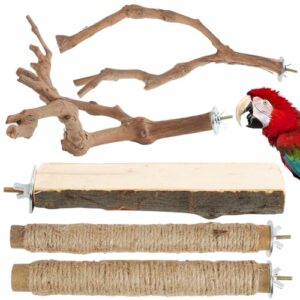
While single-perch solutions target one need, the Manoai Natural Wood Perch Set covers multiple comfort zones with five untreated apple wood pieces—two Y-shaped grapevines, two rope-wrapped stands, and one 6″ x 4″ platform.
Your cockatiel or conure gets natural claw sharpening plus mental stimulation from varied textures, and installation couldn’t be simpler with built-in bolts and metal wing nuts.
The khaki-toned hardwood resists aggressive chewing while offering a non-slip grip, though macaws and African Greys will need sturdier options.
| Best For | Small to medium parrot owners seeking varied perch options that combine natural wood benefits with easy cage setup. |
|---|---|
| Material | Natural apple wood |
| Installation | Metal wing nuts and bolts |
| Bird Size | Small to medium birds |
| Foot Exercise | Yes |
| Color | Khaki |
| Toxicity | Natural material |
| Additional Features |
|
- Five-piece variety pack addresses multiple perch needs in one purchase
- Apple wood construction naturally trims claws while birds grip and climb
- Tool-free installation with pre-fitted bolts and wing nuts saves setup time
- Not strong enough for large parrots like macaws or African Greys
- Natural wood means each piece has unique sizing and shape variations
- May wear down quickly if your bird is an aggressive chewer
Safety and Maintenance Tips for Parrot Perches
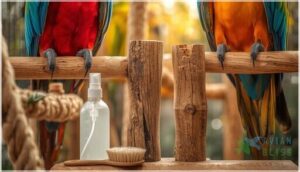
Your parrot’s perches aren’t a one-and-done purchase—they need your attention to stay safe and supportive. Regular cleaning, smart material choices, and knowing when to swap things out will protect your bird’s feet and overall health.
Let’s walk through the essential maintenance habits that’ll keep your large parrot standing strong and comfortable.
Cleaning and Disinfecting Perches
Keeping your parrot’s perches clean isn’t just about tidiness—it’s essential bird health insurance! Use mild soap and warm water weekly to scrub wooden perches, rinsing thoroughly to protect your bird’s delicate skin.
For disinfection methods, apply bird-safe products every two weeks, avoiding household cleaners with phenols that threaten avian health. Always let perches air dry completely before returning them to the cage, preventing mold and ensuring maximum bird perch safety!
Regular cleaning helps prevent issues related to.
Monitoring for Wear and Damage
Vigilance protects your parrot’s feet! Inspect perches weekly for wear signs like cracks, splinters, or frayed rope that compromise bird perch safety. Check fasteners for rust and confirm connections remain tight during your safety checks.
Natural wood showing darkened spots or peeling bark needs immediate replacement as part of your maintenance tips. Damage control means catching issues early—your bird’s health depends on your consistent perch inspection routine and smart bird perch selection!
Rotating Perch Styles to Prevent Foot Problems
Your parrot’s foot health thrives on variety! Rotate different perch styles weekly—mix natural wood branches with rope, platform, and mineral perches to shift pressure points and prevent sores.
Varying diameters from 0.75 to 3 inches strengthens grip muscles while promoting beak care and claw maintenance naturally.
This simple perch rotation strategy delivers essential bird exercise and parrot enrichment, keeping those extraordinary feet comfortable and strong.
Avoiding Toxic Woods and Unsafe Materials
When selecting parrot perches, steer clear of toxic wood like cedar, redwood, and treated pine—these release irritants that harm your bird’s respiratory system.
Safe wood options include maple, birch, and beech from trusted suppliers, ensuring non-toxic alternatives that meet perch safety standards.
Avoid painted surfaces, synthetic ropes with chemical dyes, and bonded products like plywood to protect your parrot’s health through bird-friendly designs.
Frequently Asked Questions (FAQs)
What are the best perches for parrots?
Think of it this way: the best perches for parrots blend varied diameters, natural wood textures, and rope options, supporting bird foot health while preventing pressure sores and promoting avian enrichment through diverse perch material safety.
What are large parrots called?
Large parrots include Macaws, Amazons, African Greys, and cockatoos—collectively known as Psittacines in avian nomenclature.
These species require spacious large parrot cages with varied perches, since their size demands sturdy support and specialized care considerations.
What wood is not safe for parrots?
Avoid redwood, pitch pine, cherry, oak, box elder, yew, and holly—all contain toxic oils, tannins, or harmful compounds.
Never use treated, painted, or wild-collected wood; stick with safe hardwood perches from trusted sources.
How many perches does a large parrot need?
For keeping your feathered friend’s feet happy, variety is the spice of life—aim for 4 to 6 perches in large parrot cages to support foot health, bird exercise, and parrot comfort.
Can large parrots share perches with smaller birds?
Sharing perch space between large parrot cages and smaller pet birds creates serious perch sharing risks, since size considerations and potential aggression compromise interspecies harmony.
So, parrot owners should provide separate bird perches for safety.
Should perches be positioned near food and water?
Keep perches at least one to two body lengths away from food and water dishes to prevent droppings from contaminating meals, reduce spillage, and maintain proper bird hygiene in your parrot cages and feeding zones.
How often should perches be replaced for parrots?
Inspect your parrot perches every week or two for splinters and cracks, replacing them when damaged to protect foot health and guarantee parrot safety.
Most natural wood perches need rotation every one to three months.
Conclusion
Don’t let your macaw’s foot health fall through the cracks—those dowels have been doing enough damage already. The bird perches for large parrots you choose today determine whether your companion develops debilitating pressure sores or maintains the strong, agile feet nature intended.
Rotate materials, embrace diameter variation, and prioritize natural textures that mimic wild conditions. Your bird’s comfort starts from the ground up, and these five options give you exactly what those exceptional feet deserve.