This site is supported by our readers. We may earn a commission, at no cost to you, if you purchase through links.
A single suet feeder stocked with the right cake can draw seven or eight bird species to your yard within a week—woodpeckers, nuthatches, chickadees, and wrens, all working different angles of the same wire cage. Most backyard birders start with one basic feeder and wonder why only starlings show up.
The feeder style matters as much as the suet itself. Upside-down designs filter out aggressive species, tail-prop feeders cue woodpeckers by mimicking bark, and weight-activated cages keep squirrels from cleaning you out before dawn.
Choosing the right suet bird feeders for attracting multiple species comes down to matching feeder mechanics to bird behavior—and the options below make that easier than you’d expect.
Table Of Contents
Key Takeaways
- Feeder design shapes which birds show up more than the suet itself—upside-down models filter out starlings, tail-prop styles cue woodpeckers, and weight-activated cages block squirrels before they clean you out.
- Matching feeder mechanics to bird behavior is the real key to species diversity, since chickadees, nuthatches, and woodpeckers each feed differently and respond to specific structural cues.
- What goes inside your suet cake matters—nut-based blends draw the widest mix of species, while fruit additions attract bluebirds and insect blends support birds through spring migration.
- Placement and maintenance are just as important as feeder choice—hang feeders 5–6 feet high, keep them shaded in summer, and clean them every two weeks to protect bird health and keep suet fresh.
Best Suet Feeders for Multiple Bird Species
Not every suet feeder works equally well for every bird, and the design really does make a difference in who shows up. The six feeders below were chosen based on durability, species compatibility, and how well they handle real-world challenges like squirrels and spoilage.
If you’re just getting started, this guide to suet bird feeders for beginners breaks down exactly what to look for before you buy.
Here’s what you need to know about each one.
Brome Squirrel Buster Squirrel Proof Suet Feeder
The Brome Squirrel Buster is a standout pick in any honest suet feeder review. Its weight-activated shroud slides down automatically when a squirrel climbs on, blocking access without causing harm. You can fine-tune spring tension to exclude larger bully birds too.
Built from chew-proof, UV-stabilized materials, it holds two suet cakes and attracts woodpeckers, nuthatches, and chickadees reliably through winter.
The feeder’s durability and maintenance are backed by a Lifetime Care warranty for customer assurance.
1. More Birds Double Suet Feeder
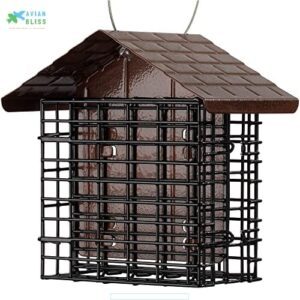
If squirrel-proofing isn’t your top priority, the More Birds Double Suet Feeder is worth a close look. It holds two standard suet cakes side by side, so you can offer different flavors at once and pull in a wider mix of species.
The solid steel cage with powder-coated finish withstands year-round weather well, and the built-in roof diverts rain and snow to keep suet fresh longer. The double-locking closure opens easily by hand, making refills quick and clean.
| Best For | Bird lovers who want to attract a variety of clinging species like woodpeckers and chickadees and don’t have major squirrel problems in their yard. |
|---|---|
| Material | Metal |
| Suet Capacity | 2 suet cakes |
| Weather Resistance | Weatherproof shroud |
| Target Birds | Woodpeckers, Nuthatches |
| Squirrel Protection | Weight-activated shroud |
| Ease of Cleaning | Detachable trays |
| Additional Features |
|
- Holds two suet cakes at once, so you can offer different flavors and attract more species
- Solid steel build with a powder-coated finish that holds up through all kinds of weather
- Built-in roof keeps suet dry, and the double-locking closure makes refills fast and easy
- The large grid openings make it pretty easy for squirrels to help themselves
- Some birds may struggle to access the suet depending on feeder placement
- Not a great fit for areas with bears or heavy wildlife pressure
2. More Birds Double Caged Suet Bird Feeder
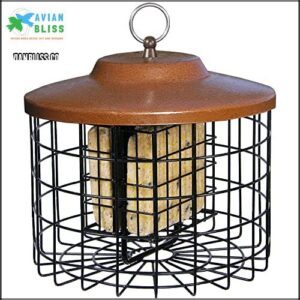
If squirrels and starlings are the real problem, step up to the More Birds Double Caged Suet Bird Feeder. It wraps two inner suet cages inside a wider outer metal cage, leaving gaps only small enough for chickadees, nuthatches, and downy woodpeckers to slip through. Grey squirrels and bully birds simply can’t fit.
The powder-coated steel resists rust year-round, and the hinged lid lifts easily for refills. At just under two pounds, it hangs securely without swaying.
| Best For | Bird lovers who are fed up with squirrels and starlings hogging the feeder and want to give smaller birds like chickadees and nuthatches a fair shot. |
|---|---|
| Material | Metal |
| Suet Capacity | 2 suet cakes |
| Weather Resistance | Powder-coated finish |
| Target Birds | Woodpeckers, Chickadees |
| Squirrel Protection | No built-in protection |
| Ease of Cleaning | Easy-open closure |
| Additional Features |
|
- Double cage design keeps squirrels and bully birds out while letting small birds feed in peace
- Powder-coated steel holds up in rain, snow, and everything in between
- Holds two suet cakes at once and refills in seconds with the hinged lid
- Larger birds like woodpeckers may have trouble getting through the cage openings
- The lid threads can wear out over time with regular use
- Needs occasional cleaning to keep things running smoothly
3. Kingsyard All Metal Double Suet Bird Feeder
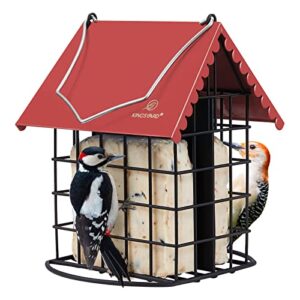
Not worried about squirrels but still want something that holds up through the seasons? The Kingsyard All Metal Double Suet Bird Feeder keeps things simple and solid. Its powder-coated steel frame resists rust and chewing, so it won’t fall apart after a hard winter.
If you want to see how suet feeders like this one hold up against the elements year-round, this guide to suet bird feeders built for woodpeckers and tough weather breaks it down nicely.
It holds two standard suet cakes, which means woodpeckers, chickadees, and nuthatches can feed side by side without crowding. The removable weatherproof roof shields suet from rain, slowing spoilage between refills.
| Best For | Bird lovers who want a durable, low-maintenance feeder and aren’t too worried about squirrel interference. |
|---|---|
| Material | Alloy Steel/Aluminum |
| Suet Capacity | 2 suet cakes |
| Weather Resistance | Powder-coated steel |
| Target Birds | Small clinging birds |
| Squirrel Protection | Double cage design |
| Ease of Cleaning | Easy open and fill |
| Additional Features |
|
- Powder-coated steel holds up through rain, snow, and sun without rusting or warping
- Fits two suet cakes at once, so more birds can feed at the same time with less crowding
- The removable roof keeps suet dry and makes refilling and cleaning quick and easy
- No latch or lock, so squirrels can open it and help themselves to the suet
- Only fits standard-size suet cakes, so you’re a bit limited on what you can load in
- Squirrels can still perch and feed freely if you don’t take extra steps to deter them
Nature’s Way Cedar Upside Down Suet Feeder
Cedar durability makes the Nature’s Way Upside Down Suet Feeder a smart long-term investment for serious bird watching. The cedar resists rot naturally, and a water-based stain keeps mold from taking hold.
Its upside down design filters out starlings and grackles, leaving suet access to woodpeckers, nuthatches, and chickadees. One standard suet cake fits snugly, making wild birds feel right at home.
The feeder’s construction features a rust free design that ensures durability.
4. Kingsyard Recycled Plastic Bird Feeder House
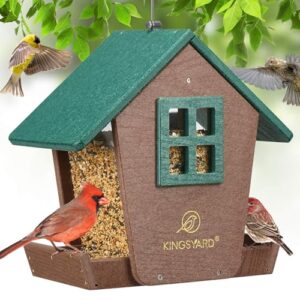
The Kingsyard Recycled Plastic Bird Feeder House brings a farmhouse charm to your yard without sacrificing function. Built from 100% recycled plastic, it holds up to 4 lbs of mixed seeds and won’t crack or rot through harsh winters.
It attracts finches, cardinals, and woodpeckers reliably, making it a solid choice for diverse backyard flocks. Refilling takes seconds with the drawcord roof lock.
If you want low-maintenance feeding with real visual appeal, this feeder delivers both.
| Best For | Bird lovers and gardeners who want a low-maintenance, weather-resistant feeder that looks great year-round. |
|---|---|
| Material | Metal |
| Suet Capacity | 2 suet cakes |
| Weather Resistance | Powder-coated finish |
| Target Birds | Woodpeckers, Titmice |
| Squirrel Protection | No built-in protection |
| Ease of Cleaning | Removable roof |
| Additional Features |
|
- Built from recycled plastic that holds up through rain, snow, and sun without rotting or cracking
- Attracts a solid mix of birds — finches, cardinals, and woodpeckers all show up regularly
- Super easy to refill and clean thanks to the simple drawcord roof lock
- No squirrel-proofing built in, so seeds can disappear fast if you’ve got determined critters nearby
- Larger birds like grackles can make a mess and empty it quicker than you’d like
- At 4 lbs capacity, frequent refilling may be needed in busy backyards
Types of Suet Feeders and Key Features
Not all suet feeders work the same way, and picking the right style makes a real difference in which birds show up. Each design has its own strengths, from basic cage feeders to squirrel-proof builds with weather guards.
Here’s a breakdown of the main types and what sets them apart.
Cage and Double-cake Suet Feeders
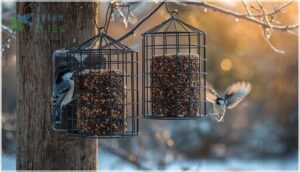
The cage design on a standard suet feeder uses 0.5 by 1 inch coated wire mesh, giving chickadees, nuthatches, and titmice a solid grip while keeping the suet cake contained. Double cake models double your suet capacity, holding two 5 by 5 inch cakes independently — useful during winter when bird traffic peaks.
Feeder materials like powder-coated steel and vinyl-coated wire resist rust, keeping your caged feeders functional season after season.
Tail-prop Suet Feeders for Woodpeckers
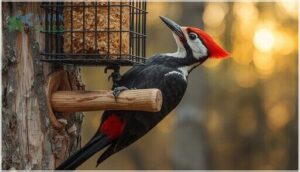
Woodpecker behavior tells you a lot about what a feeder needs to do. These birds brace against vertical surfaces using their stiff tail feathers, so tail-prop feeders mimic exactly that.
- Props extend 6–8 inches below the suet cage
- Flat surfaces distribute weight across feet and tail
- Grooved grips secure claws during feeding
- Pileated woodpeckers feed without slipping or repositioning
Upside-down and Caged Feeders
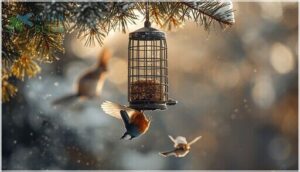
Upside-down feeders flip the feeding mechanics in a way that genuinely changes which birds show up. Clinging birds like nuthatches and chickadees hang beneath the cage with ease, while starlings and grackles can’t maintain that inverted posture for long and drop off.
Upside-down feeders naturally welcome clinging birds while sending starlings and grackles packing
Caged feeders add another layer of squirrel protection through sturdy cage materials that block larger animals while letting smaller birds slip through comfortably.
Squirrel-proof Designs and Durability
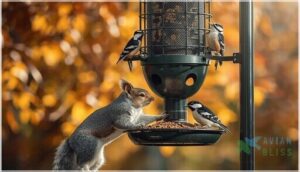
Squirrels don’t quit — so your feeder’s defenses need to be built for the long haul. The best squirrel-proof suet feeders combine weight-activated mechanisms, chew-resistant materials, and weather protection into one durable package. Here’s what actually separates a reliable feeder from one you’ll replace next season:
- Weight-activated shrouds drop to block access when a squirrel climbs on, letting small birds feed freely
- Chew-resistant construction using powder-coated steel or RoxResin composites holds up against persistent gnawing
- UV-resistant finishes protect housings from sun and freeze-thaw cycles, keeping moving parts functional
- Pole systems with baffles mounted five feet up eliminate the squirrel’s only real route to your suet feeders
- Lifetime warranties on premium models cover chew damage and rust, meaning durability is backed by the manufacturer
Attracting a Variety of Bird Species
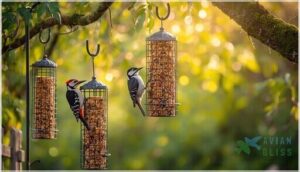
The right suet feeder does more than just hold food — it shapes which birds show up and how often. Woodpeckers, nuthatches, and chickadees each have feeding preferences that certain feeder styles support better than others.
Here’s what to know about matching birds to feeders, choosing the right suet mix, and making your backyard work for a wider range of species.
Common Backyard Birds Drawn to Suet
Suet feeders draw an impressive bird species diversity to your yard. Downy woodpeckers, measuring just 5.5 to 7.1 inches, hit suet feeders hard in winter when bark insects disappear.
Chickadees grab single chunks and cache them nearby, while nuthatches cling upside down and scatter-hoard morsels up to 130 feet out. Carolina wrens and tufted titmice round out your wild birds lineup reliably.
Suet Feeder Styles for Specific Species
Matching your feeder style to the birds you want is the real trick. Tail-prop woodpecker feeders mimic tree trunks, giving woodpeckers the stable brace they need. Upside-down designs naturally filter out starlings while keeping clinging birds—nuthatches and chickadees especially—feeding comfortably.
For genuine bird diversity, a squirrelproof caged feeder with suet cakes accommodates almost every species that visits your yard.
Suet Recipe Variations for Different Birds
What you put inside your suet cakes matters more than most people realize. Woodpecker recipes usually lean on peanut butter, oats, and bird seed blends for dense, high-energy winter formulas. Nutty mixtures with almond flour or chopped walnuts draw pileated species reliably.
For bluebirds and thrushes, fruit additions like dried cranberries work well. Summer blend suet and nomelt suet options keep avian nutrition consistent year-round.
Proper Suet Feeder Placement and Setup
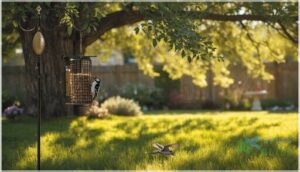
Where you hang your suet feeder matters more than most people realize. The right spot keeps the suet fresh, the birds safe, and the squirrels frustrated.
Here’s what to think about before you pick a location.
Ideal Feeder Locations for Safety and Visibility
Where you hang your feeder decides everything. Smart feeder placement strategy balances Feeder Height, Window Placement, and Predator Control to create a true backyard bird sanctuary.
- Hang feeders 5–6 feet high to block cats and raccoons
- Keep Quiet Areas 20+ feet from wooded edges to limit squirrel jumps
- Use Visibility Optimization by positioning near windows for easy bird watching
- Stay under 3 feet or beyond 30 feet from glass for bird-friendly landscaping
Preventing Suet Melting and Spoilage
Heat is suet’s worst enemy, so shade placement matters more than most people realize. Positioning your suet feeders under tree canopy or roof eaves can drop feeder temperature by 10 to 15 degrees, keeping suet cakes firm longer.
For Suet Storage, refrigerate unused portions below 40°F. Prioritize no-melt varieties for Melting Prevention, Spoilage Control, and overall Suet Preservation, since their extra-rendered fat and oat binders resist temperatures past 100°F.
Minimizing Predator and Window Collision Risks
Safety around suet feeders comes down to two things: keeping predators out and keeping windows from becoming hazards. Hang your feeders at least five feet off the ground for solid predator evasion, and position them 10 feet from trees or fences to cut squirrel jump paths.
For window safety and reducing bird-window collisions, stay within three feet or beyond 30 feet of glass. Bully bird protection and bird safety around feeders improve dramatically with smart feeder placement.
Suet Feeder Maintenance and Bird Health
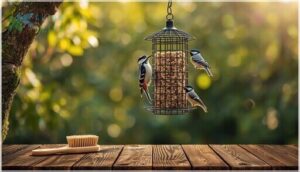
Keeping your suet feeder in good shape is just as important as picking the right one. A little routine care goes a long way toward keeping the birds coming back healthy and happy. Here’s what you need to know to stay on top of it.
Cleaning and Refilling Best Practices
A clean feeder is a safe feeder — and that’s not just a saying. Bird feeder maintenance directly affects the health of every species visiting your yard. Follow these Suet Refill Tips and Cage Cleaning steps:
- Clean suet feeders every two weeks in cool weather; weekly above 70°F
- Use a bleach-water solution (1:9 ratio) for feeder sanitizing during deep cleans
- Air dry completely before you refill — moisture causes mold fast
- Store unused suet in a cool, dry spot for proper Suet Storage
Stick to consistent Refill Schedules, and easy cleaning becomes second nature.
Monitoring for Mold, Pests, and Spoilage
Even a small lapse in feeder maintenance can quietly cost birds their safety. Prioritize Feeder Sanitation for Bird Safety.
For Mold Detection, check suet surfaces after rain — fuzzy white spots or dark patches appear within 24 to 48 hours. Rancid Suet Spoilage shows as a slimy texture or sour smell detectable from feet away.
Pest Control matters too: small holes or droppings signal insects or rodents.
Seasonal Adjustments for Optimal Feeding
Birds’ needs shift with every season, and your suet feeders should shift with them. In winter, stock high-fat suet cakes consistently — birds can burn up to 10 percent of their body weight overnight just staying warm.
During spring migration, switch to insect-blended suet recipes to support bird nutrition during nesting.
Summer calls for no-melt formulas and shaded feeder placement to prevent spoilage.
Frequently Asked Questions (FAQs)
Which suet attracts most birds?
Nut-based suet cakes attract the widest variety of wild birds. Peanut pieces draw woodpeckers, chickadees, and nuthatches reliably, while mixed nut suet recipes boost cardinal visits markedly compared to plain fat blocks.
Can birds eat suet during summer months?
Yes, wild birds can eat suet in summer — but Suet Melting and Spoilage Prevention matter.
Switch to Heat Stable Options, like no-melt suet cakes, to keep Summer Suet Safety intact and meet Bird Energy Needs.
What predators are attracted to suet feeders?
Who else shows up when you put out suet? Raccoon behavior, hawk attacks, squirrel problems, and even bears make pest deterrence essential for anyone using suet feeders year-round.
How do I store unused suet cakes properly?
Store unused suet cakes in a cool, dry spot below 70°F, or freeze them for up to six months.
Wrap opened cakes tightly and keep them away from pests and strong odors.
Are homemade suet cakes better than store-bought?
Both have real value. Homemade suet cakes give you full ingredient control and better bird nutrition, but store-bought wins on convenience. Match your choice to your time, budget, and the species you want to attract.
Which birds avoid suet feeders entirely?
Hummingbirds, American Goldfinches, and ground foragers like doves skip suet entirely. Their bird feeding habits—nectar specialists, seed eaters, and ground foragers—don’t match suet’s texture or cage-style bird accessibility.
Conclusion
Think of your yard as a stage—the right suet bird feeders for attracting multiple species are simply setting the scene for the right performers to show up. Feeder mechanics drive species diversity more than any other single variable.
Match the design to the bird’s feeding posture, stock fresh suet year-round, and stay consistent with placement. Do that, and you won’t wonder why only starlings show up anymore.
- https://marin.wbu.com/suet-feeders
- https://birdsconnectsea.org/2024/03/19/bird-feeding-101-suet-earthcare-northwest/
- https://www.pennington.com/all-products/wild-bird/resources/the-best-types-of-suet-and-feeders-for-wild-birds
- https://duncraft.com/blogs/birding-tips/discouraging-starlings-and-grackles
- https://www.audubon.org/news/make-your-own-suet