
This site is supported by our readers. We may earn a commission, at no cost to you, if you purchase through links.
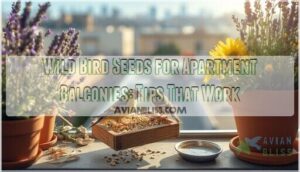
A small balcony doesn’t have to mean a birdless one.
Plenty of apartment dwellers have turned a few square feet of outdoor space into a reliable pit stop for sparrows, finches, and even the occasional woodpecker—all with the right seeds and a feeder that fits on a railing or sticks to a window.
The trick isn’t having a yard; it’s knowing what birds actually need and making it easy for them to find it.
Choosing the wild bird seeds for apartment balconies, pairing them with a well-placed feeder, and keeping things clean can turn your balcony into a surprisingly busy little waypoint.
Table Of Contents
Key Takeaways
- Seed choice is your biggest lever — hulled sunflower hearts and nyjer attract the most birds with the least mess, making them the smart pick for tight balcony spaces.
- A suction cup or railing-mount feeder positioned within 3 feet of your window cuts collision risk and gives you a front-row view without taking up floor space.
- Keeping feeders half-full during wet weather, cleaning them every two weeks, and storing bulk seed in airtight containers below 80°F is what keeps birds coming back consistently.
- Timing matters more than most people think — stock feeders by late February for spring migrants, shift to oil-rich seeds in autumn, and watch during the hour after sunrise for the most activity.
Choosing The Best Wild Bird Seeds
The seed you choose makes a bigger difference than most people expect. Different seeds pull in different birds, and some options are a lot tidier on a balcony than others.
For a deeper look at which seeds work best in small spaces, attracting birds to your balcony garden breaks it down by bird type and mess factor.
Here’s what you need to know before you fill that first feeder.
Sunflower Seeds Vs. Nyjer Seeds
Sunflower seeds and Nyjer seed each bring something different to your balcony setup.
Sunflower seeds win on cost per weight and attract a wider crowd — sparrows, tits, and finches all love them.
Nyjer seed costs more but targets finches specifically, and its high fat content promotes bird health year‑round.
Shelf life matters too: nyjer goes stale fast, so buy smaller bags and refill often.
They also offer valuable nutrients in sunflower seeds.
Seed Mixes for Urban Birds
If choosing just one or two seeds feels limiting, a good seed mix opens the door to more visitors.
Protein-rich blends with safflower inclusion and a peanut protein boost cover nutrition across species.
Millet-dominant mixes pull in sparrows and doves, while high-fat winter formulas keep birds energized when temperatures drop.
For urban birds and small balcony feeders, a well-rounded mix makes bird feeding genuinely rewarding.
Consider using anti-squirrel blends to deter rodents.
Mess-free Seed Options for Balconies
Keeping your balcony tidy doesn’t mean giving up on feeding birds. Hulled sunflower hearts are a great no mess option — no shells, no sprouting, no angry landlord.
A No‑Mess Blend works the same way. For even less seed spillage, try Seed Cylinders or Compressed Cakes, which birds peck in place.
- Hulled sunflower attracts a wide variety without leaving husks
- No‑Mess Blend suits any compact tube or tray feeder
- Seed Cylinders last 8–12 weeks and cut balcony clutter
- Tray Catchers underneath feeders catch nearly 90% of dropped seed
Attracting Specific Bird Species With Seed Choice
Different seeds bring different birds to your railing. A finch seed mix with nyjer draws goldfinches and siskins, while hulled sunflower works as a natural cardinal attractor and satisfies tit preferences for high‑fat bird food.
For an even richer spread, try whipping up your own blends with these homemade bird food recipes that let you tailor ingredients to the birds visiting your railing.
Offer peanuts for jays high‑energy needs, and skip millet, a sparrow deterrent. Rotating seed mixes boosts bird species diversity without much extra effort.
Selecting Feeders for Apartment Balconies
The right feeder makes all the difference when you’re working with a small balcony or a single window.
Not every style suits every setup, so it helps to know what your options are before you buy anything.
Here are a few feeder types that work especially well for apartment living.
Suction Cup Window Feeders
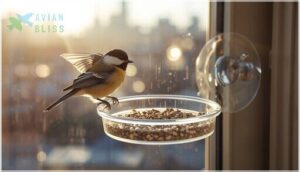
Suction cup feeders might be the best thing to happen to balcony birdwatching. They mount directly on your window glass using two to four suction cups, and when pressed correctly, they stay put for months.
Most are made from clear acrylic, which keeps weight low and lets you monitor bird food levels at a glance. That mounting stability, combined with smart placement within three feet of the glass, also doubles as collision prevention — birds learn the surface quickly, making your window genuinely birdfriendly glass.
Compact Tube and Tray Feeders
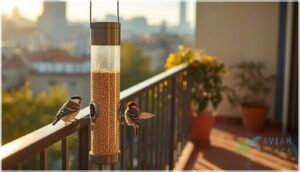
Railing-mount tube feeders are a smart fit for tight balcony spaces. Most compact designs weigh under two pounds, so mounting clamps attach safely without stressing standard railings.
With two to four feeding ports, weatherproof materials, and a clear visibility design that lets you track seed levels from inside, these bird feeders make bird attraction easy. The port arrangement keeps multiple birds feeding at once — no crowding, no chaos.
Squirrel-resistant Feeder Options
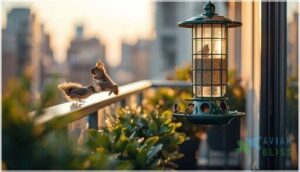
Squirrels are clever, and a standard bird feeder won’t slow them down for long. That’s where Weight-Activated Feeders and Metal Cage Designs earn their place on your balcony.
- Weight-activated perches close feeding ports under a squirrel’s heavier weight.
- Adjustable Spring Tension lets you fine‑tune access for smaller birds.
- Metal Cage Designs use openings too small for adult squirrels to reach through.
- Dome Baffles tip and slide squirrels off before they reach seeds.
- UV-Resistant Materials keep the feeder structurally sound through sun and rain.
Feeder Placement for Safety and Visibility
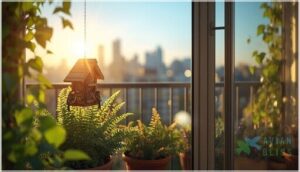
hang your feeder matters more than most people realize.
Mount it at railing height on the leeward side of your balcony for wind shielding and stable landings. Keep it within 3 feet of the glass to reduce window collisions, and align it with your eye-level view inside.
Open sightlines past balcony plants complete a genuinely bird‑friendly balcony setup.
Attracting Birds to Urban Balconies
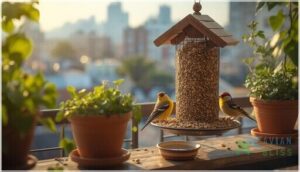
Getting birds to notice your balcony takes a little more than just putting out seed. The good news is a few smart moves can turn even a high-rise ledge into a regular pit stop for local and passing birds. Here’s what actually works.
Using Color and Plants to Draw Birds
Color does more work than most people realize. Red nectar plants like fuchsias and salvias in colorful hanging baskets signal hummingbirds from a distance, while yellow seed flowers — sunflowers, zinnias, marigolds — pull in finches naturally.
Red and yellow blooms silently recruit hummingbirds and finches before your feeder ever does
Add purple berry shrubs like coneflower or lantana, and you’ve built a living welcome sign. Pair these bird-friendly balcony plants near your feeders, and birds connect the dots fast.
Seasonal Strategies for Attracting Migratory Birds
Migration timing matters more than most balcony birders expect. In spring, keep feeders stocked by late February — early migrants move through cities from March onward and need fast refueling.
Shift to oil-rich seeds in autumn for fat-building before long flights.
Practice light management and noise reduction at dawn, and rotate seeds seasonally.
During stormy weather, move feeders to sheltered corners for safer bird feeder placement.
Leveraging Nearby Green Spaces and Water Sources
Your surroundings do a lot of the work for you.
Balconies within 100–300 meters of parks or tree-lined streets naturally tap into existing Park Flight Paths — birds commute these Green Proximity Benefits daily.
Urban water attracts species too, with water‑adjacent sites hosting roughly 24% more bird varieties.
Align balcony view toward Courtyard Bird Hubs, use balcony planting to mirror urban green spaces, and your bird feeding stations become a natural stop on every bird‑friendly balcony route.
Maintaining Clean and Safe Feeding Stations
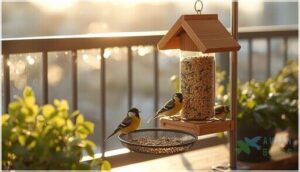
Getting birds to show up is the fun part — keeping them coming back takes a little more effort. A clean, safe feeder makes a real difference, both for the birds and for your balcony setup.
Here’s what to keep in mind to make your feeding station work well long-term.
Preventing Seed Spoilage in Small Spaces
Balcony bird feeding is rewarding, but humidity control can make or break your setup. Damp air turns seed moldy within days, so smart portion management and moisture barriers are your best tools.
Keep these three habits in mind:
- Use sealed storage containers indoors
- Fill feeders halfway during rainy periods
- Check for mold detection signs — clumping, sour smell, or birds suddenly avoiding the feeder
Cleaning Routines for Balcony Feeders
Once the seed is fresh, keeping the feeder that way comes down to a consistent cleaning schedule. Aim for every two weeks—weekly if it’s hot out or you spot mold.
| Task | Tool | Technique |
|---|---|---|
| Scrubbing tubes | Bottle brush | Twist and push through |
| Tight corners | Old toothbrush | Circular scrubbing motion |
| Soaking parts | Bleach dilution ratio (1:9) | 10-minute soak, full rinse |
| Drying techniques | Clean towel or rack | Air-dry completely before refill |
For protective gear, gloves and a simple mask go a long way. Good bird feeder hygiene keeps your visitors healthy — and your balcony clean.
Reducing Window Collisions With Proper Setup
clean feeder is only half the equation — a bird‑friendly balcony also means safe glass. Keep window feeders within 3 feet of the pane so birds can’t build up dangerous speed.
Glass patterning, UV window film, and screen barriers all help break up reflections. Lighting management matters too — dim indoor lights at night. Bird-friendly glass or simple decals do real work.
Tips for Successful Balcony Birdwatching
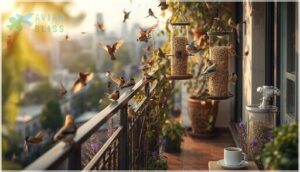
Once your feeders are up and the birds start coming, real fun begins.
Getting the most out of balcony birdwatching comes down to few simple habits worth building.
What actually matters.
Monitoring and Identifying Visiting Birds
The best bird activity on balconies happens right after sunrise and again before sunset — so build your watching routine around those windows.
Snap photos through clean, unlit glass for clearer plumage shots, and use identification apps like Merlin to match what you see. Add quick behavior notes and sound recordings to your log, and patterns will start showing up faster than you’d expect.
Adjusting Feeding Habits by Season
Seasons change fast, and so do your birds’ needs. In winter, lean into Winter Energy Needs — black oil sunflower seeds and suet carry small birds through the cold.
Spring calls for a Spring Protein Shift toward mealworms and soft foods for nesting parents.
Summer Heat Management means smaller portions and shade.
Come autumn, Seasonal Refill Timing and richer seeds support Autumn Fat Buildup before temperatures drop.
Encouraging Neighbors to Support Urban Birdlife
Turning your balcony into a bird-friendly space is even better when your neighbors join in. A few easy conversations can spark something real:
- Start a Community Bird Log to track sightings together
- Propose Neighbor Observation Nights during migration peaks
- Share Shared Feeder Guidelines to keep things tidy and acceptable
- Pitch Joint Habitat Projects or Collective Conservation Pledges through community projects like Celebrate Urban Birds
A bird-friendly community changes everything.
Frequently Asked Questions (FAQs)
How do I attract birds to my apartment balcony?
Living ten floors up feels worlds away from nature—yet urban birds are closer than you think.
Set out fresh water, add a plant perch, and keep noise reduction in mind. They’ll find you.
Is it safe to put bird feeders on a balcony?
Yes, it’s safe if you plan ahead.
Mind your building’s legal regulations, manage pest control, keep feeders clean to lower disease risk, and position them to prevent window collisions — especially on a highrise balcony.
What is the best bird feeder for a balcony?
The best balcony feeder balances weather resistance, material durability, and ease of installation.
A suction cup or railing-mount model works great for most spaces, keeping your bird-friendly balcony safe and low-maintenance.
Can bird feeding attract unwanted pests to balconies?
Like leaving crumbs on a picnic blanket, bird feeding can invite more than just birds — rodent attraction, pigeon overpopulation, insect infestations, and squirrel climbing are all real risks worth knowing.
Are there local regulations against feeding birds in apartments?
Regulations vary by location.
In Germany, no national ban exists, but city bylaws, landlord rules, and neighbor nuisance complaints can all restrict balcony feeding — especially if it attracts pigeons or creates health risks.
How do I store bulk bird seed long-term?
bulk seed fresh with container sealing in airtight bins, temperature control below 80°F, and freezing methods for 48–72 hours to kill larvae.
pest barriers and moisture monitoring to prevent seed spoilage.
Conclusion
Good things come to those who wait—birds come to those who prepare.
Choosing the right wild bird seeds for apartment balconies is really about paying attention: what species visit your area, what seasons bring change, and what small adjustments keep your setup clean and welcoming.
Your balcony doesn’t need to be big to matter. For a passing sparrow or finch, even a well-stocked railing feeder can be exactly the stopping point it needs.
- https://www.wbu.com/products/seed-blends/no-mess-blends/
- https://www.flockingaround.com/post/which-birdseed-is-best-for-attracting-birds
- https://www.allaboutbirds.org/news/i-live-in-a-high-rise-apartment-in-the-city-how-can-i-attract-birds/
- https://northcoastgardening.com/2015/02/diy-bird-seed-blends/
- https://humbirdy.com/blogs/entry-door-expert-guides/apartment-birding-guide