This site is supported by our readers. We may earn a commission, at no cost to you, if you purchase through links.
Most bird owners swap out a toy when their parrot destroys it or loses interest—and call that enrichment.
But birds are wired for novelty the same way we crave a change of scenery after weeks of the same routine.
A cockatiel left with the same three toys for months isn’t just bored; its brain is running idle.
Strategic toy rotation rewires that change entirely.
Done right, it sharpens problem‑solving, cuts stress, and keeps even the most stubborn birds genuinely engaged.
Knowing how to rotate bird toys effectively is the difference between a cage that challenges your bird and one that just holds it.
Table Of Contents
Key Takeaways
- Rotating your bird’s toys every 7–14 days isn’t just a nice habit—it actively problem‑solving, reduces stress, and prevents destructive behaviors like feather plucking and screaming.
- Match your rotation frequency to your bird’s personality and energy: high‑energy conures may need swaps every few days, while calmer birds do fine on a 10–14 day cycle.
- A well-rounded toy lineup should mix foraging puzzles, chewable materials, and interactive toys—variety in type and texture is what keeps your bird’s brain genuinely working.
- Over-rotation is a real risk—swap only one-third of toys at a time and introduce new ones gradually outside the cage first, so curious birds warm up without feeling overwhelmed.
Why Rotate Bird Toys Regularly?
toy rotation as your bird’s version of a fresh Netflix lineup — same bird, whole new world.
Swapping toys weekly taps into that same instinct — and if your bird’s already pulling feathers, these avian feather-plucking solutions and enrichment strategies can help you figure out why.
A little change goes a long way for keeping your feathered friend mentally sharp and emotionally balanced.
Here’s exactly why making rotation a regular habit is one of the smartest things you can do for your bird.
Cognitive and Behavioral Benefits
Curiosity is your bird’s superpower — and toy rotation keeps it switched on. Every new puzzle, texture, or foraging challenge activates problem solving and enhances neural plasticity, literally reshaping how your bird thinks.
Toy rotation keeps your bird’s curiosity alive, turning every new puzzle into a brain-reshaping challenge
Enrichment diversity pushes birds to explore, adapt, and build stress resilience over time. That’s the real cognitive benefit of bird behavior enrichment: a sharper, more confident companion through consistent mental stimulation.
Implementing a regular toy rotation schedule further enhances enrichment.
Preventing Boredom and Stress
Cognitive stimulation is only half the equation. A stale cage is genuinely stressful for birds — predictability kills motivation fast.
That’s why preventing boredom in parrots comes down to Novelty Introduction through a consistent toy rotation schedule.
Rotating Stress‑Reducing Materials, textures, and Playtime Variety weekly builds Environmental Complexity that satisfies avian enrichment needs, keeping bird behavior balanced and your parrot genuinely thriving.
Regular toy rotation reduces stress and anxiety.
Reducing Negative Behaviors
Boredom doesn’t just make birds restless — it shows up as Aggressive Biting, feather pecking, and relentless screaming.
Rotating chewable toys give your bird a safe outlet, cutting down on Territorial Guarding and Feather Plucking Prevention becomes far more manageable.
Smart Screaming Control starts with foraging toys introduced at predictably noisy times.
Consistent behavior observation and Anxiety Management through rotation are genuinely powerful tools for bird behavior and enrichment.
Choosing The Right Toys for Rotation

Not every toy deserves a spot in your rotation — and that’s actually a good thing.
Rotating out worn or rarely used toys also gives you a natural chance to clean and disinfect bird toys properly before anything goes back into the mix.
Picking the right ones means knowing your bird’s personality, what’s safe, and how to keep things interesting without breaking the bank.
Here’s what to think about before you start building your lineup.
Assessing Bird Preferences and Safety
Every bird has opinions — and they’ll show you if you pay attention.
Watch for engagement indicators like repeated returns to a toy or active shredding lasting over ten minutes.
Size matching matters too: oversized loops trap small birds, while tiny parts risk choking larger parrots.
Check material toxicity, flag design hazards like open chain links, and honor species-specific preferences to nail toy selection.
Balancing Toy Types and Materials
Mixing toy types is what keeps your bird’s brain working. Aim for foraging variety — puzzle boxes, seagrass mats, treat-dispensing balls — alongside a solid shredding mix like palm leaves and balsa wood.
Rotate in chewing wood options such as java or beech blocks, add preening fibers like sisal rope, and maintain interactive balance with swings and foot toys.
Bird-safe materials, toy durability, and regular toy inspection make the whole system work.
DIY and Budget-Friendly Toy Options
You don’t need to spend big to keep your bird engaged.
Cardboard Foraging Tubes made from paper towel rolls, Paper Tube Rattles stuffed with pellets, and Natural Wood Chews from untreated pine cost almost nothing.
Recycled Plastic Puzzles, Dollar Store Accessories like wooden skewers, and other household items become excellent DIY toys when you use bird‑safe materials — proof that budget‑friendly bird care solutions work beautifully.
Creating an Effective Toy Rotation Schedule

A good rotation schedule is what turns a random toy swap into a real system that works.
Getting the timing and structure right makes all the difference for your bird’s engagement and well-being.
Here’s what to think about when building a schedule that fits your situation.
Determining Optimal Rotation Frequency
There’s no one-size-fits-all answer to rotation frequency — and that’s actually good news. Your bird tells you exactly what it needs if you pay attention. Let these three signals guide your toy rotation schedule:
- Energy Level Indicators: Curious, high-energy conures may need swaps every few days; calmer birds do well every 10–14 days.
- Bird Age Factors and Species Specific Needs: Juveniles shred fast; macaws destroy; African greys prefer complexity — adjust accordingly.
- Stress Behavior Cues and Toy Wear Assessment: Feather-picking or ignored, worn toys mean it’s time to rotate sooner.
Scheduling for Single and Multiple Birds
Single bird or a whole flock — your rotation schedule lives or dies by one thing: knowing your birds. A single cockatiel needs biweekly partial cage swaps, while a conure demands energy-based timing with daily destructible toy changes. For toy rotation for multiple parrots, a bin labeling system keeps species‑specific rotation organized fast.
| Setup | Rotation Frequency | Digital Tracking Tools |
|---|---|---|
| Single Cockatiel | Every 10–14 days | Notes app with dates |
| Single Conure | Every 2–3 days | Weekly play schedule checklist |
| Multi‑Parrot Home | Staggered weekly swaps | Spreadsheet toy audit per bird |
Themed and Seasonal Toy Rotations
Themed rotations are where your toy rotation schedule gets genuinely fun. Match Holiday Color Schemes using bird‑safe reds, greens, or golds for winter sets.
Seasonal Foraging Puzzles — paper‑wrapped treat parcels in spring, cooling bath‑adjacent toys in summer. Texture Change Shifts keep things fresh, while Behavioral Theme Matching tailors DIY Seasonal Toys to your bird’s mood and energy. Smart parrot toy rotation strategies built around the calendar.
Step-by-Step Guide to Rotating Bird Toys
Knowing when to rotate is only half the battle — how you do it matters just as much.
Thoughtful process keeps your bird comfortable while still delivering that fresh-environment excitement.
Here’s exactly what to do, step by step.
Observing Bird Reactions and Engagement
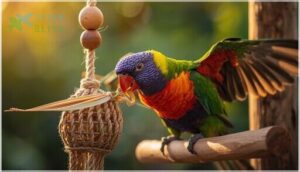
Your bird’s body language tells you everything. Watch for eye pinning, beak grinding after play, and wing flicking — these signal real engagement.
Vocal chirps mean your bird’s happy. Feather fluffing shows relaxation.
Observing parrot behavior during rotation helps you track bird behavior and preferences over time.
When bird engagement drops below five minutes, that toy’s not working.
Safe Removal, Cleaning, and Storage
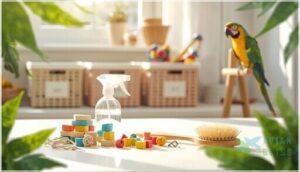
Once you’ve spotted a toy losing its magic, it’s time to pull it out — carefully and cleanly.
- Remove your bird first, then handle each toy gently at its attachment point.
- Toy Disassembly means separating wooden blocks, ropes, and clips for full cleaning access.
- Scrub with a Vinegar Disinfectant — equal parts white vinegar and water works great.
- Rinse — Thoroughness matters: run warm water through every crevice twice, then use Sunlight Drying to naturally disinfect before sealing toys in Labeled Bins.
That’s your disinfection schedule locked in — simple, safe, and sustainable for any toy rotation schedule.
Introducing and Arranging New Toys
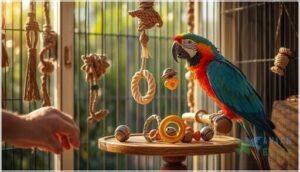
Now that your toys are clean and stored, it’s time for the fun part — bringing them back in.
Start with Gradual Presentation: place the toy outside the cage for a day or two. Then use Owner Demonstration to spark curiosity. Strategic Placement near familiar perches, combined with Treat Association, makes Initial Reaction Observation easy. Watch, adjust, and let your bird lead.
Monitoring and Adjusting Your Toy Rotation System
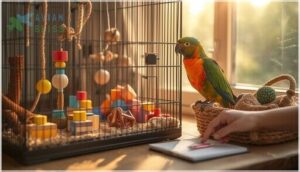
A good toy rotation system isn’t set-it-and-forget-it — it needs regular check-ins to stay effective. Your bird’s reactions will tell you a lot if you know what to look for.
Here’s what to watch and adjust as you go.
Recognizing Signs to Change Toys
Your bird will tell you when it’s time — you just have to listen. Feather plucking, pacing behavior, and vocal distress are classic bird boredom signs that scream "change something now."
Toy avoidance and safety wear are equally telling. If a toy sits ignored for several days or shows frayed edges, trust those signs to change bird toys before stress takes hold.
Tracking Bird Preferences and Behavior
Once you spot the warning signs, the real work begins: knowing why your bird reacts the way it does. Observation Logs turn guesswork into patterns. Jot down Engagement Timing, Body Language, and Mood Vocal Patterns daily — even rough notes work.
- Log date, toy name, and play duration
- Note mood labels: calm, hyper, or withdrawn
- Record body language cues near each toy
- Use Digital Tracking Tools or simple spreadsheets
- Track variety, not just total playtime
Common Mistakes and How to Avoid Them
Even experienced bird owners stumble with common mistakes in toy rotation.
Overloading Toys at once stresses cautious birds — swap just two or three at a time.
Skipping Safety checks lets frayed ropes and rust linger.
Poor Cleaning invites bacteria.
Inconsistent Timing, like rotating daily then forgetting for weeks, kills momentum.
Lack Variety keeps things stale.
Evaluating toy rotation effectiveness means adjusting toy rotation based on behavior, with observation and patience guiding every decision.
Frequently Asked Questions (FAQs)
How often should I rotate my bird toys?
Most birds thrive with a toy rotation schedule every 7 to 14 days.
Species-specific timing, energy level impact, age considerations, and personality cues all shape the ideal frequency of toy rotation for your bird.
How to tell if a bird is bored?
Watch for feather plucking, vocal changes, repetitive movements, appetite shifts, and lethargy indicators. A bored parrot screams, paces, or stops eating. These behaviors signal it’s time for fresh stimulation.
When to start rotating toys?
Think of toy rotation like a first day at school — timing matters. Start once your bird actively chews and climbs, usually around 8–12 weeks old.
Can toy rotation work for non-parrot birds?
Absolutely.
Toy rotation promotes bird health across all species.
Finches, canaries, and doves all thrive with perch variety, feeding enrichment, and auditory stimuli customized to their species-specific needs — just keep safety checks consistent.
How many toys should a bird own total?
Let’s talk toy-tally! Most birds thrive with 12 to 18 toys total — enough for weekly swap rotations. Your species, cage size limits, and toy type ratios all shape the right number.
At what age should toy rotation begin?
Most birds are ready for toy rotation around 3 to 4 months old.
Once your juvenile confidently plays and eats normally, gentle swaps every week or two support healthy bird cognitive development beautifully.
Do birds need toys when out of cage?
An idle mind is the devil’s workshop" — and that holds for your parrot too.
Yes, toys outside the cage matter. Natural foraging, cognitive stimulation, and physical exercise don’t stop when the cage door opens.
Can over-rotation cause stress in some birds?
Yes, over-rotation can absolutely stress your bird.
Feather plucking, vocalization spikes, pacing behavior, appetite loss, and perch avoidance are all red flags.
Rotate every 7–10 days, swapping only one-third of toys at a time.
Conclusion
Your bird’s cage is a canvas, and every toy you rotate into it adds a fresh brushstroke of mental color.
When you learn how to rotate bird toys effectively, you’re not just preventing boredom—you’re actively building a sharper, happier bird.
Small, consistent changes signal that the world is alive and worth exploring.
That’s not a small thing.
That’s the difference between a bird that merely survives its day and one that genuinely thrives through it.
- https://squawkboxes.com/blogs/news/how-often-should-you-rotate-bird-toys
- https://birdbuddyguide.com/pet-bird-care/accessories-toys/how-to-create-a-toy-rotation-for-your-bird/
- https://www.furrycritter.com/pages/articles/birds/toy_rotation.htm
- https://discountbirdtoys.com/how-often-should-you-change-bird-toys
- https://oneloveanimals.org/blog-birds/do-birds-get-bored-why-mental-stimulation-is-a-must/