This site is supported by our readers. We may earn a commission, at no cost to you, if you purchase through links.
Most apartments don’t come with a backyard, but that doesn’t mean birds care. A cedar birdhouse on a fifth‑floor balcony can attract chickadees, wrens, and even the occasional nuthatch—if you set things up right.
The trick is knowing which wooden bird houses for apartment balconies actually hold up to wind, rain, and limited railing space. Some are built to last a decade; others warp after one wet season. The good news? A few smart picks make it easy to turn even a small balcony into a genuine pit stop on the local bird highway.
Table Of Contents
- Key Takeaways
- Best Wooden Bird Houses for Apartment Balconies
- Choosing The Right Wooden Bird House
- Safe Installation Tips for Balcony Bird Houses
- Creating a Bird-Friendly Balcony Environment
- Maintenance and Care for Wooden Bird Houses
- Frequently Asked Questions (FAQs)
- How to attract birds to an apartment balcony?
- Is it safe to put bird feeders on a balcony?
- What is the best bird feeder for a balcony?
- Can apartment rules restrict balcony birdhouse installation?
- Which bird species thrive in urban environments?
- How do I deter squirrels from wooden birdhouses?
- Do wooden birdhouses require permits in condos?
- When do birds typically begin nesting in spring?
- Conclusion
Key Takeaways
- Cedar and redwood are your best bets for balcony birdhouses — they handle rain and rot without falling apart after one rough winter.
- Matching entrance hole size to the bird you want (like 1⅛ inches for chickadees) keeps bigger, bullying birds out of the picture.
- A birdhouse works best when you pair it with fresh water, native plants, and mixed seed — birds want the whole package, not just a place to sleep.
- Check lease or HOA rules before mounting anything, since many buildings treat balcony installations as alterations that need written approval first.
Best Wooden Bird Houses for Apartment Balconies
Finding the right birdhouse for a balcony doesn’t have to be complicated. A few solid options out there are built specifically with small outdoor spaces in mind. Here are six worth a closer look.
Before diving in, brushing up on apartment balcony birdhouse ideas and bird-friendly tips can help you zero in on the best fit for your space.
1. Hanizi Outdoor Hanging Bird Feeder
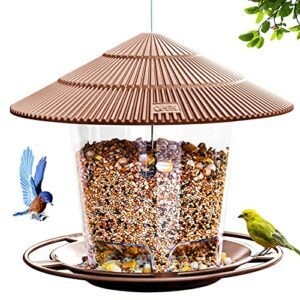
The Hanizi Outdoor Hanging Bird Feeder is a solid pick if balcony space is tight. It holds up to 47 ounces of seed — that’s weeks of feeding without constant refills.
The clear plastic body lets you check seed levels at a glance, and the inclined roof keeps things dry even on rainy days. Best of all, the twist-lock lid and metal rope make it genuinely tough for squirrels to crack.
Lightweight, easy to clean, and balcony-friendly.
| Best For | Bird lovers with limited outdoor space who want a low-maintenance feeder that keeps squirrels out and seeds dry. |
|---|---|
| Material | Plastic |
| Primary Color | Brown |
| Weight | 8.1 oz |
| Bird Type | Finches, Sparrows, Cardinals |
| Easy Cleaning | Yes |
| Gift Suitable | Yes |
| Additional Features |
|
- Clear body makes it easy to see when it’s time for a refill
- Inclined roof and drainage holes keep seeds dry even in heavy rain
- Twist-lock lid and metal rope make life genuinely difficult for squirrels
- Perch size is small, so larger birds like blue jays or doves may struggle
- Determined squirrels may still find a way in over time
- 47 oz capacity is great for small birds, but a busy feeder will still need regular refills
2. Clear Window Bird House for Viewing
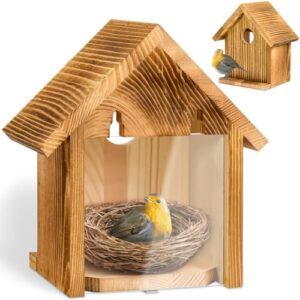
Want to actually watch birds up close? The ANSTEEP Clear Window Bird House makes that happen.
It mounts right to your balcony glass with two sturdy hooks, so bluebirds, wrens, and chickadees are just inches away.
The acrylic viewing panel stays clear over time, and cleanup is simple — just slide it off and wipe it down.
Weighing under a pound, it won’t stress your windows either.
A genuinely fun pick for kids and bird lovers alike.
| Best For | Bird lovers, curious kids, and anyone who wants a front-row seat to backyard wildlife without leaving home. |
|---|---|
| Material | Wood |
| Primary Color | Brown |
| Weight | 0.61 kg |
| Bird Type | Bluebirds, Wrens, Chickadees |
| Easy Cleaning | Yes |
| Gift Suitable | Yes |
| Additional Features |
|
- Clear acrylic panel lets you watch birds up close without spooking them
- Super easy to install and clean — no tools, no hassle
- Lightweight and compact, so it works great on windows and balconies
- Suction cups can lose their grip over time, especially in heat or cold
- Birds may take a while to find it — don’t expect visitors on day one
- Smaller size means it suits wrens and chickadees, not larger bird species
3. Hanizi Bird Bath Deck Mounted Bowl
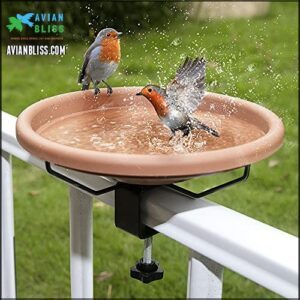
Birds need more than a place to nest — they need water too.
The Hanizi Bird Bath Deck Mounted Bowl clips right onto your balcony railing with a hand-tightened clamp, no tools required. That’s perfect for renters who can’t drill into walls.
The 12-inch plastic bowl detaches easily for a quick rinse, and the steel ring holds everything steady through wind and rain. Just bring it indoors before hard freezes to keep the plastic from cracking.
| Best For | Renters, balcony gardeners, and bird lovers who want an easy, no-drill setup that attracts birds without a lot of fuss. |
|---|---|
| Material | Plastic & Steel |
| Primary Color | Not Specified |
| Weight | 1 lb |
| Bird Type | Garden Birds |
| Easy Cleaning | Yes |
| Gift Suitable | Yes |
| Additional Features |
|
- Clips on with a hand-tightened clamp — no tools, no drilling, renter-friendly
- The plastic bowl pops off for quick and easy cleaning
- Lightweight and easy to move around or bring inside when the weather turns
- Plastic can crack in hard freezes, so it needs to be brought indoors in winter
- May be a bit deep for smaller birds to comfortably use as a bath
- Some customers have noted the measurements aren’t quite accurate
4. Hummingbird Swings Metal Frame Wooden Perch
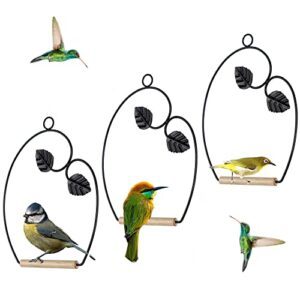
Now, if you want to give hummingbirds a reason to hang around, this set of three metal-frame swings is worth a look. Each one features a rust-resistant frame with a smooth wooden dowel perch — sized to mimic a natural twig.
For best results, hang these swings where hummingbirds feel safe — a backyard bird feeding placement guide recommends keeping perches 10 to 15 feet from shrubs to give birds a clear sightline.
Hummingbirds actually spend about 80 percent of their time perching, so a dedicated resting spot near your feeder keeps them close longer.
Hang one about a foot from your nectar feeder, at eye level, and you’ll get front-row seats.
| Best For | Bird lovers and backyard enthusiasts who want to attract hummingbirds and enjoy them up close. |
|---|---|
| Material | Alloy Steel & Metal |
| Primary Color | Not Specified |
| Weight | 3.2 oz |
| Bird Type | Hummingbirds |
| Easy Cleaning | No |
| Gift Suitable | Yes |
| Additional Features |
|
- Set of three swings gives you flexibility to place them around your yard or feeder
- Rust-resistant metal frame holds up outdoors without looking beat up after a season
- Lightweight and easy to hang — just find a branch or ceiling hook and you’re done
- The wooden dowel runs a bit thick, so some hummingbirds may skip it for a skinnier perch
- The wire narrows in spots where a tiny bird’s leg could get caught, which is worth watching
- No guarantees your hummingbirds will use it — some flyers just aren’t interested in swings
5. Neoguly Transparent Parakeet Nesting Box
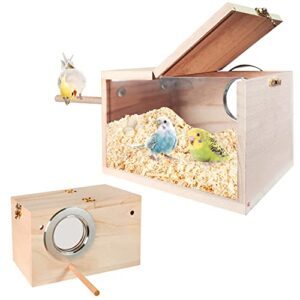
If you keep parakeets or lovebirds on your balcony, the Neoguly Nesting Box is a clever little setup. The acrylic front panel lets you watch eggs hatch without disturbing the birds — no stress, no guessing.
It’s compact at 7.4 x 4.7 inches, so it fits neatly inside most cages. The pine wood frame feels natural and safe for nesting.
Plus, the hinged lid makes cleaning quick and easy. Small birds, big comfort — it’s that simple.
| Best For | Bird owners who want to keep a close eye on their budgies, lovebirds, or parakeets while they nest, rest, or hatch. |
|---|---|
| Material | Wood & Acrylic |
| Primary Color | White |
| Weight | 13.7 oz |
| Bird Type | Budgies, Parrots, Lovebirds |
| Easy Cleaning | Yes |
| Gift Suitable | Yes |
| Additional Features |
|
- The acrylic panel lets you check on your birds anytime without opening the box or stressing them out
- Pine wood frame feels warm and natural — way better than plastic for nesting
- Hinged lid makes cleaning fast and easy, no fuss
- Some birds may chew through the wood or acrylic over time, so it might not last forever
- On the smaller side, so it’s really only a fit for budgies and similarly tiny birds
- Not ideal if your bird needs a bit more room to stretch out
6. LaElvish Hand Blown Glass Hummingbird Feeder
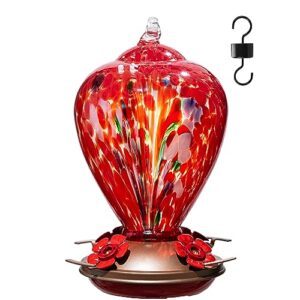
Hummingbirds are honestly whole different category of backyard magic.
The LaElvish Hand Blown Glass Feeder brings that magic right to your balcony rail.
Its 34-ounce glass reservoir means fewer refills, and the copper feeding ports are safe for delicate beaks and tongues.
The leakproof base keeps your balcony clean, while the built-in ant moat blocks uninvited crawlers.
At under 12 inches tall, it hangs neatly without crowding your space — just beauty, function, and tiny wings at eye level.
| Best For | Hummingbird lovers who want a feeder that looks as good as it works — especially great as a gift for moms, gardeners, or anyone with a porch or balcony to dress up. |
|---|---|
| Material | Glass |
| Primary Color | Rainbow |
| Weight | 1.72 lbs |
| Bird Type | Hummingbirds |
| Easy Cleaning | Yes |
| Gift Suitable | Yes |
| Additional Features |
|
- The 34oz glass reservoir means you’re not refilling every other day
- Copper feeding ports are safe and durable, and the leakproof base keeps things tidy
- Comes ready to hang with an ant moat, S hook, and cleaning brush included
- The ant moat is small and can dry out fast in hot weather, so it needs frequent topping off
- Bees can still find their way to the ports despite the design’s best efforts
- A few buyers noted the actual product didn’t quite match what was shown in the listing photos
Choosing The Right Wooden Bird House
Not all birdhouses are built the same, and on a balcony, the wrong pick can fall apart in winter.
A few key things — wood type, size, and ventilation — make all the difference. Here’s what to look for before you buy.
Selecting Durable Wood Materials for Balconies
The wood you choose makes or breaks a balcony birdhouse.
Cedar longevity is real — its natural rot resistance means untreated cedar lasts 10–15 years outdoors. Redwood weather resistance is equally impressive, often hitting 15–20 years.
Look for:
- ¾-inch boards for insulation and warp resistance
- Untreated softwoods — no pressure-treated lumber near nesting birds
- Eco-safe sealers like linseed or tung oil, fully cured before use
- Handcrafted wooden birdhouses built from solid panels, not thin composite boards
Cedar’s natural rot resistance also helps keep the interior temperature stable for nesting birds.
Ideal Birdhouse Size and Entrance Dimensions
Size matters more than you’d think when choosing the right birdhouse. For balcony setups, compact box proportions work best — aim for a floor size range of 4×4 to 5×5 inches. Species-specific dimensions also guide entrance height: place the hole 4–6 inches above the floor. A healthy depth ratio of 6–10 inches keeps nesting boxes snug, safe, and perfectly suited to small urban songbirds.
These birdhouse dimensions vary by species, with specific recommendations for birds like the Eastern Bluebird or Chickadee.
Features for Ventilation and Weather Protection
A well-built birdhouse works hard against the elements. Look for a Roof Overhang of 2–4 inches to shield the entrance from driving rain. Smart Ventilation Placement — small holes near the roofline — lets heat escape without chilling the nest.
Floor Drainage holes prevent pooling, while tight Joint Sealing and a Weatherproof Finish keep wooden balcony birdhouse designs standing strong season after season.
Matching Birdhouse Design to Target Bird Species
Not all birds want the same front door. For chickadees, a 1⅛-inch entrance hole and 4×4-inch floor check every box.
Wren house design stays similar but slightly shorter.
These small tweaks in Entrance Hole Control keep bigger, aggressive birds out.
For color camouflage, stick to muted greens or grays — birds feel safer, and your balcony looks cleaner too.
Safe Installation Tips for Balcony Bird Houses
Getting your birdhouse up is half the fun — but a wobbly setup won’t do you or your feathered visitors any favors. A few smart choices upfront make all the difference between a house that stays put and one that ends up on the ground.
Here’s what to keep in mind before you grab your clamps and pick a spot.
Secure Attachment Methods (rail Clamps, Wall Brackets)
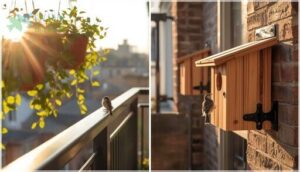
Securing your birdhouse properly makes all the difference between a cozy bird retreat and a windy disaster. Two solid options work great for balconies:
- Rail clamps grip railings up to 2 inches thick, with rubber pads for corrosion resistance and vibration dampening
- Wall brackets anchor into brick or concrete using two points for strong load capacity
- Both need zero‑power installation tools
Optimal Placement for Bird Safety and Comfort

Once your birdhouse is locked in tight, placement is what really keeps birds safe. Aim for 5 to 10 feet off the floor — that sweet spot hits the Height Guidelines for deterring cats below.
East Orientation captures gentle morning sun without afternoon heat stress.
Keep at least 10 feet of Predator Clearance from climbable walls, and maintain Feeder Separation of 10 to 15 feet for a calmer, bird-friendly balcony environment.
Avoiding Noise and High-traffic Balcony Areas
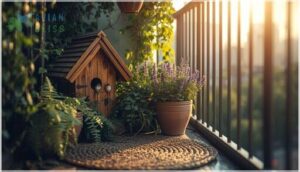
Placement matters more than you’d think. When installing birdhouses on balconies, noise is a silent deal‑breaker.
Quiet Corner Choice — tucking your house behind planters — gives nesting birds a natural Buffer Zone Creation from daily chaos.
A Traffic Noise Shield like dense foliage softens the rumble. Dampen Vibrations with an outdoor rug nearby, and set simple Quiet Hour Rules around dawn.
- Parent birds abandon nests when startled too often
- Your quiet corner becomes their safe haven
- Small changes protect a whole little family
Ensuring Level and Stable Installation
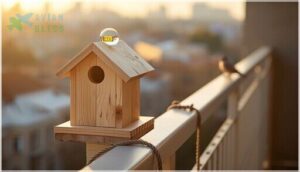
Once your quiet corner is set, make sure it actually stays put. Use the Bubble Level Technique — a small 6–9‑inch level checked in two directions — to catch hidden tilts.
The Shim Placement under the base fixes uneven rails fast. After Clamp Tightening, do Wind Resistance Checks by giving it a firm push. A Safety Cord Backup adds peace of mind when gusts roll through.
Creating a Bird-Friendly Balcony Environment
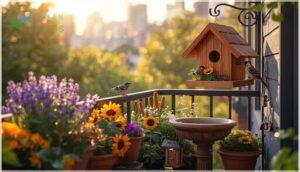
A birdhouse is just the starting point — what you do around it makes the real difference. The right plants, water, and food turn your balcony into a spot birds actually want to hang around.
Here’s how to pull it all together.
Using Native Plants to Attract Local Birds
Think of your balcony as a tiny ecosystem waiting to happen.
Your balcony is a tiny ecosystem waiting to happen
A Native Plant Mix does most of the heavy lifting regarding attracting birds to balconies.
Berry Shrubs like dwarf elder or compact mountain ash feed blackbirds and finches.
Add Insect-Hosting Flowers like cornflower, Seed-Rich Perennials like yarrow, and Spring Nectar Plants like oregano — your bird-friendly balcony practically runs itself.
Providing Water With Balcony-safe Bird Baths
Adding a water source turns your balcony from a pit stop into a real destination for birds.
Here’s what makes a balcony bird bath work:
- Shallow Water Depth (1–2 inches) keeps small birds safe
- Detachable Bowl Design makes cleaning fast and mess‑free
- Anti‑Slip Mounts protect railings and prevent wobbling
- Winter Heater Use keeps water ice‑free on cold mornings
Spill Prevention Strategies, like partial‑shade placement and snug clamp‑on bird bath installation, keep things tidy for neighbors below.
Offering Mixed Seed Blends for Diverse Species
Choosing the right seed blend is basically the secret handshake of bird feeding. A Nutrient Balanced Mix with sunflower hearts, white millet, and nyjer covers Species-Specific Ratios for finches, sparrows, and cardinals — no fillers, no mess.
| Seed Type | Bird Species | Benefit |
|---|---|---|
| Sunflower Hearts | Finches, Tits | Low-Mess Seed Types |
| White Millet | Sparrows, Doves | Ground-friendly |
| Safflower | Cardinals | Squirrel-Resistant Formulation |
Seasonal Seed Rotation keeps your balcony bird house ideas fresh year-round.
Minimizing Hazards and Deterring Predators
Your birds deserve a safe landing zone — not a danger zone.
Use Predator Guards (those plastic or cedar covers over entry holes) to block raccoons and squirrels. No-Perch Entrances stop invasive birds from hanging around uninvited.
For Secure Mounting and Baffle Installation, attach a dome baffle to your rail setup. Add window decals for Collision Prevention — minimizing hazards for birds keeps your balcony a true sanctuary.
Maintenance and Care for Wooden Bird Houses
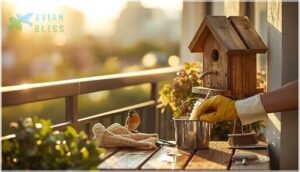
A birdhouse is only as good as the care you put into it. With a little seasonal upkeep, your wooden house can last for years and stay welcoming for birds.
Here’s what you need to know to keep things in good shape.
Seasonal Cleaning and Upkeep Tips
A clean birdhouse is a busy birdhouse. Deep clean twice a year — once before nesting season kicks off and again after the last brood leaves.
For birdhouse cleaning techniques, a 10% bleach disinfection solution manages bacteria and keeps mite management in check.
Clear ventilation gaps for proper ventilation during each spring inspection, and always dry the interior fully after washing — especially important for winter drying between seasons.
Protecting Wooden Houses From Weather Damage
Wood takes a beating on a balcony — sun, rain, and wind don’t let up. Start with a UV-resistant coating or weatherproof finish to lock out moisture before damage starts. Sealant application every one to three years keeps wooden houses solid.
Good roof drainage design — think a 30-degree pitch with overhangs — sheds rain fast. A simple moisture barrier goes a long way in maintaining birdhouses season after season.
Monitoring for Pests and Unwanted Guests
A quick weekly inspection checklist saves you big headaches later. Once weather protection is sorted, pests move in fast.
Check entry hole surveillance regularly — wasp cells and ant trail detection are easier to detect early. Spot visual pest signs like droppings, shredded nesting, or bee clusters before they escalate.
A seasonal pest calendar keeps bird safety on track without guesswork.
Ensuring Long-term Birdhouse Durability
Keeping pests out is half the battle — but making your birdhouse last is the other half. Wood Thickness Standards (at least ¾‑inch walls) so freeze‑thaw cycles don’t crack the frame.
Sealant Reapplication every two years, solid Joint Sealing Methods, and a proper Roof Overhang Design do the heavy lifting.
These simple bird house maintenance tips stretch your Wooden Creations well past a decade.
Frequently Asked Questions (FAQs)
How to attract birds to an apartment balcony?
Start with native plants, fresh water, and mixed seed blends.
Balcony predator deterrents, microhabitat diversity, and bird-friendly lighting go a long way toward creating a bird-friendly balcony environment birds can’t resist.
Is it safe to put bird feeders on a balcony?
Yes, it’s safe — if you’re thoughtful about it.
Mind legal restrictions, manage disease risk, prevent pest attraction, and position feeders to avoid window collisions.
Smart placement makes balcony bird feeder options work beautifully.
What is the best bird feeder for a balcony?
best balcony bird feeder depends on your space and goals.
compact rail clamp feeder with no-mess hulled seed is a great starting point — easy to mount, clean, and bird-safe.
Can apartment rules restrict balcony birdhouse installation?
Think of your borrowed space — apartment rules, HOA bylaws, lease restrictions, and even court rulings can limit balcony birdhouse installation.
Always check tenant permissions first before mounting any wooden birdhouses outside.
Which bird species thrive in urban environments?
House sparrows, starlings, and pigeons dominate urban birding thanks to small size advantage, generalist diet, high clutch size, strong dispersal, and impressive noise tolerance — making them ideal neighbors for your balcony birdhouse.
How do I deter squirrels from wooden birdhouses?
Add a metal predator guard over the entrance hole, coat the pole with petroleum jelly, and hang a cone baffle below.
Natural repellents like peppermint oil around the base also keep squirrels away.
Do wooden birdhouses require permits in condos?
Permits aren’t usually required, but condo bylaws and HOA approval processes often are. Check your building’s rules first — many treat balcony mounts as alterations needing written board permission before installation.
When do birds typically begin nesting in spring?
Most birds kick off their spring nesting in March. Great tits and robins lead the charge, while blue tits follow in April.
Warmer days and longer light trigger the whole cycle.
Conclusion
City noise fades fast when a chickadee lands three feet from your coffee mug. That’s the quiet magic wooden bird houses for apartment balconies can deliver—wild moments tucked inside an urban life.
Pick weather-resistant cedar, mount it securely, keep it clean, and let native plants do the rest.
Your balcony stays small, but the world it invites in? That grows wider every season a new bird decides to stop by.