This site is supported by our readers. We may earn a commission, at no cost to you, if you purchase through links.

Most bird owners don’t realize their feathered companion needs roughly 10–12 hours of uninterrupted darkness each night—the same way a toddler needs a consistent bedtime routine to actually thrive. Without it, birds can develop hormonal imbalances, weakened immunity, and a condition called "night frights," where sudden sounds or light flickers send them into a terrified frenzy mid-sleep.
A simple cage cover fixes all of this. If you’re new to bird ownership and wondering whether bird cage covers for beginners are worth the effort, the short answer is yes—and making your own is easier than you’d think.
Table Of Contents
- Key Takeaways
- Why Beginners Need Bird Cage Covers
- Choosing The Right Fabric for Cage Covers
- Step-by-Step Guide to Making a Cage Cover
- Essential Safety and Maintenance Tips
- Top 10 Supplies for DIY Bird Cage Covers
- 1. Scotch Greener Masking Tape
- 2. Okuna Outpost White Vellum Tracing Paper
- 3. Vanhench Brown Kraft Paper Roll
- 4. Manufore 6×24 Acrylic Quilting Ruler
- 5. Fiskars Acrylic Sewing Ruler 3 by 18
- 6. Tesdluy Retractable Tape Measure Set
- 7. Fiskars SoftGrip All Purpose Scissors
- 8. Fiskars RazorEdge SoftGrip Fabric Scissors
- 9. Brother XM2701 Sewing Machine
- 10. Sunenlyst Pearlized Ball Head Sewing Pins
- Frequently Asked Questions (FAQs)
- Conclusion
Key Takeaways
- Birds need 10–12 hours of darkness each night, and a well-fitted cage cover is the simplest way to protect their sleep, hormones, and immune health.
- Breathable cotton works best for most climates, while fleece traps warmth in winter and burlap keeps air moving in summer—your fabric choice directly affects your bird’s comfort.
- Accurate cage measurements, pre-washed fabric, and a snug fit with ventilation gaps are the three things that separate a safe cover from a hazardous one.
- Weekly washing, regular thread checks, and watching for fraying or worn Velcro keep your DIY cover safe long after the first stitch.
Why Beginners Need Bird Cage Covers
A bird cage cover might seem like a small thing, but it makes a real difference in your bird’s daily life. New bird owners are often surprised by how many problems a simple cover can solve. Here’s why it deserves a spot in your routine from day one.
A cover also supports cleaner cage habits overall—and if you’re not sure where to start, brushing up on signs of healthy bird hygiene helps you catch problems before they snowball.
Benefits for Bird Health and Sleep
When you cover your bird’s cage with breathable fabric, you’re not just helping them sleep—you’re supporting melatonin regulation, immune support, and energy conservation. This simple routine keeps their circadian rhythm steady, balances hormones, and ensures respiratory health.
Consistent cage covering and temperature regulation are cornerstones of bird health and wellness, shaping calm mornings and reliable avian behavior.
Reducing Stress and Night Frights
Consistent Bedtime Routine, paired with a well‑fitted Bird Cage Cover made from breathable fabric, helps soothe anxious birds and curb night frights.
Gentle Sound Noise Management, Dim Night Lighting, and careful Perch Placement Safety all play their part.
Gradual Cover Introduction reassures your bird, making sleep time predictable—an important foundation for Bird Health and Wellness and stress‑free Bird Care and Maintenance. providing a dim night light can further reduce night frights.
Temperature and Light Regulation
If you’ve ever worried about chilly drafts or bright summer nights disturbing your bird, you’re not alone.
Using a breathable fabric, sized to your cage dimensions, creates gentle thermal insulation and draft mitigation, while light blocking helps maintain a steady circadian rhythm.
Seasonal adjustments—like covering more in winter nights, less in summer—help keep temperature comfortable and sleep patterns stable.
Privacy and Comfort for Birds
Just as steady temperature keeps your bird relaxed, a Quiet Enclosure created with a well‑fitted bird cage cover offers privacy and comfort.
The Visual Shield blocks household commotion, reducing stress and night frights.
With soft fabric options, precise measuring tape work, and handy velcro strips, you can create a safe retreat—letting your bird settle into Night Darkness and enjoy a gentle Temperature Buffer.
Covering the cage provides darkness at night and helps the bird rest.
Choosing The Right Fabric for Cage Covers
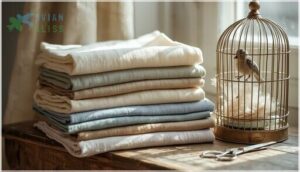
fabric you pick for your bird’s cage cover matters more than most beginners expect.
It affects airflow, warmth, light blocking, and how easy the whole thing is to keep clean.
Here’s a look at your best options and what each one does well.
Breathable Cotton and Its Advantages
Cotton is the go-to fabric for DIY bird cage covers — and honestly, it earns that reputation. Its natural breathability facilitates airflow efficiency, so your bird isn’t sleeping in stale air. It’s soft, eco‑friendly, material‑conscious, and manages noise damping and temperature regulation better than synthetic options.
- Breathable cotton keeps air circulating all night
- Soft fibers mean gentle skin softness against cage bars
- Dark cotton weaves dim lights without sealing airflow
- Easy to machine wash weekly for hygiene
- Safe, natural material your bird won’t react to
Fleece and Burlap for Different Climates
When the seasons shift, your fabric choice shifts too.
Fleece is your best friend for winter nights — its heat retention traps warm air and manages draft prevention smoothly.
Burlap’s loose weaving makes airflow management effortless in warmer climates, preventing overheating.
For a well-rounded DIY bird cage cover, think of fleece and burlap as your seasonal fabric choice toolkit — one warms, one breathes.
Avoiding Unsafe Materials
Not all fabrics are bird-safe — and that gap can quietly cost your bird its health.
Toxic Fabric Choices like vinyl or PVC release fumes that stress sensitive lungs, while Hazardous Dyes in bright synthetics break down into chemicals birds ingest from chewed threads.
Vinyl, PVC, and synthetic dyes don’t just look unsafe — they poison birds through fumes and chewed threads
Watch for Flame‑Retardant Risks, Unsafe Metal Hardware like zinc-coated grommets, and poor weaving that traps moisture, inviting Mold & Dust Prevention failures in your DIY bird cage cover.
Fabric Tips for Easy Cleaning
Easy cleaning starts with smart fabric choices. For DIY bird cage covers, stick to machine washable fabrics like 100% cotton or polyester blends — they handle gentle cycles without falling apart.
Quick dry materials, especially microfiber, are back on the cage the same day. Look for lint control and stain resistance built into the weave, and odor resistant textiles mean one mild-detergent wash restores freshness fast.
Step-by-Step Guide to Making a Cage Cover
Making your own bird cage cover is easier than it sounds, and getting the basics right from the start makes the whole process smoother.
There are just a few key steps to follow, each one building on the last. Here’s exactly what to do, from measuring your cage to making sure the finished cover fits snugly and safely.
Measuring Your Bird Cage Accurately

Getting the measurements right is the foundation of any good bird cage cover — skip this step, and nothing else will fit properly. Grab a flexible measuring tape and record your cage’s width, depth, and height from the outer edges, not just between the bars.
- Measure width at the widest outer point
- Include attachments like seed guards, which add 3–4 inches per side
- Account for domed tops by measuring to the peak
- Take each measurement twice and use the larger number
Add a 0.25-inch seam allowance on each panel edge so your finished cover isn’t too snug.
Creating a Custom Pattern
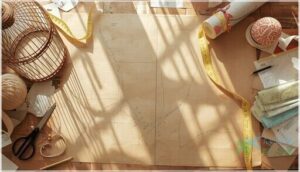
Think of your pattern as a dress rehearsal before the real thing.
Tape together grocery bags or kraft paper, hold them against the cage, and trace each face — top, front, sides, and back.
Keep your measuring tape handy to double‑check dimensions.
Add 1–1.5 cm seam allowance around every edge, plan your panel layout before cutting, and always do a test fit with scrap muslin first.
Cutting and Preparing Fabric Pieces
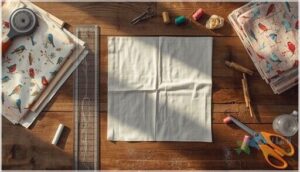
Once your pattern is ready, prewash your fabric first — cotton can shrink 3–5%, which would throw off your fit later.
After drying and pressing it flat, align each panel with the grainline using a sewing ruler so nothing hangs crooked.
Use a rotary cutter for clean straight edges, scissors for corners, mark your seam allowances clearly with tailor’s chalk, and cut confidently.
Sewing Techniques for Beginners

With your pieces cut and ready, it’s time to sew. Start with Straight Stitch Basics — a 2–2.5 mm stitch length works perfectly for cotton cage covers.
Practice Seam Allowance Control by keeping edges aligned with your needle plate guide. Use Backstitching Tips at every seam start and end to lock stitches. Pressing Finishing Seams flat after each pass keeps everything neat, and Thread Tension Adjustment ensures clean, even stitching throughout.
Ensuring a Snug and Safe Fit
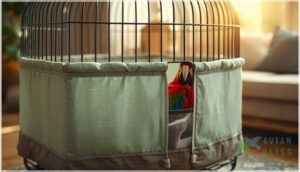
Once your seams are pressed, focus on fit and safety. A snug bird cage cover should hang just outside the bars, anchored with adjustable closures like velcro strips. Leave ventilation panels open for airflow, and manage excess fabric so nothing drags or sags.
For chewing prevention, check these four points:
- Secure anchoring
- Ventilation panels
- Excess fabric management
- Adjustable closures
Essential Safety and Maintenance Tips

Once your cover is made, keeping it safe and clean is just as important as sewing it well. A few simple habits can protect your bird from hidden hazards and keep the cover working the way it should.
Here’s what every beginner needs to know.
Preventing Airflow Blockages
Fresh air isn’t optional — it’s survival.
When placing your bird cage covers, leave at least one full side open and drape loosely to create natural ventilation gaps. Cage cover designs with built-in mesh panels help maintain consistent airflow through nylon mesh or mesh fabric layers.
Try the simple airflow testing method: breathe through your chosen fabric. Restricted? Find something lighter.
Partial coverage protects without suffocating.
Avoiding Loose Threads and Hazards
Even a tiny loose thread can become a serious trap for small toes or beaks.
When making DIY bird cage covers, choose Thread‑Free Fabrics with tight, smooth weaves and practice Secure Hemming to tuck every raw edge inside. Use sewing scissors to Trim Loose Ends flush after each wash, avoid Decorative Trim like fringe, and make Regular Thread Checks part of your bird cage maintenance routine.
Cleaning and Washing Recommendations
Keeping your DIY bird cage covers clean is one of the simplest bird cage maintenance and care habits you can build.
Wash covers weekly using a fragrance-free detergent — your Washing Frequency, Detergent Choice, and Drying Method all matter for your bird’s health.
Air-dry away from direct sun, skip fabric softeners, and store extras in a sealed bin for solid storage hygiene.
Inspecting for Wear and Tear
Checking your cover weekly is a small habit that goes a long way.
Look for thread fraying along hems and door edges, and gently tug seams to catch any gaps — seam integrity fails fastest at corners and hanging loops.
Watch for fabric thinning, color fading, and hardware wear on Velcro or ties.
This simple cage maintenance step keeps your DIY cover safe and lasting.
Top 10 Supplies for DIY Bird Cage Covers
Having the right supplies on hand makes the whole process smoother and a lot less frustrating. From measuring tools to sewing essentials, each item plays a role in helping you get a clean, well‑fitted cover. Here are ten supplies worth picking up before you get started.
1. Scotch Greener Masking Tape
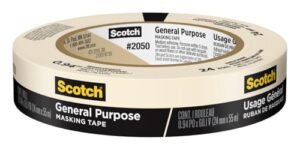
Scotch Greener Masking Tape is one of those quiet workhorses you’ll reach for constantly when making your first cage cover. Use it to hold pattern paper against the cage bars while you trace openings — it peels off metal cleanly without leaving sticky residue.
It’s also great for temporarily securing fabric pieces during fitting, so you’re not wrestling with pins near a curious beak. Made with 56% renewable materials, it’s a small but satisfying eco‑conscious choice for bird owners who care about the details.
| Best For | DIY bird owners and hobbyists who want a reliable, eco-friendly tape for cage cover projects, painting prep, labeling, and light bundling tasks. |
|---|---|
| Brand | Scotch |
| Primary Material | Rubber/Recycled Fiber |
| Primary Color | Tan |
| Weight | 3.2 oz |
| Skill Level | All levels |
| Craft Use | Masking/Labeling |
| Additional Features |
|
- Peels off cleanly without leaving residue, so your cage bars and surfaces stay damage-free
- Made with 55% renewable resources and a core from 70% post-consumer waste — a genuinely greener pick
- Versatile enough for painting, labeling, bundling, and fitting fabric — one roll does a lot
- Not built for wet conditions or extreme temperatures, so skip it for outdoor or high-heat spots
- Won’t cut it as a permanent bond — it’s meant to be temporary
- Can cause discoloration or corrosion if left on surfaces too long
2. Okuna Outpost White Vellum Tracing Paper
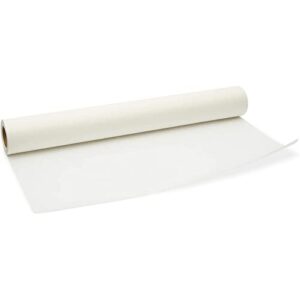
Good pattern paper makes everything easier, and this roll delivers.
The Okuna Outpost White Vellum Tracing Paper comes in a generous 17‑inch wide, 50‑yard roll — plenty for drafting every panel of your cage cover without taping narrow strips together.
Its translucent surface lets you see your cage outline clearly underneath, so tracing is accurate from the start.
The paper supports pencil, pen, and erasing without falling apart, which matters when you’re still tweaking measurements and learning the process.
| Best For | Sewers, fashion designers, and hobbyists who need a reliable, large-format tracing paper for drafting patterns and intricate designs. |
|---|---|
| Brand | ZQSTA |
| Primary Material | Vellum Paper |
| Primary Color | White |
| Weight | 1 unit |
| Skill Level | All levels |
| Craft Use | Pattern Drafting |
| Additional Features |
|
- Generous 17-inch x 50-yard roll means fewer interruptions and no awkward seam-taping mid-project
- Translucent surface makes tracing over existing patterns clean and accurate
- Works well with pencils and pens, and holds up through erasing while you fine-tune measurements
- Can tear or wrinkle with heavy handling, so it’s better suited for single-use drafts than repeated tracing
- Thin enough that certain markers may bleed through to layers underneath
- Stock can be inconsistent on Amazon Prime, so grabbing it when it’s available is a smart move
3. Vanhench Brown Kraft Paper Roll
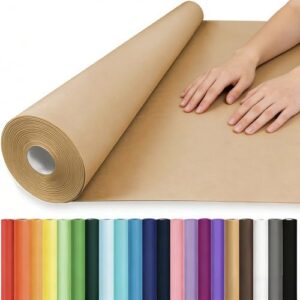
Pattern paper doesn’t have to be fancy to get the job done. The Vanhench Brown Kraft Paper Roll gives you a whopping 210 feet of sturdy, uncoated paper — more than enough to draft templates for multiple cages or redo a pattern that didn’t quite work out.
At 70 gsm, it’s thick enough to hold its shape when draped over your cage for a test fit, yet soft enough to cut cleanly with regular scissors. Eco-friendly and pencil-ready right out of the roll.
| Best For | Crafters, artists, and DIYers who need a generous supply of lightweight, eco-friendly paper for projects like pattern drafting, gift wrapping, or cage templates. |
|---|---|
| Brand | Unbranded |
| Primary Material | Paper |
| Primary Color | Brown |
| Weight | 8.48 lbs |
| Skill Level | All levels |
| Craft Use | Arts and Crafts |
| Additional Features |
|
- 210 feet of paper gives you plenty of room to work, redo, and experiment without running out
- Uncoated and pencil-ready surface makes sketching and drafting a breeze
- Made from recycled materials, so it’s a solid choice if you care about sustainability
- On the thinner side, so it can rip if you’re not careful with it
- Not built for heavy-duty packing or shipping — it’s craft paper, not moving box material
- Some buyers have received rolls with dents or tears, which can be frustrating right out of the box
4. Manufore 6×24 Acrylic Quilting Ruler
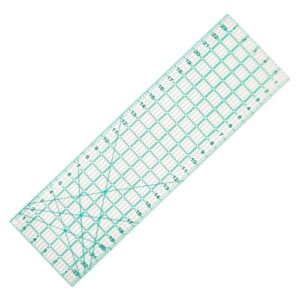
Once you’ve got your kraft paper pattern ready, you’ll need something precise to measure and cut against. The Manufore 6×24 Acrylic Quilting Ruler earns its place on the supply list fast.
At six inches wide and two feet long, it spans folded fabric in one pass — no repositioning, no guesswork. The clear acrylic lets you see your fabric underneath, and the 1/8-inch grid markings make seam allowances genuinely easy to dial in.
The non-slip coating keeps it steady while you cut, which beginners will appreciate immediately.
| Best For | Quilters of all skill levels who need a reliable, easy-to-read ruler for precise fabric cutting and seam allowance work. |
|---|---|
| Brand | MANUFORE |
| Primary Material | Acrylic |
| Primary Color | Blue |
| Weight | 11.2 oz |
| Skill Level | All levels |
| Craft Use | Quilting/Sewing |
| Additional Features |
|
- The full 6×24" size covers folded fabric in a single pass, saving time and cutting down on repositioning
- Clear acrylic with 1/8-inch grid lines makes it easy to see your fabric and dial in accurate measurements
- Non-slip coating keeps the ruler steady while you cut, which is a big help when you’re just starting out
- No metric measurements, so international users may need to add their own markings
- The anti-slip coating can be hit or miss on certain surfaces like vinyl
- Some users find the tick marks and cross points a bit bulky, which can make fine-detail reading trickier
5. Fiskars Acrylic Sewing Ruler 3 by 18
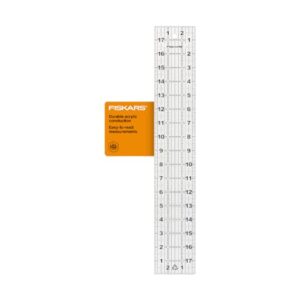
Where the Manufore shines on wide cuts, the Fiskars Acrylic Sewing Ruler fills a different need — narrow, precise work on smaller panels.
At 3 inches wide and 18 inches long, it’s the right tool when you’re trimming a front flap or marking a clean edge along a side panel.
The clear acrylic lets you see your fabric grain underneath, and the printed gridlines keep seam allowances honest.
Weighing 4.6 ounces, it won’t fatigue your hand mid-project.
| Best For | Quilters, sewists, and crafters who need clean, precise cuts on narrow fabric panels, strips, or detailed project work. |
|---|---|
| Brand | Fiskars |
| Primary Material | Acrylic |
| Primary Color | Clear |
| Weight | 4.6 oz |
| Skill Level | All levels |
| Craft Use | Quilting/Sewing |
| Additional Features |
|
- Clear acrylic lets you see fabric grain and patterns right through the ruler — no guessing
- Bold gridlines make seam allowances easy to read at a glance
- Lightweight at 4.6 oz, so it’s comfortable to use for longer sessions
- Too narrow for wide cuts — you’ll want a bigger ruler for those
- Can develop a slight bend over time, though a little heat fixes it
- Rotary blades wear out and need replacing, adding to the long-term cost
6. Tesdluy Retractable Tape Measure Set
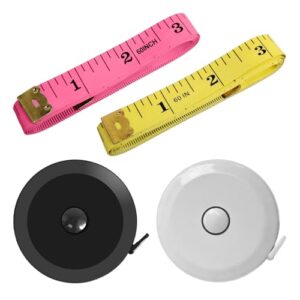
Once you’ve got your rulers sorted, you still need something flexible for the cage itself — and that’s where the Tesdluy Retractable Tape Measure Set earns its spot.
Cage corners and rounded tops don’t cooperate with rigid tools.
This 4-pack includes both soft and retractable tapes, each running 60 inches (150 cm) with clear inch and centimeter markings on both sides.
The compact housing keeps things tangle-free, and having multiple tapes means one stays near the cage while another lives at your cutting table.
| Best For | Sewers, tailors, and crafters who need a flexible tape for measuring curved surfaces, body dimensions, or oddly shaped projects. |
|---|---|
| Brand | Tesdluy |
| Primary Material | Fiberglass/Vinyl |
| Primary Color | Multi-color |
| Weight | 2 oz |
| Skill Level | All levels |
| Craft Use | Sewing/Tailoring |
| Additional Features |
|
- Comes as a 4-pack with both soft and retractable options, so you can keep one at each workspace
- Double-sided markings (inches and centimeters) make it easy to switch between measurement systems
- Compact and lightweight — slips into a pocket or craft bag without any hassle
- Not precise enough for technical or machinist-level work
- The retractable clasp area can warp over time with regular use
- 60 inches is the max, so it won’t cut it for larger-scale measuring jobs
7. Fiskars SoftGrip All Purpose Scissors
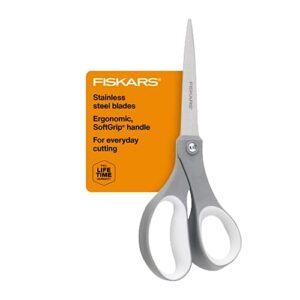
With your measurements locked in, it’s time to cut — and having the right scissors makes that part surprisingly satisfying. The Fiskars SoftGrip All-Purpose Scissors are a solid go-to for trimming pattern paper, cutting cardboard templates, and snipping threads along the way.
The SoftGrip handle keeps your hand comfortable during longer sessions, and the stainless steel blades stay sharp all the way to the tip. At just 3.2 ounces, they won’t weigh you down either.
| Best For | Crafters, scrapbookers, and home sewers who need reliable everyday scissors for cutting paper, cardboard, and light materials. |
|---|---|
| Brand | Fiskars |
| Primary Material | Plastic/Steel |
| Primary Color | Gray |
| Weight | 3.2 oz |
| Skill Level | All levels |
| Craft Use | Paper/Crafting |
| Additional Features |
|
- Stainless steel blades stay sharp and cut cleanly all the way to the tip
- The SoftGrip handle makes longer cutting sessions way more comfortable
- Super lightweight at 3.2 oz, and backed by a full lifetime warranty
- Not built for heavy-duty jobs like thick fabric or dense materials
- The pivot screw can loosen up over time with regular use
- Struggles a bit with sticky adhesives, so keep that in mind for certain craft projects
8. Fiskars RazorEdge SoftGrip Fabric Scissors
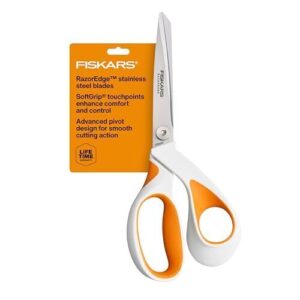
Once you’re done with pattern paper and templates, fabric cutting is where these scissors truly shine. The Fiskars RazorEdge SoftGrip Fabric Scissors are purpose-built for textiles — their precision-honed stainless steel blades glide through cotton, fleece, and multiple layers without bunching or dragging.
The bent handle keeps fabric flat on your table, which makes a real difference when you’re trimming wide cage cover panels. At 8 inches, they’re long enough for extended cuts but easy to control, even if you’re just starting out.
| Best For | Sewers, crafters, and hobbyists who want clean, precise fabric cuts with a comfortable grip during long projects. |
|---|---|
| Brand | Fiskars |
| Primary Material | Stainless Steel |
| Primary Color | White/Orange |
| Weight | 4.2 oz |
| Skill Level | All levels |
| Craft Use | Fabric Cutting |
| Additional Features |
|
- RazorEdge blades cut cleanly through cotton, fleece, and multiple layers without dragging or bunching
- SoftGrip handle reduces hand fatigue during extended cutting sessions
- Comes with a protective sheath, making it easy to store or toss in a travel bag
- Handle size may feel too small or uncomfortable for users with larger hands
- Blades can dull over time, especially with heavy use
- Designed specifically for fabric, so don’t expect great results on paper, packaging, or other materials
9. Brother XM2701 Sewing Machine
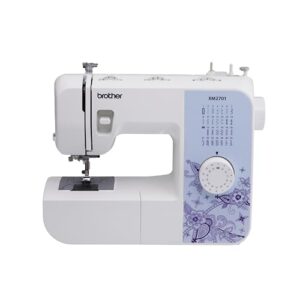
When it’s time to stitch your cage cover together, the Brother XM2701 makes the whole process feel far less intimidating. It comes with 27 built-in stitches — including zigzag and stretch options — so you’re covered whether you’re sewing lightweight cotton or cozy fleece.
The automatic needle threader and drop‑in bobbin save you real frustration, and the free arm manages curved sections with ease.
At 12.6 pounds with a carrying handle, it’s portable enough to store between projects without any hassle.
| Best For | Beginners and hobbyists who want a reliable, easy-to-use machine for everyday sewing projects like clothing, accessories, and home decor. |
|---|---|
| Brand | Brother |
| Primary Material | Metal |
| Primary Color | White |
| Weight | 12.6 lbs |
| Skill Level | Beginner/Advanced |
| Craft Use | General Sewing |
| Additional Features |
|
- 27 built-in stitches — including zigzag, stretch, and decorative options — gives you solid variety for most projects
- Automatic needle threader and drop-in bobbin make setup quick and painless
- Backed by a 25-year limited warranty, which is hard to beat at this price point
- Struggles with thick or heavy fabrics, so it’s not the best pick for heavy-duty work
- The spool pin feels flimsy and has a reputation for breaking with regular use
- No handle included, which makes it a bit awkward to carry around despite its lightweight build
10. Sunenlyst Pearlized Ball Head Sewing Pins
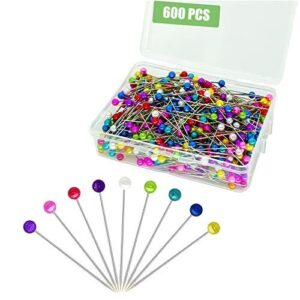
Every sewing project needs a reliable pinning workhorse, and the Sunenlyst Pearlized Ball Head Sewing Pins deliver exactly that.
The assorted bright colors make it easy to spot pins against dark cage cover fabrics before you head to the machine — a small detail that prevents a lot of headaches.
At 1.42 inches long, they pass cleanly through layered cotton without snagging.
With 600 pins per pack, you won’t run short mid‑project, making these a smart buy for any beginner’s sewing kit.
| Best For | Beginners and craft lovers who need a reliable, colorful set of pins for everyday sewing, quilting, and DIY projects. |
|---|---|
| Brand | Unbranded |
| Primary Material | Stainless Steel |
| Primary Color | Assorted |
| Weight | Not listed |
| Skill Level | Beginner/Crafter |
| Craft Use | Sewing/Quilting |
| Additional Features |
|
- 600 pins per pack means you’ll rarely run out mid-project
- Assorted colors make pins easy to spot on any fabric
- Sharp, sturdy stainless steel that slides through layered fabric cleanly
- Some pins may arrive blunt or missing the ball head entirely
- Pin colors can bleed or flake off onto fabric
- The storage box runs shallow, so pins can spill easily
Frequently Asked Questions (FAQs)
How do I cover a cage with multiple doors?
Cut the front panel into two vertical pieces so each half covers one door. Overlap the center edges by one inch, then secure them with Velcro for quick, easy access.
Should covers differ for day naps versus nighttime?
Night covers go dark and full, locking out light for 10 to 12 hours of deep sleep.
Day nap covers stay lighter, partial, just enough to dim and settle.
Do cage covers work for outdoor aviaries?
Cage covers absolutely work for outdoor aviaries.
Use waterproof, breathable fabric to block rain, wind, and harsh sunlight while keeping fresh air flowing.
Just make sure predator-proof materials are still in place underneath.
Can I use a cover during cage cleaning time?
You can, but keep it partial.
Drape the cover over the back and sides while leaving the front open so your bird has fresh air, light, and can still see you while you clean.
Conclusion
Stitching something special starts with simply caring enough to try. Your bird doesn’t need a luxury setup—just consistent darkness, clean fabric, and a cover that fits. That’s genuinely all it takes.
With the right supplies and this guide, making bird cage covers for beginners becomes less intimidating and more instinctive with every project.
Your feathered companion will reward your effort the only way birds know how—with calmer nights, healthier mornings, and a whole lot less drama at 2 a.m.
- https://parrotsupplies.co.za/blogs/chloes-story/the-truth-about-covering-your-parrots-cage-myths-and-benefits
- https://www.mightyape.co.nz/mn/buy/mighty-ape-breathable-good-night-birdcage-cover-black-35152847/
- https://geni.us/best_8x42_binoculars
- https://youtu.be/9Uytxr_Tu_Y
- https://birdsinthetree.com/do-birds-need-sunlight/