This site is supported by our readers. We may earn a commission, at no cost to you, if you purchase through links.

A feeder packed with the wrong seeds doesn’t just waste money—it invites squirrels, attracts pigeons, and leaves the birds you actually want hungry. Small gardens have no room for that kind of chaos.
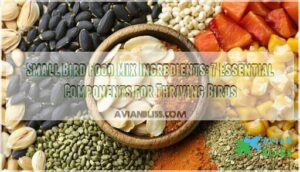
Choosing the right bird seed mixes for small gardens means thinking about who you’re feeding, what keeps your patio clean, and what stops half the bag from rotting on the ground. The good news: a handful of targeted seeds does more than a generic supermarket blend ever could.
Here’s exactly what to fill your feeder with.
Table Of Contents
Key Takeaways
- Matching seeds to specific birds—like nyjer for finches, safflower for cardinals, and peanut pieces for jays—works far better than grabbing a generic supermarket mix.
- Hull-free options like sunflower hearts keep your patio clean and cut down on the sprouting mess that low-quality blends leave behind.
- Storing seed in airtight containers, rotating stock regularly, and doing a quick daily ground sweep stops pests, mold, and waste before they become a problem.
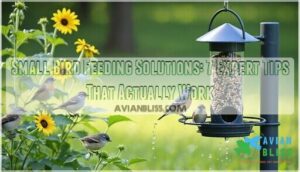
- A compact feeder like a slim squirrel-proof tube or a window hopper lets even the smallest garden attract a solid variety of birds without the clutter.
Best Seed Mixes for Small Gardens
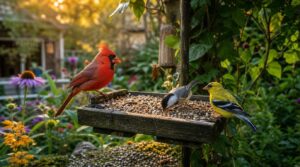
Not every garden has room for a sprawling feeder setup, but that doesn’t mean you can’t attract a good variety of birds. The right seed mix does most of the heavy lifting, pulling in more species without adding clutter or mess.
A well-chosen blend paired with the right hanging feeder setup can turn even a small yard into a surprisingly busy spot.
Here are five mixes that work especially well in smaller spaces.
No-waste Sunflower Hearts
Sunflower hearts are one of the smartest picks in backyard birding. These hull-free kernels keep your patio clean — no shells, no sprouting mess.
They deliver a real energy boost for garden birds, especially during migration support season when birds need dense calories fast.
Buy in bulk to save money, store in an airtight container to protect aroma preservation, and you’ll notice visitor frequency climb quickly.
The mix also offers balanced nutrition blend.
Black-oil Sunflower Blends
If sunflower hearts got you started, black oil sunflower seeds take things further. Its thin shell and roughly 40% oil content make it one of the best bird seed blends for garden birds year-round.
Here’s why it works so well:
- Energy Density fuels birds through cold snaps
- Shell Thickness is minimal, so small birds crack it easily
- Winter Fat Boost bolsters survival when food is scarce
- Oil Preservation keeps nutrition intact longer in your feeder
Nyjer Mixes for Finches
Want to bring a flash of gold to your garden? Finch-friendly Nyjer seeds are your best bet. These tiny kernels pack a serious amount of fat—about 25% more than millet—providing finches with the essential fatty acid balance they need during winter.
Use specialty Nyjer feeders with narrow ports to reduce waste. This design ensures efficient feeding while minimizing seed loss.
Adjust your seasonal mix to maintain seed size uniformity and freshness. Consistent adjustments help preserve seed quality, keeping your garden a reliable haven for finches year-round.
Safflower-heavy Cardinal Blends
Cardinals are drawn to color and calories—and a safflower-heavy seed blend delivers both. Safflower’s natural oil ratio aids bird nutrition through cold months, and its bitter taste keeps squirrels away.
Mix in black oil sunflower for extra fat, and place your feeder at the right feeding height (around five feet) for best results. Seasonal timing and blend cost make wild bird seed mixes an easy backyard win.
Peanut Pieces for Energy
Peanuts pack a serious calorie boost into every small piece, making them one of the most energy-rich foods you can add to wild bird seed mixes. This fat-dense snack delivers winter energy fast, helping birds stay warm and active on cold days.
Keep peanut pieces plain, salt-free, and fresh. As part of a balanced mix, they support bird nutrition and rapid satiety without overfeeding.
Match Seeds to Garden Birds
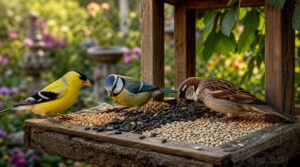
Different birds have different favorites, and knowing what each species loves makes your feeder far more effective.
Pairing the right seed with the right bird matters even more when you’re storing it properly in airtight bird food storage containers that keep every variety fresh and pest-free.
A small garden doesn’t need a dozen seed types — just the right ones for the birds already visiting your yard.
Here’s a simple breakdown of which seeds work best for the birds you’re most likely to see.
Finches and Nyjer Seed
Goldfinches, house finches, and purple finches absolutely love Nyjer — a tiny, oil-rich seed with impressive caloric density that facilitates winter thermoregulation when temperatures drop.
Unlike thistle, pure Nyjer seed keeps finch health strong all season. Use specialty Nyjer feeders with small mesh ports to maintain seed purity, simplify feeder cleaning, and give your wild birds reliable, energy-packed nutrition.
Cardinals and Safflower Seed
If there’s one seed that cardinals keep coming back to, it’s safflower. Its Shell Hardness Advantage naturally reduces competition, so your cardinals enjoy calmer Cardinal Group Dynamics at the feeder. That’s a real Winter Energy Boost when they need it most.
5 Safflower Tips for Cardinals:
- Use hopper feeders for best Feeder Placement Tips
- Store seed airtight for freshness
- Practice Seasonal Seed Rotation to maintain interest
- Pair with a water source nearby
- Combine with sunflower in your seed mixture for broader species attraction
Chickadees and Sunflower Hearts
Chickadees are tiny birds with a big appetite for sunflower hearts. Their natural caching behavior means they grab a seed, fly to a habitat edge, and store it for later. This makes beak handling easy—no cracking required.
Adding sunflower hearts to your seed mixture ensures reliable species attraction and provides serious winter energy support. The comparison between sunflower hearts and black oil sunflower seeds is outlined in the table below:
| Benefit | Sunflower Hearts | Black Oil Sunflower |
|---|---|---|
| Feather Health | High fat, vitamin E | High oil content |
| Beak Handling | Shell-free, easy grip | Thin hull |
| Bird Feeding | Year-round draw | Broad species attraction |
Jays and Peanut Pieces
Jays are natural hoarders—their cache strategy turns your feeder into a personal pantry. Blue jays practice smart bill-size selection, grabbing peanut pieces that fit just right, then flying off to stash them.
These nutrient-dense seeds pack serious nutrient density, with roughly 50% fat for seasonal feeding patterns and urban foraging.
Add peanut pieces, and you’ll keep jays coming back all winter.
Nuthatches and Mixed Kernels
Nuthatches are natural hoarders—they wedge seeds into bark crevices and return to them later. That’s why cache-friendly blends work so well for them. Offer thin-shell seeds like sunflower and peanuts, providing beak-compatible kernels they can grab and store quickly.
Premium bird seed blends with nutrient-dense seeds deliver a winter energy boost, keeping nuthatches visiting your branch-perch feeders all season.
Choose Low-Mess Seed Blends
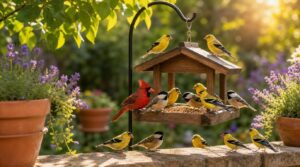
The seed you choose matters just as much as where you put it. Low-mess blends keep your patio tidy and make feeding birds something you actually enjoy, not a weekend chore.
Here’s what to look for when picking a blend that works hard and stays clean.
Hull-free Seed Options
Hull-free mixes are some of the best choices you can make for a tidy small garden. Nutrient-dense seeds—sunflower hearts, shelled peanuts, and hull-free safflower—skip the thin shells entirely, eliminating husk mess beneath your feeder.
Their energy-rich food profile fosters species-wide attraction, drawing cardinals, finches, and chickadees alike.
Bulk packaging benefits include easier storage and extended shelf life when kept sealed and dry.
Avoiding Filler Seeds
Not all seed mixes are created equal. Cheap blends often pad their weight with milo sorghum, rice filler, wheat, and oats — ingredients most garden birds simply ignore. Do an ingredient label audit before buying: prioritize high-fat, nutrient-dense seeds and verify low moisture content.
Cheap seed mixes waste money on fillers birds ignore — choose fat-rich, nutrient-dense seeds instead
Skip blends that led with fillers and look for:
- No milo sorghum or rice listed in the first three ingredients
- Shelled, high-protein seeds like sunflower hearts or peanut pieces near the top
- A clean, nutty smell confirming freshness
Reducing Sprouting Under Feeders
Even the best seed selection can leave you with a weedy mess if spilled seeds hit bare soil. A spill tray design catches fallen kernels before they germinate, while a gravel base underneath improves drainage and blocks contact with dirt. Layer in barrier mulch or fabric ground cover for extra protection.
Seasonal relocation of feeders disrupts build-up, offering simple, effective feeder moisture control.
Cleaner Patios and Lawns
Keeping your patio clean starts with choosing mess-free bird food and no-waste options that skip the hulls entirely. A power-wash schedule a few times a season manages leftover residue, and eco-friendly sealants protect surfaces from moisture buildup.
Pet-safe cleaners make maintenance worry-free, while leaf litter prevention through regular sweeping and feeder hygiene keeps both your lawn and feathered visitors happy.
Freshness and Spoilage Control
Fresh seed makes all the difference. Store your mixes in airtight containers using cool chain management — ideally between 5–15°C — and toss anything that smells off or looks damp. Watch for aflatoxin risk in corn and peanuts by rotating stock regularly.
- Use desiccant packets to fight moisture
- Choose oxygen scavenger packaging for oily seeds
- Check freshness indicator sensors on premium bags
- Allow gradual warm-up after cold storage before filling feeders
Small-Space Feeder Pairings
A small garden doesn’t mean you have to compromise on attracting birds — it just means choosing feeders that work smarter in tight spaces. The right pairing of feeder and seed can make a surprising difference in how many species stop by.
Here are five compact options worth considering.
Compact Tube Feeders
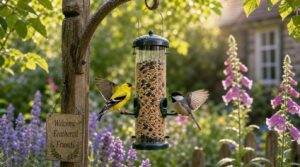
Tube feeders are one of the smartest tools for tight spaces. Constructed with UV-Stabilized Tubing and Moisture-Resistant Caps, they ensure your best-selling wild bird seed mixes stay dry and fresh. The Clear Seed Visibility feature allows you to refill before birds lose interest, maintaining their visits.
Additional features like Adjustable Perch Spacing and Modular Seed Compartments simplify the bird-attracting process, making it genuinely easy. These design elements cater to both bird enthusiasts and the birds themselves.
| Feature | Why It Matters |
|---|---|
| UV‑Stabilized Tubing | Slows seed degradation in sunlight |
| Moisture‑Resistant Caps | Keeps seed dry after rain |
| Clear Seed Visibility | Shows when refills are needed |
| Modular Seed Compartments | Separates different feeder types |
| Squirrelproof Feeders | Blocks pests without bulk |
Window Hopper Feeders
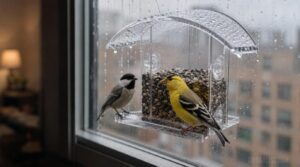
Window hopper feeders let you watch birds up close — no yard required. Strong Suction Cup Strength ensures they remain securely attached to glass, while a Roof Rainshield Design protects your best-selling wild bird seed mixes from rain. Port Spacing Benefits minimize crowding, and clear viewing window materials allow you to monitor seed levels at a glance.
Try specialty blends like nyjer or sunflower hearts to attract birds year-round. These options ensure consistent visits all season long.
Low Platform Feeders
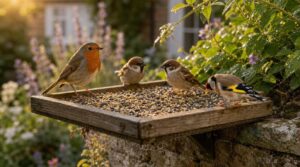
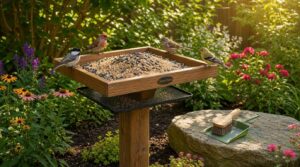
Low platform feeders are a great match for small gardens, bringing ground-feeding birds right to your level. Their compact footprint fits easily on walls or posts, and adjustable height options let you customize placement.
Mesh flooring and a built-in drainage system keep nutrient-dense seeds and high-oil-content mixes dry, ensuring mess-free bird food that’s fresh and perfect for attracting birds daily.
Nyjer Sock Feeders
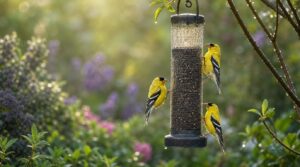
A Nyjer sock feeder might be the smartest small-space tool you haven’t tried yet. Hang one at the right hanging height, and goldfinches will find it fast. The mesh durability and weather shielding keep our best-selling bird seed blends fresh through rain and sun.
Multiple access points let several finches feed at once, making finch-friendly Nyjer seed go further for attracting birds daily.
Slim Squirrel-proof Feeders
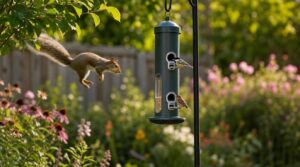
Slim squirrel-proof feeders are worth every penny. Squirrels can empty a feeder in minutes, making these specialized designs essential. Smart baffle engineering and a spring port system close seed access instantly when a squirrel’s weight triggers the mechanism.
Chew-resistant plastics and a locking roof mechanism provide long-term protection for nutrient-dense, high-protein seeds. These features ensure durability against persistent pests while safeguarding your investment in quality bird food.
The narrow port design keeps the right birds feeding, allowing smaller birds access while excluding squirrels. Meanwhile, integrated feeder protection strategies and squirrel baffles handle the rest, ensuring a harmonious and squirrel-free feeding environment.
Prevent Waste and Pests
Keeping your feeder area tidy makes a bigger difference than most people realize. A little daily effort goes a long way toward cutting down on waste, pests, and spoiled seed.
Here’s what to focus on to keep things clean and your birds coming back.
Airtight Seed Storage
Good seed storage starts with a solid container. Use glass jars, metal tins with silicone seals, or vacuum-sealing to cut seed spoilage fast.
Tuck in desiccant packs for moisture control, and store your containers somewhere cool and dark for smart temperature management.
Don’t forget labeling practices — mark each batch with the seed type and date so you always rotate fresh stock first.
Daily Ground Cleanup
Storing seed properly keeps your supply fresh — but what falls to the ground needs just as much attention. Seed spill removal and debris sweeping each morning stop seed spoilage before it starts. A quick surface inspection catches soggy patches and bird droppings that attract pests. Moisture drying and weed trimming around feeders keep things tidy for ground-feeding birds and support overall feeder maintenance .
Your daily four-step routine:
- Sweep hulls, twigs, and spilled mess-free bird food from walkways
- Check for damp spots and dry them quickly
- Remove sprouting weeds near feeders
- Discard any seed showing mold or dampness
Hot-pepper Squirrel Deterrents
After sweeping up spills, your next line of defense is hot pepper blends. Capsaicin application—coating seeds or feeder perches with spicy extracts—works because squirrels feel the burn while birds don’t.
Reapplication frequency matters: refresh every one to two weeks, or after rain, for steady squirrel-deterrent results.
| Factor | Details | Tip |
|---|---|---|
| Effectiveness Variables | Concentration, rain, wind | Reapply after wet weather |
| Safety Guidelines | Wear gloves when handling | Keep away from eyes |
| Environmental Impact | Humane, non-harmful to birds | Follow label directions |
| Hot Pepper Blends | Pre-coated seed options available | No mixing required |
| Feeder Maintenance | Treat perches and poles too | Aids squirrel exclusion |
Mold and Damp Seed
Hot pepper blends handle squirrels, but damp seed is a different problem. Mold grows fast when humidity climbs above 60 percent, and warm storage spots make it worse.
Check for fuzzy growth, clumping, or a musty smell—those are your mold identification signals.
Use desiccant packs, practice seed drying before storage, and prioritize container ventilation.
No-waste options and mess-free bird food reduce leftover seed that traps moisture.
Safe Peanuts and Corn
Peanuts and cracked corn are favorites for ground-feeding birds, but they carry a real risk: aflatoxin, a mold toxin with strict safety thresholds of 20 parts per billion in many countries.
Buy from suppliers who run regular audits and batch testing. Stick to cold storage and proper drying protocols at home to mitigate risks.
A quick visual screening for discolored or damaged kernels catches bad batches before they cause harm.
Frequently Asked Questions (FAQs)
What is the best bird seed mix for small birds?
The smallest feeders often draw the biggest crowds.
For small birds, a no-waste blend of sunflower hearts and finch-friendly Nyjer seed hits the sweet spot — high energy density, seasonal nutrition, and zero hull mess.
How often should small garden feeders be cleaned?
Clean feeders every two weeks as part of your seasonal cleaning schedule.
Bump that to weekly with humidity-driven cleaning in hot, damp weather or high-traffic cleaning when many birds visit regularly.
Which seeds attract birds during winter months?
When winter arrives, birds burn energy fast just to stay warm. High-fat options like sunflower, safflower, and nutrient-dense seeds meet their winter bird diet needs with high oil content perfectly.
Do feeders need repositioning throughout the seasons?
Repositioning feeders seasonally is one of the best bird feeding tips you can follow.
Use shade management in summer, winter windbreaks for cold months, and adjust placement near migration hotspots as habitat changes shift bird activity.
How do weather conditions affect seed quality outdoors?
Temperature stress, humidity effects, and rainfall timing all break down seed quality fast. Wind damage and excess light exposure speed up spoilage.
Always swap out damp or stale seed to prevent aflatoxins.
Conclusion
The right tool for the right job—and the right seed for the right bird makes all the difference in a small garden. Choosing targeted bird seed mixes for small gardens means less waste, fewer pests, and more of the birds you actually want at your feeder.
Match your seeds to your visitors, keep storage tight, and clean up regularly. By doing so, your small space becomes exactly the kind of garden birds keep coming back to.
- https://braxtons.com/blog/finding-the-best-wild-bird-seed-how-to-select-the-perfect-mix-for-your-feathered-friends
- https://duncraft.com/collections/all-bird-seed?srsltid=AfmBOoqyLsyvuhAwpGnWq9bcaSfr0KJ6V4PIErxU3qZStvysprQLtah3
- https://www.kalmbachfeeds.com/blogs/wild-birds/the-best-bird-seed-for-attracting-more-birds-what-to-feed-for-maximum-color-activity?srsltid=AfmBOorwUnkigvRKcYUdk4s6GWFRyUPVUoQ1GP6S3MT3CctIxWiCcjr6
- https://birdseyemeeple.com/homemade-bird-food/
- https://feedthebirds.com/collections/bundles-with-free-feeders