This site is supported by our readers. We may earn a commission, at no cost to you, if you purchase through links.
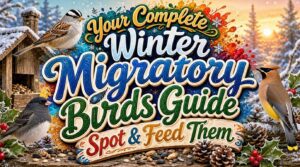
Every November, something shifts. The birds at your feeder change almost overnight—familiar summer faces gone, replaced by strangers with white-striped heads and rustling wings you don’t recognize. That’s not coincidence. Billions of birds mid-journey, following ancient routes shaped by food, daylight, and instinct sharpened over millions of years. Some stopped by design. Others landed because a storm forced their hand.
Knowing who they are, why they came, and what they need turns a cold-weather feeder into something worth watching every morning—this winter migratory birds guide covers exactly that.
Table Of Contents
- Key Takeaways
- What Are Winter Migratory Birds?
- Why Birds Migrate in Winter
- Main Winter Migration Routes
- Common Winter Songbirds
- Woodpeckers, Nuthatches, and Titmice
- Winter Waterfowl and Geese
- Identifying Winter Birds Easily
- Best Winter Bird Habitats
- Feeding Migratory Birds Safely
- Winter Bird Threats and Conservation
- Frequently Asked Questions (FAQs)
- Conclusion
Key Takeaways
- Winter birds move because of food, not just cold — shrinking daylight triggers hormonal changes that push birds to follow dwindling food sources south before survival becomes impossible.
- North America’s four flyways (Atlantic, Mississippi, Central, and Pacific) act like highways in the sky, and knowing which one runs through your area tells you exactly which species to expect at your feeder.
- The right food makes a real difference — black-oil sunflower seeds, suet, niger, and a heated water source can be the deciding factor between a bird surviving a hard freeze or not.
- Cats, window collisions, and habitat loss kill billions of birds every year, but simple fixes like UV window decals, keeping cats indoors, and planting native shrubs near feeders genuinely help.
What Are Winter Migratory Birds?
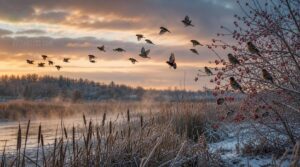
Not every bird you see in winter flew in from somewhere far away — but plenty did.
Some made an impressive journey to reach your yard — check out this winter backyard bird identification guide to see which species traveled far and which simply stayed put.
Winter migratory birds are species that shift where they live based on the season, following food and warmer conditions. Here’s what you need to know about how that seasonal movement actually works.
Seasonal Movement Basics
Every fall, something ancient kicks in for birds — and it’s not just the cold. Seasonal avian movement is driven by a mix of cues your backyard visitors can’t ignore:
- Photoperiod cues — shrinking daylight triggers hormonal regulation that tells birds it’s time to go
- Temperature thresholds — dropping temps raise energy expenditure, making migration routes the smarter survival bet
- Wind assistance — favorable winds shape migration timing and patterns
Migratory birds also rely on celestial navigation cues to orient their long journeys.
Resident Vs Migratory Birds
Some birds never leave — they’re homebodies with strong territory fidelity, relying on habitat stability and a consistent seasonal diet year-round. Migratory birds, by contrast, burn through energy reserves on long journeys guided by navigation cues.
| Resident Birds | Migratory Birds |
|---|---|
| Stay year-round | Seasonal visitors |
| Cache local food | Burn fat reserves |
| Defend fixed territory | Follow flyway routes |
| Feeder attraction all winter | Appear then disappear |
Knowing which is which helps you plan smarter winter bird feeding.
Partial Migration Patterns
Not every bird in a species migrates — and that’s actually fascinating. Partial migration means some individuals leave while others stay put.
- Age influences who goes — younger birds often migrate while experienced adults hold territory
- Trigger thresholds like food scarcity and temperature drops push individuals to move
- Habitat fragmentation shifts the math, making staying riskier
Winter Survival Advantages
Migration isn’t the only winning strategy. Staying put works too — if you’ve got the right toolkit.
| Survival Strategy | How It Works | Example |
|---|---|---|
| Feather Insulation | Traps air, cuts heat loss up to 60% | Chickadees, juncos |
| Metabolic Rate Reduction | Lowers energy expenditure at rest | Roosting songbirds |
| Food Caching | Stores seeds before snow hits | Nuthatches, titmice |
| Cooperative Thermoregulation | Shared roosts reduce individual cold exposure | Communal bird roosts |
| Subnivean Habitat Use | Snow cover shields small foragers underneath | Voles, ground feeders |
Cold tolerance and smart bird feeding behavior make winter survival strategies more accessible than you’d think.
Why Birds Migrate in Winter
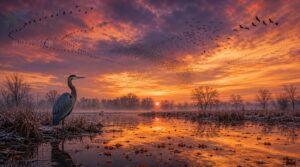
Birds don’t migrate just because the weather gets cold — it’s actually a mix of factors working together that sends them south. Understanding what triggers that instinct helps you predict when and where to spot them.
Here’s what’s really driving them to move.
Food Scarcity Triggers
Think of winter as nature’s slow starvation test. Early frost triggers Crop Frost Loss, slashing edible forage by 20 percent across northern grounds. Additional pressures—Wetland Freeze, Insect Decline, and Seed Shortage from heavy snow cover—further strain food availability.
This cascading resource scarcity renders survival untenable. As dependence on dwindling supplies intensifies, migration becomes the only viable solution: birds follow the food south.
Shorter Daylight Changes
Daylight is the hidden clock behind winter migration. As days shrink by 2–3 minutes daily after the autumn equinox, photoperiod cues trigger a cascade of changes:
- Foraging Window Compression — less light means less feeding time
- Energy Reserve Timing — birds bulk up fat faster
- Photoperiod-driven Molt — feathers shift for insulation
- Dawn Chorus Shift — morning calls intensify earlier
These bird migration phenology adjustments, driven by photoperiodism, fine-tune migration timing instinctively.
Harsh Weather Pressure
When storms roll in, birds feel it before you do. Rapid pressure drops signal dangerous extreme weather conditions ahead, triggering an urgent push southward. Pressure gradients drive brutal winds, making cold weather foraging nearly impossible.
High pressure clarity brings relief but also bone-chilling wind chill overnight. These storm pressure patterns fundamentally force birds to move — or risk starving — making weather patterns a primary migration trigger.
Survival and Energy Needs
Fat storage is the bird’s secret weapon. Before departure, fat reserves can make up 40% of a bird’s body weight — pure fuel for the journey.
In winter, thermoregulation strategies kick into overdrive, pushing metabolic rate up to three times normal levels during hard freezes. That’s why fuel selection matters: a winter diet rich in seeds and suet aids energy budgeting, cold weather foraging, and hydration balance when food availability drops.
Main Winter Migration Routes
Birds don’t just "head south" — they follow very specific highways through the sky, and knowing which one runs through your area changes everything about what you’ll see this winter. North America has four major flyways, each funneling millions of birds from breeding grounds to warmer wintering spots.
Here’s a look at each route and the key stopovers that make the whole journey possible.
Atlantic Flyway
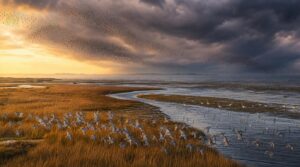
The Atlantic Flyway is the busiest migration corridor on the continent, stretching from the Canadian Arctic down the eastern coastline.
Millions of birds funnel through this corridor each season, making it a prime reason to stock your feeders with safe, high-quality bird seeds that support migrating species.
Delaware Bay Shorebirds congregate on mudflats each spring, while the Cape May Hotspot attracts massive mixed flocks during fall migrations.
Coastal Marsh Refuges and Salt Marsh Feeding grounds provide critical resources to fuel these journeys.
Flyway Weather Impacts, particularly from nor’easters, can shift migration routes overnight.
Mississippi Flyway
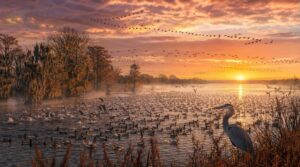
Think of the Mississippi Flyway as North America’s highway for birds — stretching across 21 states from Canada straight down to the Gulf Coast.
Floodplain wetlands and river refuges along the Mississippi provide millions of waterfowl with vital places to rest and refuel. Drought effects can severely constrict these critical wetland habitats, threatening their availability during migration.
This underscores the necessity of State Collaboration and Citizen Monitoring to track shifts in bird migration routes, particularly during the winter birdwatching season.
Central Flyway
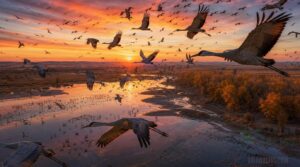
Head west from the Mississippi and you’re in the Central Flyway — a sweeping corridor running from Canada straight to the Gulf. The Platte River concentrations of Sandhill cranes are truly something you have to see once. Missouri River wetlands fuel waterfowl through fall, while prairie pothole staging areas prepare birds for long flights south.
Weather front impacts can shift migration routes in the Central Flyway overnight.
Pacific Flyway
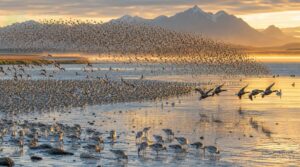
Now shift your gaze west — the Pacific Flyway spans the entire Pacific coast, from Alaska to Baja California. Coastal mudflats teem with Western Sandpipers, while Pacific Brant geese rely on eelgrass feeding grounds in sheltered bays.
The Flyway Council oversees critical salinity management at key wetlands, including the Great Salt Lake. Bird festivals along this route transform winter migration into an engaging spectacle.
Important Stopover Habitats

Along every flyway, stopover sites make or break a bird’s winter journey. wetlands, mudflats, and tidal creek resources act like roadside diners — birds refuel fast and move on.
Reed bed sanctuaries shelter exhausted songbirds overnight, while delta sandbar havens pack shorebirds in tight. Irrigated cropland stops and mudflat refueling zones fill gaps between wild habitats.
Healthy migration corridors depend on protecting these spots.
Common Winter Songbirds
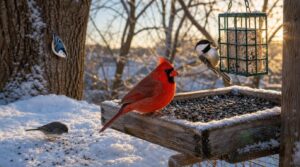
Winter songbirds are some of the easiest birds to spot once you know what to look for. A few familiar faces appear in backyards, parks, and fields across North America every cold season. Here are the ones you’re most likely to encounter.
American Robin Flocks
American Robins don’t always fly south — many stay close and gather in surprisingly large roosts, sometimes hundreds strong, tucked into dense thickets and swampy vegetation.
This flocking behavior is smart survival: territory dilution confuses predators, and vocal coordination helps the flock respond fast to threats.
Food patch dynamics drive their daily moves, while weather-driven movement shifting roosts when cold fronts roll in.
Dark-eyed Junco Identification
Spotting a Dark-eyed Junco is one of winter birdwatching’s easiest wins. Look for the pale bill — that’s your anchor point. Crown coloration ranges from slate-gray to brownish depending on the subspecies, and head pattern often shows a darker hood contrasting with lighter cheeks.
5 Quick Junco ID Clues:
- Pale, stubby bill shape
- Gray-to-dark hood (seasonal molt dulls juveniles)
- White outer tail feathers flash in flight
- Juvenile head looks brownish, not crisp gray
- Visits feeders for small seeds
White-crowned Sparrow Habits
The White-crowned Sparrow is a backyard birdwatching delight once you know what to look for. Watch for Ground Scratching — that quick two-footed kick through leaf litter is unmistakable.
Flock Efficiency drives their winter migration habits; they feed in mixed groups, rotating Shrub Perching with ground foraging for Predator Vigilance.
Their seed preferences lean toward grasses and weeds, and Dawn Whistles signal that a cold front has just passed.
White-throated Sparrow Habitat
If you want to find a White-throated Sparrow, think dense understory and shrub thickets — that’s their winter address. They work the leaf litter for seeds and bugs, sticking to warm microhabitats tucked inside wooded parks and forest edges. Ground forage is their game.
Habitat selection during winter hinges on cover, food availability, and nearby water.
American Goldfinch Plumage
You’d barely recognize the American Goldfinch in winter — the vivid lemon-yellow male transforms into soft olive-brown. This seasonal plumage change stems from molt timing and carotenoid diet, as winter coloration reflects the pigments available during the fall feather swap.
Knowing this biology simplifies songbird identification at feeders. Key winter clues include:
- Male brightness fading to dull olive after the late-summer molt
- Female dullness persisting year-round, with a subtle yellow belly wash
- A rump flash—a quick white burst against dark wings during flight
- Consistent black wings featuring white wing bars across seasons
- The conical bill shape, your most reliable winter identifier
Woodpeckers, Nuthatches, and Titmice
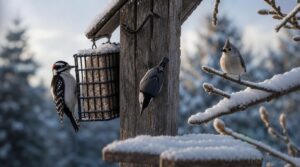
Woodpeckers, nuthatches, and titmice are the regulars you can count on all winter long. They’re not passing through — they’re sticking around, and with the right setup, they’ll visit your yard daily.
Here’s what draws each one in.
Downy Woodpecker Feeders
The Downy Woodpecker is your most reliable winter birdwatching companion. Hang suet feeders 5–10 feet up — proper feeder height keeps predators away and mimics natural foraging. Metal feeders resist their persistent pecking, and a dab of peanut butter attractant on a nearby post works like a magnet on cold days.
| What to Offer | Why It Works |
|---|---|
| Suet feeders | Top winter food source |
| Black-oil sunflower seeds | Easy for small bills |
| Multiple feeding ports | Reduces bird competition |
Don’t forget seasonal water access — even in freezing temperatures, hydration matters.
Red-bellied Woodpecker Calls
The Red-bellied Woodpecker‘s rolling call structure is hard to miss — it cuts right through dense winter woods. Once you tune in, you’ll catch the seasonal call variation: louder and more frequent in spring, quieter in deep winter.
- Rolling churr-churr phrases signal acoustic territory signaling to rivals
- Sharp "kik" notes warn nearby birds of danger
- Urban call adaptation makes city parks surprisingly active listening spots
White-breasted Nuthatch Foods
If the Red-bellied Woodpecker is the loud neighbor, the White-breasted Nuthatch is the quiet hoarder next door. This seed-eating bird relies on acorn caching and beechnuts storage to survive winter food availability gaps.
It also visits bird feeders for sunflower seeds, peanuts, and suet, with corn supplementation happening occasionally. Smart cache placement in bark crevices ensures its nutrient balance remains solid all season.
Red-breasted Nuthatch Behavior
Unlike its white-breasted cousin, the Red-breasted Nuthatch is a wanderer at heart. Irruptive migration pulls it south when conifer seed preference shifts — cone crops fail up north, and suddenly your feeder’s got a new regular.
Watch for trunk foraging headfirst down bark and food caching in crevices. These behaviors highlight the bird’s adaptability in seeking sustenance.
Its tiny tin-horn yank-yank call and territorial duets between mates make vocalizations surprisingly easy to track, adding to its distinctive presence.
Tufted Titmouse Sounds
The Tufted Titmouse is practically singing its own name. That clear peter‑peter whistle carries across the whole yard — hard to miss, easy to love. Here’s what to listen for:
- Peter‑Peter Whistle — 4 to 8 evenly spaced notes, repeated from a perching song rhythm in the treetops
- Nasal Buzzy Chatter — a sharp contrast to chickadees, making auditory identification straightforward
- Alarm Chip — staccato and urgent, alerting every bird nearby
Winter bird calls and seasonal call variation make birdwatching tips like these genuinely useful out there.
Winter Waterfowl and Geese
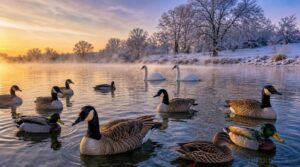
Winter waterfowl are some of the easiest birds to spot once you know where to look. From your local pond to a wide-open lake, cold months bring a surprising variety right to you.
Here are five species worth knowing.
Mallard Winter Habitats
Mallards are remarkably adaptable winter waterfowl. They favor open water pockets in city park ponds and agricultural field ponds, where food remains accessible.
They seek shoreline reed shelters for overnight protection and navigate wetland corridor networks when conditions change. Unlike most birds, they don’t need bird feeders.
Healthy wetlands are truly all they require to thrive.
Canada Goose Behavior
Canada Geese are surprisingly complex birds once you watch them closely. Their behavior reveals a tight social structure built around Pair Bonding, Nest Defense, and coordinated Foraging Strategies.
- They flash Territorial Displays — neck-stretching, wing-spreading, loud honking
- Mates form lifelong bonds, often by year three
- Flocks follow V-Formation Leadership during migration patterns
- Families graze together, shifting habitat preferences seasonally
- Both parents guard goslings fiercely near food sources
Bufflehead Diving Habits
Watch a Bufflehead long enough and you’ll notice a rhythm to everything it does. Dive depth ranges from 1 to 3 meters, with propulsion mechanics powered entirely by strong foot strokes—wings tucked tight. Underwater foraging takes just 10 to 15 seconds per dive, and surface interval timing is brief before the next plunge.
For winter birdwatching, target habitat dive zones like shallow bays, estuaries, and open water feeding areas where food availability is highest.
Snow Goose Flocks
Few sights in winter bird migration rival a Snow Goose flock — thousands of birds lifting off in waves, their vocal coordination signals filling the air. Flock size dynamics can reach tens of thousands, especially along Gulf Coast wetlands.
They use aerial formation techniques to conserve energy, while feeding ground selection and roosting water preferences shift constantly with weather and food availability.
Tundra Swan Migration
Tundra swans are long-haul travelers, covering over 5,000 kilometers each season between Arctic breeding grounds and southern winter habitats. They follow established migration corridors along both coasts, timing departures from September through November based on ice cover and food availability.
V-Formation Aerodynamics help conserve energy across long stretches, enabling these birds to sustain their arduous journeys.
Wetland Restoration Impact along these routes is critical—healthy stopovers ensure bird migration patterns remain intact, underscoring the need to protect these vital ecosystems.
Identifying Winter Birds Easily
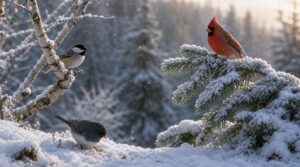
Spotting a new bird is satisfying — but figuring out what it actually is can feel like solving a puzzle with missing pieces.
The good news is you don’t need a biology degree to crack it. A few reliable clues make identification surprisingly straightforward, no matter where you’re watching from.
Plumage and Color Changes
Birds pull a quiet disguise trick every fall. Through molt timing, they swap bright summer colors for muted browns and grays — classic camouflage shifts for surviving winter.
Structural colors stick around, but carotenoid diet determines how vivid yellows and reds stay. Sexual dimorphism fades too, making bird identification trickier.
Watch for these three field marks in winter birdwatching:
- Body feather tone — duller overall, less saturated
- Wing contrast — retained color often lingers here longest
- Facial markings — key anchors for winter bird phenology clues
Tail Markings
Tail markings are one of the most reliable field marks for winter birdwatching. The Dark-eyed Junco’s White Tail Tips flash cleanly against darker feathers — a fast Tail Color Contrast that screams "junco" before you even raise your binoculars.
Tail pattern signals also shift with seasonal tail changes after molt. For quick species identification tips, always check the tail first.
Size and Silhouette
Once you’ve observed the tail, step back and assess the whole shape. Size and silhouette are critical in winter birdwatching. For instance, a chickadee’s compact 10–12 cm body versus a robin’s 25–35 cm frame offers a quick silhouette comparison that accelerates identification.
Body proportions, beak length, and tail shape often clinch species identification before color even registers. These features provide essential clues, ensuring accurate recognition even in low-light winter conditions.
Calls and Songs
Sound is your secret weapon for winter bird identification. Once you know a Blue Jay’s sharp "jay-jay" alarm vocalization or the American Robin’s rolling carol, you won’t need perfect lighting.
Song structure varies widely — the Northern Cardinal whistles clean phrases; the American Goldfinch chips quick seasonal dialects mid-flight.
Territorial calls reveal who owns the feeder. Listen as much as you look.
Feeding Behavior Clues
Watch how a bird eats — it tells you almost as much as its markings.
Feeder Timing Patterns matter: most species hit bird feeders at dawn, then again before dusk.
Seed Preference Shifts happen mid-winter when food availability drops.
Flock Foraging Dynamics reveal social rank.
Cache Recovery Signals — a bird pecking the same spot twice — hint at a hidden winter diet stash.
Best Winter Bird Habitats
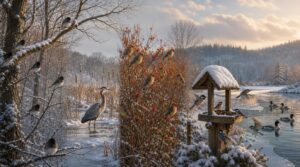
Winter birds don’t just show up anywhere — they have favorite spots, and knowing those spots changes everything.
Once you know where to look, you’ll start seeing birds you’ve walked past a hundred times without noticing.
Here are the five habitats worth checking this winter.
Backyard Feeders
Your backyard is one of the best winter birdwatching spots you’ll ever have.
A well-placed mix of suet feeders, tube feeders, and platform feeders draws surprising variety. Position feeders 10–15 feet from cover to balance accessibility and safety.
Squirrel-proof designs save real headaches, while rotating seasonal food offerings and maintaining weekly sanitation ensures consistent bird health.
Consider camera monitoring—you’d be amazed what visits at dawn.
Forest Edges
Stepping just beyond your backyard into forested areas unlocks a whole new level of winter birdwatching. Forest edges create a unique edge microclimate—warmer, brighter, and rich with shrub layer diversity that attracts White-throated Sparrows and juncos seeking food sources.
These boundary zones also serve as predator movement corridors, so birds stay alert.
Smart buffer zone design with native plantings keeps invasive species invasion in check while maximizing habitat selection during migration.
Wetlands and Lakes
Wetlands and lakes are some of the best spots for winter birdwatching. Mallard pairs drift along open water while waterfowl flock dynamics unfold in real time.
Aquatic plant diversity and water filtration benefits keep food chains active even in cold months.
Ice formation impacts push birds toward open shorelines, making them easier to spot than at any bird feeders in your yard.
Weedy Fields
Don’t overlook weedy fields — they’re quietly one of the richest winter birdwatching spots. Weed seedbanks fuel seed-eating birds like White-crowned Sparrows all season long. Field edge diversity and seasonal succession keep food sources rotating, so migratory birds keep returning.
Watch for:
- Sparrows scratching through stubble
- Goldfinches working nyjer-like weed heads
- Juncos flashing white tail feathers
- Cover crop benefits sheltering ground feeders
- Pollinator refuges doubling as foraging zones
Urban Parks
Urban parks are seriously underrated for winter birdwatching. Tree canopy shade creates sheltered microclimates where juncos and sparrows forage all morning. Stormwater ponds attract mallards and buffleheads, offering vital winter refuge.
Even bike path design and playground safety zones push foot traffic away from quieter corners — giving birds room to feed undisturbed. These human-centric features inadvertently carve out spaces where wildlife thrives.
Urban green spaces with native plantings, bird feeders, and public art integration quietly double as habitat. Such intentional design transforms recreational areas into critical sanctuaries for wintering birds.
Feeding Migratory Birds Safely
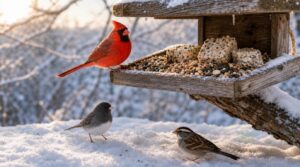
Feeding winter birds doesn’t have to be complicated, but what you put in your feeder matters more than you’d think. The right foods can mean the difference between a bird making it through a cold snap and one that doesn’t.
Here’s what actually works.
Black-oil Sunflower Seeds
If there’s one seed to stock up on in your feeders this winter, make it black-oil sunflower. With up to 50% fat content and around 300–500 calories per 100 grams, it’s pure caloric energy for seed-eating birds braving the cold.
- High fat content fuels chickadees, juncos, and finches through freezing nights
- Thin shells make cracking easy for smaller backyard visitors
- Vitamin E benefits support immune health during harsh weather
- Store in cool, dry cold storage to prevent rancidity from seed moisture
- Nearly every winter birdwatching wish-list species will visit your food sources for these seeds
Suet for Cold Weather
Suet is basically a lifeline for winter birds — pure fat energy when temperatures nosedive. A high-energy mix of rendered beef fat, seeds, and peanut butter boosts calories fast, helping woodpeckers and nuthatches fuel cold weather adaptation overnight.
Use no-melt suet in proper bird feeders, check feeder placement at 1.5–2 meters up, and practice mold monitoring every two weeks.
Nyjer for Finches
If suet keeps the big birds happy, Nyjer is the secret weapon for finches. This tiny, oil-rich seed delivers a serious finch energy boost — goldfinches and House Finch or Purple Finch flocks can’t resist it.
Use squirrel-resistant feeders with small ports, set at ideal feeder height around 5 feet. Follow simple Nyjer storage tips — keep it cool and dry — and practice regular hull cleanup methods beneath your backyard bird feeding station.
Peanuts and Mealworms
Beyond seeds, peanuts and mealworms round out your feeder’s menu for both seed-eating birds and insectivorous birds. A quick Nutrition Comparison tells the story: peanuts pack around 25–30% fat, while dried mealworms hit 50–60% protein — serious cold-weather fuel.
For Choking Prevention, use shelled, unsalted peanuts in chunky-grain feeders. Shelf-life Storage matters too — keep both in airtight containers.
Preference Variations are real: nuthatches and chickadees favor peanuts, while robins and sparrows gravitate toward mealworms as winter insect food sources dry up.
These Feeding Techniques and feeder attraction strategies genuinely work.
Clean Water Sources
Food brings birds in — water keeps them coming back. Even in deep winter, birds need daily water for drinking and bathing. Groundwater springs and ice-free streams stay open when everything else freezes. Managed ponds, snowmelt reservoirs, and urban water features fill the gap too.
Add a heated bird bath near your feeders, and you’ll see Mallards, juncos, and sparrows gather in ways that reveal real winter bird ecology.
Wetlands and wetland conservation do the heavy lifting at a landscape scale, but your backyard water source matters just as much locally.
Winter Bird Threats and Conservation
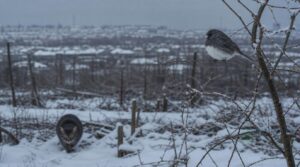
Winter birds face real dangers that go beyond just cold temperatures. From vanishing habitats to roaming cats, the threats add up fast.
The cumulative pressure on winter birds stems from these compounding risks.
Here’s what’s putting pressure on winter birds — and what actually helps.
Habitat Loss
Urban sprawl and agricultural conversion don’t just shrink wild spaces — they quietly erase the places birds depend on to survive winter. Wetland drainage cuts off critical stopover fuel. Fragmentation edges expose birds to predators and invasive species. Human-induced habitat loss chips away at population stability every season.
- Habitat fragmentation isolates wintering flocks from food patches
- Wetland conservation gaps leave waterfowl with nowhere safe to rest
- Urban habitats replace native seed plants with concrete
Habitat restoration is the fix worth fighting for.
Extreme Winter Weather
Winter doesn’t play fair with birds. Ice Storm Hazards, Snow Load Risks, and Extreme Cold Windchill can kill fast — extreme cold windchill strips away body heat in hours, and snow cover visibility at feeders drops to near zero during heavy storms. Keep your bird feeders stocked and clear.
| Winter Threat | Bird Impact |
|---|---|
| Temperature fluctuations | Increases energy demands sharply |
| Power Outage Vulnerability | Freezes water sources overnight |
| Frostbite Prevention gaps | Reduces winter bird counts noticeably |
Cold-weather birding shows you just how brutal survival gets.
Outdoor Cat Predation
Cats are one of the most underestimated bird mortality factors out there. Free-roaming cats kill up to 4 billion birds annually in the U.S.
Free-roaming cats silently kill up to 4 billion birds every year in the U.S
Cat Density Impacts hit hardest near wooded edges where songbirds gather. Seasonal Kill Rates spike in winter when birds cluster at feeders.
Community Cat Management and Protective Collars help reduce predation risk, but Public Perception still lags behind the science.
Window Collision Risks
Window collisions are silent bird mortality factors that most people overlook. Reflective glass mimics open sky, and birds simply don’t see it coming.
Building orientation matters — east- and west-facing windows catch the worst light angles. Feeder placement near glass raises the risk greatly. Seasonal vegetation reflecting in panes makes things worse.
Simple fixes like UV markings or decals spaced 10 cm apart genuinely save lives.
Native Planting Support
Planting natives might be the single best thing you can do for wintering birds. Three simple steps to get you started:
- Add insect-rich shrubs and seed-producing perennials near feeder placement zones for layered food sources.
- Install native understory layers and riparian native buffers to support habitat restoration and seed dispersal along wintering locations.
- Choose drought-tolerant plantings that survive freeze-thaw cycles without extra fuss.
Frequently Asked Questions (FAQs)
How do birds navigate during long winter migrations?
Birds rely on a solar compass, magnetic map, star navigation, geographical features memory, and olfactory cues. These diverse methods collectively guide their migratory journeys.
Magnetoreceptors read the geomagnetic field, while celestial navigation using celestial patterns keeps them perfectly on course.
Which invasive species compete with native winter birds?
A few invasive species quietly bully native winter birds. European Starlings dominate nest cavities, House Sparrows steal seeds, and Geese strip grazing patches bare.
Parakeet feeder dominance grows yearly.
That’s the real invasive species impact on winter birds.
How do migratory birds communicate within winter flocks?
There’s safety in numbers" — and in sound. Winter birds rely on species-specific calls and acoustic coordination to stay connected.
Using contact call timing and vocal cue functions, they navigate, feed, and dodge predators together.
What role does moonlight play in nocturnal bird migration?
Moonlight acts as a natural compass. Bright lunar nights trigger moonlit foraging bursts, sharpen lunar navigation cues, and drive migration timing synchronization.
This helps birds fine-tune flight altitude adjustments and predation risk modulation using reliable celestial cues.
How does climate change affect winter migration timing?
Climate change is nudging migration timing earlier each year. Warmer winters mean advancing departure, shorter stopovers, and northward route shifts.
These climate-driven timing changes create phenology mismatches — birds arrive before their food.
Conclusion
Your feeder is a rest stop on one of nature’s oldest highways. Every junco scratching at spilled seed, every nuthatch spiraling headfirst down bark—each one is mid-story, not just passing scenery.
This winter migratory birds guide gives you the tools to read those stories instead of missing them.
Fill the feeder, keep the water thawed, and pay attention. The birds don’t wait for perfect conditions to show up. Neither should you.
- https://www.perkypet.com/advice/migratory-bird-guide/migratory-bird-guide-iz?srsltid=AfmBOorH4tSMwKiVdk7NCYW6RwPC-Mt3_41fuJ6dkAHSbtPn4sXzQibk
- https://www.borealbirds.org/boreal-bird-migrations
- https://www.massaudubon.org/nature-wildlife/birds/bird-feeding
- https://www.nature.org/en-us/about-us/where-we-work/priority-landscapes/great-lakes/stories-in-the-great-lakes/winter-birds/
- https://avianreport.com/identify-bird-visit-backyard-feeders-new-york/