This site is supported by our readers. We may earn a commission, at no cost to you, if you purchase through links.
Walk past any backyard feeder stocked with a single seed type, and you’ll notice something: half the birds land, peck twice, and leave. That’s not pickiness—it’s biology. Different species evolved to process different seeds, and a cardinal’s thick beak tells a completely different nutritional story than a finch’s narrow one.
Mixed seed blends work because they match that reality. Species like mourning doves, dark-eyed juncos, and native sparrows flock to feeders where millet sits alongside sunflower and safflower—each bird finding exactly what its body needs.
Knowing which birds prefer mixed seeds transforms your feeder from a snack stop into a reliable gathering point for your whole neighborhood’s wildlife.
Table Of Contents
Key Takeaways
- Birds like cardinals, mourning doves, dark-eyed juncos, and chickadees have each evolved to eat different seeds, so a mixed blend attracts far more species than any single seed ever could.
- Matching your feeder type to the birds you want matters just as much as the seed itself—platform feeders for ground foragers, tube feeders for finches, and hopper feeders for blended seeds.
- Seasonal shifts in seed mix—high-fat options in winter, protein-rich boosts in spring, energy-dense blends before migration—keeps your feeder relevant year-round instead of just a cold-weather habit.
- Spilled seeds and poor feeder placement invite pests and feeder dominance, but baffles, elevated feeders, and nearby shrub cover solve both problems while making your yard safer for smaller birds.
Birds Most Drawn to Mixes
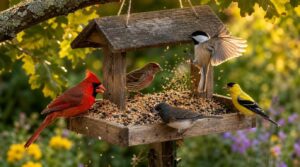
Some birds are practically made for mixed seed feeders—they show up consistently, eat well, and keep coming back. Knowing which ones to expect helps you set up your yard for the right visitors.
Pairing the right seed to your feeder type makes a real difference—check out this guide to choosing the best birdseed for your backyard to attract the species you actually want.
Here are the five species you’ll most likely see at a mixed seed feeder.
Northern Cardinals
The Northern Cardinal is hard to miss — that bold red flash against a winter feeder is unforgettable.
To attract more cardinals, stock your feeder with their preferred seeds:
- Black-oil sunflower seeds as their top high-energy food
- Safflower seeds to reduce feeding aggression from competing species
- Scattered millet for ground foraging near shrub nesting areas
Their crest displays and territorial songs signal successful feeder placement. They also feature a bright orange‑red bill, a key trait distinguishing them from other backyard visitors.
Mourning Doves
While Mourning Doves quietly rule the ground below, they thrive on ground feeding platforms stocked with the right seed blend composition — millet and cracked corn especially. Their seed preferences are simple but specific, and seasonal water sources nearby seal the deal.
Keep nesting site selection in mind too — they nest close to where food is reliable.
Dark-Eyed Juncos
Where doves leave off, dark-eyed juncos take over — flitting down from brushy edges to work the ground below your feeders.
Their seed preferences lean heavily toward millet in any mixed bird seed blend.
Here’s what draws them in:
- Winter habitat use shifts toward open understory and suburban yards
- Flock foraging dynamics keep competition manageable
- Ground feeding platforms suit their natural scratching style
- Migration timing brings peak feeder visits in late fall
- Juvenile plumage ID — brownish tones, white tail flash — confirms your flock
Native Sparrows
Juncos aren’t the only ground-scratchers worth watching. Native sparrows — song, white-throated, and fox varieties among them — share that same love of low-level foraging, making them reliable visitors to any mixed bird seed setup.
Their seasonal diet leans heavily on millet, and flock dynamics keep things lively below the feeder. Smart seed blend formulation with ground-feeding birds in mind brings them straight to you.
Chickadees and Titmice
Few birds reward a well-stocked feeder quite like Black-capped Chickadees and Tufted Titmice. Their winter flocking habit brings small, energetic groups together, making them a joy to watch.
Their acrobatic feeding style — hanging upside down and hammering seeds open mid-perch — adds to their charm. Both species thrive on mixed bird seed blends, showing a clear preference for black oil sunflower seeds.
Vocal communication and predator vigilance keep the whole flock sharp, ensuring their survival while they forage.
Why Mixed Seeds Attract More
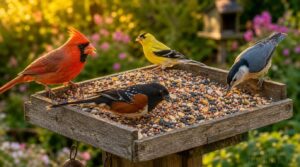
Mixed seed works like a buffet — different birds show up for different dishes. The reasons behind that variety go beyond just having more options in the bowl.
Here is what actually pulls more species to your feeders.
Varied Seed Preferences
No two species read a menu the same way. Seed Size Spectrum, Shell Hardness Preference, and Protein-Fat Ratio shape which birds land at your feeder — and mixed blends speak to all of them at once.
A wide tray like the Cedar Platform Tray Bird Feeder for cardinals gives every species enough room to sort through a mixed blend and find exactly what they came for.
- Cardinals lean on Shell Hardness Preference, cracking sunflower with ease
- Finches follow Texture Appeal and Color Attraction toward nyjer
- Sparrows track Protein-Fat Ratio through millet’s accessible energy
That’s why mixed bird seed blends consistently outperform single-seed setups.
Ground and Perch Feeders
Where you place your seed matters as much as what’s in it. Platform feeders with Tray Drainage Design keep mixed bird seed blends dry and fresh, while Perch Spacing Strategy—usually 4 to 6 inches apart—lets multiple bird species coexist without crowding. Material Weatherproofing through powder-coated steel extends feeder life year-round.
| Feature | Benefit |
|---|---|
| Perforated tray bottom | Drains moisture fast |
| Textured perches | Grip improves in wet weather |
Ground Feeder Hygiene keeps ground-feeding birds healthy.
Seasonal Nutrition Variety
Think of a mixed seed blend as a year-round menu that shifts with the seasons.
In winter, high-fat options like sunflower and peanuts build winter fat stores for warmth.
Spring calls for a Spring Protein Boost with mealworms.
Fall Energy Seeds fuel pre-migration build-up.
Summer Hydration Snacks keep fledglings thriving.
Smart seasonal feeding strategies and seed mix proportions match bird species preferences perfectly.
Reduced Feeder Dominance
Ever notice how one bossy jay can clear a feeder in seconds? Mixed seed fixes that.
One bossy jay can clear a feeder in seconds — mixed seed stops that cold
By creating Multi-Seed Zones, a good bird seed mix triggers Dominance Dilution — cardinals chase sunflower while juncos work the millet below.
This Height Stratification and species-specific feeding behavior encourages Temporal Access Rotation, so smaller birds get their turn without a fight.
Broader Backyard Diversity
Mixed seed blends don’t work alone — your whole backyard determines what shows up. Layer your space intentionally:
- Native shrub plantings and layered habitat zones give birds cover between feeder visits.
- Seasonal water features draw species that ignore seed entirely.
- Groundcover seed sources and an insect-friendly meadow corner support ground-foragers year-round.
Together, these create genuine bird species diversity — attracting songbirds via species-specific feeding, not luck.
Best Seeds for Each Bird
Not every bird wants the same thing on the menu. Knowing which seeds match which species helps you build a mix that works for your whole backyard, not just the loud ones.
Here’s a quick breakdown of the best seeds for the birds you most want to attract.
Sunflower for Cardinals
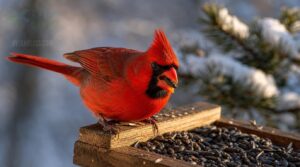
Cardinals are practically built for black oil sunflower seeds. Their thick bills make shelling efficiency second nature — they crack and eat faster than most backyard birds.
During winter feeding peaks, cardinals rely on the high fat content in these seeds to stay warm.
Add black oil sunflower seeds to your mixed birdseed or platform feeder, and you’ll consistently attract cardinals with high-fat options they won’t skip.
Millet for Doves
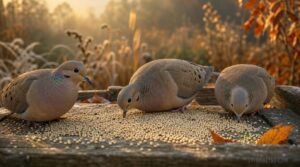
Doves take a different approach than cardinals—they’re ground foragers at heart—and white proso millet is their go-to seed in any mixed birdseed blend. Here’s what makes millet work so well for doves:
- Seed size preference — At 2–3 mm, proso millet fits perfectly in a dove’s beak.
- Dove energy boost — High carbohydrates fuel migration and cold-weather days.
- Seasonal millet timing — Most effective from fall through spring when natural seeds are scarce.
- Mold risk management — Refresh millet daily and follow storage tips: keep it cool and dry.
- Platform feeders — Low, open trays let doves feed comfortably at ground level.
Nyjer for Finches
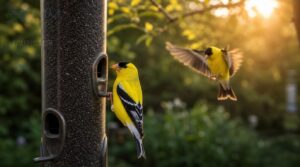
Where doves graze low, finches work differently — they cling, dart, and hover for their meals. Nyjer seed is their sweet spot.
| Feature | Detail | Why It Matters |
|---|---|---|
| Nyjer nutritional profile | High oil content | Fuels finch energy fast |
| Tube feeder port size | Tiny, narrow openings | Keeps larger birds out |
| Nyjer storage tips | Cool, dry, sealed container | Preserves seed quality |
| Hull cleanup methods | No-mess blends help | Reduces ground debris |
| Nyjer seed quality | Sterilized, deep black | Safe and fresh for finches |
Stock your tube feeder with fresh Nyjer seed, and goldfinches won’t stay away long.
Safflower for Finches
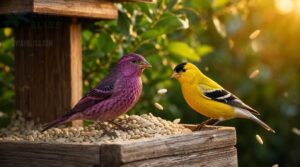
Nyjer isn’t the only high-energy seed that finches love. Safflower seeds deserve a spot in your bird seed mix too. Their hard seed coat slows down feeding, which actually extends feeding time at your feeder.
With roughly 38% fat content, safflower promotes feather molt and winter warmth. Its shelf stability makes it a reliable choice year-round.
Peanuts for Woodpeckers
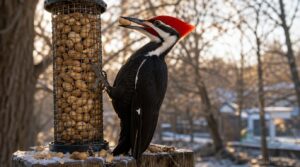
Woodpeckers are peanut fanatics — and for good reason. Peanuts pack high fat and protein, giving them compact calories when insects disappear in winter.
Stick to unsalted, skinless peanuts for mold prevention and easier extraction. Mesh peanut feeders handle peanut shells safely and effectively, keeping kernels off the ground.
For seasonal peanut timing, ramp up offerings in early spring and during cold snaps.
Feeders for Mixed Seed Success
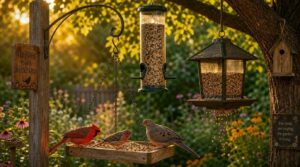
The right feeder makes a bigger difference than most people expect. Not every style works well with mixed seed, and choosing the wrong one can mean wasted food, fewer birds, and more mess to clean up.
Here’s what actually works.
Hopper Feeders for Blends
Hopper feeders are built for exactly this kind of variety. Their internal baffle design keeps seeds tumbling together, ensuring real blend consistency at the feeding port — eliminating separated millet piles at the bottom.
Adjustable flow control lets you regulate seed output, while weather-proof construction protects your custom blends from moisture.
Easy cleaning access simplifies maintenance, reducing mess and creating a healthier environment to attract more birds.
Platform Feeders for Doves
Ground platforms are your best bet if you want to attract Mourning Doves. Prioritize platform dimensions of at least 10 inches wide—doves prefer room to move. Landing ergonomics matter too: a flat surface with a low 0.5-inch rim keeps their feet unobstructed.
Maintain seed depth around half an inch, and select feeders with drainage for weather protection and easy cleaning. This ensures durability while keeping the feeding area functional and hygienic.
Tube Feeders for Finches
Finches are picky — and that’s actually a good thing. The right tube feeder turns that selectiveness into your advantage.
Look for these four features:
- Port Size Optimization — Ports around 3/16 inch fit finch beaks perfectly for nyjer thistle and fine seed blends
- Anti-Clog Mechanisms — Seed diverters keep ports clear so finches don’t give up and leave
- Squirrel-Resistant Materials — Metal ports stop gnawing before it starts
- Easy-Clean Bases — Removable bottoms make maintenance quick
Mount feeders for finches at 4–6 feet for best results.
Baffles to Deter Squirrels
Squirrels are relentless — but the right baffle stops them cold. Design Types matter here: dome baffles block overhead drops, while cylinder wraps prevent pole-climbing.
For solid Installation Geometry, position baffles at least five feet from nearby jump points.
Material Durability counts too — metal and powder-coated options hold up season after season.
Stick to a simple Maintenance Routine: inspect every few weeks and wipe surfaces clean.
Placement Near Protective Cover
Place your feeder 6 to 10 feet from dense shrubs or a hedge—that is your sweet spot for cover distance. Birds need a quick escape route, not a hidden trap.
Ensure your windbreak orientation so feeders don’t sit in cold wind tunnels.
Good shade timing keeps seeds dry, preserving their quality.
Clear predator sightlines with solid ground clearance make every visit safer.
Top 4 Mixed Seed Feeders
The right feeder makes a real difference in which birds show up, and how often. Some designs work better with mixed seed than others, so it helps to know what to look for before you buy.
Here are four feeders worth considering.
1. Kingsyard Heavy Duty Platform Bird Feeder
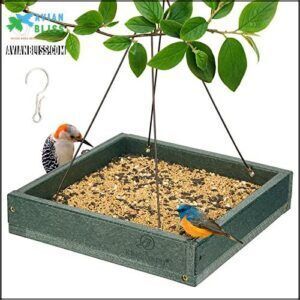
The Kingsyard Heavy Duty Platform Bird Feeder is a solid pick if you’re serious about attracting a wide mix of species. Its 11-by-11-inch mesh platform provides ample space for cardinals, doves, and woodpeckers to feed comfortably without overcrowding.
The feeder’s 3.5-pound capacity reduces the need for frequent refills, while its drainage mesh ensures seeds stay drier for longer—a significant advantage during wet weather.
It arrives ready to use, hanging straight out of the box on four chains, and maintains stability even when larger birds land with force.
| Best For | Backyard birders who want a low-maintenance, high-capacity feeder that welcomes a wide variety of birds year-round. |
|---|---|
| Material | Recycled plastic |
| Mounting Style | Hanging (chain) |
| Weather Resistance | UV/rain resistant |
| Easy Cleaning | Brush and rinse mesh |
| Color | Green |
| Squirrel Protection | None |
| Additional Features |
|
- Holds up to 3.5 lbs of seed, so you’re not constantly refilling—great for busy weeks or heavy winter feeding.
- The mesh base drains water and dries out fast, keeping seeds fresh longer after rain.
- Comes pre-assembled and ready to hang, no tools or setup headaches required.
- No roof or cover, so feed still gets wet in heavy rain or snow.
- Squirrels can access it just as easily as birds—not ideal if that’s a concern for you.
- Needs regular cleaning to prevent mold, especially in humid weather.
2. Kingsyard Metal Mesh Finch Feeder
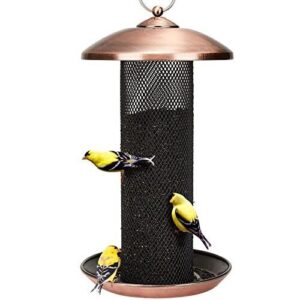
The platform feeder is your workhorse for bigger birds, but this model is built for the specialists. Targeting goldfinches, house finches, and chickadees, the Kingsyard Metal Mesh Finch Feeder features a 360° mesh tube that allows birds to cling and feed from any angle.
Its 2.5-pound nyjer capacity reduces refill frequency, while the all-metal, powder-coated build effectively blocks squirrel intrusion.
The twist-off top ensures truly quick cleaning — no tools, no fuss.
| Best For | Backyard birders who want to attract small finches like goldfinches and chickadees without the headache of squirrel raids or constant refills. |
|---|---|
| Material | Powder-coated metal |
| Mounting Style | Hanging (hook) |
| Weather Resistance | Rust-resistant finish |
| Easy Cleaning | Twist-off base |
| Color | Antique copper |
| Squirrel Protection | Squirrel-proof design |
| Additional Features |
|
- The 360° mesh tube lets multiple birds cling and feed at once from any angle — no fighting over a single port.
- All-metal, powder-coated build keeps squirrels out and holds up through the seasons without rusting.
- Twist-off top and detachable base make cleaning and refilling genuinely easy — no tools needed.
- The mesh openings run tight, so some birds may have trouble getting to the seed.
- No dedicated feeding ports means seed can spill onto the catch tray and ground more than you’d like.
- It’s really built for small finches — if you’ve got larger birds like grackles in your yard, they won’t get much use out of this one.
3. Squirrel Shield 16 Inch Clear Baffle

A great feeder means nothing if squirrels beat the birds to it. That’s where the Squirrel Shield 16 Inch Clear Baffle earns its place.
Mount it above your feeder or below on the pole — the dual setup gives you real flexibility. Its wide, slippery dome stops climbers cold, and the UV-stabilized clear plastic won’t block your view of the birds underneath.
Setup takes minutes, and the transparent dome keeps things looking clean and natural in your yard.
| Best For | Bird lovers who want to keep squirrels out without blocking their view or committing to a complicated setup. |
|---|---|
| Material | UV-stabilized plastic |
| Mounting Style | Hanging or pole-mount |
| Weather Resistance | UV-stabilized |
| Easy Cleaning | Rinse dome surface |
| Color | Clear |
| Squirrel Protection | Baffle/deterrent |
| Additional Features |
|
- Works two ways — hang it above the feeder or slide it onto the pole below, so it fits however your setup is arranged.
- Clear dome keeps sightlines open, so you’re not staring at a big hunk of metal every time you look out the window.
- Slippery, wide shape is genuinely tough for squirrels to get around.
- Water can pool in the dome with no way to drain, which could turn into a mosquito situation fast.
- The mounting hardware isn’t the most secure — windy days might have you reaching for the duct tape.
- Big enough to stop squirrels, but don’t count on it against raccoons or anything more determined.
4. Natures Way Cobalt Metal Bird Feeder
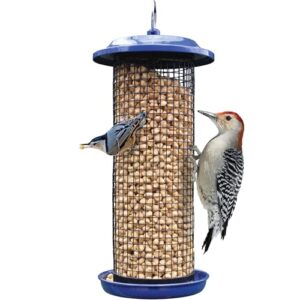
If the baffle keeps squirrels out, the Nature’s Way Cobalt Metal Bird Feeder keeps birds coming back. Its 360° metal mesh tube lets clinging species — woodpeckers, nuthatches, sparrows — feed from any angle without crowding.
The twist-off lid enables quick, spill-free refills, while built-in drain holes keep seed dry after rain. It holds around 2 quarts of mixed seed, making it ideal for smaller yards.
The powder-coated finish withstands weather without rusting, ensuring long-term durability.
| Best For | Backyard birders who want to attract clinging species like woodpeckers and nuthatches without a lot of fuss or upkeep. |
|---|---|
| Material | Powder-coated metal |
| Mounting Style | Hanging (hook) |
| Weather Resistance | Corrosion-resistant finish |
| Easy Cleaning | Tool-free disassembly |
| Color | Blue |
| Squirrel Protection | Not squirrel-proof |
| Additional Features |
|
- The 360° mesh design lets birds feed from any direction, so there’s no jostling for the "good spot"
- Twist-off lid makes refilling quick and clean — no tools, no mess
- Drain holes keep seed from getting soggy after rain, so you’re not tossing out spoiled feed every other day
- The mesh openings run small, so shelled peanuts or bigger seeds won’t work well here
- Squirrels can chew through the wire — don’t count on this holding up if you’ve got determined ones around
- Some buyers report durability issues early on, like the lid brace or bottom giving out within just a few weeks
Frequently Asked Questions (FAQs)
Why put a potato in your bird feeder?
Cooked plain potato gives birds a quick carbohydrate boost, especially in cold weather.
It’s soft, easy to peck, and pairs well with seed mixes.
Just keep it unseasoned and peel it first.
How do mixed seeds reduce feeder waste and spillage?
Mixed seeds cut waste by matching what birds actually want to eat. Hulled and no-grow blends mean less shell debris, less spillage, and fewer uneaten seeds rotting under your feeder.
Which seed blends work best during winter months?
Winter calls for high-fat blends.
A mix of black-oil sunflower, safflower, white proso millet, and a handful of cracked corn gives your backyard birds the energy they need to get through freezing nights.
Do mixed seeds attract unwanted pests or rodents?
Yes, mixed seeds can attract rodents — spilled seed on the ground is the main culprit. Use baffled, elevated feeders and clean beneath them regularly to keep pests away.
How often should mixed seed feeders be cleaned?
Clean your mixed seed feeders every two weeks under normal conditions.
Increase the frequency to weekly during hot, humid weather or after heavy rain—moisture turns seeds into a mold magnet fast.
Conclusion
Picture your feeder at golden hour—a cardinal cracking sunflower seeds, doves sweeping millet off the platform below, juncos darting in from the shrub line. That’s not luck. That’s what happens when you understand birds prefer mixed seeds over single seed varieties.
Match the blend to the species, pair it with the right feeder, and your backyard stops being a pit stop. It becomes the neighborhood gathering place every passing flock remembers.
- https://www.lyricbirdfood.com/birding-hub/basics/bird-feeding-101-mixed-seed-vs-straight-seed/
- https://georgiawildlife.com/out-my-backdoor-best-seeds-backyard-bird-feeders
- https://www.massaudubon.org/nature-wildlife/birds/bird-feeding
- https://www.allaboutbirds.org/news/types-of-bird-seed-a-quick-guide/
- https://ratherbebirding.com/blog-1/best-bird-feeders