This site is supported by our readers. We may earn a commission, at no cost to you, if you purchase through links.
A flash of red at the feeder, a chorus of chirps from the hedge—your backyard can host more wildlife drama than you might expect.
On any given morning, Northern Cardinals, Blue Jays, and Mourning Doves compete for seeds, each with its own habits and preferences. Some birds stick to the ground, others dart in for a quick meal, and a few hang upside‑down on suet cages like acrobats.
If you’re curious about which birds visit backyard wild bird feeders and how to make your yard their favorite stop, understanding their behaviors and needs can turn your feeder into a reliable gathering spot for dozens of species.
Table Of Contents
Key Takeaways
- Matching feeder type to the bird matters more than most people realize—cardinals need hopper feeders, finches thrive on tube feeders with small ports, and doves do best on low platform feeders with cracked corn or millet.
- Food choice drives who shows up: black‑oil sunflower seeds pull in the widest variety, nyjer attracts goldfinches, suet brings in woodpeckers and wrens, and peanuts are a reliable draw for jays and titmice.
- Water, native plants, and shelter are just as important as the feeder itself—birds need a safe place to drink, hide from hawks, and feel comfortable enough to return daily.
- Backyard feeders can support conservation in a real way, especially for species like the Painted Bunting, whose Near Threatened status means every yard offering millet and low cover genuinely helps.
Common Birds at Backyard Wild Bird Feeders
Backyard feeders don’t just attract one or two species — they can become a regular meetup spot for dozens of birds throughout the year.
With the right setup, you might be surprised how many visitors show up — stocking quality options from wild bird supplies and feeders can easily push that number past 20 species in a single season.
In Texas especially, you’ll find a surprising mix of year-round residents, seasonal visitors, and occasional migrants all sharing the same space.
Here are the most common birds you’re likely to spot at your feeder.
Northern Cardinal
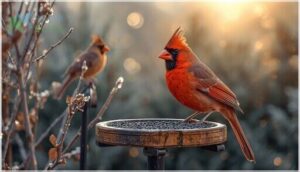
The Northern Cardinal is one of the most rewarding backyard birds for bird watching in Texas. Males flash vivid crimson plumage, while females wear warm brown with reddish tinges — plumage differences that make every feeder visit easy to identify.
Place hopper or platform feeders stocked with black-oil sunflower seeds to excel at attracting birds to your yard.
Cardinals stay year-round, sing territory songs at dawn, choose nesting habitat in dense shrubs 3–10 feet up, and stay predator vigilant near cover.
Human activity has helped the cardinal’s range expand into new areas, as described in the cardinal range expansion.
Blue Jay
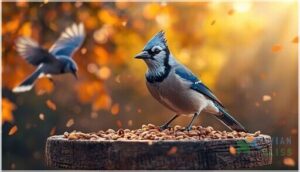
Another bold backyard bird worth knowing is the Blue Jay.
At 9–12 inches long and up to 100 grams, it dominates feeders with confidence.
Watch its crest behavior — raised means alert, bristled means agitated.
Blue Jays rely on social calls to rally others to food, and their acorn caching spreads oak trees naturally.
Stock platform feeders with peanuts and sunflower seeds to bring these striking backyard birds in regularly.
The species is evaluated as Least Concern due to its extensive range and large population.
Mourning Dove
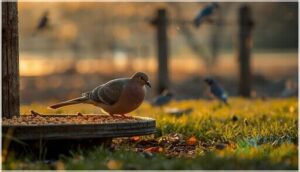
Where Blue Jays bring drama, the Mourning Dove brings calm.
This soft-cooing backyard bird follows clear migration patterns, moving south in fall and returning by May.
It’s a dedicated ground forager — seeds make up 99% of its diet.
Set out cracked corn or millet on a low platform feeder.
Just be aware of lead poisoning risks near old hunting fields.
House Finch
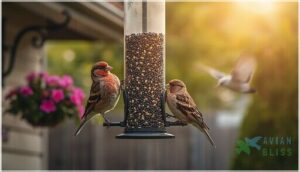
After the quiet Mourning Dove, the House Finch brings cheerful noise and color to your feeders.
Males show rosy-red finch plumage on the forehead and chest — females are streaked brown. For backyard birding success, keep these tips in mind:
- Offer black oil sunflower or nyjer for smart seed selection for birds
- Use tube feeders at bird feeders to attract small flocks
- Watch for crusty eyes — disease prevention means cleaning feeders every few weeks
- Males practice courtship feeding, passing food directly to females
- They’ll use hanging plants and eaves as nesting sites nearby
Seasonal migration is minimal — House Finches are mostly year-round neighbors.
Carolina Chickadee
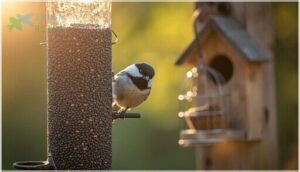
The Carolina Chickadee is a backyard birding staple — tiny, under 5 inches, but impossible to miss. Its black cap, white cheeks, and "chick-a-dee-dee" vocalization patterns make identification tips almost unnecessary.
For bird feeders, black-oil sunflower seeds and suet match its seasonal diet shifts perfectly. Install a small nest box to encourage nesting, and watch its bold territory behavior up close.
Tufted Titmouse
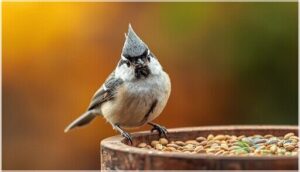
The Tufted Titmouse is one of those backyard birds that earns its spot fast. At 5.5 to 6.3 inches, its spiked gray crest and bold black forehead make it instantly recognizable.
Watch its acrobatic foraging — it grabs a sunflower seed, dashes to a perch, and caches it nearby.
Cavity nesting, seasonal diet shifts, sharp vocalization patterns, and reliable feeder visits make this bird a backyard favorite worth attracting.
Carolina Wren
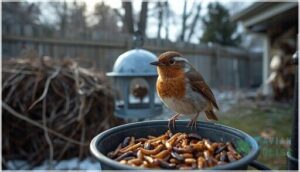
Small but bold, the Carolina Wren punches well above its weight at backyard bird feeders.
Suet preference makes it easy to attract — place blocks near a brush pile habitat and it’ll show up reliably.
Its 20+ song variants echo year‑round, and its domed nest architecture often appears in sheltered yard corners.
For winter foraging, offer mealworms alongside suet to keep this backyard bird coming back.
White-winged Dove
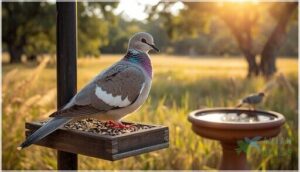
White-winged Dove is a standout among Texas Wildlife and Backyard Birds, bigger than a Mourning Dove and built for ground feeding.
Its habitat preferences lean toward open yards with scattered trees.
Water Needs are serious — it’ll fly 25 miles for a drink.
Offer platform Bird Feeders loaded with millet or black‑oil sunflower, and this seasonal migrant will find you fast.
Red-bellied Woodpecker
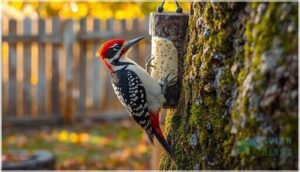
The Red-bellied Woodpecker is a year-round backyard regular with bold black-and-white barred wings and a vivid red cap. Its drumming behavior on tree trunks signals territory — you’ll hear it before you see it. Here’s what brings it in:
- Hang suet feeders for its strong suet preference
- Add peanuts and sunflower seeds to match its bird seed preferences
- Leave dead trees standing for cavity nesting opportunities
- Watch for cache storage — it wedges food into bark crevices nearby
American Goldfinch
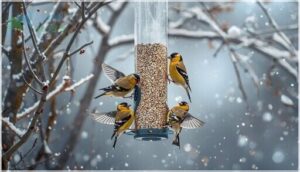
The American Goldfinch is basically a seasonal shape-shifter. Its dramatic plumage changes take it from vivid yellow in summer to muted olive in winter.
During winter migration, flocks arrive at backyard bird feeders in noisy waves, clinging sideways in classic feeder perching behavior. Fill tube feeders with nyjer seeds and sunflower seeds, and you’ll hear their bright vocalization patterns long before you spot them.
Great-tailed Grackle
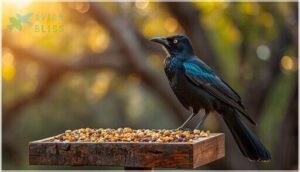
From tiny goldfinches we shift to one of Texas’s boldest backyard birds. The Great-tailed Grackle brings urban adaptation to a whole new level.
Its roosting behavior fills city trees with noise each evening, and those piercing vocalizations are hard to miss.
At bird feeders, its dietary flexibility and problem-solving skills help it crack open nearly anything.
Scatter mixed seed or cracked corn on platform feeders to welcome this striking Texas bird.
Painted Bunting
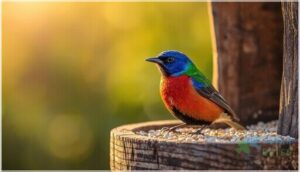
Few backyard birds stop people in their tracks like the Painted Bunting. The male’s blue head, green back, and red underparts make him look almost unreal.
Few backyard birds stop people in their tracks like the Painted Bunting, whose blue, green, and red plumage looks almost unreal
These small migrants arrive in Southern Texas during breeding season, favoring brushy thickets and low feeders stocked with white proso millet. Conservation efforts matter here — their Near Threatened status means your yard genuinely helps.
Eastern Bluebird
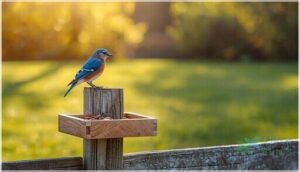
While the Painted Bunting dazzles with color, the Eastern Bluebird brings its own quiet magic. Males wear royal blue backs and rusty-orange chests.
Their habitat preferences lean toward open lawns with scattered perches — think fence posts and short grass. Skip the seed tube feeders; bird feeder selection matters here. A shallow tray with live mealworms works best.
What Attracts Birds to Feeders
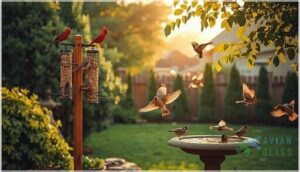
Getting birds to show up consistently comes down to a few key things working together.
It is not just about the seed you put out — water, shelter, and a sense of safety all play a role.
Here’s what actually matters.
Seed and Food Preferences by Species
Ever notice how seed selection shapes your feeder visitors?
Black oil sunflower draws cardinals, chickadees, and finches.
Nyjer preference is strong in goldfinches, while millet for doves keeps Mourning Doves coming back.
Suet attraction works for woodpeckers and wrens.
Peanut preferences pull in jays and titmice.
Smart bird feeding tips start with matching bird seed preferences to feeder selection.
Importance of Water Sources
When you add a bird bath or water feature, you meet birds’ hydration needs and offer bathing benefits that keep feathers healthy. Seasonal water strategies, like heated bird baths in winter, give backyard birds a safe spot to drink.
Careful water feature placement boosts predator safety.
In bird friendly gardening, reliable water is as essential as any bird feeder for wildlife conservation.
Role of Native Plants and Shelter
Native plants do more than look good — they’re the backbone of a truly bird-friendly habitat.
Oaks and hickories deliver Seasonal Food Sources like acorns, while dense Native Shrub Layers and Evergreen Cover Benefits give backyard birds quick shelter from hawks.
Add a Brush Pile Habitat for wrens and sparrows, and Cavity Nesting Trees for chickadees.
That’s Gardening for Birds done right.
Safe Environments for Visiting Birds
Safety isn’t optional — it’s the foundation of a truly bird‑friendly habitat.
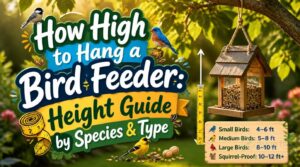
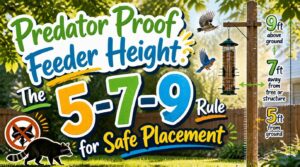
Mount feeders 5 to 6 feet high for Predator‑Safe Placement, and practice Window Collision Prevention by keeping them within 3 feet of glass.
Solid Hygiene & Disease Control, smart Weather Protection Strategies, and Hardware Design Safety round out your Bird Feeding Tips.
Squirrel Proof Bird Feeders and consistent Bird Feeder Maintenance keep every visit stress‑free.
Best Bird Feeder Types for Different Species
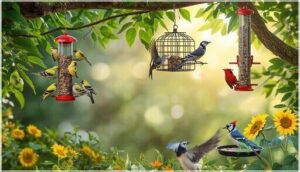
Different birds have their own feeder preferences, so choosing the right setup matters.
You’ll find that each style attracts certain species and feeding behaviors.
Here’s a quick look at which feeder types work best for popular backyard birds.
Tube Feeders for Finches and Chickadees
Tube feeders are your best bet for attracting finches and chickadees. Small ports — around 1 to 1.5 inches — keep larger birds out while giving small species easy access. Fill them with nyjer seed or black-oil sunflower seeds, and you’ll see steady traffic.
For feeder placement, hang them 5–6 feet high, and clean every two weeks to keep your backyard birding rewarding year‑round.
Hopper Feeders for Cardinals and Jays
Hopper feeders are the go-to choice for Northern Cardinals and Blue Jays. Their flat Seed Tray Design lets heavy‑billed birds turn and peck seeds with ease.
Here’s what makes them work:
- Height Placement at 4–6 feet deters ground predators
- Adjustable Baffles control seed flow and discourage squirrels
- Squirrel Proofing cages keep mammals away
- Color Attractants like red trim draw Cardinals instantly
- Bird feeder selection matters — hopper styles suit these Backyard Birds perfectly
Platform Feeders for Doves and Sparrows
Platform feeders are a ground feeder’s best friend — and Mourning Doves, White-winged Doves, and House Sparrows know it.
| Feature | Why It Matters |
|---|---|
| Ground Height (1–3 ft) | Predator Protection without blocking access |
| Open tray design | Fits multiple Backyard Birds at once |
| Mesh bottom | Easy Maintenance, drains rain fast |
| Seasonal Placement | Shift spots as weather changes |
| Cracked corn Seed Mix | Draws doves and sparrows reliably |
Nectar Feeders for Hummingbirds and Orioles
If you’re looking for a splash of color and action after ground feeders, nectar feeders bring hummingbirds and orioles right to your garden. Choose a colorful feeder design, keep a 4:1 sugar ratio for seasonal nectar, and stick to a strict cleaning schedule. Place feeders at eye level for easy monitoring.
- Red or orange accents attract hummingbirds
- Sugar ratio ensures safe feeding
- Frequent cleaning prevents disease
Top Backyard Bird Feeders to Try
If you’re ready to bring more birds to your yard, picking the right feeder makes a big difference.
Different feeders suit different birds and feeding styles. Here are a few top choices you might want to think about.
1. Gray Bunny Green Squirrel Proof Bird Feeder
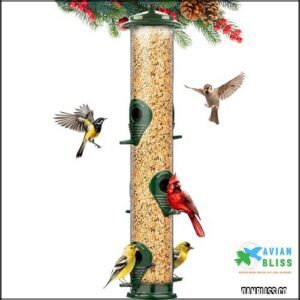
Gray Bunny Green Squirrel Proof Bird Feeder is a solid pick if squirrels keep raiding your setup.
Its metal cage lets small birds like finches, chickadees, and sparrows slip through easily, while blocking larger pests.
Six feeding ports mean less crowding at mealtime, and the lift-lid top makes refilling quick.
It holds up to 4 cups of seed and endures outdoor weather well.
Just know it can take birds 2–3 weeks to warm up to a new feeder.
| Best For | Bird lovers and backyard nature fans who are tired of squirrels stealing all the seed and want a low-maintenance feeder that works for small birds like finches and sparrows. |
|---|---|
| Material | Metal |
| Color | Green |
| Dimensions | 15″H x 2.25″L x 5.75″W |
| Outdoor Use | Yes |
| Bird Attraction | Finches, Sparrows |
| Easy Cleaning | Yes |
| Additional Features |
|
- Metal cage design keeps bigger pests out while letting small birds feed comfortably
- Six ports cut down on crowding, and the lift-lid top makes refilling a breeze
- Holds up well outdoors and is easy to hang pretty much anywhere
- Not fully squirrel-proof — determined ones may still find a way in
- Some users have noticed rust forming on the lid and base over time
- Birds can take 2–3 weeks to start using it, so don’t expect action right away
2. DutchCrafters Large Hanging Hopper Bird Feeder
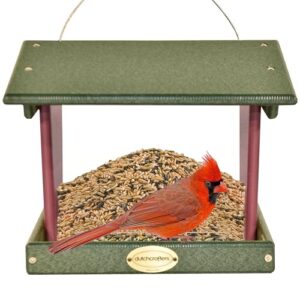
If you want to welcome cardinals, chickadees, and sparrows, the DutchCrafters Large Hanging Hopper Bird Feeder stands out. Its poly lumber build resists weather and won’t crack or rot, even after years outside.
The clear plexiglass sides let you check seed levels at a glance, and the aluminum mesh tray drains rain quickly to keep food dry. With a hinged roof and removable panels, cleaning and refilling are straightforward. This feeder’s sturdy hanging wire supports heavy loads and keeps everything secure.
| Best For | Bird lovers who want a durable, low-maintenance feeder that holds up in tough weather and attracts a wide variety of backyard birds. |
|---|---|
| Material | Plastic (Poly Lumber) |
| Color | Turf Green & Cherry Wood |
| Dimensions | 11.75″L x 11.75″W x 9.75″H |
| Outdoor Use | Yes |
| Bird Attraction | Cardinals, Chickadees, Sparrows |
| Easy Cleaning | Yes |
| Additional Features |
|
- The poly lumber build won’t crack, rot, or fade—it’s built to last through years of outdoor use.
- Clear plexiglass sides make it easy to see when it’s time to refill, and the aluminum mesh tray drains rain so seed stays dry.
- The hinged roof and removable panels make cleaning and refilling quick and painless.
- At 6.25 lbs, it’s on the heavier side—you’ll need a solid hook or branch to hang it safely.
- It costs more than most feeders on the market, which might give budget-conscious shoppers pause.
- The size and weight could be overkill if you’re working with a smaller yard or a lightweight setup.
3. Birds Choice Hanging Tray Bird Feeder
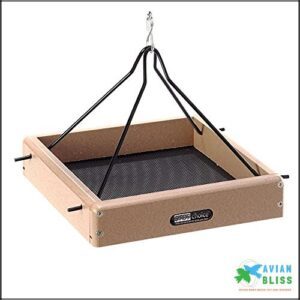
If you’re after versatility and easy maintenance, the Birds Choice Hanging Tray Bird Feeder is worth considering. Its recycled poly-lumber frame won’t fade or crack, even after years outdoors. The stainless steel mesh bottom drains rainwater fast, keeping seeds dry for titmice, cardinals, woodpeckers, and more.
You can fill it with mixed seeds, peanuts, or mealworms—whatever your local birds prefer. Cleaning is simple, and the tray’s open design makes it easy for birds of all sizes to land and feed.
| Best For | People who want a sturdy, eco-friendly feeder that attracts a variety of backyard birds and is easy to clean. |
|---|---|
| Material | Recycled poly-lumber and steel |
| Color | Beige |
| Dimensions | 10.75″L x 10″W x 2″H |
| Outdoor Use | Yes |
| Bird Attraction | Titmice, Towhees, Woodpeckers, Cardinals |
| Easy Cleaning | Yes |
| Additional Features |
|
- Made from recycled materials and built to last.
- Attracts different bird species with its open tray design.
- Simple to fill and clean, saving time and hassle.
- Hanging wires may bend or fall, making setup tricky.
- Not ideal for areas with lots of squirrels.
- May need extra hardware for stable mounting.
4. More Birds Ruby Hummingbird Feeder
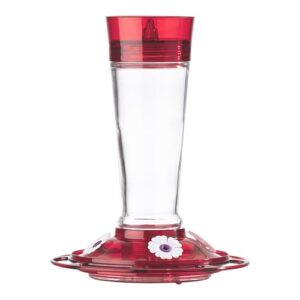
Welcoming hummingbirds to your yard gets easier with the More Birds Ruby Hummingbird Feeder. Its 10-ounce glass bottle holds enough nectar for several days, even with frequent visitors.
The four flower-shaped ports and built-in ant moat keep pests out, letting hummingbirds feed comfortably.
You’ll appreciate the wide opening for quick cleaning and refilling.
The bright red base draws hummingbirds like a magnet, while the sturdy glass lets you monitor nectar levels easily.
It’s a practical choice for anyone serious about backyard birdwatching.
| Best For | Backyard birdwatchers who want a low-maintenance feeder that keeps ants out and gives hummingbirds a comfortable spot to feed. |
|---|---|
| Material | Glass and Plastic |
| Color | Ruby Red |
| Dimensions | 6.5″L x 6.5″W x 8.75″H |
| Outdoor Use | Yes |
| Bird Attraction | Hummingbirds |
| Easy Cleaning | Yes |
| Additional Features |
|
- The built-in ant moat does the heavy lifting — no extra gadgets needed to keep pests away from the nectar
- Four flower-shaped ports mean multiple hummingbirds can feed at once without fighting over a spot
- The wide bottle opening makes cleaning and refilling quick and painless
- Hand-wash only, so it takes a little more effort than tossing it in the dishwasher
- Some users found the nectar doesn’t always reach the ports, which can be frustrating
- Packaging has been known to arrive less than secure, so there’s a chance of damage before it even hits your yard
5. Oriole Orange Fruit Bird Feeder
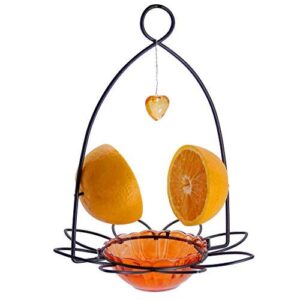
If you want to bring Baltimore Orioles to your yard, the Oriole Orange Fruit Bird Feeder makes it simple.
Its dual aluminum spikes hold one or two orange halves securely — no fruit rolling off when birds land. Two extended perches let a pair of orioles feed side by side.
The bright orange recycled plastic body catches their eye from a distance. At just 7 inches wide, it fits any yard or balcony without taking up much space.
| Best For | Bird lovers and gardeners who want an easy way to attract Baltimore Orioles with fruit or nectar. |
|---|---|
| Material | Metal, Plastic |
| Color | Orange |
| Dimensions | 7.5″L x 7.5″W x 10.5″H |
| Outdoor Use | Yes |
| Bird Attraction | Baltimore Orioles, other birds |
| Easy Cleaning | Yes |
| Additional Features |
|
- Colorful design draws in orioles and other birds
- Easy to fill, hang, and clean thanks to the detached bowl and open top hook
- Compact size fits small spaces and makes a thoughtful gift
- Small bowl limits the amount and size of fruit you can use
- Some users report flimsy construction and loose metal tabs
- Not raccoon-proof and may not last outdoors for years
Frequently Asked Questions (FAQs)
Why put a potato in the bird feeder?
Picture a sparrow grabbing a warm potato chunk on a cold morning—like a runner fueling up with carbs.
Plain cooked potato gives birds fast energy, vitamin C, and potassium, especially during chilly snaps or nesting season.
How often should bird feeders be cleaned?
seed feeders every two weeks, or weekly in summer heat, or after rain. Platform feeders need weekly cleaning.
Hummingbird and nectar feeders should be scrubbed every 3–5 days, especially in hot weather, to prevent fermentation.
What time of day do birds visit feeders most?
Most birds crowd feeders right after sunrise, especially between 7 am and 11 am, when they’re hungry from the night.
You’ll notice another busy window from 4 pm to dusk as birds stock up for evening.
Can bird feeders attract unwanted animals or pests?
Feeding birds can turn your yard into a wildlife hotspot, but it’s not all song and dance—spilled seed draws rodents, raccoons, deer, and insects.
That’s why regular cleaning and thoughtful feeder placement matter so much.
How do weather conditions affect feeder visits?
Weather shifts change feeder traffic fast.
Cold snaps and snow push birds to feeders, while rain and wind alter patterns—ground feeders move up, but heavy storms slow visits.
Heat drops activity, especially when natural food is plentiful.
Are there feeder options for apartment balconies?
Small tube feeders, suet cages, and window-mounted feeders with suction cups all work well on balconies. Many models are under 10 inches wide and clamp easily onto railings without drilling.
Conclusion
It’s no coincidence that when you set out fresh seed, a cardinal appears just as a chickadee lands nearby. The patterns of what birds visit backyard wild bird feeders follow nature’s clockwork, shaped by food, shelter, and safety.
Every feeder you hang, every plant you grow, become part of their daily routine. By understanding their needs, you turn your yard into a reliable stop—where bird behavior meets your curiosity, and each morning brings a new visitor.
- https://avianreport.com/backyard-feeder-birds-northeast-usa-canada/
- https://www.wildaboutbirds.com/read/attracting-birds/suet-vs-seed-feeders
- https://feederwatch.org/common-feeder-birds/
- https://www.ivelvalleybirdfood.co.uk/blog/10-common-garden-birds-to-spot-at-feeders
- https://pmc.ncbi.nlm.nih.gov/articles/PMC6405926/