This site is supported by our readers. We may earn a commission, at no cost to you, if you purchase through links.

A single single birdbath can attract more species to your yard than a full season of premium seed—water draws birds that feeders never will. Warblers, thrushes, and orioles that pass silently through your neighborhood will stop for a reliable water source when they’d ignore even the best suet.
The pull is biological and powerful, especially during migration and the dry heat of midsummer.
Choosing the right backyard water features for birds means understanding what different species actually need: shallow edges for small songbirds, moving water that catches sound and light, and materials that hold up through every season.
From simple stone baths to tiered cascading fountains, the options cover every yard size, budget, and aesthetic.
Table Of Contents
Key Takeaways
- single birdbath with shallow edges and moving water will attract far more bird species — including warblers, thrushes, and orioles — than even the best seed feeders ever will.
- material choice matters: stone and copper age beautifully and last for years, while resin and terracotta offer lightweight, budget-friendly options that still hold up through the seasons.
- placement is everything — position your water feature near shrubs for escape cover, in partial shade to slow evaporation, and on a stable elevated base to keep predators at bay.
- water clean, moving, and ice-free year-round is what turns a casual bird visit into a daily habit, so weekly scrubbing, a solar pump, and a winter deicer are well worth the effort.
Bird Baths for Everyday Use
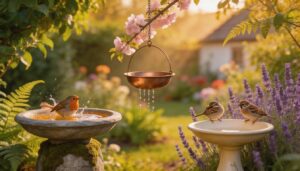
A good bird bath doesn’t have to be complicated, but the right design makes a real difference in how often your backyard visitors show up. From sturdy stone basins to compact hanging bowls, there’s something for every garden size and style.
If you want to take it up a notch, a bird bath with a built-in mister keeps birds cool and coming back all summer long.
Here are five everyday options worth considering.
Stone Birdbaths for Durability
Dense cast stone is one of the most reliable choices you can make for a classic birdbath.
Thick bowl walls resist hail damage and heavy snow, while a sealed polished finish limits water absorption, cutting down on freeze cracking over winter.
Many designs include an integrated drain system and modular bowl design, so cleaning stays simple and worn bowls are easy to swap out without replacing the whole stone bird spa.
[reliable water source](https://www.aquadivo.com/en/bird-bath-made-of-stone/) provides garden wildlife.
Ceramic Pedestal Baths for Elevated Safety
Ceramic pedestal baths take bird-friendly design a step further, lifting the basin to an ergonomic height that deters cats and keeps water visible across the yard. A glazed surface hygiene benefit comes built‑in — smooth, nonporous ceramic wipes clean in seconds.
Look for models with:
- Slip-resistant feet for stability on patios
- A load-bearing base engineered for durability
- Adjustable leveling feet for uneven ground
- Wide, shallow bowls with a classic bird bath on a pedestal silhouette
Hanging Bird Baths for Compact Backyards
Not everyone has room for a pedestal bath — that’s where hanging birdbath shines. Suspended from a tree branch or bracket, it masters vertical space utilization without claiming an inch of ground. Lightweight frame design means even small backyard water features stay easy to reposition. Weather resistant materials like polyresin and hammered copper hold up season after season.
| Feature | Why It Matters |
|---|---|
| Easy chain installation | 16-inch chains included, ready to hang |
| Shallow 2.5-inch basin | Safe bathing depth for small birds |
| Lightweight frame design | Under 2 lbs for flexible placement |
| Weather resistant materials | Polyresin resists cracking through seasonal water management |
Shallow Bowls With Sloped Edges
A well-designed bowl with sloped edges makes a real difference in how comfortably birds drink and bathe.
That gentle 5–15 degree edge angle benefits birds by drawing them closer to the water without awkward leaning.
Shallow water stays cleaner longer, water flow dynamics guide debris toward the center, and glazed finishes simplify weekly scrubbing — making this a genuinely low-maintenance water feature birds return daily.
Pebbles for Traction and Safer Footing
Rough-textured pebbles transform a slippery bath floor into a confident landing zone for small feet.
Pebble Texture and Slope Drainage work together — a gentle 2–5% slope keeps water moving while pebbles grip. Depth Coverage of 3–5 cm lets toes anchor without burying. Smart Placement Patterns and Maintenance Longevity keep your Pebble Water Basin welcoming all season:
- Mix 8–20mm rounded river pebbles for natural grip
- Scatter randomly rather than in uniform grids
- Rinse every two weeks to clear algae buildup
- Top up depth seasonally as pebbles shift with use
Fountains That Add Motion
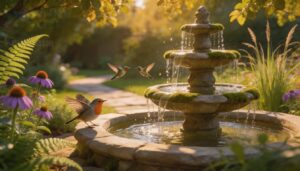
Still water is fine, but moving water is what really gets birds excited. The sound and shimmer of a flowing fountain acts like a dinner bell for everything from robins to hummingbirds.
Still water attracts birds, but a fountain’s sound and shimmer acts like a dinner bell
Here are some great fountain styles worth adding to your backyard.
Solar-powered Fountains for Eco-friendly Flow
A solar-powered fountain is one of the quietest gifts you can give to your garden ecosystem. With smart Solar Panel Positioning — mounting the panel where full sun hits while your basin stays partly shaded — you get Wildlife-friendly Flow Patterns without wiring or waste.
| Feature | Benefit | Bird Impact |
|---|---|---|
| Battery Backup Options | Runs after sunset | Consistent access |
| Low-Noise Pump Design | Calm Water Conservation Benefits | Less startled birds |
| Adjustable nozzle heads | Controls flow strength | Suits all species |
Copper Drippers for Gentle Sound
copper bird dripper brings something solar panels simply can’t — quiet drip mechanics that feel almost meditative.
Pairing it with the right basin makes all the difference — explore bird bath styles that complement drip-based features to keep both the look and the water fresh.
Petal shaped outlets release water in a soft, pinhole-like fall, building garden soundscapes created by water that birds genuinely trust.
adjustable flow rate lets you tune soft water sounds from a whisper to a gentle chime, while patina aging develops a natural finish that complements any bird-friendly waterfall or eco-friendly garden design beautifully.
Temperature tone shifts subtly through the day, keeping things interesting.
Bird-friendly Mist Fountains for Hot Weather
On a scorching afternoon, a bird-friendly mist fountain becomes your garden’s most generous gift. Micro nozzle technology releases fine droplets that deliver evaporative cooling benefits without overwhelming small visitors.
Quiet pump design keeps disturbance low, while battery backup systems sustain misting through cloudy spells.
Pair yours with native plant integration for a truly sustainable garden design that welcomes birds all summer long.
Tiered Fountains With Multiple Perches
A tiered cascading fountain turns your yard into a little neighborhood for birds. Each tier perch level gives visitors a predator observation point before they commit to bathing, while variable water depth across bowls suits everyone from tiny finches to robins.
- Textured perch surfaces grip wet feet securely
- Adjustable flow rate keeps splashing gentle and inviting
- Sculptural fountain with bird perches doubles as garden art
Water Wigglers for Still Bird Baths
A water wiggler is one of the quietest upgrades your bird bath can get.
Drop it in, add two D-cell batteries, and it immediately creates gentle ripples that mimic a natural stream — attracting birds to backyard gardens without any wiring.
That ripple effect also doubles as mosquito prevention, disrupting breeding cycles on the surface. Battery life stretches weeks, making it a truly simple, eco-friendly water feature.
Ponds and Basins Birds Love

Ponds and basins bring a different energy to your backyard — calmer, more naturalistic, and surprisingly welcoming to a wider range of wildlife. Whether you have a sprawling yard or a cozy corner to work with, there’s a water feature here that fits.
Here are five pond and basin styles that birds genuinely love.
Reflective Garden Ponds for Drinking and Bathing
reflective garden pond does more than hold water — it turns your yard into a living mirror. Mirror light effects draw birds in at dawn, when the surface catches early sun and signals a safe water source for birds.
Wide edge rims design lets them land and wade comfortably, while low glare finishes reduce hesitation. Surrounding plant contrast and seasonal depth adjustments keep the pond welcoming year‑round.
Pebble Water Basins for Shallow Access
Pebble water basins bring that same naturalistic energy closer to ground level, where many birds feel most at ease. A low-profile basin filled with layered pebble ramps creates gradient depth zones — letting birds choose their comfort level.
Here’s why they work so well:
- Shallow water (1–2 inches) keeps small birds safe
- Microhabitat texturing mimics a pebble stream edge
- Seasonal algae control stays easier in a shallow concrete basin
Stepping Stone Ponds With Landing Spots
Stepping stone ponds take that ground-level comfort one step further, giving birds actual landing zones across the water.
Flat sandstone or slate platforms, spaced 6 to 12 inches apart, create a natural micro route birds genuinely use.
Mossy perch surfaces add grip, micro current design keeps sediment moving, and predator guard nets underneath make the whole setup a safe, welcoming microhabitat.
Pondless Waterfalls for Safer Small Yards
If open water makes you nervous with little ones or curious pets nearby, a pondless waterfall is your best friend.
Water cascades over a Safety Rock Shield into a hidden Gravel Basin Lining, where a Compact Pump Vault quietly recirculates everything using Gravity Fed Flow.
Add LED Night Lighting, and this BirdFriendly Waterfall becomes a Sustainable water solution that facilitates Microhabitat creation — beautifully, safely.
Aquatic Plants That Improve Shelter
The right aquatic plants turn a bare pond into a living room for birds. Here are five that quietly do the heavy lifting:
- Water Lily Canopy — pads 10–30 cm wide shade the water, keeping it cool and less exposed.
- Pickerelweed Edge Screens — upright clumps 60–120 cm tall hide movement at the waterline.
- Soft Rush Margins — tight stems give small birds a concealed pause point near the water.
- Arrowhead Leaf Cover — bold arrow‑shaped foliage softens hard basin edges fast.
- Native Sedges Buffer — arching blades blend open water into dry ground naturally.
Together, these native plants layer microhabitat creation through water features into something birds genuinely trust.
Materials and Styles to Consider
The material you choose shapes how your water feature looks, lasts, and fits into your garden’s personality. Each option brings something a little different to the table, from rustic warmth to sleek, modern charm.
Here’s a closer look at five materials worth considering.
Natural Stone for a Timeless Look
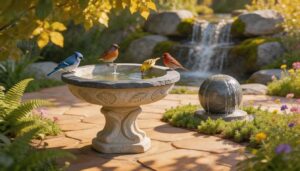
Natural stone earns its place in any garden by outlasting trends and softening beautifully with age. A classic birdbath on a pedestal carved from limestone reveals fossil detail right in the basin — no two look alike.
Granite patina deepens over seasons, while a cascading rock waterfall or granite water sphere adds movement.
Slate textured edges give wet birds’ confident footing, and sandstone warm tones feel genuinely at home outdoors.
Terracotta for Warm Rustic Charm
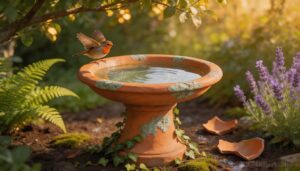
Terracotta’s earthy color palette — all warm clay oranges and dusty russets — settles into a garden as if it has always belonged there.
Its porous cooling effect keeps water slightly revitalized even on hot afternoons, though you’ll refill more often.
Handcrafted surface variations mean each terracotta spillway bowl or rustic pedestal design looks genuinely one-of-a-kind, aging patina development only deepens that charm over seasons.
Copper for Patina and Elegance
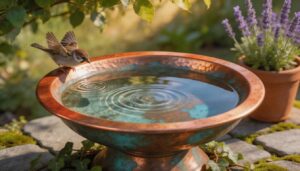
Copper earns its place in a garden the slow way — starting as that warm reddish-orange and deepening beautifully through patina development into rich brown, then blue‑green verdigris over seasons outdoors. A hammered copper texture scatters water reflections softly, hiding splash marks naturally.
Here’s why a copper bird bath suits your backyard so well:
- Weathered copper aesthetics blend effortlessly with stone, brick, and wood surroundings
- Elegant copper finish resists rust completely since copper contains no iron
- Antique copper birdbath styles develop a protective oxidation layer that guards the metal underneath
- Bird‑friendly shallow basins around 1.5–2 inches deep let small birds bathe safely
- Patina maintenance is simple — plain water and a soft cloth preserve that naturally aged look
Copper fits beautifully into eco‑friendly garden design ideas, adding warmth and garden aesthetics that genuinely improve with age.
Resin for Lightweight Weather Resistance
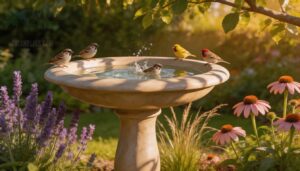
Resin might not carry copper’s romance, but a polyresin bird bath quietly earns its place in a sustainable gardening setup. Hollow resin construction keeps weight low enough for one-person repositioning between sun and shade.
Non-porous surfaces dry faster, resist staining, and make weekly scrubbing genuinely easy.
Polyresin UV coating preserves color through seasons, and freeze-thaw durability means winter won’t crack that carefully chosen pedestal.
Glass Accents for Decorative Bird Appeal
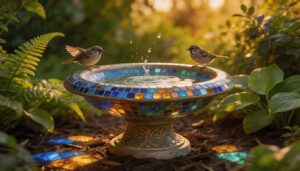
A glass bird bath does something no stone or resin piece can — it catches morning light and throws color across your garden like a quiet little celebration. Cobalt, amber, and aqua tints stay vivid beside green foliage all season long.
- Mosaic Tile Patterns grip easily with textured bowl surfaces, improving bird footing.
- Colored Glass Tints in cobalt or amber create striking light, reflecting placement near dark mulch.
- Tempered Glass Durability is suitable for outdoor use, though you’ll want to empty it before a hard freeze.
- Decorative designs of bird baths shine brightest facing morning or late‑afternoon sun — simple bird bath placement tips worth remembering.
Best Placement for Bird Activity
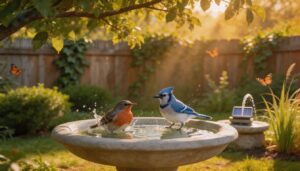
Where you place a water feature matters just as much as which one you choose. The right spot can mean the difference between a bird’s trust and one they ignore entirely.
Here are the placement details that make the biggest impact on bird activity.
Partly Shaded Spots to Slow Evaporation
East-facing placement is a quiet win — your bath catches bright morning light, then settles into cooler shade by early afternoon, slowing evaporation noticeably.
heat-reflective barriers like pale walls or concrete patios nearby, since they push reradiated warmth right into the bowl.
Wind-sheltered zones and vegetation buffer strips help too, turning your setup into a low-maintenance water feature birds actually trust.
| Placement Factor | Effect on Water | Bird Benefit |
|---|---|---|
| East-facing spot | Reduces afternoon heat buildup | Cooler, fresher water longer |
| Wind-sheltered zone | Slows surface evaporation | Stable depth for safe bathing |
| Ground surface cooling | Grass or mulch reduces heat rise | Less frequent refilling needed |
Placement Near Shrubs and Small Trees
Shrubs placed 6 to 12 feet away strike the sweet spot for escape cover distance, giving small songbirds a fast retreat without creating a predator buffer zone problem. Leave a clear 3 to 5-foot strip around the basin for flight path access.
Small trees with open perch tree structure, like serviceberry or dogwood, complete the microhabitat beautifully.
Elevated Locations to Reduce Predator Risk
Position matters as much as design regarding predator protection. A classic birdbath on a pedestal, standing 24 to 36 inches tall, gives birds clear sight lines and a clean launch path upward.
- Keep spacing from structures like fences and walls at least 3 feet.
- Choose elevated base materials like smooth metal poles predators can’t grip.
- Apply secure mounting techniques so the bowl won’t tip under pressure.
- Create predator-free perches with open airspace on all sides.
Birdfriendly landscaping and providing safe bathing spots for birds go hand in hand here.
Safe Distance From Pesticides and Chemicals
Beyond predator safety, bird baths need distance from pesticide zones too. Always check label buffer zones before treating nearby lawn or beds — some products require 25 to 50 feet of separation from water.
Wind drift management matters just as much; spray travels farther on breezy days.
Runoff path planning, granule tracking prevention, and mixing area separation keep your sustainable water solutions and habitat enhancement efforts genuinely bird-safe.
Stable Bases for Bowls and Fountains
A wobbly base undoes even the most beautiful Stone Bird Spa or Mosaic Tile Birdbath. Wide Footprint designs — ring or tripod bases — spread weight evenly and resist tipping, especially as bowl diameter grows.
Low Center Gravity keeps heavy cast-stone Classic Birdbath on a Pedestal from leaning after rain.
For a Rustic Wooden Barrel Fountain, Level Foundation on compacted gravel prevents frost-heave shifts, while Ground Anchoring stakes and smart Materials selection for outdoor fountains maintain Freeze Thaw Stability all winter.
Cleaning and Seasonal Care Tips
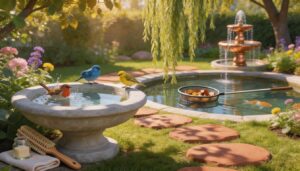
A beautiful water feature only stays beautiful if you’re willing to put in a little regular care. Birds notice the difference between fresh, clean water and a neglected, murky bath faster than you’d think.
Here are the key habits that keep your setup healthy and welcoming through every season.
Weekly Scrubbing to Control Algae
once a week is all it takes to stop algae before it turns your bird bath into a slippery mess. algae spot identification along the waterline and around pebbles, where growth hides fastest.
brush type selection matters — a stiff non-metal bristle brush protects glazed and resin finishes. vinegar rinse technique to lift mineral film, rinse completely, then clear pump intake cleaning points so water circulation stays strong.
Frequent Refills During Summer Heat
Summer heat can drain a shallow bird bath faster than you’d expect — sometimes within a few hours. A simple Morning Refill Schedule gets birds off to a strong start, while an Evening Refill Routine replaces water lost during peak heat.
- Refill early, before 8 a.m., when bird activity peaks
- Top off again near sunset for roosting visitors
- Monitor Evaporation by checking depth mid-afternoon
- Use Cooling Water Strategies — cool tap water, never ice-cold
- Practice Basin Volume Management with smaller, frequent pours
Moving Water to Discourage Mosquitoes
Still water is a mosquito’s best friend — and a bird bath’s worst enemy. Mosquitoes need calm surfaces to lay eggs and can complete their cycle in just 7 to 10 days.
Battery Wigglers and solar pumps prevent mosquito breeding with moving water by keeping full-bowl ripple action constant. Monitor your pump flow rate, practice regular debris management, and mind the calm rim pockets — edge ripple design matters too.
Winter Deicers for Year-round Access
Cold winters don’t have to mean an empty bird bath. A thermostatic control deicer keeps a small opening ice‑free without running nonstop, which lowers power consumption considerably. Here’s what to keep in mind:
- Electrical safety — always use a GFCI‑protected outdoor outlet
- Material compatibility — confirm your bath is rated for the deicer’s wattage
- Installation tips — keep the cord above snow level and refill daily
Pump Checks for Steady Circulation
A quiet pump is easy to overlook—until your fountain turns into a puddle. Keeping your pump system healthy takes just a few minutes each week, and it pays off in steady, bird-drawing flow all season.
| Check | What to Do | Why It Matters |
|---|---|---|
| Water Level Monitoring | Top off daily in summer heat | Exposed intakes lose prime fast |
| Intake Screen Cleaning | Rinse with soft brush every 1–2 weeks | Blocked screens cut flow before the pump fails |
| Impeller Inspection | Remove cover, rinse off grit or scale | Slime-coated impellers cause rattling and weak circulation |
| Tubing Nozzle Flow | Flush line, check for kinks or deposits | Narrow nozzles break the stream pattern sideways |
| Solar Panel Maintenance | Wipe panel with damp cloth regularly | Dust lowers output enough to stop circulation entirely |
These low-maintenance garden fountain habits support sustainable water solutions for landscapes while keeping birds coming back reliably.
Top 3 Bird Water Products
After all the planning and placement tips, it helps to know which products actually deliver for birds and your backyard. These three picks cover a bath, a solar pump, and a winter heater — the core essentials for a water feature that works year-round.
Here’s a closer look at each one.
1. Vingli Antique Copper Bird Bath
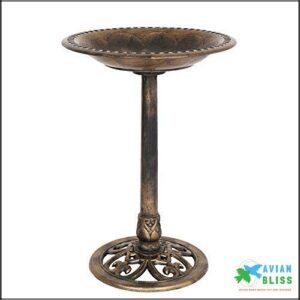
The Vingli Antique Copper Bird Bath brings genuine charm to any backyard without the backache of hauling heavy concrete. At 28 inches tall with a 20-inch bowl, it gives small birds plenty of room to bathe comfortably, while the shallow 2.4-inch basin keeps things safe.
Resin construction means it’s weather-resistant and easy to reposition whenever you want to refresh your garden layout.
The textured, non-slip basin bottom is a thoughtful touch — birds appreciate solid footing just as much as fresh water.
| Best For | Backyard bird lovers who want an attractive, low-maintenance water feature without the weight and hassle of traditional concrete or stone baths. |
|---|---|
| Material | High-density resin |
| Weather Resistant | Yes |
| Assembly | Tool-free |
| Bird Friendly | Yes |
| Anchoring Included | 3 ground stakes |
| Finish | Antiqued bronze/copper |
| Additional Features |
|
- Assembles in seconds with no tools — just screw on the stem and you’re done.
- Lightweight resin makes it easy to move around, clean, and store when needed.
- Weather and frost resistant, so it holds up through the seasons without much fuss.
- It’s light enough that strong winds can tip it over, so you’ll want to fill the base or use the stakes.
- The finish leans more bronze than copper, which might disappoint anyone expecting a true copper look.
- Rim holes can let water escape fast if you’re running a high-spray fountain, meaning more frequent refills.
2. AISITIN Solar Fountain Pump for Bird Bath
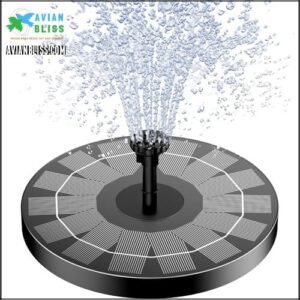
If you want movement without wiring, the AISITIN Solar Fountain Pump is a clever little upgrade for any existing bird bath.
Its 2.5-watt monocrystalline panel kicks on the moment sunlight hits it, sending water dancing through six interchangeable nozzle heads — no outlets, no cords, no fuss.
The floating design drops right into your basin, and you can swap spray patterns by hand in seconds. Just know it needs steady direct sun to perform; cloudy days will quiet it down quickly.
| Best For | Anyone who wants to add some life and movement to a bird bath or small garden pond without running a single wire. |
|---|---|
| Material | High-density resin |
| Weather Resistant | Yes |
| Assembly | Tool-free |
| Bird Friendly | Yes |
| Anchoring Included | 3 ground stakes |
| Finish | Antiqued bronze/copper |
| Additional Features |
|
- Fires up automatically in direct sunlight — zero setup beyond dropping it in the water
- Six nozzle options give you real flexibility over how the water looks and flows
- Lightweight and portable, so you can move it wherever the sun (and birds) take you
- No battery means it stops the second a cloud rolls in — don’t count on it for cloudy climates
- Shallow basins can lose water fast, especially on breezy days or with the higher-flow nozzles
- Durability is a question mark; some users report it gives out after just a few months
3. KH Super Ice Bird Bath Heater
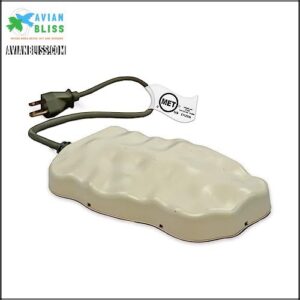
Winter is when the K&H Super Ice Bird Bath Heater earns its place. While the solar pump keeps things lively in summer, this 80-watt submersible deicer covers the season when birds need liquid water most — down to -40°F.
Its thermostat cycles on and off automatically, so it isn’t burning energy around the clock. The enamel "rock-like" housing blends into any bath, and you can even paint it to match. A three-year warranty backs it up nicely.
| Best For | Backyard bird lovers in cold climates who want a low-maintenance, energy-efficient way to keep water accessible for wildlife all winter long. |
|---|---|
| Material | High-density resin |
| Weather Resistant | Yes |
| Assembly | Tool-free |
| Bird Friendly | Yes |
| Anchoring Included | 3 ground stakes |
| Finish | Antiqued bronze/copper |
| Additional Features |
|
- Thermostat cycles on and off automatically, so it’s not running (or costing you money) 24/7.
- The enamel housing is tough, rust-resistant, and easy to clean — plus you can paint it to blend in.
- MET Labs certified and backed by a three-year warranty, so it’s built to a solid safety standard.
- It has to stay fully submerged — if any part is exposed, you risk overheating and early burnout.
- The cord is short, so you’ll likely need an outdoor-rated extension cord and a waterproof connector.
- In brutal cold snaps below -20°F, it may only keep a small center pocket liquid, with ice still forming around the edges.
Frequently Asked Questions (FAQs)
Which bird species visit water features most frequently?
Ever wonder who actually shows up first?
American robins, house finches, mourning doves, house sparrows, and northern cardinals are your most reliable visitors, drawn consistently to clean, shallow water throughout the seasons.
Can water features attract unwanted pests or animals?
Yes, water features can attract mosquitoes, rodents, raccoons, and snakes.
Stagnant water breeds mosquitoes fast, low basins invite rats, and ponds with frogs draw raccoons and snakes seeking an easy meal.
How deep should water be for larger bird species?
Larger birds bathe best in 1 to 2 inches of water, with a shallow drinking shelf around 75 inches near the rim, giving doves and jays safe footing without losing their balance.
Conclusion
Whether you’re designing a lush oasis or a simple haven, backyard water features for birds can transform your outdoor space.
Shallow edges, moving water, and natural materials come together to create a haven.
A well-placed birdbath or fountain attracts a diverse array of species, fostering a deeper connection with nature. By incorporating these elements, you’ll both improve biodiversity and also create a serene retreat that brings joy and wonder to your daily life.
- https://www.nwf.org/CertifiedWildlifeHabitat
- https://www.epa.gov/soakuptherain/soak-rain-rain-gardens
- https://garden-fountains.com/products/13-5-inch-hanging-aged-brass-bird-bath
- https://nature-niche.com/products/mini-hanging-bird-bath
- https://www.marcopaul.co.uk/blogs/home/best-bird-baths-top-picks-for-your-feathered-friends