This site is supported by our readers. We may earn a commission, at no cost to you, if you purchase through links.
Most birders remember their first rare sighting—the rush, the scramble for binoculars, then the sinking feeling of forgetting half the details by dinner. A birding journal fixes that. It turns fleeting moments into something you can actually revisit, compare, and learn from over time.
Knowing what to write in a birding journal makes the difference between a vague memory and a record worth returning to. The five things covered here will help you capture everything that matters—from the weather at dawn to the exact flick of a tail feather that finally confirmed the ID.
Table Of Contents
- Key Takeaways
- Record The Observation Basics
- Describe Each Bird Clearly
- Write Down Bird Behavior
- Add Sketches, Photos, and Sounds
- Track Patterns Across Entries
- Frequently Asked Questions (FAQs)
- What do you put in a bird journal?
- How do you write a bird journal?
- What can you do with a bird journal?
- Should you keep a bird journal?
- What are the 5 S’s of birding?
- What is a cute birding quote?
- What is a code 5 in birding?
- How do I organize entries for multiple locations?
- Should I journal solo trips differently than group outings?
- Can journal data help with local conservation efforts?
- Conclusion
Key Takeaways
- Logging the basics — date, exact location, weather, and habitat — gives every sighting real context instead of leaving it as a fuzzy memory floating in time.
- Describing each bird beyond just its name (size, field marks, age, behavior) is what turns a casual note into a record you can actually learn later.
- Sketches, photos, and quick sound notes capture details your words will miss, and they’re what you’ll thank yourself for when an ID gets tricky months down the road.
- The real payoff comes when you track patterns across entries — arrival dates, weather links, habitat shifts — because that’s when your journal stops being a diary and starts acting like a field study.
Record The Observation Basics

Before you ever write down a single bird name, you need to capture the "where, when, and what was going on" of your outing. Think of it as the foundation — without it, your sighting is just a floating memory with no context.
Here’s what to jot down every time you head out.
Date, Start Time, End Time, and Duration
Every solid birdwatching journal entry starts with one thing: time. Log your date using ISO 8601 format (YYYY-MM-DD) — it’s clean, consistent, and plays nicely with platforms like eBird. Use a 24-hour clock to dodge AM/PM confusion.
Pair your timestamped entries with the right gear by checking out this bird watching equipment guide for beginners and serious birders before your next outing.
Your observation metadata should capture:
- Exact start and end times
- Duration calculation (end minus start)
- Midnight crossing notation when sessions span two dates
Simple, but game-changing.
Exact Location, Landmarks, and GPS Coordinates
Time tells you when. Location tells you where — and that second part matters more than most beginners expect.
Log your GPS coordinates in decimal degrees (like 51.1783, -1.8262), then back them up with Reference Triangulation Techniques: a trailhead sign, a pond edge, a distinctive oak.
Add elevation for complete observation metadata.
Always verify coordinates against a map before sharing, and apply Secure Data Sharing practices for sensitive sites.
Google Earth shows the latitude and longitude in the lower‑right corner coordinates while you move the cursor.
Weather, Temperature, Wind, Clouds, and Rain
Now that you’ve pinned down your spot, look up. Weather shapes everything you’ll see.
Log these three things before scanning the treetops:
- Temperature — note exact degrees; temperature trends shift bird feeding windows fast.
- Wind direction and cloud cover — calm mornings with high clouds mean longer, clearer views.
- Rain intensity and humidity impact — even light drizzle changes where birds forage.
Weather conditions don’t lie.
Habitat Type and Nearby Water Sources
Weather tells you what birds are doing. Habitat tells you why they’re there.
Note the habitat type — Riparian Pools, Lake Shoreline, Wetland Mosaic, or Riverine Edge — and any nearby water. Seasonal Water Levels shift feeding zones fast. shrinking pond exposes mudflats; herons show up overnight.
habitat details, woven into your Location and Habitat notes, turn a simple environmental observation into serious habitat monitoring.
Travel Time, Site Count, and Gear Used
Log your travel time honestly — coastal boardwalks and muddy trails can add 20 to 40 minutes you didn’t plan for. Your Transit Buffer Planning and Travel Time Variability notes keep future trips realistic.
Aim for 3 to 8 sites per session, spaced at least 200 meters apart — that’s your Site Spacing Strategy in action.
Vary your routes between sites the same way birds vary their building materials — a habit worth exploring through intricate bird nest weaving and construction techniques.
Round it out with a Trip Logistics Checklist: binoculars, scope, waterproof pen, backup batteries.
Done.
Describe Each Bird Clearly
Getting the bird’s name down is just the start. The real value comes from capturing the details that make each sighting unmistakable — the kind of notes that bring the moment back weeks later.
what to record for every bird you spot.
Common Name and Scientific Name

Start every species entry with the common name, then add the scientific name in parentheses — like Turdus migratorius for the American Robin.
Regional naming gets messy quickly, so that binomial is your anchor. Nomenclature rules keep it italicized and genus capitalized.
Bird ID apps like Merlin Bird ID follow the same system. Your species list becomes genuinely useful when both names appear together.
Size, Shape, Colors, and Field Marks

Once you’ve got the name down, describe what you actually saw.
Jot a quick Silhouette Comparison — was it sparrow-sized or crow-sized?
That Relative Size Index matters more than you’d think.
Then note Color Hue Variation across the wings and breast, and flag any Eye Ring Identification details or Wing Shape Analysis.
These plumage and physical attributes are your bird identification backbone.
Beak, Legs, Plumage, and Unusual Markings

Now zoom in on the details. Beak Morphology tells you a lot — a short, stout bill cracks seeds; a long, curved one probes for insects.
Note Leg Structure too: scaled, feathered, or wading-ready. Document Plumage Coloration, any Mosaic Markings, or Irregular Feather Tufts near the head or tail. These plumage and physical attributes sharpen your bird identification and make each observation count.
Age Class and Sex if Identifiable

Not every bird gives away age or sex — but when it does, write it down.
Juvenile plumage often shows Feather Wear and mottled patterning, while Molt Stage hints at life stage and sex details.
Sexual Dimorphism, size, distinctive markings, and Vocal Indicators all feed into your bird identification methods.
Add a Confidence Rating so future-you knows how sure you actually were.
Flock Size, Solitude, or Mixed-species Groups
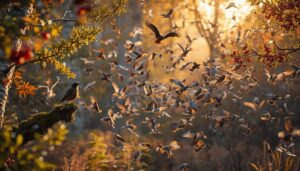
Whether you spot a lone bird or a buzzing flock of 20, counting individuals and describing group dynamics tells a bigger story. Note the number of individuals, any mixed-species associations, and who seems to be leading. Leadership rotation happens more than you’d think.
Predator alarm calls spread faster in diverse groups, and habitat influence shapes flock size. Resource competition often explains why some birds ditch the crowd entirely.
Write Down Bird Behavior

A bird’s name is just the beginning — what it’s doing tells the real story. Behavior is where the magic happens, and it’s often what helps you confirm an ID or notice something genuinely surprising.
Here’s what’s worth writing down every time.
Feeding, Foraging, and Drinking Behavior
When a woodpecker hammers faster than usual, that’s a pecking rate worth noting in your birdwatching journal. Bird behavior around food tells a real story.
Jot down seed selection at your bird feeder, nectar hovering at flowers, or water source preference after a hot afternoon. Track seasonal diet shifts too — behavioral notes like these turn scattered bird observations into something genuinely meaningful.
Singing, Calling, and Territorial Displays
From food to sound — birds have a lot to say.
Note Dawn Song Timing in your behavioral notes; males sing the longest at first light to hold territory.
Log Repertoire Size, Alarm Call Structure, and Visual Display Elements like crest puffs or wing flicks.
Neighbor Interaction through song matching is fascinating, too.
Bird vocalizations reward an audio recording more than almost any other bird behavior.
Nesting, Mating, or Parental Activity
Nesting season is where bird behavior analysis gets genuinely exciting. Watch for Nest Construction Materials — what’s the bird weaving in? Mud, moss, or stolen string?
Note Egg Temperature Regulation, behaviors like tucking or wing-spreading.
Post Hatch Care is worth tracking too: feeding frequency, brooding posture, Territorial Defense near the nest.
Your birdwatching journal captures what no field guide ever will.
Flight Style, Posture, and Movement
Flight tells you so much about a bird’s identity. From Wing Morphology to Glide Angles, your field notes should capture it all.
- Note Takeoff Mechanics — leg push, wingbeat power, and speed
- Log Landing Strategies — body tilt, tail spread, leg crouch
- Track Aerodynamic Drafting in flocks
- Sketch flight patterns and posture mid-glide
Bird observation sharpens when you treat behavior and activity as data.
Unusual Actions or Repeated Patterns
Sometimes bird just does something weird — and that’s exactly what you want to write down.
| Unusual Action | What It Might Mean |
|---|---|
| Ritualistic Counting of hops | Stress or territorial habit |
| Stereotyped Movements (head bobs) | Sensory or social signaling |
| Fixed Observation Routes revisited | Predictability Preference in foraging |
These behavioral notes reveal migration patterns and seasonal patterns analysis you’d otherwise miss.
Add Sketches, Photos, and Sounds

Words can only do so much when you’re trying to capture a bird. That’s where sketches, photos, and sound notes come in — they fill the gaps your pen can’t.
Here’s what’s worth adding to each entry.
Quick Sketches or Silhouette Drawings
You don’t need to be Audubon — a rough silhouette tells the story. Quick sketches capture what cameras miss: posture, gesture lines, the tilt of a head.
Try these sketching techniques to sharpen your field notes:
- contrast techniques — dark shapes against bright sky read instantly
- Build a pose library of 5–6 standard stances
- Gesture lines over details for faster field sketches
- Tool selection matters: blunt pencils push shapes quickly
- Lighting strategies like backlight reveal clean outlines
Photo or Video Notes With Metadata
Your photos and videos do the heavy lifting — but only if you treat the metadata like field notes. EXIF tagging captures camera settings automatically, while GPS embedding locks in date, time, and location for every shot.
Log your file naming conventions and run a metadata export workflow after each outing. That way, species, weather conditions, and photographic documentation stay permanently tied to each image.
Audio Descriptions of Calls and Songs
Bird calls slip away fast — jot down vocalization rhythm, pitch range, and call timing right after you hear them. Is it a sharp alarm or a lazy, melodic trill? Note dialect variation if it sounds different from what your guide describes.
Tag your audio metadata with GPS and weather too. That context turns a rough sound sketch into real bird vocalization analysis you’ll actually use later.
Binocular, Scope, or Camera Performance Notes
Your gear deserves a few lines in your journal too. Note how your binoculars handled light transmission at dawn, whether the field of view felt cramped, tracking warblers, and if your focus diopter needed resetting mid‑session.
Build quality matters in the rain — log it. If you tried a digiscoping setup, record what worked.
Small gear performance notes save you big headaches later.
Visual Clues That Confirmed The ID
Sometimes one tiny detail seals the deal. That’s when your visual judgment sharpens into something real — not guesswork, but confident recognition built on bird morphology and bird identification skills. Write down exactly what clicked.
- Eyebrow Contrast, and Wing Bar Pattern against the crown
- Tail Patch Visibility, when the bird flushed from its perch
- Rump Color Band confirmed mid-flight
- Crest Shape and size, distinctive markings matching your field guide
Track Patterns Across Entries

Single entries are useful, but the real magic happens when you start connecting the dots across weeks and months. Your journal becomes less of a diary and more of a living field study—one that reveals patterns you’d never notice in the moment.
Here’s what to track so those connections actually start to show up.
First Arrival and Last Departure Dates
Every spring, first Barn Swallow cutting across the sky feels like a personal gift. Write it down — exact date, time, and location.
Do the same when the last one disappears in autumn. These first arrival records and last departure notes build your own migration tracking calendar over time. A few years of seasonal date patterns; you’ll start reading the seasons like an old friend.
Monthly Species Frequency and Abundance
Beyond arrival dates, start counting — how many individuals showed up, and how often across the month. Jot species, number of individuals, date time and location, and weather conditions each visit.
Over time, these notes reveal temporal trends and Site Variability between spots.
Effort Normalization matters too: ten minutes versus two hours skews everything. Consistent counting builds Statistical Confidence, and Habitat Influence becomes obvious fast.
Habitat Shifts Across Different Sightings
Notice when the same species shows up in completely different spots. That’s a habitat shift — and it tells you a lot.
- Elevation Influence pulls birds up or down as temperatures swing
- Food Resource Links explain moves toward fruiting scrub or insect-rich field margins
- Disturbance Effects push species into quieter, denser cover
- Microclimate Refugia and Corridor Connectivity keep birds moving between patches
Log date and time, location, species, weather conditions, and habitat description every time.
Weather Links to Bird Activity
Weather does more than set the mood — it shapes everything you see.
Temperature Influence nudges feeding times earlier or later, while Wind Influence can silence an entire hillside of singers. Cloud Influence stretches vocal activity in forest birds. Rain Influence flushes insects up from wet soil.
Log Weather Conditions alongside Behavioral Notes and Habitat Description, and Phenology Tracking, seasonal patterns, and Pressure Influence start making real sense.
Personal Reflections, Questions, and Learning Notes
Your journal isn’t just data — it’s a conversation with yourself over time. Jot down personal reflections after each outing, and you’ll start noticing how Mood Influence and energy shaped your focus.
Your birdwatching journal is a conversation with yourself that deepens with every outing
Track these five things:
- Personal thoughts on what surprised you
- Follow-up Questions about uncertain IDs
- Skill Goals for your next trip
- Mnemonic Aids that clicked — or didn’t
- Resource Evaluation notes on guides or apps used
Frequently Asked Questions (FAQs)
What do you put in a bird journal?
Your birdwatching journal holds everything — species names, field marks, behaviors, weather, sketches, and gear notes. Think of it as your personal field guide built one sighting at a time.
How do you write a bird journal?
Start simple. Pick a notebook, grab a pen, and jot down what you saw, where, and when. That’s it.
Your layout planning, color coding, and digital integration can grow naturally from there.
What can you do with a bird journal?
A bird journal lets you set personal goals, compile species lists, analyze habitat use, document gear performance, and reflect on experiences — turning your time outside into something genuinely useful and deeply personal.
Should you keep a bird journal?
Yes — and here’s why it’s worth it.
birdwatching journal sharpens your skills, deepens mindful observation, and builds memory retention.
It’s a simple habit with real benefits for anyone serious about the craft.
What are the 5 S’s of birding?
The 5 S’s are Size, Shape, Shade, Sound, and Setting.
Together, they cover Scale Metrics, Silhouette Outline, Hue Contrast, Acoustic Signature, and Habitat Position — giving you a fast, reliable framework to identify any species in the field.
What is a cute birding quote?
Every feathered flutter is a little love letter from nature.
Gentle imagery, warm tone, rhythmic phrasing — cute birding quotes capture everyday moments with creative expression, turning mindful observation into something worth sharing.
What is a code 5 in birding?
A code 5 is birding’s rarity ranking for species spotted five or fewer times in the ABA area.
Think of it as the holy grail — extremely rare, demands serious documentation, and sends community alerts flying.
How do I organize entries for multiple locations?
Think of it like a library card system. Assign each spot a tag — L1, L2 — and log GPS coordinates, date and time, and habitat.
Your birdwatching journal stays clean, sortable, and easy to compare.
Should I journal solo trips differently than group outings?
Yes and no. Solo trips let you control timing granularity and reflection focus.
Group outings shift toward social dynamics, equipment sharing, and confidence levels built through consensus.
Adjust your observation checklist and personal reflections accordingly.
Can journal data help with local conservation efforts?
Absolutely.
Your journal entries feed directly into citizen science, turning personal notes into tools for habitat mapping, population trends, and threat detection — data that shapes real conservation efforts and even policy influence.
Conclusion
The date grounds you. The weather sets the scene. The behavior tells the real story.
Knowing what to write in a birding journal means you’re not just listing birds—you’re building a record that actually teaches you something over time. Each entry is a small deposit.
Flip back a year later and you’ll see patterns you never noticed in the field. That’s when a journal stops being a habit and starts being a tool.