This site is supported by our readers. We may earn a commission, at no cost to you, if you purchase through links.
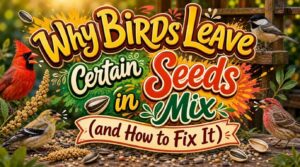
Watch a feeder long enough and you’ll notice something that looks almost deliberate: birds tossing seeds aside, picking through the mix like they’re searching for something specific. They are. A cardinal doesn’t scatter millet out of carelessness—its thick bill is built for cracking sunflower shells, and millet offers little return for that effort.
Birds balance caloric payoff against physical capability every time they visit your feeder, and the seeds left behind tell you exactly where that calculation failed. Understanding why birds leave certain seeds in a mix means reading the feeder floor like a field biologist—each rejected seed points to a mismatch between what you’re offering and what your visitors can actually use.
Table Of Contents
Key Takeaways
- Birds reject seeds based on beak mechanics and caloric return, not stubbornness — a goldfinch physically can’t crack a sunflower shell, and a cardinal won’t waste energy on millet.
- Cheap mixes packed with red millet, milo, wheat, and cracked corn drive waste because most backyard species are hard-wired to ignore low-fat, low-return seeds.
- Seed quality degrades fast — rancid oils, moisture damage, and mold can turn a good mix into a health hazard within 24–48 hours, and birds will abandon a contaminated feeder quickly.
- Switching to sunflower-heavy blends, matching seed to visiting species, and cleaning feeders weekly are the most direct ways to cut waste and keep birds coming back.
Why Birds Sort Seed Mixes
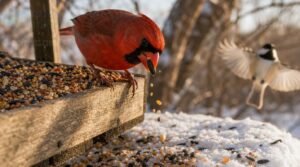
Birds don’t sort seed mixes out of stubbornness — they’re following instincts honed over millions of years. What looks like picky eating is actually a combination of beak mechanics, energy calculations, and hardwired species preferences.
Even their rejection of certain feeders comes down to the same survival logic — birds evaluate every feeding situation with the same instinct-driven calculus.
Here’s what’s really driving that behavior.
Natural Feeding Instincts
When you watch birds work through a seed mix, you’re seeing natural foraging behavior play out in real time. They rely on visual contrast to spot preferred seeds first, use olfactory cues to assess freshness from meters away.
Drawing on prior experience and social learning, they build a clear food preference hierarchy — one that shifts with seasonal changes in energy demands.
Beak Size Limitations
Beak size influence on seed selection criteria is more straightforward than most people realize. A goldfinch’s narrow bill physically can’t crack a sunflower shell — that’s not preference, it’s mechanics. Beak-seed match determines processing speed and efficiency at every feeder.
Four key factors drive this:
- Mechanical advantage — deeper beaks generate more crushing force against thick seed shell thickness
- Beak shape impact — curved or hooked bills dehusk seeds that straight beaks struggle with
- Beak growth variation — slight within-species size differences shift individual seed waste patterns
- Gape width — limits the maximum kernel size a bird can grip and manipulate
Strong beak braincase integration indicates that beak form is constrained by overall skull morphology.
Energy-rich Seed Choices
Beyond beak mechanics, birds are fundamentally calorie hunters. High-fat sunflower seeds top the list — delivering around 650–700 kcal per 100g — which is why they disappear first.
Omega-rich flax and protein-packed hemp support sustained energy, while mineral boost sesame aids oxygen transport and muscle function.
Seasonal seed rotation matters too: high-fat seeds in winter directly reduce seed waste by matching birds’ peak metabolic demands.
Species-specific Preferences
Calorie needs vary by species, and so do seed preferences.
Cardinals show a clear sunflower bias — their thick bills crack shells smaller birds can’t touch. Goldfinches lock onto finch nyjer preference almost exclusively, ignoring anything larger. Chickadees stick to their seed size sweet spot, while Blue Jay peanut selection and Woodpecker nut choice edge out smaller competitors.
Understanding these species interaction patterns is your first step toward smarter seed waste management.
Birds Leave Seeds They Cannot Use
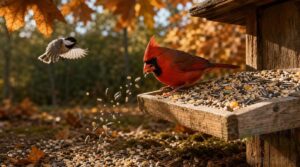
Not every seed in a mix is worth eating — at least, that’s how birds see it. Some seeds get tossed aside the moment a bird realizes it can’t crack, swallow, or digest them.
Here are the main reasons certain seeds never get touched.
Hard Shells
Hard shells pose a real barrier for smaller birds, as shell chemistry packed with lignin makes cracking energy-costly to crack. If the energy cost exceeds the reward, birds simply move on.
That’s why checking treat quality matters just as much as shell hardness—safe and nutritious bird treat selection tips can help you offer snacks that are worth the effort for your feathered visitors.
Seasonal changes further complicate matters: hardness increases as seeds dry out, rendering already difficult-to-eat seeds even less appealing.
Species adaptations vary widely—cardinals manage fine, but chickadees won’t bother. The fastest path to seed waste reduction is straightforward: skip seeds your visitors can’t open.
Oversized Kernels
Size matters more than you’d think. When oversized kernels enter the mix, kernel rolling behavior becomes a real problem — seeds tumble off platform feeders before smaller birds even get a chance. Bulkiness reduces intake, as handling time offsets the caloric density tradeoff birds instinctively calculate.
Feeder depth requirements increase, and mixed-seed uniformity suffers, driving seed preference toward smaller, hard-to-eat seeds nearby.
Low-fat Fillers
Most filler seeds in commercial mixes share one trait: they mimic bulk without delivering real energy. Think starch mimetics or protein-based fillers—engineered hydrocolloid textures that satisfy volume, not nutrition. Birds detect this instinctively.
Watch for these common low-fat offenders:
- Red millet—low-fat, widely rejected
- Wheat grains—poor fat-to-fiber ratio
- Milo—minimal caloric return
- Cracked corn—attracts starlings, not songbirds
Swap these for high-fat seeds instead.
Poor Nutrition Value
Bulk doesn’t equal nutrition. A poor-quality seed mix loaded with fillers creates amino acid imbalance and calcium deficiency that quietly damage your feeder birds’ health.
Zinc scarcity and omega‑3 lack impair feather growth and immune response. Without essential fatty acids from energy-dense seeds, birds reject what they sense won’t sustain them.
A high-quality seed mix targets the actual nutrient content of seeds birds need.
Unfamiliar Seed Types
Birds don’t trust what they don’t recognize. Unfamiliar seeds in a mix often carry toxic compounds or bitter flavors that trigger instinctive rejection — your backyard’s species simply won’t risk it.
Spiny seed coats and unusual textures make handling awkward at feeding ports. Wind-blown seeds scatter before birds investigate, further discouraging engagement.
Meanwhile, dormancy cues, scarification needs, and unmet moisture thresholds mean these low-quality seed additions offer nothing useful to bird species’ dietary preferences.
Common Seeds Birds Reject
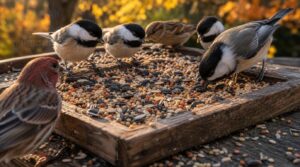
Not all seeds earn their place in the bag. Some show up in cheap mixes simply because they’re affordable to produce, not because birds actually want them.
Here are the most common offenders you’ll find sitting untouched on your feeder tray.
Red Millet
Red millet might look harmless in your seed mix, but most backyard species simply won’t touch it. Despite its agronomic benefits — warm-climate suitability, gluten-free grain status, low glycemic index, and even notable iron richness — none of that matters to a chickadee.
Bird species’ preferences are shaped by energy needs, not nutrition labels. Red millet offers too little fat, making it unappealing as a food source. Dominance hierarchies at feeders only push it further aside, as stronger birds monopolize more desirable seeds.
Milo Seed
Milo seed, also called sorghum, follows a similar pattern. Its high carbohydrate content makes it a cost-effective bulk filler, yet most feeder birds overlook it due to bird species’ clear dietary preferences for fat-rich seeds. Ground-feeding preference is primarily observed in doves and sparrows.
Three reasons milo causes problems include:
- Feeder spillage issues lead to rodent attraction
- Poor milo shelf life accelerates spoilage
- Seed selection instincts push most species toward millet or sunflower
Wheat Grains
Wheat shares that same filler-grade reputation. Its kernel hardness and milling separation process leave the endosperm starch intact but strip away most accessible bran fiber and germ oils — exactly the nutrients birds instinctively seek. Most backyard species don’t have the bill strength to crack wheat’s structure efficiently.
| Factor | Wheat Grain | Bird Response |
|---|---|---|
| Kernel hardness | High | Rejected by most passerines |
| Endosperm starch | Dominant (83%) | Low energy value for birds |
| Germ oils/Bran fiber | Minimal post-milling | Unappealing seed preference |
Bird species preferences consistently bypass wheat in any seed mix. Competition and dominance hierarchies speed that process along — dominant birds toss it aside first.
Cracked Corn
Cracked corn draws a mixed crowd — and not always the one you want. Starlings, grackles, and jays dominate these kernels, triggering food competition that displaces smaller species.
This dominance leads directly to seed spillage, as larger birds toss unwanted pieces aside. Feeder suitability is limited for target species mixes, as the resulting mess and competition deter desired birds.
Hulled Oats
Cracked corn brings noise and competition — hulled oats bring silence. Birds simply ignore them. Despite their beta glucan benefits and chewy texture for humans, oats don’t register as food to most feeder species. Their bird feeding habits lean toward fat and protein, not complex grains.
Here’s why oats drive seed discarding:
- Extended cooking time signals low energy return
- Soaking reduces time for humans, not birds
- Grain flour substitute status makes them a processing food, not a field seed
- Hard-to-eat seeds with unfamiliar texture trigger food preference rejection
Oats stay untouched — a clear sign of poor seed quality and condition for wildlife feeders.
Seed Quality Affects Feeding Behavior
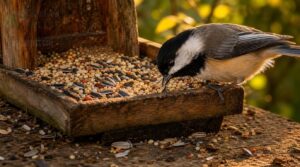
Seed quality matters more than most people realize — birds are surprisingly good at detecting when something’s off.
A kernel that looks fine to you might smell rancid or feel wrong to a bird, and they’ll drop it without a second thought.
Here’s what’s actually driving that behavior.
Stale Birdseed
Stale birdseed is a quiet feeder killer. Birds simply stop showing up when nutrient loss and palatability decline occur due to oil oxidation breaking down fats over time.
Fresh seed feels firm and earthy, but texture alteration becomes evident as aging stock turns powdery or tacky. These shelf-life cues signal declining quality, directly impacting feeder activity.
Seed longevity drops fast in warm storage conditions. Ultimately, seed freshness directly determines whether your feeder remains active or gets ignored.
Moldy Seed Risks
Mold is more than an eyesore — it’s a genuine health threat. When moisture infiltrates feeders, preventing seed spoilage becomes critical. Aflatoxin toxicity damages a bird’s liver, ochratoxin kidney damage weakens immune response, and mycotoxin-related reproductive disruption compounds over time. Chronic exposure impacts are subtle but serious.
Mold in feeders is a silent threat — aflatoxins, ochratoxins, and mycotoxins quietly destroy birds’ livers, immunity, and reproduction
Watch for these mold detection methods:
- Clumping or caked seed clusters
- Discoloration or dark patches on kernels
- Fuzzy visible growth on seed surfaces
- A musty or sour odor from the feeder
Rancid Oils
Rancid oils quietly undermine seed quality even before visible spoilage appears. Unsaturated fats in high-fat seeds—especially black oil sunflower seeds—break down via oxidation catalysts like heat, light-induced spoilage, and trace metals.
Temperature control and airtight, opaque containers serve as essential tools for preventing seed spoilage. Premium mixes containing antioxidant additives resist breakdown longer, extending seed viability.
Peroxide testing provides a definitive method to confirm whether a batch has already turned, ensuring quality assurance.
Moisture Damage
Moisture is the fastest way to ruin a feeder. Whether it’s condensation issues from temperature swings or seed moisture content creeping up after rain, birds detect the difference immediately. Seed mold develops within 24–48 hours in damp conditions, and mold growth in feeders spreads fast.
Watch for these moisture damage signs:
- Clumped seeds that won’t separate
- Discoloration or fuzzy growth on kernels
- Musty odor from the feeder tray
- Seed spoilage visible near moisture entry points
- Birds abandoning a feeder they previously favored
Seed spoilage prevention starts with keeping water out entirely.
Proper Seed Storage
Good storage is the simplest form of seed spoilage prevention. Keep seeds in airtight containers in a cool, dark location.
Temperature-controlled storage between 2 and 10°C maintains seed quality and condition for months.
Humidity management is equally critical; silica gel desiccants keep seed moisture content low and prevent mold growth.
Label containers by date and practice inventory rotation—don’t let old stock sit forgotten.
How to Reduce Wasted Birdseed
Wasted birdseed usually comes down to a few fixable habits — the right seed, the right feeder, and routine maintenance.
Once you address those, you’ll notice less spillage, fewer rejected kernels, and more birds actually feeding instead of sorting. Here’s what makes the biggest difference.
Choose Sunflower-heavy Mixes
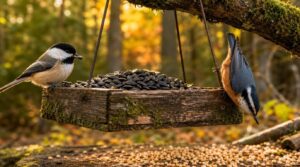
Switching to a sunflower-heavy blend is one of the most effective moves you can make. Black oil sunflower seeds are energy-dense, delivering roughly 50–60% fat by weight — exactly what chickadees, finches, and nuthatches seek. These high-fat attractants minimize seed spilling because birds actually want what’s in the feeder.
Pair sunflower seed access with proper mix freshness strategies, and you’ll see fewer rejected kernels accumulating below.
Avoid Filler-heavy Blends
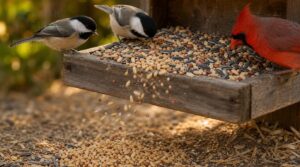
That sunflower-heavy approach loses its edge fast if the rest of the mix is packed with filler seeds. Low-quality seed mixes often run 30–50% milo, wheat, or red millet — seeds most backyard birds simply won’t touch.
Check the label before buying: nutrient density focus beats bulk purchase strategies every time. A smaller bag of high-quality seed mix outperforms a bargain blend almost every visit.
Match Seeds to Species
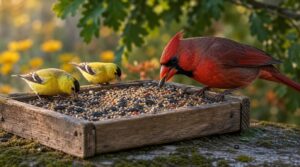
Even a high-quality seed mix falls short if it’s built for the wrong birds. Regional seed selection matters — what goldfinches need differs sharply from what cardinals seek. Targeted finch mix means nyjer seeds; cardinals want black oil sunflower seeds. Match habitat-mimic seeds to your local species with seasonal seed swaps:
- Offer native seed offerings in spring for resident songbirds
- Switch to high-fat blends in winter to meet bird nutritional needs
- Use a targeted finch mix with nyjer seeds for small-billed visitors
- Rotate your seed mix quarterly to reflect natural food availability
Use Better Feeder Designs
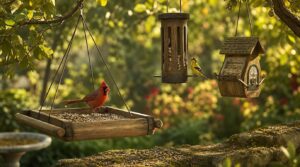
Seed selection matters, but bird feeder design shapes how much actually gets eaten. Open trough access lets multiple birds feed without crowding.
Vertical slit spill-control channels guide seed toward rounded perches — reducing scatter noticeably. Self-closing flaps cut wind-driven loss, and flow baffles prevent sudden seed dumps.
Space multiple feeders at least 15 feet apart to curb dominance displacement and feeder placement competition.
Clean Feeders Regularly
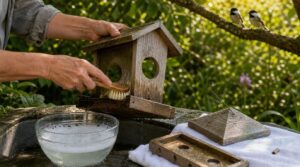
Good feeder design only goes so far if you’re not keeping things clean. Moldy seed clings to ports and trays fast—especially in humid weather. Sanitize feeder ports and inspect for cracks weekly using a bleach solution (one part bleach, nine parts water).
Dry feeder components completely before refilling. A consistent feeder cleaning schedule prevents contamination that drives birds away from even a high-quality seed mix.
Frequently Asked Questions (FAQs)
Why put a potato in your bird feeder?
Cooked potato offers a starch energy boost that works as a winter calorie source when seeds run low.
Serve plain, bite-sized portions — no salt or butter — and species curiosity will do the rest.
Do birds sleep in the same place every night in the winter?
Not always. Many birds show roost site fidelity, returning to the same sheltered cavity or dense evergreen nightly, but weather-induced moves are common.
Cold snaps, predator avoidance needs, or shifting social roost dynamics can push them elsewhere.
How does feeder height affect which seeds birds choose?
Feeder height shapes foraging behavior more than most people realize. Higher placements attract canopy species seeking oil-rich seeds.
Ground-level feeders draw sparrows and doves preferring heavier grains through flight distance selection.
Can bird feeding habits change during migration seasons?
Yes, absolutely. During migration, birds shift toward fat-rich seeds and high-energy foods to fuel long flights — a condition-driven feeding response tied directly to migration timing cues and seasonal diet shifts.
Do birds remember and avoid feeders with bad experiences?
Birds do remember bad feeders. Memory avoidance is real — repeated exposure to moldy seed or poor-quality mixes triggers bad-feeder aversion.
This negative experience leads to site fidelity loss, which follows quickly after just a few unsatisfactory visits.
Conclusion
A cluttered feeder floor and an empty one tell opposite stories, yet both reveal the same truth—birds are precise, not picky. Understanding why birds leave certain seeds in a mix isn’t just about cutting waste; it’s about reading animal behavior written in scattered husks.
Swap the fillers for sunflower hearts, match your feeder to the species visiting your yard, and what once looked like rejection becomes a conversation you finally know how to answer.
- https://www.audubon.org/birding/backyard
- https://www.thebluebirdshed.com/single-post/2017/08/23/bird-questions-answered-why-don-t-birds-like-my-seed
- https://www.pbs.org/wnet/nature/blog/feeding-wild-birds-can-carry-risks-heres-how-to-minimize-unintended-harms/
- https://www.allaboutbirds.org/news/types-of-bird-seed-a-quick-guide/
- https://www.facebook.com/mentalscoop