This site is supported by our readers. We may earn a commission, at no cost to you, if you purchase through links.
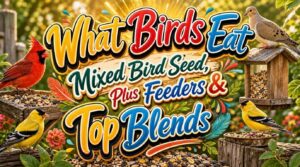
Watch a mixed seed feeder long enough and you’ll notice something: birds aren’t eating randomly. They’re sorting. A cardinal tosses aside the millet to get at the sunflower seeds. A goldfinch clings upside-down, ignoring everything but the nyjer. Doves clean up whatever hits the ground. Each species comes with its own preferences, its own feeding style, its own agenda.
Once you understand what birds eat in mixed bird seed—and why certain seeds disappear first—filling your feeder stops feeling like guesswork. You’ll know exactly what to offer, and who’s likely to show up for it.
Table Of Contents
Key Takeaways
- Birds aren’t random at the feeder — cardinals go straight for sunflower and safflower seeds, goldfinches want Nyjer, and doves sweep up whatever hits the ground, so matching seeds to species cuts waste quickly.
- Black-oil sunflower seeds are the one seed that almost every backyard bird will actually eat, making them the smartest base for any blend.
- Filler seeds like milo and red millet pile up uneaten and attract pests, so a leaner mix of high-value seeds saves you money and keeps your yard cleaner.
- Feeders need a scrub every two weeks and a seasonal seed swap — fat-rich seeds in winter, protein in spring — to keep birds coming back all year.
Birds That Eat Mixed Seed
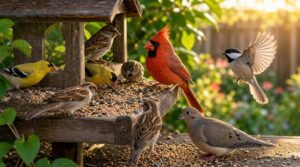
Mixed seed attracts a surprisingly wide range of backyard visitors, from bold cardinals to tiny finches. The birds that show up depend a lot on what’s in the blend and how it’s offered.
Since birds can be picky eaters, understanding the best small bird food mix ingredients helps you fine-tune your blend for the most feathered visitors.
Here are the most common species you’ll see at a mixed seed feeder.
Cardinals and Grosbeaks
Few backyard visitors stop you in your tracks like a male cardinal — that flash of red is unforgettable. Both cardinals and grosbeaks bring their thick, powerful beaks straight to your mixed blends.
Here’s what makes them special:
- Beak morphology built for cracking sunflower and safflower seeds
- Bold plumage identification makes males easy to spot
- Territorial songs signal a healthy, active yard
- Habitat preferences lean toward brushy edges near feeders
- Seasonal diet shifts toward high‑fat seeds in winter
Recent taxonomic studies show that molecular evidence removed Saltator from the family.
Finches and Siskins
Cardinals grab the spotlight, but finches and siskins are just as exciting. Goldfinches go crazy for nyjer seeds — especially in tube feeders — and siskins and redpolls often join them.
Watch for their inverted feeding behavior, hanging upside down like tiny acrobats. During the breeding season, their seasonal protein needs shift noticeably, and they even favor spots near their favorite pine seeds.
Doves and Blackbirds
Doves and blackbirds bring a totally different vibe to your yard. Mourning Doves are calm, gentle ground feeders — just scatter some millet or mixed seed on a low platform and they’re happy. Blackbirds are a bit bolder, sometimes claiming the whole feeder.
Both shift their diet with the seasons, ramping up seed consumption in winter when energy needs are highest.
Chickadees and Nuthatches
Now, chickadees and nuthatches are a completely different story from your mellow doves. The Black-capped or Carolina Chickadee loves a good mixed seed blend, grabbing smaller seeds first. White-breasted Nuthatches go straight for sunflower chips.
Both rely on vocal coordination to share feeder space peacefully.
Winter caching, bill morphology, and smart feeder placement tips all shape how these two tiny acrobats visit your yard.
Jays and Woodpeckers
Blue Jays and Downy Woodpeckers bring real drama to your bird feeders. Territorial battles break out fast — jays bully smaller woodpeckers away from peanut-caching spots without hesitation. Meanwhile, Downy Woodpeckers use tail bracing against suet holders, listening for drumming signals from rivals nearby.
Both species thrive on a nutrient-dense seed mix that includes peanuts and sunflower seeds, alongside cavity-competition for winter territory.
Seeds Birds Pick First
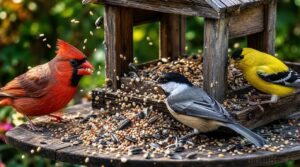
Not all seeds are created equal — birds have their favorites, and they’ll toss aside the rest without a second thought. Knowing what they actually want helps you spend less money on filler and more on what gets eaten.
Birds have favorites, and knowing what they actually want means less money on filler and more on what gets eaten
Here’s a quick look at the seeds birds reach for first.
Black-oil Sunflower Seeds
Black oil sunflower seeds are basically the crowd favorite of any seed mix. Their thin hull makes them easy for almost every bird to crack open, and that fat density delivers serious year-round energy.
Here’s why they belong in your feeder:
- High fat content fuels birds through cold months
- A natural vitamin E boost promotes healthy feathers
- Thin hulls mean less effort, more birds attracted fast
Safflower Seeds
Safflower seeds are a secret weapon in any bird feeder setup. Cardinals and grosbeaks absolutely love them, cracking through the Shell Hardness Challenge with their strong beaks like it’s nothing.
The Bitter Taste Advantage keeps squirrels away naturally, ensuring these seeds remain exclusive to birds.
As a Winter Energy Source packed with High Fat Density, this nutrient-dense seed mix delivers essential fuel without attracting unwanted freeloaders.
Nyjer Thistle Seeds
Nyjer thistle seed is basically bird candy for finches — tiny, energy-dense, fat-packed, and irresistible. Goldfinches can’t get enough of it.
Here’s why it earns a spot in your seed mix:
- High in essential fatty acids for feather health
- Vitamin E supply boosts metabolism
- Seed sterilization benefits prevent yard weeds
- Tiny seed mesh tube feeders keep it exclusive to finches and sparrows
- Dense calories fuel birds through cold nights
White Proso Millet
White proso millet is the quiet workhorse of any mixed seed blend. Ground-feeding birds like juncos and mourning doves absolutely love millet scattered on the ground — it’s their comfort food.
With around 58 percent starch, it serves as a reliable seasonal energy source, especially in summer.
Its gluten-free applications and drought tolerance make it easy to grow, store, and use.
Follow basic storage guidelines: keep it dry, sealed, and fresh.
Cracked Corn
Think of cracked corn as the budget MVP of your seed mix — low cost, high carbs, and birds can’t get enough in cold months. It’s a real winter boost for ground feeders like doves and juncos.
- Delivers quick energy density for cold-weather birds
- Perfect for platform feeders and ground trays
- Solves the ground feeding dilemma with easy-access scatter feeding
- Follows simple storage guidelines — dry, sealed, fresh
- Honest cost-effectiveness without sacrificing bird variety
Top 6 Mixed Seed Essentials
Once you know which seeds your birds actually want, the next step is finding the right products to fill your feeder.
These six picks cover everything from ready-to-go seed blends to the gear that makes feeding easier.
Here’s what’s worth your money.
1. More Birds Abundance Bird Feeder
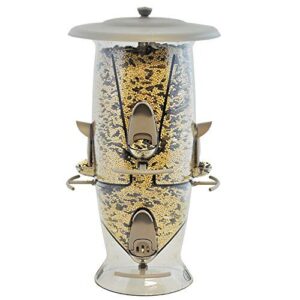
Few feeders make backyard hosting this easy. The More Birds Abundance holds 3.5 pounds of mixed seed, so you’re not climbing out to refill it every other day.
Its six adjustable perches let cardinals spread out while chickadees slip into tighter spots — no squabbling over prime real estate.
The Stay Full Port system keeps seed flowing to every opening even when the level drops low.
And when cleaning day comes, the whole base splits apart. Quick, thorough, done.
| Best For | Backyard bird enthusiasts who want to attract a wide variety of species without constant refilling or fussing over complicated maintenance. |
|---|---|
| Product Type | Bird Feeder |
| Target Species | Finches, Cardinals, Chickadees |
| Intended Use | Backyard Feeding |
| Squirrel Risk | Not squirrel-proof |
| Price (USD) | Not specified |
| Ease of Use | Wide-mouth refill lid |
| Additional Features |
|
- Six adjustable perches let you welcome small birds like finches and chickadees while keeping pushy larger birds in check
- The Stay Full Port system means seed keeps flowing to every port even when the reservoir is running low — no dead zones
- The split-base design makes cleaning genuinely easy, which matters a lot for keeping birds healthy
- Squirrels can pop the lid or pry off port pieces, so it’s not a great fit if your yard has an active squirrel problem
- Some buyers have received units with missing or broken parts right out of the box, which means a trip to customer service before you even get started
- The thin perch arms can wear down over time, especially if you get a lot of heavy bird traffic
2. iBorn Metal Six Port Bird Feeder
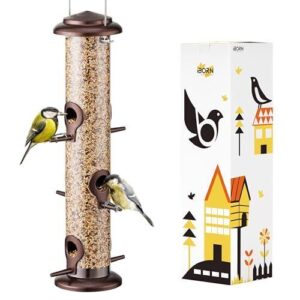
The iBorn Metal Six Port Bird Feeder offers a sleek solution for your garden. Its six evenly spaced ports allow chickadees, finches, and nuthatches to feed simultaneously without crowding.
Built with an aluminum body and a coffee-powder coating, this feeder resists rain, sun, and squirrel damage effectively. The durable design ensures longevity while maintaining a stylish appearance.
Refilling is effortless: simply flip the top open and pour in your seed. The clear chamber provides a quick visual check, so you’ll always know when it’s low.
| Best For | Bird lovers who want a low-maintenance, durable feeder that attracts small songbirds like chickadees, finches, and nuthatches to their garden year-round. |
|---|---|
| Product Type | Bird Feeder |
| Target Species | Finches, Chickadees, Nuthatches |
| Intended Use | Backyard Feeding |
| Squirrel Risk | Not fully squirrel-proof |
| Price (USD) | Not specified |
| Ease of Use | Flip-top refill lid |
| Additional Features |
|
- Six feeding ports mean multiple birds can eat at the same time — no squabbling over spots.
- All-metal build with a coffee-powder coating holds up well against the elements and gnawing squirrels.
- The flip-top lid and clear seed chamber make refilling and monitoring super quick and easy.
- Not fully squirrel-proof — crafty ones can still raid seeds from the top or ground.
- The small perches don’t work well for larger birds, so it’s really only suited for smaller species.
- Seeds can get stuck near the bottom of the compartment, meaning you might waste a bit or need to give it a shake now and then.
3. Kaytee Wild Bird Nut Fruit Seed
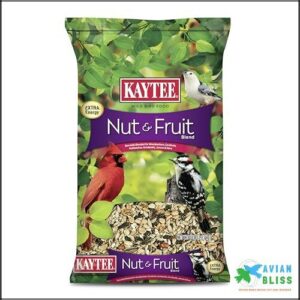
Kaytee’s Wild Bird Nut and Fruit Blend gives birds a real reason to stay. It’s packed with sunflower seeds, peanuts, dried cherries, raisins, and mixed nuts — roughly 30% fat and 14% protein, so high-energy visitors like cardinals, chickadees, and woodpeckers get actual fuel.
The cherry flavor variety adds something a little different, too.
At $12.59 for 5 lbs, it’s a step up in price, but the feeder traffic usually makes it worth the price.
| Best For | Backyard birders who want to attract a wide variety of songbirds and don’t mind paying a little extra for quality. |
|---|---|
| Product Type | Bird Seed Mix |
| Target Species | Cardinals, Woodpeckers, Juncos |
| Intended Use | Backyard Feeding |
| Squirrel Risk | Attracts squirrels |
| Price (USD) | $12.59 |
| Ease of Use | Ready to use |
| Additional Features |
|
- Pulls in a solid mix of species — cardinals, chickadees, woodpeckers, nuthatches, and more
- High fat and protein content gives birds real energy, not just filler
- The cherry flavor variety adds a nice twist that sets it apart from basic seed mixes
- At $12.59 for 5 lbs, it costs more than most generic blends
- Squirrels and crows will come running too, so you may need a protected feeder
- Ingredient ratios can vary between bags, which might put off pickier birds like blue jays
4. Pennington Pride Songbird Nut Fruit Seed
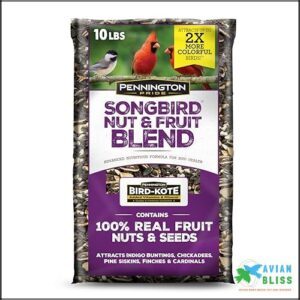
Pennington Pride Songbird Nut Fruit Seed takes a similar approach but adds a nutritional twist, using BIRD-KOTE technology to coat seeds with Vitamin A, Vitamin D-3, and iodine. These small additions genuinely support bone health and plumage.
The 10-lb bag costs $19.97 and includes black-oil sunflower, safflower, peanuts, raisins, and dried cherries. Cardinals, chickadees, and indigo buntings respond well to it.
Note that it can attract squirrels, so pairing it with a squirrel-proof feeder makes sense.
| Best For | Backyard bird enthusiasts who want to attract a wide variety of songbirds and don’t mind paying a bit more for a vitamin-enriched, fruit-and-nut blend. |
|---|---|
| Product Type | Bird Seed Mix |
| Target Species | Finches, Cardinals, Chickadees |
| Intended Use | Backyard Feeding |
| Squirrel Risk | Attracts squirrels |
| Price (USD) | $19.97 |
| Ease of Use | Ready to use |
| Additional Features |
|
- Packed with real fruit, nuts, and seeds that pull in cardinals, chickadees, indigo buntings, and more
- BIRD-KOTE technology adds Vitamin A, D-3, and iodine — small but meaningful boosts for bird health
- Works with hopper, gazebo, and tray feeders, so it fits most backyard setups
- Some bags contain noticeable debris like sticks and bark mixed in with the seed
- At $19.97 for 10 lbs, it runs pricier than basic seed mixes
- Squirrels are fans too, so a squirrel-proof feeder is worth the investment
5. Morning Song Shell Free Bird Seed
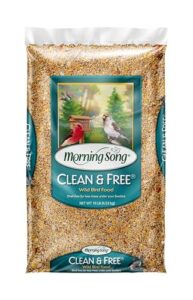
Morning Song Shell Free Bird Seed keeps things simple in the best way — no shells, no mess, and no piles of rejected husks under your feeder. The 10-lb bag is packed with sunflower chips, peanuts, white proso millet, canary seed, and cracked corn into one tidy blend.
This mix effortlessly attracts cardinals, chickadees, finches, doves, and nuthatches. It works seamlessly in tube, tray, hopper, and platform feeders, making it versatile for any setup.
At $19.24, it’s a solid, low-maintenance pick for hassle-free bird feeding.
| Best For | Bird lovers who want a clean, low-maintenance feeder setup that draws in a wide variety of backyard species without the mess of shells. |
|---|---|
| Product Type | Bird Seed Mix |
| Target Species | Finches, Cardinals, Nuthatches |
| Intended Use | Backyard Feeding |
| Squirrel Risk | Attracts squirrels |
| Price (USD) | $19.24 |
| Ease of Use | Ready to use |
| Additional Features |
|
- No shells means no hulls piling up under your feeder — way less cleanup
- Attracts a solid mix of birds, from finches and cardinals to nuthatches and doves
- Works with pretty much any feeder type, so no need to buy something new
- Some birds skip the red millet and cracked corn, which can mean wasted seed on the ground
- At $19.24 for 10 lbs, the cost adds up fast if you’re running a busy, high-traffic feeder
- The bag can cut unevenly, making it a bit messy to pour
6. National Geographic North America Bird Field Guide
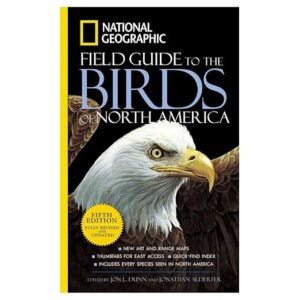
Once you know what’s visiting your feeder, you’ll want to know who those visitors actually are. The National Geographic Field Guide to Birds of North America is the perfect companion for that curiosity.
It covers 967 species with stunning full-color illustrations, updated range maps, and quick-find navigation tabs that make on-the-spot identification genuinely easy.
At $36.78, it’s a solid investment—durable enough for outdoor trips, detailed enough for serious birders, and approachable enough for complete beginners.
| Best For | Birders of any experience level who want one thorough, continent-wide reference they can actually take outside. |
|---|---|
| Product Type | Field Guide Book |
| Target Species | All 967 North American Species |
| Intended Use | Backyard Bird Watching |
| Squirrel Risk | N/A |
| Price (USD) | $36.78 |
| Ease of Use | Quick-find index flaps |
| Additional Features |
|
- Covers all 967 North American species with 4,000 illustrations showing multiple life stages, so you’re rarely left guessing.
- Updated range maps and thumb-tab navigation make it fast and practical in the field.
- Sturdy enough for day hikes and detailed enough to replace several other guides at once.
- Paperback binding can wear out faster than you’d like under heavy field use.
- A bit bulkier than compact guides, which might bug ultralight travelers.
- No photos, and a few color illustrations run a little muted—tricky if color is the key ID feature you’re working with.
Feeders for Mixed Seed Birds
The right feeder makes a real difference in which birds actually show up. Different birds have different habits, and matching your feeder to those habits means less wasted seed and more happy visitors.
Here are the feeder styles that work best for mixed seed birds.
Tube Feeders for Finches
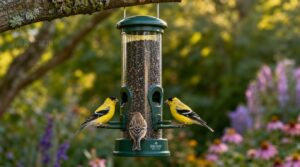
Finches are picky little birds, and tube feeders are basically built with them in mind. The small port size keeps bigger birds from muscling in, while the dual access design lets goldfinches and siskins feed comfortably from multiple spots.
Look for weatherproof materials and an anti-mold coating — nyjer seed stays fresh longer.
Good seed flow mechanics mean your birds aren’t waiting on a clog.
Platform Feeders for Doves
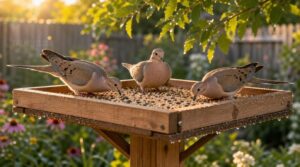
Doves don’t love fighting for space — they’re calm, ground-loving birds that need room to breathe. Platform feeders solve the ground-feeding dilemma perfectly, offering a flat surface of 8–12 inches that lets mourning doves spread out with mixed seed and bird seed blends without jostling.
Here’s what makes a great platform feeder:
- Elevated drainage design keeps moisture out after rain
- Weather-resistant materials hold up through every season
- Clear predator visibility so doves spot threats while eating
- Easy-to-clean trays make weekly maintenance genuinely painless
- Open fly-through access lets birds land and leave freely
Ground Trays for Sparrows
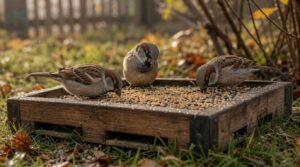
Sparrows are humble little ground feeders — they would rather scratch through millet scattered on the ground than wrestle with a hanging feeder. A simple ground tray solves that ground feeding dilemma beautifully.
Look for trays with solid drainage design and material durability that withstands cold and rain. Ensure a smart placement strategy away from shrubs to keep birds safe from predators.
Fill yours with a seasonal seed mix, and finches and sparrows will find it fast.
Squirrel-proof Feeder Designs
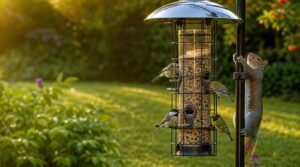
Squirrels are clever, but good feeder design is cleverer. Three squirrel deterrent methods actually work:
- Weight activated doors with adjustable perch sensors snap shut under squirrel weight, then reset instantly for birds
- Metal cage guards block chunky bodies while letting chickadees slip right through
- Dome baffle placement at elevated mounting height stops climbers cold
Pick squirrel-proof feeders built from these principles, and your seed stays where it belongs.
Suet Holders for Woodpeckers
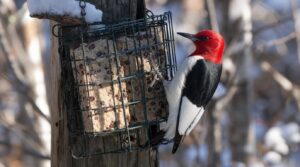
Woodpeckers need more than seeds — suet is their real fuel. A good suet holder has dual compartments, so you can offer two cakes at once.
Look for mesh size with one-inch openings and a weather-resistant finish that won’t rust mid-winter. Perch integration lets them brace their tails comfortably while feeding, and an easy-refill design means less hassle for you.
Reduce Waste and Feeding Problems
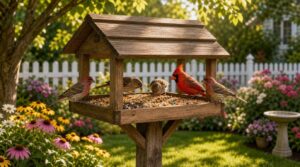
Mixed seed feeders can turn into a mess fast — waste piles up, mold creeps in, and suddenly you’re feeding rodents instead of robins.
A few simple habits make a real difference. Here’s what to watch for.
Avoid Rejected Filler Seeds
Here’s the thing — not every seed in a bag pulls its weight. Milo, wheat, and red millet are classic fillers that pile up uneaten, wasting money and attracting pests. Use a Filler Identification Guide to audit your mix, and aim for Low-Filler Mix Ratios where sunflower leads.
- Skip milo and sorghum
- Limit cracked corn and millet portions
- Test seed preferences with small trial batches — Taste Preference Testing works
- Choose Alternative High-Protein Fillers like safflower
- Practice Shelf-Life Monitoring to catch stale seed before birds reject it
Prevent Moldy Seed Buildup
Moldy seed is a sneaky problem — birds will just stop showing up, and you might not know why.
Batch Rotation (using older seed first and buying smaller amounts more often) helps keep moisture out. Moisture Monitoring and Desiccant Use prevent fungal growth in feeders before it starts. A quick weekly check catches seed spoilage prevention issues early.
Store Seed in Containers
Once you’ve tackled mold, the next piece is where you actually keep your seed. A good container does more work than you’d think. Proper seed storage is your best tool for seed spoilage prevention and seed waste reduction — and it’s simple.
Here’s what solid seed storage best practices look like:
- Airtight sealing locks out humidity — glass or metal containers with gasket lids win here
- Moisture control means adding a silica gel packet inside each container
- Material selection matters — amber glass or food-grade metal protects seed freshness better than flimsy plastic
- Labeling organization keeps you rotating stock correctly, using older seed first
- Size optimization means choosing containers that match your seed volume, so there’s minimal air trapped inside
Clean Feeders Regularly
Feeder cleaning is one of those maintenance requirements that’s easy to let slide — until you spot something grim. Make feeder hygiene a real habit: scrub every two weeks with warm soapy water, then use a bleach solution (one part bleach, nine parts water) for full disinfection. Drying procedures matter too — never refill a damp feeder.
Bump your cleaning frequency during rainy stretches, and do a seasonal deep-clean when the weather shifts.
Adjust Blends by Season
Think of your feeder like a seasonal menu — birds’ needs genuinely shift throughout the year. Here’s a simple seasonal seed adjustments guide to cut waste and keep more birds coming back:
- Spring Protein Boost: Add mealworms and suet to support migration
- Summer Carbohydrate Shift: Increase nyjer and millet for fledglings
- Autumn Fat Increase: Prioritize sunflower and safflower to build reserves
- Winter Mold Prevention: Choose storeable, mold-resistant seeds like safflower
- Seasonal Ratio Guide: Adjust black-oil sunflower from 40–60% based on season
Seasonal bird diet changes are real — your feeder should reflect that.
Frequently Asked Questions (FAQs)
How do I keep rodents away from bird feeders?
An ounce of prevention is worth a pound of cure here. Use baffle installation, placement height of 4+ feet, weight-sensitive ports, rodent-proof containers, and scent deterrents to keep pests away.
Which birds prefer feeding at specific times of day?
Most birds hit feeders hardest right after dawn. Cardinals, chickadees, and blue jays arrive within the first hour of sunrise.
A quieter afternoon rush follows around 3–6 PM as birds rebuild energy before roosting.
How much seed should I put out daily?
Start simple: most small birds eat roughly a quarter of their body weight daily. Put out 30–80 grams and watch what disappears. That’s your perfect personal baseline.
Do weather conditions affect how birds eat seed?
Yes, weather shapes everything.
Cold snaps push birds toward high-fat seeds like black-oil sunflower.
Rain slows visits.
Wind shortens foraging bouts.
Snow drives them straight to your feeder, hungry and focused.
Conclusion
They say the early bird catches the worm—but the well-prepared birder catches every bird. Now that you understand what birds eat in mixed bird seed, you’re not just filling a feeder. You’re setting a table for cardinals, finches, doves, and a dozen others who’ll show up once they trust the spread.
Match the seed to the bird, pick the right feeder, and ensure everything is well-maintained. These steps are crucial for attracting a variety of birds to your backyard.
Keep things clean, and your backyard does the rest.
- https://www.audubon.org/magazine/mixology-breaking-down-5-common-birdseed-blends
- https://www.allaboutbirds.org/news/types-of-bird-seed-a-quick-guide/
- https://www.almanac.com/feeding-wild-birds-guide-seed-types
- https://avianreport.com/food-feeders-wild-birds-prefer/
- https://www.kaytee.com/learn-care/wild-bird/value-of-wild-bird-ingredients