This site is supported by our readers. We may earn a commission, at no cost to you, if you purchase through links.
A bird dropping feathers on the cage floor can send any owner into a quiet panic—and understandably so. Feathers are more than decoration. They regulate body temperature, enable flight, and often signal what’s happening inside the body long before other symptoms appear.
Here’s the thing most owners don’t realize: feather loss has at least six distinct causes, and they require completely different responses. Confusing a nutritional deficiency with a parasite infestation, or missing early signs of a viral disease, can cost your bird weeks of unnecessary suffering. Knowing the difference matters.
Table Of Contents
Key Takeaways
- Feather loss has six distinct causes—molting, poor nutrition, stress, habitat problems, parasites, and internal disease—and each one needs a different response, so identifying the right cause first is what actually helps your bird.
- Symmetrical shedding with visible pin feathers and a four-to-eight-week cycle signals a healthy molt, while patchy, one-sided, or repeated loss is your cue to look deeper.
- Diet quietly drives feather quality—deficiencies in protein, vitamin A, zinc, and omega-3s all weaken or stall regrowth, and a seed-only diet can’t cover those gaps long-term.
- Seek same-day veterinary care if your bird shows fluffed posture, breathing trouble, skin lesions, or stops eating for 12 or more hours—these signs point to something beyond a simple molt.
Your Bird May Be Molting Naturally
Before you worry, feather loss isn’t always a problem — sometimes it’s just your bird doing what birds naturally do. Molting is a normal, healthy process where old feathers shed to make room for fresh ones. Here’s what to look for so you can tell the difference.
If your bird is struggling through the molt, bird feather loss treatments and remedies can help you support their recovery and keep stress to a minimum.
Seasonal Feather Shedding
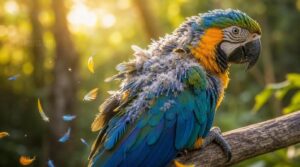
Most pet birds molt once or twice a year — and that’s completely normal. Seasonal feather shedding is driven by shifts in daylight and temperature, signaling the body to replace worn feathers. This process is essential for improving thermal regulation and maintaining body heat.
Here’s what normal molt timing looks like:
- Molt begins in spring or fall
- Shedding spreads across the whole body gradually
- Feather regrowth starts within days
- The full cycle runs four to eight weeks
Symmetrical Feather Loss
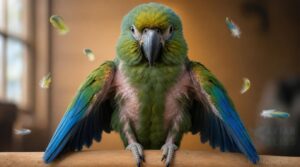
One of the clearest signs of normal molting is symmetrical feather loss. Feathers shed on both sides of the body at the same time — left wing mirrors right wing, and so on.
Photo tracking over a few days helps you see this pattern clearly. Uneven or patchy loss on just one side warrants closer attention.
New Pin Feathers
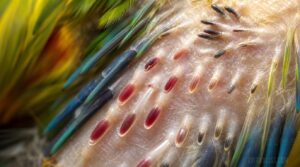
Look closely at your bird’s skin where feathers are missing. You’ll likely spot new pin feathers — small, tube-like structures pushing through the surface.
Each one is wrapped in a protective sheath and contains a blood-filled pulp that feeds growth. As the feather matures, that blood supply recedes and keratin hardens in its place, forming a complete, structured feather.
Four-to-eight-week Cycle
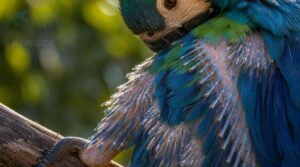
As those pin feathers fill in, you can start tracking the bigger picture: molt timing. Most birds complete a full cycle in four to eight weeks. That window shifts depending on species, age, and environment — shorter days or temperature changes can speed it up or slow it down.
Feather replacement is also staged, not simultaneous. Different feather tracts shed and regrow at different points within the same cycle.
Normal Preening Behavior
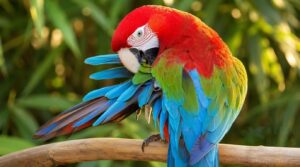
Watching your bird preen is actually reassuring. Normal preening is calm and methodical — a steady routine, not a frantic one. Here’s what healthy grooming looks like:
- Beak alignment: gentle nibbling to straighten feathers, not tear them
- Preen oil spreading: beak touching the tail gland, then smoothing feathers
- Body positioning: lifting wings or rotating to reach every feather group
This behavior promotes normal molting, not feather loss.
Poor Nutrition Can Cause Feather Loss
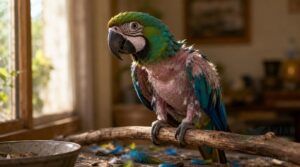
What your bird eats directly affects the quality of its feathers. A poor diet is one of the most common — and most overlooked — causes of feather loss in pet birds. Here are five nutritional issues that could be affecting your bird’s plumage.
Seed-only Diet Risks
Many birds eat seeds their whole lives — but seeds alone can’t support a healthy coat of feathers.
Seed-only diets create serious micronutrient gaps, falling short on vitamin A, vitamin D, zinc, and selenium. They also deliver essential fatty imbalances, skewing omega-3 and omega-6 ratios. Over time, this imbalanced diet quietly chips away at feather quality.
Low Protein Intake
Feathers are made of keratin — and keratin needs protein to form. When your bird’s diet lacks enough protein, feather regrowth slows noticeably. The body quietly redirects amino acids toward essential organs, leaving little left for new plumage.
Diseases like mites, bacterial infections, and PBFD can further stall regrowth, so reviewing common avian skin and feather disorders helps you catch the real culprit early.
When a bird’s diet lacks protein, the body quietly steals amino acids from feathers to feed vital organs
Over time, this muscle-feather tradeoff weakens immune support too, making follicles more vulnerable. Thin, patchy, or delayed regrowth often signals an avian nutrition problem worth addressing.
Vitamin a Deficiency
Vitamin A does more than support vision — it keeps your bird’s skin healthy from the inside out. Vitamin A deficiency causes the skin to dry out and thicken through a process called skin keratinization, which clogs feather follicles and disrupts normal regrowth.
Here’s what poor vitamin A status can trigger in birds:
- Dry, brittle feathers that break easily or fail to grow back properly
- Retinal dysfunction, often seen as difficulty seeing in low light
- Immune suppression, leaving your bird more vulnerable to secondary infections
- Skin scaling and irritation around the face, feet, and feather tracts
- Growth retardation in younger birds, sometimes mistaken for slow development
A balanced pelleted diet is the most reliable way to correct these nutritional deficiencies. Seeds alone can’t deliver enough vitamin A for long-term avian nutrition.
Calcium and Zinc Imbalance
Calcium zinc interference is a hidden trap in bird nutrition. Too much calcium blocks zinc absorption — research shows uptake can drop by 50% when both minerals share a meal. Zinc deficiency signs include skin lesions and brittle keratin. That directly weakens feather follicles, making mineral imbalance effects one quiet driver of feather loss your avian veterinarian won’t overlook.
| Mineral Problem | Effect on Bird | Recommended Action |
|---|---|---|
| Excess calcium intake | Blocks zinc absorption by up to 50% | Space out calcium and zinc sources |
| Low zinc levels | Skin lesions, fragile feathers | Add supplemental zinc dosing under vet guidance |
| Poor skin-feather connection | Damaged follicles, increased breakage | Assess full mineral profile |
| Seed-only diet | Broad nutritional deficiencies | Switch to balanced pellets |
| Unmonitored supplements | Worsening vitamin and mineral imbalances | Review diet with avian veterinarian |
Omega-3 Shortage
Think of omega-3s as your bird’s feather polish. Dietary omega-3 deficiency is a slow thief — it doesn’t strip feathers overnight, but over weeks, it quietly dulls and weakens them. Most seed mixes simply don’t deliver meaningful EPA and DHA, the long-chain omega-3s critical for skin health and feather lipid maintenance.
Here’s what low omega-3 intake looks like:
- Dull, rough feathers that lack normal sheen
- Dry, less resilient skin beneath the plumage
- Slow or poor-quality feather regrowth during molt
- Pin feathers emerging with visible structural weakness
- Worsening symptoms across multiple feather growth cycles
The fix is straightforward. A balanced pelleted diet, paired with fish oil or algae-based supplements, restores that omega-6 to omega-3 balance. Store supplements away from heat and light — oxidized oils lose potency fast. If supplement availability is limited, ask your vet about reliable alternatives. Don’t overlook this nutritional gap.
Stress May Trigger Feather Plucking
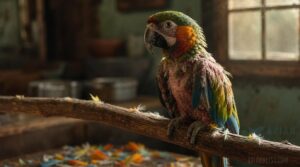
Stress is one of the most overlooked reasons birds start pulling out their own feathers. Unlike a physical illness, it’s easy to miss because the triggers often look harmless to us. Here are five common stressors that may be behind your bird’s feather plucking.
Boredom and Under-stimulation
Boredom is a quiet troublemaker. When your bird has nothing meaningful to do, it turns to the one thing always within reach — its own feathers. Feather plucking often starts this way. Without novel foraging tasks, varied perches, or rotating toys, birds fill idle time with repetitive self-grooming that eventually damages plumage.
Give your bird safe daily exploration and enrichment variety to redirect that energy.
Social Isolation
Boredom doesn’t work alone. When your bird lacks meaningful social contact, it compounds quickly into something worse — loneliness. Birds are flock animals. Without regular interaction, they experience stress-induced feather plucking as a coping response.
Even if you’re home, low engagement still counts as isolation. Make time for daily direct interaction to close that gap.
Sudden Routine Changes
Birds thrive on predictability. Sudden routine changes — like shifting feeding times, relocating the cage, or switching caretakers — can trigger stress-induced feather plucking. Even altering light cycle timing disrupts their internal rhythm.
If your household recently changed, that shift may explain the plucking. Keep changes gradual whenever possible.
Loud Household Noises
Routine shifts aren’t the only stress trigger. Loud household noises can push a bird toward feather plucking just as quickly.
Common culprits include:
- Vacuum cleaners running near the cage
- TV volume spikes during action scenes
- HVAC compressors cycling on and off
- Door slams, yelling, or clapping
Unpredictable noise keeps your bird on edge — and chronic stress often shows up in its feathers.
Separation Anxiety
Some birds don’t just miss you — they unravel without you. Separation anxiety drives birds to pluck their own feathers as a way of coping with the stress of being apart from their primary person. You may notice cling behavior beforehand, protest vocalizations the moment you leave, or avoidance of routines that signal your departure.
Habitat Problems Can Damage Feathers
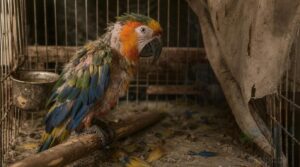
Your bird’s living space affects more than just comfort — it directly impacts feather health. Small issues like poor airflow or dry air can quietly cause real damage over time. Here are the habitat factors worth checking first.
Low Indoor Humidity
Dry indoor air is one of the quieter threats to your bird’s feathers. Low humidity speeds up evaporative drying, pulling moisture from your bird’s skin and feather follicles. When skin dries out, feathers become brittle and rough. Your bird then preens more aggressively — and that extra friction causes visible feather damage over time.
Winter heating makes this worse. Forced-air systems strip moisture from indoor air, sometimes dropping relative humidity below 30 percent — well outside the recommended 30–60 percent range. That dry heat irritates respiratory membranes too, making your bird uncomfortable and restless.
A simple room humidifier helps restore balance.
Poor Cage Ventilation
Stale cage air is a hidden environmental factor in avian health. When the air exchange rate drops, ammonia concentration and carbon dioxide levels both rise. This causes skin irritation and triggers feather loss.
Five signs your cage ventilation design is failing:
- Persistent odor near the cage
- Labored breathing at rest
- Skin irritation or redness
- Dull, brittle feathers
- Abnormal breathing sounds
Cramped Cage Space
A cage that’s too small works against your bird every single day. Limited wing stretch forces feathers to scrape against bars repeatedly, causing breakage. Increased cage contact from cramped conditions wears feathers down gradually.
Less perching distance and fewer nesting options keep your bird tense and stressed — and chronic stress is one of the fastest paths to feather plucking.
Irregular Light Cycles
Your bird’s body runs on a biological clock — and light is what sets it.
Irregular light timing disrupts this internal schedule, throwing off natural molting patterns and hormonal balance. Inconsistent light exposure creates a kind of social jetlag, where your bird’s body never quite knows what time it is, and feather growth cycles fall out of sync.
Toxic Airborne Fumes
Some fumes you can’t smell are still silently damaging your bird’s feathers and skin.
Toxic airborne fumes — from non-stick cookware, cleaning sprays, or poor ventilation — destroy feather follicles at the root. Birds are far more sensitive to airborne toxins than humans.
- Ammonia and formaldehyde irritate skin and disrupt feather regrowth
- VOCs from household products weaken plumage over time
- Particulate metals in fumes cause lasting follicle damage
Parasites and Infections May Be Responsible
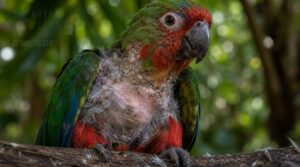
Sometimes feather loss isn’t about behavior or environment at all — it’s something living on your bird. Parasites and infections are easy to miss, especially in early stages. Here are five culprits worth knowing.
Mites and Lice
Sometimes the culprit is hiding in plain sight. Mites and lice are external parasites that feed on your bird’s skin, feathers, or blood — and they’re a common cause of parasitic infestation and feather loss.
You might notice your bird scratching constantly, or spot dark specks on feathers. Lice eggs attach directly to feather shafts, making lice egg detection straightforward under a close look.
Avian Mange Mites
Avian mange mites take things a step further than ordinary lice. These tiny parasites — often under a millimeter — burrow into the skin, causing crusty, thickened lesions around the bill, eyes, legs, and feet.
Their life cycle runs one to five weeks, making infestations worsen fast. They’re also highly contagious, spreading quickly to other birds nearby. A vet can confirm them through a simple skin scraping.
Fungal Skin Infections
Mites damage the skin directly. Fungal infections take a different route — they settle into warm, moist skin folds and quietly spread. Fungal skin infections often cause itching, redness, and patchy feather loss. You may notice crusty or flaky lesions with inflamed edges.
There’s also a zoonotic risk — meaning these fungi can transfer to you through direct contact with your bird.
Bacterial Skin Irritation
Bacterial skin irritation follows a similar pattern to fungal infections — it starts at the skin surface and works inward. Bacteria enter through broken skin: scrapes, damaged feather follicles, or insect bites. Common culprits include Staphylococcus and Streptococcus.
Watch for swelling, warmth, and crusting around featherless patches. Left untreated, the infection can deepen and spread.
Viral Feather Diseases
Viruses hit differently than parasites. Psittacine Beak and Feather Disease — PBFD — is the most serious feather virus your bird can contract. It attacks developing feather follicles directly, causing malformed, brittle, or completely absent feathers. An avian veterinarian can confirm diagnosis through blood testing or feather sampling.
PBFD transmission spreads through dander, feather dust, and shared surfaces — often before symptoms appear.
Health Disorders Need Veterinary Care
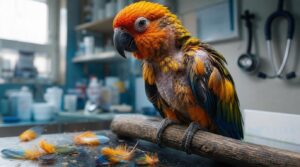
Sometimes feather loss points to something happening inside your bird’s body. Hormonal shifts, organ dysfunction, and physical injuries can all affect how feathers grow and stay intact. Here’s what you need to know about the internal health conditions that may require a vet’s attention.
Hormonal Feather Picking
Sometimes the trigger isn’t stress or diet — it’s hormones. Reproductive hormone triggers can cause birds to pluck compulsively during or around breeding periods. Thyroid imbalance is another culprit, disrupting feather growth cycles in ways that look purely behavioral. Both fall under avian endocrinology and require a vet to diagnose.
Watch for these signs of hormonal problems:
- Bare patches appearing during breeding season
- Obsessive plucking that continues even when calm
- Skin keratin problems causing rough or peeling skin
- Foot lesion development — birds may chew at sore feet
- Self-trauma that worsens despite environmental improvements
Progesterone therapy can help in early stages when hormonal imbalance drives feather plucking. Don’t wait — early treatment matters.
Liver or Kidney Disease
When the liver or kidneys fail, feathers pay the price. Liver or kidney disease disrupts how your bird processes nutrients, and without proper filtration, toxic waste compounds — a condition called azotemia — build up in the bloodstream.
That metabolic strain quietly starves feather follicles, leading to noticeable feather loss that no diet change or enrichment fix will resolve.
Endocrine Disorders
Your bird’s endocrine system works like a silent control panel — when one dial is off, everything shifts. Hormonal imbalance from conditions like Thyroid Imbalance, Pituitary Dysfunction, or Sex Hormone Fluctuations during breeding seasons can disrupt feather growth cycles entirely.
Common signs pointing to underlying medical conditions include:
- Patchy, asymmetric feather loss without plucking behavior
- Skin changes alongside poor feather regrowth
- Behavioral shifts tied to Cortisol Dysregulation or Parathyroid Calcium Issues
Blood tests confirm hormonal changes. A vet visit is the next step.
Injury or Trauma
A fall, burn, or snag can leave more than a bruise.
Fall impact damage often breaks feathers around the wings where the bird hits first.
Burn injury recovery is slow when follicles are destroyed by heat.
Skin wound effects from scrapes or bites can block new feather growth entirely. Entanglement injuries from string or elastic cause friction-based feather loss in clusters.
When to Call a Vet
Feather loss alone doesn’t always mean an emergency — but some signs demand same-day action. Call an avian vet immediately if your bird shows persistent fluffed posture, open-mouth breathing, or abnormal droppings.
Refusing food for 12 to 24 hours is serious. Visible skin lesions, rapid feather loss, or breathing difficulty confirm the need for prompt veterinary consultation.
Frequently Asked Questions (FAQs)
What to do when my bird is losing feathers?
Start by checking for feather symmetry and pin feathers. Adjust Light Cycle, Use Humidifier, and Add Protein Foods to your routine. Offer Foraging Toys, Monitor Feather Growth, and consult an avian vet if stress and anxiety or medical conditions are suspected.
Can bird feather loss be contagious to humans?
Most feather loss itself isn’t contagious to you. But feather dust and droppings can carry pathogens like PBFD or bacteria. Wash hands after handling your bird. Avoid inhaling cage dust.
Does feather loss affect my birds ability to fly?
Yes, it can. Flight feather gaps reduce lift and increase aerodynamic drag, making flight harder. Severe or uneven loss throws off wing balance, affecting control and speed.
Does age play a role in feather loss frequency?
Age does play a role. Juvenile molt timing often is faster and more noticeable. As birds age, adult feather regrowth slows. Older birds may show longer, more frequent shedding phases.
Can feather loss indicate pain or physical discomfort?
Yes — feather loss can signal pain or discomfort. Birds often pluck to relieve itching from skin irritation, parasites, or injury. If plucking seems compulsive, an avian vet should assess for underlying medical conditions.
Conclusion
A thousand clues can hide in a single lost feather—if you know how to read them. Understanding why my bird is losing feathers causes most owners to finally act faster, smarter, and with real confidence.
Molting, nutrition, stress, habitat, parasites, illness—each one demands a very different response.
Don’t wait for things to get worse. Watch the pattern carefully. Note the timing. Your bird can’t tell you what’s wrong, but its feathers always will.
- https://birds-care-world.blogspot.com/2026/02/best-vitamins-for-birds-feather-loss.html
- https://www.oreateai.com/blog/understanding-preening-natures-grooming-ritual/6d66bb37ee995deec85a08de22fe4a54
- https://www.birdful.org/what-does-it-mean-if-a-bird-is-preening/
- https://pmc.ncbi.nlm.nih.gov/articles/PMC5118299/
- https://nrm.dfg.ca.gov/FileHandler.ashx?DocumentID=132831&inline