This site is supported by our readers. We may earn a commission, at no cost to you, if you purchase through links.

A bored bird doesn’t stay quiet about it. Feather-plucking, endless screaming, repetitive pacing—these aren’t personality quirks, they’re distress signals from a creature whose wild counterpart spends 12 hours a day foraging, flying, and problem-solving. Most pet birds live in the mental equivalent of a waiting room. The cage is there, the food bowl is full, but nothing actually happens.
Enriching a pet bird’s environment means giving that busy brain something to do. The right cage setup, smart toy choices, and a consistent daily routine can transform a stressed bird into a confident, curious companion.
Table Of Contents
- Key Takeaways
- Build a Safer Bird Cage
- Add Daily Enrichment Activities
- Top 5 Bird Enrichment Items
- Create a Healthy Enrichment Routine
- Frequently Asked Questions (FAQs)
- What is bird enrichment?
- Why is avian enrichment important?
- How do you enrich a bird cage?
- Are DIY cockatiel foraging ideas a good idea?
- What temperature is ideal for tropical pet birds?
- How often should bird perches be sanitized?
- Which houseplants are toxic to pet birds?
- Do different bird species need different enrichment?
- Can birds live alone without a companion?
- Conclusion
Key Takeaways
- Bored birds don’t hide it — feather-plucking, screaming, and repetitive pacing are distress signals that tell you your bird’s brain isn’t getting what it needs.
- A safe cage starts with the right size, bar spacing, and non-toxic materials, but it only becomes truly enriching when you add varied perches, foraging toys, and climbing tools that mimic wild behavior.
- Rotating toys weekly, running short training sessions, and spending daily one-on-one time with your bird builds trust and keeps stress behaviors from taking root.
- Consistent routines — steady lighting cycles, regular bathing, and daily monitoring for behavior changes — are what turn a good setup into a genuinely thriving environment.
Build a Safer Bird Cage
Your bird’s cage is more than a place to sleep, it’s the foundation for everything else you’ll build. Get the basics wrong, and even the best toys won’t fix the stress underneath. Here’s what to check first, piece by piece.
That starts with understanding which cage materials are actually safe for birds—the wrong coating or metal can cause harm long before stress ever becomes the issue.
Proper Cage Size
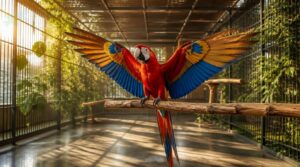
Why does cage size matter so much? Because cramped quarters crush confidence fast.
Match width and depth to 1.5 times your bird’s wingspan measurement, with vertical space topping 18 to 24 inches for headroom. Larger species need 60-inch enclosures or three square feet of floor area each.
Species-appropriate cage design keeps real flight space possible—wings fully extended. Always measure the interior cage space and exclude seed guard for accurate dimensions.
Safe Bar Spacing
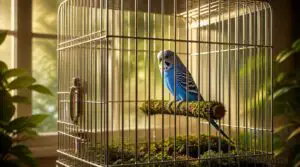
Once cage size matters are settled, bar spacing decides safety. Think of it like a venue’s aisle width or patron circulation plan—too tight, and trouble follows.
Match cage bar spacing to your species; gaps that invite head entrapment or escape break ADA‑style accessibility logic. Proper spacing prevents environmental hazard prevention failures, supporting species-appropriate cage design and genuine bird cage safety, much like server movement needs clear room to work.
Non-toxic Cage Materials
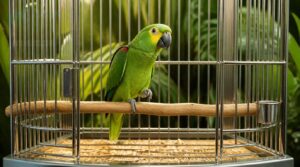
What your bird’s cage is made of matters just as much as its size. Birds chew constantly, so every surface is a potential meal.
Choose stainless steel or zinc-free powder coating, both corrosion-resistant and bird-safe. Skip galvanized metal entirely—chewed zinc causes real toxicity. Stick with untreated hardwood perches and non-toxic sealants on glass panels. Birdsafe materials protect health for years.
Varied Natural Perches
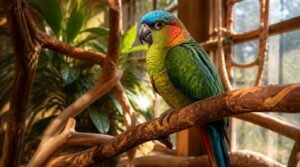
Safe materials only solve half the puzzle—what’s on those perches matters too. Your bird’s feet need variety to stay strong and healthy.
Offer natural wood branches like manzanita and dragonwood, mixing perch diameter variety from 6mm to 38mm. This challenges foot muscles, while rough bark texture benefits grip far better than smooth dowels. Varied grip surface diversity keeps those feet flexible and strong.
Smart Cage Placement
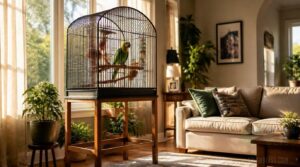
Where you put that cage matters as much as what’s inside it. Aim for ideal cage height around four feet up, in a well-lit, draft-free area for behavioral wellness.
- Eye-level placement for real connection
- Stable stand selection for safety
- Steady airflow, away from vents
- Social zone positioning near family life
- Consistent temperature regulation, no sudden swings
Add Daily Enrichment Activities
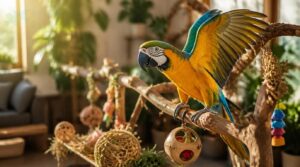
A safe cage is just the starting point, not the finish line. Your bird also needs daily activities that mimic what it would naturally do in the wild, like foraging, climbing, and flying. Here are five enrichment habits worth building into your routine.
Foraging Puzzle Toys
Foraging puzzle toys tap into one of your bird’s most powerful instincts — the drive to work for food. In the wild, parrots spend the majority of their waking hours searching and problem-solving. You can replicate that at home using puzzle feeders with hidden treats, DIY foraging puzzles made from cardboard or untreated wood, and rotating rewards to keep things fresh.
For smaller species, exploring bird toys designed specifically for budgies can spark ideas for scaling foraging challenges to the right size and complexity.
Parrots are born to work for their food — puzzle feeders bring that wild instinct home
Start simple. Clear difficulty levels help your bird learn the mechanism before you increase the challenge with smaller openings or deeper compartments. Gradually working up prevents frustration and builds confidence — two things that directly reduce stress behaviors like pacing or feather picking.
Chewing and Shredding Play
Chewing and shredding is your bird’s version of a deep workout — mentally and physically. Natural wood blocks, fruitwood branches, and untreated pine perches give safe, long-lasting surfaces for beak maintenance. Rotate shreddable toys like paper towel tubes and cardboard rolls daily to keep curiosity alive.
Best materials to offer:
- Natural wood blocks for durable, satisfying chewing
- Fruitwood branches with smooth bark for gentle beak conditioning
- Cardboard rolls for shredding that mimics nesting behavior
- Sisal or cotton rope for safe, inspectable fiber chewing
- Paper-based toys using non-toxic inks only
Keep sessions to 10–15 minutes to prevent fatigue. Always inspect surfaces for splinters or fraying, and replace anything showing wear immediately.
Climbing Ropes and Ladders
Climbing ropes and ladders turn your bird’s cage into a true fitness course. Nylon or polyester ropes (6–12mm diameter) offer safe grip and resist chewing wear.
Mix rope ladders with wooden ones for varied textures. Anchor every rope at multiple points, inspect weekly for fraying, and rinse every two weeks to keep things clean and mold-free.
Supervised Flight Time
Flight time gives your bird bodyweight exercise, but only works inside a safe flight arena setup.
Set firm flight session limits, monitor fatigue signs in drooping wings, and define clear safety stop signals before each round.
Keep emergency first aid ready, and treat free flight time as true flight enrichment, your bird’s favorite flight training reward for confidence and growth.
Bathing Opportunities
Bathing opportunities deliver pure sensory enrichment, your bird craves. Offer a shallow dish at feather-depth, refreshed daily, or mist gently with a spray bottle from twelve inches.
Most parrots bathe two to three times weekly; watch for fluffed feathers and head-bobbing as happy bathing cues.
Add a bath perch and towel—simple accessories supporting humidity for tropical species and avian health.
Top 5 Bird Enrichment Items
Knowing the categories of enrichment is one thing, but having the right products on hand makes it real. You don’t need a shopping cart full of gadgets to keep your bird sharp and happy, just a handful of proven picks. Here are five items worth adding to your supply list.
1. Kyouki Natural Bird Foraging Box
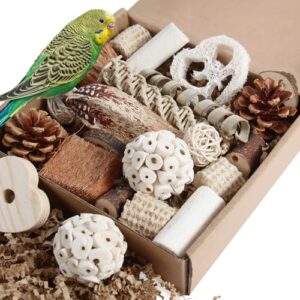
The Kyouki Natural Bird Foraging Box is a standout pick for birds that need more mental engagement throughout the day.
Built from pine cones, apple wood, coconut shells, loofah, and seagrass — no metal, paint, or dyes — it’s as safe as it is stimulating.
Your bird works to uncover hidden treats using the removable compartment, turning snack time into a genuine puzzle.
It’s best suited for small to medium birds like parakeets and cockatiels.
| Best For | Small to medium birds like parakeets and cockatiels that need extra mental stimulation and enrichment throughout the day. |
|---|---|
| Material | Natural wood & fiber blend |
| Eco-Friendly | Yes, no dyes, paint, or plastic |
| Primary Use | Bird foraging toy |
| Pack Contents | 1 toy unit |
| Intended Users | Small to medium pet birds |
| Lifespan | Destructible; frequent replacement needed |
| Additional Features |
|
- Made entirely from natural materials — pine cones, apple wood, coconut shells, and more — with no metal, paint, plastic, or dyes
- The removable treat compartment turns snack time into an interactive foraging game, keeping birds mentally engaged
- Mixed textures and shapes support natural chewing instincts and help keep beaks healthy
- Some tougher or bulkier pieces may be hard for very small birds to handle
- Heavy chewers will go through it quickly, so you may need to replace it often
- Not suitable for large parrots or birds that need sturdier toys — supervision is recommended to prevent swallowing small pieces
2. Bonka Natural Crinkle Paper
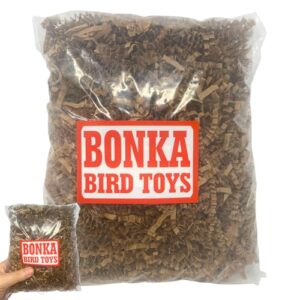
If the Kyouki box sparks curiosity, Bonka Natural Crinkle Paper keeps that curiosity burning.
It’s 85 cubic inches of unbleached, shredded paper strips — lightweight, pliable, and completely bird-safe. Stuff it into foraging toys, tuck it into nesting huts, or hide treats inside for your bird to dig through. The crinkled texture encourages natural shredding and exploration.
Made in the USA, it’s a low-cost, adaptable refill option that extends the life of nearly any foraging toy you already own.
| Best For | Bird owners who want an affordable, versatile foraging filler to refresh existing toys or add nesting material to huts and breeding boxes. |
|---|---|
| Material | Unbleached paper strips |
| Eco-Friendly | Yes, 100% bird-safe, unbleached |
| Primary Use | Foraging and nesting filler |
| Pack Contents | 1 bag (~85 cu in) |
| Intended Users | Pet birds of varied sizes |
| Lifespan | Depletable; may need restocking often |
| Additional Features |
|
- 100% bird-safe and made in the USA, so you’re not worrying about harmful dyes or chemicals
- Flexible enough to stuff into almost any foraging toy, nest hut, or DIY project you already have
- Lightweight and easy to handle — the crinkled texture naturally encourages shredding and exploration
- At 85 cubic inches, the bag runs out fast if your bird is an enthusiastic forager
- Only comes in plain brown — no color variety for birds that respond better to visual stimulation
- Can’t get wet, so it’s strictly an indoor, dry-environment option
3. TashiBox White Paper Bath Cups
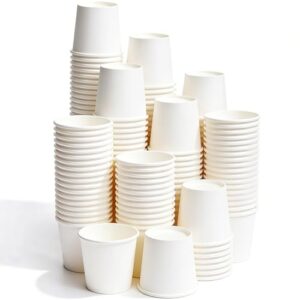
Paper cups aren’t just for coffee. TashiBox White Paper Bath Cups give your bird a safe, disposable bathing option that’s easy to refresh between uses.
The food‑grade paper holds water well for short sessions, and the white color helps birds spot the water surface clearly.
Supervision matters here — check edges for fraying before placing one in the cage, and swap it out the moment it starts softening.
Simple, practical, and fuss‑free.
| Best For | Bird owners who want an affordable, disposable way to offer their pet a quick bath without the hassle of cleaning a permanent dish. |
|---|---|
| Material | Food-grade paper |
| Eco-Friendly | Yes, biodegrades faster than plastic |
| Primary Use | Portioning, drinking, and bathing |
| Pack Contents | 200 cups |
| Intended Users | Home, office, and travel users |
| Lifespan | Single-use disposable |
| Additional Features |
|
- White finish makes it easy for birds to see the water surface clearly
- Food-grade, unwaxed paper is safe for pets and decomposes faster than plastic
- Comes 200 to a pack, so there’s always a fresh, clean cup ready to swap in
- Not built for prolonged water exposure—edges can soften or fray with extended use
- Lacks the structural strength of plastic or metal, so it can crush or tip easily
- Requires regular supervision to check for fraying before and during use
4. SOUJAP Pulp Egg Cartons Half Dozen
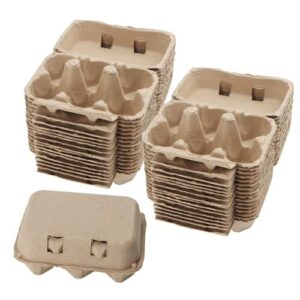
Here’s something unexpected: pulp egg cartons make surprisingly effective foraging toys. The SOUJAP Half Dozen cartons come in packs of 30, giving you a steady supply to hide seeds, pellets, or small treats inside each compartment.
Your bird has to work to investigate every section, which mirrors natural foraging behavior closely. The 1.6-inch compartments fit most small-to-medium treats perfectly.
Once your bird’s done, toss the carton — it’s fully recyclable and biodegrades faster than plastic.
| Best For | Bird owners, backyard chicken keepers, and Airbnb hosts looking for an affordable, eco-friendly way to store, share, or repurpose half-dozen eggs. |
|---|---|
| Material | Recyclable pulp |
| Eco-Friendly | Yes, recyclable pulp construction |
| Primary Use | Egg storage and transport |
| Pack Contents | 30 cartons |
| Intended Users | Home and small-farm egg keepers |
| Lifespan | Reusable until damaged or crushed |
| Additional Features |
|
- Pulp construction cushions eggs well, reducing the chance of cracks during transport or storage
- The buckle-and-lid design makes sealing quick and the cartons stack neatly for easy organization
- Comes in a pack of 30 (180-egg capacity total), making them great value for regular use or gifting
- The pulp material feels flimsier than plastic to some users and can tear or crush under pressure
- Not compatible with extra-large eggs, which won’t fit the 1.6-inch compartments
- Rough handling or tight packaging can damage the cartons before they’re even used
5. Natural Jute Twine 250ft Bird Toy
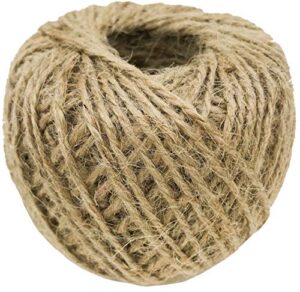
Few bird toys pull triple duty like natural jute twine. This 250-foot roll gives you enough to wrap perches, build ladders, and create pull-tugs — all from one spool. The 100% natural jute fibers are free from synthetic dyes and coatings, so chewing is safe and beak-healthy.
Birds love unraveling sections, which mirrors the problem-solving parrots do in the wild. Just inspect it weekly and trim any frayed ends promptly.
| Best For | Bird owners and crafters looking for a safe, natural twine that works equally well for pet toy making, gift wrapping, and garden projects. |
|---|---|
| Material | 100% natural jute fiber |
| Eco-Friendly | Yes, biodegradable and compostable |
| Primary Use | Cage enrichment and crafting |
| Pack Contents | 1 roll (250 ft) |
| Intended Users | Pet bird owners and crafters |
| Lifespan | Long-lasting 250 ft supply |
| Additional Features |
|
- 250 feet of 100% natural jute gives you plenty of material for perches, pull-tugs, ladders, and craft projects all from one roll
- Completely biodegradable and free from synthetic dyes or coatings, making it safe for birds to chew and beak-friendly
- Versatile enough to use beyond the bird cage — great for wrapping, plant ties, garden tags, and decorating
- Some buyers notice a chemical smell right out of the package, which may need to air out before use around birds
- The twine runs thin — more yarn-like than rope-like — so it’s not suited for anything requiring heavy-duty strength
- The spool is roughly apricot-sized, which can feel small and awkward to handle for larger or longer projects
Create a Healthy Enrichment Routine
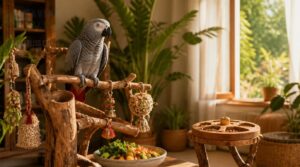
A good enrichment routine doesn’t have to be complicated — it just needs to be consistent. Covering a few key areas each week makes a real difference in your bird’s mood, health, and behavior. Here’s what to build your routine around.
Weekly Toy Rotation
Think of toy rotation as your bird’s version of a fresh playlist. Rotate five toys weekly to prevent habituation, keeping your bird mentally engaged without overwhelming it. A few simple habits make this easy:
- Color-coded bins help you swap toys quickly and consistently
- Log each rotation date and your bird’s response to track preferences
- Do a quick safety inspection every swap — check for wear, sharp edges, or loose parts
Positive Reinforcement Training
Training your bird doesn’t have to feel complicated. Positive reinforcement training builds trust while keeping your bird mentally active — a natural extension of the enrichment routine you’ve already started.
Begin with target training: hold a small stick near your bird and reward any beak contact immediately, within one to two seconds, using a favorite treat.
| Foundation Behavior | Training Tool | Reward Type |
|---|---|---|
| Target touching | Stick or chopstick | Seed or nut treat |
| Step-up command | Your hand or perch | Verbal praise |
| Basic recall | Clicker or verbal cue | Brief flight time |
Keep sessions to 5–10 minutes, two or three times daily during active morning or evening periods. Short, consistent practice beats long, infrequent sessions every time.
Social Bonding Time
Your bird doesn’t just need toys — it needs you. Daily social bonding time strengthens trust through shared vocal interactions, gentle eye contact, and joint play sessions.
Try call-and-response games or solve a foraging puzzle together, with verbal encouragement.
Short, frequent sessions build attachment faster than occasional long ones, keeping your bird calm, confident, and genuinely connected to you.
Full-spectrum Lighting
Lighting is one of the most overlooked parts of bird care. Full-spectrum lighting mimics natural daylight by delivering UVB and UVA wavelengths your bird can’t get from a standard bulb.
- UVB promotes vitamin D₃ synthesis, which strengthens bones and feathers
- Color rendering (CRI near 90) helps your bird see toys and perches naturally
- 5000–6500 Kelvin bulbs best replicate daytime daylight
- 12-hour light cycles regulate your bird’s circadian rhythm
- Timers simulate dawn and dusk, easing daily transitions
Stress Behavior Monitoring
Your bird can’t tell you it’s struggling — but its body will.
Watch for vocalization changes first: sudden silence or non-stop screaming both signal stress. Feather plucking, pacing the same cage path repeatedly, watery droppings, and appetite shifts are equally serious red flags. Check these behaviors daily, and act quickly when patterns emerge.
Frequently Asked Questions (FAQs)
What is bird enrichment?
Avian enrichment gives your pet bird mental stimulation and environmental complexity that mimics natural behaviors like foraging and problem-solving.
It’s behavioral enrichment that reduces captive boredom, promotes mental welfare, and keeps your feathered friend’s mind sharp and engaged daily.
Why is avian enrichment important?
Avian enrichment matters because it keeps your bird’s mind sharp and body healthy. It encourages preventing boredom, mimics wild instincts, builds cognitive skills, and reduces stress behaviors, all while improving physical health and strengthening your bond together.
How do you enrich a bird cage?
To enrich a bird cage, provide foraging puzzles, varied perches, chewing toys, and climbing tools. Rotate enrichment weekly and make certain safe placement, proper lighting, and daily supervised flight time.
Are DIY cockatiel foraging ideas a good idea?
Yes, DIY foraging toys work great for cockatiels.
Use safe DIY materials like cardboard tubes and paper cups, build foraging skill progression gradually, watch for frustration, and monitor nutritional intake to keep mental stimulation balanced and rewarding.
What temperature is ideal for tropical pet birds?
Your bird’s comfort hinges on near-tropical precision: keep the cage at 70-80°F, with 50-60% humidity, away from drafts and sunlight. A digital thermometer catches fluctuations early, preventing heat stress and respiratory trouble across species-specific needs.
How often should bird perches be sanitized?
Spot clean perches daily to clear droppings and grime, then go for a full weekly wash with bird-safe soap. Inspect rope perches weekly too, replacing worn sections to prevent cross contamination and reduce pathogen buildup.
Which houseplants are toxic to pet birds?
A leafy houseplant can hide a silent danger.
Identifying toxic flora matters: dieffenbachia, philodendron, kalanchoe, oleander, and avocado pits threaten your bird. Watch for poisoning symptoms like seizures or labored breathing, and choose bird-friendly houseplants such as Boston fern instead.
Do different bird species need different enrichment?
Absolutely, species-specific enrichment matters.
Beak shape, foraging, climbing styles, and dietary foraging textures all differ, so match toys, perches, and species-specific cage size to your bird’s natural soundscapes, territorial retreat spaces, and nutritional requirements for true wellbeing.
Can birds live alone without a companion?
Flying solo" works for some, but not all. Highly social species like parrots risk loneliness stress signs—plucking, screaming—without enough social interaction.
Daily bonding and solo bird enrichment help, though companionship remains a true double-edged sword.
Conclusion
silent cage breeds despair; a busy cage breeds joy. That’s the heart of how to enrich a pet bird environment—you’re not adding clutter, you’re adding purpose.
Every shredded carton, every solved foraging puzzle, every supervised flight builds a bird who trusts you and trusts itself. Rotate toys, watch for stress signals, and keep routines steady. Your bird won’t thank you in words, but you’ll see it in bright eyes, busy feet, and feathers that finally stay put.
- https://ace-eco.org/vol17/iss2/art9
- https://sites.uw.edu/oawrss/iacuc/environmental-enrichment-sops/environmental-enrichment-for-birds
- https://www.mdpi.com/2673-5636/3/2/17
- https://www.revivalanimal.com/learning-center/environmental-enrichment-for-birds
- https://windycityparrot.com/bird-toys-for-foraging-and-enrichment