This site is supported by our readers. We may earn a commission, at no cost to you, if you purchase through links.
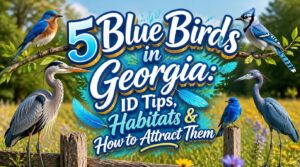
Georgia holds a quiet secret that stops most first-time birders cold: a single state hosts bluebirds singing from fence posts, herons stalking creek shallows, and indigo buntings burning like blue flames in the brush—sometimes all within a mile of each other.
Five distinct blue bird species call this state home, each carved by evolution into a different niche, a different habitat, a different way of making a living. Knowing which bird you’re looking at changes everything—from where you search to what you put in your feeder. These five species, their field marks, haunts, and habits, are worth knowing by heart.
Table Of Contents
- Key Takeaways
- Blue Birds Found in Georgia
- How to Identify Blue Birds
- Where Blue Birds Live
- Blue Bird Behavior and Diet
- Attracting Georgia Blue Birds
- Frequently Asked Questions (FAQs)
- What does a Bluebird look like in Georgia?
- What birds are blue in Georgia?
- Do Bluebirds live in Georgia?
- Are there Blue Jays in Georgia?
- What birds live in a backyard in Georgia?
- Are there any bluebird conservation organizations in Georgia?
- Are there bluebirds in Georgia?
- Are Blue Jays a good bird in Georgia?
- How do you identify birds in Georgia?
- What type of bluebirds are in Georgia?
- Conclusion
Key Takeaways
- Georgia is home to five distinct blue bird species — Eastern Bluebird, Blue Jay, Indigo Bunting, Blue Grosbeak, and Little Blue Heron — each living in a different habitat and filling a different ecological role.
- Telling them apart comes down to a few quick checks: size, bill shape, plumage pattern, and sound, with males typically showing much brighter blue than females.
- You can attract blue birds to your yard with a well-placed nest box, native berry shrubs, a shallow birdbath, and species-matched foods like mealworms for bluebirds or nyjer seeds for buntings.
- Avoiding pesticides is one of the most important things you can do, since blue birds depend on insects for food and raising their young.
Blue Birds Found in Georgia
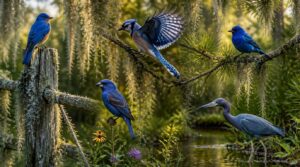
Georgia is home to some genuinely stunning blue birds, and spotting one always feels like a small reward. Whether you’re watching from your backyard or out on a trail, knowing who’s who makes all the difference. Here are five blue birds you’re likely to come across in Georgia.
If herons are more your speed, Georgia’s waterways host some beautiful ones too—check out this guide to Georgia’s five heron species to sharpen your eye.
Eastern Bluebird
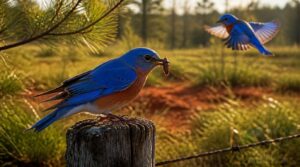
The Eastern Bluebird (Sialia sialis) is a backyard favorite in Georgia. Males wear a bright blue back with a warm rusty-orange chest — hard to miss. They are commonly found in open woodland habitats across North America. Here’s what makes them special:
- Cavity nesters using old woodpecker holes or nest boxes
- 3–5 eggs per clutch, incubated about 13–14 days
- Insects dominate their summer diet; berries take over in winter
- Males sing soft, warbling songs from fence posts or wires
- Predator guards on nest boxes dramatically boost fledgling survival
Blue Jay
If the Eastern Bluebird is the gentle neighbor, the Blue Jay (Cyanocitta cristata) is the bold one next door. Measuring 9–11 inches with a striking blue, white, and black pattern, it’s hard to miss. That raised crest? It signals mood — excitement, alarm, attitude.
Jays are loud, smart, and surprisingly good at mimicking hawk calls to clear a feeder.
Indigo Bunting
Now shift your gaze from loud and bossy to small and stunning.
The Indigo Bunting (Passerina cyanea) looks like someone dipped a sparrow in the sky. Males wear vibrant blue plumage that almost glows in sunlight. In winter, that color fades to a patchy, muted blue-gray mix — easy to overlook until spring returns their brilliance.
Blue Grosbeak
The Indigo Bunting wows with color, but the Blue Grosbeak (Passerina caerulea) brings something extra — sheer size and power.
Here’s what makes it stand out:
- A thick conical bill, built to crack hard seeds
- Deep vibrant blue plumage across the back and chest
- Bold rusty wing bars cutting across each wing
- A stocky build, bigger than most backyard finches
- Strong preference for shrubby habitat edges and hedgerows
Little Blue Heron
Meet the Egretta caerulea — the Little Blue Heron — a quiet but striking wader found in Georgia’s wetland habitats. Adults wear slate-blue plumage with a purplish-maroon head, while juveniles are completely white. That color shift during breeding season can make bird identification tricky.
They’re colonial nesters, patient hunters, and face real conservation challenges as Georgia’s freshwater marshes shrink.
How to Identify Blue Birds
Spotting a blue bird is one thing — knowing which blue bird it is can feel like a whole different puzzle. Georgia is home to several blue species, and they don’t all look alike up close. Here are five key things to look for when you’re trying to make a positive ID.
If you’re puzzling over two of the trickiest lookalikes, this blue grosbeak vs. indigo bunting comparison breaks down exactly what sets them apart.
Size and Body Shape
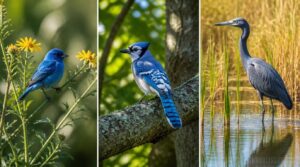
Size tells you a lot before you even reach for your binoculars. Georgia’s blue birds range widely — from tiny songbirds to tall wading birds.
Here are three quick size anchors:
- Indigo Bunting — about 4.5–5 inches, lighter than a golf ball
- Blue Jay — 9–12 inches, roughly robin-sized but bolder
- Little Blue Heron — up to 33 inches, unmistakably tall
Blue Plumage Patterns
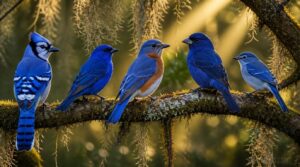
Not all blue is the same. The blue you see on a bird’s feathers isn’t painted on — it comes from nanoscale feather structures that scatter light. That’s why a Blue Jay’s wings can look electric in sunlight but almost flat in shade.
A Blue Jay’s wings can look electric in sunlight because the color comes from light-scattering feather structures, not pigment
Some birds show solid, uniform blue, while others, like the Jay, wear black-barred patterns that break up the color nicely.
Male Versus Female Colors
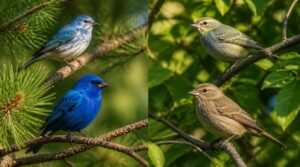
Here’s a quick truth about Georgia’s blue birds: the males usually hog all the color.
Take the Indigo Bunting — the male is vivid indigo blue all over, while the female is plain brown. Same story with the Cerulean Warbler. Males shine sky blue; females lean blueish-green with yellow tones.
Here’s how the pattern plays out across species:
- Male Indigo Bunting — fully saturated indigo, no mixing
- Female Indigo Bunting — soft brown, barely a hint of blue
- Male Cerulean Warbler — crisp sky blue on top
- Female Cerulean Warbler — muted blueish-green with yellowish wash
Female plumage isn’t a flaw — it’s camouflage for nesting season. Once you know this, spotting the dull bird beside the vivid one suddenly feels like cracking a code.
Bills, Crests, and Markings
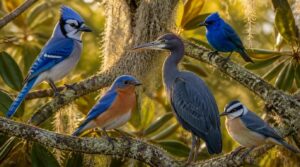
Once you’ve nailed down color, the next clues are right on the bird’s face. Bill shape alone can stop you in your tracks. The Eastern Bluebird carries a short, dark bill — neat and simple. The Little Blue Heron? A long, dagger-like bill, greenish-yellow at maturity. Different tools for very different lives.
Crests and facial stripe patterns matter too. Blue Jays raise their crest when alert. Indigo Buntings can lift theirs during display. Look for eyebrow stripes, eyelines, and malar stripes running from the beak toward the cheek — these markings are your fastest shortcut to a confident ID.
Songs and Calls
Sound is one of your sharpest ID tools. Each songbird carries a vocal signature as unique as a fingerprint.
The Eastern Bluebird sings a soft, melodious warble — gentle and low. Blue Jays announce themselves with loud, harsh calls you can’t miss.
Dawn chorus dynamics reveal who’s nearby before you even raise your binoculars.
Where Blue Birds Live
Blue birds don’t all hang out in the same spots — each species has its favorite kind of place to call home. Knowing where to look makes all the difference between a lucky sighting and a frustrating walk. Here are the five main habitats where you’re most likely to find them in Georgia.
Open Fields and Meadows
Some of Georgia’s best birdwatching happens right in the middle of an open field. Indigo Buntings and Barn Swallows love these grassy, sunlit spaces.
Meadows with native wildflowers create rich insect foraging zones, which keeps these birds well-fed. Diverse plants bloom from spring through fall, drawing insects that birds can’t resist.
Forest Edges and Canopies
Open fields draw your eye, but forest edges are where things get really interesting. That boundary between trees and open space creates a unique microclimate — warmer temperatures, drier soils, and denser undergrowth — that blue birds love.
Cerulean Warblers prefer deep mature canopies, where light filters through natural gaps and feeds a rich insect community below.
Key draws at forest edges:
- Canopy light gaps invite bursts of flowering and fruiting
- Layered vegetation gives birds distinct feeding zones
- Edge winds shift seed dispersal, renewing food sources
Wetlands and Marshes
Where forest edges quiet down, wetlands take over — and they bring a whole different cast of characters. These soggy, reed-filled spaces aren’t just scenic. They’re working ecosystems that store floodwater, filter pollutants, and support dense invertebrate food webs that keep birds well-fed.
Lakes, Rivers, and Ponds
Move past the marsh, and you hit open water — lakes, rivers, and ponds. This is Belted Kingfisher territory.
Watch for it hovering over still water before plunging after fish. The Little Blue Heron wades slowly along muddy shorelines, hunting with quiet patience.
Both species rely on clean, well-connected water habitats to feed and thrive year-round.
Backyards and Urban Parks
You don’t have to leave your yard to see bluebirds. Eastern Bluebirds and Blue Jays visit suburban feeders regularly.
Plant native berry shrubs and add a clean birdbath to pull them in. A nest box on a shade tree helps bluebirds settle nearby. Keep things quiet at dawn — birds love a peaceful yard.
Blue Bird Behavior and Diet
Watching a blue bird go about its day tells you more than any field guide ever could. From the way it hunts to where it sleeps, behavior reveals who it really is. Here’s a closer look at what Georgia’s blue birds eat, how they nest, and when they move.
Insects and Flying Prey
Some blue birds in Georgia are serious hunters. Eastern Bluebirds dart after insects mid-flight, while Barn Swallows chase moths and mosquitoes with impressive speed. Here’s what makes their aerial hunting so effective:
- Dragonfly-like vision helps birds detect tiny moving prey
- Rapid interception tactics cut pursuit time dramatically
- Flight speeds up to 30 mph enable mid-air catches
- Energy-efficient pursuit keeps hunts worth the effort
Seeds, Berries, and Fruit
Not every blue bird in Georgia is a hunter. Many rely on seeds, berries, and fruit as key parts of their avian diet. Eastern Bluebirds, for instance, shift to berries like dogwood and serviceberry in winter. Indigo Buntings prefer nyjer thistle seeds year-round.
These feeding habits also support seed dispersal mechanisms, helping Georgia’s native plants spread naturally.
Fish and Aquatic Prey
Not all blue birds stick to seeds and insects. Some, like the Belted Kingfisher, are built for fishing. They dive headfirst into rivers and ponds, targeting small fish between 2 and 20 millimeters.
Wetland areas also serve up aquatic insect foraging opportunities, especially in spring when mayfly and caddisfly larvae peak. Seasonal prey availability shifts fast, so these birds adapt their feeding habits accordingly.
Nesting Sites and Eggs
Nesting habits vary a lot across Georgia’s bluebirds. Eastern Bluebirds rely on old woodpecker holes or nest boxes during breeding season. The Georgia Bluebird Society even promotes safe nest box design to boost local populations.
Eggs are pale blue, a natural egg camouflage pattern that blends beautifully. Parents pick spots high up to outsmart predators.
Migration Through Georgia
Some birds treat Georgia like a layover — and Indigo Buntings are a perfect example. These vibrant indigo migrants travel roughly 1,200 miles each night, charting entirely by starlight.
Eastern Bluebirds from Canada and the Northeast also arrive each winter. Georgia’s varied habitats make it a natural migration corridor, giving you a great chance to spot blue plumage throughout the seasons.
Attracting Georgia Blue Birds
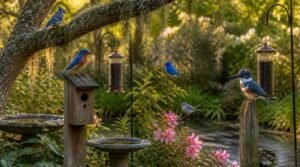
Getting blue birds to visit your yard isn’t as hard as you might think. A few simple changes can make a real difference. Here’s what works best.
Install Safe Nest Boxes
Setting up a nest box the right way makes all the difference. Use untreated wood only — chemicals can harm eggs and chicks. Follow these three basics:
- Box placement height: 5–15 feet for small songbirds
- Predator guard installation: baffles on poles stop raccoons cold
- Ventilation requirements: drill small holes to prevent overheating
Clean boxes out after each breeding season to keep your backyard nesting sites healthy.
Offer Bird-friendly Foods
Once your nest boxes are up, the next step is keeping your visitors well-fed.
Black oil sunflower seeds and nyjer seeds are your best starting point — small songbirds can’t resist them. In colder months, winter suet treats give birds the extra energy they need to stay warm. Eastern Bluebirds love dried mealworms year-round.
| Food Type | Target Bird |
|---|---|
| Nyjer seeds | Indigo Bunting |
| Dried mealworms | Eastern Bluebird |
| Suet cakes | Blue Jay |
| Unsalted peanut pieces | Blue Jay |
| Mixed seed blend | Feeder birds generally |
Clean your feeders regularly — mold builds fast in Georgia’s heat and can make birds sick fast.
Add Clean Bird Baths
Food gets birds to your yard — water keeps them coming back.
A shallow basin, 3–4 inches deep, works best for small blue birds like Eastern Bluebirds and Indigo Buntings. Refill it daily and swap out the water every few days in Georgia’s heat. Place it 10–20 feet from feeders, near shrubs where birds can dart to safety.
Plant Native Berry Shrubs
Water draws them in — but native berry shrubs keep them around all season long. Shrubs like winterberry holly and highbush blueberry offer natural food from late summer through winter, perfect for Eastern Bluebirds and Indigo Buntings.
Plant in well-drained, amended soil after the last frost, spacing shrubs 3–6 feet apart in full sun for the best berry crops.
Avoid Pesticides Outdoors
Pesticides can quietly wipe out the insects that blue birds in Georgia depend on. Before reaching for a spray, think twice.
- Apply during calm conditions to prevent drift onto birds or water
- Avoid broad-spectrum sprays near nests, feeders, or backyard habitats
- Store pesticides safely away from wildlife access
- Plant nectar flowers to invite natural predators instead
Your backyard thrives without chemicals.
Frequently Asked Questions (FAQs)
What does a Bluebird look like in Georgia?
The Eastern Bluebird is hard to miss. Males wear bright royal blue on their back with a warm orange-red chest. Females are softer — pale blue with grayish-brown tones. Both are about 7 inches long.
What birds are blue in Georgia?
Georgia is home to five blue birds: the Eastern Bluebird, Blue Jay, Indigo Bunting, Blue Grosbeak, and Little Blue Heron — each with its own look, habitat, and habits worth knowing.
Do Bluebirds live in Georgia?
Yes, Eastern Bluebirds live in Georgia year-round. They prefer open fields and woodland edges, nesting in cavities or boxes. You’ll spot them in backyards and pastures across the state in every season.
Are there Blue Jays in Georgia?
Blue Jays boldly call Georgia home year-round. You’ll spot them in backyards, forest edges, and suburban parks across the state — stable, adaptable, and easy to recognize by their vivid blue crest.
What birds live in a backyard in Georgia?
Several birds call Georgia backyards home year-round. You’ll spot Eastern Bluebirds, Blue Jays, and Indigo Buntings regularly. Set up nest boxes and feeders to welcome them reliably.
Are there any bluebird conservation organizations in Georgia?
Want to support bluebirds beyond your backyard? Birds Georgia leads statewide partnerships across the state, while the Georgia Ornithological Society funds conservation grants backing habitat restoration and nest box monitoring efforts.
Are there bluebirds in Georgia?
Georgia is home to several stunning blue birds. The Eastern Bluebird lives here year-round, nesting in open fields and backyards. Indigo Buntings and Blue Jays are common too, especially in spring and summer.
Are Blue Jays a good bird in Georgia?
Yes, Blue Jays are great for Georgia. They’re bold, smart, and cache acorns across your backyard, quietly planting future oaks. Their feeder dominance can be pushy, but the ecological payoff is real.
How do you identify birds in Georgia?
Look at size, plumage, and bill shape first. Then note the habitat and season. Songs clinch tricky IDs. Apps like Merlin make citizen science fast and fun.
What type of bluebirds are in Georgia?
Five species wear blue in the Peach State. You’ve got the Eastern Bluebird, Blue Jay, Indigo Bunting, Blue Grosbeak, and Little Blue Heron — each rocking a different shade of blue.
Conclusion
Some birders spend years chasing blue birds in Georgia with expensive gear, detailed maps, and zero luck—then a bluebird quietly lands right on their own mailbox.
The birds were never hiding from you. You just needed to know where to look, what to listen for, and how to make your yard worth stopping at.
Put up a nest box. Plant something native. Skip the pesticides.
The blue was always there, just waiting for you.
- https://ebird.org/species/easblu/US-GA-207
- https://www.allaboutbirds.org/guide/Eastern_Bluebird/id
- https://georgiawildlife.com/out-my-backdoor-bluebird-migration
- https://www.slideshare.net/slideshow/georgia-birds-field-guide-73379951/73379951
- https://backyardwildlifeconnection.com/2020/04/26/indigo-buntings-are-showing-up-at-georgia-feeders