This site is supported by our readers. We may earn a commission, at no cost to you, if you purchase through links.
 A parakeet’s world is a busy one—full of color, chatter, and curiosity. These little birds aren’t content to sit quietly in a corner; they thrive on routine, attention, and a safe space to explore.
Neglect the basics, and their health can unravel fast, sometimes in ways that aren’t obvious until it’s too late. Knowing how to take care of a parakeet means more than filling a bowl with seeds. It’s about building trust, setting up the right environment, and spotting trouble before it starts.
With a few mindful habits, you’ll keep your feathered companion happy, healthy, and keen to greet each new day.
Table Of Contents
- Key Takeaways
- How Do You Take Care of a Parakeet?
- Choosing The Right Parakeet for Your Home
- Setting Up The Ideal Parakeet Cage
- Feeding Your Parakeet a Balanced Diet
- Keeping Your Parakeet Healthy and Groomed
- Socialization, Training, and Enrichment
- Frequently Asked Questions (FAQs)
- How do you take care of a parakeet?
- Are parakeets easy to care for?
- What do you need to keep a parakeet in a cage?
- How do you care for a parakeet cage?
- What should I do if I get a parakeet?
- How to keep a parakeet happy?
- Is a parakeet easy to take care of?
- What shouldn’t I do with my parakeet?
- Do parakeets need to be covered at night?
- How do I keep my parakeet happy?
- Conclusion
Key Takeaways
- Your parakeet needs daily social interaction, a clean environment, and a balanced diet to stay healthy and happy.
- Choose a cage with proper size, safe bar spacing, and place it in a draft-free, quiet spot away from kitchens and windows.
- Offer fresh water, rotate safe toys, and provide a variety of raw, pesticide-free fruits and vegetables while avoiding toxic foods like avocado and chocolate.
- Watch for early signs of illness such as changes in behavior or appearance, and schedule regular vet visits to catch health issues before they worsen.
How Do You Take Care of a Parakeet?
Caring for a parakeet starts with understanding what they need each day. Your bird’s health and happiness depend on creating the right environment and routine.
Here’s what to focus on as you set up your parakeet’s home.
Daily Care Requirements
Every day, your parakeet depends on you for more than just food. Cage maintenance keeps their space safe, while fresh water and a balanced parakeet diet support health and wellbeing. Feather care matters—offer bathing chances. Quick health checks help you spot issues early.
With daily parakeet care, you build trust and social bonding, laying the groundwork for a happy bird. Regular cage cleaning tasks cage cleaning tasks are essential for maintaining a healthy environment.
Meeting Social and Behavioral Needs
When you nurture Social Bonding and encourage Parakeet social interaction, you help your bird thrive. Parakeet behavior blossoms with daily Emotional Support—think gentle conversation, shared play, and Behavioral Enrichment. Flock Dynamics matter, even for solo birds, so Vocal Learning and Bird socialization keep minds sharp and hearts steady. Providing a proper parakeet diet is essential for maintaining their overall health.
- Rotate toys for curiosity
- Practice clicker training
- Mimic simple words
- Offer mutual preening opportunities
Ensuring a Safe Environment
After social time, your parakeet’s environment needs just as much care. Create a Toxic Free Zone by choosing stainless steel for your cage setup and keeping household cleaners far away. Air Quality Control means no smoking, aerosols, or Teflon fumes nearby.
Safe Temperature—65–80°F—is key, and watch for drafts. Noise Reduction helps prevent stress, making your parakeet habitat setup truly safe.
Choosing The Right Parakeet for Your Home

Finding the right parakeet for your home starts with a few key choices. You’ll want to think about health, personality, and living arrangements before you decide.
Let’s walk through what matters most when picking your new feathered friend.
Selecting a Healthy Parakeet
Looking for a healthy parakeet? Think of Parakeet Inspection like picking the ripest fruit—look for smooth feathers, bright eyes, and a clean vent. Health Checks matter, so ask about recent Veterinary Advice and quarantine records.
For smart Breed Selection and Purchase Guidance, pay attention to:
- Alertness and activity
- Balanced posture
- Clean beak and cere
- Well-groomed feet and nails
Male Vs Female Parakeet Traits
Choosing between a male or female Budgerigar often comes down to Color Differences and Behavioral Traits. Males (blue cere) excel in Vocal Patterns and mimicry, while females (brown cere) tend to be more territorial. Sex Identification is easiest after six months. For instance, Melopsittacus undulatus males are more social, and females show distinct Mating Habits, especially during breeding.
| Trait | Male Parakeet | Female Parakeet |
|---|---|---|
| Color Differences | Blue/Purple cere | White/Brown cere |
| Behavioral Traits | Social, active | Territorial, reserved |
| Vocal Patterns | Mimics, chatty | Loud, single call |
| Mating Habits | Courtship displays | Egg-laying, guarding |
Single Parakeet or Pair
Companionship shapes parakeet behavior and health. A single parakeet needs at least two hours of daily interaction to prevent loneliness and stress, while pairs thrive through Social Benefits and Pair Bonding.
Flock Dynamics encourage natural play and vocalization, reducing boredom.
If you’re Choosing a parakeet, consider Companion Needs—paired birds often enjoy better Parakeet care and wellness.
Age Considerations and Sources
Adoption ages matter—a young parakeet (2–3 months) is easier to tame, but older rescues deserve a second chance. Rescue statistics remind us many birds need homes.
Breeder selection affects parakeet health and wellness; reputable sources offer critical history and source verification.
Age-related care, regular avian vet visits, and attention to parakeet lifespan and care guarantee lasting companionship.
Setting Up The Ideal Parakeet Cage
Creating a comfortable and safe home for your parakeet starts with the right cage setup. There are a few key features you’ll want to look for before bringing your bird home.
Here’s what to keep in mind when choosing an enclosure.
Recommended Cage Size and Materials

Did you know a parakeet’s happiness starts with the right cage setup? For ideal bird welfare, choose a rectangular enclosure—never round—with these cage size guidelines and material safety tips:
- Minimum cage size: 18×18×18 inches for one, 30×18×18 for two.
- Stainless steel is safest.
- Horizontal design facilitates flight.
- Durable welded joints prevent escapes.
Proper Bar Spacing and Safety

Ever wonder why bar spacing matters so much? Safe bar spacing—0.375–0.5 inches—keeps your parakeet’s head and wings secure, preventing injury. Stainless steel bars offer top Bar Material Safety, while 16–18 gauge steel ensures Cage Structural Integrity.
Here’s a quick guide for your Parakeet cage setup:
| Bar Spacing | Material | Safety Focus |
|---|---|---|
| 0.375–0.5 inches | Stainless Steel | Injury Prevention |
| 0.5 inches | Powder-Coated | Avian Welfare Standards |
| 0.4 inches | Aluminum/Nickel | Environment and Safety |
Cage Placement in Your Home

Where you place your parakeet cage shapes their health and happiness more than you might think. Aim for a cozy, stable spot—never near kitchens or drafty windows.
For ideal cage setup, consider:
- Temperature Control: 18–24°C, away from radiators
- Noise Reduction: Moderate activity rooms
- Cage Orientation: One wall for retreat
- Lighting Options: Natural or LED
- Airflow Management: Avoid direct drafts
Essential Accessories and Perches
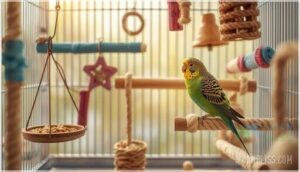
Once you’ve found the right spot for your parakeet cage, focus on parakeet cage accessories that support healthy feet and happy minds. Natural perches—untreated wood or rope—beat sand or metal for safety.
Mix in enrichment items like swings, ladders, and puzzle feeders. Bird toys and varied perches keep your parakeet active, curious, and engaged every day.
Feeding Your Parakeet a Balanced Diet

Making sure your parakeet gets the right nutrition is key to their health and happiness. There are a few important things to keep in mind when planning their meals.
Here’s what you need to know about feeding your bird well.
Pellet and Seed Mix Guidelines
Pellet Nutrition sits at the heart of a healthy parakeet diet, but Seed Diversity matters too. For a smooth Dietary Shift and solid Nutrient Balance, follow these feeding schedules:
- Offer 60–70% pelleted food daily.
- Limit seeds to 10%—choose at least three types.
- Mix seeds and pellets for gradual change.
- Refresh uneaten food every 24 hours.
Safe Fruits and Vegetables
You want your parakeet’s diet and nutrition to shine, so fresh food safety matters as much as variety.
Rotate vegetables like kale, bok choy, and chard for nutrient balance, and offer fruit variety in moderation.
Always remove fruit seeds and serve everything raw, washed, and pesticide-free.
| Fruit Variety | Vegetable Rotation | Fresh Food Safety |
|---|---|---|
| Mango | Kale | Wash thoroughly |
| Papaya | Bok choy | Remove seeds |
| Blueberry | Chard | Serve raw |
Foods to Avoid
Just as fresh fruits and veggies keep your parakeet’s diet and nutrition on track, knowing which foods to avoid is essential for parakeet health and wellbeing.
Avocado risks, chocolate poisoning, seed toxins, salty snacks, and dairy all threaten your bird’s diet. Stick to pelleted food and safe produce—never offer these toxic foods, even in tiny amounts.
Water and Treats
Hydration is the heartbeat of your parakeet’s health. Offer fresh water daily, scrubbing water and food dishes to prevent bacteria. For treats, choose safe foods like fresh vegetables or a millet spray—not more than 10% of the diet. Watch drinking habits; changes in water intake can signal illness. Thoughtful treat choices keep your bird happy and thriving.
- Fresh water daily
- Safe foods as treats
- Monitor drinking habits
- Clean water and food dishes
Keeping Your Parakeet Healthy and Groomed

Keeping your parakeet healthy and well-groomed is all about consistency and care. There are a few simple routines you’ll want to keep up with to make sure your bird stays comfortable and happy. Here’s what you should focus on for daily and weekly maintenance.
Spot Cleaning and Deep Cleaning The Cage
Did you know a spotless cage can add years to your parakeet’s life? Daily spotting and weekly deep disinfect keep bacterial control in check, while feather cleaning benefits from a fresh, safe space.
Here’s a quick glance at Parakeet cleaning and maintenance:
| Cage Sanitation | Deep Disinfect |
|---|---|
| Daily Spotting | Weekly Scrubbing |
| Feather Cleaning | Sun-Drying |
| Bacterial Control | Accessory Check |
Nail and Beak Maintenance
Precision matters regarding Parakeet grooming and care. For Beak Health and Nail Care, use bird-safe Grooming Tools and watch for signs of overgrown beak or nails. Trimming Safety is key—avoid cutting the quick, and always keep styptic powder handy. Parakeet health maintenance hinges on:
- Monthly nail trims
- Environmental enrichment
- Routine beak checks
Bathing and Feather Care
Did you know most parakeets prefer a gentle mist or shallow dish over a full bath? Misting benefits feather hydration and aids natural feather preening, keeping those vibrant colors intact.
Bathing techniques like early-day misting or shower perches help with humidity control, reducing feather plucking. Thoughtful bird grooming and care prevent brittle feathers, making parakeet care rewarding and stress-free.
Recognizing Signs of Illness
Ever notice your parakeet sitting fluffed up or unusually quiet? These subtle shifts often signal underlying health problems. Respiratory Issues, Feather Loss, and Behavioral Changes are common parakeet illnesses you’ll want to catch early.
Health Monitoring starts with Dropping Analysis and watching for Signs of parakeet illness like:
- Nasal discharge
- Open mouth breathing
- Persistent silence
- Dirty vent
- Sudden weight loss
Socialization, Training, and Enrichment

Making your parakeet feel at home goes beyond food and shelter. They need daily connection, fun challenges, and ways to stay curious.
Here’s what you can do to keep your bird engaged and happy.
Daily Interaction and Bonding
Did you know daily Social Bonding with your parakeet can spark impressive Trust Building and Vocal Learning? Parakeet behavior and socialization thrive on Play Interaction and Emotional Connection. You’ll notice a friendlier, more curious bird when you make Bonding With Your Parakeet a habit.
Here’s a quick look:
| Interaction Type | Minutes/Day | Benefit |
|---|---|---|
| Handling | 20 | Trust Building |
| Vocal Training | 15 | Vocal Learning |
| Play | 10 | Emotional Connection |
Introducing New Toys and Activities
Once you’ve built trust, introducing new toys becomes part of daily Parakeet Enrichment. Start with Toy Introduction Methods—place enrichment toys outside the cage for a day or two. Use Safe Toy Materials like acrylic or vegetable-dyed wood.
Rotate Parakeet enrichment toys weekly, blend foraging techniques with activity scheduling, and let your bird approach toys at their own pace for best results.
Basic Training Techniques
After your parakeet feels comfortable with new toys, you can begin with basic training techniques like Clicker Training and Target Sticks.
Use Positive Reinforcement—rewarding small successes right away—to shape behavior and build trust. Short, consistent sessions, paired with gentle Hand Training, help your bird learn simple commands.
This approach keeps Parakeet training and enrichment both effective and stress-free.
Encouraging Talking and Mental Stimulation
Once your bird responds well to basic commands, you can weave in Vocal Training and Speech Therapy. Repeat simple words daily—thirty to fifty times works best for Talking Techniques.
Mix in Cognitive Games and puzzle toys for Mental Stimulation. This approach keeps Bird behavior lively, bolsters Parakeet care, and makes Parakeet training and enrichment a rewarding routine for both of you.
Frequently Asked Questions (FAQs)
How do you take care of a parakeet?
Caring for these lively companions means focusing on Parakeet Nutrition, Bird Exercise, and Social Bonding daily.
Clean their Parakeet habitat, offer fresh water, support Feather Health and Beak Care, and prioritize Veterinary Care for lasting Bird health.
Are parakeets easy to care for?
If you’re looking for Beginner Friendliness, pet bird care with parakeets is manageable. Parakeet Care Tips focus on daily routines and moderate Time Commitment.
Ease Of Handling is high, but consistent Parakeet diet and nutrition, health, and enrichment matter.
What do you need to keep a parakeet in a cage?
Sometimes the smallest space can feel vast—if it’s set up right. You’ll need a cage meeting Cage Size Requirements, Bar Spacing Safety, Non Toxic Materials, good Ventilation Systems, easy-access perches, and daily Cage Cleaning Tips for proper parakeet care.
How do you care for a parakeet cage?
To keep your parakeet safe and healthy, wash food and water bowls daily, spot-clean waste, and deep-clean weekly using safe sanitation protocols.
Inspect cage materials and bar spacing often—proper cage cleaning and setup are essential for long-term parakeet enclosure requirements.
What should I do if I get a parakeet?
Bringing home a parakeet is like opening a door to a new friendship. Start with Habitat Setup for Bird Safety, schedule Veterinary Checks, plan Nutrition, and begin gentle Parakeet Acclimation—each step builds trust and lifelong wellbeing.
Welcoming a parakeet means building trust and lifelong wellbeing through a safe home, proper nutrition, and gentle acclimation
How to keep a parakeet happy?
To keep your parakeet happy, offer daily Social Interaction, Environmental Enrichment, and Mental Stimulation. Use foraging toys and encourage Natural Behaviors to create a stimulating environment.
Parakeet care thrives on a safe, engaging environment and companionship. Guarantee Emotional Security through gentle handling, ensuring your parakeet feels secure and loved.
Is a parakeet easy to take care of?
Parakeet care proves pleasantly practical for most pet owners. With easy handling, low maintenance routines, and friendly bird behavior, parakeets suit beginners well.
Daily tasks—feeding, cleaning, and interaction—rarely exceed an hour. Try these parakeet care tips for success.
What shouldn’t I do with my parakeet?
Don’t offer toxic foods like avocado or chocolate, use hazardous materials, or expose your bird to environmental dangers.
Avoid social isolation, improper handling, and neglecting veterinary exams—these missteps often lead to common parakeet health issues and distress.
Do parakeets need to be covered at night?
Covering your parakeet’s cage at night promotes healthy sleep patterns and melatonin regulation. Darkness benefits their rest, while a breathable cover insulates the bird habitat, protects against drafts, and helps maintain a safe, stable parakeet environment and safety.
How do I keep my parakeet happy?
Imagine your parakeet’s world as a vibrant playground—Environmental Enrichment, Social Bonding, Diet Variety, and Mental Stimulation are your keys.
Happy Habits like daily parakeet social interaction and diverse parakeet enrichment keep parakeet happiness thriving in a safe environment.
Conclusion
Picture your parakeet fluttering from perch to perch, feathers sleek, eyes bright, and voice lively—a small world thriving because of your care. Learning how to take care of a parakeet isn’t just about meeting needs; it’s about creating a daily rhythm of trust and discovery.
Every interaction, from fresh food to gentle words, shapes their well-being. With steady hands and attentive eyes, you’re not just a pet owner—you’re the architect of your bird’s safe, joyful life.
- https://www.staravian.org/wp-content/uploads/2022/07/cage-setup-101.pdf
- https://www.avianwelfare.org/shelters/pdf/NBD_shelters_housing_birds.pdf
- https://www.marionzoological.com/docs/TheNutritionoftheBudgerigar.pdf
- https://lafeber.com/vet/basic-information-sheet-for-the-parakeet/
- https://rogue-scholar.org/records/eckr7-d3h91