This site is supported by our readers. We may earn a commission, at no cost to you, if you purchase through links.
A bird weighing less than a AA battery can burn through 30% of its body weight in a single winter night just to survive until morning. That’s not a metaphor — it’s the metabolic reality small songbirds face every time temperatures plummet.
What you put in your feeder on a January morning versus an August afternoon isn’t a minor detail. It’s the difference between a bird that thrives and one that doesn’t. Seeds carry wildly different fat, protein, and caloric profiles, and birds’ bodies demand different things depending on whether they’re molting, migrating, incubating eggs, or simply enduring a cold snap.
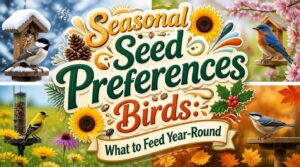
Seasonal seed preferences in birds follow precise biological patterns — and once you understand them, feeding becomes something more intentional than just topping off a tube feeder.
Table Of Contents
Key Takeaways
- Small songbirds can burn through 30% of their body weight in a single winter night, making high-fat seeds like black oil sunflower essential cold-weather feeder staples.
- Birds’ nutritional needs shift dramatically across seasons—fat-dense blends in winter, protein-rich mixes during spring breeding and molt, fresh low-waste seeds in summer, and calorie-dense blends for fall migration.
- Feeder hygiene matters as much as seed choice: spoiled or moldy seed becomes a health hazard, so clean feeders monthly (weekly in heat), store seed in airtight containers, and discard anything that floats, clumps, or smells off.
- Where you live shapes what to offer—northern winters call for suet and sunflower seeds, southern summers favor nyjer to beat spoilage, and coastal or urban yards attract distinct bird communities with their own preferences.
Why Seasonal Bird Seed Choices Matter
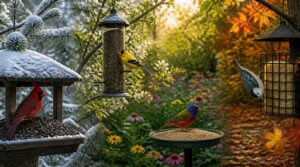
Birds aren’t eating the same way in January as they are in July, and that shift isn’t random — it’s survival. What you put in your feeder directly shapes which birds visit, how well they thrive, and whether your backyard becomes a reliable refuge through every season. Here’s why matching your seed choices to the time of year makes all the difference.
Knowing which seeds birds actually prefer in feeders gives you a real edge in building a backyard habitat that supports them year-round.
What fills your feeder shapes which birds survive — season by season, seed by seed
Changing Energy Needs
Birds aren’t passive about energy — their metabolic demands shift dramatically with the seasons.
What drives those shifts?
- Plummeting temperatures spike caloric burn overnight
- Small birds may consume 30% of their body weight daily in winter
- Migration requires rapid fat accumulation
- Summer heat reduces energy needs but raises spoilage risks
- Daylight length triggers hormonal changes that alter appetite
Match your feeder offerings to these cycles, and you’ll genuinely sustain the birds that depend on you.
Breeding and Molting Demands
Spring brings a different kind of pressure. Egg production drains calcium reserves fast, and post-laying recovery demands nutrient-dense options before a second clutch begins. Nestlings need feeding every 10–20 minutes — parents burn through energy at an astonishing rate.
Molting compounds this further. Protein for feathers becomes the priority, as amino acids fuel rapid quill regrowth without sacrificing flight capability.
Migration Fuel Requirements
Migration reframes everything. When birds prepare for long-distance travel, fat becomes fuel — delivering roughly 9 calories per gram, far outpacing protein or carbohydrates.
- Some species depart carrying 40% of their body weight in fat reserves
- Stopover sites allow rapid refueling within days
- Cold headwinds increase thermoregulation costs, burning reserves faster
What you offer at your feeder directly shapes their odds.
Weather and Food Availability
Weather doesn’t just set the mood — it dictates what’s actually available. Drought, cold snaps, and heavy rain can strip natural food sources almost overnight, leaving birds dependent on what you provide.
| Weather Event | Impact on Food Availability |
|---|---|
| Drought | Reduces wild seed crops and berries |
| Heavy rain | Promotes mold, washes exposed grain |
| Cold snap | Suppresses insects, limits foraging |
| Snowstorm | Cuts off ground-level seed sources |
Your feeder fills the gap.
Best Winter Seeds for Birds
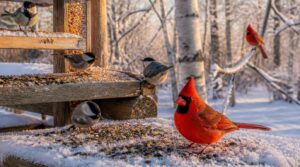
Winter is the season that tests birds the hardest, and what you put in your feeder can genuinely make a difference. The right seeds give them the fuel they need to stay warm when temperatures drop and natural food sources disappear. Here’s what to stock up on before the cold sets in.
Black Oil Sunflower Seeds
Few wild bird foods match the nutritional value of black oil sunflower seeds in winter.
- 25–30% crude fat fuels cold-night survival
- Thin shells enable shell cracking efficiency for small beaks
- Linoleic acid helps plumage and metabolism
- Large kernels get the most energy-rich food per bite
- Attracts finches, chickadees, nuthatches, and cardinals
Their seasonal feeding habits shift dramatically when temperatures drop — and this seed delivers. These premium sunflower seeds offer a high oil content to sustain avian energy levels.
Hulled Sunflower Hearts
Every kernel matters when temperatures plummet. Hulled sunflower hearts are stripped of their shells, so birds like chickadees, nuthatches, and finches spend energy eating — not cracking. With 20–25% protein by weight and dense natural fats, they’re a compact, high-return food source.
For birds that need variety or have seed sensitivities, sunflower-free organic birdseed blends offer the same nutrient-dense fats and protein through nut-based mixes instead.
Store them sealed and cool; exposed hearts turn rancid fast, and spoiled seed helps no one.
High-Fat Seed Blends
Think of high-fat seed blends as a winter fuel depot — caloric density packed into every cup, delivering 180–230 calories per serving. Sunflower, safflower, and millet combine to deliver essential fatty acids, including omega-3 and omega-6 varieties that support sustained energy through freezing nights.
Seed oxidation risks rise fast when blends sit exposed, so rotate stock regularly and store sealed.
Suet and Seed Cakes
Suet cakes work where seeds fall short. Rendered beef fat — the binding agent — locks seeds, dried fruit, and mealworms into a dense block. Peanut butter improves grip and adds protein-rich options for feather support.
- High-fat seeds like black oil sunflower anchor most blends
- Mealworms or chopped nuts boost protein
- Freeze cakes to prevent rancidity
Woodpeckers and chickadees seek them instinctively.
Feeding During Snowstorms
When snow buries natural food sources, birds burn through fat reserves faster than they can replenish them. That’s why high-fat storm nutrition — suet, black oil sunflower seeds, and peanuts — becomes non-negotiable.
Clear a snow-free feeding zone near dense shrubs, and set out a shallow dish of fresh water. Small birds simply can’t afford to forage blind in a blizzard.
Best Spring Seeds for Nesting Birds
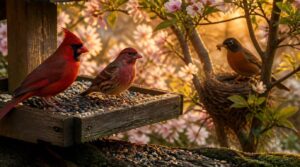
Spring shifts everything at your feeders, and the birds arriving to nest in your yard have needs that go well beyond a simple handful of seeds.
What you offer now can shape whether nesting pairs thrive, eggs hatch successfully, and fledglings grow strong enough to fly. Here’s what to stock up on this season.
Protein-Rich Seed Mixes
Spring places huge demands on breeding birds, and protein-rich seed mixes rise to meet them. Blends combining sunflower, pumpkin, chia, flax, and sesame seeds deliver 20–35% protein by weight, covering the full amino acid profile birds need for tissue repair, feather growth, and nestling development.
Rotate stock using first-in, first-out to prevent fat oxidation, which quietly degrades nutritional value before birds even reach the feeder.
Sunflower Hearts for Energy
Protein mixes fuel the nest, but sunflower hearts take that energy delivery a step further. Containing 50–60% fat by weight, they offer astonishing metabolic energy efficiency — birds consume nearly 100% of each seed, with no husk to discard.
The omega fatty acids support feather quality during molt, while Vitamin E provides antioxidant immune support, keeping breeding birds resilient through spring’s unpredictable demands.
Calcium for Eggshell Health
Fat and vitamins carry breeding birds far, but eggshell formation demands something different: calcium. About 95% of a shell is calcium carbonate, deposited in the oviduct daily — and without enough dietary supply, hens draw from their own skeleton.
Offer these simple supplements at your feeder:
- Crushed, baked eggshells
- Oyster shell grit
- Ground limestone
- Vitamin D3-enriched feed (it drives calcium absorption)
Mineral balance matters — phosphorus and magnesium levels directly affect how efficiently calcium reaches the shell.
Seeds Versus Insects
Calcium tells only part of the story. Once eggs hatch, seeds alone can’t sustain nestlings — protein-to-fat ratios shift dramatically, and caterpillars, beetle larvae, and mealworms become the priority.
Adult birds forage insects off foliage to deliver amino acids that seeds simply can’t match. That’s why placing mealworms near your feeder during spring dietary shifts directly helps what’s happening in the nest.
Supporting Juvenile Growth
Once fledglings leave the nest, their nutritional needs spike sharply — juveniles require 1.2 to 1.5 times the baseline energy of adults during peak growth spurts. Protein intake drives muscle and tissue formation, while calcium helps bone mineralization and iron fuels cognitive development.
Offering omega-3-rich seed blends near cover gives fledglings the brain-building nutrition that determines long-term nesting success.
Best Summer Seeds for Backyard Birds
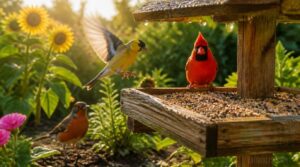
Summer shifts the rules of backyard feeding in ways that can catch even seasoned birders off guard. Heat, humidity, and spoilage become your biggest concerns — not just which seeds birds prefer. Here’s what to keep in your feeders (and what to skip) when temperatures climb.
Fresh Low-Waste Blends
Summer heat doesn’t just stress birds — it turns your feeder into a spoilage trap.
Fresh low-waste blends skip fillers and artificial preservatives entirely, combining black oil sunflower seeds, nyjer, and white millet in measured ratios that reduce uneaten seed. Many are sourced from regional growers and packaged in compostable materials, cutting waste while keeping what reaches your birds genuinely fresh.
Avoiding Rancid Suet
Suet rarely announces its own spoilage. A sour odor, slimy texture, or visible mold are your warnings — discard immediately.
- Refrigerate at 1–4°C to slow fat oxidation
- Freeze in airtight packs up to six months
- Never leave suet out more than 2 days
- Use weatherproof feeders to reduce humidity exposure
Replace at the first sign of rancidity to protect birds’ digestive health.
Preventing Moldy Seeds
Heat accelerates spoilage faster than most feeders realize. Keep stored seed between 4 and 15°C, use airtight containers with desiccants, and check moisture levels with a meter — target 8–12%.
A quick hydrogen peroxide rinse on containers before refilling removes surface fungi. Clean feeders regularly to prevent mold spores from accumulating and spreading avian disease.
Nyjer for Finches
Very few seeds rival Nyjer thistle for drawing finches to summer feeders. Goldfinches, pine siskins, and redpolls all respond reliably when seed stays fresh and ports stay clear.
Get the best results:
- Use tube feeders with 2–3mm ports
- Store in airtight containers, cool and dry
- Check for a light nutty aroma — rancid smell means discard
- Refresh stock frequently in small batches
Water Alongside Seed
Birds don’t just need fuel — they need fluid. A shallow birdbath placed within 6 feet of your feeders draws species back repeatedly, aiding digestion and feather care between seed visits.
Keep it shaded and clean, replacing water daily and sanitizing weekly to prevent algae and mosquito habitat. Separate it from seed by at least 2 feet to avoid contamination.
Best Fall Seeds for Migration
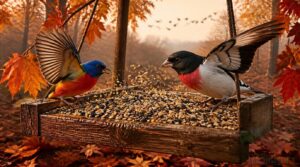
Fall transforms your backyard into a critical pit stop for birds loading up on fuel before long journeys south. The right seeds can make a real difference in how well they arrive at their destination. Here’s what to offer your feathered visitors this season.
High-Fat Migration Blends
Fall migration is basically a marathon with no pit stops — and that’s why high-fat migration blends, engineered to exceed 9 kcal per gram, give traveling birds the concentrated fuel their bodies demand. Five qualities define the best options:
- Hardened palm fractions for dense, sustained energy
- Antioxidants that resist rancidity in outdoor feeders
- Crystallization promoters preventing oil separation
- Stable fat matrices releasing energy steadily during flight
- Pairing with high-fat seeds for maximum uptake
Sunflower Seeds for Stamina
Where high-fat blends lay the foundation, sunflower seeds carry migrating birds through the final stretch. Delivering 45–50% fat content, they support sustained energy stability and muscle recovery during grueling flights. Striped sunflower seeds offer slightly thicker shells but comparable nutritional value.
Fat-soluble vitamins like E help nutrient absorption efficiency, while magnesium and selenium address the metabolic needs that migration genuinely demands.
Millet for Ground Feeders
While sunflower seeds fuel aerial migrants, white proso millet feeds a different crew — sparrows, juncos, towhees, and doves working the ground below.
- Scatter millet near habitat edges
- Use shallow trays to mimic natural foraging
- Combine with protein-rich foods during migration
- Clear leftovers daily to prevent mold
- Refresh supplies after snowfall
Its carbohydrate-rich profile delivers quick energy for short foraging bursts.
Native Seed Sources
What you scatter matters as much as when you scatter it. Seeds carrying regional provenance connect migrating birds to local ecotypes — plants their biology already recognizes.
| Seed Type | Local Sourcing Benefit |
|---|---|
| White Millet | Matches regional soil profiles |
| Striped Sunflower Seeds | Helps genetic diversity in wild bird food |
Choosing certified seed mixes from nearby suppliers means better germination, stronger plants, and more reliable fuel stops for birds pushing south.
Preparing Birds for Winter
Certified regional seeds aren’t just migration fuel — they’re a bridge into winter. Once birds arrive at their wintering grounds, fat reserves built during fall determine survival odds through the coldest months.
- Offer high-energy suet before first frost
- Add roosting shelters near feeders
- Keep water unfrozen daily
Feather preening and clustering do the rest.
Regional Seed Preferences by Season
Where you live shapes what birds show up at your feeder just as much as the season does. A chickadee braving a Minnesota winter has completely different needs than a mockingbird riding out a Georgia summer. Here’s how regional differences play out across five key feeding scenarios.
Northern Winter Feeding
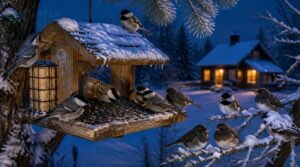
When temperatures plunge and snow blankets natural forage, birds’ basal metabolic rates rise sharply, demanding a constant caloric response. Black oil sunflower seeds and suet cakes become essential anchors at your feeder, delivering the fat density small species need to survive overnight.
Birds also cache food aggressively before storms, so keeping feeders consistently stocked gives them a reliable reserve when foraging becomes impossible.
Southern Summer Feeding

Southern heat rewrites the rules of backyard feeding. Nyjer seed stays fresh longer than oil-heavy blends and draws finches reliably when humidity makes richer mixes spoil fast.
Place hydration stations close to feeders — evaporative water loss peaks during heat waves. Stick to drought-tolerant, low-fat mixes, schedule fills for early morning, and clean feeders weekly to block mold before it starts.
Coastal Bird Preferences

Coastal birds rarely visit traditional seed feeders — their diet revolves around tidal flat foraging, invertebrates, and fish rather than sunflower or millet. Salt glands handle seawater intake, while coastal camouflage patterns keep shorebirds hidden against sandy shorelines.
For wildlife observation near estuaries, focus on water access and natural cover. Estuary migration stopovers concentrate shorebirds seasonally, making these sites far more rewarding than any feeder placement.
Urban Backyard Birds
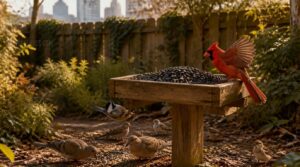
Urban yards host a surprisingly consistent cast: house sparrows, northern cardinals, black-capped chickadees, and mourning doves show up year-round, largely unbothered by traffic or nearby foot traffic. That tolerance for human activity makes backyard feeding genuinely effective here.
Black oil sunflower seeds attract the widest variety, while ground-scattered millet is great for doves. Keep feeders near mature shrubs — cats remain the single biggest predator threat in cities.
Migratory Route Differences

Where a bird breeds shapes exactly how it migrates south.
- Pacific Flyway birds face open coastal crossings
- Central Flyway migrants use inland routes
- Mississippi Flyway offers rich stopover sites
- Atlantic Flyway birds navigate geographic barriers
- Route divergence shifts wintering destinations
Wind patterns and barrier geography determine which flyway a bird population uses — and what fuel they’ll need at your feeder.
Safe Seasonal Feeding Practices
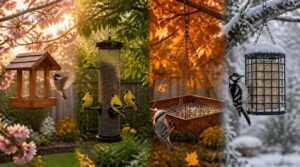
Feeding birds well through the seasons isn’t just about what you offer — it’s also about how safely you offer it. A neglected feeder can quietly become a health hazard, undoing all the good you’re trying to do. Here are the essential practices that keep your setup clean, safe, and genuinely helpful to the birds visiting your yard.
Cleaning Feeders Regularly
A dirty feeder is a quiet hazard. Clean feeders monthly during cool, dry periods, and bump that to weekly when heat and humidity climb. After storms, sanitize immediately.
Use bird-safe disinfectants — not household bleach — scrubbing perches, ports, and reservoirs thoroughly, then air-dry completely before refilling. High-traffic stations spread disease fast, so consistency here protects every bird that visits.
Storing Seed Properly
Good sanitation means little if your seed stock is already compromised. Store seeds in airtight, opaque containers at 32–41°F, away from fruits that emit ethylene gas.
- Keep moisture below 6% using silica gel
- Label containers with harvest and storage dates
- Test viability every 6–12 months, discarding anything below 60% germination
Fresh seed protects every bird you’re trying to support.
Preventing Pests and Rodents
Sealed storage alone won’t protect your setup if rodents find other ways in. Seal gaps over 6 mm around foundations and pipes with steel wool and caulk. Store seed in airtight metal containers, elevated at least one meter off the ground. Clean spills within 15 minutes, place snap traps along travel routes, and clear brush within three meters of buildings.
| Threat | Recommended Control | Action Frequency |
|---|---|---|
| Entry points | Steel wool + caulk, gaps >6 mm | Quarterly inspection |
| Seed attractants | Airtight metal bins, 1 m elevated | Every refill |
| Ground spills | Remove within 15 minutes | After each feeding |
| Rodent activity | Snap traps on travel routes | Check weekly |
| Shelter habitat | Clear brush 3 m from structures | Each season |
Placing Feeders Safely
Keeping rodents out sets the stage, but where you mount your feeder matters just as much. Place feeders 5 to 6 feet high on poles fitted with predator baffles, at least 10 feet from fences or branches squirrels can launch from:
- Use window collision decals if glass is within 10 feet
- Allow open ground clearance beneath the feeder
- Position near shrubs for strategic cover placement
Removing Spoiled Seed
Even with feeders placed correctly, spoiled seed can quietly undermine your best efforts. Check for visual spoilage signs — discoloration, shriveling, or clumping — before each refill. A quick water buoyancy test helps: fresh seeds sink, while spoiled ones float due to internal decay. Bag and dispose of contaminated seed away from feeding areas, then clean and dry the feeder before refilling.
| Spoilage Signal | What It Indicates | Action Required |
|---|---|---|
| Seeds floating in water | Internal mold or decay | Discard the entire batch |
| Fuzzy gray or white growth | Active mold presence | Remove seed; sanitize feeder |
| Musty or sour odor | Microbial contamination | Dispose away from feed area |
| Clumped, sticky texture | Moisture damage | Discard; dry feeder thoroughly |
| Insect activity near seed | Spoiled or infested lot | Remove seed; clean surrounding area |
Frequently Asked Questions (FAQs)
What is the best seed to feed birds in the winter?
Cold nights demand high caloric density, yet birds can’t afford wasting energy on tough shells. Black oil sunflower seeds solve both — thin husks, rich fat, and broad appeal to cardinals, chickadees, and finches alike.
Do squirrels affect which seeds birds will eat?
Yes, squirrels directly reduce seed availability for birds. Safflower seeds deter most squirrels while keeping chickadees and cardinals feeding. Switching seed types is one of the most effective ways to stabilize bird feeder visits.
How does rainfall influence seed selection in open feeders?
Rainfall shifts what birds find at open feeders. Wet conditions swell seed coats and raise mold risk, pushing birds toward drier, thin-shelled seeds that stay accessible and resist spoilage during prolonged wet weather.
Should feeders be removed during mild winter periods?
No, keep feeders stocked through mild winters. Natural food remains scarce, and resident birds like chickadees depend on consistent foraging routes to conserve energy and avoid starvation, even when temperatures stay above freezing.
Conclusion
Like Aesop’s industrious ant preparing for winter while others ignored the coming cold, your feeding strategy defines outcomes. Seasonal seed preferences in birds aren’t guesswork — they’re biology written in feathers, fat reserves, and migration corridors.
Match what you offer to what each season demands. High-fat blends in winter. Protein-rich mixes in spring. Fresh, clean seed always. The birds arriving at your feeder aren’t just visitors. They’re responding to exactly what you’ve chosen to provide.
- https://www.kalmbachfeeds.com/blogs/wild-birds/what-to-feed-birds-in-every-season-the-complete-year-round-guide
- https://www.rspb.org.uk/birds-and-wildlife/feeding-birds-near-you
- https://blog.nwf.org/2024/01/year-round-bird-feeding
- https://www.nwf.org/Magazines/National-Wildlife/2010/Bird-seeds
- https://www.audubon.org/news/11-tips-feeding-backyard-birds