This site is supported by our readers. We may earn a commission, at no cost to you, if you purchase through links.
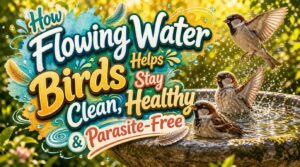
Watch a house sparrow drop into a shallow puddle after rain, and you’ll notice something almost mechanical about the whole performance—wings spread, body shaking, water flying in every direction. That instinct runs deeper than habit. Birds depend on flowing, splashing water to strip away dust, realign feather barbs, and flush out the mites and lice that burrow into their plumage. Still water barely scratches the surface.
The movement itself does the real work, using shear forces and capillary action to reach layers no preening bill could access alone. This process leverages fluid dynamics to dislodge parasites and realign feathers, ensuring both hygiene and aerodynamic efficiency.
Understanding how flowing water helps birds stay clean explains why your bird bath setup matters more than you’d expect. A well-designed bath with moving water mimics natural conditions, supporting avian health in ways stagnant pools cannot.
Table Of Contents
- Key Takeaways
- How Flowing Water Cleans Birds
- Feather Health and Preening Benefits
- Parasite and Debris Removal
- Cleaner Water, Healthier Bird Baths
- Top 3 Flowing-Water Cleaning Aids
- Frequently Asked Questions (FAQs)
- Why should we keep bird bath water clean?
- How do you keep birds away from a bird bath?
- How to clean a bird bath?
- Can you soak a birdbath in vinegar?
- What is the 5 7 9 rule for bird feeders?
- Do birds bathe differently across seasons?
- How does bathing frequency vary between bird species?
- Does water temperature affect how birds bathe?
- Conclusion
Key Takeaways
- Moving water cleans birds far better than still water because the turbulence and shear forces reach deep into feather layers, dislodging mites, lice, and debris that preening alone can’t remove.
- Bathing in flowing water softens feather barbs and stimulates preen oil production, which restores waterproofing, reduces flight drag, and helps birds stay insulated in changing weather.
- Stagnant birdbaths quickly become breeding grounds for algae, bacteria, and mosquitoes, so adding circulation—even a simple solar fountain—makes a meaningful difference in water safety for visiting birds.
- Regular exposure to clean, moving water directly supports bird health beyond hygiene, reducing stress, improving social signaling, and enhancing foraging efficiency throughout the day.
How Flowing Water Cleans Birds
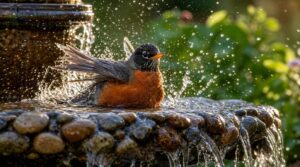
Birds don’t just drink water — they rely on it to stay genuinely clean. Moving water does something still water simply can’t: it reaches deep into feathers, loosens debris, and mimics the natural streams and rain birds evolved alongside.
That instinct runs deep — birds are naturally drawn to moving water in baths because it mirrors the streams and rain they’ve trusted for survival across thousands of years.
Here’s how this flowing motion actually works to keep your backyard visitors in better shape.
Why Moving Water Mimics Natural Streams and Rain
Think of a backyard birdbath as a miniature stream. Moving water creates turbulent flow patterns and variable velocity zones that closely mimic natural streams and rainfall splashes, including eddy formation dynamics birds instinctively recognize. That acoustic water cue draws them in from surprising distances.
What stream simulation gives your birds:
- Aerated, clean water that feels natural
- Gentle currents mimicking rainfall splashes
- Familiar eddy formation dynamics encouraging bathing
- Effective stream simulation supporting instinctive hygiene behavior
How Splashing Water Loosens Dirt and Dust
Splashing isn’t just fun for birds — it’s doing real work. When droplets hit feathers, droplet impact shear dislodges loose dust, while capillary bridge lifting pulls particles away from the keratin surface. Turbulent microflows sweep debris outward, and particle encapsulation keeps dirt suspended so it rinses clear. Surface tension lift manages the finer grime.
Every splash is doing real work, driving water deep into feathers to dislodge dust, lift debris, and rinse plumage clean
| Cleaning Mechanism | What It Does | Why It Matters |
|---|---|---|
| Droplet Impact Shear | Breaks dust adhesion on contact | Removes surface grime fast |
| Capillary Bridge Lifting | Pulls particles from feather vanes | Prevents reattachment |
| Particle Encapsulation | Suspends dirt in microdroplets | Keeps plumage residue-free |
Research shows that dust layer thickness directly controls droplet speed, slowing cleaning efficiency on thicker layers.
How Water Movement Reaches Deeper Feather Layers
Surface cleaning is just the beginning. As water movement intensifies around a bathing bird, capillary microchannels form between aligned barbules, drawing clean water deeper into the plumage.
Hydrostatic pressure pushes moisture past outer layers through a Cassie‑Baxter wetting state, where trapped air pockets guide flow inward. Barbule alignment controls how far water advances.
Wing‑spread drying afterward restores the insulating air core beneath.
Why Cleaner Feathers Support Healthier Daily Behavior
Once the deeper feather layers are clean and realigned, birds exhibit improved behavior throughout the day. Clean plumage, achieved through moving water, directly enhances bird health in ways that extend beyond mere appearance.
These benefits include:
- Reduced predation risk through quieter, more agile flight
- Enhanced social signaling with brighter, well-kept feathers
- Improved foraging efficiency and extended activity periods
- Stress reduction linked to disease prevention and feather maintenance
Feather Health and Preening Benefits
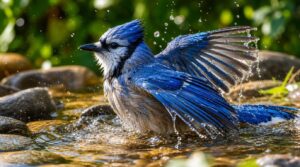
Bathing does more than rinse off surface dirt — it actually restores the physical structure of a bird’s feathers.
Each bath helps realign tiny barbs, triggers natural oil production, and sets the stage for more effective preening afterward.
The science behind this goes deeper than it looks—water actually lowers surface tension, helping preen oil spread evenly across every feather.
Here’s a closer look at how flowing water aids feather health from the inside out.
How Bathing Helps Birds Realign Feather Barbs
Every feather is built like a zipper, and bathing in moving water helps reset it. Flowing water softens the keratin matrix, allowing misaligned barbs to flex back into place. This process restores the feather’s structural integrity, preparing it for further realignment.
The gentle current facilitates barbule hook realignment along each rachis, re-establishing vane interlock and enabling feather loft recovery. The cumulative effect is aerodynamic shape refinement, ensuring backyard birds maintain efficient flight. Clean water makes all the difference in this natural maintenance process.
Why Clean Feathers Improve Waterproofing
Clean feathers don’t just look good — they work harder for the bird. When dirt and grime are gone, barbs interlock tightly, locking in air-trapping pockets that boost thermal efficiency.
Here’s what clean plumage actually does:
- Improves water repellency by allowing preening oils to coat evenly
- Reduces drag during flight in wet conditions
- Bolsters avian health by keeping waterproofing intact between molts
- Enhances bird bath hygiene through consistent clean water exposure
- Promotes improved bird health through aerated water and water quality management
How Flowing Water Supports Effective Preening
When a bird bathes in moving water, the constant flow softens barbules and reduces feather stiffness, making preening far more effective. That water movement facilitates enhanced oil diffusion across the plumage, letting birds spread preen oil more evenly.
The benefits of moving water in bird baths also include accelerated drying and better temperature regulation — both critical for preen ergonomics and overall bird bath hygiene.
The Role of The Uropygial Gland in Feather Care
At the base of a bird’s tail sits the uropygial gland, a small but essential organ whose secretion chemistry delivers wax esters, fatty acids, and antimicrobial properties directly onto feathers during preening.
Gland size variability across species reflects different habitat pressures, including parasites and moisture exposure.
Access to clean water and water movement stimulates bathing, which in turn activates the gland and enhances overall cleanliness and health.
How Clean Plumage Supports Flight and Insulation
Well-maintained plumage functions like a finely tuned machine, where every feather contributes to keeping birds aloft and insulated. Fresh, flowing water supports this system by washing away parasites and residues that impair feather performance, ensuring optimal avian health.
Key functional benefits of clean plumage include:
- Drag reduction, which maintains smooth wing surfaces for efficient flight
- Lift optimization, dependent on properly aligned, debris-free flight feathers
- Thermal retention, achieved through plumage unclogged by matting or contaminants
- Enhanced wing stability and energy efficiency, both restored when water revitalizes feather condition
Parasite and Debris Removal
Flowing water does more than rinse feathers — it actively works against the tiny hitchhikers birds carry every day.
Feather mites, lice, and trapped debris don’t stand much of a chance against a good splash.
Here’s a closer look at exactly how that process works for your backyard visitors.
How Moving Water Helps Dislodge Feather Mites
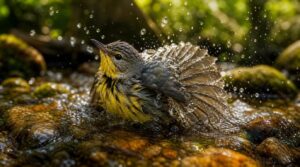
Moving water acts like a gentle pressure washer against each feather’s surface. The shear force created by flowing currents disrupts the feather microhabitat mites depend on, weakening their grip on barbules and rachis.
Turbulent shedding sweeps detached mites—and even their eggs—away before reattachment occurs, making the benefits of flowing water for bird health genuinely measurable.
| Mechanism | What It Does | Why It Matters |
|---|---|---|
| Shear Force | Lifts mites off feather surfaces | Reduces attachment strength quickly |
| Turbulent Shedding | Flushes dislodged mites downstream | Prevents mites from reattaching |
| Egg Removal | Dislodges eggs trapped between feathers | Interrupts the mite life cycle |
| Feather Microhabitat Disruption | Breaks up mite clusters at barbules | Eliminates stable hiding zones |
| Mite Detachment | Repeated water passes lower mite loads | Promotes cleaner, healthier plumage |
How Splashing Can Loosen Lice and Trapped Debris
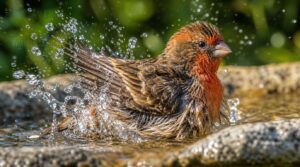
Lice cling tighter than mites, but they’re no match for turbulent splash mechanics. Each splash creates shear force dislodgement along feather barbs, penetrating deeper layers where lice eggs hide near the shaft base.
This water agitation disrupts the microhabitat supporting lice colonies, loosening trapped debris simultaneously.
For birds using moving water in bird baths, preventing stagnation and disease starts with this simple mechanical advantage.
Why Birds Preen After Bathing in Flowing Water
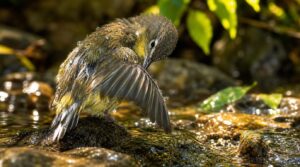
Once the water does its work, birds shift straight into preening—and that’s where the real cleanup happens. Flowing water loosens parasites and debris, but the bill finishes the job, realigning barbs and spreading preen oil for Oil Distribution Efficiency across every feather.
This meticulous process enables Thermoregulation Boost, Energy Conservation, and Predator Vigilance through optimized Muscle Coordination.
Therefore, ensuring clean water in your bird bath is vital to prevent stagnation and disease, safeguarding both the birds and the bath’s functionality.
How Regular Bathing Reduces Feather Buildup
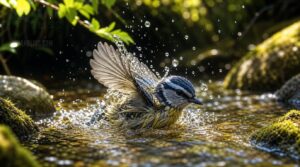
Regular bathing does more than rinse feathers—it prevents buildup from compounding. Moving water manages Surface Particle Flushing continuously, so shed skin, dust, and dried oils don’t settle into the Keratin Layer Renewal zone near the shaft.
This process acts as Oil Clump Dissolution in slow motion.
A consistent regular cleaning schedule, paired with clean water, directly supports Feather Microclimate Restoration and long-term Dust Accumulation Prevention.
Why Clean Feathers Lower Irritation and Stress
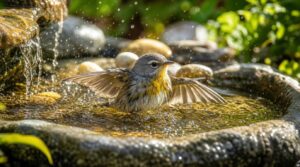
Clean feathers do more than look good—they keep birds genuinely comfortable. Without debris and parasites irritating the skin, birds show reduced scratching, which promotes healthier skin microflora and steadier thermal comfort. That calm carries over socially, giving birds more social confidence during feeding and interaction.
Improving bird health through aerated water is one quiet way a clean water setup for birds pays off every single day.
Cleaner Water, Healthier Bird Baths
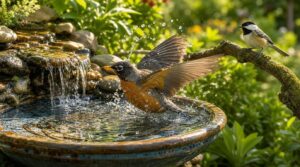
Still water is a magnet for trouble—algae, bacteria, and mosquitoes move in fast when nothing’s flowing. Keeping water clean is just as important for birds as the bath itself.
Here’s what you need to know to make your bird bath a genuinely safe place to drink and splash.
Why Stagnant Water Becomes Dirty Faster
Still water turns dirty faster than you might expect. Without circulation, oxygen depletion occurs rapidly, and biofilm formation begins within days.
Nutrient accumulation from droppings and debris fuels algal blooms, while heat buildup accelerates bacterial growth. Three things happen almost immediately:
- Organic matter settles and feeds microbes
- Mosquitoes find still surfaces ideal for egg-laying
- Pathogens multiply in poorly aerated water
How Circulation Reduces Algae Buildup
Circulation does more than keep water moving — it actively fights algae at every stage.
Shear forces and boundary disruption prevent spores from settling on bath surfaces, while nutrient mixing stops concentrated pockets from feeding blooms. Oxygen enrichment and temperature homogenization make conditions genuinely hostile to algae.
Studies show moving water reduces algal growth by up to 40%, making water circulation your most reliable tool for preventing algae in bird baths.
How Aerated Water Helps Limit Bacterial Growth
Aeration does something subtle but powerful — it shifts the water’s chemistry just enough to make life harder for bacteria.
Gas exchange during circulation briefly lowers pH, disrupting the conditions many aquatic bacteria need to thrive.
Shear forces from moving water detach loosely anchored microbes, while oxygen enrichment flushes them away before biofilm inhibition kicks in.
That constant movement is your best defence against preventing stagnation and disease in bird baths.
Why Moving Water Discourages Mosquito Breeding
Mosquitoes can’t breed where water won’t stay still. Moving water disrupts breeding through larval washout, sweeping newly hatched instars downstream before they can feed or develop. Egg displacement occurs naturally as ripples prevent stable surfaces for oviposition.
Oxygen stress and nutrient dilution further limit larval survival, starving early-stage colonies. These environmental pressures compound the challenges posed by turbulent conditions.
Predator exposure increases in turbulent zones, adding another layer of threat. Features like drippers and fountains exploit these dynamics, making mosquito breeding genuinely difficult and supporting effective mosquito control without chemicals.
How Shallow Flowing Water Supports Small Songbirds
Small songbirds don’t need a pond — they need a puddle with purpose. Shallow water depth of just one to two inches lets them bathe safely** without being overwhelmed.
Auditory attraction comes into play as moving water carries sound up to 150 meters, while visual motion cues from ripples draw birds closer.
Perch proximity keeps visits longer, ensuring songbirds feel secure during use.
Species-specific usage patterns confirm that songbirds consistently favor gentle, shallow moving water over still basins.
Weekly Cleaning Tips for Safe Bird Bath Water
Even a fountain bird bath needs your attention once a week. Begin with debris skimming to clear leaves and droppings, then scrub surfaces with a soft brush to cut algae formation by roughly 70%.
Regular maintenance also means pump inspection to catch clogs early and water replacement to keep things fresh.
A nontoxic algaecide manages stubborn growth without harming birds, while weekly pH checks maintain balanced conditions.
Top 3 Flowing-Water Cleaning Aids
Keeping a flowing birdbath clean doesn’t have to be complicated, but the right tools make a real difference.
A few well-chosen products can help you maintain healthy water conditions with less effort and better results. Here are three practical options worth adding to your setup.
1. Vxcellent Bathtub Filter Cartridge
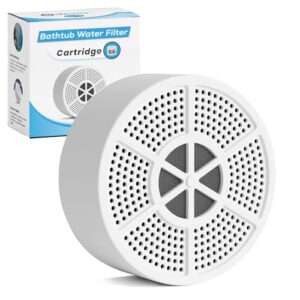
The Vxcellent Bathtub Filter Cartridge (model BTWFC0087) isn’t just for human baths — it’s a practical tool for anyone serious about water quality in bird bathing setups. Its multi-layer media blend, including activated carbon, calcium sulfite, and zeolite, targets chlorine, heavy metals, and general impurities.
At $18.99 per cartridge and a roughly 90-day replacement cycle, it offers a low-cost way to maintain cleaner bird bath water between weekly scrubs.
Installation requires no tools — simply swap and go, ensuring hassle-free maintenance.
| Best For | Anyone who wants cleaner, gentler bath water — especially people with sensitive skin, eczema, or young kids who need softer water without the hassle of a whole-home system. |
|---|---|
| Primary Use | Bathtub water filtration |
| Target Environment | Indoor bathtub |
| Water Quality Impact | Removes chlorine and heavy metals |
| Wildlife Benefit | Safer water for bathers with sensitive skin |
| Maintenance Required | Quarterly cartridge replacement |
| Unit Weight | 0.5 lb (0.23 kg) |
| Additional Features |
|
- Swaps in seconds with no tools — just open, pull, and replace.
- Multi-layer filtration tackles chlorine, heavy metals, and impurities all at once.
- At $18.99 every three months, it’s a pretty affordable way to upgrade your bath water.
- Some buyers say they noticed little to no difference in water quality.
- The filter housing can get grimy over time, making the cartridge tough to unscrew.
- There’s no clear gallon limit listed, so it’s hard to know exactly when performance starts to drop.
2. Pond Guy InstaFix Liquid Algaecide
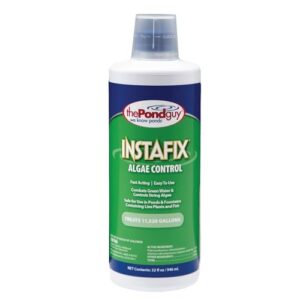
Pond Guy InstaFix is an EPA-registered liquid algaecide designed to combat green water and string algae in birdbaths and fountains.
Apply 1 oz per 360 gallons, pouring the solution near areas with good circulation. It is safe for fish and birds when used as directed, but skip it if you have snails or shrimp nearby.
For best results, pair this treatment with continuous aeration.
| Best For | Anyone with a small decorative pond, fountain, or birdbath who’s dealing with green water or string algae and wants a fast, fish-safe fix. |
|---|---|
| Primary Use | Pond/birdbath algae control |
| Target Environment | Outdoor water features |
| Water Quality Impact | Eliminates algae and prevents regrowth |
| Wildlife Benefit | Safe for fish and aquatic plants when directed |
| Maintenance Required | Weekly re-dosing for maintenance |
| Unit Weight | 2 lb (32 oz) |
| Additional Features |
|
- Works quickly on common algae types like green water and blanketweed
- Safe for fish (koi, goldfish) and aquatic plants when dosed correctly
- EPA-registered, so it’s held to a real safety standard
- Not safe for snails, shrimp, clams, or any crustaceans — a dealbreaker for some ponds
- Needs continuous aeration during treatment, or you risk dangerous oxygen drops
- Some users say the results only last a few days, so you may be re-treating often
3. AUTGA Solar Floating Fountain Pump
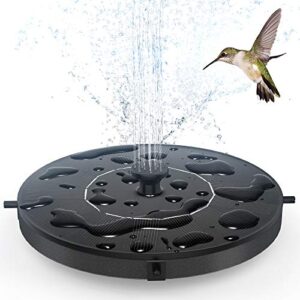
The AUTGA Solar Floating Fountain Pump addresses stagnation differently than chemical treatments like InstaFix. It operates via a 1.4W solar panel, requiring no wiring and activating automatically within seconds of sunlight exposure.
Six interchangeable nozzles allow customization of spray patterns to fit any birdbath’s size. The floating design ensures the pump remains centered while keeping the filter clear of debris.
Birds are naturally drawn to moving water, and this pump maintains steady circulation throughout the sunny days. Its solar-powered operation eliminates electricity costs, providing reliable performance without ongoing expenses.
| Best For | Garden and backyard enthusiasts who want to attract birds and pollinators to their birdbath or small pond without dealing with wiring or electricity costs. |
|---|---|
| Primary Use | Birdbath water circulation |
| Target Environment | Outdoor birdbath or pond |
| Water Quality Impact | Improves oxygenation and circulation |
| Wildlife Benefit | Attracts birds and pollinators |
| Maintenance Required | Regular cleaning of panel and pump |
| Unit Weight | 0.25 kg (8 oz) |
| Additional Features |
|
- Starts up fast and runs completely on sunlight — no batteries, no plugs, no ongoing costs.
- Six nozzle options let you dial in the spray pattern that works best for your setup.
- Keeps water circulating and oxygenated, which naturally draws in birds and beneficial insects.
- Stops working the moment clouds roll in or the sun goes down — there’s no stored energy to fall back on.
- Can empty a shallow birdbath in as little as two hours, so you’ll be refilling it often.
- The solar panel can discolor and wear down after a few months outside, which shortens its overall lifespan.
Frequently Asked Questions (FAQs)
Why should we keep bird bath water clean?
An ounce of prevention is worth a pound of cure. Dirty bird bath water breeds bacteria, algae, and parasites that harm visiting birds.
Clean water protects their health and keeps your backyard a safe, welcoming stop.
How do you keep birds away from a bird bath?
Sometimes you actually want fewer birds at your bath — maybe it’s too crowded or poorly timed.
Adding a motion-activated sprinkler or reflective tape nearby will gently discourage visits without harming them.
How to clean a bird bath?
Empty it weekly, scrub with a vinegar-water mix (1 part vinegar to 9 parts water), rinse three times, and refill with fresh water to keep bacteria and algae from building up.
Can you soak a birdbath in vinegar?
Yes, you can soak a birdbath in vinegar. Mix one part white vinegar with nine parts water, let it sit, then scrub and rinse thoroughly until no vinegar scent remains.
What is the 5 7 9 rule for bird feeders?
The 5-7-9 rule keeps feeders five feet high, seven feet from structures, and nine feet below overhanging branches.
This spacing blocks squirrels from jumping, climbing, or dropping onto your feeder.
Do birds bathe differently across seasons?
Birds definitely adjust their bathing habits with the seasons. In summer, they bathe more often to cool down and shed parasites. Come winter, sessions get shorter to conserve body heat.
How does bathing frequency vary between bird species?
Bathing frequency varies quite a bit by species.
Small songbirds like chickadees may bathe several times daily, while raptors do so rarely. Desert species bathe least often, saving it for rain.
Does water temperature affect how birds bathe?
Absolutely, temperature matters more than most people realize. Birds avoid water that’s too hot or too cold, favoring lukewarm to cool temperatures that let them bathe comfortably and effectively without risking feather damage.
Conclusion
A backyard robin that bathed daily in a fountain-fed bath showed noticeably cleaner plumage and less scratching than one using a still dish nearby—a small observation, but telling.
That’s exactly how flowing water helps birds stay clean, stripping debris and parasites that stagnant water simply leaves behind.
Add movement to your bird bath, and you’re not just attracting more visitors. You’re giving them something genuinely useful: water that actually works.
- https://www.poposoapsolar.com/blogs/aquatic-life/why-birds-love-bubbling-water?srsltid=AfmBOoqW7tRx2Px2f9OLih0mgzKB9eQg0TIQJQI6bI8kmb1Q3lwDOgup
- https://outdoors.stackexchange.com/questions/16116/do-backyard-birds-prefer-birdbaths-with-moving-water
- https://www.outdoorartpros.com/blogs/news/how-does-water-movement-in-a-bird-bath-benefit-birds
- https://www.audubon.org/magazine/why-you-should-keep-your-birdbath-clean
- https://outdoors.codidact.com/posts/40495/55705