This site is supported by our readers. We may earn a commission, at no cost to you, if you purchase through links.
You set out fresh nectar, hang the feeder, and within a day there’s a marching column of ants turning your garden centerpiece into their personal buffet. It’s one of the most frustrating surprises in backyard birding—and it happens to almost everyone.
The problem runs deeper than aesthetics. Ants contaminate nectar with waste and microbes, and hummingbirds can smell the difference. They’ll hover, hesitate, then leave hungry.
A few smart barriers and one good maintenance habit can keep ants out of your hummingbird feeder permanently—no harsh chemicals, no complicated setups.
Table Of Contents
- Key Takeaways
- Why Ants Invade Hummingbird Feeders
- Stop Ants With Water Barriers
- Use Safe Physical Deterrents
- Prevent Ants Through Feeder Maintenance
- Top 6 Ant-Control Feeder Products
- Frequently Asked Questions (FAQs)
- How do I keep ants off my hummingbird feeder?
- Why do you put aluminum foil on hummingbird feeders?
- Will vaseline keep ants away?
- Can I spray vinegar on my hummingbird feeder?
- How do you keep ants out of a hummingbird feeder?
- How to deter bees from hummingbird feeders?
- Do hummingbird feeders have ant moats?
- How to clean a hummingbird feeder?
- What keeps ants off hummingbird feeders?
- What attracts ants to hummingbird feeders initially?
- Conclusion
Key Takeaways
- An ant moat filled with ¼ to ½ inch of water is your most reliable first line of defense — it stops ants cold before they ever reach the nectar.
- Leaks and sticky residue are the real culprits — fix drips, tighten seals, and wipe ports daily to cut off the scent trail that recruits the whole colony.
- Layering barriers works best: combine fishing line, PTFE tape or petroleum jelly on the pole, and strategic feeder placement at least seven feet from walls and branches.
- Moving your feeder every three to seven days scrambles ant pheromone trails and is one of the easiest habits that keeps infestations from taking hold.
Why Ants Invade Hummingbird Feeders
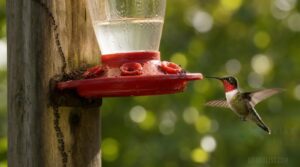
Ants aren’t after your hummingbirds — they’re after the sugar water, and they’re remarkably good at finding it.
The good news is that a simple ant moat or guard can stop them cold — and there are plenty of other proven tricks for attracting hummingbirds to a new feeder worth knowing.
Once a scout discovers your feeder, it lays a scent trail that sends the whole colony marching up your pole.
Here’s what’s actually drawing them in and what it means for your birds.
How Sugar Water Attracts Ant Trails
Ants are wired to find sugar — and your feeder basically announces itself. Through chemoreceptor detection, foragers pick up the scent of your nectar solution from surprising distances. Their antennae contain hundreds of olfactory receptors that detect sugary scents from a distance.
Once one ant finds the food source, it lays down a pheromone gradient trail to recruit the entire colony. Surface smoothness ensures the trail adheres effectively, while temperature and humidity influence how long the pheromones remain potent, sustaining the recruitment process.
Why Leaking Nectar Causes Ant Problems
A leaking feeder is an open invitation. Even a small drip creates sugar water leakage that ants detect quickly — triggering Ant Recruitment Amplification, where one scout ant can summon hundreds within hours. High Sugar Concentration prolongs trail activity, while Microbial Nectar Contamination silently degrades the remaining nectar.
Watch for these critical signs of feeder leakage:
- Sticky residue around port openings
- Visible ant trails climbing the pole
- Cloudy or discolored nectar inside
- Ants clustering near the base
- Hummingbirds hovering but not feeding
Do Ants Harm Hummingbirds?
So, do ants actually hurt hummingbirds? Not directly — a bird that size isn’t threatened by a few insects. The real danger is subtler.
Nectar contamination happens when ants introduce waste and microbes into the sugar water, triggering pathogen transmission that spoils the nectar fast. This causes feeding disruption and energy loss, since hummingbirds simply won’t drink tainted nectar.
Signs Your Feeder Has an Ant Issue
Spotting an ant infestation early saves your hummingbirds a lot of stress. Here’s what to watch for:
- Visible ant trails running up your pole or hanger
- Ports ant clusters packed around feeding holes
- Sticky nectar pools collecting on trays after each refill
- Dust buildup below the feeder from increased ant activity
- Hummingbirds avoiding the feeder or leaving unusually fast
Stop Ants With Water Barriers
Water is one of the simplest weapons you have against ants — and it works surprisingly well. A basic moat or a clever feeder placement can stop an ant trail dead in its tracks. Here are the water-based methods worth knowing.
What an Ant Moat Does
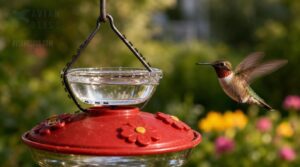
Think of an ant moat as a tiny moat around a castle — water that blocks ant passage before they ever reach the nectar. It’s a small cup that hangs above your feeder. Fill it with water, and it stops ants from climbing dead in its tracks. This simple barrier also reduces pheromone trails and maintains feeder hygiene over time.
| What It Does | Why It Matters |
|---|---|
| Prevents nectar dilution | Keeps sugar water clean |
| Ant exclusion barrier | No chemicals needed |
| Moat design stays simple | Works with most feeders |
| Fights moat evaporation | Refilling beats any DIY ant moat |
How to Install a Store-Bought Ant Moat

Most store-bought moats, like the AMAURAS Red Glass Ant Moat, go up in minutes. Here’s what to know:
- Mounting Bracket Alignment: center the moat directly above the feeder so ants hit water before nectar
- S‑Hook Securing: double-check it’s fully closed — a loose hook tips the moat
- Weight Capacity Check: confirm your hanger holds the combined feeder and moat weight
Rinse weekly as an anti-algae measure.
DIY Ant Moat Setup Steps
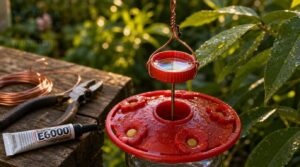
You don’t need to spend money to block ants — a DIY ant moat built from a repurposed bottle cap or small jar works surprisingly well. This water-filled ant moat uses the same using water barriers to block ants principle as store-bought versions, as ants simply can’t cross moving water.
Pairing your DIY moat with a high-quality wild bird food mix also helps — less spillage means fewer ants investigating in the first place.
| Step | Action | Why It Matters |
|---|---|---|
| 1 | Punch a hole through a bottle cap | Creates the hanging point |
| 2 | Thread wire through and seal edges with waterproof adhesive | Key DIY Sealant Tip — prevents leaks |
| 3 | Hang above feeder using balanced S-hooks | Follow a basic Weight Balance Guide |
| 4 | Fill with plain water | Activates your water barrier technique |
| 5 | Do a quick Water Level Check | Ensures complete ant coverage |
Seal every gap carefully, as even a slow drip can ruin the entire system.
How Deep to Fill an Ant Moat

The ideal moat depth is simpler than you’d think — aim for ¼ to ½ inch of water. That’s enough to stop ants cold without constant refilling.
For your water-filled ant moat or DIY ant moat, hit these targets:
- Standard moats — ¼ inch minimum
- Hot, dry climates — ½ inch for climate-adjusted depth
- Small bottle-cap moats — 3/16 inch, measured carefully
Uniform depth maintenance keeps your water barrier technique working reliably.
When to Refill Moats in Hot Weather
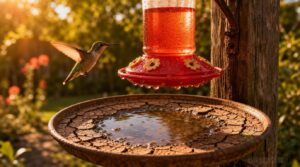
Heat is the silent enemy of your water moat. When temperatures hit 90°F, evaporation cues kick in fast — your moat can lose over 25% of its depth by afternoon. Morning top‑ups are non-negotiable in hot summer months.
Here’s a simple schedule for moat water maintenance:
| Condition | Refill Frequency |
|---|---|
| Below 80°F | Once daily |
| 80–89°F | Once daily + afternoon checks |
| 90°F+ | Every 12 hours |
| High humidity | Once daily, monitor closely |
| Drought/direct sun | Twice daily minimum |
Temperature effects on nectar and humidity adjustments both matter — check your water-filled ant moat before birds start feeding each morning.
Hanging Feeders Over Birdbaths or Fountains

Already have a birdbath or fountain in your yard? Hang the feeder above water, and you’ve just turned your décor into a working ant barrier — dual-purpose décor at its finest.
To implement this strategy effectively:
- Choose a spot with elevated visibility for hummingbirds
- Make sure splash protection keeps nectar ports dry
- Use branches for natural perching nearby
- Pick spots with light reflection to attract birds
- Combine with a water moat for layered protection
Using water barriers to deter ants this way requires zero extra products.
Use Safe Physical Deterrents
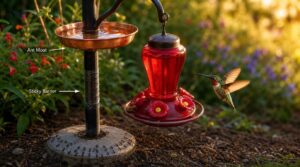
Water moats are great, but they’re not your only option. Sometimes you need something more hands-on — a physical barrier that stops ants before they even get close.
Here are six simple deterrents that work without putting your hummingbirds at risk.
Hang The Feeder With Fishing Line
Swap your standard hook for thin fishing line — ants can’t grip it. Use UV-resistant line (around 200–300 lb test) tied with a bowline knot for knot security. This setup creates a simple yet effective ant barrier.
| Step | What to Do |
|---|---|
| Anchor Point Selection | Choose a sturdy tree limb or hook away from walls |
| Line Tension Management | Keep it taut — sagging brings ants closer |
| Seasonal Line Replacement | Swap out once per season to prevent fraying |
This method works because the fishing line’s smooth, narrow surface prevents ants from climbing.
Wrap Feeder Poles With PTFE Tape
Fishing line manages the aerial approach — but what about the pole itself? Applying Teflon tape to feeder poles is a smart next step. This ant barrier works because ants cannot grip nonstick surfaces.
Wrap clockwise, following the thread direction — your Wrap Direction Guide. Two to four layers hit the sweet spot for Tape Thickness Selection. Press edges flat so nothing lifts.
Apply Petroleum Jelly Safely on Poles
PTFE tape secures the pole well — but petroleum jelly works too. It’s a dead-simple ant deterrent that costs almost nothing.
Here’s how to apply it safely:
- Pole cleaning steps: Wash with mild soap, rinse, and dry completely
- Jelly application thickness: Use a thin, even layer — less is more
- Safety gear usage: Always wear disposable gloves
- Barrier reapplication schedule: Reapply every 1–2 weeks in warm weather
- Alternative non-oil barriers: PTFE tape or BugSnub gel if you prefer non-petroleum ant barrier materials
Avoid Grease Near Feeding Ports
One rule matters here: keep grease and oils away from feeding ports. Petroleum jelly belongs on the pole base only. If it migrates to the ports, it coats hummingbird feathers and can ground them.
For residue buildup prevention, use dry cleaning methods — a soft brush, then a quick-dry microfiber wipe.
Port seal integrity keeps nectar in and ants out, no slippery substances needed.
Use Sticky Barriers With Bird Protection
Sticky barriers work well as an ant deterrent — but placement techniques matter. Apply eco-friendly formulas to the pole, never near nectar ports.
These formulas offer solid weather resistance and pair naturally with spike integration for layered protection.
Stick to a simple maintenance routine: inspect weekly, recoat as needed.
Done right, they protect your hummingbird feeder without putting bird safety at risk.
Keep Feeders Away From Ant Bridges
Think of ants as tiny engineers — they will build a living bridge across any gap they can reach. That’s why strategic distance matters.
Ants are tiny engineers — give them any gap, and they will build a bridge to your feeder
Keep feeders at least seven feet from walls, fences, and branches. Choose an isolated branch with vertical clearance below. Combine this with an ant moat as a low-level barrier, and you have cut off nearly every route they use.
Prevent Ants Through Feeder Maintenance
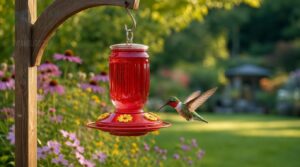
Most ant problems start with the feeder itself — a small drip or sticky spot is all it takes to bring a whole colony running.
Keeping your feeder clean and in good shape cuts off that invitation before ants even get started. Here’s what to stay on top of.
Clean Sticky Nectar Residue Daily
Sugar residue is basically a welcome mat for ants. Maintaining feeder cleanliness to avoid ant attraction starts with a simple wipe-down schedule — clean every port and surface daily using gentle cleaning agents such as warm soapy water.
Use residue-free tools like a soft cloth or small brush. Then apply a complete drying technique before refilling, and always spot-check nectar levels for drips.
Fix Cracks, Seals, and Loose Parts
Even a hairline crack turns your feeder into an ant highway overnight. Do a quick leak check monthly — run your finger along seams and mounting tabs, using basic crack detection tools like a flashlight to spot weak points early.
Tighten loose screws with threadlock application to stop vibration loosening.
Repair leaks with UV resistant sealants and let them cure fully before refilling — don’t rush it.
Swap out worn replacement gaskets rather than patching them.
Switch to Leak-Resistant Saucer Feeders
If you’re tired of patching the same old bottle feeder, a saucer feeder’s leakproof design is a major advancement. Unlike bottle feeders, saucer vs bottle comes down to physics — saucers keep nectar below the ports, so heat tolerance isn’t a problem and drips disappear.
- Transparent reservoir lets you spot trouble instantly
- Built-in ant moat blocks crawlers automatically
- Quick disassembly makes cleaning genuinely painless
- Pressure-balanced ports mean leakproof, every time
Place Feeders in Partial Shade
Direct sun is the silent saboteur here. Place your hummingbird feeder in the shade — specifically morning sun, afternoon shade — and nectar stays 5 to 10 degrees cooler. Cooler nectar means slower fermentation, fewer drips, and less ant attraction.
For shade placement, position 4 to 8 feet from tree trunks. Keep feeder height at 5 to 6 feet for easy maintenance and solid window visibility.
Move Feeders to Break Ant Trails
Ants follow pheromone highways — disrupt the path and you buy yourself time. Keep your hummingbird feeder on the move every three to seven days during warm months. This simple relocation schedule scrambles their trail mapping completely.
Move the feeder a few feet in any direction, adjust the height, and test the new spot before committing. Ants reset. Hummingbirds barely notice.
Remove Debris Near Feeder Poles
Ground litter cleanup matters more than most people think. Leaf piles, mulch, and tall weeds touching your feeder pole give ants hidden highways straight to the top.
Trim weeds, pull mulch back from the base, and do regular branch pruning overhead. Wipe up any spills immediately — fermenting nectar in the dirt keeps recruiting more scouts.
Garden sanitation is unglamorous work, but it seals the deal.
Top 6 Ant-Control Feeder Products
Sometimes the easiest fix is just the right tool. These six products cover the main approaches — moats, guards, slippery barriers, and smart feeder design — so you can pick what works best for your setup.
Here’s what’s worth your money.
1. Aspects HummZinger HighView Hummingbird Feeder
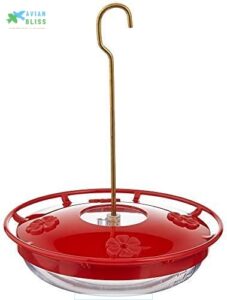
The Aspects HummZinger HighView is one of the smartest feeder designs available, holding 12 oz of nectar. It features a built-in ant moat, eliminating the need for a separate purchase. Simply fill the moat with water to create a barrier that stops ants before they reach the feeding ports.
The saucer-style bowl design minimizes dripping compared to traditional bottle feeders, reducing unintended attraction for insects. Its wide bowl also detaches easily, allowing for a thorough scrub to maintain cleanliness.
| Best For | Backyard birders who want an easy-to-clean, low-maintenance hummingbird feeder that keeps ants and rain out of the nectar. |
|---|---|
| Ant Protection | Integrated ant moat |
| Material | Polycarbonate plastic |
| Weight | 12.8 oz (363 g) |
| Maintenance Required | Refill nectar every 3 days |
| Color | Red |
| Price Range | Mid-range |
| Additional Features |
|
- Built-in ant moat means no extra gadgets — just add water and you’ve got a natural bug barrier
- The 360° perch rail lets birds settle in while feeding, so you can actually watch and identify them up close
- Detachable bowl is dishwasher-safe, making cleanups quick and mold a lot less likely
- The integrated hook can cause tilting if the feeder isn’t hung perfectly level, which throws off nectar access
- Nectar goes bad fast — in hot weather you’re looking at a refill every three days or so
- Not great for cold climates; freezing temps will ice up the nectar and you’ll need a heat source or have to bring it inside
2. Aspects Jewel Box Window Hummingbird Feeder
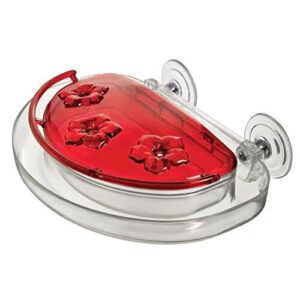
If window-watching hummingbirds is your thing, the Aspects Jewel Box Window Hummingbird Feeder is worth a look. It mounts directly to glass using two suction cups, putting you inches from the action.
The detachable ant moat cradles the entire feeder base, so ants hit a water wall before reaching any port.
It holds 8 oz of nectar across three feeding ports, and the hinged lid makes refilling quick.
Just keep that moat filled — an empty one does nothing.
| Best For | Anyone who wants a close-up window view of hummingbirds without the hassle of hanging a traditional feeder. |
|---|---|
| Ant Protection | Optional ant moat |
| Material | Polycarbonate plastic |
| Weight | 10.88 oz (308 g) |
| Maintenance Required | Frequent refills needed |
| Color | Tinted red |
| Price Range | Higher-end |
| Additional Features |
|
- Mounts right to your window glass, so you get an up-close look at hummingbirds as they feed and rest
- The removable 8 oz reservoir is easy to lift out, clean, and refill without uninstalling the whole feeder
- Built-in ant moat plus optional Nectar Guard tips give you two solid lines of defense against bugs
- 8 oz fills up fast, so expect to refill more often than you would with a larger feeder
- Suction cups need a perfectly clean, dry surface to hold — they can slip over time or in extreme heat or cold
- It costs more than most basic window feeders, which might be a dealbreaker if you’re watching your budget
3. AMAURAS Glass Ant Moat for Hummingbird Feeders
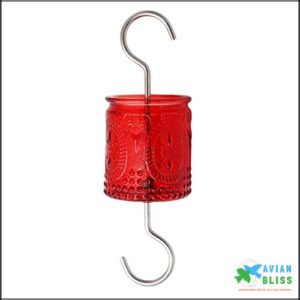
If you want something that looks good and works, the AMAURAS Glass Ant Moat is a solid upgrade from cheap plastic versions. The candy-apple red glass body actually helps draw hummingbirds in, while the built-in water moat stops ants cold.
It hangs between your hook and feeder using a stainless steel hook, and the rubber grommet keeps the seal tight. At $12.95, it costs a little more than plastic — and yes, glass can chip if you’re rough with it.
But keep it filled, and ants don’t stand a chance.
| Best For | Bird lovers who want a durable, good-looking ant moat that pulls double duty — keeping pests out while actually attracting hummingbirds with its red glass finish. |
|---|---|
| Ant Protection | Dedicated ant moat cup |
| Material | Glass and stainless steel |
| Weight | 1 lb (454 g) |
| Maintenance Required | Refill moat water regularly |
| Color | Candy-apple red |
| Price Range | Budget ($12.95) |
| Additional Features |
|
- The candy-apple red glass looks great and can help draw hummingbirds to your feeder
- Rust-free stainless steel and glass construction means it’ll outlast most plastic moats by a long shot
- The rubber grommet keeps the seal tight, so water stays in the moat where it belongs
- At $12.95, it’s pricier than your average plastic ant moat
- Glass can chip if you’re not careful handling or installing it
- The moat still needs regular refilling — it’s not a set-it-and-forget-it solution
4. BugSnub Ant Guard for Hummingbird Feeders
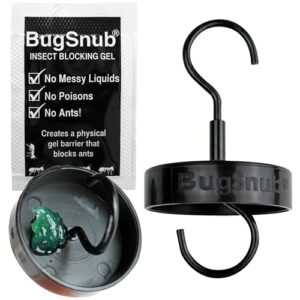
The BugSnub Ant Guard offers a unique solution for ant-proofing bird feeders, replacing traditional water moats with a food-grade mineral oil gel. This odorless, non-toxic formula is safe for birds, pets, and children, providing effective protection without harmful chemicals.
Its inverted cup design shields the gel from rain and debris, ensuring durability. A single application can last for months, making it a low-maintenance choice. The guard fits most standard feeder hooks with a diameter under ¾ inch.
For cost-conscious buyers, the 3-pack option reduces the price to approximately $6.66 per unit. However, users with multiple feeders will need to purchase additional gel packets separately, as the initial supply is limited to one feeder.
| Best For | Hummingbird enthusiasts who want a low-maintenance, chemical-free way to keep ants out of their feeders—especially in hot climates where water moats evaporate quickly. |
|---|---|
| Ant Protection | Upside-down gel barrier |
| Material | Metal and food-grade gel |
| Weight | Not specified |
| Maintenance Required | Reapply gel eventually |
| Color | Black |
| Price Range | Budget–Mid ($9.99–$19.98) |
| Additional Features |
|
- The food-grade gel is completely non-toxic, so no worries about birds, pets, or curious kids coming into contact with it.
- One application can last months, which means less time fussing with your feeder and more time watching hummingbirds.
- The inverted cup design keeps the gel clean and intact even in rain or high heat—it just keeps doing its job.
- Each pack only comes with one gel packet, so if you have multiple feeders, you’ll need to buy extra gel separately.
- The hanger won’t work with hooks wider than ¾ inch, which rules it out for some shepherd’s hook setups.
- It costs more upfront than a basic water moat or DIY fix, which might give budget-focused buyers some pause.
5. Vaseline Skin Healing Jelly
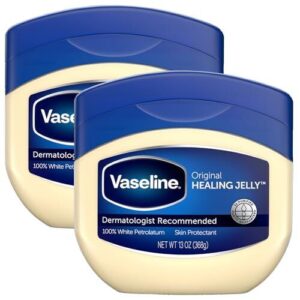
Vaseline Skin Healing Jelly, a household staple, serves as a surprisingly effective ant deterrent for bird feeders. Apply a thin layer to your feeder pole—avoiding the ports—to create a slippery barrier ants cannot cross. This method leverages the product’s unique properties to protect feeders without harming wildlife.
The triple-purified, fragrance-free formula ensures safety for animals while providing long-lasting protection. At $17.99 for a jumbo jar, a single purchase covers multiple poles for months, offering both affordability and durability.
Reapplication is necessary during hot weather, as heat causes the jelly to thin and slide off. This simple maintenance step ensures consistent ant defense throughout the season.
| Best For | Anyone dealing with dry, cracked, or sensitive skin who wants a simple, no-frills healing ointment that works for everything from chapped lips to eczema flare-ups. |
|---|---|
| Ant Protection | Petrolatum barrier (DIY use) |
| Material | 100% white petrolatum |
| Weight | 1.1 lb (499 g) |
| Maintenance Required | Reapply as needed |
| Color | White |
| Price Range | Mid-range ($17.99) |
| Additional Features |
|
- Triple-purified, fragrance-free formula makes it safe for sensitive skin and hypoallergenic enough for even babies
- Incredibly versatile — one jar handles dry skin, minor cuts, chapped lips, chafing, tattoo healing, and more
- At $17.99 for a jumbo jar, it stretches a long way and covers multiple uses for months
- The big jar is awkward to toss in a bag — not great if you travel a lot or have limited bathroom space
- The pop-open lid can get loose and unreliable after lots of one-handed use
- It’s purely a protective barrier — no SPF, no active healing ingredients, so it won’t replace prescription wound care
6. Feed Garden Hummingbird Nectar Feeder
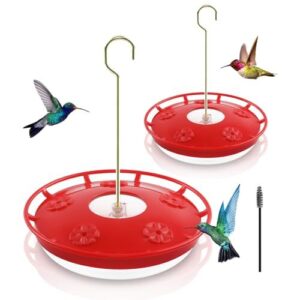
The Feed Garden Hummingbird Nectar Feeder pulls double duty — it attracts hummingbirds and fights ants at the same time. Its built-in ant moat sits right above the nectar tray, cutting off the main invasion route before ants even get close. The bright red top draws birds from a distance, while raised ports help keep rain from diluting your sugar water.
At $15.99 for a two-pack with cleaning brushes included, it’s solid value for any backyard setup.
| Best For | Backyard bird lovers who want an easy-to-maintain feeder that keeps ants out and attracts multiple hummingbirds at once. |
|---|---|
| Ant Protection | Integrated ant moat |
| Material | BPA-free plastic |
| Weight | 0.76 kg (1.7 lb) |
| Maintenance Required | Dishwasher-safe cleaning |
| Color | Red |
| Price Range | Budget ($15.99 for 2-pack) |
| Additional Features |
|
- Two feeders plus cleaning brushes for $15.99 is genuinely hard to beat
- The built-in ant moat does real work keeping pests away from the nectar
- Transparent reservoir with a measurement scale makes refilling quick and stress-free
- The ant moat is small and can fill up fast in hot weather, letting ants through anyway
- Open feeding ports mean rain can get in and water down your nectar
- Plastic construction looks basic compared to glass feeders and may crack after years in the sun
Frequently Asked Questions (FAQs)
How do I keep ants off my hummingbird feeder?
Keep ants off your hummingbird feeder by using an ant moat above the feeder.
Hang it on fishing line to create a physical barrier.
Clean nectar spills daily to eliminate food sources.
Move the feeder periodically to break established scent trails.
Why do you put aluminum foil on hummingbird feeders?
Wrapping your feeder’s reservoir in aluminum foil reflects sunlight, slowing nectar from heating up and spoiling.
The shiny surface also confuses ants and bees, making them less likely to zero in on the feeding ports.
Will vaseline keep ants away?
Yes, but only as part of a bigger plan. A thin strip of Vaseline on the feeder pole slows most ants down.
It won’t stop them forever — combine it with a moat and regular cleaning.
Can I spray vinegar on my hummingbird feeder?
You can, but skip spraying it directly on the feeder. Instead, soak disassembled parts in a 1:3 vinegar-to-water mix, then rinse thoroughly until no scent remains before refilling.
How do you keep ants out of a hummingbird feeder?
Think of your feeder as a tiny restaurant. Ants smell the sugar and follow scent trails straight to it.
Use an ant moat, hang with fishing line, fix leaks, and clean daily.
How to deter bees from hummingbird feeders?
Bees are attracted to exposed nectar and sunny spots.
Use saucer-style feeders, add bee guards over ports, and hang your feeder in partial shade to keep bees away without harming hummingbirds.
Do hummingbird feeders have ant moats?
Some hummingbird feeders have a built-in ant moat above the reservoir, while others require a separate moat added to the hanging hook.
Before purchasing, check your feeder’s design to determine whether additional accessories are needed.
How to clean a hummingbird feeder?
Disassemble the feeder completely, rinse with hot water, then scrub every part with mild dish soap and a bottle brush. Rinse until no suds remain. Air dry fully before refilling.
What keeps ants off hummingbird feeders?
Water moats, fishing line, PTFE tape, and regular cleaning are your best defenses. Used together, they block ants at every step — before they ever reach the nectar.
What attracts ants to hummingbird feeders initially?
Ants find your feeder the same way they find a dropped popsicle — fast.
Their antennae detect sugar from a distance, and one foraging scout lays a pheromone trail that brings the whole crew running.
Conclusion
An ounce of prevention is worth a pound of cure—and that’s exactly true when you’re trying to keep ants out of your hummingbird feeder. Fill your ant moat. Fix every leak. Move the feeder when trails form.
None of this is complicated, but skipping even one step invites the whole problem back. Your hummingbirds deserve clean nectar and a feeder they’ll actually trust. Stay consistent, and they’ll keep coming back.
- https://www.allaboutbirds.org/news/how-do-i-keep-ants-out-of-my-hummingbird-feeder/
- https://gardening.stackexchange.com/questions/13746/how-can-i-keep-ants-off-of-my-hummingbird-feeder
- https://www.southernliving.com/keep-ants-from-feeder-11967787?srsltid=AfmBOoo4m2VRmKyUK9PYGhOMV5w9O4Njdp_QuuhWdf-i1Pwn1oyQfSlQ
- https://www.thespruce.com/how-to-keep-ants-out-of-hummingbird-feeders-11896283
- https://www.bilantan.com/blogs/blog/keep-ants-out-hummingbird-feeder?srsltid=AfmBOoqXO-fRxDrYBFTedzq_NBpWpuQ0QQlkZmP4xvi6odY6bM_1eoMU