This site is supported by our readers. We may earn a commission, at no cost to you, if you purchase through links.
single oak tree can support over 500 species of caterpillars—and every one of them is a meal a bird is already hunting for. That’s not a coincidence. Birds and insects have co-evolved across millions of years, locking feeding cycles together so tightly that a backyard without insect life is basically a backyard without birds.
Most feeders miss this entirely, loaded with seeds while nestlings nearby starve for protein. Knowing which seasonal insect food birds actually need—and when—changes how you support wildlife through every month of the year.
Table Of Contents
Key Takeaways
- A single oak tree supports 500+ caterpillar species, making native plants the most powerful thing you can add to your yard for bird life.
- Birds’ nutritional needs shift every season—spring demands soft, protein-rich insects for chicks, summer needs calcium and fat, fall calls for high-energy fuel for migrants, and winter means leaving leaf litter and dead stems undisturbed.
- Seed feeders alone won’t cut it during nesting season; nestlings need live insects like mealworms, crickets, or waxworms to grow properly.
- Safe insect feeding matters as much as which insects you offer—gut-load them before serving, avoid pesticide-contaminated sources, and clean your feeders weekly to prevent disease.
Best Insects Birds Eat Seasonally
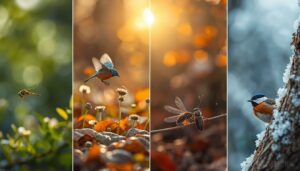
Birds don’t eat the same insects year-round — their needs shift with every season. What works during nesting won’t cut it during migration or mid-winter.
Matching your feeders to the season makes a real difference, and these high-quality bird food recipes by season show exactly what to offer and when.
Here’s a closer look at which insects matter most, season by season.
Spring Caterpillars for Breeding Birds and Nestlings
When spring arrives, caterpillars become the backbone of nearly every songbird’s breeding strategy. Caterpillar Nutrient Timing is everything — chicks need protein fast, and caterpillars deliver it soft, digestible, and abundant.
Research shows that peak caterpillar biomass aligns with the critical feeding period for nestlings.
Top reasons caterpillars dominate the nestling diet:
- High protein fuels rapid feather and muscle growth
- Soft bodies reduce choking risk for small gapes
- Phenological Synchronization matches peak hatching with peak abundance
- Habitat Plant Diversity facilitates Chemical Defense Selection, helping parents avoid toxic species
Summer Crickets, Beetles, Flies, and Larvae
As summer takes over, the insect menu expands well beyond caterpillars.
Crickets bring solid protein — around 20–25% dry mass — while beetles add calcium that promotes bone growth.
Black soldier fly larvae pack serious Nutrient Density Variation in a compact form.
Fruit flies and hover flies thrive near pond margins, shaped by Microclimate Influence.
Together, they drive Breeding Synchrony Timing through peak nestling-growth weeks.
Fall Insects That Support Migration Energy Needs
Fall shifts the menu fast. Lepidopteran caterpillars remain a top insect protein source at stopovers, while Winged Beetles and true bugs bulk up on stored lipids.
Autumn Ant Swarms and Termite Flights appear during windy windows, giving migrants a quick energy-dense diet hit. A Spider Prey Boost multiplies what’s available.
These seasonal feeding strategies reflect birds’ need for high-fat, high-calorie foods before long flights.
Winter Invertebrates Found Under Bark and Leaf Litter
Even in cold winter months, the forest floor stays busy.
Leaf litter’s Litter Nutrient Cycling sustains dense microarthropod communities — up to 50,000 individuals per square meter.
Overwintering Predators, like rove beetles and spiders, shelter in Bark Crevice Thermals and Pupal Site Diversity hotspots.
Microhabitat Moisture keeps overwintering insects active enough for wrens and kinglets to pick them out, meeting real winter energy needs and nutrient density, including high calcium.
Which Backyard Birds Prefer Insect-rich Foods
Bluebirds chase beetles, chickadees hunt caterpillars, and wrens snatch flies — each bird has its favorites.
Warblers devour moths during migration, while nuthatches extract grubs from bark year‑round.
These insectivore bird species benefit most from seasonal feeding strategies for wild birds.
Providing insects during breeding and winter months delivers summer insect protein for nestlings and the nutritional benefits of live insects for birds.
Spring Insect Foods for Nesting Birds
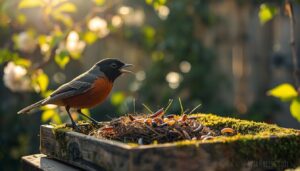
Spring is when birds shift into high gear — nesting, laying eggs, and feeding hungry chicks around the clock. That kind of effort demands a steady supply of protein-rich insects, and what you offer at your feeder can make a real difference.
Here’s what works best during the breeding season.
Why Breeding Birds Need High-protein Insects
Breeding season puts birds under serious nutritional pressure. Protein-rich insects fuel muscle development, feather growth, and rapid tissue synthesis in chicks from day one.
Egg quality and immune boost depend on it, too. During chick rearing, seeds simply won’t cut it. Your feeders can help fill that gap with:
- Mealworms for quick protein delivery
- Crickets for calcium and balanced nutritional needs
- Waxworms for high-fat energy support
Caterpillars as Essential Soft Food for Chicks
Caterpillars are nature’s perfect chick food — soft, protein-dense, and packed with carotenoids that support immune function and feather development.
Caterpillars are nature’s perfect chick food — soft, protein-dense, and loaded with carotenoids that fuel immunity and feather growth
| Nutrient | Benefit | Source |
|---|---|---|
| Protein | Fuels rapid growth | Caterpillars, silkworms |
| Carotenoids | Immune boost, coloration | Seasonal caterpillars |
| Amino acids | Organ development | Caterpillar protein density |
Feeding synchronization matters — offering caterpillars during peak nesting aligns with chick rearing demands and your seasonal feeding strategies for wild birds.
Mealworms for Bluebirds, Chickadees, and Wrens
Mealworms are a go-to spring protein source for bluebirds, chickadees, and wrens during nesting season. Size selection matters — offer small to medium worms for nestlings.
Place feeders near nesting boxes for smart feeder placement.
Dried mealworms work well with proper storage guidelines — cool, dry, sealed containers.
Pairing them with sunflower seeds creates real nutrient synergy, strengthening your seasonal feeding strategies for wild birds year-round.
Waxworms as a High-fat Breeding-season Treat
Waxworms pack a serious calorie punch — around 25–30% fat by fresh weight. That makes them one of the best high‑fat, high‑calorie foods for the breeding season.
- Waxworm Energy Boost: fuels parents through long daily foraging runs
- Moisture Benefits: provides hydration for nestlings still developing
- Calcium Enrichment: aids bone growth in young chicks
Use controlled portioning — a small handful in a shallow dish — to keep seasonal feeding strategies balanced.
Earthworms for Robins and Fledgling-friendly Feeding
Robins are natural earthworm hunters, and spring makes their job easier. After rain, rising soil moisture brings worms to the surface — no worm harvesting techniques required.
Earthworms deliver solid protein and calcium, rivaling mealworms in nutrient density for fledgling growth monitoring purposes.
Keep your garden pesticide‑free and moist. That simple step quietly helps seasonal feeding strategies for wild birds all spring long.
Summer Insects for Growing Chicks
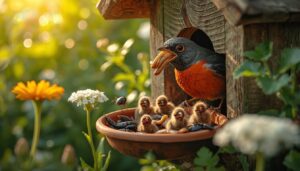
Summer is prime time for feeding growing chicks, and the insects you offer can make a real difference. Birds need a steady stream of protein, calcium, and fat to fuel rapid nestling development through the season.
Here’s what works best at your feeder right now.
Crickets for Protein, Calcium, and Vitamins
Crickets are a powerhouse summer option for growing chicks. About 65% protein by dry weight, their amino acid balance rivals traditional animal proteins — with strong digestibility advantages that matter when chicks need fast fuel. Gut loading them 24–48 hours before feeding further boosts their nutrient density. Here’s what makes crickets stand out:
- Protein helps rapid feather and muscle growth
- Calcium from exoskeletons strengthens developing bones
- B vitamins fuel energy metabolism and nerve development
- Chitin fiber offers gut health benefits in moderate amounts
Their mineral synergy complements seed-heavy diets beautifully — making crickets a smart pillar of seasonal feeding strategies for wild birds.
Black Soldier Fly Larvae for Balanced Nutrition
Black soldier fly larvae take that protein‑calcium synergy even further. Their amino acid profile — rich in lysine and methionine — facilitates rapid tissue repair in growing chicks.
The protein‑fat balance is easy to adjust: use defatted larvae to sharpen lean muscle development.
| Nutrient | Benefit |
|---|---|
| Calcium | Bone strength |
| Lauric acid | Gut health benefits |
| Lysine/Methionine | Tissue growth |
| Zinc/Iron | Metabolic support |
A genuinely sustainable feed source worth adding to your seasonal feeding strategies for wild birds.
Flying Insects Near Ponds, Wetlands, and Gardens
Ponds and wetlands are insect factories in summer. Dragonfly habitat near calm water produces adults, that Tree Swallows snatch mid‑flight.
Damselfly flight patterns skim shallow edges, offering easy prey.
Mosquito predator balance keeps pest numbers in check naturally.
Shoreline insect diversity — mayflies, caddisflies, fruit flies, grasshoppers — gives insectivorous birds endless foraging options.
These are your seasonal feeding strategies for wild birds, built into the landscape itself.
Supporting Natural Insect Abundance With Native Plants
What you plant shapes what birds find. Native plants fuel insect abundance in spring and carry it through summer.
Try Layered Planting — groundcover diversity at the base, Native Shrub Layers in the middle, small trees above. This habitat garden structure multiplies insect niches dramatically.
Add Moisture Retention through mulch, commit to Pesticide-Free Management, and bird foraging on insects and protein becomes self-sustaining.
Balancing Live Insects With Berries, Grains, and Seeds
Live insects cover the protein side of summer nutrition, but birds need more than that.
Mealworm-Berry Mix gives you a practical Protein-Carb Balance — insects for muscle growth, high‑fat native berries for quick energy.
Toss in whole grains to stabilize digestion through Chitin-Fiber Interaction.
Keep your Grain-Insect Ratio varied, offer Vitamin-Rich Pairings like crushed berries alongside gut-loaded mealworms, and you’re running real seasonal feeding strategies for wild birds.
Fall and Winter Feeding Strategies
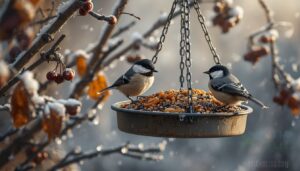
Once the breeding season wraps up, birds shift gears fast — and so should your feeding strategy. Fall and winter bring a whole new set of nutritional priorities, from fueling long migrations to surviving cold nights.
Here’s what you need to know to feed birds well through the quieter months.
How Bird Diets Shift After Breeding Season
Once breeding wraps up, bird diets shift fast.
Protein Decline sets in as chicks leave the nest — adults no longer need ultra-high-protein insects every hour. Instead, Fat Accumulation takes over.
Birds begin Foraging Range Expansion, covering more ground for calorie-dense foods. Metabolic Rate Adjustment follows, slowing energy use slightly.
Seasonal feeding strategies for wild birds should reflect this — less protein-rich insects, more fat-heavy options.
Insects for Migrating Birds Needing Protein
Even though fat dominates fall diets, protein still matters for migratory birds. Long flights break down muscle tissue, so replacing it quickly is critical.
Offer these high-protein insects during peak migration:
- Moth larvae and silkworm pupae — dense in amino acids
- Protein-rich diptera — easy to digest, quickly absorbed
- High-calcium beetle shells — support muscle and bone repair
Migration protein timing is everything. Gut loading insects with kale or carrots before offering them maximizes nutritional value for passing birds.
Pairing Mealworms With Suet and Sunflower Seeds
Mealworms alone won’t cut it once temperatures drop. That’s where nutrient synergy kicks in — pairing them with suet and black oil sunflower seed creates a seasonal mix timing that works hard for birds all winter.
| Ingredient | Benefit |
|---|---|
| Mealworms | Protein and calcium enrichment |
| Suet | Maximum energy density per ounce |
| Black oil sunflower seed | Sustained fat release |
| Combined feeder block design | Reduces waste, attracts more species |
| Seasonal bird foods trio | Aids muscle repair and warmth |
High-fat Foods That Complement Seasonal Insects
Fat is your secret weapon in fall and winter. Nut-Infused Suet, Almond Butter Topping, and Walnut Mealworm Coating turn ordinary feeders into high-calorie powerhouses.
Add a Flaxseed Oil Drizzle or Pumpkin Seed Crumble alongside black oil sunflower seed for sustained energy-dense foods that carry birds through cold nights.
These high-fat, high-calorie foods work best paired directly with your insect offerings.
Winter Insect Refuges in Leaf Litter and Dead Stems
Leaf litter does more than decompose — it’s a system of thermal insulation and moisture buffers that keeps winter insect shelters alive beneath your feet. Beetle larvae and moth pupae follow pheromone signals to safe spots within the litter.
Dead plant material as insect refuges doesn’t stop there: hollow stem niches shelter solitary wasps and larvae. Leave both standing, and birds will find them.
Safe Seasonal Insect Feeding Tips
Feeding insects to birds is rewarding, but a few simple habits keep it safe and effective.
How you prepare and serve those insects matters just as much as which ones you choose.
Here’s what to keep in mind before you head out to the feeder.
Gut-loading Insects Before Feeding Birds
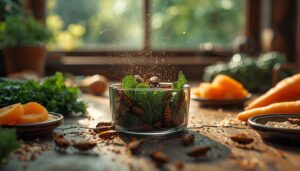
Before offering insects to birds, gut-load them 24–48 hours ahead to increase their nutritional value.
- Feed calcium greens like kale or carrots for high calcium delivery.
- Add protein boost foods such as soy meal for protein-rich insects.
- Apply vitamin spray application evenly across the colony.
- Choose a moisture source selection like damp sponges.
- Keep loading timeframes tight — nutrient enrichment fades fast.
Avoiding Pesticide-contaminated and Toxic Insects
Gut-loading boosts nutrition, but contaminated insects can undo all of that work fast.
Stick to Pesticide-Free Sources — woodlands, organic gardens, and Native Plant Habitat areas away from roads or treated fields. Practice Safe Insect Handling by rinsing wild-caught insects and checking for unusual sheen during Chemical Residue Testing.
| Risk Zone | Safer Alternative |
|---|---|
| Roadside vegetation | Protected woodland edges |
| Treated ornamental gardens | Native wildflower patches |
| Urban collection sites | Organic farm margins |
| Pesticide-sprayed fields | Brush pile insect refuges |
| Home garden spray zones | Community garden IPM plots |
Share what you learn — Community Education Programs help neighbors reduce pesticide contamination risk for everyone’s local birds.
Chopping Large Insects to Prevent Choking
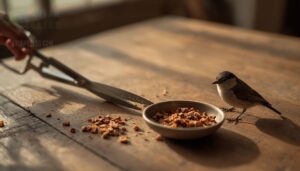
Large crickets and other big insects can be a choking hazard for small birds and nestlings. Prep them right before serving — fresh prep timing keeps texture and nutrients intact. Use kitchen shears for knife safety and create uniform fragments no bigger than 1 centimeter.
- Remove stingers and mandibles first (hard part removal)
- Cut into four or more pieces
- Keep fragments under 1 cm
- Serve immediately in your feeder dish
Using Shallow Dishes for Live Insect Feeding
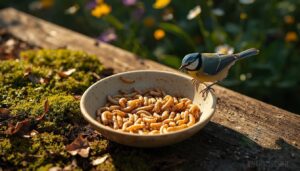
Once your insects are prepped, the right dish makes all the difference. Use ceramic, stainless steel, or food‑grade plastic — Material Safety Standards matter here.
A Lip Height Optimization of 1–3 mm enables Insect Escape Prevention without blocking bird access.
Follow this Dish Placement Strategy:
| Factor | Recommendation |
|---|---|
| Depth | 3–5 mm for small live insects |
| Location | Shaded, open, stable surface |
Cleaning Feeders to Reduce Disease Transmission
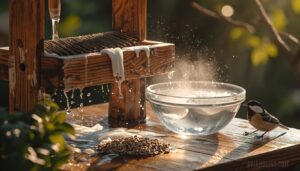
Clean feeders protect birds from Salmonella and other pathogens.
Every week, scrub biofilm and buildup using soapy water, then soak in a bleach to 9 parts water solution for 10 minutes — or use a vinegar soak for 60 minutes. Thorough rinsing removes all residue. Air drying completely before refilling prevents mold.
Consistent feeder hygiene and weekly cleaning are non-negotiable for food safety for birds.
Discarding Dead Insects and Spoiled Food Quickly
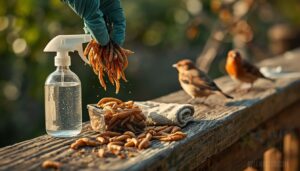
Dead insects spoil fast — and spoiled food undoes all your feeder hygiene efforts. Remove them the moment you spot them.
- Use Glove Handling every time you touch dead insects
- Instant Flush small insects down the toilet
- Seal larger ones in a Dedicated Trash Bin with a lid
- Apply Bleach Sanitization with bleach to 9 parts water
- Try Freezing Disposal for pantry insects before bagging
Food safety for birds depends on weekly cleaning and fast removal.
Frequently Asked Questions (FAQs)
What to feed birds in fall and winter?
When temperatures drop, birds need calorie-rich fuel fast. Offer suet blocks, peanut mixes, nyjer seed, and a calorie rich seed mix. Keep winter water stations ice-free daily.
What color do birds dislike most?
Birds dislike white most. White aversion is strong across many bird species.
Neon deterrent colors, dark color avoidance triggers, and reflective surface repulsion also keep birds away. Camouflage contrast works best to welcome them.
Do migratory birds eat insects at night?
Yes. During bird migration stopovers, nocturnal foraging is common.
Warblers and sparrows catch light-attracted insects near urban illumination, topping off their night energy budget under moonlit skies before continuing their journey.
Can urban birds find enough seasonal insects?
Urban birds can find insects, but it’s rarely enough on its own.
Native plants, green roof habitat, and backyard bird feeding fill the gaps where urban habitat connectivity and insect population density fall short.
Which insects do hummingbirds actively hunt?
Hummingbirds hunt gnats, midges, mosquitoes, fruit flies, and spiders mid‑flight or off leaves.
Mosquito Foraging, Midge Capture, Fruit Fly Hover, and Spiderling Snatching supply the protein nectar that hummingbird feeders alone can’t deliver.
How do climate shifts affect insect timing?
Warmer springs compress diapause, pushing temperature emergence weeks earlier. Phenology shifts create elevation timing mismatches—alpine insects emerge asynchronously from valley prey.
Diapause alteration and geographic phenology variation mean climate change effects on insects now reshape seasonal food availability unpredictably.
Do birds teach fledglings to catch insects?
Birds do teach fledglings through parental demonstration and observational learning. Parents model prey capture while siblings provide assistance. Foraging play in areas of habitat complexity builds chick health development naturally.
Conclusion
Bugs really do matter—no "ifs," "ants," or "bugs" about it. Supporting seasonal insect food for birds isn’t a one-month effort.
It’s a year-round commitment that mirrors how nature actually works. Plant natives to draw caterpillars in spring.
Offer crickets and larvae through summer. Keep mealworms available when migrants pass through fall. In winter, leave the leaf litter alone.
Do that, and your backyard stops being just a pit stop—it becomes a destination.
- https://www.usgs.gov/news/when-timing-everything-migratory-bird-phenology-changing-climate
- https://gl.audubon.org/node/4326?utm_source=openai
- http://www.wbufranchise.com/
- https://www.rspb.org.uk/birds-and-wildlife/feeding-birds-near-you/keep-your-garden-birds-healthy
- https://www.birdscanada.org/you-can-help/keeping-feeder-birds-healthy