This site is supported by our readers. We may earn a commission, at no cost to you, if you purchase through links.

A rat snake can scale a smooth wooden pole in under thirty seconds—most people never see it happen. One morning the nest is full; by afternoon, it’s empty. Snakes don’t stumble onto birdhouses by accident. They remember productive feeding sites and return, often during the same crepuscular window when parent birds are most active and distracted.
Keeping snakes away from nests takes more than wishful thinking or folk remedies. The right pole material, baffle placement, and yard habits make all the difference between a thriving nest and a silent one.
Table Of Contents
Key Takeaways
- Snakes return to known nests by memory, so your first job is removing what draws them there — food, water, cover, and easy climbing routes.
- A smooth metal pole with a cone or stovepipe baffle mounted at least 4 feet up is your strongest physical defense against climbing snakes.
- Where you place your birdhouse matters as much as how you protect it — keep it 10 feet from any tree, away from fences, and surrounded by a clear, trimmed 3-foot perimeter.
- No single fix works alone; layering location choice, physical barriers, yard tidiness, and routine inspections every six months is what keeps nests safe long-term.
Why Snakes Target Bird Nests
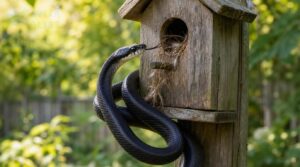
Snakes don’t stumble onto bird nests by accident — they’re hunting.
They zero in on nests with surprising precision, using snake predator tactics that endanger wild birds like stealth, scent tracking, and patient ambush.
Your birdhouse is basically a well-stocked pantry to them, and once they find it, they remember. Here’s why they keep coming back.
Eggs, Nestlings, and Adult Birds as Prey
Snakes don’t visit birdhouses by accident. Egg predation is their goal — and nestling vulnerability makes the timing even more critical during early brooding. Once a snake finds a nest, predator memory kicks in, and it will return.
Adult bird threats follow suit, especially for parents focused on parental defense.
Protecting bird eggs starts with understanding exactly what’s at stake. Choosing nest sites with dense thicket placement can further deter snakes.
Why Birdhouses Can Attract Snakes
A birdhouse does more than shelter birds — it’s a magnet for snakes. Open entry holes allow snake heads to probe inside easily. Unsealed seams and cracks create hidden travel routes.
The warm interior mimics natural den conditions. Cavity humidity draws insects and rodents, and that rodent attraction pulls snakes straight to your yard.
Birdhouse openings are basically an open invitation.
Common Climbing Snakes Around Nests
Not every snake on the ground stays there. Several species are built to climb — and your birdhouse is exactly what they’re after.
- Rat snakes scale smooth poles up to 8 feet high
- Corn snakes grip vertical surfaces with surprising ease
- Black racers ascend man-made structures quickly
- Green snakes use tight body coils on narrow poles
Arboreal snakes are persistent, skilled climbers.
Peak Snake Activity During Nesting Season
Timing matters as much as method. Snake activity peaks at dawn and dusk—crepuscular synchrony windows when temperatures are moderate and birds are most vocal.
Seasonal snake activity surges after warm rain events and during temperature spikes in mid-spring. Rodent abundance near nests further fuels this, creating a post-rain surge of hungry climbers.
April through June demands your sharpest attention.
Why Snakes Return to Known Nests
Once a snake finds a reliable nest, it doesn’t forget. Memory cues — scent, landmarks, and interior structure — guide it back season after season. Here’s what keeps drawing it back:
- Stable microclimate — familiar shelter buffers temperature and humidity
- Prey proximity — nearby rodents and nestlings reduce foraging effort
- Predator evasion — known escape routes lower risk
- Energy efficiency — no wasted effort scouting new sites
Consistent snake behavior makes habitat modification your most powerful tool.
Choose a Safer Nest Location
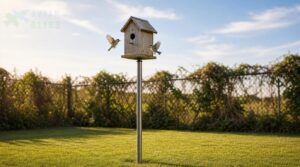
Where you put a birdhouse matters just as much as how you protect it. Snakes are adept at finding routes up poles, through brush, and along fences — so placement serves as your first line of defense.
Here are the key location choices that make a real difference.
Place Birdhouses in Open Yard Areas
Open yard placement is your first line of defense. Mount your birdhouse on a freestanding pole in the center of a clear, open area — this maximizes visibility sightlines, giving nesting birds a full view of approaching threats.
Face the entrance East or Southeast for wind exposure orientation. This positioning ensures optimal conditions for both birds and ventilation.
Seasonal placement timing matters too: set up before spring migration so birds settle in early, securing the best chance for successful nesting.
Avoid Trees, Fences, and Branches
Trees and fences are basically a snake’s highway to your birdhouse. Skip them entirely.
Follow these placement rules:
- Mount on freestanding poles — no adjacent fencing contact
- Honor tree proximity limits — stay 10 feet from any trunk
- Avoid overhanging limbs within 6 feet above your pole
- Meet pole height standards — minimum 6 feet clearance around supporting structures
- Prune ladder branches every 1–2 years
Keep Nests Away From Tall Grass
Tall grass is a snake’s best friend — it’s cover, a hunting lane, and a direct path to your birdhouse. Keeping grass trimmed under 3 inches within a 6-foot radius ensures solid sightline clearance and deters snakes.
Low-height groundcover works better than dense weeds near nest poles, as it reduces hiding spots while maintaining soil stability. This simple habitat modification requires only basic garden maintenance.
Buffer zone planning and seasonal growth checks are easy habits to adopt. These proactive steps ensure long-term effectiveness without additional costs, relying solely on consistent upkeep.
Remove Nearby Water Sources
Water draws snakes like a magnet. Eliminate standing water sources within 50 feet of birdhouses, including pet bowls, pooled irrigation runoff, and leaky hoses.
Redirect roof runoff using drainage swales or buried diversion lines, ensuring water flows away from nesting areas.
Control soil moisture through perimeter ditching and relocating rain gardens to maintain dry ground conditions.
These habitat modifications represent simple yard maintenance with tangible results, effectively reducing snake attraction.
Maintain a Clear Three-Foot Perimeter
Think of the ground around your birdhouse pole as a security perimeter. Maintain a clear, three-foot zone by doing three things:
- Trim vegetation and remove debris regularly — lawn kept trimmed short, no brush piles
- Use contrasting ground color or flat pavers for surface leveling and easy visibility
- Add boundary markers and schedule clear zone inspections after storms
Pathway routing around — never through — this zone keeps disturbances to a minimum.
Use Freestanding Poles Instead of Trees
Once your perimeter is clear, your next move matters just as much — where you mount the box. Freestanding poles beat trees every time for snake-climbing prevention. No branches. No bark grip. Just open space.
| Feature | Poles vs Trees |
|---|---|
| Pole stability | Poles hold firm; trees sway and shift |
| Foundation options | Concrete or driven footings vs. unpredictable roots |
| Material durability | Metal resists rot; bark degrades over seasons |
| Height standardization | Set exactly 8–12 feet; trees vary |
| Maintenance routines | Easy baffle and snake guard design checks |
Installation of baffles and guards on poles is straightforward — no branches interfering. Using hardware cloth as a snake barrier around poles takes minutes. Placement of nest boxes on poles vs trees isn’t even close.
Install Snake-Proof Birdhouse Barriers
The right barriers can stop a snake before it gets anywhere near the nest. Several proven options exist, and each one works a little differently depending on your setup.
Here’s what to explore installing.
Smooth Metal Pole Placement
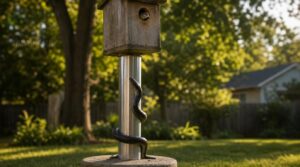
Start with a smooth metal pole — galvanized finish, 1.5 to 3 inches in diameter depending on wind load. Set it in a concrete footing deep enough to stay firmly planted. Use anti-seize fasteners on all mounting hardware so future adjustments don’t become a battle.
A smooth pole gives snakes nothing to grip, making baffle installation above it even more effective.
Proper Birdhouse Height Above Ground
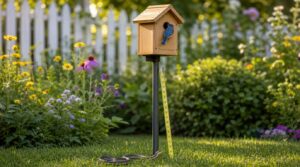
Height matters more than most people realize. Species Height Guidelines vary: mount bluebird houses 4 to 6 feet off the ground, swallows 5 to 15 feet, and chickadees 6 to 15 feet.
When mounting birdhouses on poles, you’re measuring installation height against a snake’s climbing range. Proper placement deters predators while ensuring accessibility for birds.
Wind Exposure Height also plays a role—don’t go higher than necessary. Excessive height increases wind risk without added benefit, so balance safety and practicality.
Metal Cone Baffles
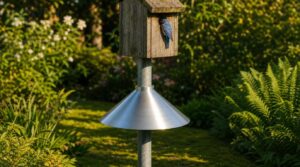
Once your pole is set at the right height, a metal cone baffle is your next line of defense. Mount it at least 4 feet up, wide end facing up, with a 30–60 degree cone angle. Installation alignment matters — gaps let snakes slip through.
Key snakeproofing bird houses tips:
- Choose galvanized steel or aluminum for weather durability lasting 10–20 years
- Confirm the cone guard fits flush against the pole — no wobble
- Keep interior surfaces smooth to eliminate footholds on metal poles
- This snake barrier works best when cone diameter extends 2–4 inches outward
- Check maintenance frequency every 3–6 months for bent edges or loose hardware
Material choice determines long-term performance — so don’t cut corners.
Stovepipe Predator Guards
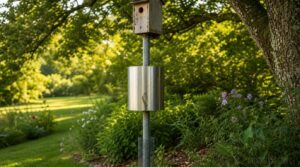
A stovepipe baffle enhances predator protection. Slide an 8-inch galvanized pipe—ensuring proper diameter selection—over the pole and secure it with hose clamps using secure clamping methods.
Mount the birdhouse on the pole at a minimum height of 4 feet. Top the structure with hardware cloth to create a snake barrier around the pole.
Apply a slip-coating surface treatment and prioritize rust-resistant materials for durability.
Schedule routine integrity checks seasonally to maintain effectiveness.
Noel Guards Around Entrance Holes
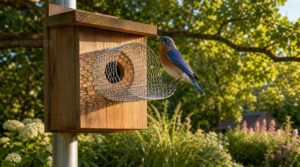
Even with a solid baffle in place, snakes can still probe the entrance hole. That’s where a Noel guard steps in. This hardware cloth collar mounts directly around the opening and adds several centimeters of clearance — a critical layer for snakeproofing bird houses.
Follow these installation steps:
- Select galvanized or coated mesh for Material Selection and rust resistance
- Cut and shape the mesh, leaving sharp prongs for Edge Sharpness around the perimeter
- Apply Installation Techniques carefully — secure with screws without blocking Bird Access Clearance
- Use predator guards alongside snake deterrent mats at the base for layered defense
- Perform Seasonal Maintenance checks — inspect welds, tighten fasteners, and clear debris
Using predator guards for bird houses this way greatly reduces predator reach into the nest.
Slinky-Style Pole Barriers
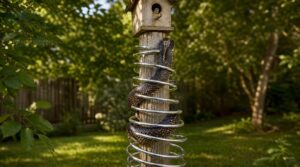
Wrap an old Slinky tightly around your birdhouse pole — it’s one of the simplest DIY snake guard setups you can rig up. The coil friction stops snakes mid-climb because they can’t get stable footing. Choose a UV-stable coating version for outdoor durability.
The quick-release installation means you can slide it off for your cleaning routine without tools.
Hardware Cloth Around Pole Bases
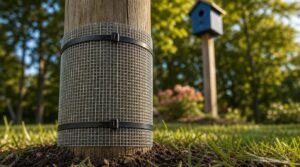
Hardware cloth is one of the most reliable snake barrier materials available. Cut a 24-inch-wide strip of ¼-inch mesh—this specific mesh size is critical for blocking even slim snakes. Wrap the strip around your pole base using UV-resistant zip ties as the attachment method.
Opt for galvanized steel, which provides robust corrosion resistance and ensures the barrier lasts 10–15 years outdoors.
Adhere to a strict inspection schedule, checking for gaps or damage every six months to maintain effectiveness.
Checking Barriers for Gaps or Damage
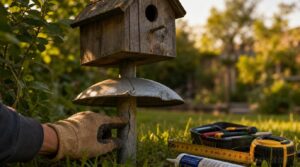
Check your pole base cracks first — even hairline splits can widen over time. Press each fastener for tightness and look for sealant wear around mounting brackets.
Inspect baffle dents that can misalign your snake guard. Confirm barrier height stays above 30 centimeters to maintain effectiveness.
Build this birdhouse inspection routine into your calendar every six months to prevent infestations and ensure long-term safety.
Make Your Yard Less Inviting
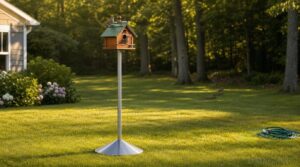
Barriers do a lot of the heavy lifting, but your yard itself can either help or work against you.
Snakes don’t wander in randomly — they follow food, cover, and water straight to your birdhouse. A few simple changes around your property can cut off those routes before a snake ever reaches the pole.
Snakes follow food, cover, and water — cut those routes and they never reach your birdhouse
Trim Grass and Low Shrubs
Tall grass is a snake’s best friend — it’s cover, camouflage, and a hunting corridor all in one. Keep your lawn trimmed to 2.5–3 inches using sharp blade maintenance to guarantee clean cuts.
Seasonal shrub pruning and edge definition techniques remove hiding spots fast.
This habitat modification to deter snakes works best when you practice consistent garden maintenance and yard upkeep to reduce snake hiding spots year-round.
Remove Brush, Leaf, and Wood Piles
Once your lawn is trimmed, look around for debris piles — they’re just as inviting to snakes as tall grass. Brush pile placement matters: move wood, leaf, and compost heaps well away from nesting areas.
Seasonal cleanup timing helps most, so clear debris every 6–12 weeks. This consistent maintenance reduces hiding spots for snakes and other pests.
Habitat modification like this, paired with proper debris disposal methods, makes your yard far less welcoming to unwanted wildlife.
Replace Heavy Mulch Near Nests
Debris piles aren’t the only problem. Heavy mulch near nests creates exactly the warm, damp microhabitat snakes love.
Swap thick wood chips for tightly packed gravel — it dries faster and cuts down insect suppression opportunities that draw foragers close. If you keep mulch, follow mulch depth guidelines: no more than 2–3 inches. Light-color mulch helps with moisture control by retaining less heat.
Reduce Rodents That Attract Snakes
Snakes follow rodents. Cut the food supply and you cut the visits. Seal cracks with steel wool, fitting metal trash lids tightly, and install a door sweep on any nearby shed. These steps involve basic habitat modification to deter snakes.
Set snap traps and monitor them weekly. Such rodent control and rodent management steps can shrink local rodent numbers by roughly a third within a month.
Secure Pet Food and Birdseed
Food scraps and loose seed are open invitations. Store everything in airtight containers — ideally, pest-resistant bins with locking lids — and keep them elevated at least 18 inches off the ground.
- Use metal or heavy plastic airtight containers
- Practice elevated storage on shelves or stands
- Apply moisture control with desiccant packs
- Schedule regular inspection weekly for spills or chew marks
- Clean feeders daily as your primary rodent deterrent
Tight storage is quiet but effective bird feeder protection and a cornerstone of smart snake deterrent strategies and broader garden wildlife management.
Fix Leaks, Gutters, and Standing Water
Water draws snakes in — standing water near your birdhouse is a quiet magnet. To address this, check for broken gutters and use leak detection methods like a garden hose flush to spot drips at seams. Gutter sealant application and slope adjustment techniques resolve most issues quickly.
Downspout extension placement ensures water is directed 4–6 feet from the foundation, minimizing pooling. This step is critical for disrupting snake-attracting habitats.
Routine maintenance, including gutter cleaning and soil moisture control, serves as a simple yet effective habitat modification to reduce snake presence. Consistent vigilance prevents water accumulation and deters snakes long-term.
Inspect Nesting Areas During Warm Months
Once a week during spring and summer, conduct birdhouse inspections with a flashlight and notebook. Document snake tracks, droppings, or scratches—these serve as early warning signs of predators.
During each visit, perform cavity moisture monitoring and ventilation slot checks to ensure habitat safety. These routine assessments prevent environmental hazards.
Maintain weekly activity logs by tracking predator evidence and verifying temperature ranges. This practice ensures data remains meaningful for long-term protection.
Regular inspections during warm months address issues before nestlings pay the price, safeguarding vulnerable populations proactively.
Use Repellents and Respond Safely
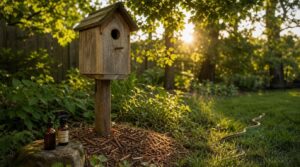
Even the best barriers can use a little backup. Repellents — both natural and commercial — add another layer of protection. Knowing how to respond when a snake shows up keeps you and your birds safe.
Here’s what actually works and what to do when it counts.
Natural Snake Deterrents Around Birdhouses
Nature gives you a few quiet weapons here. Some plants and scents genuinely make snakes uncomfortable enough to turn around.
- Plant marigolds in a ring — they release alpha-terthienyl, a natural phytotoxin snakes dislike.
- Grow garlic nearby for a pungent odor that disrupts their sensory tracking.
- Use Native Aromatic Herbs like lemongrass or oregano as a living border.
- Try Mineral Salt Barriers around the pole base as a physical-chemical combo.
- Add Predator Decoy Perches overhead — hawks unsettle snake behavior below.
Essential Oils and Scent Barriers
Scent works like an invisible fence. A cedarwood oil barrier around your pole base discourages snakes with its sharp, woody aroma.
Add a peppermint oil mist every few days—its high vapor pressure spreads fast. An eucalyptus spray protocol works well too.
Blend clove oil and cinnamon for a stronger oil blend with enhanced effectiveness.
These essential oils offer genuinely eco-friendly, natural snake repellent options. Always follow plant safety guidelines when applying near soil.
Commercial Snake Repellent Granules
Commercial granules provide a reliable line of defense against snakes. Products like Ortho Snake B Gon utilize active ingredients—typically sulfur-based compounds or natural irritants—that create discomfort for snakes, discouraging them from crossing treated areas.
Follow application guidelines carefully: sprinkle a continuous band around the pole base, using approximately 0.5 acres per 4-lb bag. Reapply after rain to maintain effectiveness.
Efficacy depends on factors like habitat and snake species, so combine chemical repellents with physical barriers for stronger control. Always adhere to product instructions for optimal results.
Why Some Home Remedies Fail
Home remedies sound appealing, but most simply don’t hold up. Mothballs, sulfur, and naphthalene have been tested against black rat snakes and showed little real deterrent effect. Here’s why they underperform:
- Ingredient Degradation: Clove oil and cinnamon oil lose potency fast due to heat, light, and improper storage.
- Incorrect Dosage: Lack of standardization in commercial products causes concentrations to vary wildly.
- Symptom Focus: These treatments mask the problem without removing what draws snakes in.
How to Tell if a Snake is Venomous
So a snake slips past your defenses — now what? Start with snake identification from a safe distance. Check the head shape first: venomous snakes have broad, triangular heads with a narrowed neck.
Look at pupil shape — slit pupils signal danger, while round ones usually don’t. Pit vipers show Heat Pits near the snout.
Study tail scales, color patterns, and overall snake behavior before getting any closer.
What to Do if a Snake is Found
Once you’ve identified the snake, your next move matters. Back away slowly and give it a clear path to leave. Keep children and pets indoors immediately — this isn’t negotiable.
- Don’t try to trap or grab it
- Use a snake hook or long stick to guide non-venomous species away
- Photograph from 6+ feet for identification
- Wash hands after any outdoor contact
When to Call Wildlife Control
Sometimes immediate danger — like a venomous species near children or pets — demands urgent action: contact professional wildlife and pest control services immediately.
Repeated entry attempts, despite barriers, signal a deeper problem requiring professional assessment. Large infestations, trapped animals indoors, or encounters with protected species also necessitate licensed intervention.
Always prioritize legal compliance; handling certain snakes without permits risks serious penalties.
| Situation | Action |
|---|---|
| Venomous snake present | Emergency snake removal call |
| Repeated entry attempts | Professional assessment needed |
| Trapped animal indoors | Contact wildlife control promptly |
| Large infestation detected | Expert humane removal required |
| Protected species identified | Legal considerations apply |
Safe Steps After Snake Removal
Once the professionals handle emergency snake removal, your job isn’t quite done. Safe removal techniques get the snake out — but what happens next protects your yard long-term.
- Containment Verification — Confirm the snake is fully secured before anyone re-enters the area.
- Protective Gear Usage — Keep gloves and boots on during post-removal inspection.
- Secure Storage Practices — Seal entry points immediately.
- Medical Response Guidelines — Seek care after any bite, even minor contact.
Frequently Asked Questions (FAQs)
Can snakes damage the birdhouse structure itself?
Rarely, but it can happen. Pole pressure from a coiling snake may loosen screws or crack weakened joints.
Wood warping and metal corrosion create gaps over time — making routine checks essential.
Do certain bird species attract more snakes?
Yes. Cavity nesters like bluebirds and large egg clutch species draw more attention. Colonial breeders and thick foliage nesters concentrate prey, attracting snakes reliably. Rodent-feeding birds indirectly invite them too.
Will security cameras help monitor snake activity?
Security cameras work well for tracking snake activity near birdhouses. Motion trigger alerts and night vision detection let you monitor visits day or night without being present.
Can neighboring yards increase your snake risk?
Your yard isn’t an island. Adjacent vegetation density, shared fence gaps, and cross‑yard water features all funnel snakes your way.
Neighbor rodent control and community cleanup coordination matter just as much as your own garden maintenance.
Do weather patterns affect snake predation frequency?
Weather absolutely shapes snake behavior. Temperature spikes and humidity influence how often snakes hunt, while rainfall timing and seasonal climate trends drive peak activity.
Understanding seasonal snake activity patterns helps you stay one step ahead.
Conclusion
Think of your yard as a fortress with one weak gate. Every gap in your defense—tall grass, a rough wooden pole, a brush pile near the post—is an invitation.
Snake-proof baffles, clear sightlines, and tidy ground close those gates one by one.
Keeping snakes away from nests isn’t a single fix; it’s a system. Build it right, check it often, and the birds you’re protecting will keep coming back.
- https://www.callnorthwest.com/2020/08/snake-repellent-what-works-and-what-doesnt/
- https://www.growinginmygarden.com/keep-snakes-out-of-your-bird-house/
- https://www.therusticelk.com/naturally-repel-snakes/
- https://championsforwildlife.org/snakes-guards-bluebirds
- https://nestwatch.org/blog/how-to-protect-tree-mounted-nest-boxes-from-snakes/