This site is supported by our readers. We may earn a commission, at no cost to you, if you purchase through links.
A small warbler can double its body weight in just a few days before taking off on a 1,500-mile flight—no rest stops, no refueling. It does this by eating almost constantly, packing fat reserves that burn cleaner and last longer than any carbohydrate could.
Most backyard feeders don’t realize migration season food availability can make or break that journey. The right seeds, suet, and native berries at the right time give migrants exactly what they need to push through. What you put out—and when—matters more than you’d expect.
Table Of Contents
- Key Takeaways
- Why Migration Changes Food Needs
- Best Foods for Migrating Birds
- Match Feeders to Arrival Timing
- Build Better Stopover Food Sources
- Track Shifts in Food Availability
- Frequently Asked Questions (FAQs)
- What drives bird migration & food availability?
- How does low food availability affect bird migration?
- How do birds eat during migration?
- What is a bird migration?
- What is the food availability?
- What are five animals that migrate?
- Do migrating birds eat differently at night?
- Which feeders attract the most migrant species?
- Can urban yards support meaningful migration stopovers?
- How does drought affect seed and berry crops?
- Conclusion
Key Takeaways
- Migrating birds need 40–100% more calories before takeoff, so stocking high-fat foods like suet, black oil sunflower seeds, and peanuts at your feeder can literally double a bird’s body weight before it departs.
- Timing your feeders two weeks before migrants arrive — and keeping them stocked two to three weeks after peak season — ensures exhausted late travelers don’t land in an empty yard.
- Native berry shrubs like elderberry, arrowwood viburnum, and red chokeberry give fruit-eating migrants a natural fuel source that syncs with their migration window far better than store-bought options.
- Warming temperatures are shifting insect emergence and plant flowering by days each decade, so using tools like eBird’s real-time route alerts helps you adjust your feeder setup before the birds arrive — not after.
Why Migration Changes Food Needs

Migration puts birds under serious physical stress—and their food needs shift fast to match it. Before they take off, their bodies go through some significant changes to prepare for the journey.
Their bodies are essentially racing against a clock, and understanding those changes starts with knowing what birds go through before and during migration season.
Here’s what’s actually happening inside a migrating bird, and why it matters for how you feed them.
Higher Calorie Demands Before Departure
Before a single wing beat of migration begins, a bird’s body is already working overtime. Caloric intake jumps 40–100%, driven by a Metabolic Rate Surge and Hormonal Lipogenesis Boost that prime the body for Carbohydrate Glycogen Loading.
Nighttime Energy Expenditure climbs around 15%, shrinking rest windows. That’s why your Predeparture Feeding Schedule matters — stocking high-fat, protein-rich foods keeps those energy reserves ready to go.
Hyperphagia and Rapid Fat Storage
That calorie surge doesn’t stop at fueling daily activity — it triggers hyperphagia, where Hormonal Triggers and Neurotransmitter Signals push birds to eat almost constantly. Insulin Sensitivity stays high, channeling food into fat deposition through rapid Adipose Expansion.
High-fat foods and the energy density of seeds make this Metabolic Efficiency possible.
Supplemental nutrition from your feeders can literally double a bird’s body mass before departure.
Feeder food can literally double a migrating bird’s body mass before departure
Why Fat Fuels Long Flights Better
Fat packs more than double the energy of carbohydrates per gram — that’s the Energy Density Advantage birds rely on. Through hyperphagia and fat deposition, birds build energy reserves that power thousands of miles.
High-fat foods and the energy density of seeds support Efficient Oxygen Use and Reduced Muscle Catabolism mid‑flight.
Fat also produces Metabolic Water, extending their Extended Flight Range without stopping.
Migratory birds also exhibit lipid store expansion to boost endurance.
How Stopovers Support Recovery
Stopovers aren’t just pit stops — they’re full recovery stations. Birds use these rest windows for muscle repair, immune boost, and hydration balance after grueling flights.
Stress hormones drop within a day or two. Digestive tissues bounce back in one to three days with good food.
Quality stopover habitat with supplemental nutrition helps birds rebuild energy reserves fast and depart stronger.
Best Foods for Migrating Birds
Not every food at your feeder pulls equal weight during migration season. Birds need specific nutrients — mostly fat — to power long flights and recover quickly at stopovers.
Here are the best options to stock up on.
Black Oil Sunflower Seeds for Energy
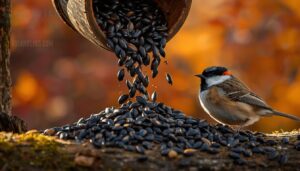
Black oil sunflower seeds are one of the smartest choices you can make during migration season. Their shell thickness is especially thin, so birds spend less energy cracking them open.
Each seed packs around 580–600 calories per 100 grams — that’s serious caloric density. The seed fat profile, rich in oleic and linoleic acids, directly builds birds’ energy reserves.
Add micronutrient benefits like vitamin E, and their storage longevity makes stocking up easy.
Suet Cakes for Fat-rich Fuel
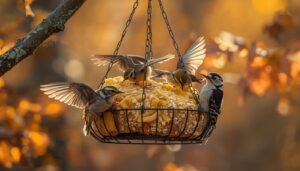
Suet cakes are among the most effective high-fat foods you can offer during migration season. Rendered fat delivers twice the energy per gram compared to carbohydrates — serious fuel for birds covering hundreds of miles.
Ground oats handle Binding Agent Selection, while mealworms add calcium and improve Fat-to-Protein Balance.
Try Seasonal Flavor Rotation — peanut, insect, seed — and always choose a Melt-Resistant Formulation with Calcium Enrichment Strategies built in.
Peanuts for Added Fats and Protein
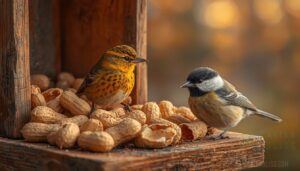
Peanuts punch well above its weight for meeting the energy needs of migrating birds. With 45–50% fat and up to 30% protein, shelled peanuts deliver serious supplemental nutrition in one small package. That fat composition — mostly unsaturated — burns efficiently during long flights.
Stick with unsalted, mold-free options, since aflatoxin management and rancidity prevention matter. Poor storage ruins both protein quality and safety fast.
Native Berries for Fruit-eating Migrants

Think of your yard as a fast-food stop on a 2,000-mile highway. Native berries do exactly that job. Viburnum fat content rivals sunflower seeds, and fruit color signaling helps birds spot ripe clusters fast. Plant these for reliable fall fuel:
- Arrowwood viburnum – ripens late summer, matching peak migration season
- Elderberry – dense clusters, birds gulp quickly during rapid transit
- Red chokeberry – antioxidant protection reduces oxidative stress from long flights
Phenology tracking shows berry flush often syncs with species-specific berry preferences among thrushes and waxwings. That timing isn’t luck — it’s evolution working in your favor.
Mealworms as a Protein Boost
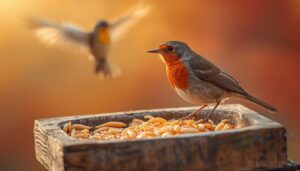
Few foods pack the same punch as mealworms regarding protein power during migration. Dried mealworms deliver around 50 percent protein by dry weight — a complete, digestible protein with every essential amino acid included. That’s mealworm nutrition doing serious work.
A protein-rich diet speeds muscle recovery between flights, and this sustainable insect feed provides supplemental nutrition and survival rates when birds need it most.
Nectar for Migrating Hummingbirds

Hummingbirds run on nectar like a sports car runs on premium fuel. Get the Nectar Sugar Ratio right — one part sugar to four parts water. No dye, no honey, no shortcuts.
- Use colorless syrup preference: plain white sugar only.
- Feeder Hygiene Practices matter — clean every 2–3 days.
- Fermentation Risk spikes in heat; discard cloudy nectar immediately.
- Nectar Shelf Life tops one week refrigerated.
During hummingbird migration, this simple mix meets their energy requirements and fueling strategies perfectly.
Match Feeders to Arrival Timing

Timing your feeders right makes a real difference for migrating birds. A few days too late and exhausted traveler moves on without finding the fuel it needs.
Here’s how to match your setup to when birds actually show up.
Installing Feeders Before Migrants Arrive
Set up your feeders about two weeks before migrants are expected in your area. Sheltered feeder placement matters — position them 10 to 15 feet from dense cover using weather-resistant mounts that handle late storms.
Height optimization is simple: 5 to 6 feet work for most species. A backup feeder strategy — a second station 50 to 100 feet away — prevents crowding from the start.
Keeping Feeders Stocked Through Late Season
Don’t pull feeders the moment you stop seeing regulars. Late migrants — stragglers running behind schedule — can trickle through 2 to 3 weeks after peak flow.
A daily restocking routine and stock rotation schedule keep your seasonal seed mix fresh and effective. Weather-resistant feeders handle late storms without losing access.
High-fat food benefits during migration are real: supplemental nutrition and survival rates show a 56% improvement with consistent late-season feeder management.
When to Refresh Nectar Feeders
Nectar spoils faster than you’d think. Temperature refresh matters most — above 75°F, swap it every 2 to 3 days. Humidity refresh is equally real: high moisture accelerates mold growth. Shade placement helps slow spoilage considerably.
- Hot days (75°F+): Refresh every 2–3 days
- Mild weather (60–75°F): Every 3–4 days works fine
- Feeder rotation: Swap two feeders alternately to keep nectar consistently fresh
- Visit frequency check: Fewer birds often signal spoiled nectar — refresh immediately
Seasonal Peaks for Eastern Migrants
Eastern migrants follow a tight schedule.
Spring peaks hit mid‑April through early May, driven by temperature cue shifts that trigger insect emergence. Those spring insect pulses draw warblers and vireos surging up the East Coast of the United States along riparian stopover peaks.
Fall runs late August through October, when berry flush and native berries give fruit‑eaters the high‑fat food benefits during migration, they need.
Seasonal Peaks for Western Hummingbirds
Western hummingbirds don’t all move at once — think of it as a Species Wave rolling through in stages.
Rufous hummingbirds lead the charge, peaking in May through the intermountain West. Calliope hummingbirds ride Elevation Shifts into higher terrain through June.
Latitude Timing matters too: Black-chinned and Costa’s peak earlier in southern Desert Bloom zones.
Corridor use along Pacific routes funnels nectar-hungry western hummingbirds steadily northward from March through June.
Using Local Sightings to Time Feeding
Don’t guess birds will show up — let your neighbors tell you. Community Sighting Networks and Citizen Science Alerts track migration timing street by street. Local Species Maps and Neighborhood Arrival Calendars, built from Birdwatcher Reporting Protocols, sharpen your Seasonal Feeder Management better than any calendar date.
- Check sighting reports weekly to adjust Feeding Strategies in real time
- hummingbird sighting maps and data collection reveal arrival patterns within 2–3 days
- early-warning alerts so your feeder is stocked before the first migrant lands
Build Better Stopover Food Sources

Feeders are a great start, but your yard itself can become a full rest stop for migrating birds. A few simple changes to plants, water, and shelter make a real difference in how many birds stop — and how well they recover.
Here’s what to add to your yard to make it genuinely useful during migration season.
Planting Native Berry-producing Shrubs
Think of native shrubs as a living pantry for migrating birds.
Serviceberry, silky dogwood, and elderberry are reliable choices for native planting for migratory birds — each thriving in soil pH range of 5.5 to 7.0.
Match plants to your sun tolerance zones, plan for a 15 to 30-foot shrub spread planning, mulch to 2 to 3 inches, and watch for disease surveillance needs early.
Choosing Late-ripening Fruit Plants
Late-ripening varieties extend your seasonal food supply well into fall — exactly when migrants need it most. Autumn King apples and Winter Nelis pears ripen from late September through November, adding fruit and seed availability after early crops are gone.
Most need 600–1,200 chill hours and soil pH around 6.0–7.0.
Full sunlight exposure — at least six hours daily — boosts sugar content.
Their storage longevity makes them reliable native planting for migratory birds.
Supporting Insects With Pesticide-free Yards
Pesticides don’t just kill pests — they wipe out the insects migrating birds depend on. Native Plant Diversity in your yard naturally boosts insect abundance without chemicals. Pair that with Soil Health Practices like compost and no-dig methods, and you’re feeding the whole food web.
Habitat Connectivity Corridors and Mechanical Pest Control keep things balanced.
Pesticide-free environments simply work better for everyone passing through.
Adding Brush Piles and Shelter
A good brush pile is one of the most underrated tools in bird-friendly habitat design. Done right, Brush Pile Design gives migrants instant cover between feeding stops.
Focus on three essentials:
- Shelter Material Choices — layer hardwood branches with evergreen boughs
- Placement Strategies — position near shrub lines, away from foot traffic
- Seasonal Maintenance — refresh material every 2–4 years
Microhabitat diversity, like this, fights habitat loss quietly but effectively.
Providing Shallow Water for Refueling
Brush piles handle shelter — but birds also need fresh water to refuel between flights.
Keep your bird bath shallow, just 1–2 inches deep, and change the water every two days.
Water quality monitoring matters more than most people realize. In winter, heated deicers prevent freezing so late migrants don’t arrive to an empty dish. Clean water is simple fuel that makes a real difference.
Creating Multiple Feeding Stations
One water dish helps, but multiple feeding stations help more. Space them 6–12 meters apart to cut competition between species.
Mix feeder types — seeds, suet, and fruit — at varying heights for feeder placement and predator safety.
Add anti-rodent baffles and weatherproof covers. more birds mean more birds fueling up successfully before their next long flight.
Track Shifts in Food Availability

Migration seasons aren’t what they used to be, and the food birds depend on is shifting right along with them. Warmer springs, unpredictable weather, and changing insect cycles all affect what’s available — and when.
Here’s what to watch so your yard stays a reliable stop when birds need it most.
How Warming Changes Flowering Times
Warming springs are quietly rewriting the calendar for plants — and birds are paying the price. Every 1°C rise shifts flower blooming phenology roughly 2–3 days earlier. That sounds small, but it adds up fast.
- Woody Herbaceous Shift means trees bloom before wildflowers catch up
- Fruit Trait Sensitivity causes fleshy-fruited plants to respond unpredictably
- Community Synchrony Loss leaves peak nectar windows fragmented
- Latitudinal Phenology Change hits northern stopover sites hardest
Spring Temperature Impact reshapes seasonal food availability — creating real phenological mismatch risks and climate change impact gaps birds can’t always bridge.
Insect Emergence and Migration Mismatches
Plants aren’t the only ones running behind schedule. Insect Emergence Shifts follow a similar pattern — mayflies, beetles, and caterpillars are appearing 2 to 5 days earlier per decade. That’s Phenological Mismatch in action.
Birds arrive expecting a food buffet, but the peak is already fading. Aquatic Terrestrial Linkage matters here too — when lake insects emerge early, terrestrial birds lose a critical stopover ecological fuel source.
Wind Pattern Changes make timing even harder to predict.
Weather Effects on Seasonal Food Flushes
Weather doesn’t just set the mood — it rewrites the menu.
A Heatwave Fruit Flush can spike berry sugar content mid-spring, while a Cold Snap Delay wipes out buds for 3–7 days.
Rainfall Insect Surge boosts protein sources by up to 40 percent, but Wind-Reduced Nectar quietly cuts hummingbird intake by 20 percent.
Humidity-Extended Fruit adds 5–10 extra days of availability.
These weather cues shift migration phenology, insect emergence, and seed availability faster than birds can adjust.
Regional Differences in Food Timing
Where you live shapes when food appears — and birds track that closely. Latitude Meal Shifts mean Alabama feeders see arrivals two weeks before Maine does. Seasonal Daylight Influence stretches or compresses nectar windows across Urban Rural Timing differences, too.
- Gulf Coast stopover sites peak mid‑April
- Pacific coastal feeders see western species through late May
- Northern states need feeders stocked into early June
Using Migration Apps and Sighting Maps
Migration apps turn raw data into something you can actually use. Tools like Cornell Lab of Ornithology’s eBird offer Real-time Route Alerts, Species Filter Tools, and Wind Overlay Integration — so you know exactly when to stock your feeder. The Community Validation System confirms sightings, while Offline Data Caching keeps you covered in remote yards.
| App Feature | What It Does | Why It Helps |
|---|---|---|
| Real-time Route Alerts | Notifies when species enter your region | Times your feeder setup perfectly |
| Hummingbird Tracker | Follows citizen science hummingbird sighting maps and data collection | Spots late migrants others miss |
| Wind Overlay Integration | Layers weather fronts on the migration map | Predicts arrival surges after tailwinds |
| Species Filter Tools | Filters routes by individual species | Focuses attention on target birds |
| Offline Data Caching | Stores recent data without internet | Facilitates remote stopover planning |
Use of mobile apps for tracking hummingbird migrations has logged over 197 million reports since 2009.
Adjusting Backyard Feeding During Changing Seasons
Seasons shift fast — your feeding strategies should be too.
Flexible Food Rotation keeps things practical: swap in suet cakes and black oil sunflower seeds as temperatures drop, since every 5°C fall raises daily energy needs by roughly 5 percent.
High‑Fat Food Benefits During Migration are real.
Combine Microhabitat Diversity with Citizen Science Integration, Seasonal Feeder Placement, and Temperature-Driven Hydration through Water Provision for Migrating Birds to keep birds fueled all season.
Frequently Asked Questions (FAQs)
What drives bird migration & food availability?
Ancient instincts still govern modern migration. Magnetic Navigation, Daylight Length, and Wind Assisted Flight cue departure.
Climate change and Habitat Fragmentation now disrupt Phenology Shifts, shrinking reliable stopover feeding sites along Gulf and Pacific coasts.
How does low food availability affect bird migration?
When food sources diminish, birds face delayed departure timing and reduced flight speed.
Low seasonal food availability disrupts hyperphagia, strains stopover habitats, and raises mortality risk — forcing altered route selection and extended stopover duration to meet energy storage and consumption in flight.
How do birds eat during migration?
Birds don’t eat casually during migration — they eat strategically.
Feeding frequency spikes, meal size grows, and digestive adaptations kick in to optimize pre‑flight gut loading and precise energy budgeting before every departure.
What is a bird migration?
Bird migration is a seasonal movement where birds travel between breeding and wintering grounds — sometimes thousands of kilometers.
Daylength timing mechanisms and magnetic field detection guide their flyway navigation cues across predictable migration routes each year.
What is the food availability?
During migration, food sources shift fast. Seed crop timing, insect biomass peaks, and nectar flow duration rarely align perfectly.
Water source availability and habitat fragmentation impact how well migrants refuel between flights.
What are five animals that migrate?
Five animals stand out for jaw-dropping journeys: Arctic Tern Path spans 25,000 km, Bar-tailed Godwit Flight crosses 11,000 km nonstop, Humpback Whale Breeding drives ocean crossings, Gray Whale Feeding migration covers 12,000 km, and Wildebeest Migration Cycle loops 300 km seasonally.
Do migrating birds eat differently at night?
Yes — and it’s more strategic than you’d think.
Nocturnal food preference shifts toward high-fat foods like suet and seeds. Moonlight influence and temperature foraging shape when and how much they eat after dark.
Which feeders attract the most migrant species?
Platform and hopper feeders draw the widest mix of migrants. Tube feeders pull in warblers and finches. Suet feeder appeal spikes during cold fronts, attracting woodpeckers fast.
Can urban yards support meaningful migration stopovers?
Picture a sparrow dropping into your yard mid‑flight, urgently needing fuel.
Urban yards absolutely support meaningful stopovers — green corridor connectivity and native trees turn even small spaces into essential refueling stations.
How does drought affect seed and berry crops?
Drought hits seed and berry crops hard. Seed yield reduction happens fast — fewer seeds per plant, smaller size.
Berry size decline follows, with sugar content loss making fruit less nutritious for wildlife.
Conclusion
Nearly half of all migratory songbirds have declined in population over the past 50 years—and migratory season food availability is one quiet factor behind that drop.
Your yard can change that math. A few well-timed feeders, native shrubs, and a pesticide-free patch of soil turn a stopover into a genuine lifeline.
Birds don’t need much from us. They just need what’s there when they land.