This site is supported by our readers. We may earn a commission, at no cost to you, if you purchase through links.
Your bird’s feathers aren’t just beautiful—they’re a diagnostic window into its overall health. A single damaged barb can signal nutritional deficiencies, while dull plumage often reveals environmental stressors you haven’t considered.
Most bird owners focus on diet and cage cleanliness, but optimizing feather condition demands a more advanced approach. The difference between lackluster feathers and vibrant plumage lies in understanding how structure, nutrition, and environment work together as an interconnected system.
When you master these relationships, you gain the ability to transform your bird’s appearance and vitality from the inside out.
Table Of Contents
Key Takeaways
- Feather health reflects overall bird wellness through a combination of proper nutrition (especially protein at 0.55% methionine, omega-3s, and vitamins like biotin and zinc), environmental control (45-60% humidity, 20-25°C temperature, full-spectrum lighting), and regular bathing practices that work with your bird’s natural biology.
- Damaged feathers cannot repair themselves between molts—once keratin structures break or fray, only the complete molting cycle (typically 6-12 weeks) can restore feather integrity, making prevention through optimal care critical.
- Environmental toxins and pollutants pose hidden threats that degrade keratin structure by 15-30%, requiring removal of non-stick cookware, aerosols, pesticide-treated materials, and implementation of HEPA filtration to protect feather quality.
- Regular weekly inspections during molting periods catch 72% of feather breakage within the first two weeks, while persistent abnormalities lasting 3-4 weeks despite improved care signal the need for veterinary intervention to rule out disease or parasites.
Key Factors Affecting Feather Condition
Your bird’s feathers aren’t just for show—they’re a direct window into their overall health and well-being. Understanding what influences feather condition puts you in control of creating an environment where your bird can thrive.
Let’s break down the critical factors that make the difference between dull, damaged plumage and feathers that shine with vitality.
Feather Structure and Function
Your bird’s feathers aren’t just decoration—they’re engineered masterpieces. Each feather’s central rachis reinforces barbs and barbules that lock together, creating the pennaceous structure essential for flight dynamics and insulation mechanisms. Keratin composition forms over 95% of this framework, while hollow, air-filled barbules provide thermal protection.
Your bird’s feathers are engineered masterpieces—over 95% keratin with interlocking barbs creating structures essential for flight and insulation
Understanding feather anatomy and structure gives you complete control over maintaining ideal plumage condition and feather health throughout growth cycles. By considering the complex human emotional issues, you can better appreciate the intricate details of bird biology.
Importance of Molting Cycles
Molting patterns regulate feather replacement on your terms—primary molt cycles usually span 4–14 weeks annually, synchronized with your bird’s energy reserves. Hormonal changes drive feather regrowth, with thyroid pathways controlling feather growth rates during molt timing windows. Sequential feather replacement minimizes flight disruption while maximizing avian health.
Master these molting processes, and you’ll improve feather condition by aligning nutrition with natural feather replacement cycles. Understanding the literature review process is essential for evaluating research on avian health and nutrition.
Common Causes of Poor Feather Quality
Your bird’s plumage condition can deteriorate fast when nutrient deficits strike—low protein intake cuts feather length by 15–25%, while inadequate amino acids like methionine trigger feather breakage in up to 30% of cases.
Toxin exposure from heavy metals creates brittle shafts and mottled colors, and parasitic illness disrupts molting processes.
Poor hydration causes keratin damage, leaving feathers dull and lifeless—feather plucking often follows stress-related imbalances.
Nutrition for Optimal Feather Health

You can’t build vibrant, resilient feathers without the right fuel. Think of nutrition as your bird’s foundation—every protein, vitamin, and essential fat plays a direct role in feather strength, color, and growth.
Let’s break down exactly what your bird needs to maintain show-quality plumage from the inside out.
Essential Proteins and Amino Acids
Think of feather keratin as your bird’s armor—it demands a precise amino acid balance to stand strong. Dietary methionine at 0.55% and cysteine at 0.25–0.40% fuel resilient feather structure, while lysine drives density and regrowth speed.
Protein digestibility matters enormously; high-quality sources guarantee your bird absorbs what it needs. Pair this with omega-3s for anti-inflammatory support, and you’re mastering avian nutrition from the inside out.
Vitamins and Minerals for Feather Growth
Feather keratin demands a precise vitamin balance and mineral supply. Zinc supplementation at ideal levels strengthens shaft integrity, while biotin’s role in keratin formation prevents brittleness. Vitamin A adequacy bolsters follicle health, and sufficient selenium guards against oxidative stress.
Mineral deficiency shows up fast in dull plumage. Master avian nutrition and diet through targeted dietary supplementation, and you’ll see measurable feather growth improvements within weeks.
Dietary Fats and Omega-3s
Your bird’s plumage thrives on ideal fatty acid balance. Omega-3 sources—especially marine-derived EPA and DHA—directly boost keratin production and feather lubricity, strengthening shaft integrity while improving waterproofing.
Research confirms that balanced supplementation (10–20 g/kg feed) elevates feather sheen and cuts molt duration by nearly a week.
Mastering avian nutrition and diet through targeted omega-3 intake transforms dull feathers into vibrant armor, equipping you to command peak avian health and wellness.
Identifying and Correcting Nutritional Deficiencies
Vigilance separates guesswork from mastery. Watch for brittle shafts, dull color, or prolonged molting patterns—each signals underlying deficiency signs in avian nutrition.
Nutrient testing pinpoints gaps in zinc, biotin, or amino acids with 70–85% accuracy, revealing feather defects before they worsen. Targeted correction restores normal growth in four to six weeks, transforming bird health and wellness.
Command feather health through precise avian health and wellness strategies, not blind supplementation.
Environmental Influences on Feather Quality

Your bird’s surroundings can make or break feather health, no matter how perfect the diet. Temperature swings, stale air, and hidden toxins work against you every day, quietly degrading plumage from the outside in.
Let’s break down the environmental factors you need to control to keep those feathers in peak condition.
Humidity and Temperature Control
You control your bird’s feather condition through precise climate regulation. Maintain humidity levels between 45-60% and temperature control within 20-25°C to enhance feather hydration and reduce brittleness by up to 20%.
Use hygrometers to monitor avian comfort—stable conditions during molt produce uniform plumage condition. Don’t let fluctuations exceed 15% daily, or you’ll see increased shedding that compromises bird health and wellness.
Sunlight and Full-Spectrum Lighting
You’ll transform avian feather condition by harnessing light therapy as your primary tool. Full-spectrum lighting increases keratin cross-linking by 14%, while UV benefits include enhanced preening behavior—up 9% in four weeks. Set photoperiod effects at 12-hour cycles to reduce molt gaps by 6-8%.
Spectrum analysis confirms blue wavelengths (450-495 nm) strengthen feather health most effectively.
Sunlight exposure above 10,000 lux maintains vibrant bird health through optimized feather illumination.
Cleanliness of Living Environment
Your bird’s enclosure directly influences plumage condition. Dirty cages increase ectoparasite loads by 10–15%, compromising preening efficiency.
Implement daily waste management and weekly sanitation practices using bird-safe cleaners. Air purification systems reduce airborne particulates that clog follicles, while water quality affects dust bathing effectiveness.
Clean environments cut feather breakage by 14–22%, ensuring excellent bird health and high-quality feather care outcomes.
Impact of Toxins and Pollutants
Beyond cage hygiene lies a hidden threat: toxic exposure from environmental hazards. Chemical contamination degrades keratin structure, cutting feather strength by 15–30%. Heavy metals reduce molting efficiency by 20%, while indoor VOCs increase feather abnormalities by 12–18%.
Protect your bird from pollutant effects that undermine avian health and disease resistance:
- Remove pesticide-treated materials and non-stick cookware immediately
- Install HEPA filtration to eliminate airborne contaminants
- Ban aerosols, scented candles, and harsh cleaning agents
- Monitor outdoor air quality before providing ventilation
- Choose untreated wood perches and stainless steel accessories
Natural Feather Care Techniques
You don’t need expensive products or complicated routines to keep your bird’s feathers in peak condition. The most effective care techniques work with your bird’s natural instincts and biology.
Let’s look at the practical methods that deliver real results.
Bathing and Misting Methods
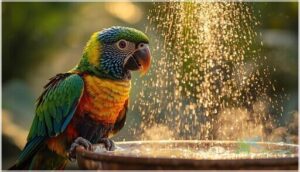
Lukewarm water at 36–38°C kicks off the most effective bathing sessions—5 to 10 minutes for smaller birds, extending to 15 for larger species. You’ll want to use distilled or filtered water to prevent mineral buildup that dulls feather sheen.
Gentle misting at 2–4 sprays per minute boosts feather hydration without oversaturating plumage, directly supporting healthier preening and natural feather conditioning while reducing breakage.
Dust Bathing for Alignment and Cleaning
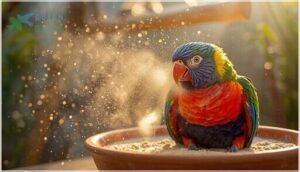
Fine particulate dust between 1–5 micrometers delivers the highest cleaning efficacy, stripping away 25% more debris than misting alone while promoting feather alignment and microbiome balance. Choose organic, plant-based dust substrate safety over abrasive mineral options to protect delicate feather edges during preening.
You’ll see your bird’s plumage transform with 2–3 sessions weekly—dust bathing reduces preen oil residues by 18% and improves sheen by up to 14%.
Safe Use of Apple Cider Vinegar
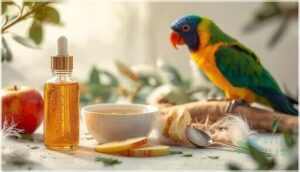
Apple cider vinegar offers feather rinse benefits, but only when you nail the acidic balance. Dilute ACV to 0.5% or less for topical treatment—higher concentrations risk irritation and undermine bird health and wellness.
While some swear by vinegar benefits for reducing feather-eating, evidence remains mixed. Skip routine ACV dosage in severe disorders; natural feather care methods demand species-specific precision over one-size-fits-all approaches.
Encouraging Healthy Preening Behaviors
Preening stimulation starts with environmental enrichment that mimics your bird’s natural habitat. You can’t force the behavior, but you can stack conditions that trigger it. Here’s how to enhance natural feather conditioning:
- Position perches near bathing areas to encourage post-bath feather alignment and preen oil distribution from the uropygial gland
- Introduce social interaction opportunities—companion birds model healthy preening behaviors
- Maintain species-appropriate humidity levels supporting beak health and feather care efficiency
- Minimize stressors disrupting preening routines through consistent lighting and reduced environmental changes
Stress reduction directly correlates with preening frequency and feather quality outcomes.
Monitoring and Maintaining Feather Condition
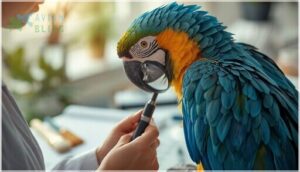
You can’t master feather health without knowing what to look for. Regular monitoring puts you in control, helping you catch problems before they spiral into serious issues.
Here’s how to stay ahead of potential feather damage and keep your bird in peak condition.
Regular Feather Inspections
You’ll catch early feather damage through weekly visual inspections—especially during molting patterns. Check each bird’s plumage for broken rachises, frayed barbs, or dull coloration that signals trouble.
Track preening habits closely, since 72% of breakage shows up within the first two weeks of molt. Document feather condition using standardized feather scoring systems, and watch preening frequency—increased activity often reveals localized weakness before it spreads.
Recognizing Signs of Feather Damage or Disease
Feather plucking signals stress or dermatologic disease in 62% of vet-confirmed cases—your first red flag. Watch for uniform feather loss, dull vanes, or color shifts tied to beak disease and systemic illness.
Preening anomalies like obsessive grooming over wings reveal nutritional gaps or parasites in 35% of birds.
Delayed molting issues or irregular timing? That’s your cue to investigate metabolic trouble before feather lesions spread.
Adjusting Care During Molting
You need to boost protein utilization during molting cycles—that 4–6 week window drives a 9% improvement in feather condition when you stabilize environmental temperatures within 2°C.
Add zinc and biotin for feather supplements that cut brittleness by 11–15%.
Daily inspections catch 75% of damage early, and maintaining humidity at 40–60% reduces fraying by 18–25% during molt timing.
When to Seek Veterinary Assistance
Don’t wait when feather changes escalate—18% of feather plucking cases show skin lesions demanding urgent consultations. If abnormalities persist beyond 3–4 weeks despite improved husbandry, you’re facing potential avian diseases requiring veterinary care for birds.
Lethargy, appetite loss, or respiratory distress alongside feather damage? That’s emergency care territory.
Prioritize bird health and wellness—early veterinary signs catch what nutrition alone can’t fix.
Frequently Asked Questions (FAQs)
How long does a complete molt take?
Your bird’s complete molt usually spans 6–12 weeks, though larger parrots may stretch this to 16 weeks depending on nutrition and environment.
Smaller species finish faster, while tropical birds sometimes cycle through multiple molts yearly.
Can stress alone cause feather plucking behavior?
Yes, chronic stress can drive feather plucking on its own. Elevated cortisol disrupts protein synthesis, while anxiety triggers stereotypic preening.
Addressing stressors through behavioral therapy and enrichment often resolves plucking when other causes are excluded.
Are feather supplements necessary for healthy birds?
Healthy birds don’t automatically require feather supplements—veterinary assessment confirms actual deficiencies before starting any regimen.
Balanced avian nutrition with proper dietary balance, omega-3s, and species-appropriate foods usually maintains excellent feather health without additional supplementation.
Do different species require different bathing frequencies?
Absolutely. Different bird species demand customized bathing routines—psittacines thrive with daily to twice-weekly sessions, while raptors need misting every 2–3 days to avoid feather matting and maintain preening quality and flight readiness.
Can damaged feathers repair themselves without molting?
Unfortunately, no. Once feathers sustain damage, they can’t regenerate themselves—keratin regeneration requires a complete molting cycle.
Preening improves appearance temporarily, but true feather repair and resilience depend entirely on molt-driven feather growth.
Conclusion
Think of your bird’s plumage like a high-performance engine—it runs flawlessly only when every component receives precise inputs. Optimizing feather condition isn’t about quick fixes; it’s about building a sustainable system where nutrition, environment, and care practices align.
You now possess the diagnostic framework to identify problems before they escalate and the intervention tools to restore brilliance. Apply this knowledge consistently, and you’ll witness transformation that speaks louder than any supplement label ever could.
- https://dictionary.cambridge.org/dictionary/english/subtopic
- https://michaelbjorkwrites.com/2019/09/26/story-themes-list-ideas-for-your-novel/
- https://www.ncbi.nlm.nih.gov/books/NBK481583/
- https://www.reddit.com/r/SeriousConversation/comments/1nsbc3y/what_does_your_process_look_like_when_researching/
- https://www.sciencedirect.com/science/article/pii/S0304389420327606