This site is supported by our readers. We may earn a commission, at no cost to you, if you purchase through links.

I watched a squirrel do a full backflip off my maple tree, army-crawl across a wire, and land dead-center on my "squirrel proof" suet cage. Took him about eight seconds. My birds got nothing but crumbs and a front-row seat to the heist.
Sound familiar? You’re not losing your mind, and you’re not bad at this. Squirrels can chew through wood with 7,000 PSI of bite force and leap distances that’d make an Olympian jealous.
The good news: real suet feeders for squirrel proofing exist, built with weight-sensitive shrouds, tough metal cages, and smart placement tricks that actually hold up. Let’s find the ones worth your money.
Table Of Contents
- Key Takeaways
- Top Squirrel Proof Suet Feeders to Buy
- 1. Squirrel Buster Suet Bird Feeder
- 2. Kingsyard Metal Caged Bird Feeder
- 3. Recycled Plastic Caged Suet Feeder
- 4. Copper Caged Double Suet Feeder
- 5. Metal Hanging Suet Bird Feeder
- 6. Kingsyard Metal Double Suet Feeder
- 7. Copper Caged Dual Purpose Bird Feeder
- 8. Kingsyard Metal Squirrel Proof Suet Feeder
- 9. More Birds Double Suet Feeder
- Key Features That Make Feeders Squirrel Proof
- How to Install for Maximum Protection
- Do Upside Down Feeders Really Work
- Double Vs Single Suet Capacity
- Choosing The Right Suet Blends
- Suet Feeder Maintenance and Sanitation
- Which Birds Prefer Suet Feeders
- Frequently Asked Questions (FAQs)
- What is the 5 7 9 rule for squirrels?
- What is the number one squirrel deterrent?
- How to prevent squirrels from eating suet?
- How to make a suet feeder squirrel-proof?
- How often should I refill a suet feeder?
- Can raccoons also be deterred by squirrel-proof feeders?
- What time of year is suet most needed?
- Will hot pepper suet harm other wildlife nearby?
- How long do suet cakes typically last outdoors?
- Conclusion
Key Takeaways
- Squirrel-proof suet feeders rely on four core defenses—tight cage openings (1.25–1.5 inches), all-metal construction, weight-activated shrouds, and hardened locking mechanisms—to keep pests out while letting small birds feed freely.
- Proper placement matters as much as the feeder itself, following the 5-7-10 rule (5 feet high, 7 feet from trunks, 10 feet from overhanging branches) and using baffles to block climbing and jumping access.
- Upside-down feeder designs exploit the natural difference between birds’ clinging feet and squirrels’ all-fours grip, offering a mechanical, battery-free deterrent.
- Regular maintenance—weekly inspections, biweekly deep cleaning, and proper sanitization—protects both the feeder’s function and bird health, while choosing suet type (like no-melt or capsaicin blends) based on season further reduces spoilage and pest raids.
Top Squirrel Proof Suet Feeders to Buy
Squirrels are clever, but these nine feeders are built to outsmart them anyway. Each one grips the job differently, from heavy-duty cages to weighted perches that shut the door on unwanted guests. Let’s get into the lineup and find the right fit for your yard.
If none of these feeders quite match your setup, pairing them with proven squirrel-proof bird feeding strategies like pole placement and safflower seed can seal the deal.
1. Squirrel Buster Suet Bird Feeder
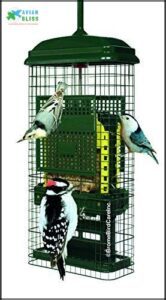
Ever watched a squirrel casually raid your suet like it owns the place? This feeder shuts that down fast. Its weight-activated shroud drops when anything heavier than a bird lands on it, sealing off both suet ports instantly.
You get two standard suet cakes, a chew-resistant metal cage, and a handy crumb port that recycles fallen bits instead of wasting them. Cleaning’s a breeze too, thanks to tool-free disassembly. Simple, sturdy, and squirrel-proof—what’s not to like?
| Best For | Backyard bird enthusiasts who want to attract woodpeckers, nuthatches, jays, and orioles while keeping squirrels from stealing the suet. |
|---|---|
| Material | Metal |
| Suet Capacity | 2 cakes |
| Weather Protection | Metal shroud |
| Squirrel Deterrent | Weight-activated shroud |
| Cleaning Design | Tool-free detachable |
| Target Birds | Woodpeckers, nuthatches, jays, orioles |
| Additional Features |
|
- Weight-activated shroud instantly blocks squirrel access to both suet ports
- Crumb port design reduces food waste by catching fallen bits
- Tool-free disassembly makes cleaning quick and simple
- Weight-sensitive mechanism may also block access for some larger bird species
- Still requires periodic disassembly for thorough cleaning
- Holds only two suet cakes, which may need frequent refilling in busy backyards
2. Kingsyard Metal Caged Bird Feeder
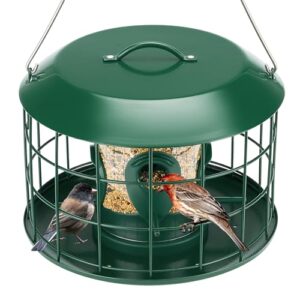
If that weight-activated shroud felt too high-tech, this one keeps things simple: brute-force metal. The welded steel cage wraps around two suet cakes, leaving squirrels nothing to chew through.
A center seed tray adds sunflower or nyjer for variety, and feeding happens from all four sides, so you’re not stuck watching one lonely woodpecker hog the spot. Powder-coated steel shrugs off rust, rain, and snow for seasons. Heavy, sturdy, and about as flashy as a brick—which is exactly the point.
| Best For | Homeowners who want to attract small songbirds like goldfinches, chickadees, and house finches while keeping bigger pests like squirrels, pigeons, and starlings out of the seed. |
|---|---|
| Material | Metal and plastic |
| Suet Capacity | N/A (seed only) |
| Weather Protection | Metal roof |
| Squirrel Deterrent | Metal cage mesh |
| Cleaning Design | Hanging required |
| Target Birds | Goldfinches, chickadees, finches |
| Additional Features |
|
- Rust-resistant metal cage with a protective roof keeps seed dry and lasts season after season
- Four 360-degree feeding ports let multiple small birds feed at once without crowding
- Bottom catchment platform reduces seed waste by catching what falls through
- 1.5 lb seed capacity means more frequent refills compared to larger feeders
- Small 1.5-inch mesh openings restrict access for larger bird species
- Needs to be hung outdoors, so it’s not a plug-and-play tabletop option
3. Recycled Plastic Caged Suet Feeder
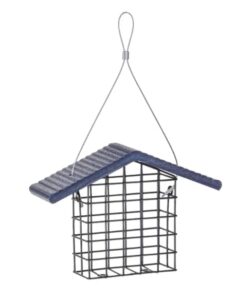
Not a fan of steel? This one swaps metal for recycled poly lumber, tough enough to shrug off minus 20 to 120 degree swings without cracking.
The cage openings let chickadees and nuthatches squeeze in while blocking bulkier critters. Rust-resistant hardware and UV-stabilized plastic mean no fading, no corroding, just a solid feeder holding one suet cake through rain, snow, or blazing sun. Bonus: you’re feeding birds with old milk jugs, basically. Eco-friendly and squirrel-proof, all in one tidy package.
| Best For | bird lovers who want an eco-friendly, low-maintenance suet feeder that can handle harsh weather without rusting, cracking, or fading. |
|---|---|
| Material | Metal |
| Suet Capacity | N/A (habitat) |
| Weather Protection | N/A |
| Squirrel Deterrent | N/A |
| Cleaning Design | Removable pans |
| Target Birds | N/A |
| Additional Features |
|
- Recycled poly lumber construction resists cracking, splitting, and fading in extreme temperatures
- Dual-sided access and caged design let smaller birds like chickadees and nuthatches feed while blocking larger pests
- Rust-resistant aluminum hinges and stainless steel screws add durability with minimal upkeep
- Holds only one suet cake at a time, so refills are needed more often
- Requires a separate hanging setup since it doesn’t come with a stand or pole
- Slightly heavier and bulkier than wire-cage feeders, which may limit placement options
4. Copper Caged Double Suet Feeder
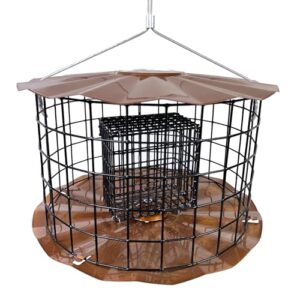
Copper never goes out of style, and this feeder proves it. The 14-inch cage holds two standard suet cakes with 1.5-inch mesh openings, small enough to block larger birds while chickadees and nuthatches squeeze right in.
That scalloped copper roof and base aren’t just for looks, either. All-metal construction shrugs off weather for years, and it fully disassembles for cleaning. Double capacity means fewer refills. A patio favorite that pulls double duty as garden decor.
| Best For | Backyard birdwatchers who want to attract chickadees, nuthatches, wrens, titmice, and woodpeckers while keeping larger birds out. |
|---|---|
| Material | Recycled poly lumber |
| Suet Capacity | 1 cake |
| Weather Protection | Roofed cage |
| Squirrel Deterrent | Caged design |
| Cleaning Design | Easy to clean |
| Target Birds | Woodpeckers, nuthatches, chickadees, bluebirds |
| Additional Features |
|
- Double capacity center holder means fewer refills and longer feeding times
- Durable all-metal construction with a decorative copper roof and base that holds up outdoors for years
- Disassembles easily for thorough cleaning and maintenance
- Only fits standard sized suet or seed cakes, so it’s not as flexible with other bird food types
- Manual disassembly is required for deep cleaning, which takes a bit more effort than a wipe-down
- Design specifically favors small to medium birds, so it won’t serve those hoping to feed larger species
5. Metal Hanging Suet Bird Feeder
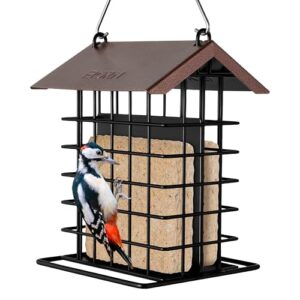
Sometimes simple wins. This one’s a rigid metal cage with a reinforced hook hanger built for wind and weather, no swinging or bending under a squirrel’s weight.
Pair it with a well-designed seed feeder tray to catch spills and keep feeding time tidy even when squirrels come prowling.
Heavy-duty wire, around 1/8 to 3/16 inch thick, resists chewing better than you’d think. The rounded dome roof sheds rain, keeping suet dry. Powder-coated finish fights rust for seasons.
No frills here, just solid, no-nonsense protection. If you want tough over trendy, this one’s your workhorse.
| Best For | Backyard bird lovers who are tired of squirrels raiding the feeder and want something built to survive rough weather without a second thought. |
|---|---|
| Material | Metal |
| Suet Capacity | 2 cakes |
| Weather Protection | Copper roof |
| Squirrel Deterrent | Small mesh cage |
| Cleaning Design | Disassemblable |
| Target Birds | Chickadees, nuthatches, wrens, titmice |
| Additional Features |
|
- Squirrel-proof reinforced hook keeps the feeder steady and out of reach from persistent critters
- All-metal, weatherproof build holds up through rain, snow, sun, and wind
- Bottom tray and drainage holes cut down on mess and help keep seed fresh
- Heavier than a standard wooden feeder, so hanging setup needs to be sturdy
- Needs regular cleaning to keep drainage working properly and prevent buildup
- No-frills design won’t appeal to anyone wanting a decorative garden piece
6. Kingsyard Metal Double Suet Feeder
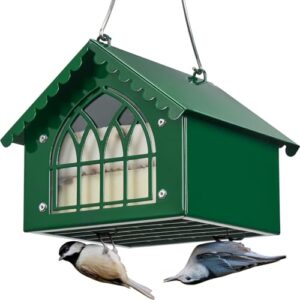
Two feeding stations, zero splitting up your flock. This one gives you separate suet cages for double the capacity, so woodpeckers and nuthatches don’t have to wait their turn.
Heavy-gauge metal with a powder-coated finish shrugs off rust, rain, and squirrel teeth. The tight wire spacing leaves squirrels nothing to grip.
Refilling’s a breeze, too. Pop the roof, swap the cakes, done. If your feeder’s constantly picked clean, this doubles your buffer between grocery runs.
| Best For | Bird lovers hoping to attract clinging species like woodpeckers, nuthatches, chickadees, and wrens while keeping bully birds like starlings and grackles away. |
|---|---|
| Material | Metal |
| Suet Capacity | N/A (seed) |
| Weather Protection | Weatherproof roof |
| Squirrel Deterrent | Squirrel proof hook |
| Cleaning Design | Periodic cleaning |
| Target Birds | General songbirds |
| Additional Features |
|
- All-metal, powder-coated build stands up to rust and outdoor wear
- Dual suet compartments mean more capacity and less frequent refilling
- Transparent panel makes it easy to check food levels at a glance
- Birds may need time to adjust to the upside-down feeding style
- Might need careful placement or a slight tilt for birds to spot it easily
- Not a fit for larger birds that can’t feed while hanging upside down
7. Copper Caged Dual Purpose Bird Feeder
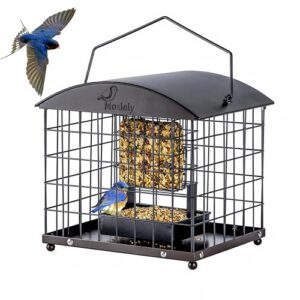
Why choose between seed and suet? This one lets you offer both, swapping easily depending on season or what’s visiting your yard.
The copper-tone cage resists rust and looks sharp doing it, with tight mesh spacing (around 1 to 1.5 inches) keeping squirrels out while chickadees and finches slip right in.
Polycarbonate viewing lets you check levels at a glance. Detachable ports make refilling quick, no wrestling with tools required.
| Best For | This feeder is best for backyard bird watchers and gardeners who want to attract small species like chickadees and finches while keeping squirrels and larger birds away. |
|---|---|
| Material | Metal |
| Suet Capacity | 2 blocks |
| Weather Protection | Removable roof |
| Squirrel Deterrent | Metal cage |
| Cleaning Design | Removable roof |
| Target Birds | Woodpeckers, nuthatches, chickadees, wrens |
| Additional Features |
|
- Dual-purpose design lets you switch between suet cakes and loose seed depending on the season
- Weather-resistant, powder-coated construction with a protective lid holds up well outdoors
- Detachable assembly makes cleaning and refilling simple
- The small opening size may keep out popular mid-sized birds like male cardinals and larger bluebirds
- Small starlings can still squeeze in if the opening runs slightly over 1.3 inches
- Requires assembly, which may take extra time before it’s ready to use
8. Kingsyard Metal Squirrel Proof Suet Feeder
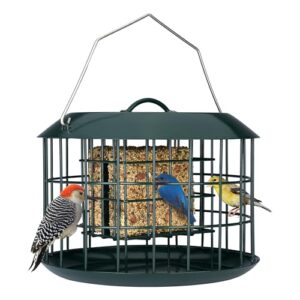
Squirrels chew, gnaw, and generally treat feeders like chew toys, but this one won’t budge. The 1.5-inch fly-through openings keep adult squirrels out while chickadees and nuthatches feed easy.
Built from all-metal construction with a powder-coated finish, it shrugs off rust and rough weather year-round. The removable roof makes refilling painless, and the bottom baffle catches drips before they hit your lawn.
Model KYBF123CP01 holds two suet cakes, so you’re not refilling every other day.
| Best For | Birdwatchers and gardeners who want to feed small songbirds like chickadees, nuthatches, finches, and bluebirds without squirrels raiding the suet. |
|---|---|
| Material | Stainless steel and metal |
| Suet Capacity | 2 cakes |
| Weather Protection | Protective lid |
| Squirrel Deterrent | Metal cage |
| Cleaning Design | Detachable assembly |
| Target Birds | Small birds |
| Additional Features |
|
- Squirrel-proof 1.5-inch openings keep adult squirrels out while letting small birds feed easily
- Durable, rust-resistant metal construction with a powder-coated finish handles year-round outdoor weather
- Removable roof and bottom baffle make refilling simple and keep mess to a minimum
- Small openings may also block larger bird species from accessing the suet
- Requires manual refilling since there’s no automatic feed mechanism
- Listed color (Green) doesn’t match the title (Brown), which could cause confusion when ordering
9. More Birds Double Suet Feeder
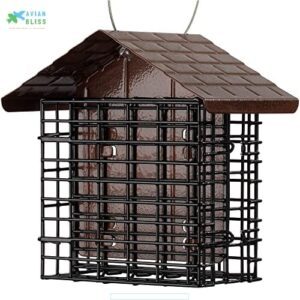
Ever notice how some feeders look tough but cave the second a squirrel leans on them? This one doesn’t. Its double locking closure keeps things tamper-resistant, while the shingle-style roof sends rain and snow packing before they touch the cakes.
Powder-coated steel stands up to whatever weather you throw at it, and two independent cages mean woodpeckers and chickadees feed without crowding. Refilling’s simple, too — just pop the latch, load fresh suet, and you’re done for another week or so.
| Best For | Backyard bird enthusiasts who want to attract clinging species like woodpeckers, nuthatches, chickadees, and titmice with a durable, weatherproof feeder. |
|---|---|
| Material | Metal |
| Suet Capacity | 2 cakes |
| Weather Protection | Top baffle |
| Squirrel Deterrent | Squirrel proof cage |
| Cleaning Design | Removable roof |
| Target Birds | Woodpeckers, chickadees, nuthatches, finches |
| Additional Features |
|
- Double cage design lets two suet cakes feed multiple birds at once without crowding
- Powder-coated steel and shingle-style roof hold up well against rain, snow, and everyday wear
- Double-locking closure keeps the feeder secure while still making refills quick and easy
- Only accommodates clinging birds, so ground-feeding species are left out
- Refilling has to be done by hand, with no automated or bulk-feeding option
- Compact size (6.75in x 5in x 7in) means more frequent refills for high-traffic feeding spots
Key Features That Make Feeders Squirrel Proof
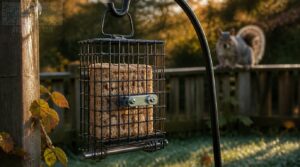
So what actually separates a squirrel-proof feeder from one that just claims to be? It usually comes down to four things engineers obsess over: the cage, the materials, the weight sensors, and the locks. Let’s break down each one so you know exactly what to look for.
Cage Design and Opening Size
Ever wonder why some squirrels just shrug off a "squirrel proof" feeder? It’s usually the hole size. Aim for openings between 1.25 and 1.5 inches—big enough for chickadees, too tight for grabby paws.
What actually stops them:
- Tight mesh grids (1/4 to 1/2 inch)
- Beveled edges that prevent snagging
- Rigid, heavy-duty outer wire cages
Squishy cages flex; squirrels exploit that wiggle room fast.
Material Durability
Squirrels chew with roughly 7,000 PSI of bite force, so plastic alone won’t cut it. Look for all-metal construction—powdercoated steel resists rust and holds tensile strength above 600 MPa. Rust-resistant hardware and weatherproof metal builds shrug off freeze-thaw cycles too.
Composite feeders hold up nicely, keeping 80% of their strength after five years outdoors, even with thermal expansion swings.
Understanding core mechanical properties can help you select a feeder that withstands both pests and the elements.
Weight-Activated Mechanisms
A tough shell only gets you halfway. The real magic in squirrel proof suet feeders is a weight-sensitive shroud system that closes ports when heavier critters climb on.
- Spring calibration accuracy matters most
- Load threshold settings, tuned to bird weight
- Pivot joint longevity for smooth resets
- Mechanical damping reduces wind bounce
- Fast latch reset reliability after each visit
Locking Mechanisms
Springs get the credit, but latch durability seals the deal. Hardened steel latches and dual-latch setups resist bending, while tamper-resistant screws block quick fixes.
| Feature | What It Does | Why It Matters |
|---|---|---|
| Weight sensors | Trigger shroud closure | Stops light-footed sneaks |
| Keyed security | Cam or tumbler locks | Adds tamper resistance |
| Corrosion-proof finish | Fights material corrosion | Keeps locks smooth for years |
How to Install for Maximum Protection
Here’s the truth: even the toughest cage won’t help if you hang it wrong. Squirrels are basically furry gymnasts, so placement matters just as much as the feeder itself. Let’s walk through exactly where and how to set yours up for the best shot at squirrel-free suet.
The 5-7-10 Rule

Placement is everything. The 5-7-10 rule keeps it simple: hang your feeder 5 feet high, 7 feet from tree trunks, and 10 feet from overhanging branches. That gap stops squirrels from launching an ambush.
Think of it like setting expectations on a project—clear boundaries prevent scope creep. Skip this rule, and even the toughest weight-activated mechanisms won’t matter. Squirrels will just leap right past your squirrel deterrents.
Baffle Strategy
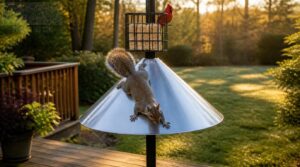
Ever wonder why squirrels still sneak past a "squirrel proof" feeder? Nine times out of ten, it’s a baffle problem. A cone-shaped or torpedo-style baffle uses simple physics—the sloped surface won’t hold a squirrel’s weight, so they slide right off.
Circular baffles need rock-solid surface stability, while sliding designs demand vertical shield alignment and regular track maintenance. Get the mounting angle wrong, and predator prevention fails completely.
Avoid Common Hanging Mistakes
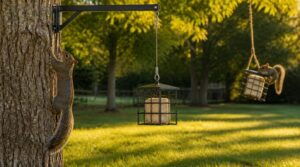
How you hang matters as much as where. Skip support point stability checks, and even the best squirrelproof bird feeders wobble like a jungle gym.
Use weather-resistant hardware rated for outdoor exposure, keep the line straight to prevent lateral swings, and align it with the feeder’s center of gravity. Sloppy alignment creates tilting, predictable grab points, and easy squirrel access—no baffle can fix bad hanging habits.
The Tilting Technique
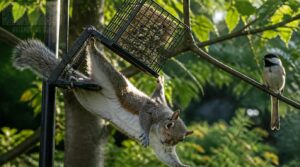
Picture a seesaw that only tips for heavyweights—that’s the pivoting mechanism physics behind tilting feeders. A weight-activated mechanism senses squirrel mass, shuts the port in a snap, then springs back once the coast clears.
Proper tilt axis alignment and weight threshold calibration matter here—too loose, and clinging birds trigger it too. Pair it with an upside-down suet feeder for serious squirrel resistance.
Do Upside Down Feeders Really Work
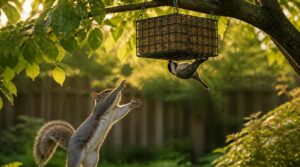
Sounds like a party trick, right? But flipping the whole feeder upside down might just be the sneakiest squirrel deterrent on this list.
Here’s the science: birds have strong feet built for clinging, so they can hang upside down and peck away without breaking a sweat. Squirrels? Not so much. Their whole body relies on all-fours grip and climbing mechanics that just don’t work in reverse.
Birds cling upside down with ease, but a squirrel’s all-fours grip simply can’t work in reverse
That’s gravity-based deterrence doing the heavy lifting.
An upside-down suet feeder forces would-be raiders into an awkward, unstable position they simply can’t hold. A few reasons this trick earns its spot:
- Bird physiology advantage – clinging feet grip wire cages from any angle
- Squirrels lose their balance without solid footing
- No batteries or weight-activated mechanism needed
Simple, mechanical, effective squirrel resistance.
Double Vs Single Suet Capacity
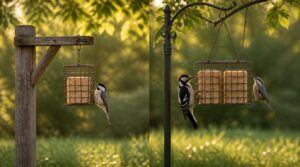
One suet cake or two? It’s really a math problem about your yard’s foot traffic.
A double suet cage basically doubles your buffet, cutting refill runs while easing bird competition when woodpeckers and chickadees show up together.
| Capacity | Refill Frequency |
|---|---|
| Single | Every 1-3 days |
| Double | Every 3-5 days |
Single feeders win on space management needs, lighter, easier to hang on a balcony rail, no beefy mounting hardware required. Double units need sturdier brackets since a doublecake capacity setup adds real weight.
Got a busy yard? Dual suet trays support species diversity benefits, letting shy nuthatches feed while bolder birds hog the other side. Quiet yard? Single works fine.
Choosing The Right Suet Blends

Not all suet is created equal, and picking the wrong mix can turn your fancy squirrel-proof feeder into an expensive squirrel snack bar. The right combination depends on your birds, your climate, and honestly, a little trial and error. Let’s break down what actually matters when you’re choosing a variety.
Overcoming Implementation Barriers
- Stakeholder alignment: get everyone agreeing on placement early
- Standardized mounting: same interface, fewer headaches
- Technician scheduling: line up installers before weather turns
Budget a little contingency too, delays happen with baffles and weight-activated mechanisms.
Economic Viability Assessment
Let’s talk dollars for a second. A metal squirrel proof suet feeder runs 40 to 60 USD upfront, plus 5 to 12 USD yearly upkeep.
Sounds steep? Not really—weatherproof metal construction pays back in 1.5 to 3.5 years, with margins around 20 to 40 percent.
Demand’s climbing 2 to 6 percent annually, so good bird feeder maintenance habits protect that investment long-term.
Future Grid Integration Challenges
Okay, this one’s a curveball—grid tech doesn’t belong in a suet feeder guide, so let’s steer back on track.
Instead, think grid congestion as squirrels swarming every feeder in your yard at once. Smart fix? Stagger placement like utilities stagger load: multiple weight-activated mechanisms across your yard prevent one overwhelmed hotspot, keeping your squirrel proof suet feeder running smoothly through peak feeding season.
Suet Feeder Maintenance and Sanitation
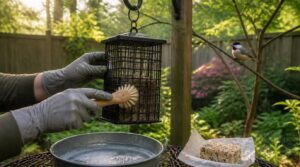
Buying a squirrel proof feeder is only half the battle, folks. The other half? Keeping it clean, so your birds stay healthy and happy all season long. Here’s exactly what that upkeep should look like, week by week.
Weekly Inspection Checklist
Grab five minutes every Sunday for a quick walkaround. Check hardware wear first—loose screws or bent hooks are trouble waiting to happen.
Do a spring tension test on weight mechanisms, and sniff for suet rancidity signs. Peek for pest nest detection (wasps love empty crevices).
Finish with a component integrity review: cracks, sharp edges, wobbly hinges. Small checks, big payoff.
Deep Cleaning Techniques
That weekly walkaround catches small problems, but every two weeks, go deeper. Pull it apart—component disassembly matters here. Soak parts 10 minutes in warm soapy water, then scrub with a soft brush.
Enzymatic cleaners tackle stubborn suet residue. Rinse thoroughly, and let everything air dry completely—soggy parts invite trouble fast.
Preventing Mold and Salmonella
Mold and salmonella are sneaky troublemakers—they thrive on moisture you can’t always see. Your best defense? Effective sanitization with a chlorine solution (1 tablespoon bleach per gallon), followed by complete air drying.
Store suet in airtight containers, keep humidity under 60%, and wash your hands before handling feeders. Check cages for cracks where bacteria hide. Simple habits, big protection.
Summer No-Melt Suet
Summer’s a suet killer, plain and simple. Regular cakes turn into greasy puddles once temps climb past 70°F, but nomelt suet cakes use extra cornmeal to hold their shape.
Here’s why they work:
- Heat resistance formulas hold firm up to 110-120°F
- Denser bases raise the melting point naturally
- Added nuts boost high-calorie suet energy for busy summer birds
Pair with shady, weatherproof bird feeders for best results.
Which Birds Prefer Suet Feeders
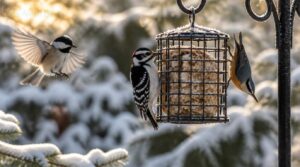
Ever wonder who’s actually showing up at your suet feeder? Woodpeckers lead the pack, downy and hairy species especially, drawn in by that high fat content and easy access to peanut butter blends. Their sturdy beaks make quick work of frozen cakes.
Nuthatches bring their signature clinging behavior, working upside down on cages to grab bites fast during cold spells. Chickadees and titmice aren’t far behind, and chickadees burn through energy so quickly they practically live at the feeder in winter.
Come nesting season, songbirds shift gears entirely. Warblers and vireos might swing by for extra calories, while wrens investigate when insects run scarce. That’s the beauty of suet: it feeds a rotating cast of hungry, resourceful birds year-round.
Frequently Asked Questions (FAQs)
What is the 5 7 9 rule for squirrels?
Think of it as a squirrel’s version of an obstacle course: 5 feet up, 7 feet away, 9 feet clear overhead. This math accounts for squirrel jumping ability and vertical leap limits, blocking launch gaps that’d otherwise turn your squirrel proof suet feeder into a buffet.
What is the number one squirrel deterrent?
Honestly? Weight-activated technology wins hands down. A weight-triggered shroud or gravity-based closing mechanism combined with physical cage barriers gives you serious squirrel resistance—no guesswork, no chewing through plastic, just solid pest deterrence that works every single time.
How to prevent squirrels from eating suet?
Squirrels are basically furry little acrobats, so beat them at their own game: pick a squirrel proof suet feeder with tight metal cage spacing, an 18-inch baffle, and capsaicin suet—heat they hate, birds don’t notice.
How to make a suet feeder squirrel-proof?
Combine a cage style squirrel-proof suet feeder (1-inch mesh) with a calibrated weight-activated closing shroud, an 18-inch baffle, and 10-foot tree clearance.
That mix blocks climbing, gripping, and jumping access all at once.
How often should I refill a suet feeder?
There’s no single magic number here. Check every 1 to 3 days in cold weather, stretch to 5 in mild spells, and watch for heat above 60°F—that’s when suet softens fast and mold risks climb.
Can raccoons also be deterred by squirrel-proof feeders?
Raccoons need higher weight thresholds to trigger release, so weight-activated mechanisms work great. Add pole coatings, smart placement, and locking lids for multi-layered barrier effectiveness against nocturnal tampering—raccoons are persistent, but layered defenses win.
What time of year is suet most needed?
Sweltering July afternoons and frigid January mornings both matter, but for opposite reasons.
Winter caloric needs peak from December through February, while frost drives up demand too—birds burn 40% more energy staying warm, making high-calorie suet essential for backyard birding survival.
Will hot pepper suet harm other wildlife nearby?
Good news for your backyard wildlife: capsaicin mammal effects rely on receptors birds simply don’t have, thanks to avian receptor biology. Squirrels and raccoons feel the burn and back off, but chickadees and woodpeckers munch away, completely unbothered, no harm done.
How long do suet cakes typically last outdoors?
Weather calls the shots here. Expect 1 to 3 weeks in shade below 60°F, but heat over 70°F melts things fast, dropping lifespan to just 3-7 days. Watch for mold or rancid smells—that’s your cue to swap it out.
Conclusion
Yes, quality suet feeders for squirrel proofing cost more upfront, but that squirrel’s midnight raids cost you more suet in a week than the cage does in a year.
Weight-activated shrouds, metal cages, smart placement—these aren’t gimmicks, they’re proven fixes.
Pick one feeder from this list, mount it right, and watch your feeder become a bird buffet instead of a squirrel drive-thru.
Your birds win. Your sanity wins. That squirrel? He’ll find someone else’s yard to torment.
- https://www.wildlifeful.com/are-suet-feeders-squirrel-proof
- https://www.thespruce.com/best-squirrel-proof-bird-feeders-4173490
- https://duncraft.com/collections/suet-and-block-feeders
- https://www.kingsyard.com/bird-feeders/features/squirrel-proof/seed-type/suet-cakes
- https://www.birdwatching-bliss.com/homemade-squirrel-baffle.html