This site is supported by our readers. We may earn a commission, at no cost to you, if you purchase through links.

One January morning, I found a chickadee fluffed up like a tennis ball, clinging to my feeder in single-digit weather. That little bird needed fuel, fast, and seeds alone wouldn’t cut it.
That’s where suet cakes for attracting songbirds earn their keep. Packed with rendered fat and protein, suet gives birds over 3,000 calories per cup, exactly what they burn keeping warm overnight. Woodpeckers, nuthatches, and wrens all flock to it.
But not every suet block performs the same. Some melt into a greasy mess by July; others deter squirrels without scaring off your favorite visitors. Let’s break down which ones actually deliver.
Table Of Contents
Key Takeaways
- Suet delivers over 3,000 calories per cup, giving songbirds the fat and energy they need to survive cold winter nights.
- Melt-resistant formulas hold their shape past 90-100°F, making suet a viable food source year-round, not just in winter.
- Capsaicin-laced suet deters squirrels and raccoons without affecting birds, since birds can’t taste the heat.
- Beyond winter survival, suet’s protein and fat support feather growth during molting, eggshell strength during breeding, and fat reserves before migration.
Best Suet Cakes for Songbirds
Picking the right suet cake can feel overwhelming with so many brands on the shelf. I’ve tested plenty over the years, and a handful truly stand out for bringing in the birds. Here are my top picks, each one worth a spot in your backyard feeder.
Once you’ve settled on a favorite, grab one of these best suet feeders for backyard birds to keep those cakes secure and squirrel-resistant all season long.
1. St Albans Bay Peanut Berry Suet
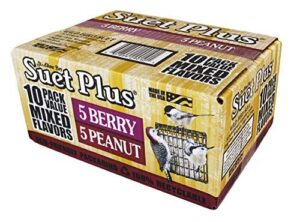
Twenty cakes in one pack means you won’t run out mid-winter. Each 11 oz cake is melt-resistant, so it holds its shape even during warmer snaps. The peanut and berry combo pulls in woodpeckers, cardinals, and jays looking for a fatty snack.
Packaging is recyclable, and cakes slide into most cage feeders without crumbling apart. That’s a small detail, but it saves you from a greasy mess every refill.
| Best For | Backyard bird enthusiasts who want a no-fuss, long-lasting suet option to keep woodpeckers, cardinals, and blue jays fed through the colder months. |
|---|---|
| Bird Attraction | Woodpeckers, cardinals, blue jays |
| Weather Resistance | Melt-resistant |
| Feeder Requirement | Requires suet feeder |
| Life Stage Suitability | All life stages |
| Maintenance Needs | Cool dry storage |
| Outdoor Use | Yes |
| Additional Features |
|
- Melt-resistant formula holds up well even during warmer weather
- Easy-open, recyclable packaging cuts down on mess at refill time
- Attracts a wide variety of species and suits birds at all life stages
- Contains peanuts, which may not work for households with allergy concerns
- Requires a separate suet feeder, so it’s not a standalone purchase
- Made from processed grain by-products, which some buyers may prefer to avoid
2. High Energy Wild Bird Suet Cakes
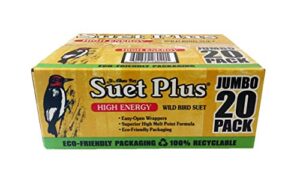
If your feeder’s been running low all winter, high energy suet cakes are worth stocking up on. Rendered beef fat makes up 50 to 70 percent of the cake, giving birds dense calories fast.
Corn, oats, and millet round out the mix, balancing energy with easier digestion. Added protein from peanuts and seeds helps feather growth, while calcium boosts eggshell strength during breeding season.
They fit standard cage feeders, usually sold in 4 to 1 pound portions, so replacing them is quick and mess-free.
| Best For | Backyard bird enthusiasts who want to attract woodpeckers, cardinals, nuthatches, and other perching birds with a high-energy, no-mess food source during colder months. |
|---|---|
| Bird Attraction | Woodpeckers, cardinals, nuthatches |
| Weather Resistance | Melt-resistant |
| Feeder Requirement | Requires suet feeder |
| Life Stage Suitability | All life stages |
| Maintenance Needs | Cool dry storage |
| Outdoor Use | Yes |
| Additional Features |
|
- Melt-resistant formula holds up well and offers stable, long-lasting energy for birds
- Easy-open, 100% recyclable packaging makes for convenient, mess-free dispensing
- Made in the USA from a blend of rendered beef suet, cracked corn, and black oil sunflower seeds
- Still needs to be stored in a cool, dry spot to stay fresh, even with the melt-resistant formula
- Contains processed grain by-products, which may not appeal to those wanting an all-natural mix
- Individual cakes are fairly small at 11 oz, so heavy feeder traffic may mean restocking often
3. Heath Berry Blast Suet Cake
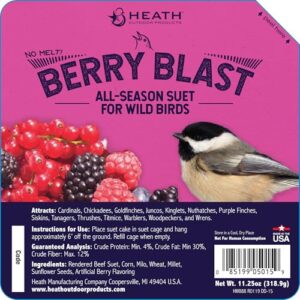
Sweetness draws birds in just as fast as fat does. Heath’s Berry Blast Suet Cake uses a rendered beef suet base mixed with corn, milo, wheat, and millet for balanced energy.
Sunflower seeds add protein for feather growth, while natural berry flavoring attracts fruit-loving species like finches and warblers first.
Each 0.75 lb cake holds up in heat past 122°F, so it won’t melt into a mess. Cardinals, chickadees, and nuthatches all show up once the berry scent spreads.
| Best For | backyard bird enthusiasts who want to attract a colorful variety of fruit-loving songbirds year-round. |
|---|---|
| Bird Attraction | 15+ songbird species |
| Weather Resistance | No melt, all seasons |
| Feeder Requirement | Requires feeder |
| Life Stage Suitability | Not specified |
| Maintenance Needs | Cool dry storage |
| Outdoor Use | Yes |
| Additional Features |
|
- No-melt formula holds up in all seasons, including hot weather
- Natural berry flavoring attracts 15 species like finches, warblers, and cardinals
- Dairy-free recipe supports weight management and provides high-energy nutrition
- May attract non-target wildlife, so the right feeder is needed
- Must be stored in a cool, dry place to stay fresh
- Not for human consumption
4. Wildlife Sciences Hot Pepper Bird Suet Balls
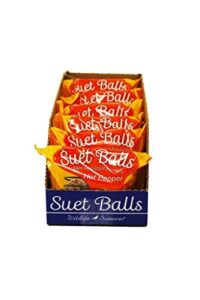
Squirrels raiding your feeder can feel like a losing battle. That’s where these balls come in.
Wildlife Sciences packs rendered beef suet, cracked corn, and peanut pieces into a capsaicin-laced mixture squirrels avoid, though birds can’t taste the heat at all. Each 2.5-inch ball comes candy-wrapped, so no greasy hands.
You’ll need a ball-style feeder, but chickadees, nuthatches, and woodpeckers show up fast once word gets out.
Packing a suet ball with seeds and fat gives these birds the quick energy they crave, especially when how birds find worms becomes trickier in colder months.
| Best For | Backyard bird enthusiasts who love attracting woodpeckers, chickadees, and nuthatches but are tired of squirrels cleaning out the feeder first. |
|---|---|
| Bird Attraction | Woodpeckers, songbirds |
| Weather Resistance | Melt-resistant |
| Feeder Requirement | Requires ball-compatible feeder |
| Life Stage Suitability | All life stages |
| Maintenance Needs | Store away from heat |
| Outdoor Use | Yes |
| Additional Features |
|
- Capsaicin blend keeps squirrels and raccoons away while birds happily dig in
- Individually wrapped balls mean no greasy hands and easy, tool-free dispensing
- Melt-resistant formula holds up well in sun and heat
- Costs more than many other suet options on the market
- Only works with a ball-style suet feeder, which you’ll need to buy separately
- Squirrel-deterring results can vary depending on how persistent your local squirrels are
5. C&S Peanut Suet Bird Nuggets
Twenty-seven ounces of roasted peanuts, beef suet, and grains — that’s what you get in every bag.
These no-melt nuggets work loose in a wire feeder, no messy blocks required. Break a few apart and jays, chickadees, and woodpeckers show up within days.
Mix them with 5 to 10 pounds of seed for extra variety, or serve straight for pure peanut appeal. The resealable bag keeps things fresh between refills, rain or shine.
| Best For | Backyard bird enthusiasts who want to attract woodpeckers, nuthatches, and chickadees with a clean, no-mess suet alternative. |
|---|---|
| Bird Attraction | Woodpeckers, nuthatches, chickadees |
| Weather Resistance | No-melt formulation |
| Feeder Requirement | Requires wire or nugget feeder |
| Life Stage Suitability | All life stages |
| Maintenance Needs | Outdoor use only |
| Outdoor Use | Yes |
| Additional Features |
|
- No-melt, no-waste nuggets that stay tidy in any weather
- Packed with high-protein, high-fat ingredients like roasted peanuts and rendered beef suet
- Versatile use — serve alone, on a platform feeder, or mixed with wild bird seed
- Needs a wire or nugget-style feeder to work best
- Strictly for outdoor use, so it won’t suit indoor birdkeeping setups
- Suitable for all life stages, but not species-specific if you’re targeting particular birds
6. Wildlife Sciences Suet and Feeder Bundle
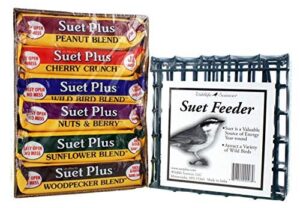
One feeder, one bundle, zero guesswork. Wildlife Sciences pairs a weather-resistant cage feeder with melt-resistant suet, so you skip separate shopping trips.
The tight wire mesh holds cakes securely while letting chickadees and nuthatches squeeze through easily. Peanut and berry formulas cover both protein and flavor bases, giving feather maintenance a boost during molt.
Setup takes minutes. Hang it near shrubs, load a cake, and you’re set for steady backyard visitors all season long.
| Best For | backyard birdwatchers who want an easy, all-in-one setup to attract a wide variety of wild birds without extra shopping trips. |
|---|---|
| Bird Attraction | Variety of wild birds |
| Weather Resistance | Melt-resistant |
| Feeder Requirement | Feeder included |
| Life Stage Suitability | All life stages |
| Maintenance Needs | Periodic cake replacement |
| Outdoor Use | Yes |
| Additional Features |
|
- Comes with six suet flavors and a feeder in one convenient bundle
- Melt-resistant suet and heavy gauge wire construction keep handling clean and durable
- Tight wire mesh design secures cakes while still letting small birds like chickadees and nuthatches feed easily
- Feeder only holds one suet cake at a time, limiting capacity
- Suet cakes need to be replaced regularly as they’re consumed
- Suitable only for suet feeding, so it won’t cover birds preferring seed or nectar
7. Antique Iron Bird Bath Trellis
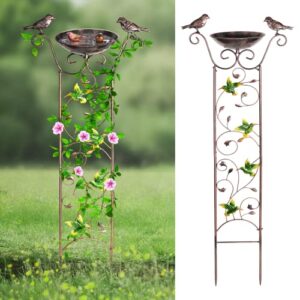
Not every backyard upgrade needs a wire cage or a bag of seed. This antique iron trellis doubles as a bird bath and climbing support, standing around 40 inches tall with a shallow bowl under 2 inches deep. Roses or ivy can twist up the scrollwork while chickadees splash below.
Keep it out of direct sun, clean the bowl a few times weekly, and you’ve got a feeder-adjacent focal point that pulls double duty in your garden.
| Best For | gardeners who want a decorative piece that attracts birds while giving climbing plants like roses or ivy a structure to grow on. |
|---|---|
| Bird Attraction | Various garden birds |
| Weather Resistance | Weatherproof antique iron |
| Feeder Requirement | N/A, standalone unit |
| Life Stage Suitability | Not specified |
| Maintenance Needs | Clean 2-4x weekly |
| Outdoor Use | Yes |
| Additional Features |
|
- Detachable bowl and tool-free setup make it easy to assemble and maintain
- Doubles as both a bird bath and a trellis, adding function without cluttering the garden
- Sturdy antique iron design brings a classic, elegant look to any outdoor space
- Needs cleaning 2–4 times a week to keep the water fresh and safe
- Must be placed out of direct sunlight, limiting where it can go in the yard
- Shallow water depth (under 2 inches) means it only suits small birds
Why Songbirds Love Suet
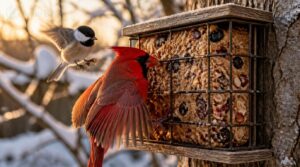
Suet isn’t just a treat for your backyard visitors, it’s practically a lifeline. Birds seek it out for real, specific reasons tied to survival and health. Let’s break down exactly what makes this simple fat cake so valuable to the birds you love watching.
High-Calorie Winter Energy
Ever watch a chickadee shiver through a January morning and wonder how it survives? The answer is caloric density — fat packs over 3,000 calories per cup, fueling thermoregulation when temperatures plummet.
Caloric density is a chickadee’s survival secret, packing over 3,000 calories per cup to fuel body heat in brutal cold
Winter raises energy expenditure fast, so songbirds need sustained fuel:
- High-fat suet cakes
- Quality commercial blends (200 cal/oz)
- Peanut butter mixes
- Metabolism-boosting nutrients
- Consistent winter feeding
Protein for Feather Growth
Feathers are over 90% protein, which makes suet’s protein content a lifesaver during molting. Sulfur-rich amino acids like methionine and cysteine build strong keratin, keeping feather shafts tight and flexible. Maintaining a steady supply of dietary protein is essential for ensuring the structural integrity of new growth.
| Nutrient | Feather Role | Source |
|---|---|---|
| Methionine | Keratin cross-linking | Peanut butter, insects |
| Lysine | Follicle attachment | Suet blends |
| Zinc | Keratin remodeling | Mealworms |
Insect-enriched suet delivers this amino acid combination beautifully, supporting healthy follicles and vibrant plumage naturally.
Fat for Body Heat
Picture a tiny chickadee puffed up like a feathered snowball on a frigid morning. That’s fat doing its job.
Subcutaneous fat works as thermal insulation, slowing heat loss from the body. High-calorie bird food, especially suet cakes, builds these fat reserves fast.
More fat means better warmth retention during winter bird feeding season, supporting metabolic heat production when temperatures plummet and energy requirements spike.
Nutrients for Breeding Birds
Warmth keeps birds alive, but breeding season asks for more than heat. Nesting females need real building blocks.
Suet with added protein helps eggshell strength, while balanced amino acid balance aids healthy chicks.
- Calcium boosts shell quality
- Fats support embryo brain development
- Trace minerals aid micronutrient absorption
This kind of avian nutrition strengthens reproductive health support all season long.
Support During Migration
Migration is basically a bird’s cross-country move, and it burns fuel fast. Suet gives migratory bird support when insects are scarce, helping thrushes and warblers pack on 10 to 30 percent extra body weight before they go.
Think of it as their high-calorie bird food pit stop. Just like people need stable resources before a big journey, birds need reliable, high energy food mixes waiting along the way.
Choosing The Right Suet Cake
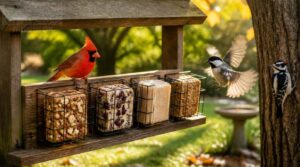
Not every suet cake fits every backyard, and that’s okay. Your birds, your climate, and your unwanted visitors all play a part in the choice. Let’s break down the options so you can pick the right one with confidence.
Peanut and Berry Blends
Few combos win over songbirds like peanuts and berries. Roasted, unsalted peanuts pack 45–50% fat, giving chickadees and nuthatches quick winter energy while supporting feather growth.
Dried blueberries, cranberries, or cherries add natural sugars and antioxidants that boost immune support. Always choose unsalted nuts—sodium upsets birds’ stomachs and masks berry flavor. These suet cakes offer a tasty, nutritious twist on homemade suet cake recipes.
Insect-Enriched Suet Options
Sweet fruit gets birds in the door, but bugs keep them coming back. Dried mealworms add real protein with amino acids like methionine and lysine for feather repair—it’s protein vs fat, working together.
- 6-25% insect content by weight
- Boosts amino acid benefits
- Adds crunchy foraging texture appeal
- Attracts warblers, chickadees
- Sourced from food-grade suppliers
Check labels for insect sourcing safety before buying these nutritious, protein-rich bird snacks.
No-Melt Seasonal Formulas
Ever hung a suet cake on a July afternoon and found it puddled at the bottom of the cage? Melt-resistant formulas fix that.
Makers rework seasonal wax ratios and use high-temperature fat matrices for real thermal stability. Strong binder structural integrity and tight moisture control keep cakes firm past 90°F, so your high energy mix stays put for songbirds long after winter feeding season ends.
Hot Pepper Squirrel Deterrents
Why do squirrels hate spice as much as we love it? Capsaicin irritates their mouths, but birds can’t taste it at all.
Hot pepper suet balls work as smart pest deterrence. Sprinkle flakes near feeders for a spicy perimeter.
- Reapply after rain
- Keep away from pets
- Skip nesting areas
- Pair with baffle feeders
Combine with peppermint oil for stronger, scent-based results.
Safe Ingredients to Avoid
Not every suet is created equal, and some ingredients do more harm than good. Skip anything with added salt—small songbirds can’t handle that sodium load. Avoid artificial dyes, flavorings, and preservatives; they offer zero nutrition.
Watch for mold, which causes dangerous aflatoxin exposure. Choose unsalted peanuts, and always check for rancid smells or grayish film before serving—it prevents spoilage and keeps your feeder disease-free.
Best Feeders and Placement Tips
Picking great suet is only half the job. The right feeder and a smart spot to hang it make all the difference in who shows up to eat. Here are the setups that work best in my own backyard.
Cage Suet Feeders
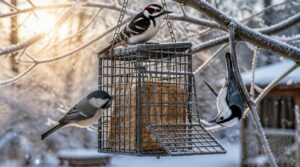
Cage feeders are the workhorses of backyard suet feeding. A metal mesh box holds one suet cake while letting chickadees, nuthatches, and woodpeckers cling and peck freely. Check mesh size and cage durability—rust-resistant steel lasts through harsh winters. Look for hinged panels for easy refill, plus sturdy chain hanging methods.
- Rust-resistant wire mesh
- Hinged front panel
- Secure hanging loop
Upside-Down Feeder Benefits
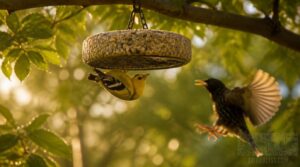
Flip the script on greedy diners—upside-down feeders make suet cakes hard for starlings to raid.
Small birds like finches hang comfortably on the inverted perch design, while bulkier species can’t get a grip. Mesh bottoms boost moisture control, keeping suet fresh longer. Mount 5-8 feet up for predator protection height, and you’ll see far less waste from your high-calorie bird food.
Tail-Prop Woodpecker Feeders
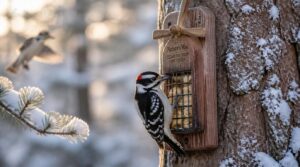
Ever watch a woodpecker brace against a tree trunk? That’s tail-prop stability in action, and good feeders copy it.
- Flat backstop for tail bracing
- Weatherproof cedar or plastic
- Dual feeding ports
- Textured grip walls
- Fits pileated to downy species
Zygodactyl foot grip lets them cling sideways while pecking suet cakes. Choose weather-resistant materials—your high-calorie bird food stays fresh through brutal winters.
Safe Height and Shelter

Height matters more than you’d think. Ideal shelter height sits between 8 and 12 feet, giving woodpeckers and songbirds room to maneuver without bonking their heads.
Effective roof overhangs of 12 to 18 inches keep suet dry during storms. Good ventilation and airflow stops moisture buildup inside.
For strategic siting tips, place feeders where sightlines stay clear but cover isn’t far. Smart bird feeder maintenance starts with placement.
Squirrel and Predator Control

Good shelter attracts more than songbirds, so squirrel-proofing matters. Baffle installation above your pole blocks climbing raiders cold.
Try weight sensitive perches that close under heavy critters, or hot pepper suet balls with capsaicin deterrent for gnawers. Motion sensor lights spook nighttime predators, while habitat management—trimming branches, clearing brush—rounds out solid bird feeder maintenance for safer bird feeding.
Homemade Suet Cake Recipes
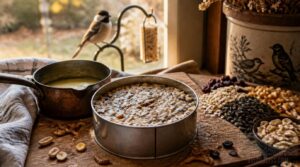
Making your own suet is easier than you’d think, and your birds will thank you for it. You get to control exactly what goes into the mix, from the fat you use to the extra treats you toss in. Here are five recipes worth trying in your own kitchen.
Classic Tallow Suet Cake
Rendering beef tallow slowly over low heat keeps it from scorching and forms the backbone of traditional bird suet cakes.
- Melt fat gently, never boil
- Mix binding agents at roughly 2:1 fat-to-filler
- Cool in airtight molds to prevent oxidation
- Refrigerate to block mold growth
This high-calorie bird food stays solid, satisfying hungry songbirds through cold snaps.
Peanut Butter Cornmeal Suet
Tallow gives you structure, but peanut butter brings the protein songbirds crave. Mix equal parts peanut butter and cornmeal, then stir in melted lard using a 2:1 fat-to-filler ratio for a firm, no-crumble cake.
Cornmeal locks moisture out, keeping texture stable through freeze-thaw cycles. Skip salted peanut butter—sodium harms birds. This DIY treat delivers balanced calories and protein chickadees and nuthatches need most.
Fruit and Nut Suet
Waxwings and thrushes come running for this one. Swap half your cornmeal for chopped nuts and dried fruit, aiming for a 3:1 fat-to-mix ratio.
- Berry flavor profiles attract cedar waxwings
- Cranberries and raisins add color, cherries add sweetness
- Nut protein benefits boost fat content for cold snaps
Choose seasonal fruit selection to match harvests, and keep moisture below 12% to prevent spoilage.
Mealworm Protein Suet
Woodpeckers and nuthatches practically dive-bomb this one. Grind a cup of dried mealworms into your cornmeal base—they’re 40 to 60 percent protein, packed with amino acids like lysine for feather repair during molt.
Keep fat ratios around 25 percent for winter energy. If you handle shellfish-sensitive folks in your house, note that mealworms carry similar allergy risks. This high-calorie, protein-rich snack keeps chilly mornings covered.
Storage and Spoilage Signs
Rarely do homemade batches spoil fast if you store them right. Keep cakes below 70°F, and always seal containers tightly to block moisture and odors.
Watch for a rancid smell, mold, or crumbly texture—all signs of trouble. Refrigerate up to two weeks, or freeze up to six months. Avoiding temperature cycling and controlling humidity keeps your suet fresh and safe for every backyard visitor.
Frequently Asked Questions (FAQs)
How long do homemade suet cakes stay fresh?
Like a batch of fresh bread, homemade suet stays best when kept cool: about 3 months refrigerated in airtight containers, or 9 to 12 months frozen, well-wrapped to guard against freezer burn.
What time of day do birds feed most?
Your busiest visitors show up at dawn and stick around into late afternoon. Cardinals and chickadees fuel up early, go quiet at midday, then return two to three hours before dusk to build energy reserves for the night ahead.
Do suet cakes work in warm summer weather?
Ever wonder why suet melts into mush by July? Traditional cakes soften above 70°F, but meltresistant formulas use stabilizers to hold shape past 100°F—perfect for summer feeding microclimates and preventing heat-induced rancidity that risks feather safety.
How often should suet feeders be refilled?
Plan on winter refill frequency every 2–4 days, since cold weather ramps up bird traffic. Warmer seasons stretch that to 4–7 days. Watch feeder capacity, temperature swings, and spoilage signs like mold or sour smells to adjust your schedule.
Conclusion
Picture that chickadee again, feathers puffed, wings trembling against the cold, now landing on a feeder stocked with the right mix. That single image explains why suet cakes for attracting songbirds matter so much. You’re not just filling a feeder; you’re fueling survival.
Choose blends that resist melting, skip harmful fillers, and hang them where birds feel safe. Do that, and your yard becomes a lifeline. Few things feel as rewarding as watching hungry wings find warmth because of your care.
- https://www.birdsandblooms.com/birding/attracting-birds/feeding-birds/make-homemade-suet/
- https://pmc.ncbi.nlm.nih.gov/articles/PMC1428793/
- https://birdsconnectsea.org/2024/03/19/bird-feeding-101-suet-earthcare-northwest/
- https://www.hummingbirdsplus.org/nature-blog-network/suet-cakes-a-cold-weather-treat-for-birds/
- https://www.themakeyourownzone.com/no-melt-suet-cakes-for-birds/