This site is supported by our readers. We may earn a commission, at no cost to you, if you purchase through links.

A parent woodpecker can make over 400 feeding trips in a single day. That’s not a typo—400 round trips between the nest cavity and the forest, beak loaded with food, driven by the relentless demands of a clutch of hungry chicks.
What’s inside that beak matters enormously. Baby woodpeckers eat a highly specific diet built almost entirely on soft insects, larvae, and regurgitated mash that their bodies can actually process.
Get it wrong, and chick survival drops fast. Understanding what baby woodpeckers eat—and why each food choice is so deliberate—reveals the precision behind one of nature’s most hardworking parenting strategies.
Table Of Contents
- Key Takeaways
- What Do Baby Woodpeckers Eat?
- Baby Woodpeckers Eat Mostly Insects
- What Parents Feed Nestlings
- Foods by Development Stage
- Safe Emergency Foods
- Foods Baby Woodpeckers Should Avoid
- How Often Baby Woodpeckers Eat
- If You Find a Baby Woodpecker
- Frequently Asked Questions (FAQs)
- What can you feed a baby woodpecker?
- What do you do if you find a baby woodpecker?
- Can baby birds survive the night without food?
- What do Baby woodpeckers eat?
- What do woodpeckers eat?
- Do woodpeckers eat baby birds?
- Do Baby woodpeckers eat grubs?
- Can baby woodpeckers eat dry food?
- Can you feed a baby woodpecker bread or milk?
- Is drumming related to feeding?
- Conclusion
Key Takeaways
- Baby woodpeckers need a protein-rich diet of soft insects, larvae, and regurgitated mash from birth — without it, their survival drops fast.
- Parents make up to 400 feeding trips a day, pre-digesting food into a smooth mash that matches each chick’s digestive stage and age.
- Never feed a baby woodpecker bread, milk, dry food, or kitchen scraps — these cause serious developmental harm.
- If you find a baby woodpecker, don’t try to raise it yourself — secure the area, avoid handling it, and contact a licensed wildlife rehabilitator immediately.
What Do Baby Woodpeckers Eat?
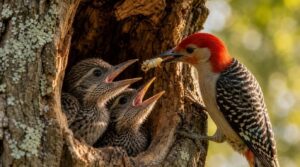
Baby woodpeckers have a surprisingly specific diet — and it’s not what most people guess. Their parents work hard to deliver exactly the right foods at exactly the right time.
From timing to texture, what baby woodpeckers eat at each growth stage shapes how quickly they develop and thrive.
Here’s what actually goes into feeding a baby woodpecker.
Mostly Soft Insects, Larvae, Ants, and Grubs
Baby woodpeckers start life on a strict insect diet — and for good reason. Parents deliver moisture-rich prey like caterpillars, soft larvae, ants, and grubs that nestlings can actually handle.
Grub softness index matters here: tiny beaks can’t manage hard food yet.
Ant fat profiles and larval energy density fuel rapid growth, while prey size matching ensures each chick gets exactly what it needs.
These scarabaeiform grub larvae are commonly found underground feeding on plant roots.
Beetle Larvae and Wood-boring Insects
Beetle larvae are a staple in a woodpecker’s protein-rich diet. These wood-boring grubs thrive in moist, decaying timber — and their larval moisture requirements make them surprisingly soft and easy for nestlings to digest.
Parents locate them by detecting frass near exit holes. That high-fat, protein-rich diet facilitates rapid chick growth, making larvae and grubs far more nutritious than seeds at this stage.
Carpenter Ants and Other High-protein Prey
Carpenter ants rank just as high on the menu as wood-boring grubs. Parent woodpeckers rely on ant foraging tactics — raiding tunnels and log galleries — to collect workers and larvae packed with larval protein density.
Prey moisture benefits nestlings too, since soft ant bodies digest easily. This high-protein prey selection keeps the insectivore diet balanced, especially when seasonal prey shifts reduce beetle and grub availability.
Regurgitated Insect Mash From Parents
Parent woodpeckers don’t just bring food — they pre-digest it first. That parental digestion cycle breaks insects down into a smooth, protein-rich mash with a fatty acid profile perfectly matched to the chick swallow reflex.
Nutrient density stays high even as seasonal mash shifts change what’s available. This insectivore diet gives nestlings exactly what fast-growing bodies need.
Small Amounts of Fruit, Seeds, Nuts, and Sap
Insects do the heavy lifting, but the diet doesn’t stop there. Once nestlings are stable on a protein-rich diet of small insects, parents introduce balanced additions in tiny portions:
- Fruit Nutrients — berry bits supply vitamins A and C
- Nut Fats — ground hazelnut fragments fuel energy bursts
- Sap Sugars — tree sap coats insects, adding quick carbohydrates
Seed minerals, nuts, seeds, and fruit round things out gradually. When feeding baby woodpeckers in rehabilitation, mirror this same progression carefully.
Baby Woodpeckers Eat Mostly Insects
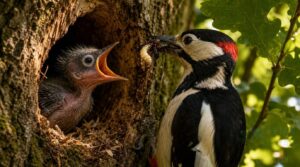
Insects aren’t just a preference for baby woodpeckers — they’re a biological necessity. From the moment they hatch, chicks depend on protein-packed prey to fuel some of the fastest growth you’ll see in any backyard bird.
For baby woodpeckers, insects aren’t a preference — they’re a biological necessity
Here’s why insects do the heavy lifting during those critical early weeks.
Why Protein is Essential for Rapid Growth
Protein is the engine behind every gram of growth a baby woodpecker puts on. A protein-rich diet fuels Amino Acid Supply, Muscle Fiber Synthesis, and Hormone Production all at once.
| Protein Role | Why It Matters |
|---|---|
| Enzyme Activity | Powers metabolism and tissue formation |
| Immune Development | Builds antibodies against early infections |
That’s why an insectivorous diet isn’t optional — it’s survival.
How Insects Support Bill and Muscle Development
Every bite of insect that a nestling receives is doing serious work. The amino acid profile in mealworms and small insects triggers leucine stimulus, which directly kickstarts muscle fiber hypertrophy.
That same protein-rich diet fuels bill keratin synthesis and mitochondrial development in flight muscles. Meeting the nutritional requirements of woodpecker nestlings through an insectivorous diet isn’t just helpful — it’s what builds a functional woodpecker.
Common Insects Fed by Parent Woodpeckers
What’s actually on the menu for baby woodpeckers? The variety might surprise you. Parents deliver a rotating lineup of prey adapted to what’s available and what the chicks can handle:
- Ant larvae and termite soldiers — dense, protein-rich diet staples
- Lacewing larvae and midge larvae — soft small insects ideal for young nestlings
- Bark beetle larvae — reliable throughout spring and summer
Sap insects round out the mix seasonally.
Why Hatchlings Need Soft, Partially Digested Food
A hatchling’s gut is brand new — it can’t break down solid food yet. Digestive Enzyme Maturation takes days, so parents lead with regurgitated mash that delivers Energy-Dense Nutrition without overwhelming an immature system. This soft food also provides Hydration Through Mash and facilitates Gut Microbiota Seeding from day one.
| Age | Food Texture | Key Benefit |
|---|---|---|
| Days 1–3 | Liquid insect mash | Gentle digestion |
| Days 4–5 | Soft pulp | Enzyme development |
| Days 6–7 | Semi-solid mash | Gut microbiota seeding |
How Insect Availability Affects Chick Survival
When insects disappear, so do chicks. Insect Biomass Peaks during warm, dry spells directly boost survival rates — and when those peaks vanish, nest failure follows fast. Weather-Driven Abundance shapes how often parents can deliver Prey Size Matching meals that hit the nutritional requirements of woodpecker nestlings.
- Habitat Insect Hotspots near dead wood keep feeding trips frequent
- Cold snaps slash invertebrate activity and slow chick growth
- Protein Lipid Ratio in beetle larvae fuels week-one mass gain
- Declining insect communities lower chick mass and raise mortality risk
What Parents Feed Nestlings
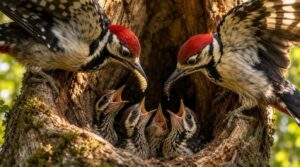
Both parents pull their weight regarding feeding nestlings — it’s a full-time job from sunrise to sunset. What they bring to the nest changes depending on the chick’s age, the season, and what’s available in the surrounding habitat.
Here’s a closer look at how woodpecker parents make it work.
Male and Female Feeding Roles
Both parents pull their weight, but in different ways. Males usually defend foraging territories and hunt larger prey, making sure protein-rich food stays available.
Females lean into brood care, reading hormonal feeding cues to deliver softer items matching each chick’s age. This sex-specific foraging and cooperative feeding timing means the diet of baby woodpeckers stays balanced from day one.
Regurgitated Food for Newly Hatched Chicks
Newly hatched chicks can’t handle solid food at all. That’s why parents pre-digest insects into a warm, moist mash before feeding — a process that controls Mash Temperature Control and Moisture Content naturally.
This soft delivery maximizes Nutrient Absorption Rate in fragile digestive tracts while ensuring Microbial Safety. Parent Digestion Timing matters too; fresh regurgitation meets the protein requirements for chicks without delay.
Frequent Feeding Trips Throughout The Day
Feeding doesn’t stop after that first mash delivery.
Parent woodpeckers keep a relentless pace all day — making 6 to 8 trips per hour during Morning Feeding Peaks alone.
Midday Foraging Bursts maintain that rhythm, while Afternoon Delivery Rhythm tapers slightly as nestlings rest.
Parental Role Alternation keeps Trip Interval Variation tight, so nestlings rarely wait more than 10 to 20 minutes between meals.
How Parents Choose Food by Chick Age
What a parent feeds depends entirely on how old the chick is. Protein Scaling starts immediately — hatchlings get soft, partially digested mash, while older nestlings receive bigger prey like beetle larvae and carpenter ants.
Prey Size Adjustment reflects Digestive Maturity. As Nutrient Prioritization shifts with age, parents instinctively match the diet of baby woodpeckers to each developmental stage.
Seasonal Changes in Natural Food Sources
Seasons shape what nestlings eat more than almost anything else. Here’s how it plays out:
- Spring insect surge — larvae and caterpillars flood the canopy, delivering a protein-rich diet right when chicks hatch.
- Summer beetle peak — dead trees yield grubs at peak fledgling growth.
- Autumn seed cache — acorns replace insects as seasonal food availability shifts.
- Winter sap reliance — tree sap bridges the gap when insects disappear.
Foods by Development Stage
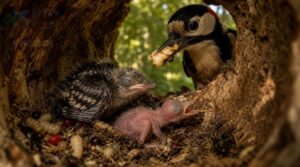
baby woodpecker’s diet doesn’t stay the same from hatch day to first flight — it changes quite a bit as the chick grows. Each stage calls for different foods that match what the bird can actually handle and digest.
Here’s how that progression looks, from the first few days all the way to juvenile independence.
Hatchlings: Soft Insect Mash Only
In their first week of life, hatchlings can only handle one thing: soft insect mash. Their digestive systems aren’t ready for anything solid.
Parents regurgitate a carefully balanced paste — think of it as nature’s baby food — where mash viscosity, moisture balance, and amino acid profile all matter.
Temperature control keeps it safe.
No mealworms, no additives. Just pure, protein-rich diet precision.
Young Nestlings: Insects With Tiny Soft Additions
Around one to two weeks old, nestlings enter what you might call the beak softening stage. Parents shift from pure mash to slightly textured prey — small caterpillars, soft ant bodies, and moisture‑rich prey like fly larvae.
Parental food delivery becomes more intentional, with careful prey size selection to match growing but still fragile beaks. Seasonal ant availability plays a big role in what gets served.
Older Nestlings: Larger Insects and Occasional Fruit
By three weeks old, nestlings are ready for bigger meals. Prey Size Scaling kicks in as parents deliver carpenter ants and beetle larvae measuring up to 2.5 cm.
Digestive Enzyme Development allows chicks to break down tougher exoskeletons now.
Parents also offer a Fruit Micronutrient Boost through small berry pieces.
This Protein Fat Balance, driven by a protein-rich diet, accelerates feather and muscle growth.
Fledglings: Ants, Beetles, Mealworms, and Suet
Fledglings are eating machines at this stage. Their feeding habits shift toward tougher invertebrates — ants deliver a strong Ant Nutrient Profile rich in calcium and protein, while beetles offer serious Beetle Energy Content for jaw development.
Mealworms bring a solid Mealworm Fat Ratio that fuels feather growth.
Watch Suet Feeding Timing during cooler days — suet feeders help fledglings maintain energy when Seasonal Ant Availability drops.
Juveniles: Insects, Seeds, Nuts, Berries, and Sap
Juvenile woodpeckers graduate to a broader menu built on Insect Prey Variety alongside nuts, seeds, and fruit. Their protein-rich diet still leans on beetles, ants, and mealworms, but now expands meaningfully:
- Tree sap provides quick Sap Energy Role fuel between foraging sessions
- Nuts deliver Nut Fat Density for sustained energy
- Berries supply Berry Antioxidant Content supporting immune health
- Seeds align with natural Seed Germination Timing, peaking in fall
Safe Emergency Foods
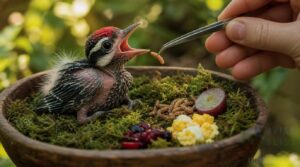
If you’ve found a baby woodpecker and can’t reach a wildlife rehabilitator right away, knowing what to feed it can make a real difference. A few common foods can safely hold a chick over in a pinch — but only if you use the right ones.
Here’s what actually works as a short-term emergency option.
Mealworms as a Short-term Substitute
When insect prey runs short, mealworms step in as a reliable emergency option for a baby woodpecker.
Their protein density — roughly 47 to 64 percent — closely mirrors what nestlings need for fast growth.
Their fat profile fulfills energy needs, and size appropriateness matters: always match worm size to the chick’s age.
Shift timing is key — seasonal availability of natural insects should guide when you phase mealworms out.
Moistened Puppy or Kitten Kibble
Mealworms won’t always be on hand — that’s where moistened puppy or kitten kibble fills the gap.
Get the water ratio right: add just enough warm water to reach a soft, spongy texture consistency. This helps nutrient retention and matches nutritional requirements of woodpecker nestlings.
Shelf life is short, so prepare small batches and follow the same feeding frequency — every 15–30 minutes.
Small Amounts of Hard-boiled Egg
Hard-boiled eggs offer a solid protein boost when other options run short. Each egg packs about 6–7 grams of complete protein — all nine essential amino acids — making it a smart fit for the nutritional requirements of woodpecker nestlings.
Chop the yolk and white into tiny, soft bits. Egg portion size matters: just a small pinch per feeding keeps homemade diets for orphaned woodpecker chicks balanced without overloading them.
Wildlife-rehabilitator Diet Formulas
When eggs alone aren’t enough, licensed rehabilitators turn to purpose-built wildlife formulas. These diets nail the nutrient balance that homemade diets for orphaned woodpecker chicks often miss — precise vitamin mix ratios, calcium supplementation for bone growth, and careful texture progression from soft mash to firmer pieces.
Temperature control keeps digestion running smoothly. Following guidelines for wildlife rehabilitation of woodpeckers ensures a protein-rich diet without guesswork.
Why Emergency Feeding Should Be Temporary
Emergency care for injured baby woodpeckers is a bridge — not a destination. The longer you hand-feed, the greater the risks of imprinting and preventing dependency on natural foraging.
To encourage natural foraging and limit nutritional imbalance, follow these steps:
- Begin gradual food reduction by week three
- Introduce bark-foraging opportunities daily
- Contact a licensed rehabilitator to follow safe feeding methods for wild bird nestlings
Foods Baby Woodpeckers Should Avoid
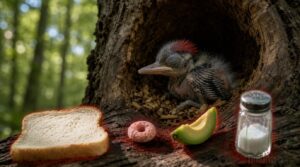
Feeding a baby woodpecker the wrong thing can cause real damage quickly. Some common foods people reach for — things sitting right in the kitchen — can cause serious harm or even death.
Here’s what to keep away from them.
Bread and Crackers
Bread and crackers might seem harmless, but they’re the wrong call for baby woodpeckers. Both are low in protein, and their calorie density comes mostly from refined carbs — not the protein-rich diet nestlings need. High sodium content in many crackers adds another risk.
Unlike safe options like mealworms or canned dog food, bread offers no real nutrition and can cause serious developmental setbacks.
Milk and Dairy Products
Dairy might seem gentle, but it’s actually harmful to the diet of baby woodpeckers. Their digestive systems can’t process lactose, casein micelles, whey protein, or milk fat globules the way mammals can.
Even fermented yogurt isn’t safe. Here’s why dairy fails nestlings:
- Lactose intolerance causes digestive distress
- Casein micelles aren’t digestible for birds
- Whey protein triggers gut inflammation
- Milk fat globules can cause aspiration
Whole Birdseed for Young Chicks
Whole birdseed isn’t a safe choice for young chicks — their beaks and guts simply aren’t ready for it. Seed size selection matters a lot here. Large or hard seeds can cause choking or blockages. Even with soaking techniques to soften them, whole seeds lack the protein-rich diet nestlings need.
| Seed Type | Risk for Nestlings | Why It’s a Problem |
|---|---|---|
| Whole sunflower | Choking hazard | Too hard for undeveloped beaks |
| Mixed birdseed | Poor nutrient ratios | Low protein, wrong fat balance |
| Millet | Digestive stress | Hard hulls irritate tiny stomachs |
| Flax/linseed | Grit inclusion needed | Requires mechanical digestion aid |
| Peanut pieces | Aspiration risk | Dense texture clogs narrow throats |
Feeding frequency for nestlings is high — every 15 to 30 minutes — and seeds simply can’t meet that demand nutritionally.
Kitchen Scraps and Processed Foods
Kitchen scraps and processed foods might seem harmless, but their scrap nutrient profile is all wrong for nestlings. Compostable food waste like fruit peels or meat trimmings carries processing food hazards — bacteria, mold, and salt.
Risks of inappropriate foods for baby birds are real.
Stick to proven options: canned dog food, hardboiled eggs, or mealworms — never random kitchen leftovers.
Direct Water and Aspiration Risk
Giving a baby woodpecker direct water is one of the most overlooked hydration hazards in orphaned bird feeding. Swallow timing in hatchlings is poorly coordinated — even small amounts can slip into the airway.
Liquid volume control matters: too much, too fast, and you risk aspiration.
If you’re using a syringe for feeding birds, syringe safety means stopping immediately if you hear gurgling or coughing.
Foods That Cause Poor Nutrition or Illness
Some foods don’t just fail baby woodpeckers — they actively harm them.
High salt and added sugar disrupt normal development.
Trans fat and ultra-processed additives have no place in a protein-rich diet built on insects and larvae.
Low nutrient fillers crowd out what chicks actually need.
Raw liver, nuts, seeds, and fruit are wrong at the wrong stage.
How Often Baby Woodpeckers Eat
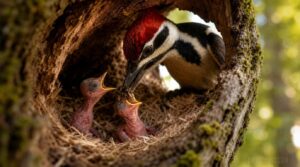
Baby woodpeckers eat constantly — and keeping up with that pace is no small task. How often they need food changes as they grow from tiny hatchlings into independent fledglings.
Here’s what that feeding schedule actually looks like at each stage.
Hatchlings Need Very Frequent Daylight Feedings
Hatchlings burn through energy fast — their metabolic rate demands a feeding every 15 to 20 minutes during daylight hours. Daylight Temperature Regulation and Energy Burst Timing drive this rhythm naturally.
Stomach Capacity Limits mean tiny meals, often:
- protein-rich insect mash
- Regurgitated prey from both parents
- Carefully timed Feeding Interval Optimization
Parent woodpeckers make hundreds of daily trips to keep up.
Nestlings May Eat Every 15–30 Minutes
As nestlings grow past that earliest hatchling stage, their Feeding Rhythm stays tight — every 15 to 30 minutes throughout the day. Their Metabolic Rate stays high, and Crop Capacity is still small, so Digestive Turnover happens quickly.
Parent woodpeckers manage this Energy Budget carefully, adjusting the diet of baby woodpeckers based on each chick’s age and feeding frequency; for nestlings, this keeps avian nutrition and nestling development on track.
Feeding Slows as Fledglings Become Independent
Once fledglings start testing their wings, the parent feeding and diet of baby woodpeckers shifts naturally. Beak Strength builds, Prey Recognition sharpens, and Self Foraging takes over.
Independence Milestones arrive gradually — begging calls fade, feeding intervals stretch, and parents step back.
These feeding habits of juvenile woodpeckers reflect Energy Conservation at work.
Fledgling development follows the season, with seasonal diet variations in woodpeckers guiding what they chase next.
Parent Woodpeckers May Make Hundreds of Trips
Parent woodpeckers don’t just feed their chicks — they run a full-time operation. Parental Coordination between male and female keeps the diet of baby woodpeckers steady and protein-rich all day long.
- Trip Timing peaks mid-morning and early afternoon
- Foraging Distance stays within a few hundred meters
- Weather Influence boosts trips on warm, insect-active days
- Energy Costs increase when prey grows scarce
Why Night Feeding is Usually Unnecessary
Once the sun sets, the work is mostly done. Woodpecker chicks build most of their growth during daylight hours, so night feeding is rarely needed.
Here’s why it stays that way:
| Factor | Daytime | Nighttime |
|---|---|---|
| Daylight Foraging Efficiency | Peak insect activity | Insects inactive |
| Predator Avoidance | Lower risk | Higher exposure |
| Chick Sleep Cycles | Active digestion | Rest and recovery |
| Parental Energy Allocation | Focused foraging | Energy conserved |
| Feeding Frequency for Nestlings | Every 15–30 min | Unnecessary |
Energy Conservation through daylight feeding keeps both parent and chick safe. A low-stress environment overnight promotes healthier baby woodpecker development overall.
If You Find a Baby Woodpecker
Finding a baby woodpecker on the ground can feel urgent, but the right move depends on what stage it’s in. Not every bird you spot needs rescuing — some just need space and a watchful eye.
Here’s what to do based on what you’re actually looking at.
Identify Hatchling, Nestling, or Fledgling Stage
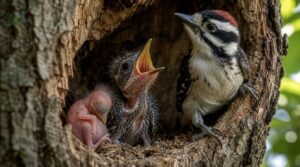
Before you do anything else, figure out which stage you’re looking at. Hatchlings are featherless, eyes shut, and completely helpless — brooding temperature keeps them alive.
Nestlings show early feather development and eye opening, with that wide beak gape signaling hunger.
Fledglings have real feathers and move around awkwardly but deliberately. Mobility cues like short flights confirm a fledgling’s stage in this altricial species.
Return Healthy Nestlings to The Nest if Possible
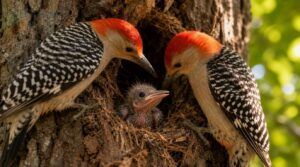
If the nest is intact, put the nestling back — it’s that simple. Use clean hands or gloves for low‑impact handling, then focus on nest stabilization by securing any loose structure with twine.
Seasonal nest positioning matters, so reattach it at the original height.
No legal permits are needed to return a bird.
Then step back and watch for parent reunification cues within a few hours.
Leave Healthy Fledglings Near Their Parents
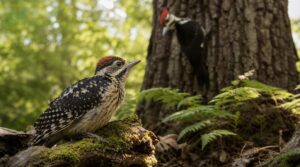
Fledglings aren’t lost — they’re learning. If you spot a healthy fledgling on the ground, leave it there.
Parental guarding behavior kicks in from nearby perches, where adults maintain predator vigilance zones and continue the diet of baby woodpeckers and parent feeding routines.
Practice proximity monitoring techniques: watch from a distance. Safe ground cover nearby gives the bird shelter while parents manage its care naturally. Minimal human interference is the rule.
Keep Cats, Dogs, and People Away
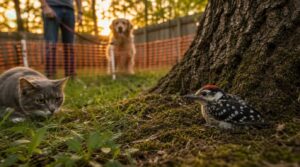
Cats and dogs are real threats to grounded fledglings. Physical Barriers, like fencing or netting, and establish a Pet-Free Buffer zone of at least 10 meters around the tree.
Deterrent Devices, and create Human Exclusion Zones with visible markers.
Seasonal Deterrence matters most during spring.
Predation and human impacts on woodpecker nesting success are leading causes of failed wildlife rescue outcomes.
Contact a Licensed Wildlife Rehabilitator
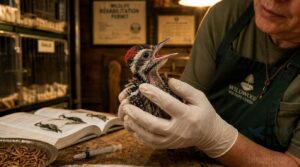
Once the area is secure, your next call should be to a licensed wildlife rehabilitator. Don’t try to manage this alone. Here’s what to have ready:
- Species, age, and visible injuries
- Your location and transport container prep details
- Questions about legal permit requirements and post‑release follow‑up
A local bird rescue organization or wildlife rehab center connects you to safe feeding techniques and proper emergency wildlife feeding protocols fast.
Avoid Keeping Woodpeckers as Pets
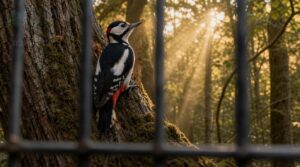
Keeping a woodpecker isn’t just impractical — it’s illegal. Under the Migratory Bird Treaty Act, woodpeckers have full legal protection, meaning possession without permits is a federal offense.
Beyond the legal considerations, captivity creates real stress risks and injury potential for birds adapted to bark, open foraging, and seasonal insect access.
Improper diet and housing also raise disease transmission concerns.
Wildlife rehabilitation is always the right path.
Frequently Asked Questions (FAQs)
What can you feed a baby woodpecker?
You can feed a baby woodpecker live insect sources like mealworms or a soft mash consistency of moistened kibble and hard‑boiled egg.
Skip raw liver, dairy, and bread — those do more harm than good.
What do you do if you find a baby woodpecker?
If you find a baby woodpecker, observe from a distance first. Assess injury before acting. Secure a safe environment, avoid handling it, and call a wildlife expert immediately.
Can baby birds survive the night without food?
Yes, baby woodpeckers can survive one night without food if they’re warm and healthy.
Their protein-rich diet builds nighttime energy reserves, supporting thermal regulation and a stable metabolic rate through brief parental absence.
What do Baby woodpeckers eat?
Baby woodpeckers eat mainly insects — beetle larvae, carpenter ants, and wood-boring grubs. Parents also deliver nuts, seeds, and fruit to round out the protein-rich diet.
What do woodpeckers eat?
Woodpeckers follow a protein-rich diet of insects, grubs, nuts, seeds, and fruit.
As insectivorous birds, their bird feeding habits shift with the seasons — leaning on sap consumption and urban or rural diet availability.
Do woodpeckers eat baby birds?
It’s rare but real. Nest predation does occur — some species engage in opportunistic feeding on nestlings when food is scarce.
Seasonal predation is sporadic and represents a minor part of overall bird feeding habits.
Do Baby woodpeckers eat grubs?
Grubs are a staple in any baby woodpecker’s protein-rich diet.
Parents actively select grubs based on grub digestibility and grub size preference, delivering soft, partially pre-digested larvae that fuel rapid nestling growth.
Can baby woodpeckers eat dry food?
Dry food isn’t safe for nestlings. Their tiny throats can’t handle hard pieces, and it causes nutrient imbalance fast.
Always soften it completely before offering any — better yet, contact a rehabilitator first.
Can you feed a baby woodpecker bread or milk?
No — don’t feed a baby woodpecker bread or milk.
Bread causes bread-induced blockage in the crop, and milk triggers milk-induced diarrhea. Both create serious digestive upset and aspiration hazard. Stick to a protein-rich diet instead.
Is drumming related to feeding?
Yes — drumming isn’t just noise.
Parental drum timing and acoustic nest signaling help rhythm feeding cues sync, so parent woodpeckers feed nestlings more consistently when territory feeding sync is established through drumming communication.
Conclusion
Every feeding trip a parent woodpecker makes is a calculated act of survival. Understanding what baby woodpeckers eat—soft insects, larvae, and regurgitated mash—isn’t just fascinating biology.
It’s the difference between a chick that thrives and one that doesn’t. If you ever find a baby woodpecker, that knowledge becomes practical and urgent.
Feed right, stay hands-off, and call a licensed rehabilitator fast.
Nature built this system carefully. Your job is to respect it.