This site is supported by our readers. We may earn a commission, at no cost to you, if you purchase through links.

West Virginia’s forests hide a notable secret—seven woodpecker species call this state home, from the crow-sized Pileated drumming deep in old-growth hollows to the sparrow-small Downy, working your backyard suet feeder in January.
That’s more resident woodpecker diversity than most birders realize exists in a single Appalachian state.
Spend a morning along any wooded ridge in the Monongahela National Forest and you’ll likely encounter three or four species before breakfast.
Knowing who’s who—and what draws each one closer—transforms a fleeting glimpse into a real connection with West Virginia’s woodland wildlife.
Table Of Contents
- Key Takeaways
- 7 Woodpeckers in West Virginia
- How to Identify Each Species
- Habitats and Seasonal Movements
- Feeding and Attracting Woodpeckers
- Top 4 Woodpecker Yard Essentials
- Frequently Asked Questions (FAQs)
- What kind of woodpeckers are in West Virginia?
- Is it good to have woodpeckers in your yard?
- What is the largest woodpecker in West Virginia?
- Do woodpeckers mean I have termites?
- How do you tell woodpeckers apart?
- How do woodpeckers build their nests in trees?
- What sounds do woodpeckers commonly produce?
- How do woodpeckers contribute to forest ecosystems?
- What threats do woodpeckers face in the wild?
- Which behaviors help woodpeckers find food?
- Conclusion
Key Takeaways
- West Virginia hosts seven woodpecker species ranging from the sparrow-sized Downy to the crow-sized Pileated, giving it more resident woodpecker diversity than most birders expect from a single Appalachian state.
- You can tell most species apart quickly by checking three things: overall body size, bill length relative to head size, and the color and placement of any red markings on the head.
- Woodpeckers do far more than peck wood — they control insect populations, accelerate forest decay, and carve out cavities that shelter dozens of other species, making them quiet engineers of healthier forests.
- Attracting woodpeckers to your yard comes down to four basics: a suet feeder stocked with energy-rich cakes, a source of moving water, native fruit-bearing trees or shrubs, and at least one standing dead tree or nest box for shelter.
7 Woodpeckers in West Virginia

West Virginia is home to seven woodpecker species you’re likely to encounter, from tiny backyard visitors to crow-sized forest giants.
Each species claims its own niche—explore the full breakdown of woodpecker species found in Virginia to see how habitat shapes their range.
Each one has its own look, habits, and favorite haunts across the state. Here’s a closer look at all seven.
Downy Woodpecker
If you spend any time near West Virginia’s wooded edges, the Downy Woodpecker (Picoides pubescens) is probably your most frequent visitor. It’s North America’s smallest woodpecker — barely six inches long — yet it punches well above its weight.
Watch for its bold black-and-white pattern and stubby bill. Males sport a small red nape patch.
Juvenile plumage development brings duller tones at first, sharpening with age. It thrives in open deciduous forest habitat across its range.
Hairy Woodpecker
Hairy Woodpecker (Picoides villosus) is basically the Downy’s bigger, bolder cousin. At 9–10 inches long, it’s noticeably larger — and that bill length ratio gives it away instantly.
Its bill nearly matches its head length, built for serious excavation work. That insect preference spectrum leans heavily toward beetles and grubs.
Spot one at your suet feeder in West Virginia’s mature forests and you’ll see why it matters for forest health. Its range spans from Alaska to Panama, demonstrating a wide geographic distribution.
Red-bellied Woodpecker
Meet the Red-bellied Woodpecker (Melanerpes carolinus) — a year-round West Virginia resident with that bold barred back and flashy red crown. Don’t let the name fool you; that belly wash is easy to miss.
- Prefers mixed deciduous forests and suburban woodlots
- Suet and peanuts draw them to backyard feeders reliably
- Breeding pair dynamics involve shared cavity excavation duties
- Territory defense includes loud rolling calls and wing displays
- Winter foraging shifts toward cached seeds and bark insects
Northern Flicker
Unlike the Red-bellied’s treetop lifestyle, the Northern Flicker (Colosaptes auratus) spends surprising time on the ground. Its bill morphology — long and slightly curved — is built for probing soil and leaf litter for ants.
Watch your lawn in West Virginia and you might spot one. Drumming patterns and territory defense calls sound like a loud, rolling "wicka-wicka."
They’ll skip your suet feeder for an anthill every time.
Pileated Woodpecker
If you hear a wild, echoing laugh deep in a West Virginia forest, that’s the Pileated Woodpecker (Dryocopus pileatus) announcing itself.
This crow-sized bird — 16 to 19 inches of black feathers and a blazing red crest — hammers large trees in mature forests and dead trees into rectangular cavities.
Its cavity creation impact shelters dozens of species, while its ant population control keeps carpenter ant colonies in check, making it a true indicator species, role model.
The Pileated Woodpecker shelters dozens of species and keeps carpenter ant colonies in check, making it a true forest indicator
Yellow-bellied Sapsucker
The Yellow-bellied Sapsucker (Sphyrapicus varius) is West Virginia’s only true migratory woodpecker, arriving each spring and heading south when temperatures drop. Its Sap Well Architecture — neat horizontal rows drilled into maples and birches — is its signature. Those wells don’t just feed the sapsucker; they fuel an entire Insect Community Impact, drawing in hummingbirds and other wildlife.
Watch for:
- Bold black-and-white back with a pale yellow belly wash
- Red crown on both sexes; males add a red throat patch
- Stuttering Territorial Drumming on resonant branches or metal
- Preferred Tree Species like birch and maple
Red-headed Woodpecker
If you spot a woodpecker with a fully crimson head in West Virginia, that’s the Red-headed Woodpecker (Melanerpes erythrocephalus) — and it’s worth a second look.
Snag Retention Benefits this species directly, since it nests in dead trees.
Populations have dropped over 70%, making Citizen Science Monitoring and bird feeders stocked with suet and mixed seed genuinely helpful.
How to Identify Each Species
Seven woodpeckers sound like a lot to keep straight, but a few key clues make it easier than you’d think. Once you know what to look for — size, bill shape, color patches, and sound — each species starts to stand out on its own.
Here’s what to pay attention to.
Downy Vs Hairy Woodpecker Differences

These two look like twins at first glance, but a few clues crack the case fast. Here’s your quick identification guide for West Virginia woodpeckers:
- Bill length — The Downy Woodpecker’s bill is short and dainty; the Hairy Woodpecker’s nearly matches its head width.
- Tail feathers — Downy’s outer tail feathers show white spots; Hairy’s are clean white.
- Overall feel — Downy looks delicate; Hairy looks bold and sturdy.
Size, Weight, and Wingspan Clues
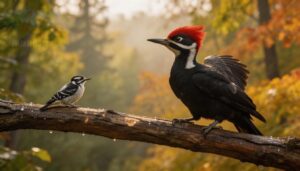
Size alone can save you a lot of guesswork. A Downy weighs barely an ounce, while a Pileated tips the scales at nearly a pound — that’s a dramatic species weight range.
Wing shape variations also help: Downys have short, rounded wings; Pileated show broad, powerful ones.
Keep adult-juvenile size differences in mind too, since young birds often look slightly smaller in late summer.
Bill Shape and Head Markings

Bill Shape Profiles and Head Crest Patterns are two of the fastest shortcuts for identification of West Virginia woodpeckers. The Bill-to-Head Ratio tells you a lot — a Downy’s tiny Bill Tip Shape barely clears half its head length, while a Hairy’s long bill matches its full head.
Look for a Red Nape Markings spot on smaller species, a red crown on Red-bellied, and the Pileated’s unmistakable large triangle red crest.
Plumage Patterns and Color Patches
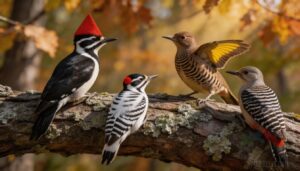
Once you’ve nailed the bill and head, plumage patterns seal the deal. Melanin-based Pigment Types paint bold black-and-white contrast on most species, while Structural Iridescence adds subtle shimmer to dorsal feathers in angled light.
Watch for Patch Edge Textures — smooth on Pileated’s large triangle red crest, speckled on Flickers’ Barred Scale Patterns, and yellow feathers on underwing.
That black bib and red spot on back of head narrow things down fast.
Calls, Drumming, and Flight Sounds

Sound is your secret weapon for woodpecker ID.
Each species has a distinct voice — the Downy’s high-pitched whinnying sound, the Hairy’s sharp peek call, the Pileated’s deep booming cuk-cuk-cuk.
Drumming tempo patterns differ too: Flickers drum fast, hit slow and heavy.
Seasonal call shifts happen throughout the year, with territorial drumming cues peaking in spring.
Trust your ears.
Male Vs Female Field Marks
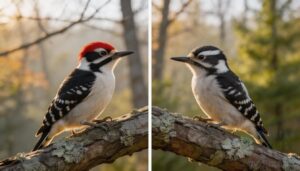
Once you’ve got the calls down, your eyes take over.
Sexual dimorphism in plumage is subtle but real. Males usually show bolder head color contrast — that red nape patch pops brighter; the moustache stripe cuts sharper. Bill base size runs slightly larger in males too. Females lean toward softer tones and quiet crest prominence. Small differences, but they add up fast in the field.
Habitats and Seasonal Movements

West Virginia’s woodpeckers don’t all live in the same places, and some don’t even stick around year-round. Where a bird hangs out depends on the trees, the food, and the season.
Here’s a closer look at what shapes each species shows up.
Forests, Woodlots, Parks, and Edges
West Virginia’s woodpeckers don’t just pick a random tree and call it home. They rely on habitat corridors — those connected stretches of forest linking woodlots and parks — to move, forage, and nest.
Edge microclimates spark seasonal insect pulses that keep birds fed year-round. Snag retention matters too, since dead trees serve as both pantry and nursery.
Park canopy layers add even more variety.
Open Woodland and Farm Country Species
Open woodlands and farm country bring out some of West Virginia’s most adaptable woodpeckers. Species like the Downy Woodpecker, Hairy Woodpecker, and Redbellied Woodpecker thrive where habitat connectivity links scattered trees to forest edges. Watch for these four in open country:
- Redbellied Woodpecker — works in forest margins
- Redheaded Woodpecker — surges during mast events
- Hairy Woodpecker — targets snags for edge foraging
- Downy Woodpecker — follows insect pulses into brushy farm borders
Ground-feeding Northern Flickers
Unlike most woodpeckers, the Northern Flicker spends a surprising amount of time on the ground. Its ant foraging behavior is almost legendary — that long, curved bill probes soil and leaf litter with precision.
In West Virginia, you’ll spot flickers working lawns, parks, and open edges where soil invertebrate impact keeps them well-fed. Seasonal habitat shifts bring them closer to suburban yards than you’d expect.
Spring and Summer Yellow-bellied Sapsuckers
Every spring, the Yellow-bellied Sapsucker quietly slips back into West Virginia’s maples and birches. Watch for neat horizontal rows of sap wells drilled into bark — that’s their signature.
During the spring breeding season, territorial drumming and courtship feeding pick up fast. Insect prey peaks draw them to forest edges, making sap well dynamics the heartbeat of their warm-weather routine here.
Winter Movements of Flickers and Red-headed Woodpeckers
winter tightens its grip, not all woodpeckers stick around. The Northern Flicker shifts its Flicker winter range southward when snow buries its favorite ground-foraging spots.
The Red-headed Woodpecker follows Red-headed migration cues tied to food caching behavior — if acorn and beech nut stores hold, some stay in West Virginia. Their edge corridor preferences keep them visible near open woodland borders.
Rare Black-backed Woodpecker Appearances
Black-backed Woodpecker (Picoides arcticus) is about as rare as it gets in West Virginia. You’re most likely to spot one after Fire Habitat events or Bark Beetle Outbreaks create High Elevation Snags in conifer stands. Listen for its Seasonal Ticking Calls along dead spruce trunks.
Three signs you’ve found one:
- All-black back with a white facial stripe
- Yellow crown patch on males
- Methodical peeling of loose bark on dead conifers
As a Conifer Forest Indicator, the Black-backed Woodpecker signals ecosystem stress — and its Conservation concerns for rare Black-backed Woodpecker status deserve attention from anyone tracking Woodpecker species distribution in West Virginia.
Feeding and Attracting Woodpeckers
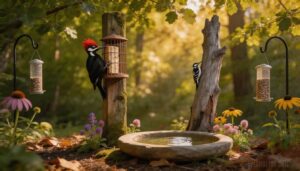
Getting woodpeckers to visit your yard isn’t complicated — you just need to give them what they’re already looking for. The right food, water, trees and nesting spots can turn your backyard into a place they keep coming back to.
Here’s what actually works.
Suet, Peanuts, Seeds, and Insects
Think of your suet feeder as a woodpecker’s favorite diner. In West Virginia, the right foods make all the difference.
Unsalted peanuts, black sunflower seed, and insect larvae mixed into suet blocks keep birds coming back. Time your insect supplement timing to the breeding season for best results.
| Food | Best For | Tip |
|---|---|---|
| Suet mix ratios | All woodpeckers | Refresh monthly |
| Peanuts | Hairy, Pileated | Unsalted only |
| Black sunflower seed | Downy, Flicker | Platform feeder |
Smart feeder placement strategies — eye-level, near trees — complete the setup.
Dead Trees, Snags, and Nest Cavities
Food at the feeder only goes so far. What woodpeckers really need is a place to raise their young.
Dead trees and snags are the backbone of cavity succession in West Virginia forests — heartwood decay softens the wood, making excavation possible. Leave legacy snags standing when you can, and consider artificial cavities where natural dead trees are scarce.
Native Fruit-bearing Trees and Shrubs
Snags give woodpeckers shelter, but native fruit-bearing plants keep them fed through lean months.
Planting these five around your yard works wonders for feeding and attracting woodpeckers in your backyard:
- Apple Orchard Edges – Red-bellied woodpeckers love late-summer drops
- Pear Tree Hedgerows – dense cover plus August fruit
- Cherry Spring Blooms – draws early migrants
- Blackthorn Sloe Berries – ripe September through November
- Hawthorn Red Haws – a winter staple along West Virginia woodland edges
Birdbaths and Moving Water Sources
Water pulls woodpeckers in just as reliably as food. A birdbath with a solar fountain creates ripple effects that catch their eyes — and ear. Keep shallow, around 1–2 inches for safe footing.
| Feature | Why It Matters | West Virginia Tip |
|---|---|---|
| Shallow Depth Design | Safer bathing for all sizes | 1–2 inch max depth |
| Solar Pump Benefits | Keeps water moving, deters mosquitoes | No outlet needed |
| Water Quality Maintenance | Fresh water draws more visits | Rinse weekly |
| Placement Near Shrubs | Quick escape cover nearby | Edge of treeline works best |
| Ripple Effects | Visual and sound cue for birds | Drippers work great too |
Nest Boxes for Backyard Woodpeckers
Beyond water, a well-placed nest box gives cavity-nesting woodpeckers a safe home right in your backyard.
In West Virginia’s humid climate, Box Materials matter — cedar or redwood hold up best.
Entrance Size should match your target species, roughly 25–45mm.
Mount at least 6–10 feet high, add a Predator Guard, and stick to a yearly Cleaning Schedule to keep things healthy.
Limiting Pesticides to Protect Insect Prey
Think about the insect larvae packed inside dead wood — that’s a woodpecker’s jackpot. Pesticides wipe that out fast.
Switching to Integrated Pest Management keeps your yard’s insect diet intact.
Use Selective Pesticides with short residual life, mind your Application Timing (evenings work best), and plant Buffer Zones and Habitat Refugia around woodland edges.
Pest control doesn’t have to mean starving the birds you’re trying to attract.
Preventing Woodpecker Damage to Homes
Preventing woodpecker damage to homes starts with understanding why they’re there — insects, hollow-sounding wood, or drumming territory.
Physical Barriers, like metal flashing or hardware cloth, stop repeat visits cold.
Reflective Deterrents, such as foil strips and old CDs, work surprisingly well.
Sound Repellents and Habitat Adjustments — like removing nearby insect-laden snags — redirect birds naturally.
Solid Repair Practices seal the deal.
Top 4 Woodpecker Yard Essentials
If you’re serious about bringing more woodpeckers into your yard, a few key items make a real difference. You don’t need to overhaul your whole backyard — just the right feeder, food, shelter, and water source can do the work.
Here are the four essentials worth picking up.
1. Birds Choice Suet Feeder with Tail Prop
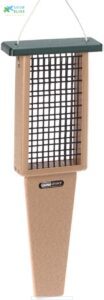
The Birds Choice Suet Feeder is built with woodpeckers in mind — literally. That 9.5-inch tail prop gives birds like Pileated and Hairy woodpeckers a solid resting point while they work through a suet cake, which means longer visits and less wobble.
It holds two standard cakes at once, so you’re not running outside every other day to reload.
The recycled poly-lumber body withstands rain, sun, and cold without cracking.
At $44.99, it’s a smart, durable investment for your backyard setup.
| Best For | Backyard birders who want to attract woodpeckers and other clinging birds with a low-maintenance, weather-tough feeder that lasts for years. |
|---|---|
| Primary Purpose | Suet feeding |
| Target Species | Woodpeckers, nuthatches, chickadees |
| Material | Recycled poly-lumber |
| Weather Resistance | Crack and fade resistant |
| Ease of Maintenance | Removable mesh panels |
| Price | $44.99 |
| Additional Features |
|
- The 9.5-inch tail prop gives woodpeckers a real resting spot, so they stick around longer instead of flying off after a quick peck.
- Dual suet cake slots let two birds feed at once — less squabbling, more watching.
- Recycled poly-lumber shrugs off rain, sun, and freezing temps without cracking or fading.
- At $44.99, it costs more than a basic wire cage feeder — though you do get what you pay for.
- The mesh openings run a bit wide, so crumbly suet can fall through and go to waste.
- Suet cakes aren’t included, so factor in that extra cost before you hang it up.
2. St Albans Bay High Energy Suet for Birds

Suet is basically jet fuel for woodpeckers, and St. Albans Bay delivers it in bulk.
Each 11-ounce cake is packed with rendered beef suet, black-oil sunflower seeds, and cracked corn — exactly the energy-dense mix that keeps Downies and Pileateds coming back.
The melt-resistant formula holds up better than standard suet in warmer weather, and you get 20 cakes per pack.
That means less restocking and more watching.
Store them somewhere cool, and your feeders stay stocked all season.
| Best For | Backyard birders who want to attract woodpeckers, chickadees, and nuthatches year-round without constantly restocking their feeders. |
|---|---|
| Primary Purpose | Suet food source |
| Target Species | Woodpeckers, chickadees, cardinals |
| Material | Rendered beef suet blend |
| Weather Resistance | Melt-resistant formula |
| Ease of Maintenance | Recyclable packaging |
| Price | Varies (20-pack) |
| Additional Features |
|
- Comes in a 20-cake bulk pack, so you’re not running to the store every week
- Melt-resistant formula holds up better than regular suet in sun and warmer temps
- Clean, recyclable packaging makes handling and storage easy
- Won’t attract fruit or berry lovers — no added flavors or seed variety here
- Extreme heat can still soften the cakes despite the melt-resistant claim
- Birds that prefer seeds or fruit may ignore it entirely
3. Coveside Three Woodpecker Nest Box
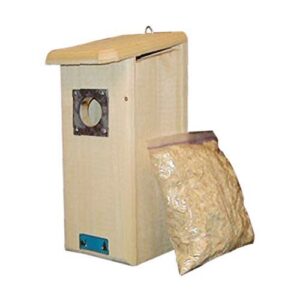
If you want woodpeckers to actually stick around, give them a place to raise their young. The Coveside Three Woodpecker Nest Box is built from kiln-dried Eastern White Pine and sized for hairy, red-headed, and red-bellied woodpeckers.
A slate guard around the 2.25-inch entry hole keeps predators out and stops birds from chewing it wider. It even ships with wood chips inside — so it’s ready to hang right away.
The side door swings open for easy cleaning between seasons.
| Best For | Backyard birders who specifically want to attract hairy, red-headed, or red-bellied woodpeckers and are willing to invest in a purpose-built, durable nesting box. |
|---|---|
| Primary Purpose | Nesting habitat |
| Target Species | Hairy, red-headed, red-bellied woodpeckers |
| Material | Kiln-dried Eastern White Pine |
| Weather Resistance | Thick pine insulation |
| Ease of Maintenance | Side access door |
| Price | Higher price point |
| Additional Features |
|
- Comes with wood chips included, so you can hang it and it’s ready to go — no extra shopping needed.
- The slate entry guard does double duty: keeps predators out and stops birds from gnawing the hole larger.
- Side access door makes seasonal cleaning quick and straightforward.
- It’s pricier than most basic birdhouses, which might give budget-conscious buyers pause.
- The joinery can be a little weak out of the box — some owners have had to reinforce it with screws.
- The roomy interior could attract unwanted guests like grackles or owls if you don’t add extra predator protection.
4. Biling Solar Bird Bath Fountain

Moving water is like a dinner bell for woodpeckers.
The Biling Solar Bird Bath Fountain keeps your birdbath fresh and flowing without any wiring or hassle. It runs on a 2.5W solar panel with an 800 mAh battery backup, so it keeps circulating even on cloudy days.
The quiet pump won’t spook shy species, and the spray deflector helps keep water in the basin. Clean the intake every few days to prevent clogging and you’re set.
| Best For | Backyard birders who want to attract more birds to a small birdbath or garden pond without dealing with extension cords or electricity. |
|---|---|
| Primary Purpose | Water feature |
| Target Species | All backyard birds |
| Material | Injection-molded plastic |
| Weather Resistance | Outdoor-rated, -10°C to 45°C |
| Ease of Maintenance | Interchangeable fountain heads |
| Price | Budget-friendly |
| Additional Features |
|
- Runs day and night thanks to the battery backup — no sun, no problem
- Quiet motor won’t startle birds or wildlife nearby
- The deflector attachment keeps water in the basin, so you’re not constantly refilling it
- Spray height is pretty modest (2–3 inches), so it won’t work for larger decorative fountains
- Needs direct sun and an occasional "dark reset" to get going again after it shuts off
- The intake clogs easily and may need cleaning every few days to keep things running smoothly
Frequently Asked Questions (FAQs)
What kind of woodpeckers are in West Virginia?
Seven woodpecker species call West Virginia home year-round or seasonally: Downy, Hairy, Red-bellied, Northern Flicker, Pileated, Yellow-bellied Sapsucker, and Red-headed. Each one has its own look, habits, and favorite hangouts.
Is it good to have woodpeckers in your yard?
Yes, woodpeckers are great to have around. They eat harmful insects, create nesting holes, other birds use, and signal a healthy yard ecosystem.
Plus, their drumming gives your outdoor space real life.
What is the largest woodpecker in West Virginia?
The Pileated Woodpecker (Dryocopus pileatus) holds that title easily. It stretches 16 to 19 inches long with a wingspan pushing 30 inches — roughly the size of a crow.
Do woodpeckers mean I have termites?
Not necessarily. Woodpeckers do hunt termites and carpenter ants, but their presence alone isn’t proof.
It’s a warning sign worth taking seriously — inspect your wood and call a pest professional if you’re concerned.
How do you tell woodpeckers apart?
Start with size — it’s your fastest clue. A dinner-plate-sized bird? That’s a Pileated. Sparrow-sized? Downy. Then check the bill length, head markings, and listen for the call.
How do woodpeckers build their nests in trees?
Think of it like a carpenter building a tiny apartment — woodpeckers chisel straight into dead wood, hollowing out a chamber where wood chips cushion the eggs naturally.
What sounds do woodpeckers commonly produce?
Woodpeckers make two main sounds: drumming and calls. Drumming marks territory and attracts mates.
Calls range from sharp "peek" notes to loud rattles, whinny-like whistles, and deep rolling kuks depending on the species.
How do woodpeckers contribute to forest ecosystems?
Every peck is a small act of forest renewal.
Woodpeckers control insect pests, accelerate wood decay, recycle nutrients, and carve cavities that shelter dozens of other species — quietly engineering healthier, more resilient forests.
What threats do woodpeckers face in the wild?
These birds face real pressure out there. Habitat loss, invasive competitors like starlings, pesticide use, and climate shifts all chip away at their survival. It’s a lot working against them.
Which behaviors help woodpeckers find food?
Like a doctor tapping a chest to find what’s hollow, woodpeckers drum bark to locate hidden insects.
They listen, aim, and strike — using sound, sight, and a long sticky tongue to pull out prey.
Conclusion
As the sun sets on another day in the woods, remember: every suet cake you hang or snag, you preserve becomes a lifeline.
West Virginia’s woodpeckers aren’t just colorful visitors—they’re architects of forests, carving homes for owls and feeding on pests that threaten trees. By welcoming them, you stitch yourself into the tapestry of their survival.
Listen closely next time you hear that rhythmic drumming; it’s the heartbeat of a wild legacy you now help protect.
Your backyard is their frontier.