This site is supported by our readers. We may earn a commission, at no cost to you, if you purchase through links.
 You’re taking the right step to protect your birds from avian roundworm.
To prevent infestations, you’ll want to quarantine new or sick birds, clean cages regularly with avian-safe disinfectants, and use vet-approved dewormers.
The best avian roundworm prevention methods also involve rotating medications to prevent resistance and maintaining a balanced diet.
By following these tips, you’ll be well on your way to keeping your birds healthy – and that’s just the beginning of a parasite-free journey, with more expert advice to come.
Table Of Contents
- Key Takeaways
- Avian Roundworm Prevention
- Deworming Birds Effectively
- Common Avian Roundworm Treatments
- Bird Health and Hygiene Practices
- Managing Roundworm Infestations
- Frequently Asked Questions (FAQs)
- How do you get rid of roundworm in birds?
- How do veterinarians protect birds from roundworms?
- What is the best avian parasite treatment?
- How do roundworms infect birds?
- What to do if a bird has a tapeworm?
- Are roundworms a problem for avian populations?
- How do you prevent roundworms in birds?
- What is the best worm prevention for chickens?
- What is the most effective treatment for roundworms?
- How do you prevent roundworm infections?
- Conclusion
Key Takeaways
- You’ll want to quarantine new or sick birds to prevent the spread of roundworms, and make sure to clean their cages regularly with avian-safe disinfectants.
- Providing a balanced diet and fresh water is crucial to boost your bird’s immune system, and you can also consider adding dietary supplements like probiotics to support gut health.
- Regular fecal exams and deworming medications, as prescribed by a veterinarian, are key to preventing and treating roundworm infestations in birds.
- You’ll need to manage your bird’s environment by reducing overcrowding, sanitizing water and food sources, and controlling insect vectors to prevent re-infestation and promote overall health.
Avian Roundworm Prevention
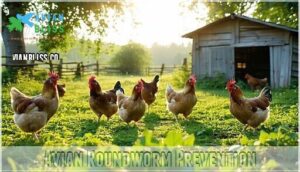
You’re taking the first step to protect your birds from avian roundworms by learning about prevention methods.
By following the best practices outlined here, you can reduce the risk of roundworm infestations and keep your birds healthy and thriving.
Identifying Contaminated Areas
To prevent roundworms, you’ve got to know where they’re lurking. Identifying contaminated areas is key. Roundworm eggs spread easily, so be vigilant.
- Feces Identification: Check droppings for worms.
- Water Sources: Make certain clean water.
- Food Contamination: Keep food fresh.
- Soil Analysis: Test soil in outdoor areas.
- Wild Bird Exposure: Limit contact.
Finding these contaminated areas helps you target your roundworm egg cleaning and environmental disinfection with the right cleaning solutions and sanitation practices. A balanced diet can also strengthen their immune system.
Regular Cleaning Methods
You prioritize bird hygiene with regular cleaning methods, including Cage Disinfection and Aviary Sanitation, to control roundworm prevention in birds.
It’s important to choose appropriate avian disinfectants for effective sanitation.
| Method | Frequency | Importance |
|---|---|---|
| Cage Disinfection | Daily | High |
| Aviary Sanitation | Weekly | Medium |
| Ground Access | Limited | Low |
| Water Sanitation | Daily | High |
The provided table outlines the frequency and importance of different sanitation methods, highlighting the need for regular Cage Disinfection and Water Sanitation.
Reducing Stress in Birds
By managing your bird’s environment, you reduce stress, a key factor in avian roundworm prevention.
Enrichment activities, social interaction, and a safe environment promote routine stability, noise reduction, and overall bird health.
Ultimately, these efforts support stress reduction and hygiene in avian roundworm prevention efforts for better health.
Balanced Diet and Nutrition
You focus on a balanced diet to boost your bird’s immune system, ensuring proper nutrient absorption.
Consider adding dietary supplements like probiotics to support gut health, key to avian roundworm prevention, and explore balanced recipes for a healthy, happy bird.
Deworming Birds Effectively

You’re taking the right step by learning about deworming birds effectively, a vital aspect of avian care.
By understanding the best methods, including registered bird wormers and natural deworming techniques, you can help keep your birds healthy and thriving.
Registered Bird Wormers
You’ll find various registered bird wormers, including Avitrol Plus, Beaphar Wormer, and Wormout Gel or Tablets, for effective bird worm treatment and poultry deworming, ensuring the best bird wormer for your needs.
With proper dosage monitoring to combat roundworm symptoms in birds, owners can ensure their birds’ health.
Many owners purchase Avitrol Plus products for their birds, looking for the most effective bird worm treatment with a reliable poultry deworming method.
Natural Deworming Methods
You’re considering natural deworming methods.
Here are some options:
- Pumpkin seeds
- Apple cider vinegar
- Garlic, but use with caution due to toxicity risks, and explore herbal remedies and probiotics benefits for a holistic approach to natural deworming birds.
**Consider diatomaceous earth benefits for parasite control.
Important Considerations for Deworming
When deworming birds, you must prioritize dosage precision and monitoring efficacy to avoid drug resistance.
Consult a vet to determine the best deworming schedule and avian worm medication, especially for roundworm symptoms in birds.
Follow their guidance on combined treatments and deworming chicks.
Common Avian Roundworm Treatments
You’ll want to explore common avian roundworm treatments to keep your birds healthy.
Keep your birds healthy with effective roundworm treatments
By understanding options like fenbendazole and ivermectin, you can make informed decisions to protect your birds from roundworm infestations.
Fenbendazole for Broad-Spectrum Protection
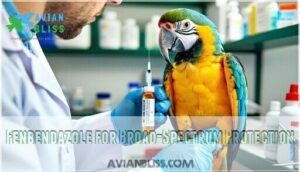
You’re using fenbendazole for broad-spectrum protection against roundworms in birds.
Fenbendazole dosage requires careful management due to toxicity concerns, emphasizing resistance management and safe usage under veterinary guidance.
For effective avian parasite control with this anthelmintic drug, careful management is crucial, highlighting the importance of safe usage.
Ivermectin for External and Internal Parasites
You’ll use ivermectin to treat internal parasites, like roundworms in birds, and external ones.
Make safe use, considering resistance concerns, and follow veterinary guidance on ivermectin dosage for effective bird deworming and broad treatment spectrum against avian parasites.
Praziquantel for Tapeworms
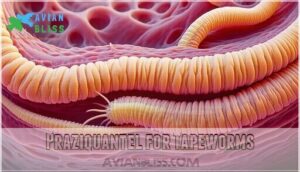
Ivermectin tackles many parasites, but what about tapeworms? That’s where praziquantel shines. It’s your go-to for bird deworming against these intestinal parasites.
Environmental cleaning is also essential for parasite control.
- Effective against tapeworms.
- Consider Praziquantel Dosage carefully.
- Watch for Side Effects.
- Be mindful of Tapeworm Resistance.
- Treatment Duration matters.
Remember, roundworms are different; praziquantel is for tapeworms. Combined Therapies are best discussed with your vet. Don’t let tapeworms ruin your bird’s day!
Levamisole for Immune System Boost
You’ll find Levamisole boosts the immune system, helping birds fight roundworms.
| Mechanism | Effect |
|---|---|
| Immune modulation | Reduces infection |
| Dosage effects | Varied response |
| Safety profile | Generally safe |
| Resistance risks | Possible issue |
The information provided is about the effects and safety of Levamisole in birds.
Bird Health and Hygiene Practices
You play a vital role in maintaining your bird’s health by following proper hygiene practices.
By quarantining new or sick birds, providing fresh water and food, and reducing overcrowding, you can help prevent roundworm infestations.
You can help keep your bird healthy by following these practices.
Quarantining New or Sick Birds
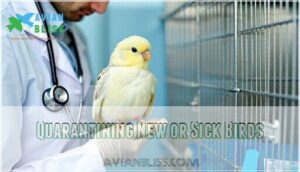
You’ll want to quarantine new or sick birds to prevent spread.
Consider:
- Quarantine Duration
- Isolation Protocols
- Stress Reduction
- Monitoring Symptoms to guarantee bird health and prevent parasite spread, key to bird parasite prevention, via quarantine procedures advised by an avian veterinarian to ensure bird health.
Regular Fecal Exams for Early Detection

You’ll prevent roundworms by having regular fecal exams, which involve microscopic analysis to detect parasites.
Consult an avian veterinarian to determine the best fecal exam frequency and sample collection methods for interpreting exam results and maintaining bird health.
Regular cleaning helps prevent parasite breeding grounds by removing potential parasite habitats, which is crucial for maintaining overall avian well-being.
Providing Fresh Water and Food

After fecal exams, let’s talk about keeping your birds healthy. You’ve got to focus on fresh water and food. Water Source Hygiene matters. Change water daily and consider water purification. For improved water quality, consider an avian water purifier.
Food Storage Safety is key. Don’t let food contamination happen. Contaminated food is a no-go. Keep it clean!
- Dispenser Cleaning Frequency
- Preventing Fecal Contamination
- Nutritional Supplement Integration
- Fresh food daily
- Fresh water always
Reducing Overcrowding in Aviaries
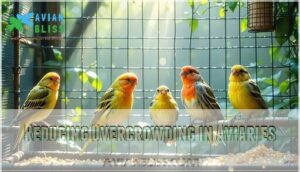
You manage your aviary’s space per bird to reduce overcrowding, minimizing resource competition and stress.
This helps prevent roundworms in birds, promoting avian health and social birding through thoughtful aviary design.
Managing Roundworm Infestations
You’re taking the right steps to manage roundworm infestations in your birds by learning about the best prevention methods.
By understanding how to recognize symptoms, clean effectively, and prevent re-infestation, you’ll be able to keep your birds healthy and thriving, which is crucial for their well-being, and by doing so, you ensure they are thriving.
Recognizing Symptoms of Infestation
Now that we’ve covered hygiene, let’s look at spotting problems early. Catching roundworm symptoms in birds early makes a huge difference.
Keep an eye out for these infestation symptoms:
- Weight loss
- Appetite reduction
- Lethargy signs
- Plumage changes
Visible worms might appear. Droppings analysis can help. Don’t delay; roundworm infestation can be sneaky. If you see these bird parasite symptoms, it’s time to act.
Effective Cleaning of Roundworm Eggs
You’ll want to clean roundworm eggs effectively.
Use a 1% bleach solution or steam cleaning for surface sanitization.
| Method | Efficacy |
|---|---|
| Bleach | High |
| Steam | High |
| Disinfectant | Medium |
Disinfect regularly to remove eggs and ensure a complete sanitization process.
Preventing Re-Infestation in Birds
You’ll prevent reinfestation in birds by focusing on habitat management, including water sanitation, soil treatment, and insect vector control.
To keep their environment clean and reduce the risk of contaminated soil affecting avian health, these measures are crucial, emphasizing the importance of complete concepts like water sanitation and soil treatment.
Consulting Veterinarians for Guidance
You’ll need veterinary guidance for dosage accuracy and combined treatments.
An avian veterinarian helps monitor resistance and guarantees species-specific roundworm prevention for birds, promoting avian health through proper diagnostic methods and veterinary consultation.
Frequently Asked Questions (FAQs)
How do you get rid of roundworm in birds?
You’ll likely encounter roundworms in 50% of birds; to get rid of them, use vet-approved dewormers and maintain a clean environment to prevent re-infestation and promote overall health.
How do veterinarians protect birds from roundworms?
You consult veterinarians who recommend regular fecal exams, deworming medications, and sanitation to protect birds from roundworms, ensuring a healthy environment and preventing infestations.
What is the best avian parasite treatment?
You’ll find that vet-approved dewormers like ivermectin, fenbendazole, and pyrantel pamoate are effective treatments for avian parasites, offering targeted relief and protection for your birds’ health.
How do roundworms infect birds?
You infect birds through contaminated food, water, or feces, ingesting embryonated ova that mature within their digestive system, causing harm.
What to do if a bird has a tapeworm?
When a bird has a tapeworm, you’ll want to act fast, as "an ounce of prevention is worth a pound of cure," so treat it with praziquantel under veterinary guidance.
Are roundworms a problem for avian populations?
You’ll face roundworm issues, as they disrupt avian populations, causing malabsorption, weight loss, and weakened immune systems, ultimately affecting their overall health and well-being substantially.
How do you prevent roundworms in birds?
You can prevent roundworms by regularly cleaning your bird’s environment, providing fresh water and food, and administering deworming medications as prescribed by a veterinarian.
What is the best worm prevention for chickens?
You’ll want to use registered wormers like Avitrol Plus or Beaphar Bird Wormer regularly, alongside good hygiene and a balanced diet, to keep those pesky roundworms at bay in chickens.
What is the most effective treatment for roundworms?
An ounce of prevention is worth a pound of cure; you’ll find levamisole or ivermectin are effective treatments for roundworms, so consult a vet to determine the best course.
How do you prevent roundworm infections?
You’ll reduce roundworm infections by regularly cleaning your bird’s environment, providing fresh water and food, and quarantining new birds to prevent parasite transmission.
Conclusion
You’ve taken the first step, remembering "an ounce of prevention is worth a pound of cure."
Now, you’re equipped with the best avian roundworm prevention methods, so you can protect your birds from these pesky parasites.
Ensuring a healthy and happy flock by following these expert tips on the best avian roundworm prevention methods.