This site is supported by our readers. We may earn a commission, at no cost to you, if you purchase through links.
A chickadee will visit your yard up to a thousand times a day when food is scarce. That’s not a metaphor—it’s a small, determined bird making the same hungry loop over and over. Give it a reason to stop, and suddenly your backyard becomes a place worth watching.
Building your own feeder costs almost nothing, takes an afternoon, and works better than most store-bought options. Whether you’re repurposing a tin can or cutting cedar boards, easy bird food feeder plans come in every style and skill level.
The birds don’t care about ideals—they care about seed.
Table Of Contents
- Key Takeaways
- Easy Bird Feeder Plans
- Bird Feeder Types Compared
- Building Bird Feeders Easily
- Bird Feeder Placement Tips
- DIY Bird Feeder Projects
- Frequently Asked Questions (FAQs)
- Why should you sprinkle coffee grounds around your bird feeder?
- What is the 5 7 9 rule for bird feeders?
- What is the easiest homemade bird feeder?
- What is the cheapest way to feed birds?
- What can I use to stick bird seed together?
- How often should bird feeders be cleaned?
- What seeds attract specific bird species best?
- How to prevent squirrels from raiding feeders?
- When is the best season for feeding?
- What weather conditions require feeder maintenance adjustments?
- Conclusion
Key Takeaways
- Building your own bird feeder costs as little as $4 and takes an afternoon, with cedar boards and recycled materials doing most of the heavy lifting.
- Matching your feeder type to your target birds matters—tube feeders for finches, suet cages for woodpeckers, and platform trays for cardinals and jays.
- Placement is half the battle: keep feeders 30 feet from windows (or within 3 feet), pole-mounted at 5 feet high, and at least 7 feet from anything a squirrel can leap from.
- Seasonal feeding pays off most in winter, when natural food disappears and high-fat options like suet and black-oil sunflower seeds keep birds alive and coming back.
Easy Bird Feeder Plans
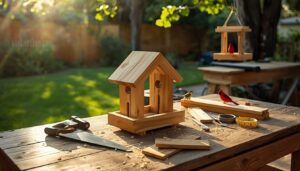
Building your own bird feeder doesn’t have to be complicated.
A few good designs stand out for beginners, each with its own perks depending on the birds you want to attract. Here are three solid plans worth knowing about.
Browse homemade bird feeder plans for beginners to find the style that best fits your backyard and the birds you’re hoping to attract.
Hopper Bird Feeder Design
Think of a hopper-style feeder design as a self-service diner for birds — one that keeps the menu stocked without you hovering nearby. Gravity feed does the heavy lifting, pushing fresh seed down to the tray as birds eat. A sealed roof keeps rain and snow out, ensuring your seed stays dry and fresh. Many hopper designs also feature a clear seed window, allowing you to check levels at a glance.
Here’s what makes building DIY bird feeders in this style so rewarding:
- Multi-side access lets several birds feed at once
- A drainage tray prevents soggy, moldy seed buildup
- Cedar or pine boards keep costs low — about $4 for a 6-ft board
Platform Bird Feeder Benefits
Platform feeders are the friendliest option in easy bird food feeder plans. Their open tray offers food versatility — seeds, fruit, mealworms, you name it. Cardinals, jays, and doves all land comfortably together.
Simple refilling means no tubes or caps to wrestle with. Flexible placement works on poles, hooks, or low mounts.
Just add drainage holes for weather protection and you’re set.
Simple Bird Feeder Construction
Building a simple bird feeder doesn’t require a workshop full of gear. Grab a saw, drill, screwdriver, and wood glue — that’s your tool checklist.
Cedar boards are the go-to for DIY bird feeder construction because they handle rain and sun without rotting. Follow beginner-friendly plans that include smart perch placement, basic cedar joinery tips, and weatherproof finishing.
Toss in squirrel guard mechanisms and recycled materials, and you’ve got a feeder worth bragging about.
You can complete this budget-friendly 20‑minute build for around $4 in material costs.
Bird Feeder Types Compared
Not all feeders are created equal — and the right match makes your backyard come alive.
From hummingbird tubes to platform trays, understanding bird feeders for different bird types helps you build a space where every visitor actually wants to stay.
- Hopper-style feeder — Great feeding capacity, attracts cardinals, jays, and finches, but cleaning ease is limited
- Tube feeders — Ideal for goldfinches; many include squirrel resistance features
- Platform feeders — Widest target species range; limited weather protection
- Suet feeders — High-energy option for woodpeckers and chickadees
- Squirrel-proof feeders — Weight-activated designs that protect your seed supply
Pick based on who you want to feed.
Building Bird Feeders Easily
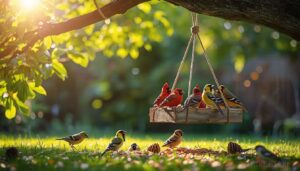
Building a bird feeder doesn’t need to be complicated or expensive. You’ve got more options than you might think, from scraps in your recycling bin to a few cedar boards from the hardware store.
Here are some of the easiest ways to get started.
Using Recycled Materials
Your trash might just be a bird’s dream home. Plastic Bottle Upcycling transforms old soda bottles into seed dispensers in minutes, while Metal Can Baffles crafted from tin cans provide sturdy, rust-resistant structure. Reclaimed Wood Frames, built from pallet scraps, offer charming and durable bases. These recycled materials keep costs low and waste out of landfills—a true win for eco-friendly backyard bird feeding.
Your trash is a bird’s dream home — bottles, cans, and pallet scraps become feeders in minutes
| Material | Feeder Type | Best For |
|---|---|---|
| Plastic bottle | Tube feeder | Finches, goldfinches |
| Tin can | Suet feeder | Woodpeckers, chickadees |
| Reclaimed wood | Platform tray | Cardinals, sparrows |
Recycling household items for wildlife also means less shopping and more doing.
Wooden Bird Feeder Designs
Wood is where most backyard feeders find their soul. Cedar boards are the go-to choice — naturally rot-resistant and easy to cut with basic tools. Pine boards work well too, especially for beginners. A good DIY bird feeder construction guide will walk you through each step without the overwhelm.
Here’s what makes a solid wooden feeder:
- Cedar construction holds up through rain, snow, and summer heat
- A pitched roof overhang keeps seed dry and birds comfortable
- A weatherproof finish like exterior polyurethane protects every exposed surface
- Smart perch placement gives birds a stable, easy landing spot
- Anti-squirrel baffles and wood screws lock everything together securely
Even a beginner-friendly bird feeder construction project can look like a craftsman built it.
Beginner Friendly Plans
Starting simple is the smartest move. Grab a plastic bottle, a chopstick, and some twine — you’re minutes away from a working feeder. These beginner-friendly plans skip the stress completely.
| Tool Checklist | Material Cost Estimate | Quick Assembly Tips |
|---|---|---|
| Drill, scissors | Cedar board ~$4 | Cut pieces first |
| Measuring tape | Plastic bottle free | Dry-fit before gluing |
| Wood screws | Twine under $2 | Pre-drill screw holes |
| Sandpaper | Milk carton free | Sand sharp edges smooth |
| Screwdriver | Hardware ~$3 | Follow safety precautions |
Bird Feeder Placement Tips
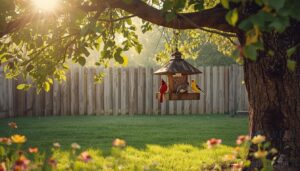
Where you hang your feeder matters just as much as what you put inside it.
The right spot keeps birds safe, squirrels frustrated, and makes your view from the window actually worth looking at.
Here are the key placement tips to get it right.
Window Collision Prevention
A bird hitting your window is a gut-punch moment nobody wants. Proper feeder placement to avoid collisions starts with the Feeder Window Buffer rule: keep feeders 30 feet from glass, or place them within 3 feet so birds can’t build speed.
- Use exterior window film or exterior mosquito screens on full panes
- Follow glass marker spacing of 2 inches apart to break up reflections
- Practice night light management by closing blinds after dark
Attracting Various Bird Species
Not every bird wants the same thing — think of your yard as a buffet, not a single dish. Cardinals love sunflower seeds near sheltering shrubs, while goldfinches prefer open spots with nyjer feeders. Mixing food options and feeder types strategically attracts diverse bird species.
| Bird | Best Setup |
|---|---|
| Cardinals | Platform feeder near shrubs |
| Goldfinches | Open tube feeder, nyjer seed |
| Woodpeckers | Suet cage, sheltered spot |
| Chickadees | Mixed seed near cover |
Native plant layers and habitat cover strategies make every visit count.
Supplemental Nutrient Provision
Think of your feeder as a seasonal pharmacy — what birds need in January isn’t what they need in May. Smart avian nutrition means timing your offerings deliberately.
- Spring and fall migration — Stock energy-dense, high-fat seed options like black oil sunflower to fuel long journeys
- Breeding season — Offer protein-rich foods like mealworms; parent birds raising chicks need them most
- Winter feeding — lipid-based supplements and suet deliver concentrated calories when cold hits hard
- Year-round variety — Rotate seed mixes to support nutrient bioavailability across targeted user groups of species visiting your yard
DIY Bird Feeder Projects
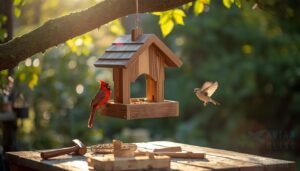
Ready to get your hands a little dusty? These four projects range from rustic charm to surprisingly clever, so there’s something here no matter your skill level.
Pick the one that fits your backyard — and your personality.
Log Cabin Bird Feeder
A log cabin bird feeder might be the most charming thing you ever build in an afternoon. Stacked horizontal logs form small walls around the feeding platform, roughly 22 inches wide, giving multiple birds room to land and eat together. The sloped Roof Design funnels seed toward the edges while keeping rain out, and Clear Plexiglas windows offer great visibility for monitoring seed levels easily.
Add Log Chinking between gaps for Winter Insulation, and position the feeder following smart feeder placement advice to deter squirrels naturally.
Terra Pot Bird Feeder
From charming log cabins to something even simpler, a terra cotta pot bird feeder proves that Clay Pot Construction needs almost no skill. Thread a steel rod through the pot and saucers using the Rod Assembly Method, then tuck in a plastic bottle for Bottle Reservoir Integration. The top saucer accommodates the Rain Shield Design beautifully.
Sparrows and finches love it. Beginner-friendly bird feeder construction doesn’t get more satisfying than this.
Wine Bottle Bird Feeder
A wine bottle bird feeder might just be the most satisfying upcycled project in your backyard. That 750ml glass bottle you recycled last weekend? It’s already halfway to becoming a DIY bird feeder.
- Gravity Seed Flow keeps seed moving steadily into the tray without dumping
- Adjustable Bottle Clamp lets you refill in seconds with no tools
- Weatherproof Roof shields both seed and bottle neck from rain
- Ant Moat Integration stops crawlers before they reach the seed
- Seasonal Refilling Guide helps you adjust seed type by month
Using recycled materials for feeders like this cuts costs and waste beautifully. Smart bird feeder placement finishes the job.
Laser Cut Birdhouse
Precision tools open up a whole new world after your wine bottle project. A laser-cut birdhouse elevates DIY construction with flat panels that snap together via press-fit joints, eliminating nails. Baltic birch or cedar ensures durability against outdoor elements.
Design features prioritize functionality: ventilation slots near the floor regulate airflow, while a removable roof simplifies cleaning. These elements combine practicality with sleek aesthetics.
Finish the exterior with non-toxic coatings to protect the wood, but leave the interior untreated for safety. This approach balances longevity with bird-friendly habits.
| Feature | Beginner Option | Upgrade Option |
|---|---|---|
| Material | 3mm plywood | ¼-inch cedar |
| Kerf Compensation | 2mm spacing | Custom calibration |
| Entry Hole | 1½-inch standard | Species-specific size |
Frequently Asked Questions (FAQs)
Why should you sprinkle coffee grounds around your bird feeder?
Think of coffee grounds as a tiny moat around your feeder. They work as a natural squirrel deterrent, slug barrier, and earthworm lure — all while quietly enriching your soil.
Sustainable feeding practices rarely get this simple.
What is the 5 7 9 rule for bird feeders?
The 5 7 9 rule is your go-to guide for proper feeder placement.
Set the vertical height at 5 feet to ensure accessibility and stability.
Maintain a 7-foot side clearance from structures to prevent interference and allow safe movement.
Leave a 9-foot overhead gap below branches for effective squirrel control, minimizing unwanted access.
What is the easiest homemade bird feeder?
No nails, no nonsense—a pine cone rolled in peanut butter and birdseed is genuinely the simplest DIY bird feeder you’ll ever make.
It’s a seeded pine bundle that takes two minutes flat.
What is the cheapest way to feed birds?
Skip the fancy store mixes. Black-oil sunflower seed bought in bulk attracts the most birds for the least money. Single seed selection wastes less than filler-heavy blends, reducing unnecessary filler.
Homemade suet crafted from kitchen scraps costs almost nothing, offering an economical alternative to store-bought options.
What can I use to stick bird seed together?
Peanut butter, gelatin, or suet works great as a binder.
Mix with seeds, oats, or cornmeal to form solid blocks.
Avoid added sugar or salt — plain, natural binders are safest for birds.
How often should bird feeders be cleaned?
A dirty feeder can sicken the very birds you’re trying to help. Clean yours every two weeks with hot, soapy water, rinse well, and dry completely before refilling.
What seeds attract specific bird species best?
Different birds want different seeds. Black oil sunflower attracts the widest crowd.
Nyjer for finches, safflower for cardinals, peanuts for woodpeckers, and millet for ground birds. Match your seed to your visitors.
How to prevent squirrels from raiding feeders?
Squirrels are clever, but you’ve got smarter options. Keep feeders pole-mounted at least five feet up and seven feet from anything they can jump onto.
Add a cone-shaped dome baffle, use caged entry designs, or mix a spicy seed coating right into your seed. Weight-activated baffles shut off access the moment a squirrel lands — small birds don’t even notice.
When is the best season for feeding?
Winter is your best window for feeding wild birds. Natural food disappears, so high-fat seed options for winter like suet and sunflower keep birds fueled.
That’s when your feeder matters most.
What weather conditions require feeder maintenance adjustments?
Ironically, the weather that sends birds rushing to your feeder is the same weather that can ruin it.
Cold Weather Checks matter most when freeze-thaw cycles crack plastic and ice blocks perches overnight.
Conclusion
That chickadee making a thousand loops? It doesn’t stop because your yard looks nice—it stops because you gave it something real.
Your easy bird food feeder plans don’t need to be perfect. A tin can, a cedar plank, or a repurposed bottle works just fine. Build it, hang it where birds feel safe, and fill it consistently.
Do that, and you won’t just attract birds—you’ll build a backyard worth coming back to.