This site is supported by our readers. We may earn a commission, at no cost to you, if you purchase through links.
 You’re looking for safe nebulizers for birds, and it’s great that you’re taking this step to safeguard your feathered friend’s health.
When choosing a nebulizer, consider ultrasonic or DeVilbiss models, and always dilute essential oils before use.
Consult with your avian vet to select the right products, and ensure proper sanitation and maintenance are vital to prevent bacterial contamination.
By using a safe nebulizer, you can help your bird breathe easy and recover from respiratory issues – and that’s just the beginning of creating a healthier environment for your bird.
Table Of Contents
- Key Takeaways
- Choosing Safe Nebulizers
- Nebulizer Equipment Sanitation
- Avian Respiratory Therapy
- Nebulizer Chamber Design
- Effective Nebulization Sessions
- Frequently Asked Questions (FAQs)
- Can birds have albuterol?
- What can I give to my bird for respiratory problems?
- What kind of air fresheners are safe for birds?
- What size nebulizer is best for small birds?
- Can nebulizers help with bird asthma symptoms?
- How often should birds be nebulized daily?
- Are homemade nebulizers safe for all birds?
- Do nebulizers work for bird respiratory allergies?
- Conclusion
Key Takeaways
- You’ll want to choose a safe nebulizer for your bird, considering ultrasonic models like the PARI LC Sprint, which produce ideal particle sizes for effective respiratory therapy.
- It’s crucial to maintain proper sanitation protocols, including rinsing nebulizer tubing with sterile saline, washing with mild dish soap, and disinfecting with a diluted bleach solution to prevent bacterial contamination.
- You should work closely with your avian veterinarian to select the right nebulizer and treatment plan for your bird’s specific respiratory issues, whether it’s a bacterial infection, fungal infection, or allergies.
- By using a safe nebulizer and following proper protocols, you can deliver targeted therapy to your bird’s airways, minimizing stress and systemic side effects, and transforming their respiratory health for the better.
Choosing Safe Nebulizers
You’re looking for a safe and effective nebulizer for your bird, and choosing the right one is vital for their health.
Choose a safe nebulizer for your bird’s health and well-being
When selecting a nebulizer, you’ll want to evaluate options like ultrasonic nebulizers, which can produce smaller particle sizes that are more effective for lower airway penetration in birds.
Ultrasonic Nebulizer Benefits

You’ll benefit from ultrasonic nebulizers, which offer superior Particle Size and Nebulizer Efficiency for Respiratory Relief in birds, providing effective Aerosol Therapy for maximum Bird Health.
The choice of nebulizer depends on understanding ultrasonic technology to guarantee the best treatment outcomes for birds, making them a great choice for nebulizers for birds, including parrot nebulizer and avian nebulizer therapy, with clear ultrasonic nebulizer benefits.
DeVilbiss Pulmo-Aide Features
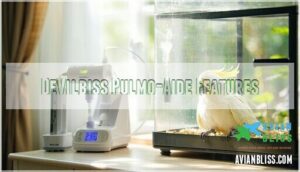
You’re considering the DeVilbiss Pulmo-Aide for your bird’s respiratory support.
- Adjustable Nebulizer Output
- Essential Particle Size
- Efficient Aerosol Delivery
- Improved Medication Efficiency
for effective nebulizers for birds, like parrot nebulizer or bird nebulizer setups, and avian nebulizer options.
Understanding respiratory disease treatment is vital for selecting the right equipment.
PARI LC Sprint Advantages
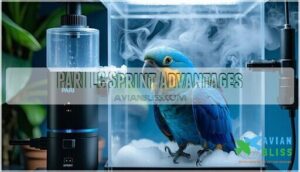
If efficiency is the name of the game, the PARI LC Sprint shines for avian respiratory care.
Its Fine Particle Production and Adjustable Output boost Nebulizer Efficiency, ensuring ideal Aerosol Delivery.
This means better Bird Respiratory Health, reliable results for your bird nebulizer setup, and a safe misting system—whether you’re caring for parrots or managing nebulizers for poultry.
The PARI LC Sprint Chamber features a breath-enhanced valve design system that optimizes medication delivery for effective treatment.
Avoiding Inexpensive Commercial Nebulizers
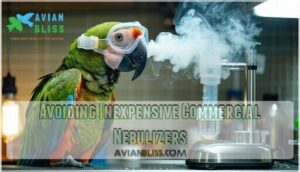
Many inexpensive commercial nebulizers fail to produce the critical 1.0 μm particle size needed for effective respiratory therapy in birds.
These budget units often generate larger droplets that can’t penetrate deep airways, making your treatment efforts less effective.
Don’t let poor aerosol delivery compromise your bird’s health.
Key problems with cheap nebulizers:
- Inadequate particle size – Droplets too large for lower airway penetration
- Poor aerosol delivery – Inconsistent medication distribution to respiratory tract
- Limited output control – Can’t adjust for different bird sizes or conditions
- Subpar construction – Difficult to clean, increasing contamination risk
Quality nebulizer safety means investing in proven units that deliver therapeutic particle sizes consistently.
Your parrot’s respiratory care depends on proper equipment that can effectively reach infected air sacs and bronchi.
Nebulizer Equipment Sanitation
You can’t take chances with contaminated nebulizer equipment—bacteria and fungi love moist environments and will happily hitchhike from one bird to another.
Proper sanitation between each use isn’t just good practice; it’s the difference between healing your feathered friend and creating a respiratory nightmare that spreads through your flock.
Cleaning Nebulizer Tubing
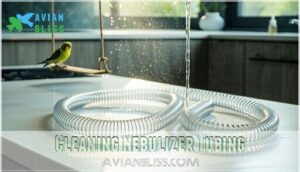
After choosing quality equipment, proper tubing maintenance becomes your first line of defense against contamination.
Rinse nebulizer tubing thoroughly with sterile saline after each session, then wash with mild dish soap and warm water.
For bird respiratory care, disinfection techniques matter – soak tubing in a diluted bleach solution (1:10 ratio) for ten minutes, followed by complete air drying.
Quality tube materials resist bacterial buildup better than cheaper alternatives, making cleaning solutions more effective for your bird nebulizer DIY setup.
Sterilizing Chambers Between Uses

Proper sterilization methods protect your feathered friend from cross-contamination between treatments.
You’ll need thorough disinfection techniques to maintain safe misting systems for respiratory therapy birds.
Effective sterilization methods include:
- Hot water rinses – Flush chambers with hot water (160°F+) after each nebulizer maintenance session
- Alcohol wipes – Use 70% isopropyl alcohol on all surfaces for quick equipment cleaning
- Steam sterilization – Hospital-grade autoclaving guarantees complete chamber sanitation for avian respiratory disease prevention
- Air drying – Allow complete moisture evaporation before storage to prevent bacterial growth
Remember, your nebulizer for parrots becomes a breeding ground for harmful microorganisms without proper disinfection techniques between bird respiratory infections treatments.
Preventing Bacterial Contamination
Contamination spreads faster than you’d think—22% of nebulizers show pathogen growth within 48 hours.
Your bird’s health depends on rigorous cleaning protocols and sterilization methods that eliminate bacterial threats before they take hold.
| Cleaning Protocol | Bacterial Control Result |
|---|---|
| Post-treatment rinse | Prevents medication buildup |
| Daily soap wash | Removes 98% surface pathogens |
| 72-hour disinfection | Eliminates persistent colonies |
Sanitizing equipment after each use isn’t just good hygiene practices—it’s essential for preventing respiratory infection treatment complications in your feathered friend.
Saline as Preferred Nebulizing Fluid
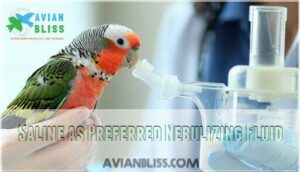
When cleaning your equipment, you’ll want to choose the right fluid for safe, effective bird nebulization.
Saline stands out as the preferred nebulizing fluid because it won’t irritate your bird’s sensitive respiratory system.
Unlike mucolytic agents that can cause inflammation, saline provides gentle hydration while maintaining nebulizer safety.
This fluid choice supports ideal respiratory health and bird hydration during avian respiratory therapy sessions with nebulizer machines for birds, ensuring nebulizer safety.
Avian Respiratory Therapy
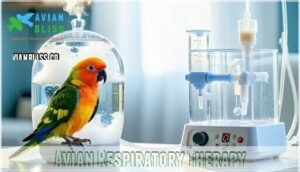
When your bird struggles with respiratory issues, nebulization delivers targeted medication directly to their airways while minimizing harmful side effects throughout their body.
This method transforms liquid medications into fine particles that reach deep into your bird’s respiratory system, offering more effective treatment than oral medications alone, using a process that can be described as targeted.
Delivering Medications via Nebulization
With proper sanitation in place, nebulizer machines for birds become powerful tools for medication delivery.
Nebulization transforms liquid medications into fine aerosol particles that reach deep into your bird’s respiratory system.
This targeted approach delivers antibiotics and antifungals directly where they’re needed most.
Veterinary nebulizers create ideal particle sizes around 1.0 μm, ensuring effective respiratory support while providing essential bird hydration during treatment.
Effective avian respiratory disease treatment requires understanding of respiratory disease causes to apply the right therapy and care.
Reducing Systemic Side Effects
Nebulization transforms avian respiratory health by delivering medications directly to airways, bypassing digestive absorption that often reduces drug effectiveness.
This targeted approach minimizes systemic exposure while maximizing therapeutic impact.
Three key advantages of direct respiratory delivery:
- Higher lung concentrations – Inhaled itraconazole achieves tissue levels 100-fold above minimum inhibitory concentrations
- Reduced liver processing – Medications skip first-pass metabolism, preserving drug potency
- Lower toxicity risks – Amphotericin B shows no nephrotoxicity in birds despite mammalian concerns
Treating Bacterial Air Sacculitis
When bacterial infections target your bird’s air sacs, bactericidal antibiotics like cefotaxime and piperacillin delivered through nebulization offer direct treatment without overwhelming your feathered friend’s system.
These medications tackle airway infections head-on, providing targeted bacterial treatment that oral medications can’t match.
| Antibiotic | Target Bacteria | Typical Duration |
|---|---|---|
| Cefotaxime | Gram-positive/negative | 5-7 days |
| Piperacillin | Pseudomonas species | 7-10 days |
| Enrofloxacin | E. coli, Klebsiella | 5-7 days |
| Amikacin | Resistant bacteria | 5-7 days |
This targeted approach guarantees your bird gets effective respiratory care while minimizing the stress of handling for oral medication administration.
Using Inhaled Itraconazole Nanosuspension
Fungal infections can ruffle more than feathers—especially in the context of bird respiratory care.
Inhaled itraconazole nanosuspension therapy offers a clever way to treat avian respiratory diseases.
This bird treatment gets medication deep into the lungs, improving outcomes.
Use the right Itraconazole dosage and nebulizer for best results.
It’s science with a side of compassion for respiratory infections in birds.
Nebulizer Chamber Design

When designing a nebulizer chamber for your bird, you’ll want to make certain secure lids, proper ventilation, and an appropriate size that keeps your feathered escape artist safe without adding stress.
Design a safe and stress-free nebulizer chamber for your bird’s comfort
Choose portable, easy-to-clean materials—your future self will thank you when it’s time for cleaning duty.
Secure Lids and Ventilation
If you’ve ever seen a parrot eyeing the exit, you’ll know secure lids with correct ventilation systems are non-negotiable in chamber design.
Reliable Air Exchange and uninterrupted Aerosol Flow are essential for bird comfort in avian nebulizer setups.
Homemade nebulizer chambers and professional models like the DeVilbiss PulmoAide both benefit from:
- Locking lids
- Protective louvers
- Securely fitted mouthpiece holes
- Ample airflow slots
- Easy-clean materials, which are crucial for maintaining reliable Air Exchange and ensuring the overall bird comfort.
Preventing Escape and Stress
No one wants their bird making a break for it mid-treatment! Chamber safety hinges on secure lids and proper openings—think of it like locking the car before a road trip.
Escape prevention isn’t just about hardware; add a towel for bird calming, dim the room, and talk softly.
These parrot nebulizer setups reduce bird respiratory distress and stress during therapy. By creating a safe environment, you can help with bird conservation efforts and promote the well-being of your bird.
Appropriately Sized Chambers
Once your bird is settled and calm, double-check that your Chamber Size matches its species—think of a budgie in a cockatoo crate.
The right fit helps Bird Comfort, keeps Aerosol Delivery efficient, and supports Respiratory Health.
Choose wisely:
- Measure your bird
- Provide proper Ventilation Systems
- Prevent overcrowding
- Make easy access
- Maximize avian respiratory care
Portable and Easy-to-Clean Materials
You’ll want portable nebulizer options with easy cleaning, like Plexiglass chambers or Acrylic materials, for a bird-friendly and sanitary design, making nebulization a breeze for your feathered friend.
When selecting a nebulizer, consider the importance of portable nebulizer options for enhanced mobility and ease of use, with DIY parrot nebulizer setups also available for convenient and hygienic use, and a design that is bird-friendly.
Effective Nebulization Sessions
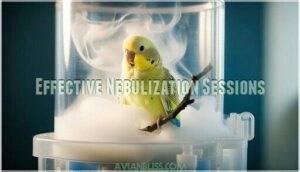
You’ll want to make certain your bird’s nebulization sessions are effective and safe.
By following guidelines for session duration and frequency, you can help your bird breathe easy and recover from respiratory issues.
Session Duration and Frequency
When using a nebulizer, consider:
- Session length
- Frequency
- Treatment timing
- Dosage control
to adjust your bird’s respiratory therapy scheduling for effective nebulization therapy, ensuring proper treatment timing and session length for your bird’s respiratory treatment with a nebulizer.
Monitoring Bird’s Response
You monitor your bird’s response to nebulization by tracking Bird Behavior, Respiratory Signs, and Treatment Outcomes.
| Nebulizer Efficacy | Bird Health |
|---|---|
| Improved | Reduced symptoms |
| Stable | Managed disease |
| Declined | Worsening condition |
Adjusting Treatment Plans
You’ll adjust treatment plans based on bird monitoring, considering dose adjustment, treatment timing, and medication switching to optimize therapy.
This adjustment ensures the nebulizer is used effectively in bird respiratory treatment, a key aspect of avian respiratory care.
Using respiratory therapy devices is crucial in this process, as it directly impacts the effectiveness of the treatment plan.
Combining Nebulization With Oral Therapy
You’re optimizing bird respiratory treatment by combining nebulization with oral therapy, enhancing medication synergy for better treatment outcomes and bird recovery, thereby improving respiratory health through therapy optimization with nebulizers and oral therapy.
Effective avian respiratory disease treatment requires understanding of respiratory health issues to guarantee proper care and management of birds, which is crucial for better treatment outcomes and ultimately leads to improved respiratory health.
Frequently Asked Questions (FAQs)
Can birds have albuterol?
You’ll be relieved to know that, yes, birds can have albuterol, a bronchodilator, to help ease respiratory issues, but always consult an avian vet for proper dosage and administration guidance.
What can I give to my bird for respiratory problems?
You’ll need a veterinarian to diagnose and prescribe appropriate treatments. Options include nebulized antibiotics for bacterial infections, antifungals like itraconazole for aspergillosis, and supportive care with humidification and proper nutrition.
What kind of air fresheners are safe for birds?
No air fresheners are safe for birds. Their respiratory systems are extremely sensitive to chemical fumes, aerosols, and fragrances. Use natural ventilation and cleaning instead.
What size nebulizer is best for small birds?
Picture trying to thread a needle with a garden hose—that’s what happens when you use oversized nebulizers for small birds.
You’ll want ultrasonic nebulizers producing 0 μm particles, like the PARI LC Sprint, designed specifically for effective respiratory therapy in petite feathered patients.
Can nebulizers help with bird asthma symptoms?
Yes, nebulizers can effectively help birds with respiratory distress by delivering medication directly to their airways.
They’re particularly useful for delivering bronchodilators, antibiotics, and antifungals while providing moisture to soothe inflamed respiratory tissues, which can be a key factor in treating birds with respiratory issues.
How often should birds be nebulized daily?
Like troubleshooting a telegraph line, you’ll want to nebulize your bird 2-4 times daily for 10-30 minutes per session.
This frequency guarantees effective medication delivery while preventing respiratory system overload and stress.
Are homemade nebulizers safe for all birds?
Homemade nebulizers aren’t safe for all birds.
While they can work, professional units like DeVilbiss Pulmo-Aide produce ideal particle sizes (0 μm) for effective respiratory therapy.
Improper construction risks contamination and ineffective treatment.
Do nebulizers work for bird respiratory allergies?
Nebulizers can help birds with respiratory allergies by delivering saline or prescribed medications directly to airways.
They reduce inflammation and clear allergens from respiratory passages.
However, you’ll need proper veterinary diagnosis to distinguish allergies from infections, ensuring appropriate treatment for your bird’s specific condition.
Conclusion
Remember the old saying, "An ounce of prevention is worth a pound of cure" – this couldn’t be truer when selecting safe nebulizers for birds.
You’ve learned about ultrasonic models, proper sanitation protocols, and therapeutic applications that can transform your bird’s respiratory health.
By choosing quality equipment like DeVilbiss or PARI systems, maintaining sterile conditions, and working closely with your avian veterinarian, you’re ensuring effective treatment delivery.
Safe nebulizers for birds aren’t just medical devices – they’re lifelines that provide targeted therapy while minimizing stress and systemic side effects for your feathered companion, offering a way to improve their health through respiratory health care.
- https://www.harrisonsbirdfoods.com/wp-content/uploads/2024/03/382-416-Ch15-Supportive-care-and-Emergency-Therapy.pdf
- https://pmc.ncbi.nlm.nih.gov/articles/PMC4451201/
- https://www.youtube.com/watch?v=_D9kTjePzR0
- https://vcahospitals.com/know-your-pet/respiratory-disease-in-birds
- https://www.backyardchickens.com/threads/nebulization-cage.1441018/