This site is supported by our readers. We may earn a commission, at no cost to you, if you purchase through links.
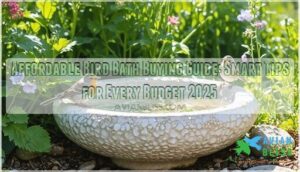 You’ll find budget-friendly bird baths that attract feathered visitors without emptying your wallet.
Start with simple ceramic or concrete options under $30 – they’re durable and birds love them. Skip fancy decorative elements that jack up prices but don’t improve bird appeal.
Focus on shallow bowls (1-2 inches deep) with textured surfaces for grip. Placement matters more than price – choose shaded spots near cover but away from predators.
Regular maintenance keeps any affordable bird bath functioning like expensive models. The secret lies in understanding what birds actually need versus what manufacturers want to sell you, which is the key to success.
Table Of Contents
- Key Takeaways
- Choosing Bird Bath Type
- Bird Bath Materials Matter
- Bird Bath Design Considerations
- Bird Bath Maintenance Tips
- Heating Bird Bath Water
- Creating Moving Water
- Bird Bath Placement Strategies
- Attracting Birds to Bath
- Bird Bath Budget and Cost
- Bird Bath Safety and Benefits
- Frequently Asked Questions (FAQs)
- Should I buy a freestanding birdbath?
- What is a birdbath?
- How much does a bird bath cost?
- Which is the best birdbath?
- What are the best bird bath options & fountains?
- What is the best material for a bird bath?
- What to consider when buying a bird bath?
- Why put pennies in a birdbath?
- How often should I replace my bird bath?
- Can bird baths attract unwanted pests or insects?
- Conclusion
Key Takeaways
- Choose concrete or ceramic bird baths under $30 – they’re durable and birds prefer them over expensive decorative models that don’t improve functionality
- Focus on shallow bowls with textured surfaces – 1-2 inches deep with rough bottoms prevent slipping and accommodate more bird species than smooth, deep alternatives
- Place your bird bath in shaded areas near cover – positioning matters more than price, reducing algae growth and providing safety without requiring costly heating elements
- Maintain regular cleaning schedules over fancy features – changing water every 2-3 days and weekly scrubbing keeps any affordable bird bath as effective as expensive models
Choosing Bird Bath Type
When choosing your bird bath type, consider your space and budget first. Pedestal advantages include stability and classic appeal, but they need level ground and cost more than hanging options.
Hanging bird baths work perfectly for small yards and balconies, offering affordable birdbath solutions that don’t require permanent installation. Ground baths attract the widest variety of birds since they mimic natural water sources.
Deck mounted designs let you watch birds up close while making maintenance easier. Space considerations determine which cheap bird bath fits best – hanging types maximize limited areas while ground-level options need more room.
Bird bath types range from simple plastic models to decorative ceramic designs. Bird bath material affects both price and durability, with lightweight options being most budget-friendly. Many retailers offer various hanging models online.
Bird Bath Materials Matter
Your bird bath’s material affects both your budget and the birds’ safety. Each material offers different benefits for durability, maintenance, and attracting feathered visitors to your yard.
Choose your bird bath material wisely – it’s the foundation of both your budget and your birds’ bathing experience.
Concrete Bird Baths
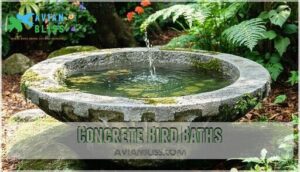
Concrete bird baths offer unmatched concrete durability that’ll last for decades in your yard.
These affordable birdbath options balance budget bird bath pricing with impressive concrete aesthetics and design versatility. Many retailers offer various concrete options for sale.
- Weight considerations make them theft-resistant but harder to relocate
- Sealing options prevent cracking and extend lifespan substantially
- Bird bath cost considerations favor concrete for long-term value
- Bird bath materials comparison shows concrete beats plastic durability
- Concrete bird bath cheap models start under $30 at garden centers
Ceramic Bird Baths
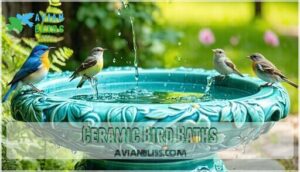
Ceramic bird baths offer artistic designs that transform your garden into a visual masterpiece.
You’ll find glaze options in countless colors and patterns, from earthy browns to vibrant blues.
These baths provide excellent frost resistance when properly glazed, making them durable year-round investments.
Weight concerns exist since ceramic breaks easily if dropped, but their affordable price point makes replacement manageable for most budgets.
Consider that glazed ceramic resists UV damage, which helps maintain cooler water temperatures.
Glass Bird Baths
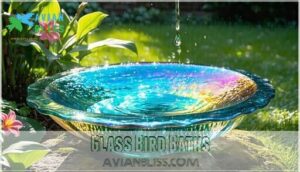
Glass bird baths offer stunning artistic designs that transform your garden into a visual masterpiece.
You’ll find these baths showcase exceptional light reflection properties, creating rainbow effects that captivate both you and visiting birds.
However, glass durability concerns require careful consideration since drops can cause shattering.
Cleaning challenges arise from water spots and fingerprints, though bird safety remains high with proper textured surfaces for secure footing.
Many shoppers seek an affordable glass option for their gardens.
Metal Bird Baths
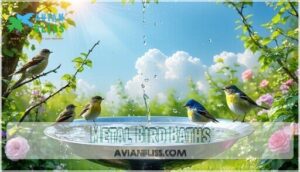
When you’re hunting for durability without breaking the bank, metal bird baths offer unbeatable strength and modern aesthetics.
These sleek options resist cracking better than ceramic alternatives, though rust prevention becomes your main concern.
You’ll find amazing design variety from copper to stainless steel finishes, and simple cleaning methods using mild soap keep them sparkling, making metal an excellent choice for your affordable bird bath buying guide needs.
Bird Bath Design Considerations
Your bird bath’s design directly impacts how many birds you’ll attract and their safety while bathing.
Smart design choices like proper bowl depth, textured surfaces, and strategic stone placement make the difference between a popular bird hangout and an unused yard decoration.
Bowl Depth and Size
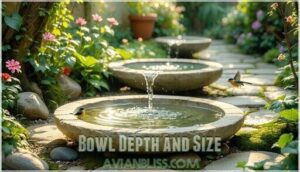
Getting bowl depth and size right means creating a bird bath that welcomes all species comfortably.
You’ll want to examine how different birds use water and what dimensions work best for their bathing habits.
Here’s what ideal dimensions look like:
- Shallow basin depth: Keep water 1-2 inches deep for small birds like finches and chickadees
- Bird size considerations: Medium birds need 2-3 inches, while larger species require deeper sections
- Water displacement factors: Bowl design should account for how birds move water during bathing
- Species needs variation: Different birds prefer different depths for drinking versus bathing
- Bird bath dimensions: 18-24 inch diameter basins accommodate multiple birds safely
Textured Surfaces for Grip
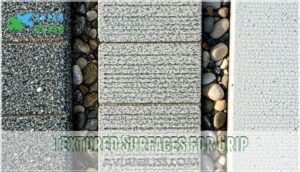
Bird baths with smooth surfaces become slippery when wet, making them unsafe for birds. You’ll want to choose Surface Materials that provide natural Grip Enhancement for ideal Bird Safety.
Look for textured bottoms, raised ridges, or rough finishes that prevent slipping.
| Surface Type | Grip Level | Cleaning Ease |
|---|---|---|
| Smooth ceramic | Poor | Easy |
| Textured concrete | Excellent | Moderate |
| Rough stone | Good | Difficult |
| Ridged plastic | Good | Easy |
Adding stones or pebbles creates additional grip points while offering Texture Variety that birds prefer over slippery material surfaces.
Perches and Stones for Safety
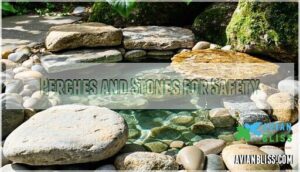
Adding stones and pebbles to your bird bath creates natural perches that prevent slipping on smooth surfaces.
These Safe Materials give birds solid grip while they drink and bathe.
Strategic Stone Placement around the basin edges provides multiple Water Access points for different bird sizes.
Small pebbles in shallow areas help tiny birds feel secure, while larger stones accommodate bigger species.
This thoughtful Perch Design eliminates dangerous slippery material and maximizes Bird Comfort for all visitors.
Integrating natural elements enhances the birdbath’s appeal.
Bird Bath Maintenance Tips
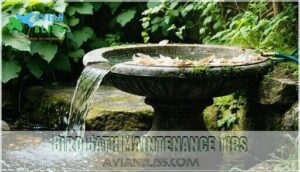
You’ll need to maintain your bird bath properly to keep birds healthy and coming back for more.
Clean water and regular upkeep prevent disease while ensuring your feathered visitors stay safe and happy.
Regular Water Changes
Fresh water changes every two to three days keep your bird bath safe and inviting.
Stagnant water breeds mosquitoes and spreads disease among visiting birds.
During hot weather, daily water changes prevent contamination and maintain water freshness. Dump old water completely rather than topping off to remove debris and droppings that compromise water quality.
Regular cleaning helps prevent bacterial and fungal growth and is essential for maintaining a healthy environment, which supports complete water quality management.
Weekly Cleaning Schedule
Beyond changing water regularly, you’ll need thorough weekly cleaning to keep your bird bath healthy.
Heavy use or dirty water means cleaning two to three times weekly. This prevents disease spread and removes algae buildup that regular water changes can’t handle.
- Cleaning Frequency: Clean weekly minimum, increase to 2-3 times during peak bird activity seasons
- Scrubbing Techniques: Use stiff brushes to remove algae and droppings from all surfaces thoroughly
- Algae Prevention: Allow complete drying between cleanings to reduce pathogen survival rates
- Bird-Safe Products: Choose non-toxic cleaning methods that won’t harm visiting birds after rinsing
Using Diluted Cleaners
In the context of cleaner dilution, you’ll want to mix one part bleach to nine parts water for effective bird bath cleaning.
Vinegar offers a gentler alternative at the same ratio.
Always rinse thoroughly after cleaning since residue effects can harm birds.
These diluted household cleaners tackle algae prevention while maintaining water quality and bird safety.
Heating Bird Bath Water
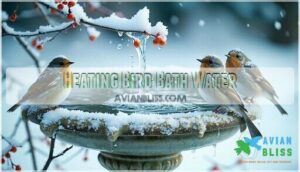
Winter weather can freeze your bird bath water, making it useless when birds need it most.
You can add heating elements or de-icers to keep water available year-round for thirsty birds.
Built-in Heating Elements
Heated bird baths with built-in heating elements offer reliable freeze protection through integrated thermostats that automatically activate when temperatures drop.
These units typically consume 50-150 watts with energy consumption varying by size and thermostat control settings.
Quality models include safety features like automatic shutoffs and weatherproof connections.
Element lifespan averages 3-5 years with proper bird bath winter care maintenance, ensuring a long-lasting and reliable operation.
De-icers for Existing Baths
You don’t need built-in heating if you already own a bird bath.
Submersible de-icers offer smart winter bird care solutions with thermostat control that activates only when temperatures drop below freezing.
These energy-efficient bird bath heaters consume just 50-80 watts, costing pennies daily.
Choose cast aluminum models for durability and safe placement in concrete, ceramic, or plastic baths.
These devices guarantee accessible water, even when there are freezing temperatures.
Creating Moving Water
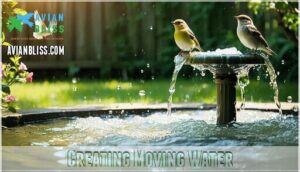
Moving water catches birds’ attention better than still water and helps prevent freezing during winter months.
You can choose fountain-style bird baths with built-in pumps or add simple accessories like drippers and solar-powered water circulators to existing baths.
Fountain Bird Baths
You’ll find fountain bird baths create mesmerizing water sounds that work like dinner bells for feathered friends.
These solar-powered fountains prevent algae growth through constant water movement while attracting more birds than static baths.
Look for bird bath deals on multi-tier designs with adjustable flow rates, even budget-friendly fountain mechanics provide winter benefits when water keeps moving.
Consider classic concrete bird baths for added durability, such as those found at classic concrete bird baths, which offer solar-powered fountains and multi-tier designs.
Adding Accessories
You can transform any basic bird bath into a water feature with simple add-ons.
Solar fountains work without electricity and create gentle ripples that catch birds’ attention. Drippers and misters provide steady water movement while keeping maintenance low.
Decorative rocks add landing spots and create shallow areas for smaller birds.
These bird bath accessories turn static water into an active attraction that birds can’t resist, with features like solar fountains and gentle ripples.
Bird Bath Placement Strategies
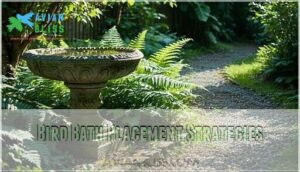
Where you place your bird bath determines how many feathered visitors you’ll attract and how often you’ll need to clean it.
Smart placement reduces maintenance while creating a safe, inviting space that birds will use daily.
Shaded Areas for Algae Control
Placing your bird bath in shaded areas substantially reduces algae growth and keeps water cooler for visiting birds.
Direct sunlight accelerates algae development and increases evaporation rates, forcing you to refill more frequently. Shade creates ideal conditions that maintain water quality longer.
- Cool, clean water attracts more bird species to your garden sanctuary
- Reduced maintenance means more time watching birds instead of scrubbing algae
- Lower water bills from decreased evaporation save money year-round
- Healthier birds thrive when drinking from algae-free water sources
Proximity to Feeders and Predators
Strategic bird bath placement balances safety with accessibility.
Position your bath 10-15 feet from feeders to prevent seed contamination while keeping escape routes open.
Place it 3-6 feet from shrubs or trees for quick cover without creating predator hiding spots.
This distance gives birds clear sight lines while maintaining nearby safety zones for nervous visitors.
Water Source and Drainage
Access to fresh water starts with understanding your bird bath water capacity and planning smart water replenishment strategies.
Position your bath near a garden hose or natural springs for easy refills, but make certain proper drainage solutions prevent water wastage and stagnation.
To manage water effectively, consider the following strategies:
- Install overflow drainage to prevent water logging around your bird bath base
- Use gravel or sand beneath ground-level baths for natural water flow management
- Position baths on slight slopes to encourage proper bird bath water drainage
- Consider alternative sources like rainwater collection for water conservation efforts
- Maintain 2-3 inch water depth to optimize bird bath water refill frequency and support water conservation efforts with proper drainage solutions.
Attracting Birds to Bath
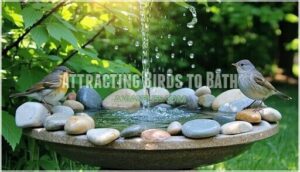
You’ll need fresh water and the right setup to turn your bird bath into a popular destination.
Smart placement of stones and thoughtful attention to depth make all the difference in attracting feathered visitors to your yard, which can be achieved with complete concepts in mind.
Fresh Water Importance
Fresh water serves as your bird bath’s lifeline, supporting birds’ hydration needs and feather maintenance while reducing disease risks.
Clean water prevents bacteria buildup that threatens bird health. During drought conditions or winter months when natural sources freeze, your affordable bird bath becomes a critical water source.
Change water every few days to maintain bird bath water quality and freshness, ensuring ideal bird bath water quality through regular bird bath cleaning practices.
Bath Depth and Stone Placement
Most birds prefer water that’s 1-2 inches deep for safe bathing.
You’ll attract more species by creating shallow areas with varying depths. Stone placement transforms your bath into a bird-friendly oasis that accommodates different bird sizes.
- Ideal Depth: Keep water depth at 1 inch maximum for small songbirds, with gradual slopes allowing birds to wade safely
- Stone Types: Use rough, natural river stones that provide secure grip and create shallow perching spots within the bath
- Bee Safety: Add small stones as landing pads so bees can drink without drowning while accessing water
- Slope Angle: Position flat stones to create gentle entry points that accommodate various bird sizes and comfort levels
Surrounding Environment and Vegetation
Your backyard’s layout determines which birds feel safe visiting your bath. Place it near bushes and trees that offer Natural Cover within 3-6 feet for quick escapes. However, avoid dense vegetation that blocks Bird Visibility of approaching predators.
| Plant Type | Distance from Bath | Bird Benefit |
|---|---|---|
| Small bushes | 3-6 feet | Quick escape routes |
| Medium trees | 6-10 feet | Perching and shade |
| Dense shrubs | 10+ feet | Territorial boundaries |
| Ground cover | 2-3 feet | Insect hunting spots |
| Tall trees | 15+ feet | Lookout points |
Smart Plant Selection creates layers of protection while maintaining clear sightlines. Position your bath where morning shade from nearby trees prevents rapid water heating, but make certain afternoon sunlight reaches the area for natural drying.
Bird Bath Budget and Cost
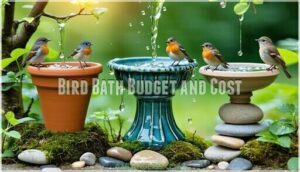
You don’t need to spend a fortune to attract birds to your yard with the right bird bath.
Smart shopping means finding quality options that balance price with features birds actually need.
Affordable Options and Brands
Budget-friendly bird baths don’t mean compromising on quality. You’ll find excellent affordable bird baths from trusted budget brands like Neecong and Best Choice Products.
Adding water movement attracts more birds to your yard.
- Budget Brands: Neecong offers hanging models under $20
- Discount Materials: Plastic and ceramic options cost less than stone
- DIY Baths: Create custom designs using large plant saucers
- Resale Options: Check thrift stores and garage sales for deals
- Seasonal Sales: Buy during fall clearances for spring setup
Balancing Cost and Quality
You’ll want to look beyond the price tag when choosing affordable bird baths.
Material lifespan affects long-term value – concrete lasts decades while plastic might crack after a few seasons.
Design longevity matters too; classic styles stay appealing longer than trendy ones.
Feature tradeoffs exist in budget bird bath options, but brand reputation often signals better bird bath value within your bird bath price range.
Long-term Investment and Durability
Quality matters more than initial price when choosing bird bath materials.
Stone and concrete options offer superior weather resistance and material lifespan compared to plastic alternatives.
Metal baths provide excellent durability with minimal repair options needed.
Consider future-proofing your investment through damage prevention strategies.
A durable cheap bird bath made from quality materials will outlast multiple replacements, making bird bath cost comparisons favor long-term thinking.
Bird Bath Safety and Benefits
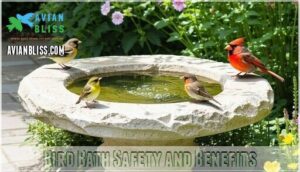
A well-designed bird bath protects your feathered visitors from injury while keeping them healthy through proper hygiene.
You’ll create a safer garden environment that attracts more bird species and reduces disease transmission in your backyard wildlife community, which is a key factor in maintaining a healthy environment for the birds.
Preventing Slipping and Injury
Birds need secure footing to feel safe while bathing.
Safe footing transforms nervous birds into confident bathers.
Textured surfaces prevent slipping on wet materials like smooth ceramic or glass.
Choose bird baths with roughened bottoms or add stones for better grip.
Shallow water depth under two inches lets birds maintain balance easily.
Stone additions create natural perch placement options.
Material safety matters too – avoid sharp edges that could injure delicate feet during bathing sessions, ensuring a safe and secure environment for delicate feet.
Disease Prevention and Cleanliness
Clean water prevents disease outbreaks that can devastate local bird populations.
You’ll need to change water daily and scrub your bath weekly with safe disinfectants like diluted vinegar.
Bacteria control starts with proper bird bath maintenance tips – remove debris immediately and position your bath away from feeders.
Fresh water quality matters more than fancy features for bird health and effective algae prevention.
Enhancing Garden Biodiversity and Liveliness
Your garden transforms into a bustling wildlife hub with an inexpensive bird bath.
These discount bird bath options attract diverse species, creating natural habitat that supports local ecosystems. Bird-friendly gardens flourish when you provide consistent water sources alongside native plants.
Even a low cost bird bath becomes nature’s meeting place where butterflies, bees, and birds gather. Smart shoppers find best bird bath value during seasonal sales, turning small investments into thriving biodiversity havens, creating a biodiversity haven.
Frequently Asked Questions (FAQs)
Should I buy a freestanding birdbath?
Studies show ground-level bird baths attract 40% more species than elevated ones.
You should consider a freestanding birdbath if you want maximum bird variety and easy maintenance.
They’re stable, accommodate larger birds, and don’t require mounting hardware like hanging alternatives, making them a good choice for easy maintenance.
What is a birdbath?
A birdbath is a shallow basin filled with water that you place in your yard to provide drinking and bathing opportunities for birds.
It helps them stay hydrated and maintain their feathers.
How much does a bird bath cost?
Bird bath prices typically range from $15-30 for basic hanging models to $50-150 for pedestal designs. You’ll find budget-friendly options under $20, while decorative concrete or fountain styles cost $100-300+.
Which is the best birdbath?
The Mademax Solar Pump paired with Best Choice Products Bird Bath takes the crown as the best overall birdbath.
You’ll love its solar-powered operation, multiple nozzle options, and rim design that birds adore for comfortable perching.
What are the best bird bath options & fountains?
Picture crystal-clear water cascading gently, creating ripples that catch morning sunlight.
You’ll want the Mademax Solar Pump with Best Choice Products Bird Bath for reliability, or Alpine Corporation’s 3-tier fountain for luxury appeal.
What is the best material for a bird bath?
Stone and concrete offer the best durability for bird baths.
They’re weather-resistant, provide natural texture for grip, and won’t tip over easily.
Ceramic works well too, offering decorative options while staying functional and frost-resistant for year-round use.
What to consider when buying a bird bath?
Consider material, size, placement, and maintenance when shopping for bird baths.
Choose textured surfaces for grip, shallow depths under 3 inches, and durable materials like stone or ceramic.
Position in shaded areas near cover for bird safety and easy cleaning access.
Why put pennies in a birdbath?
You’ll put pennies in your birdbath to prevent algae growth since copper naturally inhibits algae formation.
However, this method’s effectiveness is debated, and regular cleaning remains more reliable than copper pennies alone, as regular cleaning is essential for maintaining a healthy birdbath.
How often should I replace my bird bath?
You don’t need to replace your bird bath regularly if you maintain it properly.
Clean it weekly and change the water every few days to prevent bacteria buildup and algae growth.
Can bird baths attract unwanted pests or insects?
Bird baths can become mosquito breeding grounds if water sits stagnant for days.
You’ll attract flies, ants, and algae too.
Change water every 2-3 days and add moving water features to prevent pest problems while keeping birds happy.
Conclusion
Like a compass guiding travelers through uncharted territory, this affordable bird bath buying guide directs you toward smart choices that maximize bird attraction while minimizing costs.
You’ve learned that ceramic and concrete options under $30 outperform expensive alternatives when properly maintained.
Focus on shallow bowls with textured surfaces rather than decorative features that inflate prices.
Strategic placement in shaded areas near cover beats costly built-in heating systems.
Your success depends on understanding bird needs, not marketing claims.
With regular maintenance and proper setup, any budget-friendly bird bath becomes a thriving wildlife destination.