This site is supported by our readers. We may earn a commission, at no cost to you, if you purchase through links.
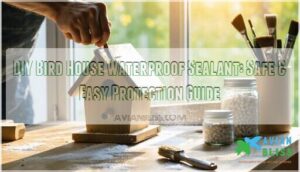 You’ll want to use natural, bird-safe options for your DIY bird house waterproof sealant.
Tung oil mixed with citrus solvent creates excellent weather protection without harmful chemicals.
Linseed oil and low-VOC water-based sealants also work well.
Apply thin, even coats and let each layer cure completely before adding birds to their new home.
The right sealant keeps your feathered friends dry while extending your birdhouse’s lifespan substantially.
Getting the application technique right makes all the difference between amateur results and professional-grade protection.
Table Of Contents
- Key Takeaways
- Choosing Birdhouse Sealants
- Applying Waterproof Coatings
- Safe Sealant Options
- Benefits of Waterproofing
- DIY Waterproofing Techniques
- Frequently Asked Questions (FAQs)
- What can I use to waterproof a birdhouse?
- How to make a water proof bird house?
- Is polyurethane safe for birdhouses?
- How to predator proof a bird house?
- How often should I reapply sealant coats?
- Can I use indoor sealants outdoors safely?
- What temperature is best for sealant application?
- How long before birds can use house?
- Should I seal entrance holes completely shut?
- Conclusion
Key Takeaways
- Choose natural oils like tung oil or raw linseed oil – you’ll get excellent weather protection without harmful chemicals that could endanger nesting birds
- Apply thin, even coats and allow proper curing time – you’ll need 24-48 hours between layers for maximum durability and bird safety
- Focus extra sealant attention on joints, corners, and roof areas – you’ll prevent water penetration where it’s most likely to occur and cause damage
- Expect 2-3 years between reapplications – you’ll maintain long-term protection while reducing maintenance frequency compared to unsealed birdhouses
Choosing Birdhouse Sealants
You’ll want to pick the right sealant to protect your birdhouse while keeping feathered residents safe.
Natural oils like tung oil and linseed oil offer excellent protection, while water-based latex and clear lacquers provide faster-drying alternatives that won’t harm visiting birds.
Natural Tung Oil Sealants
Tung oil properties make it an exceptional bird house sealant choice.
This natural waterproof birdhouse protector penetrates wood fibers deeply, creating lasting birdhouse protection.
Apply thin coats using proper application techniques, allowing 24-hour drying time between layers.
Wood preservation improves substantially with this bird safe sealant.
The natural sealant offers minimal environmental impact while delivering superior results.
It also provides a natural matt finish suitable for outdoor use, making it a great choice for outdoor and natural environments.
Linseed Oil Sealants
Linseed oil, derived from flax seeds, stands as a time-tested bird house sealant.
You’ll want raw linseed oil over boiled versions since additives in boiled types can harm birds.
This food-safe option penetrates wood deeply, offering excellent birdhouse protection.
Expect longer drying times compared to synthetic options, but the non toxic sealant provides reliable birdhouse waterproofing.
As a natural alternative, linseed oil is an ecological choice for treating wood.
- Raw linseed oil is bird safe while boiled contains harmful additives
- Deep wood penetration creates lasting protection against moisture damage
- Food-grade linseed oil origin makes it safe for wildlife contact
- Longer drying time requires patience but guarantees proper curing
- Multiple coats enhance waterproofing effectiveness for outdoor exposure
Clear Non-Toxic Lacquer Sealants
Clear non-toxic lacquer sealants offer faster drying time than oils while maintaining bird safe protection.
These VOC-free formulas dry within hours, requiring two coats for maximum weatherproofing birdhouse surfaces.
Application techniques involve brush or spray methods focusing on roof areas.
Consider sealant product availability for your birdhouse project.
Durability factors include UV resistance and flexibility preventing cracks, providing a cost-effective waterproofing solution without petroleum-based chemicals.
Water-Based Latex Sealants
Versatility makes water-based latex sealants a smart choice for weatherproofing birdhouse exteriors.
These bird safe sealant options use latex primer and acrylic additives to create flexible, waterproof barriers. You’ll appreciate their low environmental impact and easy application techniques.
Many look to this type of sealant when they need latex options. Though durability concerns exist compared to oils, this diy sealant delivers reliable exterior sealant protection for 2-5 years with proper recoating, providing a reliable and waterproof solution.
Applying Waterproof Coatings
Proper application methods make the difference between a birdhouse that lasts one season and one that protects feathered families for years.
Quality sealant application transforms fragile shelters into decades-long bird sanctuaries.
Start with thorough surface preparation by sanding rough spots and cleaning away dust or debris.
Your exterior sealant works best when applied in thin, even layers rather than one thick coating.
Use a high-quality brush or foam applicator for smooth coverage, working with the wood grain.
Apply your first coat of diy sealant and allow complete curing before adding subsequent layers.
Most weatherproofing birdhouse products require 24-48 hours between coats.
Layer thickness matters – two thin applications provide better protection than one heavy coat that might drip or create weak spots.
Focus extra attention on joints, corners, and the roof where water typically penetrates.
Temperature and humidity affect sealant curing, so choose dry days between 50-80°F for ideal results.
Cedar’s natural oils provide rot and insect resistance, but sealant adds an extra layer of protection.
Safe Sealant Options
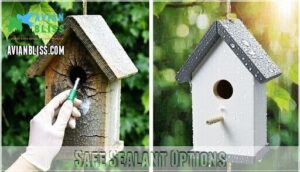
You’ll want to choose sealants that protect your birdhouse without harming its feathered residents.
The key is selecting materials with low toxicity levels and minimal chemical odors that won’t deter birds from nesting.
Bird-Safe Sealant Materials
When selecting materials for your DIY birdhouse project, focus on sealant toxicity levels first.
Pure tung oil and raw linseed oil offer the best birdhouse sealant options without harmful chemicals.
Oil vs. lacquer choices matter—oils penetrate deeper while lacquers create surface barriers.
Water-based options need latex primer for proper adhesion.
Avoid epoxy concerns by choosing low-VOC formulations.
UV protection prevents degradation, ensuring your waterproof sealant for wood lasts seasons protecting your outdoor birdhouse investment, with a focus on low-VOC formulations.
Non-Toxic Sealant Alternatives
Soy-based and protein-based sealants offer eco-friendly alternatives to traditional wood sealant options.
These plant-based sealants use whey protein or soybean oil as primary ingredients, creating waterproof barriers without harmful chemicals.
DIY recipes combining beeswax finishes with natural oils provide effective protection.
Clay sealants and milk paint also serve as non-toxic alternatives, though they require more frequent reapplication than synthetic options.
Low-VOC Sealant Options
Low-VOC wood sealant options meet strict VOC regulations while delivering excellent sealant durability for your DIY birdhouse project.
These eco-friendly choices reduce environmental impact without sacrificing performance. Popular application techniques include brush-on tricopolymer coatings and penetrating sealers like Siloxa-Tek 8500.
Zero VOC paints are a safer alternative for birdhouses. When doing cost comparison, zero-VOC sealant options often require fewer reapplications, making them budget-smart for ongoing birdhouse maintenance, which also supports eco-friendly choices.
Benefits of Waterproofing
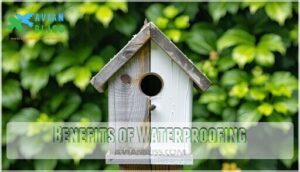
Waterproofing your birdhouse isn’t just about keeping rain out—it’s an investment that pays off in multiple ways.
You’ll extend your birdhouse’s lifespan substantially while creating a healthier environment for nesting birds and reducing your own maintenance workload.
Increased Birdhouse Durability
When you apply waterproof sealant to your DIY birdhouse project, you’re basically giving it armor against nature’s toughest challenges.
Quality sealant for wood delivers exceptional weather resistance and rot prevention, extending your birdhouse’s lifespan from just a few seasons to 10-15 years.
This material protection maintains structural integrity through countless storms, freeze-thaw cycles, and UV exposure, making your birdhouse care routine practically effortless.
Reduced Maintenance Needs
When properly sealed, your birdhouse becomes virtually maintenance-free for years.
Weatherproof birdhouse sealant application creates barriers that dramatically reduce upkeep:
- Cleaning Frequency drops to once yearly instead of seasonal scrubbing
- Algae Prevention and mildew resistance eliminate constant washing cycles
- Rot Reduction and warping prevention preserve structural integrity longer
Quality sealant for birdhouses transforms routine maintenance into occasional check-ups.
Improved Bird Health
Waterproof sealant application creates dry interiors that dramatically boost chick health and disease prevention.
Moist environments breed deadly fungal spores and bacteria, but your DIY birdhouse with quality outdoor sealant blocks these threats.
Parasite control improves substantially when moisture can’t accumulate, and mold reduction through weatherproof sealant means healthier respiratory conditions for nesting birds.
Increasing survival rates substantially is a direct result of using a waterproof sealant and maintaining a dry environment, which in turn supports disease prevention.
Enhanced Aesthetic Appeal
Your DIY birdhouse becomes a stunning landscape feature when weatherproof sealant preserves its visual appeal.
Sealant sheen options range from matte to gloss, letting you match your outdoor decor.
Color matching capabilities help blend the structure naturally, while texture effects add character.
Artistic finishes transform basic wood into eye-catching focal points.
Smart camouflage options make houses blend seamlessly with surroundings, creating beautiful birdhouse design elements that withstand weather year-round.
DIY Waterproofing Techniques
You’ll need to prep your birdhouse properly before applying any waterproof sealant to guarantee maximum protection and longevity.
Start by sanding rough surfaces smooth and cleaning off all dust, dirt, and debris so the sealant can bond effectively to the wood.
Preparing Birdhouse Surfaces
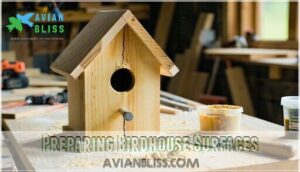
Surface preparation sets your bird house up for waterproofing success.
Start with wood sanding using 120-grit sandpaper to smooth rough spots and remove old finishes.
Clean surfaces thoroughly with a damp cloth to eliminate dust and debris.
Fill cracks with wood filler and seal seams tightly.
Priming importance can’t be overstated—it helps long lasting sealant bond properly to your DIY projects and outdoor crafts waterproofing materials.
Applying Sealants Evenly
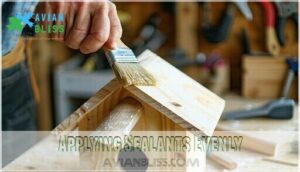
Thin, even coats using quality application tools prevent bubbles and guarantee long lasting sealant coverage.
Brush strokes should flow in one direction, avoiding overlap prevention issues that create thick patches.
For DIY projects like your bird house, maintain consistent sealant thickness across all woodworking surfaces.
Consider roof pitch importance for effective water runoff.
Outdoor crafts require patience – rushing leads to uneven protection that compromises durability.
Allowing Sealants to Dry
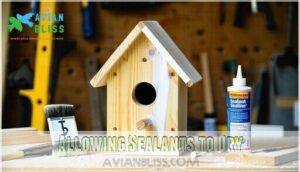
Patience pays off with proper drying time—rushing leads to sticky situations.
Most DIY birdhouse sealant types need 24-48 hours between coats, but humidity effects and temperature impact can extend this.
High moisture slows the curing process, while heat accelerates it.
Check manufacturer guidelines for recoat timing, as application techniques vary by product.
Inspecting Sealant Quality
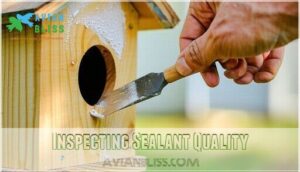
After your sealant’s curing time passes, thorough adhesion testing reveals quality.
Check coverage uniformity by examining every surface for thin spots or gaps.
Visual defects like bubbles, streaks, or uneven thickness indicate poor application techniques.
Test a small corner’s bond strength by gently scraping—proper adhesion resists removal.
Quality sealant types provide consistent exterior protection, ensuring longevity prediction and reliable weather resistance for waterproofing materials.
Frequently Asked Questions (FAQs)
What can I use to waterproof a birdhouse?
Transform your feathered friends’ home into a weatherproof fortress!
You’ll want natural tung oil, linseed oil, or clear non-toxic lacquer for safe, durable protection.
Water-based latex sealants work great too, keeping birds healthy while shielding wood from rain and rot.
How to make a water proof bird house?
Building weatherproof bird houses starts with selecting proper materials and sealants.
Apply natural tung oil, clear non-toxic lacquer, or water-based latex sealants in multiple coats, focusing on roof areas for maximum protection.
Is polyurethane safe for birdhouses?
Wondering if that leftover polyurethane’s right for your feathered friends?
Standard polyurethane contains volatile organic compounds that can harm birds.
So you’ll want bird-safe alternatives like tung oil or water-based sealants instead.
How to predator proof a bird house?
Install entrance holes sized precisely for target bird species to exclude larger predators.
Mount houses on smooth poles with baffles, place 5+ feet high, and position entrance holes away from prevailing winds for maximum security.
The instruction to mount houses and position entrance holes is crucial for the birds’ security.
How often should I reapply sealant coats?
Good things come to those who wait, but sealant reapplication shouldn’t keep you waiting too long.
You’ll typically need to reapply waterproof sealant every 2-3 years, depending on your climate and weather exposure conditions.
Can I use indoor sealants outdoors safely?
No, indoor sealants aren’t designed for outdoor conditions. They’ll break down quickly from UV rays, temperature changes, and moisture, leaving your birdhouse vulnerable to weather damage and potentially harming birds.
What temperature is best for sealant application?
Apply sealant when temperatures range between 50-85°F for ideal curing. You’ll get better adhesion and smoother application when it’s not too hot or cold outside.
How long before birds can use house?
Wait at least 48-72 hours after applying waterproof sealant before allowing birds to occupy the house. This waiting period guarantees harmful fumes dissipate completely, protecting bird health and safety.
Should I seal entrance holes completely shut?
Never seal entrance holes completely shut – you’ll create a death trap instead of a sanctuary.
Birds need properly sized openings (25-5 inches for most species) to enter and exit safely during nesting season.
Conclusion
Protecting your feathered friends’ sanctuary mirrors the ancient art of preservation—your DIY bird house waterproof sealant becomes their shield against nature’s elements.
You’ve learned that natural options like tung oil and linseed oil provide superior protection without compromising bird safety.
These non-toxic solutions guarantee your birdhouse withstands harsh weather while maintaining a healthy environment.
Remember to apply thin, even coats and allow complete curing before welcoming your avian visitors to their weatherproof home.
- https://www.birdforum.net/threads/diy-bird-house-and-bird-safe-wood-treatment.417094/
- https://www.gizmoplans.com/how-do-you-waterproof-a-wooden-birdhouse/
- https://www.ukworkshop.co.uk/threads/sealant-for-a-bird-house.105472/
- https://www.mychemicalfreehouse.net/2021/11/non-toxic-sealant-for-concrete-bird-baths.html
- https://www.gardenstew.com/threads/sealant-for-painted-birdhouse.28849/