This site is supported by our readers. We may earn a commission, at no cost to you, if you purchase through links.
 You’ll need to clean your hummingbird feeder every 2-3 days in hot weather to prevent deadly bacterial infections like candidiasis, which causes tongue swelling in these delicate birds. Temperature acts like a timer for bacterial growth, so daily cleaning becomes essential when it’s above 90°F.
Mix nectar using a 1:4 sugar-to-water ratio, place feeders in partially shaded spots, and watch for signs of spoilage like cloudiness or fermentation smell. Clean feeders with hot water and a bottle brush, rinse thoroughly, and refill with fresh nectar to keep your tiny visitors healthy.
Smart placement and consistent maintenance create the perfect balance between convenience and bird safety.
Table Of Contents
- Key Takeaways
- Why Hummingbird Feeder Care is Essential
- How Often to Clean and Change Nectar
- Step-by-Step Hummingbird Feeder Cleaning Guide
- Best Practices for Feeder Placement and Maintenance
- Making and Storing Healthy Hummingbird Nectar
- Frequently Asked Questions (FAQs)
- How often should you clean a hummingbird feeder?
- Do hummingbirds eat sugar water feeders?
- Why do hummingbirds need a clean feeder?
- How do you clean a hummingbird feeder?
- Are hummingbird feeders good etiquette?
- Do hummingbirds get sick if you don’t clean your feeder?
- What colors attract hummingbirds to feeders best?
- How do I stop ants from reaching feeders?
- Can I use honey instead of sugar?
- Why do hummingbirds fight at my feeder?
- Conclusion
Key Takeaways
- Clean your feeder every 2-3 days in cool weather and daily when temperatures exceed 80°F to prevent deadly bacterial infections like candidiasis that cause fatal tongue swelling in hummingbirds.
- Use only plain white sugar mixed with water in a 1:4 ratio – never use honey, artificial sweeteners, or other sugar alternatives that can cause serious health problems or fungal infections.
- Place feeders in partially shaded locations about 10-15 feet from vegetation and 5-6 feet high to prevent nectar spoilage while reducing predator risks and bird collisions.
- Watch for spoilage signs like cloudiness, fermentation smell, or mold and replace nectar immediately when you notice these warning indicators of bacterial contamination.
Why Hummingbird Feeder Care is Essential
When you skip proper feeder care, you’re practically setting up a breeding ground for deadly fungal and bacterial infections that can kill the very hummingbirds you’re trying to help.
Clean feeders with fresh nectar aren’t just attractive to these tiny visitors—they’re literally a matter of life and death, since contaminated sugar water can cause tongue swelling and starvation in affected birds.
Dirty feeders become death traps where contaminated nectar causes fatal infections in hummingbirds
Preventing Harmful Infections in Hummingbirds
Keeping your feeders clean isn’t just about aesthetics – it’s a matter of life and death. Nectar pathogens like Acinetobacter, Klebsiella, and Pseudomonas can establish colonies in dirty feeders, creating a dangerous breeding ground for disease transmission.
Here are four critical infection risks:
- Avian candidiasis – fungal infections causing fatal tongue swelling
- Bacterial infections spreading rapidly between visiting birds
- Immune system failure from consuming contaminated nectar
- Antibiotic concerns as wild populations develop resistance
The microbial composition differs from floral nectar. Your hummingbird health and safety efforts make all the difference.
Dangers of Mold and Bacterial Growth
When nectar fermentation begins, harmful bacteria like Acinetobacter and Pseudomonas multiply rapidly in your feeder. These bacterial infections create dangerous biofilm buildup that coats feeding ports.
Mold growth follows quickly, producing toxins that cause fungal infections and tongue swelling in hummingbirds. Disease transmission spreads through contaminated nectar, making preventing hummingbird infections critical for their survival.
How Clean Feeders Attract More Hummingbirds
Hummingbirds naturally gravitate toward spotless feeders that signal fresh, safe nectar. Clean feeders create an inviting feeding station that ensures:
- Nectar Freshness – Crystal-clear sugar water attracts more visits
- Visual Appeal – Sparkling feeders catch hummingbird attention instantly
- Disease Prevention – Healthy birds return repeatedly to trusted sources
- Increased Visits – Word spreads among hummingbird communities about reliable spots
- Positive Reviews – Clean hummingbird feeders earn excellent hummingbird maintenance ratings
How Often to Clean and Change Nectar
Temperature matters more than you might think when it comes to feeder maintenance.
The hotter it gets outside, the faster bacteria multiply in that sweet nectar, turning your backyard bird buffet into a potential health hazard.
Think of your feeder like a tiny restaurant kitchen—the warmer it gets, the faster harmful microbes multiply, putting your feathered visitors at risk.
Cleaning Frequency by Temperature
Temperature acts like a timer for nectar spoilage and cleaning frequency. Hot weather accelerates bacterial growth, making your cleaning schedule critical for hummingbird health.
You’ll need daily cleaning when temperatures exceed 90°F, every 1-2 days at 80-90°F, and every 2-3 days at 70-80°F. Below 70°F, you can stretch cleaning to every 3-5 days. A clean feeder helps prevent dangerous nectar contamination.
Signs Nectar Needs Changing
Trust your nose – a fermentation smell means you’ve got bacterial growth turning your nectar into alcohol. Nectar cloudiness, mold presence, and nectar discoloration signal immediate replacement time. Watch for dark spots or milky swirls, which indicate bacterial growth.
Insect contamination also accelerates nectar spoilage, making hummingbird nectar unsafe for your visitors.
Seasonal Maintenance Tips
Spring cleaning kicks off your year-long hummingbird feeder maintenance routine. You’ll need deep cleaning after winter storage, checking for cracks or damage.
Summer heat demands daily nectar changes and thorough cleaning.
Fall preparations aid hummingbird migration with consistent feeding schedules.
Winterizing feeders in cold climates means proper storage to prevent freeze damage.
Step-by-Step Hummingbird Feeder Cleaning Guide
The right cleaning supplies and a methodical process help you eliminate harmful residues that could endanger your hummingbirds.
Follow these steps to safely eliminate harmful mold and bacteria without exposing your hummingbirds to toxic cleaning chemicals.
What You’ll Need for Cleaning

Getting your cleaning gear ready first makes the whole process smoother and helps you hit every spot that needs attention. You’ll want your usual household cleaners on hand, plus some narrow brushes that can snake into those tricky feeding port areas.
- Cleaning Supplies: Distilled white vinegar and unscented dish soap
- Specialized Brushes: Bottle brush and pipe cleaners for tight spaces
- Protective Gear: Rubber gloves to shield hands from cleaning solutions
- Drying Methods: Clean towels and adequate air-drying space
Disassembling The Feeder
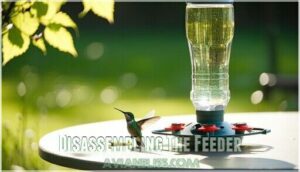
Start by taking your feeder apart completely—this makes all the difference for effective cleaning.
Most hummingbird feeder parts separate easily by hand: pop off the base, unscrew feeding ports, and remove any perches or decorative pieces.
Different feeder designs vary in disassembly difficulty, but most require no special tools beyond your hands. This step ensures you can access every nook where mold hides, making your bottle brush work much more effective when cleaning feeders thoroughly.
Soaking and Scrubbing Techniques
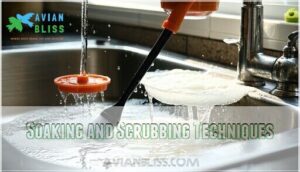
Fill your disassembled feeder parts with a vinegar solution using one part white vinegar to four parts warm water. Let components soak for ten minutes—this vinegar soak time loosens stubborn residue effectively.
Use a bottle brush or specialized feeder cleaning brush to scrub all surfaces, paying extra attention to hard-to-reach spots like feeding ports and nectar reservoirs where bacteria hide.
Rinsing and Drying Properly
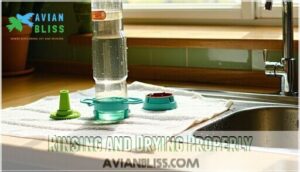
Once you’ve rinsed everything well, make sure to dry all the parts completely – this keeps mold from growing and making your hummingbirds sick.
Rinse all feeder parts with hot water around 120°F to get rid of any leftover soap.
Air-dry components separately on clean towels, guaranteeing complete moisture removal through effective drying methods. This critical feeder maintenance step completes your cleaning routine, ensuring long-term feeder care and successful mold prevention.
Best Practices for Feeder Placement and Maintenance

You’ll want to position your feeder in a partially shaded spot that’s visible from your home, ideally 10-15 feet from vegetation and 5-6 feet off the ground to mimic natural feeding heights.
Smart placement near nectar-rich flowers and away from windows prevents nectar spoilage while reducing bird collisions, creating a safer environment that’ll keep your tiny visitors coming back.
Ideal Locations for Feeders
Position your feeders where sunlight exposure stays partial—morning sun with afternoon shade works best. For predator avoidance, place feeders 10-15 feet from dense vegetation while maintaining visibility factors for easy hummingbird spotting. Consider human convenience when selecting spots you can easily reach for cleaning.
Flower proximity enhances attracting hummingbirds to your yard naturally, creating an ideal hummingbird habitat through thoughtful backyard bird care and strategic setting up hummingbird feeders with proper predator protection.
Preventing Nectar Spoilage
Why does nectar spoil so quickly in hot weather? High temperatures accelerate fermentation and bacterial growth. Shaded placement noticeably slows this process, helping prevent nectar spoilage.
Choose feeder designs with opaque tops rather than glass to reduce temperature impact. Replace nectar every two days during hot weather, as natural preservatives won’t stop bacterial contamination. Even partial shade helps somewhat.
Reducing Bird Collisions and Predators
Smart feeder placement protects hummingbirds from collisions and predators while maximizing visits. Position hummingbird feeders at least 10 feet from windows, using window decals as backup protection.
Install predator deterrents like baffles on poles. Safe distance from dense vegetation prevents ambush attacks while allowing quick escape routes.
Habitat modification around bird feeders creates secure feeding zones for backyard birds’ health.
Making and Storing Healthy Hummingbird Nectar
You’ll create the healthiest nectar by mixing one part plain white sugar with four parts water, then boiling the mixture to eliminate harmful bacteria before letting it cool completely.
Proper storage in your refrigerator keeps this homemade nectar fresh for up to two weeks, while contaminated or fermented nectar can cause deadly fungal infections that threaten hummingbird populations.
Safe Nectar Recipe and Preparation
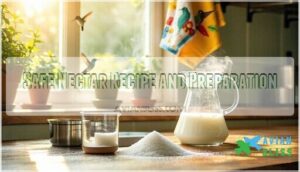
The secret to perfect hummingbird nectar? It’s surprisingly simple: one part white sugar mixed with four parts water.
Boiling this mixture does double duty—it kills off any nasty bacteria lurking around while making sure every grain of sugar dissolves completely.
Let the sugar water cool completely before filling feeders. This simple hummingbird nectar recipe avoids dangerous sugar alternatives that can harm birds.
Proper preparation prevents nectar spoilage and keeps visitors healthy.
Storing Nectar Properly

Refrigeration is your nectar’s best friend for preventing spoilage indicators like fermented smell. Store your safe nectar recipe in clean, airtight safe containers on the fridge’s coldest shelf.
Refrigeration duration extends up to two weeks for proper cleaning methods. Make smaller batch sizes to maintain freshness.
Freezing nectar isn’t recommended since it crystallizes and changes consistency.
Health Risks of Improper Nectar

Improper nectar preparation can turn your feeder into a health hazard. Nectar fermentation creates alcohol that’s toxic to hummingbirds, while bacterial infections from dirty feeders cause fatal tongue swelling.
Here’s what threatens hummingbird health:
- Mold toxicity from black fungal growth in unwashed feeders
- Disease transmission through contaminated sugar solutions
- Nutritional deficiency from artificial sweeteners or honey
- Bacterial infections like candidiasis that prevent feeding
- Preventing nectar spoilage requires temperature-based cleaning schedules
Frequently Asked Questions (FAQs)
How often should you clean a hummingbird feeder?
Your feeder needs regular cleaning to keep hummingbirds healthy.
Clean it every 2-3 days in cool weather, but switch to daily cleaning when temperatures hit 80°F or higher to stop harmful bacteria from growing.
Do hummingbirds eat sugar water feeders?
Yes, hummingbirds absolutely drink from sugar water feeders! You’re providing them with a reliable nectar source that mimics natural flower nectar, especially when blooms aren’t available.
Why do hummingbirds need a clean feeder?
Clean feeders prevent deadly fungal infections, bacterial growth, and mold that can kill hummingbirds. Dirty nectar ferments quickly, creating toxic conditions these tiny birds can’t survive.
How do you clean a hummingbird feeder?
Maintaining your feeder like a spotless kitchen ensures hummingbird health. Disassemble all parts, rinse with hot water, soak in 1:4 vinegar solution, scrub with bottle brushes, and dry completely before refilling.
Are hummingbird feeders good etiquette?
Good etiquette means placing feeders thoughtfully – away from neighbors’ windows, maintaining clean nectar regularly, and avoiding overcrowding your yard. You’ll prevent territorial disputes and disease while respecting your neighborhood.
Do hummingbirds get sick if you don’t clean your feeder?
Absolutely. Dirty feeders become breeding grounds for deadly bacteria and mold that cause serious infections in hummingbirds.
Without regular cleaning, you’re basically serving contaminated food that can kill these tiny birds through fungal diseases and bacterial poisoning.
What colors attract hummingbirds to feeders best?
Red absolutely captivates hummingbirds like nothing else! Bright red feeders will attract the most visitors, though orange and pink also work well.
Red flowers naturally draw them, so mimicking nature’s color palette ensures your feeder becomes their favorite dining spot.
How do I stop ants from reaching feeders?
Install ant moats above your feeder, fill them with water, and keep them topped off. Ants can’t swim across the water barrier.
You can also relocate your feeder periodically to break their scent trails.
Can I use honey instead of sugar?
Like tempting a child with candy instead of vegetables, honey seems sweet but harms hummingbirds. Honey causes fatal fungal infections that make tongues swell, leading to starvation. You should stick with plain white sugar.
Why do hummingbirds fight at my feeder?
Hummingbirds are fiercely territorial and will aggressively defend food sources from competitors. You’re witnessing natural behavior where dominant birds chase away others to protect their nectar supply.
Conclusion
Good hummingbird feeder care turns your backyard into a busy hub where these tiny, colorful birds can safely thrive.
Following the right steps keeps harmful bacteria at bay while making your feeder the neighborhood favorite.
You’ve learned that consistent cleaning every 2-3 days, proper nectar preparation, and strategic placement aren’t just recommendations—they’re lifelines for these delicate creatures.
Remember, your dedication to proper hummingbird feeder care directly impacts the health and happiness of these special birds throughout their seasonal visits.
- https://www.wbu.com/essential-tips-hummingbird-feeders/
- https://gardencenterohio.com/bird-care/hummingbird-feeder-facts/
- https://naturenotesblog.blogspot.com/2023/05/protecting-maintaining-hummingbird.html
- https://nationalzoo.si.edu/migratory-birds/hummingbird-nectar-recipe
- https://www.birdwatchersgeneralstore.com/mold-in-hummer-feeders/