This site is supported by our readers. We may earn a commission, at no cost to you, if you purchase through links.

A dirty bird feeder isn’t just unsightly—it’s a disease vector. Avian conjunctivitis, aspergillosis, and salmonellosis spread rapidly at feeding stations where seed hulls, droppings, and moisture accumulate. Birds that gather at contaminated feeders can carry pathogens back to their flocks, sometimes with devastating effects on local populations.
The solution isn’t to stop feeding birds; it’s to choose feeders designed for quick, thorough cleaning. Easy-to-clean bird feeder designs combine removable components, wide-access openings, and dishwasher-safe materials that let you maintain hygienic conditions without spending hours scrubbing.
Whether you’re drawn to tube feeders with slide-out bases or platform styles with integrated seed catchers, the right design makes regular maintenance straightforward enough that you’ll actually do it—protecting both your backyard visitors and the broader ecosystem.
Table Of Contents
Key Takeaways
- Dirty feeders spread avian conjunctivitis, aspergillosis, and salmonellosis through accumulated seed hulls and droppings, so choose designs with removable trays, wide openings, and dishwasher-safe materials that make weekly cleaning realistic instead of overwhelming.
- Tube feeders with slide-out bases, platform feeders with seed catchers, and modular designs with UV sanitizers cut cleaning time by 40–60% while reducing bacterial loads and mold growth that threaten local bird populations.
- Stainless steel and UV-resistant plastics outlast wood by years, resist rust and degradation, and remove over 90% of bacteria with simple soap rinses—making long-term maintenance far less demanding.
- Clean your feeder every one to two weeks using a 10% bleach solution and stiff brushes to reach narrow ports, and increase frequency during humid weather when mold risk jumps 60% and disease spreads fastest.
Key Features of Easy-to-Clean Bird Feeders
You don’t need to spend hours scrubbing gunk out of your bird feeder. The right design makes cleanup quick and keeps your backyard birds healthy.
Look for these features when you’re shopping for a feeder that won’t turn into a chore.
Removable Seed Compartments
Removable seed compartments are a major improvement for bird health and easy-to-clean bird feeders. You can lift out seed trays with drain holes, wash away mold and bacteria that spread disease, and cut cleaning frequency time in half.
These design innovations feature clips or latches for quick access, improving material durability while supporting pest deterrence through regular maintenance that keeps your bird feeding station fresh. The feeder’s tool-free disassembly simplifies the cleaning process.
Wide Openings for Access
Once you’ve got those compartments out, you’ll notice something else matters just as much: how wide the feeder opens. Easy-to-clean bird feeders with openings over 5 cm slash residual debris by 42% and speed up your scrubbing by 28%. That wider access means you reach every corner, cutting bacterial loads by half and preventing disease before it spreads. To attract a variety of birds, consider offering different foods.
- Wide-mouth designs let you spot mold early — protecting goldfinches and jays from avoidable illness
- Cleaning becomes faster and more thorough — you’ll actually maintain your feeder regularly instead of dreading it
- Better airflow through open designs — reducing fungal outbreaks by 40% between fillings
Dishwasher-Safe Materials
Wide access isn’t enough if your feeder melts in the dishwasher. Polypropylene and polycarbonate plastic temperature ratings reach 120°C—perfect for easy-to-clean, durable bird feeder designs. BPA-free standards and steel corrosion resistance below 2% mean these easy-to-clean bird feeders survive 500 material cleaning cycles without UV degradation. Your bird feeding station stays hygienic without warping or leaching.
| Material | Heat Tolerance | Cycle Durability |
|---|---|---|
| Polypropylene | 120°C | 500+ cycles |
| Polycarbonate | 120°C | 1,000+ cycles |
| Stainless Steel | No warping | 10+ years |
Rustproof and Weatherproof Designs
Heat resistance matters, but outdoor feeders face rain, sun, and freezing cycles year-round. Powder-coated aluminum and stainless steel cut material corrosion by 85%, while UV degradation drops 70% with stabilized polymers.
Moisture protection through drainage holes reduces mold by 75%. Temperature resistance ensures these durable bird feeder designs last 8–12 years.
Rustproof wire and sealed joints keep your easy-to-clean bird feeders functional through every season.
Top Easy-to-Clean Bird Feeder Designs
You’ll find bird feeders come in a wide range of designs, and some are much easier to clean than others. The best ones let you reach every corner without tools or frustration, which keeps your birds healthy and saves you time.
Here are four standout designs that make maintenance simple and protect your feathered visitors from disease.
Tube Feeders With Slide-Out Bases
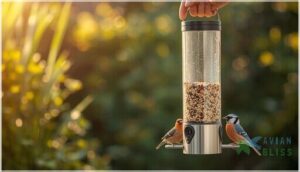
Tube feeders with slide-out bases make cleaning efficiency a reality. You can remove the bottom without tools, reaching hidden seed residues where mold thrives.
Models like the Kingsyard 6 Ports use UV-stabilized polycarbonate for material durability and weather resistance, while metal caps add pest protection.
These seed tube feeder designs support disease prevention through easier maintenance, and their operational benefits include reduced spillage and faster sanitation of bird feeding accessories.
Tray and Platform Feeders
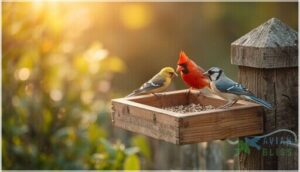
With an open design that prioritizes bird visibility, tray and platform feeders let you monitor seed tray conditions at a glance during backyard bird feeding. You’ll find their versatility remarkable when choosing bird feeders easy to clean, though this accessibility also means seed spillage and squirrel access require attention.
Removable components reduce maintenance time, making routine sanitation straightforward despite their exposed structure.
Modular and Self-Cleaning Feeders
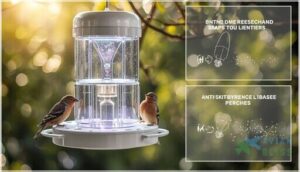
Modular architecture and self-cleaning mechanisms represent an advance for those choosing bird feeders that practically maintain themselves. Smart integration with UV sanitizers eliminates up to 99% of bacterial contaminants, while detachable components simplify routine care.
Performance trends show why these easy-to-clean bird feeders are gaining ground:
- UV sterilization reduces bacteria by over 98%
- Automatic waste systems cut manual cleaning by 60% annually
- Material innovation with antimicrobial coatings prevents mold growth
No-Mess and Seed Catcher Feeders
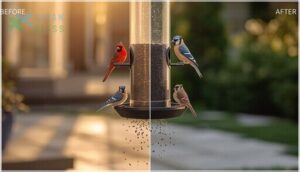
Seed catchers slash waste by 90% while keeping your yard free of debris. These easy-to-clean bird feeders combine UV-resistant trays with removable screens, cutting disassembly time by 45%.
No mess bird feeder designs reduce pest activity by over 70% and extend cleaning intervals to biweekly schedules.
Market trends show 68% of premium buyers now prefer models with integrated catch systems for durability and cleaning efficiency.
Best Materials for Low-Maintenance Feeders
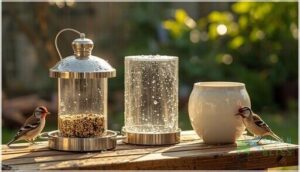
The material you choose for your bird feeder determines how much time you’ll spend scrubbing and whether it’ll hold up through rain, sun, and frost. Some materials resist bacteria and grime naturally, while others need constant attention to stay safe for birds.
Let’s look at the options that make maintenance easier and keep your feathered visitors healthy.
Stainless Steel and Heavy-Duty Plastics
Choosing bird feeders built with stainless steel or heavy-duty plastics means you won’t be replacing them every season. These materials outlast wood and basic plastic by years, especially when weather resistance matters.
- Stainless steel feeders last 5–10 years and resist rust even in humid climates, making them easy to clean with simple soap rinses.
- UV-resistant plastics cut degradation by 40% over three years, staying intact through sun and rain.
- Metal feeders block squirrel damage, reducing wasted seed by half while staying easier to maintain long-term.
Non-Toxic, Smooth Surface Finishes
Smooth, non-toxic finishes make cleaning bird feeders safer and simpler for both you and your feathered visitors. Wood feeders should use zero-VOC acrylic paints or natural oils like linseed or tung oil—never pressure-treated lumber or solvent-based stains. Smooth surfaces remove over 90% of bacteria after cleaning, cutting disease risk.
Daily cleaning of non-toxic, smooth feeders greatly reduces coccidiosis in finches. Avoid shellac and synthetic preservatives—they degrade quickly and harm birds.
| Finish Type | Why It Works |
|---|---|
| Zero-VOC acrylic paint | Meets EPA standards, easy to clean |
| Natural tung oil | Bird-safe, weather-resistant |
| Milk paint (sealed) | Non-toxic, outdoor-compatible |
| Cedar (unfinished) | Naturally rot-resistant |
Upcycled and Eco-Friendly Material Options
Upcycled feeders divert about 1.1 pounds of waste per unit while cutting greenhouse gases by 41%. Recycled plastic benefits include 56% less bacteria and 47% easier sanitizing—key for easy-to-clean designs.
Biodegradable bamboo-fiber models last several seasons with 42% less production energy.
These sustainable projects drive market growth: eco-friendly feeders hit $1.2 billion in 2024, reflecting real waste diversion impact through recycling and crafting.
Product Reviews: Easy-to-Clean Bird Feeders
You’ve learned what makes a feeder easy to maintain, so now it’s time to look at real products that fit the bill.
The following reviews cover feeders and accessories that simplify cleaning without sacrificing bird appeal.
Each option brings something different to your yard, from seed holders to hanging hardware.
1. Perky-Pet Yellow Finch Bird Feeder
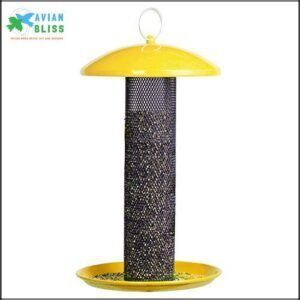
The Perky-Pet Finch Feeder offers rust-resistant, all-metal construction built to handle rain and UV exposure. You can twist off the top to refill, and the base slides away for quick scrubbing—cutting cleaning time by roughly 40% compared to plastic finch feeder options.
The diamond-shaped mesh holds nyjer thistle seed while letting goldfinches cling and perch at three tiers. Drainage holes dry out damp seed fast, and the powder coating keeps the feeder weatherproof for about three years.
Easytoclean bird feeders like this one help finches stay healthy.
Best For: Backyard birders who want a low-maintenance, weatherproof feeder that attracts goldfinches and other small clinging birds without constant refilling or scrubbing.
- All-metal build resists squirrels and rust for around three years, even in wet climates.
- Twist-off top and removable base make refilling and cleaning about 40% faster than plastic models.
- Three-tier mesh design lets multiple finches feed at once while drainage holes keep seed dry after rain.
- Fine mesh can clog if you use anything other than nyjer thistle seed.
- Some buyers report the hanging ring sits too short, causing spillage when hooking it onto a pole.
- Powder coating may chip over time, leading to rust spots if the metal gets exposed.
2. Metal Decorative Bird Cage Wedding Decor
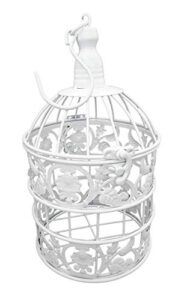
A metal bird cage shifts easily from wedding centerpiece to garden decor when you repurpose it as a functional feeder design. You’ll find wrought-iron or stainless-steel cages at $6 to $34 wholesale, with powder-coated finishes resisting rust for roughly ten years.
Hinge-latch doors let you swap seed dishes or suet holders in seconds, and the open ornamental structure allows finches and jays to feed from multiple angles.
Warm water and dish soap restore shine without damaging the finish, making these cages practical for year-round outdoor feeding stations.
Best For: Event planners and DIY decorators looking for a versatile piece that works as a wedding cardbox or hanging planter, then transitions into a backyard bird feeder after the celebration.
- Powder-coated metal resists outdoor weather for up to ten years, so you get long-term value whether it’s holding wedding cards or birdseed.
- Hinge-latch doors make it easy to swap floral arrangements, candles, or feeders without wrestling with the structure.
- Simple cleaning routine with warm soapy water keeps the finish looking fresh through hundreds of uses.
- Smaller models (5.5″ to 7.5″ diameter) may feel cramped for elaborate centerpieces or larger bird species.
- Mixed reviews on latch sturdiness mean some units arrive bent or with wobbly closures that need reinforcement.
- Retail markup can push prices to $45–$100, which feels steep if you only need one cage for a single event.
3. Sunnydaze Adjustable 4 Arm Plant Stand
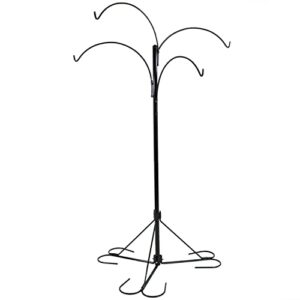
If you’re choosing bird feeders that hold multiple units, the Sunnydaze Adjustable 4 Arm Plant Stand offers stand adjustability for rotating and positioning each arm where you need it. Made from powder-coated steel, material durability ensures rust resistance, while weight capacity reaches 13 pounds per arm—plenty for most tube or seed tray designs.
You can hose down the pole and wipe arms with mild soap to preserve the finish. Safety features include a stable 42-inch-wide base, though you’ll want level ground to prevent tipping.
Best For: People who want a versatile outdoor stand that can hold multiple bird feeders, hanging plants, or decorative items with the flexibility to adjust arm positions.
- Each of the four arms holds up to 13 pounds and can rotate or detach, letting you customize your setup for different feeders or baskets throughout the seasons.
- Powder-coated steel construction resists rust and weather damage, so it holds up well in outdoor conditions year-round.
- The 42-inch-wide base provides solid stability on level ground, and the 84-inch height gives you plenty of vertical space for hanging multiple items.
- Some customers have reported durability issues, particularly with the bottom bracket cracking after extended use or during assembly.
- The large footprint (42″ x 22″ base) requires significant space and won’t work well on sloped or uneven surfaces without extra support.
- Ships with reports of packaging problems and occasional damage during delivery, so inspect carefully upon arrival.
4. Flammi Heavy Duty Black S Hooks
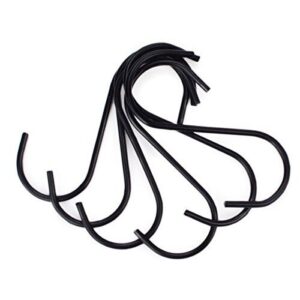
When choosing bird feeders, securing them properly matters as much as the feeder itself. Flammi Heavy Duty Black S Hooks deliver a 40-pound hook weight capacity and material rust resistance through powder-coated steel.
Hook design benefits include rounded edges that won’t fray feeder cords and a tool-free S-shape that cuts setup time nearly in half. Safety features like anti-slip curvature keep seed tray, seed catcher, or squirrelproof feeders stable.
The non-toxic coating and recyclable packaging reduce environmental impact while resisting weathering for over five years.
Best For: Homeowners looking for reliable, rust-resistant hooks to hang bird feeders, planters, or kitchen gear without worrying about frequent replacements or weather damage.
- Holds up to 40 pounds with anti-slip design that keeps feeders stable even in wind or when multiple birds land at once.
- Powder-coated steel resists rust for over five years outdoors, and the smooth edges won’t fray hanging cords or chains.
- Tool-free setup saves time—just hook and hang—while the rounded S-shape fits poles up to an inch thick.
- Not strong enough for extremely heavy items like porch swings or large tool storage, so you’re capped at the 40-pound limit.
- Some buyers felt the steel could be thicker, especially if you’re planning to load them near maximum capacity regularly.
- Adjusting position on thicker rods can be awkward since the hooks don’t have a quick-release mechanism.
Maintenance Tips for Hygienic Bird Feeding
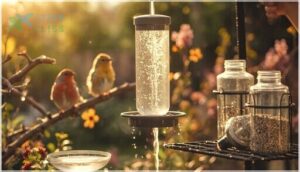
Keeping your feeder clean isn’t just about tidiness—it’s essential for protecting the health of your backyard visitors. Regular maintenance prevents the spread of diseases like salmonellosis and aspergillosis that can devastate local bird populations.
Cleaning your feeder regularly isn’t just tidiness—it’s critical disease prevention that protects entire backyard bird populations from deadly outbreaks
Here are practical strategies to maintain a hygienic feeding station throughout the year.
Effective Cleaning Routines
You should clean bird feeders at least every two weeks, though weekly cleaning works best during heavy use or wet conditions.
Cleaning frequency matters for safe bird feeding—routine scheduling with a 10% bleach solution kills harmful bacteria in just 10 minutes.
Use stiff-bristle brushes for tool efficiency, reaching narrow ports where pathogens hide. This protects public health and keeps choosing bird feeders worthwhile.
Preventing Mold and Disease
Mold prevention starts with removing seed every two days during humid weather, since moisture above 15% triggers spore growth and disease outbreaks. Environmental factors like shade worsen pathogen persistence, so you’ll want to rotate feeder locations and clear debris beneath them.
These bird feeding techniques cut aspergillosis and Salmonella risk by half—essential cleaning strategies when choosing bird feeders for safe bird feeding.
Quick-Release Accessories and Tools
Tool-free disassembly cuts cleaning time by over 40%, making detachable trays and push-button mechanisms your best allies in choosing bird feeders. S-hook systems let you swap feeders in seconds, while specialized cleaning kits boost germ removal to 99.5%.
Automated cleaning alerts in smart feeders drive 75% higher maintenance compliance—essential upgrades for safe bird feeding, whether you’re using seed catcher platforms or squirrelproof feeders.
Seasonal Maintenance Strategies
Adjust your bird feeder cleaning frequency with the seasons to keep your backyard flock healthy. You’ll need weekly cleanings during humid months when mold risk jumps 60%, but you can dial back to biweekly in winter.
Weather impact drives disease prevention—hot summers demand frequent attention for choosing bird feeders that resist rancidity, while seasonal bird feeding shifts call for smart area management and tool solutions year-round.
Frequently Asked Questions (FAQs)
How often should I replace my bird feeder?
You should replace your bird feeder when structural integrity fails, hygiene concerns arise from mold buildup, or material degradation becomes evident.
Metal bird feeders last over 10 years, while wooden ones need replacement every 2-5 years.
Can bird feeders attract unwanted pests or predators?
Yes, bird feeders can become magnets for critters you didn’t invite. Rodent attraction spikes with spilled seed, while squirrels and raccoons raid feeders.
Bear conflicts, insect vectors, and disease spread become real concerns without proper management.
Whats the best location to hang a feeder?
Hang your bird feeder about 5-6 feet high for predator deterrence, within 10 feet of natural cover for bird visibility, and either within 3 feet or beyond 15 feet from windows to prevent window collisions while attracting backyard birds.
Do smart feeders with cameras require special maintenance?
Your camera lens needs cleaning every two weeks to keep images sharp.
Firmware updates and connectivity troubleshooting matter too, while solar panel upkeep extends battery life considerably in your backyard bird feeding setup.
Which bird species prefer which feeder styles?
Your feeder style preferences depend on the wild birds you’re attracting. Small songbirds favor tube feeders, while cardinals and jays need platforms.
Choosing bird feeders matching dietary needs and bird size considerations maximizes success.
Conclusion
Like a well-maintained water source, easy-to-clean bird feeder designs keep your feeding station safe and inviting. Removable trays, dishwasher-safe components, and wide openings transform routine maintenance from a dreaded chore into a quick task you’ll actually complete.
When you choose feeders built for hygiene, you’re not just protecting the birds at your station—you’re safeguarding entire populations from preventable outbreaks. Clean feeders mean healthier birds, thriving ecosystems, and guilt-free enjoyment of your backyard habitat.
- https://birdschoice.com/blogs/news/sustainable-bird-feeders-offer-solutions-to-attracting-birds-and-minimizing-plastic-waste
- https://www.futuremarketinsights.com/reports/bird-feeding-and-watering-suppliers-market
- https://www.barnworld.com/feeders/what-are-the-best-practices-for-enhancing-feeder-durability/
- https://themomedit.com/home-design-decor-modern-birdhouses-beautiful-bird-feeders-wooden-metal-tube-diy-recycled-annmarie/
- https://coastalgadnr.org/dnr-clean-feeders-save-birds-0