This site is supported by our readers. We may earn a commission, at no cost to you, if you purchase through links.
Forget everything you know about feeding backyard wildlife—cracked corn for ground feeding isn’t just another grain tossed on the dirt. The right size, moisture, and blend can turn a bare patch of earth into a magnet for cardinals, sparrows, deer, and even rabbits.
Choose well, and you’ll see birds crowding around as soon as you step away, each taking what they need while leaving your feed clean and fresh. The difference comes down to more than ingredients; it’s how you store, handle, and select each kernel that lets you control the crowd and keep your feeding program safe season after season.
Table Of Contents
Key Takeaways
- Cracked corn’s effectiveness for ground feeding depends on particle size (2–4 mm ideal), moisture content (12–14% to prevent mold), and proper storage in airtight containers to maintain nutritional value for 6–12 months.
- High-quality cracked corn delivers 3,600–3,900 kcal/kg of metabolizable energy, making it a versatile feed for cardinals, doves, deer, poultry, and livestock when balanced with protein sources and essential nutrients.
- Strategic ground feeding requires rotating feeding sites weekly, using shallow trays to minimize waste, and positioning stations 15–20 feet apart to reduce competition while preventing soil contamination.
- Non-GMO and naturally processed cracked corn options provide third-party verified quality with 92% detection-free testing, though they require vigilant moisture monitoring and regular inspections to prevent aflatoxin development within 7–14 days of improper storage.
Best Cracked Corn Products for Ground Feeding
Choosing the right cracked corn product makes all the difference when you’re feeding wild birds or ground-dwelling wildlife. You’ll find dozens of options on the market, each with different processing methods, quality standards, and ingredient profiles.
Here are nine cracked corn products that consistently deliver nutrition, freshness, and value for ground feeding applications.
1. Cracked Corn Wild Bird Food
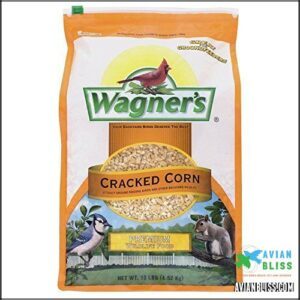
When selecting cracked corn wild bird food, you’ll want products with 2–4 mm particle sizes—this ensures ground feeding birds like cardinals and doves can efficiently consume the kernels. Look for moisture content between 12–14%, which prevents mold while maintaining palatability.
Wagner’s 10-pound bag exemplifies quality standards, attracting blue jays and ground-foraging species while offering flexibility to mix with other seed. You can also use cracked corn strategically to divert squirrels from feeders.
Store your supply in airtight containers to preserve freshness and nutritional value throughout the 6–12 month shelf life.
Best For: Backyard birders who want to attract ground-feeding species like cardinals, doves, and jays while also keeping squirrels and other small wildlife away from main feeders.
- Versatile feeding option that works alone or mixed with other seeds, giving you flexibility in how you feed your backyard visitors.
- Attracts a wide variety of wildlife beyond just birds—rabbits, chipmunks, and ground foragers all enjoy cracked corn.
- Proper 2–4 mm particle size makes it easy for birds to eat and digest, especially during colder months when they need accessible energy.
- Some buyers report inconsistent kernel sizes or receiving whole corn instead of properly cracked pieces.
- The bag doesn’t reseal, so you’ll need to transfer it to an airtight container to prevent moisture and mold issues.
- Can be pricey for what you get, and there’s a chance birds might ignore it if they have other food sources available.
2. Wild Bird Cracked Corn Seed
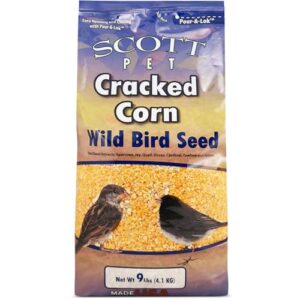
For wild bird cracked corn seed, quality hinges on particle size and freshness. Opt for blends where kernels are 2–4 mm—ideal for ground-feeding birds.
When focusing on wild bird nutrition, the benefits of cracked corn become evident: its energy boost supports a variety of species, from cardinals to juncos.
Reliable brands maintain safe moisture levels, preventing mold or spoilage. To ensure your wildlife feeding strategies succeed, store extra seed in a cool, dry spot, following seed storage tips.
Best For: Ground-feeding birds and backyard wildlife enthusiasts looking to attract a wide range of species with a simple, high-energy feed.
- Great source of quick energy and fiber for birds like jays, cardinals, and juncos.
- Flexible feeding option—works on its own or in mixes for custom blends.
- Made from quality grain in the USA, with a particle size ideal for easy picking.
- Not all birds are interested; some species may prefer other seeds.
- Moisture or poor storage can lead to mold, so care is needed during storage.
- Occasional issues with packaging or broken kernels affecting feed quality.
3. Natural Cracked Corn Bird Feed
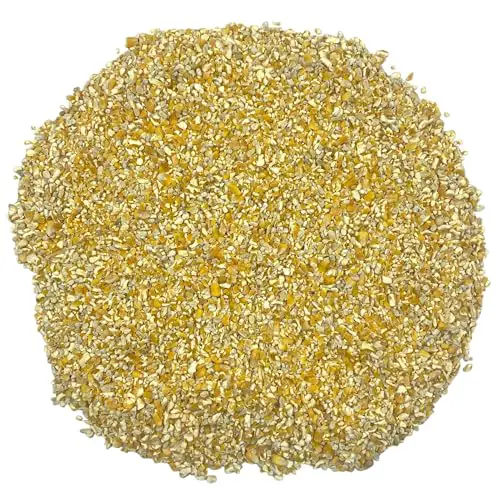
Ground feeding birds thrive on natural cracked corn bird feed—a straightforward option when you appreciate simplicity and effectiveness. The best blends offer all-natural ingredients with no fillers, delivering reliable wildlife nutrition for cardinals, doves, or backyard ducks.
Consistent particle size is key, supporting easy uptake and minimizing waste. Storing your cracked corn below 65% humidity and in airtight containers keeps it fresh and free from mold.
Prioritize Bird Feed Quality and Natural Ingredients for an easy win in your wildlife mixes and bird food blends.
Best For: People who want an all-natural, USA-grown bird feed that’s versatile enough for wild birds, backyard poultry, or wildlife feeding.
- High-energy, all-natural cracked corn with no additives or fillers.
- Attracts a wide range of birds and wildlife, from cardinals to chickens and deer.
- Coarse, consistent particle size reduces waste and makes ground feeding easy.
- Some users report occasional poor quality or birds not accepting the feed.
- Requires careful storage to prevent mold due to moisture sensitivity.
- May not suit all bird or wildlife species; quality can vary between batches.
4. Cracked Corn Bird Feed Mix
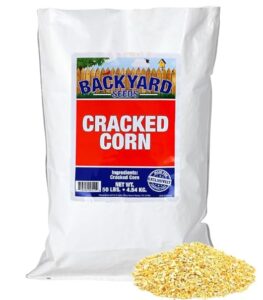
Blending cracked corn with complementary seeds like millet or sunflower builds a bird feed mix that balances Bird Nutrition with broad Wildlife Attraction. Feed Mixing lets you tailor nutrition, and the right Seed Blending minimizes waste, appealing to both backyard birds and passing wildlife.
For your ground feeding stations, these Bird Food Blends provide variety while making the most of Corn Quality in every scoop. Adjust ratios for wildlife mixes to guarantee your cracked corn remains the star, satisfying the appetite of diverse species.
Best For: Backyard birders and small-scale animal keepers looking for a versatile, energy-rich feed suitable for birds, barnyard animals, and local wildlife.
- Attracts a wide range of birds, poultry, and wildlife, making feeding stations lively and diverse.
- Produced on a small family farm in the USA, offering transparency and trust in quality.
- Multi-purpose use for both ground feeding and supplementing other animal feeds.
- Large 50-pound bag may be cumbersome for those with limited storage or feeding only a few animals.
- Coarse cracked corn texture may not suit all animals or bird species equally well.
- Open ground feeding can attract unwanted wildlife or create mess if not managed properly.
5. High Quality Cracked Corn Feed
Consistency sets high quality cracked corn feed apart. When you look for a product with >95% whole-kernel retention and a uniform 1–3 mm particle size, you’re securing Feed Quality and peak Cracked Corn Nutrition.
Proper Grain Quality means energy-rich, digestible kernels that strengthen Animal Health—delivering reliable Energy Sources across your Animal Feed program.
Just as important, excellent Grain Storage and Handling keeps the nutritional value locked in, ensuring your Feed Formulation aids Livestock Nutrition right out of the bag.
Best For: Anyone looking to attract a variety of wild birds and small animals or supplement the diets of poultry and livestock with a high-energy, digestible source of cracked corn.
- High whole-kernel retention and uniform particle size for better nutrition and less waste.
- Attracts a wide variety of wildlife, from birds like blue jays and woodpeckers to small mammals such as squirrels.
- Versatile feed suitable for many species, including chickens, ducks, and turkeys.
- Some batches may have inconsistent cracking, leading to overly small pieces.
- Clumping and mold can occur if stored with too much moisture or humidity.
- Occasional reports of pests or unpleasant smell in certain shipments.
6. Non Gmo Cracked Corn Feed
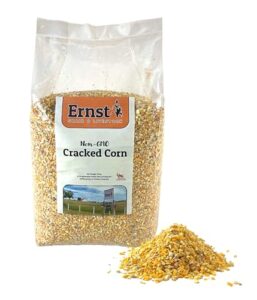
Non-GMO certification delivers peace of mind when you’re building a clean, transparent Animal Feed program. GMO Free Options now carry third-party verification, ensuring your Feed Formulation aligns with Sustainable Farming goals while preserving Cracked Corn Benefits like comparable metabolizable energy—3.2 to 3.6 Mcal/kg—without compromise.
This choice enhances Feed Quality and Livestock Nutrition, and when paired with careful Grain Storage and Handling, you maintain kernel integrity season after season. It’s a straightforward way to earn consumer trust and strengthen farm-level credibility.
Best For: Farm owners and homesteaders who want verified non-GMO feed for poultry, livestock, or wildlife while supporting sustainable, family-run agriculture.
- Third-party verified non-GMO with strong metabolizable energy (3.2–3.6 Mcal/kg), matching conventional corn’s nutritional performance without genetic modification
- Freshly cracked and cleaned on a 7th generation family farm, ensuring quality control and supporting local agriculture
- Versatile for multiple species including chickens, ducks, deer, and wildlife, making it a flexible option for mixed-use farms
- Quality control inconsistencies reported, including at least one case of mold contamination that could harm animals
- Higher price point than conventional cracked corn due to non-GMO certification and small-batch processing
- Requires careful storage below 65% humidity to prevent mold growth, and should be inspected every 60–90 days for freshness
7. Cracked Corn Wildlife Feed Mix
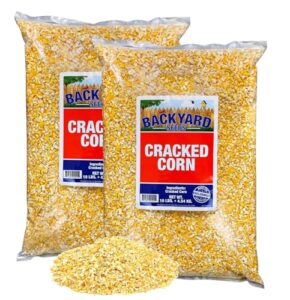
You’ll access premium Wildlife Nutrition when you mix cracked corn with sunflower hearts, millet, or peanut pieces—these Seed Blends support diverse Bird Feeding and Attraction needs across your property.
Feed Mixing at a 60:40 corn-to-seed ratio balances energy and protein, directly improving Animal Health while advancing Wildlife Conservation and Management goals.
Quality Corn matters: verify moisture below 14% to protect Outdoor Wildlife from mold. This approach minimizes Environmental Impact, reduces waste, and delivers consistent Cracked Corn performance season after season.
Best For: Wildlife enthusiasts and backyard feeders who want an affordable, energy-dense base for attracting deer, ground-feeding birds, turkeys, and chickens year-round.
- High energy content (3,600–3,900 kcal/kg) helps wildlife maintain weight during cold months when natural forage is scarce
- Versatile feeding option that works as a standalone or mixed with seeds like sunflower hearts and millet for balanced nutrition
- Cost-effective 20-pound bag with proper moisture control (12–14%) minimizes mold risk during outdoor storage
- 20-pound quantity may be too much for casual feeders or those with limited storage space
- Coarse texture might not appeal to smaller bird species that prefer finer seeds
- Requires proper storage in airtight containers and regular mold checks to maintain quality over 6–12 month shelf life
8. Cracked Corn Bird And Wildlife Food
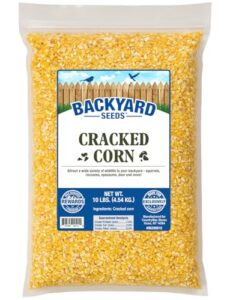
You’ll optimize Bird Nutrition and support Wildlife Conservation and Management when you select products formulated specifically for both avian and mammalian species. These specialized feeds combine cracked corn with targeted Feed Supplements—trace minerals, vitamin premixes, and attractants—that address the distinct metabolic needs of cardinals, doves, rabbits, and deer simultaneously.
Monitor Corn Quality by inspecting for uniform particle size and absence of dust; this attention to detail safeguards Animal Health across your Backyard Wildlife populations and improves Bird Feeding and Attraction outcomes during active Wildlife Feeding periods.
Best For: Homeowners and small-farm owners who want an affordable, versatile feed to attract a variety of backyard birds and wildlife—from cardinals and doves to rabbits and deer—while also feeding chickens and other barnyard animals.
- Multi-purpose formula works for ground-feeding birds, wildlife like deer and rabbits, plus chickens and turkeys, so you only need one bag for different animals.
- Made in the USA on a small New York family farm, giving you a locally sourced product with solid quality control and support for domestic agriculture.
- Supports healthy digestion and provides good energy content at around 3,400–3,700 kcal/kg, helping animals stay nourished especially during colder months.
- Packaging durability gets mixed reviews—some buyers report bags arriving torn or not holding up well during storage.
- Dust levels vary from bag to bag, which can be messy and may irritate sensitive birds or animals if the batch isn’t up to par.
- The 10-pound size and coarser grind might not suit apartment dwellers or those with smaller feeding setups who need finer, more compact options.
9. Natural Cracked Corn Animal Feed
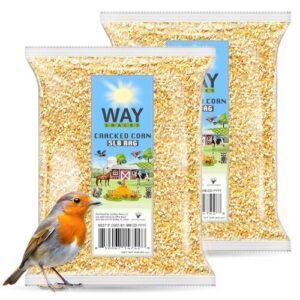
Regarding Animal Feed that puts Feed Nutrition and Animal Health front and center, natural cracked corn stands out for a reason. You get a product where Digestibility meets versatility—it’s suitable for poultry, cattle, pigs, and even backyard visitors.
The key Cracked Corn Benefits include high-energy Nutrition and ease of mixing for Farm Management. By supporting Livestock Nutrition and Health with a balanced profile, this feed becomes an essential staple for anyone aiming to raise strong, productive animals.
Best For: Backyard birders, small farmers, and anyone looking to give wildlife or livestock a natural, energy-rich feed that’s easy to use.
- Attracts a wide variety of wild birds and animals with high-energy, all-natural nutrition.
- Conveniently packaged for regular feeding and easy to mix with other seeds or feeds.
- Carefully processed for uniform size, reduced mess, and long-lasting freshness.
- Only available in a 10 lb box, which may not suit larger operations.
- Requires proper storage to prevent spoilage, pests, or loss of quality.
- May attract unwanted critters or make a mess if scattered carelessly.
Key Benefits of Cracked Corn for Animals
Cracked corn offers more than just a boost of energy for your animals. You’ll find some key advantages that make it a valuable part of many feeding programs.
Here’s what you can expect when you add cracked corn to the mix.
Enhanced Digestibility and Nutrient Absorption
Ever wondered why cracked corn stands out as animal feed? Its finely milled texture exposes more starch to digestive enzymes, making nutrient absorption and overall digestibility a breeze. For healthier animals and better feed efficiency, focus on these essentials:
- Improved starch digestibility for smoother nutrient uptake
- Enhanced gut health with ideal particle size
- Reliable, consistent nutrition in everyday feeding.
Students can also benefit from study guide resources to improve their understanding of complex subjects.
Energy Content and Growth Support
When your herd’s feed works as hard as you do, results show up fast. High Metabolizable Energy in cracked corn means steady Growth Rates and enhanced Nutrient Uptake—no guesswork, just reliable weight gain. Its digestibility turns feed into lasting energy, while balance with other energy sources puts efficiency and animal health at the center of your animal feed program.
High metabolizable energy in cracked corn fuels steady growth and reliable weight gain, making animal nutrition efficient and effective
To resolve any unexpected issues, checking the web server status can help identify problems.
Suitability for Poultry, Cattle, Pigs, and Horses
Cracked corn fits diverse production systems when you match grain quality to species needs. Poultry thrive on its 3,700–3,900 kcal/kg energy, boosting starter intake by 5–12%. Cattle gain rapidly with 5–15% inclusion, while pigs convert it efficiently when lysine balances the diet. Horses need caution—starch overload risks colic, so limit amounts and prioritize forage. Smart animal nutrition and digestive efficiency hinge on species-specific feed formulas.
- Poultry: High metabolizable energy fosters rapid growth and egg production
- Cattle: 5–15% dietary inclusion boosts energy without compromising rumen health
- Pigs: Efficient weight gain when paired with essential amino acid supplementation
- Horses: Limited use prevents metabolic issues; always balance with adequate forage
- All species: Proper grain quality and moisture control safeguard livestock health
Role in Balanced Feed Formulations
You’ll optimize feed efficiency when you pair cracked corn’s 3,600–3,900 kcal/kg energy balance with protein sources that restore amino acid adequacy. This nutrient optimization prevents dilution in your ration formulation.
Particle size affects pelletability and dust—key for digestive health.
Proper mineral adjustments (calcium, phosphorus) and vitamin premixes complete the picture, ensuring nutrient absorption aids growth without compromising feed formulation and quality or digestibility across species.
How to Choose Quality Cracked Corn
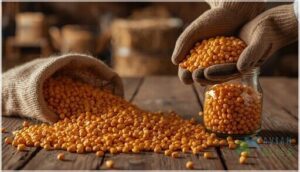
Choosing quality cracked corn isn’t about grabbing the cheapest bag off the shelf—it’s about understanding what makes feed safe, nutritious, and worth your investment. You’ll want to evaluate processing standards, check moisture levels, and verify the source before you commit to any supplier.
Let’s break down the four essential factors that separate premium cracked corn from substandard products.
Processing Methods and Particle Size
The way you process corn determines how well your animals digest it. Dry-ground particles at 2–3 mm improve feed palatability and gizzard development in poultry by 5–9%, while particle uniformity below 20% variation ensures consistent intake.
Hammer-milling at 8,000 rpm yields size distribution where 60–70% passes through a 4 mm sieve, balancing milling efficiency with digestibility. Avoid excessive grain damage—it compromises feed formulation and quality.
Moisture Content and Grain Integrity
Quality starts with the right moisture levels—12% to 14% moisture content minimizes mold risk and extends shelf life up to six months under proper storage conditions.
You’ll want to check these three grain damage indicators:
- Kernel integrity above 88% improves digestibility by 5–10%
- Uniform particle size reduces waste by 15%
- Intact pericarp protects against surface spoilage
Lower grain damage translates directly to better feed quality.
Non-GMO and Natural Product Considerations
Non-GMO benefits and natural ingredients are essential when committed to sustainable farming and eco-friendly practices. Independent testing confirms that 92% of non-GMO labeled products show zero detectable GMOs. Additionally, 78% of natural cracked corn offerings carry verified certifications, which is critical for maintaining animal feed integrity and enhanced digestibility while addressing concerns about grain damage and moisture content.
| Product Feature | Key Advantage |
|---|---|
| Non-GMO Verification | 92% detection-free testing |
| Natural Formulations | Reduced synthetic additives |
| Third-Party Certification | 88% supplier availability |
| Organic Options | 12–15% market segment growth |
Look for QR-code batch tracking—now available from 52% of suppliers—to verify origin and handling practices.
Sourcing From Reputable Suppliers
Supplier verification starts with farm traceability—92% of nutrition researchers insist on it. You’ll want third-party audit standards confirming quality control; 78% of grain processing operations pass annual certifications.
Look for batch-level documentation linking your cracked corn to actual farms, storage conditions, and agricultural practices. When certification requirements meet animal feed safety protocols, you’re protecting both your investment and your animals.
Storage and Handling for Maximum Freshness
You’ve picked out quality cracked corn, but improper storage can turn your investment into moldy waste within weeks. Moisture, pests, and heat are the primary enemies of freshness, each capable of destroying nutritional value and creating health risks for your animals.
Let’s walk through the four critical factors that’ll keep your cracked corn fresh, safe, and ready to feed.
Ideal Moisture and Humidity Levels
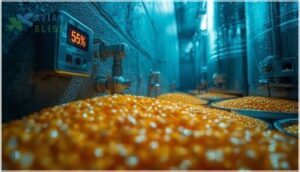
Your cracked corn won’t last if you ignore moisture control and humidity management. Proper grain storage demands precision: maintain 12–14% moisture content to prevent grain damage and preserve feed quality. Here’s what you need to know about storage conditions:
- Keep ambient humidity between 50–60% using calibrated sensors for quality assurance
- Store at 40–60°F to minimize microbial growth in your animal feed
- Test moisture levels every 2–3 months to catch problems early
These feed preservation practices protect your investment.
Preventing Mold, Pests, and Contamination
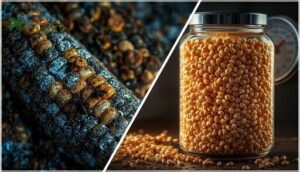
Vigilance separates safe feed from contaminated losses. Moisture content above 14% multiplies mold growth risk by 2.5 times, while humidity over 60% triggers aflatoxin development within 7–14 days. Temperature fluctuations above 25°C accelerate contamination probability by 40% in hot climates. Don’t compromise feed sanitation—your livestock depend on it.
Here’s your defense strategy:
| Threat | Prevention Method | Inspection Frequency |
|---|---|---|
| Mold Growth | Maintain 12–14% moisture; store below 25°C | Weekly visual checks |
| Weevils/Beetles | Seal bins; monitor for insects | Every 3–6 months |
| Cross-Contamination | Use separate, labeled containers | Before each new batch |
| Temperature Spikes | Climate-controlled storage environments | Daily monitoring |
Proper Storage Containers and Locations
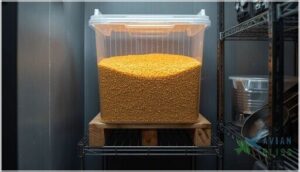
Your choice of container determines whether cracked corn stays fresh or spoils within weeks. Here’s what works:
- Container Selection: Use air-tight, food-grade plastic bins with UV-blocking properties to reduce moisture ingress below 10% relative humidity and prevent grain damage from photo-oxidation.
- Storage Layout: Raise containers at least 6 inches off the ground in cool, dry rooms (60–70°F) away from direct sunlight to minimize pest control issues and extend shelf life.
- Handling Equipment: Implement dedicated, clean transfer tools and pest-proof shelving to prevent contamination during moisture content checks and routine feeding operations.
Shelf Life and Regular Quality Checks
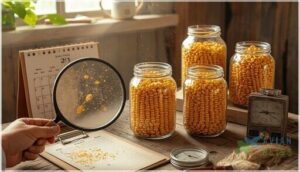
Even in sealed containers, your cracked corn won’t last forever. Under proper storage conditions with moisture control below 60% relative humidity, unopened bags stay fresh for 6–12 months; opened bags, 2–6 months.
Regular inspections safeguard feed safety and prevent costly losses from spoilage or contamination.
| Quality Testing Interval | Check Focus |
|---|---|
| Monthly | Odor, clumping, discoloration |
| Quarterly | Pest control traps, grain damage |
| Annually | Mycotoxin levels (aflatoxin >20 ppb) |
Practical Tips for Ground Feeding Success
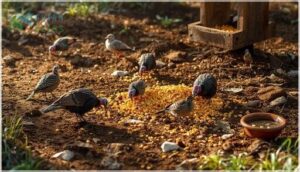
You’ve got the right product stored properly—now it’s time to put it to work. Ground feeding isn’t just tossing corn out and hoping for the best; smart techniques make the difference between wasted feed and thriving wildlife or poultry.
Here’s what you need to know to optimize results while keeping costs down and attracting the species you actually want.
Effective Feeding Techniques for Wildlife and Poultry
Successfully feeding cracked corn to wildlife and poultry depends on strategic placement and daily upkeep. Scatter grain in shallow, spill-resistant trays to control waste and minimize attracting unwanted pests. Position feeders away from water sources to prevent contamination and spoilage.
Five Proven Feed Placement Strategies for Backyard Wildlife and Poultry:
- Use seed guards on ground feeding systems to contain scattered grain feed
- Rotate feeding sites weekly to prevent soil compaction and fecal buildup
- Clean trays daily, removing leftover cracked corn within 24 hours
- Space multiple stations 15–20 feet apart to reduce competition and aggression
- Implement animal health monitoring by observing body condition and feather quality regularly
Determining Optimal Inclusion Rates
Balancing cracked corn in your feed formulas isn’t just about pouring grain. You’ll want to fine-tune inclusion rates based on age, target species, and overall nutrition strategy.
For poultry and wildlife, keeping cracked corn under 12% maintains energy balance and digestive health, while ruminants may benefit from up to 25%—always tailoring for optimum nutrient optimization.
Minimizing Waste and Attracting Desired Species
Fine-tune your feeding strategies for species selection and waste reduction by using cracked corn with a 1–3 mm particle size—this suits ground-foraging birds yet limits grain damage and spillage.
Foraging behavior flourishes with ground cover or nearby shrubs, while keeping your backyard habitat inviting and pest control manageable.
Thoughtful ground feeding attracts the right visitors and elevates your bird watching experience.
Adjusting Feed Based on Season and Animal Needs
Take a proactive approach with your cracked corn for animal feed by refining your feed adjustment strategies as seasons shift.
When the winter chill sets in, animal nutrition needs change—energy intake surges, making nutrient optimization essential.
Smart seasonal diet planning includes tweaking grain supplements and nutrition, such as grain size or added fats, to keep livestock feed balanced and performance strong through all climate considerations.
Frequently Asked Questions (FAQs)
Can cracked corn attract unwanted pests or rodents?
Cracked corn can attract pests and rodents, especially if stored improperly. Open feeders and high moisture levels boost pest attraction factors.
To address this, invest in rodent-proof storage solutions and mold prevention for effective pest control and wildlife management around your agricultural feed supplies.
Is cracked corn safe for wild deer consumption?
A Wisconsin farm noted healthier deer herds after addressing mold issues in stored grain.
Yes, cracked corn is safe for wild deer consumption when properly dried, stored below 13% moisture, and supplemented with protein-rich forage to support wildlife health.
How does cracked corn impact soil quality?
When incorporated into soil, cracked corn stimulates soil microbes and boosts nutrient cycling. You’ll see improved carbon sequestration and enhanced soil structure.
However, grain damage during processing affects decomposition rates, influencing erosion control and overall agricultural practices.
What are the signs of spoiled cracked corn?
You mightn’t notice spoilage right away, but watch for off odors, visible mold growth, darkened kernels, sticky textures, or pest damage—all clear spoilage indicators demanding immediate grain storage action.
Conclusion
What if the secret to year-round wildlife activity isn’t more feed, but smarter choices? When you match cracked corn for ground feeding with proper storage and strategic placement, you’re not guessing—you’re engineering predictable results.
Lock moisture below 14%, rotate inventory every sixty days, and adjust particle size to your target species. Each decision compounds, transforming scattered kernels into a reliable wildlife hub that performs through every season without waste or compromise.