This site is supported by our readers. We may earn a commission, at no cost to you, if you purchase through links.
Most wild bird seed bags contain 30 to 50 percent filler—milo, wheat, and oats that songbirds toss straight to the ground. You’re basically paying premium prices for seed that ends up rotting beneath your feeder, attracting rodents and nothing worth watching. Meanwhile, the birds you actually want—cardinals, chickadees, woodpeckers—keep flying past.
Seed blends with no fillers flip that equation entirely. Every seed in the bag pulls nutritional weight, delivering concentrated fats and proteins birds need to survive cold nights and nesting season.
The difference in feeder traffic is something you’ll notice within days.
Table Of Contents
- Key Takeaways
- Best Seed Blends With No Fillers
- 1. Wagners Gourmet Nut Fruit Bird Food
- 2. Kaytee Wild Bird Mealworm Food
- 3. Browns Shelled Bird Peanuts
- 4. Wild Delight No Waste Bird Seed
- 5. High Energy Wild Bird Suet
- 6. Brown’s Squirrel Free Bird Seed
- 7. Lyric Fine Tunes Bird Seed Mix
- 8. Wagners Nyjer Seed Bird Food
- 9. Kaytee Wild Bird Cracked Corn
- 10. Wagners Cardinal Bird Seed Blend
- Why Choose No-Filler Bird Seed
- Key Ingredients Worth Buying
- Match Blends to Backyard Birds
- Serving No-Waste Seed Blends
- Frequently Asked Questions (FAQs)
- What is the best homemade seed starting mix?
- Is it too late to plant seeds in October?
- How do filler-free blends compare in cost?
- Can seed blends attract unwanted pests or animals?
- What protein levels should quality blends provide?
- Do organic seed options offer additional benefits?
- How quickly should birds consume opened seed?
- Can DIY blends match commercial no-filler quality?
- How often should no-waste feeders be cleaned?
- Conclusion
Key Takeaways
- Most wild bird seed bags are 30–50% filler that songbirds toss aside, so switching to no-filler blends means every seed you buy actually gets eaten.
- The best seed ingredients—sunflower kernels, shelled peanuts, safflower, nyjer, and mealworms—each serves a specific nutritional purpose, so matching them to your target species gets real results fast.
- No-filler blends don’t just feed birds better; they cut ground mess, discourage rodents, and keep your feeding area cleaner without extra effort.
- How you store and serve your seed matters as much as what’s in the bag—airtight containers, the right feeder type, and cleaning every two weeks protect your investment and keep birds coming back.
Best Seed Blends With No Fillers
Not all bird seed is worth your time or money.
Some brands are packed with fillers that birds toss aside, so checking out a guide to the best bird seeds for wild birds can save you a lot of wasted cash.
The blends below skip the cheap fillers and give birds exactly what they need.
Here are ten options that deliver real nutrition without the mess.
1. Wagners Gourmet Nut Fruit Bird Food
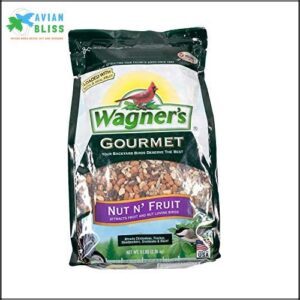
Wagner’s Gourmet Nut N’ Fruit blend packs five real ingredients into every 5-lb bag — no fillers, no shell fragments, just peanut pieces, sunflower kernels, dried fruit, and tree nuts working together. This fruit content is the key factor, drawing fruit-loving birds like woodpeckers and cardinals that ignore plain seed mixes entirely.
You can scatter it on a tray or load it into a tube feeder, offering versatility in placement. Either way, your yard gets busier without the mess, ensuring a cleaner, more vibrant outdoor space.
| Best For | Backyard bird enthusiasts who want to attract a wide variety of songbirds — from finches and chickadees to cardinals and woodpeckers — without the mess of shells or fillers. |
|---|---|
| Package Weight | 5 lb |
| Filler-Free | Yes |
| Price (USD) | $13.98 |
| Resealable Bag | Yes |
| Squirrel Deterrent | No |
| All Life Stages | Yes |
| Additional Features |
|
- Draws a diverse mix of birds, including fruit-loving species that ignore plain seed mixes
- No shell fragments or waste, so it’s clean enough for decks and patios
- Works in tube feeders or scattered on the ground, so it fits most setups
- A 5-lb bag can disappear in about a week with active feeders, so costs add up fast
- Pricier than basic seed blends, which may sting for heavy users
- Likely to attract squirrels and other wildlife, so you may need a deterrent setup
2. Kaytee Wild Bird Mealworm Food
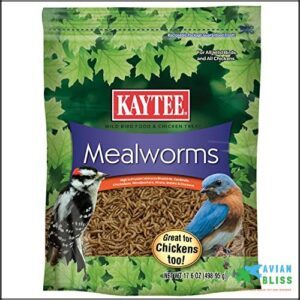
While protein keeps birds coming back during nesting season, Kaytee’s dried mealworms deliver exactly that — 47% crude protein and 25% fat, with zero additives or preservatives. It’s pure, oven-dried mealworm, nothing else.
Bluebirds, wrens, cardinals, and woodpeckers all respond well to it. You can offer it solo in a tray feeder or mix it into your existing seed blend.
The resealable 1.1-lb bag stays fresh and cuts down on packaging waste too.
| Best For | Backyard birders who want to attract protein-hungry species like bluebirds, robins, and woodpeckers — especially during nesting season. |
|---|---|
| Package Weight | 1.1 lb |
| Filler-Free | Yes |
| Price (USD) | $15.09 |
| Resealable Bag | Yes |
| Squirrel Deterrent | No |
| All Life Stages | Yes |
| Additional Features |
|
- Pure oven-dried mealworms with no additives — just one clean ingredient
- Works in a tray feeder on its own or mixed right into a seed blend
- Resealable bag keeps things fresh and cuts down on packaging waste
- Costs more per ounce than most seed or nut mixes
- The 1.1-lb bag might be overkill if you only feed birds occasionally
- Dried mealworms are a supplement, not a full diet — birds still need a balanced seed or insect mix
3. Browns Shelled Bird Peanuts
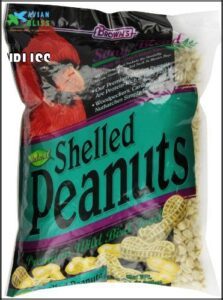
If mealworms are your protein play, peanuts are the fat-and-calorie powerhouse that keeps birds fueled through cold snaps and migration. Brown’s Shelled Peanuts are 100% peanut — no shells, no fillers. That means zero debris under your feeder.
With roughly 25% crude protein and 45% fat, these kernels attract cardinals, blue jays, woodpeckers, and nuthatches fast. Toss them in a mesh or platform feeder and watch the action pick up.
Store in a cool, dry spot to prevent rancidity.
| Best For | Backyard birders who want to attract a wide variety of birds — especially larger species like cardinals, blue jays, and woodpeckers — without dealing with shell mess. |
|---|---|
| Package Weight | 3 lb |
| Filler-Free | Yes |
| Price (USD) | Not listed |
| Resealable Bag | No |
| Squirrel Deterrent | No |
| All Life Stages | Yes |
| Additional Features |
|
- Pure peanuts, no fillers or shells — cleaner feeders and less waste on the ground
- High in fat and protein, giving birds serious fuel for cold weather and migration
- Works in mesh, platform, and specialty feeders, so it’s easy to fit into your current setup
- Pricier per pound than some alternatives, and a few buyers felt the bag looked smaller than expected
- Smaller birds may pass on them in favor of seeds, so it’s not a universal crowd-pleaser
- Stock can be spotty — a handful of reviewers mentioned it going out of stock or being hard to find
4. Wild Delight No Waste Bird Seed
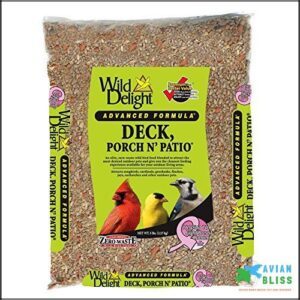
Wild Delight No Waste Bird Seed offers a premium blend of hulled sunflower kernels, peanuts, pistachios, and pumpkin seeds in a 5 lb bag. This mix eliminates shells, debris, and filler grains, ensuring near-zero cleanup and maximizing feeder efficiency.
The formula includes added vitamins and minerals, supporting birds’ nutritional needs year-round. Its broad species appeal makes it ideal for deck and patio feeders, attracting a diverse range of birds without unnecessary mess.
Priced at $17.99, it’s not the cheapest option, but its no-waste design and convenience justify the cost. For those prioritizing cleanliness and bird health, this blend delivers exceptional value.
| Best For | Bird lovers who want a clean, low-mess feeding setup on a deck or patio and don’t mind paying a little more for quality. |
|---|---|
| Package Weight | 5 lb |
| Filler-Free | Yes |
| Price (USD) | $17.99 |
| Resealable Bag | No |
| Squirrel Deterrent | No |
| All Life Stages | Yes |
| Additional Features |
|
- No shells or hulls means way less cleanup around your feeder
- Packed with vitamins and minerals, so your backyard birds are actually getting good nutrition
- Pulls in a solid variety of species — cardinals, woodpeckers, finches, chickadees, you name it
- At $17.99 for just 5 lbs, you’ll be restocking pretty often if you get a lot of feeder traffic
- Peanuts in the mix are basically a VIP invite for squirrels and raccoons
- No bulk size option, which is frustrating if you go through seed quickly
5. High Energy Wild Bird Suet
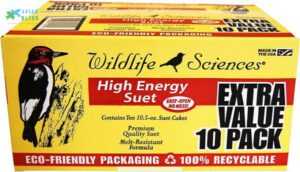
Cold snaps are tough on birds — they burn through energy fast just to stay warm. That’s where this high-energy suet pack earns its place. Each of the 10 individually wrapped cakes combines rendered beef suet with cracked corn and black-oil sunflower, delivering concentrated fat and calories when birds need them most.
The same calorie-dense fats that carry birds through winter cold also fuel the demanding work of nesting — a cycle worth understanding if you share your yard with doves and other Texas breeding birds.
The melt-resistant formula holds up in cooler temperatures, ensuring durability during winter feeding. The candy-bar-style wrappers simplify handling, keeping the process clean and straightforward.
At $14.99 for the pack, it offers solid value for winter feeding, balancing quality and affordability.
| Best For | Backyard bird enthusiasts who want a clean, convenient way to feed high-energy suet to wild birds through the cold winter months. |
|---|---|
| Package Weight | 7 lb |
| Filler-Free | No |
| Price (USD) | $14.99 |
| Resealable Bag | No |
| Squirrel Deterrent | No |
| All Life Stages | Yes |
| Additional Features |
|
- Individual candy-bar wrappers keep things mess-free and protect freshness until you’re ready to use each cake
- Melt-resistant formula holds up in cold weather so it stays put in the feeder instead of turning into a greasy mess
- Attracts a solid variety of birds — chickadees, woodpeckers, cardinals, blue jays — that really need the extra calories in winter
- Still pretty oily to handle, so you’ll want gloves nearby even with the wrappers
- A few buyers have noted their birds showed little interest, which could point to some batch inconsistency
- Costs more per ounce than bulk suet, so if you’re feeding heavily through a long winter, it adds up
6. Brown’s Squirrel Free Bird Seed
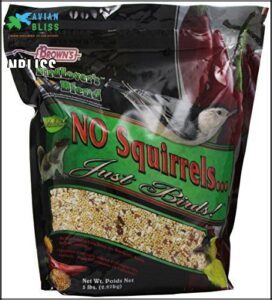
Brown’s Squirrel Free Bird Seed confronts the problem of squirrels raiding feeders head-on. It blends white safflower seeds and black oil sunflower with crushed chili peppers — a spicy deterrent for mammals, yet completely undetectable to birds. Cardinals, finches, and chickadees continue feeding undisturbed.
The formula contains no fillers, no artificial preservatives, prioritizing clean ingredients to attract songbirds while minimizing waste.
The 5 lb bag fits standard tube or hopper feeders and stores conveniently in a cool, dry location.
| Best For | Backyard bird lovers who are tired of squirrels emptying their feeders and want a natural, bird-safe solution. |
|---|---|
| Package Weight | 5 lb |
| Filler-Free | Yes |
| Price (USD) | Not listed |
| Resealable Bag | No |
| Squirrel Deterrent | Yes |
| All Life Stages | Yes |
| Additional Features |
|
- Chili pepper blend keeps squirrels away without harming or deterring birds at all
- Made with clean, all-natural ingredients — no fillers or artificial preservatives
- Attracts a solid variety of songbirds like cardinals, sparrows, and doves throughout the day
- Squirrel deterrence isn’t guaranteed — some sneaky squirrels don’t seem to mind the heat
- Birds love it so much the bag goes fast, so expect to reorder pretty often
- Results can vary depending on your local squirrel population, so a separate squirrel feeding station might help
7. Lyric Fine Tunes Bird Seed Mix
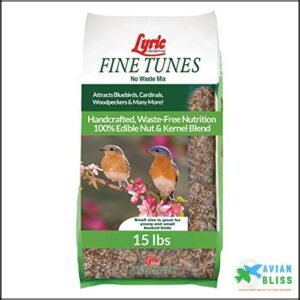
Lyric Fine Tunes Bird Seed Mix is designed for overlooked birds — small-beaked species, young arrivals, and finches or chickadees that struggle with chunky seeds.
Every ingredient is finely cut and fully edible, including peanut pieces, sunflower kernels, almond, pistachio, and hulled millet. The mix eliminates waste with no hulls, no shells, and no wasted space.
The 15 lb bag incorporates an oxygen-scavenger packet to preserve freshness.
Priced at $39.04, it costs more initially but delivers value as birds clean it out completely, leaving no leftovers.
| Best For | Backyard bird enthusiasts who want to attract small-beaked birds like chickadees, finches, and bluebirds without dealing with messy leftovers. |
|---|---|
| Package Weight | 15 lb |
| Filler-Free | Yes |
| Price (USD) | $39.04 |
| Resealable Bag | No |
| Squirrel Deterrent | No |
| All Life Stages | Yes |
| Additional Features |
|
- No shells, no hulls, no waste — birds eat every bit, so your yard stays clean
- Packed with nutrient-dense ingredients like peanut pieces, sunflower kernels, almonds, and pistachios to keep birds healthy year-round
- Oxygen-scavenger packaging keeps the mix fresh, even if you’re storing it outside for a while
- At $39.04 for 15 lbs, it’s noticeably pricier than your average bird seed bag
- The millet tends to be the last thing birds touch, so the bottom of the bag can feel like a letdown
- Some larger nut pieces can attract starlings or other bigger birds you might not be trying to feed
8. Wagners Nyjer Seed Bird Food
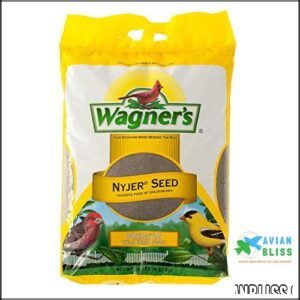
Wagner’s Nyjer Seed Bird Food is a finch magnet, attracting American Goldfinches, Purple Finches, and Pine Siskins. Each pound contains roughly 150,000 tiny seeds, delivering high-fat, high-energy nutrition in a compact feeder.
The seed is extra clean with no fillers, ensuring feeders stay unclogged and waste is minimal. Its purity maintains freshness and prevents buildup.
Store the product in a cool, dry spot after opening to preserve natural oils and potency, keeping the seed effective over time.
| Best For | Backyard bird enthusiasts who want to attract finches like Goldfinches, Purple Finches, and Pine Siskins without the mess of mixed-seed blends. |
|---|---|
| Package Weight | Varies |
| Filler-Free | Yes |
| Price (USD) | Not listed |
| Resealable Bag | Yes |
| Squirrel Deterrent | No |
| All Life Stages | Yes |
| Additional Features |
|
- Roughly 150,000 seeds per pound means a little goes a long way, so you’re not restocking constantly.
- No fillers or filler junk — just clean, pure nyjer that keeps feeders flowing and tidy.
- High fat and protein content gives small songbirds the energy they need year-round, especially in winter.
- Pricier than most mixed-seed options, and the cost has been creeping up over time.
- The zip-lock bag can be a pain to reseal properly, which could affect freshness if you’re not careful.
- It’s pretty much a finch-only food — don’t expect cardinals or wrens to show much interest.
9. Kaytee Wild Bird Cracked Corn
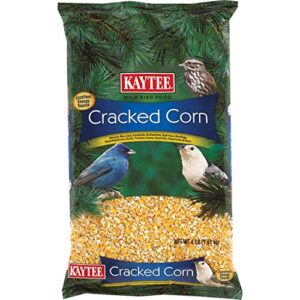
Cracked corn isn’t glamorous, but birds love it. Kaytee Wild Bird Cracked Corn offers a high-energy option that attracts doves, blue jays, and woodpeckers.
At $15.50 for a 5 lb bag, it’s budget-friendly and easy to scatter on ground trays or mix into custom blends. The cracked format digests quickly, providing birds with fast fuel—especially valuable during cooler months.
Refill feeders regularly and clean them often, as corn can mold faster than other seeds.
| Best For | Backyard birders who want an affordable, no-fuss feed that attracts a wide variety of birds and wildlife. |
|---|---|
| Package Weight | 5 lb |
| Filler-Free | No |
| Price (USD) | $15.50 |
| Resealable Bag | No |
| Squirrel Deterrent | No |
| All Life Stages | Yes |
| Additional Features |
|
- Great value at $15.50 for 5 lbs — easy on the wallet if you’re refilling often
- Cracked format is quick to digest and works well scattered on ground trays or mixed into seed blends
- Pulls in a solid range of birds like doves, blue jays, and woodpeckers
- Corn molds faster than most seeds, so you’ll need to clean feeders and refresh the supply more frequently
- Attracts raccoons, squirrels, and other mammals that can crowd out the birds you actually want to feed
- It’s a single ingredient, so it won’t cover all the nutritional bases for species with more specific dietary needs
10. Wagners Cardinal Bird Seed Blend
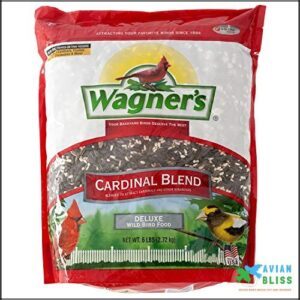
Wagner’s Cardinal Blend caters to cardinals’ picky eating habits with a 60/40 mix of black oil sunflower and safflower seeds. Priced at $13.48 for 6 lbs, this blend offers high-oil, energy-dense seeds with no filler padding the bag.
The safflower component naturally discourages squirrels, ensuring cardinals get first dibs on the feed.
Designed for convenience, the blend flows cleanly through hopper and platform feeders. Its velcro press-lok closure preserves freshness between refills.
| Best For | Backyard bird enthusiasts who want to attract cardinals and songbirds without the hassle of squirrels raiding the feeder. |
|---|---|
| Package Weight | 6 lb |
| Filler-Free | Yes |
| Price (USD) | $13.48 |
| Resealable Bag | Yes |
| Squirrel Deterrent | Partial |
| All Life Stages | Yes |
| Additional Features |
|
- The 60/40 sunflower-safflower mix is exactly what cardinals love, and the high-oil seeds give birds real, energy-dense nutrition
- Safflower naturally puts squirrels off, so the birds you actually want to see get more of the feed
- No filler seeds means less mess on the ground and fewer clogs in your feeder
- At $13.48 for 6 lbs, it costs more per pound than most generic mixes — busy feeders will burn through it fast
- Safflower deters most squirrels, but don’t count on it keeping every one away
- The velcro press-lok closure is handy at first, but it tends to lose its grip after a lot of use
Why Choose No-Filler Bird Seed
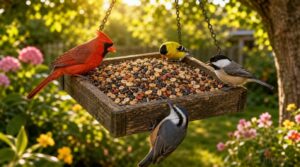
Switching to no-filler seed is one of the smartest moves you can make for your backyard birds. Every bag you buy goes toward actual nutrition — not cheap padding that ends up on the ground.
Here’s exactly why that matters.
Better Nutrition Per Bite
Every seed in a filler-free blend earns its spot. You’re getting real calorie concentration — sunflower kernels at 50% fat, shelled peanuts packed with protein density, and nyjer delivering fat quality finches love. That’s high-energy nutrition without the fluff.
- A shell-free blend means every bite is a micronutrient boost
- High-protein ingredients support feather health and molt recovery
- A nutritious blend free of fillers and GMOs keeps your birds genuinely thriving
Choosing blends that align with higher star ratings can boost overall nutrient density.
Less Feeder Waste
Shell-free blends cut that loss immediately. With seed size optimization built into filler-free mixes, every piece gets eaten rather than scattered.
Spill-resistant design and smart feeder placement strategy keep portions where they belong.
That’s real seed waste reduction — and the best no-waste bird seed delivers it without compromise.
Cleaner Feeding Areas
Less waste naturally leads to a cleaner yard. Shell-free seed means no hull piles rotting under your feeder.
Feeders with smooth interiors, anti-biofilm coatings, and tool-free disassembly make bi-weekly cleaning quick and painless.
Removable catch bins collect stray seed before it hits the ground, while extendable debris shields contain the mess.
A clean feeding environment keeps your space looking sharp.
Fewer Unwanted Pests
A clean yard does more than look good — it keeps pests at bay. No-mess, shell-free seed removes rotting debris that attracts rodents and insects.
Pair that with amber LED lighting nearby, airtight food storage, and smart moisture management, and you’re cutting off what pests actually want.
No waste means no invitation.
Higher Bird Attraction
When you switch to a no waste bird seed, the numbers speak for themselves — studies show a 30% jump in bird visitation. A shell-free blend with high-protein ingredients draws more species because birds recognize quality fast.
Adding strategic feeder height, perch visibility, native plantings, vibrant water displays, and morning feeding sessions transforms your yard into the neighborhood hotspot.
Key Ingredients Worth Buying
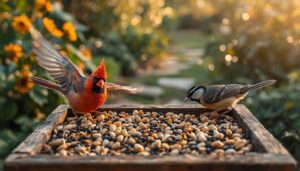
Not all seeds are created equal, and the ones you choose make a real difference in which birds show up and how healthy they stay. A quality no-filler blend starts with a handful of powerhouse ingredients that birds actually want to eat.
Here are the five worth putting in your feeder.
Sunflower Kernels
Sunflower kernels are the backbone of any quality, no waste bird seed blend — and for good reason. This shelled-free staple packs roughly 51% fat and 21% protein, giving birds serious fuel per bite.
Their impressive mineral profile includes magnesium, selenium, and zinc, plus strong antioxidant benefits from vitamin E. High in protein and naturally appealing, they deliver the real nutritional value of seeds without a single filler.
Shelled Peanuts
Shelled peanuts punch well above their weight in any shellfree blend. Each ounce delivers about 7 grams of protein and 14 grams of healthy fats — real energy birds actually use.
- No shells means no waste or bird seed mess
- Variety differences matter: Virginia types are larger; Spanish types run oilier
- Storage guidelines are simple: cool, dry, airtight containers prevent aflatoxin issues
Safflower Seeds
Safflower seeds are the quiet powerhouse of any shell-free blend — and squirrels largely ignore them. Their high linoleic oil composition makes them rich in unsaturated fats, delivering real energy with no mess. Birds love them; pests don’t.
Safflower seeds fuel birds with rich unsaturated fats while squirrels walk away uninterested
| Feature | Benefit |
|---|---|
| High-protein profile | ~16g per 100g serving |
| Drought resilience & shelf life | Stays fresh longer in storage |
Nyjer Seed
Nyjer seed is basically a cheat code for attracting finches. Its high oil ratio — between 35 and 40 percent — makes it a serious winter energy source when temperatures drop.
The tiny seed size means near-complete consumption, giving you truly waste-free bird seed and mess-free feeding.
Heat treatment prevents sprouting, and the built-in vitamin E boost promotes feather health all season long.
Mealworms and Suet
Mealworms and suet are winter energy powerhouses your insect-loving birds can’t get enough of when bugs disappear. Dried mealworms deliver a serious protein boost — up to 25 percent — while suet provides high-energy nutrition with dense fats.
Mealworm suet pellets offer pellet durability that resists warm-weather melting, mineral benefits for feather and bone health, and no mess, no waste bird seed feeding that keeps your feeder hygienic all season.
Match Blends to Backyard Birds
Not every bird wants the same thing, and feeding the wrong blend is like setting out pizza for someone who came for tacos. The good news is that once you know what each species is drawn to, picking the right mix gets surprisingly simple.
Here’s how to match your seed blends to the birds actually showing up in your yard.
Cardinals and Grosbeaks
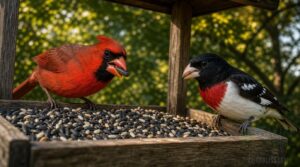
Cardinals and grosbeaks are built for serious seed work — their thick, conical bills make bill morphology comparisons obvious at a glance. Both thrive on a nutrient-dense seed mix of sunflower kernels and safflower year-round.
During Breeding Season Diet demands extra protein, a shell-free formula reduces mess while ensuring nutritional needs are met.
Plumage Color Signals and Territory Song Patterns clearly indicate these birds have claimed your feeder as their home base.
Chickadees and Titmice
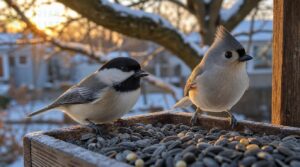
Chickadees and titmice are bold little birds with big personalities, forming mixed flock behavior groups and sharing alarm calls to signal danger. They move confidently between feeders, showcasing their social dynamics and vigilance.
Both species rely on cache retrieval through winter, storing food to survive colder months. This habit drives their winter diet shift, requiring calorie-dense fuel to sustain energy during harsh conditions.
A shell-free formula with sunflower kernels meets their nutritional needs perfectly, offering essential fats and proteins. This solution ensures simple, mess-free feeding while supporting the health of these small songbirds.
Finches and Siskins
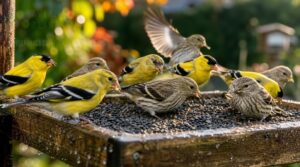
Unlike chickadees, finches and siskins bring a whole different feeding style to your yard. Their beak morphology — small, conical, precision-designed — cracks tiny seeds other birds ignore.
Here’s what works best:
- Nyjer seed suits their narrow bills perfectly
- Shell-free formula cuts mess instantly
- Nutrient-dense seed mix fuels migration patterns
- No waste bird seed matches near-complete consumption
- No mess blends support breeding cycles
Woodpeckers and Nuthatches
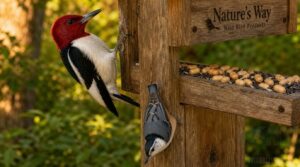
Woodpeckers and nuthatches exhibit distinct physical adaptations and feeding behaviors. Woodpeckers rely on Tail Bracing and Insect Foraging through Cavity Creation, while nuthatches employ a Climbing Technique to traverse bark headfirst. Despite their differences, both species thrive on suet and shelled nuts from Best No Waste Bird Seed blends.
These blends prioritize mess-free feeding by removing seed hulls, maintaining clean feeding stations. A shared preference for no-filler blends ensures optimal nutrition for both birds.
| Bird | Best Food |
|---|---|
| Woodpecker | Suet, shelled peanuts |
| Nuthatch | Sunflower kernels, suet |
| Both | No-filler blends |
| Drumming Communication | High-fat, energy-dense seed |
Drumming Communication signals further highlight the need for high-fat, energy-dense seed to support the birds’ active lifestyles.
Seasonal Feeding Needs
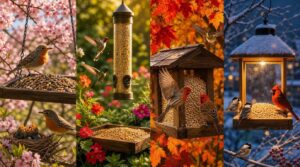
Seasons shape what your backyard birds actually need. In spring, a protein surge drives nesting demands—so a nutrient-dense seed mix bridges the gap when insects are scarce.
Summer calls for a moisture boost, while autumn builds fat reserves before migration. Winter’s caloric demand is real.
A shell-free, zero-waste formula keeps your no-waste birdseed working hard through every shift in seasonal bird feeding.
Serving No-Waste Seed Blends
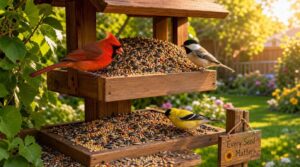
Getting the right seed is only half the battle — how you serve it makes all the difference.
The feeder you choose, how you store your blend, and how you handle squirrels all shape whether birds actually show up and stay. Here’s what you need to know to make every seed count.
Tube Feeder Compatibility
Tube feeders work best with a shell-free formula — no hulls means no jams. Port size matching matters here: look for wider ports around 0.75 inches to handle no-waste bird seed blends without blockages.
Seed size compatibility keeps flow smooth and ensures consistent, mess-free feeding.
Choose a feeder with an integrated perch design, easy cleaning access, and a secure mounting height of five to six feet.
Hopper Feeder Use
Hopper feeders give you gravity flow control and steady seed access — a perfect match for no waste bird seed. A shell-free formula moves freely through adjustable outlets, ensuring mess-free feeding without jams.
Look for these must-haves:
- UV protection on all housing components
- Moisture management seals for seal longevity
- Adjustable outlets for your preferred seed blend
- Easy-clean ports supporting bi-weekly maintenance
Tray Feeder Options
Tray feeders are the open invitation every backyard bird deserves. Platform-style trays handle whole nuts, larger seeds, and your best no-waste bird seed blends without jams.
| Feature | Benefit |
|---|---|
| Adjustable tray width | Fits multiple blend sizes |
| Magazine stack automation | Reduces refill interruptions |
| Vibration damping | Steadier seed flow |
| Calibration procedures | Accurate, consistent placement |
| JEDEC compatibility | Universal zero waste formula support |
A shell-free formula wastes nothing here.
Squirrel Deterrent Tips
Squirrels are relentless — but you can outsmart them. Place baffles at least 18 inches above pole-mounted feeders and position your no-waste bird seed station 7–10 feet from trees.
Weight-sensitive feeders with a weight-activated shroud mechanism shut seed ports automatically. Add capsaicin sprays and metal mesh barriers for backup.
Practice regular habitat cleanup to remove ground attractants.
Fresh Storage Practices
Good seed storage is the secret weapon most backyard birders overlook. Store no-waste bird seed in airtight containers with desiccant packs, maintaining 50–60% humidity in cool, dark storage.
Implement FIFO rotation to ensure older seed is used first, preserving freshness.
Oxygen scavenger packets and FreshLock technology actively prevent spoilage, extending seed longevity.
No-mess blends stay fresher longer, as absence of hull debris eliminates trapped moisture, a key culprit in degradation.
Frequently Asked Questions (FAQs)
What is the best homemade seed starting mix?
Mix sphagnum peat or coconut coir with a balanced perlite ratio for drainage. Add worm castings for gentle nutrients and lime for pH adjustment.
Moisture management is simple: aim for a wrung-out sponge feel.
Is it too late to plant seeds in October?
Not necessarily. Frost risk and soil warming are the real deciding factors.
With smart crop selection and regional timing, October planting can still work — especially with season extension tools protecting your seedlings.
How do filler-free blends compare in cost?
Filler-free blends cost more per pound upfront, but you’re not paying for empty fillers. No waste bird seed means birds eat everything, so your price per pound actually stretches further.
Can seed blends attract unwanted pests or animals?
Yes, seed blends can attract pests. Spilled seed creates rodent spillage attraction, ant trail formation, and cockroach lure risks.
A shell-free formula with no waste bird seed greatly reduces mess-free feeding problems.
What protein levels should quality blends provide?
Quality blends should hit 10–18% crude protein, with an ideal protein range of 12–16% for most backyard birds. Digestible protein level matters more than raw numbers — aim for 85% digestibility or higher.
Do organic seed options offer additional benefits?
Organic bird seed skips pesticide-free production shortcuts, offering enhanced antioxidant levels and soil health benefits.
Organic certification standards secure a nutrient-dense seed mix that’s genuinely eco-friendly feeding — no waste, no mess, just cleaner choices.
How quickly should birds consume opened seed?
Birds should consume opened seed within one to three days. Fresh seed, dry storage, and the right species mix all affect consumption speed.
Heat, moisture, and Feeder Fill Rate shift that window fast.
Can DIY blends match commercial no-filler quality?
Absolutely — DIY blends can match commercial no-filler quality. With the right ingredients, you achieve nutrient parity, batch consistency, and cost efficiency without compromising on results.
These blends maintain a shell-free formula and deliver nutrient-dense seed-mix results, ensuring no sacrifices in quality or performance.
How often should no-waste feeders be cleaned?
Clean no-waste feeders every two weeks under normal conditions. Increase this to weekly during humid summers or peak seasons.
Deep cleaning every two to four weeks ensures ports remain sanitary and supports year-round bird health.
Conclusion
Picture your feeder transformed—a steady stream of cardinals flashing red against bare branches, chickadees darting in without hesitation, woodpeckers claiming their spot with confidence. That’s what seed blends no fillers actually deliver.
No rotting milo piling up below. No rodents drawn to wasted grain. Just clean, purposeful feeding that works every single day.
Choose the right blend, store it fresh, and your backyard stops being a flyover zone—and starts becoming a destination.