This site is supported by our readers. We may earn a commission, at no cost to you, if you purchase through links.
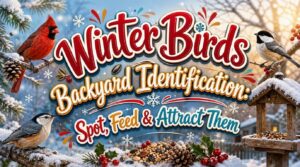
A flash of red lands on a snow-dusted branch outside your window, and for a moment, winter doesn’t feel so bleak. That’s the northern cardinal doing what it’s done for thousands of years—surviving, even thriving, in conditions most creatures flee.
Dozens of bird species stay active through the coldest months, and many of them will visit your yard if you give them a reason to.
Knowing who’s who makes the difference between a glance and a genuine connection. Winter birds backyard identification turns those fleeting moments into something you can actually build on, one species at a time.
Table Of Contents
Key Takeaways
- Reliable features—size, beak shape, tail markings, and movement style—are all you really need to tell winter backyard birds apart without memorizing a field guide.
- Matching the right food to the right feeder (suet for woodpeckers, nyjer for finches, sunflower seeds for cardinals and chickadees) is what drives real bird diversity through cold months.
- Not all winter visitors behave the same way—some are year-round residents, others are seasonal migrants, and a few only show up when food supplies collapse further north.
- Beyond feeders, small habitat tweaks like heated birdbaths, evergreen shelter, and smart feeder placement make your yard genuinely safer and more welcoming for winter birds.
Common Winter Backyard Birds
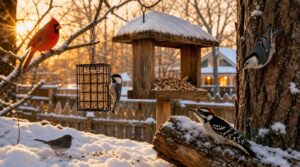
Winter doesn’t empty your backyard — it just changes the cast. A handful of birds stay close all season.
From chickadees to nuthatches, these loyal visitors keep things lively — and knowing which birds feed through winter helps you set the stage for the whole season.
Once you know who they are, you’ll spot them every time.
Here are the five you are most likely to see.
Northern Cardinal
Few winter birds stop you in your tracks like the Northern Cardinal. The male’s vivid red plumage and raised crest makes him unmistakable against snow-covered branches. Observe the bold bill contrast — his cone-shaped beak signals seed preferences perfectly suited to backyard bird feeding.
He’s a ground foraging bird, gleaning sunflower seeds beneath feeders. Occasionally, he breaks into territorial song, even on cold January mornings.
They prefer forest edges and dense shrub thickets, making backyard plantings ideal for attracting them.
Black-capped Chickadee
Unlike the cardinal’s bold silence, the Black-capped Chickadee announces itself constantly. That familiar chicka-dee-dee call isn’t just cheerful noise — Cap Call Variations actually signal predator alerts to nearby flockmates, a remarkably advanced communication for such a tiny bird.
During cold weather birdwatching, watch for these traits:
- Cache Strategies: They hide thousands of seeds across Microhabitat Preferences like bark crevices and branch tips
- Social Flocking Dynamics: Winter flocks share food location intel, boosting survival
- Energy Conservation: They lower body temperature overnight to burn fewer calories
Stock your seed feeders with black-oil sunflower seeds for reliable winter bird identification practice.
White-breasted Nuthatch
The White-breasted Nuthatch has a trick no other winter birds in your yard can match — Head Down Descents along bark, reading tree trunks like a map. This Bark Trunk Foraging specialist visits suet block feeders readily and joins mixed foraging flocks throughout the cold months.
| Trait | Detail |
|---|---|
| Cache Storage Behavior | Hammers seeds into bark crevices |
| Tree Cavity Nesting | Uses old woodpecker holes |
| Seasonal Vocal Variations | Nasal calls shift by region |
| Size | Compact, 5–5.5 inches |
Downy Woodpecker
The Downy Woodpecker brings a different energy to your feeders. At just 5.5 to 7.1 inches, it’s North America’s tiniest woodpecker — and surprisingly bold at suet cages.
Watch for these traits to nail bird identification:
- Bill Mechanics: Short, chisel-like bill drills shallow bark for larvae
- Tree Trunk Foraging: Climbs vertically, bracing with stiff tail feathers
- Drumming Behavior: Rapid pecking signals territory and cavity excavation
- Seasonal Color Shift: Males show a small red nape patch year-round
Winter bird feeding gets more rewarding when you recognize this compact visitor.
Dark-eyed Junco
Few backyard birds signal winter’s arrival quite like the Dark-eyed Junco. This small sparrow, barely 6 inches long, appears at feeders with clean gray plumage and a pale belly — then flashes dazzling white tail feathers when it lifts off.
Its stubby, conical beak is built for cracking seeds — a classic finch-like adaptation you can read more about in this guide to bird identification by beak shape.
| Feature | What You See | Why It Matters |
|---|---|---|
| White Tail Flash | White outer feathers visible in flight | Key for bird identification |
| Leaf Litter Foraging | Hops along ground, rarely perches high | Shows classic winter feeding behavior |
| Molting Patterns | Gray tones deepen through autumn | Helps with Subspecies Identification |
| Seasonal Flock Dynamics | Joins mixed backyard birds in loose groups | Increases sighting chances |
Identify Birds by Key Features
You don’t need a field guide memorized to tell birds apart — just a few reliable clues. Most winter birds give themselves away through a combination of size, color, beak shape, and how they move.
Once you know what to look for, these five features will do most of the work for you.
Size and Body Shape
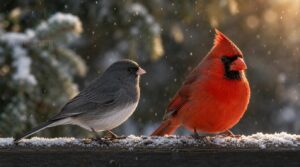
Size is one of your best clues when using a bird identification guide in winter. Common winter birds range from about 9 cm to 19 cm in body length. A junco’s slender stature silhouette and tail length proportion look nothing like a cardinal’s stout, large-headed frame.
Noticing features like wing-to-body ratio and bill size variation across backyard birds narrows down species lists quickly. These subtle differences in proportions and structure help distinguish even similarly sized birds during the colder months.
Winter Plumage Colors
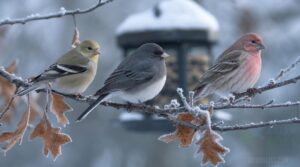
Winter birds don’t always wear their brightest colors when temperatures drop. Molt-induced color changes shift bold breeding hues into softer, more muted tones — classic camouflage hue shifts that help most common winter birds blend into bare branches and frosted ground.
Your backyard bird ID gets easier once you know these patterns. Subtle wing bar details, frosted feather edges, and regional plumage variation all appear in a good bird identification guide, revealing each species’ colorful plumage stories.
Beak Shape Clues
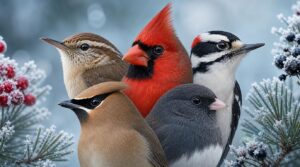
A bird’s beak tells you exactly how it makes a living. Conical seed-eaters like cardinals crack shells with brute force, while needle-like insectivores such as wrens probe bark with pinpoint precision.
Chisel woodpeckers drill deep for larvae, wedge fruit extractors pry apart husks, and medium broad shellers power through tough sunflower seeds.
Matching beak shape to foraging behavior sharpens your backyard bird ID instantly.
Tail and Wing Markings
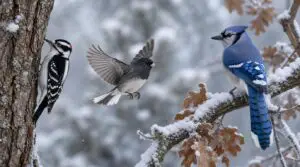
Tail and wing markings are like a bird’s signature — once you know what to look for, they’re impossible to miss. The wing bar configurations of the Downy Woodpecker stand out boldly against dark feathers, while the Dark-eyed Junco flashes white outer tail feathers mid-flight. The Blue Jay shows striking tail band patterns and wing markings year-round.
Seasonal molt effects can subtly shift these features, so your bird field guide stays essential.
Perching and Flight Style
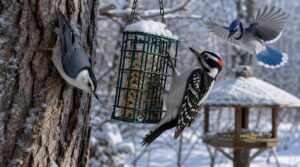
How a bird moves tells you almost as much as its colors do. The White-breasted Nuthatch defies gravity, walking headfirst down bark using toe-locking mechanics that tighten automatically on contact.
Downy Woodpeckers rely on similar landing mechanics when gripping suet cages.
Blue Jays use tail rudder control and wing gliding to swoop onto platform feeders.
Watching these flight maneuvers guides smarter bird feeder placement for winter birds.
Winter Birds at Feeders
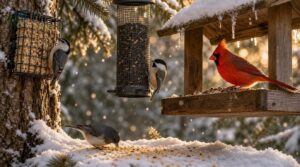
Different birds have very specific food preferences, and matching the right feeder to the right bird makes all the difference. Once you know what’s on the menu, your backyard can draw a surprisingly diverse crowd through even the coldest months.
Here’s a closer look at which birds favor which feeders.
Suet-loving Woodpeckers
Few backyard visitors match the drama of a woodpecker pair working a suet cage together. High-Fat and Insect-Infused Suet blends keep them coming back all season. Follow a Suet Rotation Schedule every 2–3 days to prevent rancidity.
Watch for these four signs of healthy winter bird feeding activity:
- Repeated short feeding bouts throughout the day
- Woodpecker Pair Dynamics at a single cake
- Territorial Winter Drumming Display near the feeder
- Shifts between suet and nearby seed stations
Sunflower Seed Visitors
Sunflower seeds are the crowd-pleaser of backyard feeding, with black-capped chickadees, house finches, and Northern Cardinals all exhibiting clear preference patterns. Each species asserts feeder dominance uniquely.
Cardinals arrive in groups during cold snaps, while juncos capitalize on seed spillover effects below. Meeting these energy demands with black-oil sunflower seeds sustains high visitor diversity throughout winter.
Nyjer Seed Finches
Smaller than a cardinal, but no less loyal to your yard — American Goldfinch, Pine Siskin, and Common Redpoll thrive on Nyjer seed through the coldest months. Its oil-rich nutrition fuels these tiny winter birds during sharp temperature drops.
Match feeder port size to their small beaks, and expect lively flock size patterns of 6–20 birds, especially when winter irruption triggers push Pine Siskin southward from failing northern cone crops.
Edge habitat preference means that placing tube feeders near hedgerows works best.
Peanut-eating Jays
Blue Jays bring a bold, deliberate energy to your large platform feeder. They test each peanut by weight before selecting it, rejecting any that feel too light — a clear example of smart energy budgeting.
Watch for their nut-caching vocalizations, as they announce storage sites nearby. This behavior highlights their strategic approach to survival.
Feeder dominance is real here, so, scatter seed separately for smaller winter birds. This ensures all species can access food without competition.
Ground-feeding Sparrows
Sparrows are the quiet workers of your winter yard. Species like the American Tree Sparrow and White-Throated Sparrow rely on scratch feeding — a two-footed shuffling motion that uncovers buried seeds beneath snow.
Snow foraging peaks during morning foraging activity, so scatter seed along brush edges for cover early. These ground feeders prefer open patches, making ground seed selection simple when you clear small areas for them.
Migration and Winter Residency
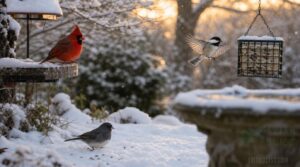
Not every bird you see in winter is just passing through — some never left at all. Others travel hundreds of miles to reach your backyard, while a few show up only when food runs short up north.
Here’s a closer look at what’s really going on with the birds outside your window.
Year-round Resident Birds
Some winter birds never leave — they’re holding down the fort while others head south. These year-round residents have mastered thermal insulation, food caching, and microhabitat shelters to survive cold months right in your backyard.
- Northern Cardinal defends territory through year-long territoriality
- Black-capped Chickadee relies on silent vocalization and cached seed
- White-breasted Nuthatch forages bark crevices near bird feeders
- Downy Woodpecker uses suet at backyard feeders consistently
Seasonal Winter Migrants
Not every visitor you see this winter has been there all year. Some species travel hundreds of miles, driven by shorter days and dwindling seasonal food sources. Migration Timing Shifts mean arrivals can vary by several weeks depending on climate route changes and weather fronts.
| Migrant Bird | Key Winter Behavior |
|---|---|
| Dark-eyed Junco | Arrives with first cold fronts |
| American Robin | Forms berry-feeding winter flocks |
| Red-breasted Nuthatch | Moves south during cone failures |
| Pine Siskin | Irruptive Seed Booms drive movement |
| American Goldfinch | Relies on Nyjer at stopover habitat |
Strong fueling strategies help migratory birds survive these journeys — Your feeders genuinely matter.
Irruptive Finch Visitors
Some winters, you’re feeders suddenly overflow with strangers. That’s Irruption Timing at work — when Cone Crop Failure strips Boreal Seed Sources bare, finches push south in waves.
Finch Flock Dynamics shift fast: Pine Siskins, Purple Finch, Evening Grosbeak, and Red Crossbill hit regional finch hotspots hard.
Stock sunflower seeds and keep bird feeders full — these hungry travelers won’t wait long.
Regional USDA Zones
Your USDA zone shapes which winter birds show up — and what they need to survive. Zone-specific plantings, microclimate shelters, and winter water design all depend on your local temperature range.
Three ways zone knowledge sharpens your setup:
- Regional seed mix — match offerings to cold weather bird behavior in your zone
- Temperature tolerance in birds — guides feeder placement and winter bird habitat decisions
- Zone-driven predator control — denser native plantings in colder zones reduce exposure risk
Mixed-species Winter Flocks
Think of a mixed-species flock as a small, self-organizing neighborhood watch. Chickadees and titmice anchor the group, sending alarm calls that every bird around them understands—that’s information transfer in action.
Chickadees and titmice anchor mixed flocks, broadcasting alarm calls every nearby bird instinctively understands
Nuthatches and juncos handle different layers of the habitat, which keeps resource partitioning smooth and flock dynamics stable.
Predator dilution means your feeder’s winter foraging crowd is actually safer together.
Create Better Birding Conditions
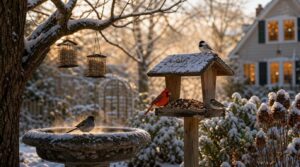
Attracting winter birds isn’t just about food — the right environment makes all the difference. A few simple changes to your backyard can turn it into a place birds actually want to stay.
Here’s what to set up before the coldest days hit.
Add Heated Bird Baths
Keeping a heated bird bath running through winter is one of the smartest things you can do for cold weather bird care. Liquid water is harder to find than food when temperatures drop, making it a genuine winter survival lifeline.
- Heating Element Types include immersion heaters and thermostatic units with Safety GFCI installation for outdoor use
- Energy-Efficient Modes cycle power only when needed, usually triggering around 35–40°F
- Material-Durability Choices like polyresin resist freeze-thaw cracking season after season
Place your winter water source near natural perches for best results.
Provide Evergreen Shelter
Water draws birds in, but shelter keeps them alive. Evergreen windbreaks and conifer canopy plantings do more than look green in January — they cut wind, block predators, and provide year-round roosting cover overnight. Dense shrub layers and simple brush piles offer similar protection. Roosting boxes with small entrance holes trap body heat surprisingly well.
Key shelter types and their benefits include:
| Shelter Type | Winter Survival Benefit | Best Placement |
|---|---|---|
| Evergreen trees | Wind and predator cover | North/northwest border |
| Dense shrub layers | Microclimate warmth | Near feeders |
| Roosting boxes | Overnight heat retention | Sheltered, east-facing wall |
Shelter plantings like conifers reward birds — and your birding — all season.
Use Safe Feeder Placement
Shelter gets birds through the night — smart feeder placement gets them through the day. Aim for Height Standards of about five feet, with Clear Sightlines in every direction so your winter visitors spot trouble early.
Keep distance from trees at least ten feet, install predator baffles on poles, and try rotating locations every week or two.
Regular feeder hygiene keeps your backyard welcoming all season.
Reduce Hawk Ambush Spots
Even the best feeder placement won’t fully protect your birds if a Red-tailed Hawk has a clear runway in. Raptors rely on open sightlines and elevated perches, so your goal is simple: break those up.
- Perch Limitation — Remove exposed branches within 15 feet of feeders
- Ground Cover Density — Plant dense shrubs within 8 feet of feeding areas
- Reflective Deterrents — Hang moving, wind-activated reflectors near feeders
- Decoy Rotation — Swap raptor decoys monthly so hawks don’t acclimate
- Feeder Height Strategy — Mount feeders at 5–6 feet to reduce ambush angles
Layering these raptor hunting behavior countermeasures makes your yard genuinely safer.
Keep Printable ID Guides
A good field guide printable doesn’t just sit in a drawer. Print yours on a foldable layout design, laminate it, and keep it near your feeders. Laminated field cards hold up through cold, wet mornings.
Use versions with color-coded legends, high-contrast fonts, and quick reference insets for fast identification. These design elements ensure durability and clarity in challenging conditions.
A printer-friendly bird species list handout simplifies winter wildlife observation — even for beginners. This accessible format transforms casual feeder visits into effortless learning opportunities.
Frequently Asked Questions (FAQs)
How do I find out what kind of bird is in my yard?
Start with size and shape, then notice the bill and plumage.
Photo ID apps, song recording tools, and local birding clubs can help you match bird calls to your bird species list fast.
How do I record and log winter bird sightings?
Think of each sighting as a small field report. Log the exact timestamp, location coordinates, and observer details, then rate your identification confidence.
Cloud sync keeps your seasonal birding records safe and shareable.
Which winter birds are most active at dawn?
Cardinals and chickadees lead the dawn chorus, singing within 15 minutes of sunrise.
Nuthatches and Downy Woodpeckers follow, foraging for bark and suet early to meet overnight energy needs before midday competition peaks.
Can window collisions be prevented during winter months?
Yes, window collisions during winter months are preventable.
Feather Friendly Films cuts strikes by around seventy percent.
Exterior Netting, Window Angle Adjustment, Visual Barrier Plantings, and Seasonal Light Management all protect your winter visitors effectively.
Do winter birds recognize individual human caregivers?
Some resident winter birds do recognize familiar caregivers through visual cues, caregiver consistency, and routine feeding patterns.
— a quiet reward for showing up daily.
How does snow depth affect ground bird foraging?
Deep snow cuts off seed access fast.
Birds shift to sheltered microhabitats, form flocks to locate exposed patches, and rely heavily on low platform feeders when snow crust penetration and energy costs make open ground foraging nearly impossible.
Conclusion
Every bird that visits your yard this winter carries a lifetime of survival instincts in a body smaller than your fist. Winter backyard bird identification gives you the key to reading those instincts—the chickadee’s quick descent, the nuthatch’s upside-down grip, the junco’s pale flash at takeoff.
Set up your feeders, add a heated bath, and keep a field guide close. These steps transform your observation into understanding, revealing the purpose behind every movement.
You won’t just watch winter anymore. You’ll understand it.