This site is supported by our readers. We may earn a commission, at no cost to you, if you purchase through links.
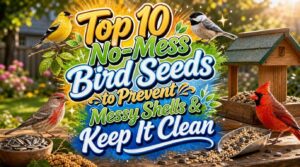
That soggy mat of cracked hulls beneath your feeder isn’t just ugly—it’s a slow invitation to rodents, mold, and a lawn full of rogue sprouts.
Most standard seed mixes pack in cheap fillers like milo and cracked corn that birds toss aside without a second glance, leaving behind a two‑centimeter crust of waste you’ll be sweeping up all weekend.
The fix isn’t a better broom. Switching to hulled, shell-free seed cuts that ground debris by up to 70%. Birds eat every last piece because there’s nothing to discard.
Table Of Contents
- Key Takeaways
- How No-Mess Seed Stops Shell Mess
- Why Standard Seed Creates Mess
- Best Shell-Free Seed Ingredients
- Birds That Prefer No-Mess Seed
- Top 10 No-Mess Bird Seeds
- 1. No Waste Bird Seed Mix
- 2. Wild Bird Nut And Fruit Blend
- 3. Wild Bird No Waste Feed
- 4. Wild Bird Food Waste Free Blend
- 5. High Quality Wild Bird Seed
- 6. Gourmet Wild Bird Food Mix
- 7. Wild Bird Sunflower Seed Mix
- 8. Lyric Peanut Wild Bird Seed
- 9. Natural White Millet Bird Seed
- 10. Kaytee Wild Bird Food Seed
- Keep Feeding Areas Cleaner
- Frequently Asked Questions (FAQs)
- Can no-mess seeds sprout under my feeder?
- Do squirrels prefer shelled or unshelled seeds?
- How long do no-mess seeds stay fresh?
- Are no-mess seeds safe for young birds?
- What weather conditions affect no-mess seed quality?
- Can eggshells be used to start bird-friendly plants?
- Do hulled seeds cost more than standard mixes?
- Which feeders work best with no-mess blends?
- How do weather conditions affect hulled seed freshness?
- Are no-mess blends safe for backyard squirrels?
- Conclusion
Key Takeaways
- Switching to hulled, shell-free seed cuts ground debris by up to 70%, so your deck and patio stay genuinely clean without constant sweeping.
- Cheap filler grains like milo and cracked corn sit untouched under your feeder, attracting pests and sprouting weeds — drop them entirely for seeds birds actually eat.
- Hull-free seeds cost 10–40% more upfront, but you waste less per bag, so the long-term value easily outweighs the extra cost.
- Pair your no-mess seed with a tray feeder, clean up spills within two hours, and check for mold every few days to keep your whole setup running cleanly.
How No-Mess Seed Stops Shell Mess
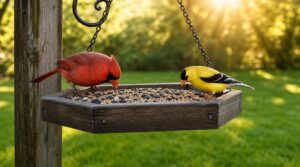
No-mess seed works because there’s simply nothing left to throw away. Birds eat every bit, so shells and debris don’t pile up under your feeder. Here’s exactly how that plays out for your yard.
If you want to skip sunflower shells entirely, organic bird food without sunflower seeds keeps your setup just as clean while attracting a surprising variety of birds.
Hulled Seeds Remove Debris
When you switch to hulled seeds, the mess nearly disappears. Seed hulls are already removed before the blend even reaches your feeder.
Birds eat the whole seed — nothing gets cracked, split, or tossed aside. That means less ground debris builds up on your deck or patio.
NoMess blends keep your outdoor space genuinely clean, with minimal shell litter left behind. This process works because the seeds have the outer seed coat removed.
Fewer Shells Under Feeders
The difference shows up fast once you hang a no-mess feeder. Reduced ground debris drops by as much as 70 percent compared to whole seed mixes. That’s not a small change — that’s your patio staying genuinely cleaner between visits.
Here’s what shell-free seeds do for your feeding area:
- Cleaner patio surfaces stay free of cracked hull fragments
- No seed hull removal means birds eat everything they touch
- Less hull cleanup after every feeding session
- Improved feeder maintenance becomes easier without compacted shell buildup
- Enhanced bird nutrition since every seed delivers full energy
NoMess blends make mess-free feeding the new normal under your feeder.
Less Sweeping and Cleanup
Once the shells stop piling up, you’ll notice something else — you’re barely sweeping anymore. Spilled seed cleanup time drops by roughly half when you switch to NoMess seed blends.
Shell-free seeds mean birds eat what they touch, leaving almost nothing behind. A quick check every few days keeps your feeder cleanliness on track with almost zero effort.
Cleaner Decks and Patios
Your deck tells the story. Reduced hull debris means no more crunchy layer of shells coating your boards each morning.
No-mess seed cuts surface litter by up to 90 percent, and most homeowners notice a visibly cleaner patio within 24 hours. Top-loading feeders designed for mess-free feeding keep seeds contained, so staining on wood or composite surfaces stays minimal.
Reduced Lawn Seed Waste
Most fallen seed never gets eaten — it just sits there, sprouting weeds or attracting unwanted visitors. No-waste mix solves this quietly but effectively.
- Hulled seeds won’t germinate if they hit the ground
- Seed spill prevention keeps your lawn looking tidy
- Shell-free seeds eliminate patchy weed growth
- Eco-friendly seeding reduces overall yard waste
- Seed waste management means less cleanup after every feeding
Why Standard Seed Creates Mess
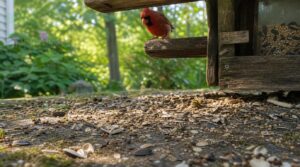
Standard seed mixes look like a good deal until you see what they actually leave behind. The mess isn’t random — it comes down to a few specific problems that add up fast. Here’s what’s really going on beneath your feeder.
Hulls Birds Discard
Watch a finch work a sunflower seed for two seconds, and you’ll understand the problem. It cracks the hull, drops it, and moves on.
Multiply that by dozens of birds daily, and hull accumulation builds fast — sometimes reaching two centimeters thick beneath busy feeders. That layer of discarded shells isn’t just unsightly; it compresses grass and blocks airflow to the soil below.
Daily hull accumulation under busy feeders can reach two centimeters thick, compressing grass and suffocating soil below
Filler Grains Birds Ignore
Most cheap seed mixes are packed with fillers — milo, cracked corn, and wheat — that birds simply push aside.
- Milo sits untouched by most songbirds
- Cracked corn draws mainly pigeons and starlings
- Wheat adds bulk with little nutritional payoff
- Canary seed gets buried under preferred seeds
- Ignored fillers pile up fast beneath feeders
A NoMess Blend skips these entirely, keeping only shell-free seeds birds actually want.
Spilled Seed Attracts Pests
Spilled seed is basically an open invitation for pests. Mice, ants, and beetles zero in on fallen seed fast — it’s a reliable food source they’ll return to daily.
Damp seed breeds mold, drawing flies and gnats. That buildup also creates feeder ground protection problems, since rotting debris shelters pests year‑round.
No mess bird feeding simply removes the problem at the source.
Sprouting Weeds Beneath Feeders
Standard seed mixes quietly build a seed bank beneath feeders. Filler grains like milo and red millet spill constantly, then germinate within 7–14 days on moist soil.
That’s how a clean yard turns weedy fast. Shell-free seeds won’t sprout when they fall, and placing feeders over gravel or mulch suppresses what little does land there.
Lower Edible Seed Value
Think about what you’re actually getting when a bag of conventional mix is half hulls and filler. Edible seed value drops fast.
Birds toss aside milo and cracked corn, leaving most of what you paid for on the ground. Shell‑free seeds flip that equation — every ounce goes toward real bird nutrition, not waste.
Best Shell-Free Seed Ingredients
Not all seeds are created equal, and the ingredients in your blend make all the difference. The best no-mess mixes rely on a handful of key components that birds actually eat. Here’s what to look for.
Hulled Sunflower Chips
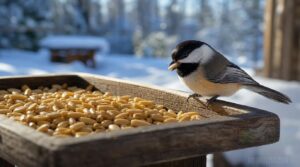
If there’s one ingredient that truly earns its place in a no-mess blend, it’s hulled sunflower chips. The hull is already gone, so birds get straight to eating — no cracking, no tossing shells onto your deck.
That means bird feeder mess drops fast. These shell-free seeds pack high fat content and rich vitamin E, making them especially valuable for winter feeding benefits.
Shelled Peanuts
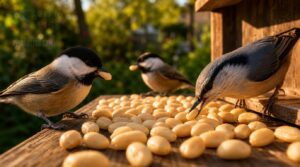
Shelled peanuts bring serious energy to any shell-free seed blend. Each ounce delivers roughly 7 grams of protein and healthy fats — no cracking required from birds or you. They’re a clean, mess-free feeding win.
- High-fat, high-protein fuel for cold-weather birds
- No shells mean zero hull debris under feeders
- Rich in niacin and vitamin E
- Store in a cool, dry place to prevent rancidity
Hulled Millet
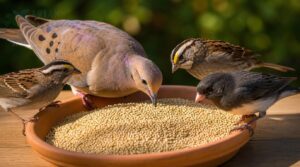
Peanuts bring the protein punch, but hulled millet quietly does the heavy lifting for smaller birds. The outer husk is already removed, so there’s zero shell debris landing on your deck.
Ground feeders like doves, sparrows, and juncos absolutely love it. It’s a true shell-free seed that keeps your feeding area tidy with no effort.
Nut and Fruit Blends
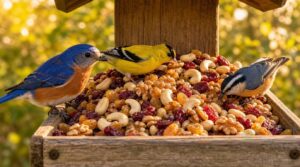
Millet controls the ground crowd well, but nut and fruit blends bring something extra to your feeder lineup. These shell-free seeds skip the mess entirely while packing real nutritional variety.
- Nut protein levels support young birds through growth
- Dried fruit texture attracts a wider range of species
- Omega fatty benefits from walnuts improve feather health
- Blend aroma enhancement keeps seed fresher, longer
No Cracked Corn Fillers
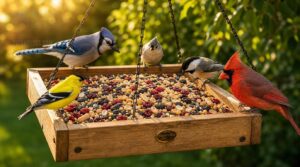
Nut and fruit blends are great, but don’t overlook what you’re removing from the mix.
Skipping cracked corn is one of the smartest moves for no mess bird feeding. Corn fillers add bulk without real nutrition — birds scatter them, and the debris piles up fast.
Shell-free seeds built around hulled alternatives keep your feeding area tidy and every bite counts.
Birds That Prefer No-Mess Seed
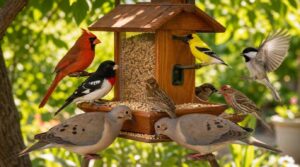
Not every bird is picky, but some species really do show up more when hulled seeds are on the menu. No-mess blends tend to draw a surprisingly wide mix — from tiny finches to ground-feeding doves. Here are the birds you’re most likely to see crowding your feeder when you make the switch.
Goldfinches and Finches
Few birds make your feeder look as lively as a male American goldfinch in full summer yellow. That bright plumage and small conical beak are built for one thing — cracking seed heads.
Hulled sunflower chips are a perfect match, since goldfinches strongly prefer them over whole seeds. Shell-free seeds mean more eating, less effort, and a cleaner feeding station for you.
Juncos and Sparrows
Watch for that white tail flash — it’s your sign that juncos have found your feeder.
These small ground foragers stick close to the earth, scratching through leaf litter during winter foraging runs.
They share that habit with sparrows, and both birds thrive on hulled millet and shell-free seeds, making mess-free feeding easy for you.
Doves and Quail
Doves and quail are natural ground feeders, and hulled millet is practically made for them.
Both birds scratch and peck low, foraging through open soil and leaf litter near cover:
- Doves roost in trees but feed in open spaces
- Quail nest on the ground, hidden in dense shrubs
- Both thrive on shell-free seeds with zero cleanup waste
Towhees and Bushtits
Two small birds that really reward no-mess feeding are towhees and bushtits.
Towhees scratch through leaf litter with a two-footed backward hop, uncovering seeds hidden beneath the surface.
Bushtits arrive in tight, chattering flocks, moving fast through shrubs.
Both species eat hulled seeds easily, and neither leaves shell debris behind.
Cold-weather Seed Eaters
Winter is when no-mess feeding really earns its keep. Cold-weather seed eaters like finches, sparrows, and chickadees flock to feeders when insects disappear and energy demands spike.
They need energy-dense seeds fast — hulled sunflower chips and shelled millet deliver that without wasted effort. Shell-free seeds mean birds eat more and you clean up less, even on the coldest mornings.
Top 10 No-Mess Bird Seeds
Once you know what to look for, picking the right no-mess seed gets a lot easier. These ten options cut down on waste while keeping your birds well-fed and your yard tidy. Here’s what made the list.
1. No Waste Bird Seed Mix
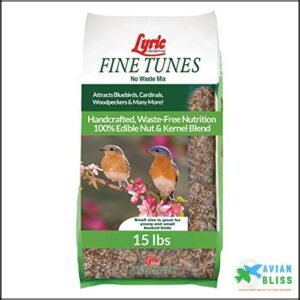
No Waste Bird Seed Mix is exactly what it sounds like — every piece in the bag is edible. There are no hulls, no fillers, just clean kernels your birds will actually eat.
You get 100% edible seed mass, which means less mess under your feeder and more nutrition per pound.
It’s a simple swap that makes a real difference, especially if cleanup under your feeder has been driving you crazy.
| Best For | Backyard bird lovers who want to attract a wide variety of songbirds while keeping their yard clean and tidy. |
|---|---|
| Shell Free | Yes |
| Mess Reduction | Zero waste |
| Primary Ingredient | Mixed seeds |
| Bag Weight | Not specified |
| Target Birds | Cardinals, chickadees, woodpeckers |
| Squirrel Risk | High |
| Additional Features |
|
- Zero waste formula — birds eat every piece, so there’s no mess or rotting seed piling up under your feeder
- Packed with nutrient-rich nuts and seeds that support bird health year-round, especially through winter
- Works with most common feeder types and pulls in a great mix of species like cardinals, chickadees, and woodpeckers
- Pricier than your standard bulk seed bag, so it adds up if you’re filling feeders often
- Small, light pieces can blow away or clump together in open tray feeders when it’s wet outside
- Contains millet, which not all birds in every region will eat — and the mix can draw squirrels and starlings
2. Wild Bird Nut And Fruit Blend
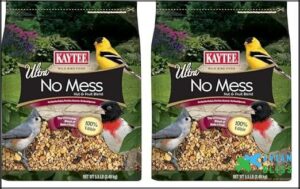
If the No Waste Seed Mix keeps things tidy, the Wild Bird Nut and Fruit Blend takes it a step further by adding real variety to your feeder.
This Kaytee blend packs hulled sunflower seeds, shelled peanuts, and dried fruits — cranberries, cherries, blueberries, and apples — into a resealable 5.5 lb bag. Every piece is edible, so shells aren’t piling up on your deck.
Cardinals, chickadees, and woodpeckers can’t resist it, especially when temperatures drop.
| Best For | Bird lovers who want to attract a wide variety of species without the mess of shells piling up on their deck or lawn. |
|---|---|
| Shell Free | Yes |
| Mess Reduction | Minimal dust only |
| Primary Ingredient | Hulled sunflower & nuts |
| Bag Weight | 5.5 lb |
| Target Birds | Cardinals, chickadees, woodpeckers |
| Squirrel Risk | High |
| Additional Features |
|
- Shell-free mix means less cleanup — no hulls rotting on your patio or smothering your grass
- The dried fruit and nut combo draws in a solid variety of birds, from finches and chickadees to cardinals and woodpeckers
- Resealable zip-top bag keeps the blend fresh and protected between fills
- Squirrels and chipmunks love the nuts and fruit just as much as the birds do, so you may need a squirrel-proof feeder
- It costs more than a basic seed mix, which adds up if you’re refilling frequently
- Not totally mess-free — some dust and fine particles will still settle around your feeder
3. Wild Bird No Waste Feed
Fruits add a fun twist, but sometimes you just want reliable, no-nonsense nutrition that every bird can enjoy.
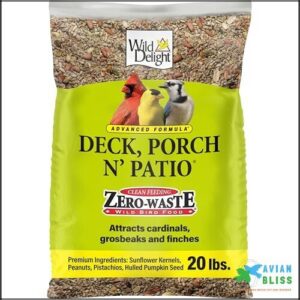
Wild Bird No Waste Feed delivers exactly that. It’s a 100% hull-free blend packed with hulled sunflower chips, shelled peanuts, and hulled millet — nothing your birds won’t eat. No filler, no debris piling up underfoot.
Your deck stays clean, and your feeder stays busy. It’s straightforward seed done right.
| Best For | Backyard bird enthusiasts who want a clean, waste-free feeding experience that attracts a wide variety of songbirds to decks, patios, and platform feeders. |
|---|---|
| Shell Free | Yes |
| Mess Reduction | Zero debris |
| Primary Ingredient | Sunflower chips & peanuts |
| Bag Weight | 20 lb |
| Target Birds | Cardinals, jays, finches, nuthatches |
| Squirrel Risk | High |
| Additional Features |
|
- No shells or fillers means zero mess under your feeder — your deck actually stays clean.
- Packed with natural ingredients and a vitamin/mineral complex, so your birds are getting real nutrition, not just empty calories.
- Pulls in a solid mix of species — cardinals, jays, finches, nuthatches, grosbeaks — so there’s always something to watch.
- Large seeds and nuts can be tricky for smaller birds like goldfinches or chickadees to manage.
- Only comes in a 20 lb bag, which is a lot to lug around if you have a smaller setup.
- The rich blend tends to attract squirrels and bigger, bossier birds like starlings and grackles.
4. Wild Bird Food Waste Free Blend
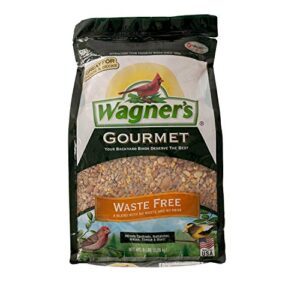
Sometimes simple wins. The Wagner’s 82056 Gourmet Waste Free Wild Bird Food keeps things clean with a sunflower nut blend that’s 100% edible — no hulls, no filler, no debris collecting on your deck.
Every piece in the bag is something your birds will actually eat. Cardinals, chickadees, and jays all show up for it. At $12.98 for 5 lbs, it’s a clean, practical pick that earns its place at your feeder.
| Best For | Bird lovers who want a clean, no-mess feeding setup on decks or patios and enjoy watching a variety of songbirds year-round. |
|---|---|
| Shell Free | Yes |
| Mess Reduction | No hulls |
| Primary Ingredient | Sunflower nut blend |
| Bag Weight | 5 lb |
| Target Birds | Cardinals, chickadees, jays |
| Squirrel Risk | Moderate |
| Additional Features |
|
- 100% edible blend means no hulls or debris piling up under your feeder
- Attracts a solid mix of birds — cardinals, chickadees, jays, wrens, and more
- High in protein and fat, so it’s actually good for the birds at any time of year
- Larger corn and peanut pieces can turn off smaller birds like mourning doves
- Pricier than your average seed mix at $12.98 for 5 lbs
- No best-by date on the bag, so freshness is a bit of a guessing game
5. High Quality Wild Bird Seed
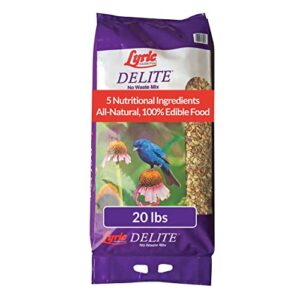
If you want premium ingredients without the mess, Lyric’s 20 lb Nut and Seed Wild Bird Mix is worth a look. It combines hulled sunflower chips, peanuts, pecans, pistachios, and pumpkin seeds — all fully edible, no hulls hiding inside.
That 100% edible blend means nothing wasted on the ground. Cardinals, chickadees, woodpeckers, and finches all come in for it. At 20 lbs, it keeps your feeder full and your patio clean longer between refills.
| Best For | Backyard birders who want to attract a wide variety of birds without dealing with shell mess or wasted seed on the ground. |
|---|---|
| Shell Free | Yes |
| Mess Reduction | No hulls |
| Primary Ingredient | Sunflower chips & nuts |
| Bag Weight | 20 lb |
| Target Birds | Cardinals, woodpeckers, finches |
| Squirrel Risk | High |
| Additional Features |
|
- 100% edible blend means no hulls, no mess, and less cleanup around your feeder
- Draws in a great mix of birds — cardinals, woodpeckers, finches, chickadees, and more
- Works with almost any feeder type, so you’re not locked into one setup
- Peanut halves can be too big for smaller songbirds, so some seed may go untouched
- Squirrels love it too, which can be a problem if your feeder isn’t critter-proofed
- It costs more than your average birdseed mix, so it’s a bigger investment upfront
6. Gourmet Wild Bird Food Mix
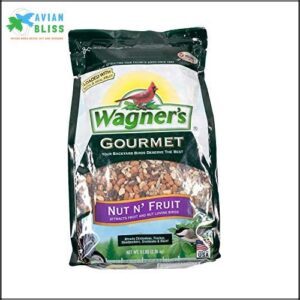
Wagner’s Gourmet Wild Bird Food Mix brings five nutrient-rich ingredients together in one resealable 5-lb bag. You get hulled sunflower chips, peanut hearts, dried fruit pieces, and more — all shell-free.
That mix of protein, fat, and natural sugars helps birds through cold snaps and migration alike. Cardinals, finches, chickadees, and woodpeckers all visit. No hulls means no debris on your deck, and the resealable bag keeps things fresh between fills.
| Best For | Backyard bird watchers who want to attract a wide variety of songbirds without the mess of shells and hulls. |
|---|---|
| Shell Free | Yes |
| Mess Reduction | No debris |
| Primary Ingredient | Hulled sunflower chips |
| Bag Weight | 5 lb |
| Target Birds | Cardinals, finches, woodpeckers, blue jays |
| Squirrel Risk | High |
| Additional Features |
|
- Draws a diverse crowd — cardinals, finches, woodpeckers, blue jays, and more all show up regularly.
- Shell-free blend means no debris on your deck, porch, or patio.
- Works year-round and in most feeder types, including ground scatter for low-foraging birds.
- A 5-lb bag can disappear in a week if you’ve got a busy feeder, so costs add up fast.
- Pricier than basic seed mixes, which might sting for anyone feeding at scale.
- Squirrels and other wildlife love it too, so you may need a deterrent setup.
7. Wild Bird Sunflower Seed Mix
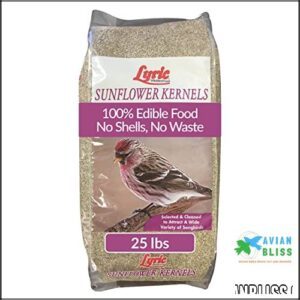
If you want a simple, single-ingredient option, this one’s hard to beat.
Lyric’s 100% sunflower kernels come pre-hulled, so birds get straight to eating — no cracking, no wasted effort. The 25-lb bag works well for busy feeders, and the high fat and protein content keeps cardinals, finches, and chickadees coming back.
No hulls mean no mess on your deck or patio, and fallen seeds won’t sprout into unwanted weeds.
| Best For | Backyard bird enthusiasts who want a clean, no-mess feeding setup that attracts a wide variety of songbirds year-round. |
|---|---|
| Shell Free | Yes |
| Mess Reduction | Zero shells |
| Primary Ingredient | Sunflower kernels |
| Bag Weight | 25 lb |
| Target Birds | Cardinals, finches, chickadees |
| Squirrel Risk | Moderate |
| Additional Features |
|
- Pre-hulled kernels mean zero shell waste and a much cleaner feeding area
- High fat and protein content gives birds real nutritional value, especially in colder months
- Works with almost any feeder type — tube, hopper, mesh, tray, you name it
- Pricier than standard sunflower seed, so it might not be the best fit for casual or budget-conscious feeders
- The 25 lb bag is a lot — overkill if you only have one small feeder
- Occasional reports of debris like mud in the bag, and trace peanuts could be a concern for some setups
8. Lyric Peanut Wild Bird Seed
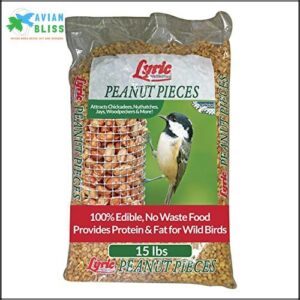
Peanuts are one of the most calorie-dense foods you can offer wild birds — and Lyric Peanut Wild Bird Seed delivers that energy without any shell mess. Each bag holds 15 lbs of shelled peanut pieces, so birds like chickadees, jays, woodpeckers, and titmice can grab a bite instantly.
With roughly 25% protein and 40% fat, these pieces fuel birds through cold mornings and busy nesting seasons. No shells means no litter, no sprouting, and a cleaner yard with every visit.
| Best For | Backyard bird watchers who want to attract a wide variety of birds — from woodpeckers to jays — without the mess of shells or wasted seed. |
|---|---|
| Shell Free | Yes |
| Mess Reduction | No shells |
| Primary Ingredient | Shelled peanuts |
| Bag Weight | 15 lb |
| Target Birds | Chickadees, jays, woodpeckers, titmice |
| Squirrel Risk | High |
| Additional Features |
|
- Pure shelled peanuts mean zero waste and a cleaner yard — no shells piling up under your feeder
- High protein and fat content gives birds real, sustained energy through winter cold and spring nesting
- Works with most feeder styles (tube, mesh, hopper, platform, tray), so you likely don’t need to buy anything new
- Whole peanuts need feeders with larger openings, so smaller tube feeders might not work
- Wet weather can cause mold to develop quickly, meaning you’ll need to check the feeder regularly after rain
- Squirrels and chipmunks love peanuts just as much as birds do, so you may need extra deterrents to keep them out
9. Natural White Millet Bird Seed
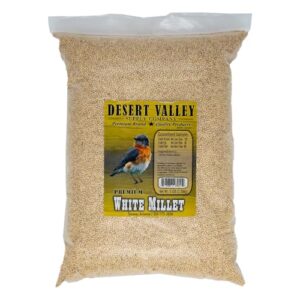
If you’re feeding small birds, white millet is a quiet workhorse in any feeder setup. Desert Valley Supply’s Natural White Millet comes triple-cleaned and hulled, so there’s barely any debris landing on your deck. It’s 100% proso millet — no fillers, no husks. Sparrows, juncos, doves, and finches genuinely love it.
Scatter it on a flat tray or low feeder and watch ground-feeders flock in, especially during colder months when energy demands spike.
| Best For | Backyard birders who want to attract small ground-feeding songbirds like sparrows, juncos, finches, and cardinals. |
|---|---|
| Shell Free | Yes |
| Mess Reduction | Minimal debris |
| Primary Ingredient | White millet |
| Bag Weight | Not specified |
| Target Birds | Sparrows, juncos, doves, finches |
| Squirrel Risk | Low |
| Additional Features |
|
- Triple-cleaned, so you get barely any debris or foreign material mixed in
- 100% pure proso millet — no fillers, no GMOs, no chemical residues
- Great for ground scattering or low-profile feeders, which encourages natural foraging
- Shipping boxes tend to be flimsy, so bags can arrive damaged
- Small seed size means larger birds won’t get much out of it
- Single-seed product, so birds that need more dietary variety may need a supplemental mix
10. Kaytee Wild Bird Food Seed
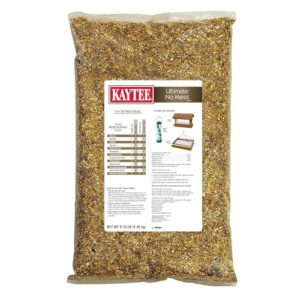
Kaytee’s Wild Bird Food wraps up this list as a solid all-around option. With 9.75 lb of hulled sunflower, white millet, and shelled peanuts, it’s built to attract cardinals, chickadees, finches, and woodpeckers year-round.
The hull-free formula keeps your feeder area tidy and cuts down on ground clutter.
One heads-up: the cracked corn can sprout if seed spills, so pair it with a feeder tray to catch any stray kernels.
| Best For | Backyard bird enthusiasts who want to attract a wide variety of songbirds while keeping their yard and feeders clean and mess-free. |
|---|---|
| Shell Free | Yes |
| Mess Reduction | Zero hulls |
| Primary Ingredient | Sunflower hearts & peanuts |
| Bag Weight | 9.75 lb |
| Target Birds | Cardinals, finches, chickadees, woodpeckers |
| Squirrel Risk | High |
| Additional Features |
|
- Hull-free seeds mean zero shell debris on your patio, flowerbeds, or feeder tray
- Attracts a solid mix of popular birds — cardinals, finches, chickadees, and woodpeckers
- High-energy ingredients like shelled peanuts and hulled sunflower keep birds coming back
- Cracked corn can sprout if seed spills, so you’ll want a tray or tidy feeder setup
- May not appeal as strongly to bird populations in certain regions like parts of California
- Won’t deter squirrels or rodents on its own — feeder placement and design still matter
Keep Feeding Areas Cleaner
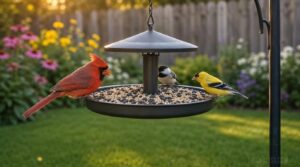
Even the best no-mess seed works better when your setup accommodates it. A few simple habits can make a real difference in how clean your feeding area stays. Here’s what actually helps.
Use Proper Feeder Trays
A good tray makes no mess bird feeding so much easier. Look for raised edges to catch stray seeds before they hit the ground. Drainage holes prevent standing water and mold from building up. A smooth surface wipes clean in seconds. Here’s what to prioritize:
- Removable tray for quick sanitation
- Weather hood to reduce rain exposure
- Shell-free seeds paired with proper trays for true messfree feeding
Place Feeders Strategically
Where you place your bird feeder matters more than most people realize. Set feeders 5 to 6 feet high to keep ground scavengers away and help small birds reach seed easily.
Stay at least 10 feet from windows to cut collision risks. Position near shrubs for quick escape routes, and face away from prevailing winds to keep shell-free seeds dry.
Clean Spilled Seed Promptly
Even with the best feeder placement, some seed will still hit the ground. Don’t let it sit. Clear spilled seed within two hours to stop pests and weeds before they get started.
A quick sweep with a stiff broom into a sealed trash bag is all it takes. That one habit keeps your whole feeding area genuinely tidy.
Check for Mold Regularly
Spilled seed dealt with? Good. Now check the feeder itself.
Mold can appear within 24–48 hours when moisture gets in, especially in humid weather. Look for fuzzy spots, discoloration, or a musty smell.
If humidity in your area stays above 50 percent, check more often. A quick visual inspection every few days keeps things clean and your birds safe.
Rotate Seed Seasonally
Just like your garden changes with the seasons, so should your feeder. A seasonal rotation plan keeps birds fed right and your setup mess-free.
Use lighter, shell-free seeds in summer to cut mold risk.
Switch to fall fat seeds like shelled peanuts when migration prep begins.
Come winter, shelled options give cold-weather birds the energy they need.
Frequently Asked Questions (FAQs)
Can no-mess seeds sprout under my feeder?
Yes, but it’s rare. Hulled seeds lack the outer coating needed to sprout easily. Still, moisture and soil contact can trigger germination. Keep the ground dry and clean up spills fast.
Do squirrels prefer shelled or unshelled seeds?
Squirrels generally prefer seeds with shells for caching, since the outer layer protects stored food through winter. But they’ll happily eat hulled seeds on the spot — it’s purely about the moment.
How long do no-mess seeds stay fresh?
No-mess seeds stay fresh 1 to 2 years at room temperature. Keep them cool, dry, and sealed. Refrigeration extends that to 2 to 5 years easily.
Are no-mess seeds safe for young birds?
No-mess seeds are safe for young birds. Hulled kernels are easy to digest and reduce choking risk. They deliver protein, fat, and carbs that support rapid nestling growth without harmful fillers or shells.
What weather conditions affect no-mess seed quality?
Weather hits no-mess seed quality hard. High humidity above 70% invites mold, while rainfall speeds rot. Strong sunlight degrades seed oils, and warm nights above 20°C quietly kill seed vigor.
Can eggshells be used to start bird-friendly plants?
Oddly enough, your breakfast scraps might be your garden’s best friend. Eggshell seed starters work beautifully — fill them with seed mix, sow seeds, then plant the whole biodegradable shell directly into your bird-friendly garden bed.
Do hulled seeds cost more than standard mixes?
Yes, hulled seeds cost more — usually 10 to 40 percent above standard mixes. Processing and hull removal add expense, but you waste less per bag, making them solid long-term value.
Which feeders work best with no-mess blends?
Tube feeders and hopper feeders work best with no-mess blends. Their tray compatibility catches loose chips, and material durability holds up outdoors. Mount them at elbow height for easy refilling and minimal spillage.
How do weather conditions affect hulled seed freshness?
Humidity and heat are the real enemies of hulled seed freshness. High moisture triggers mold growth fast, while temperature spikes turn oils rancid. Store hulled millet and shell-free seeds somewhere cool, dry, and sealed tight.
Are no-mess blends safe for backyard squirrels?
No-mess blends are generally safe for squirrels, but some contain capsaicin coatings that deter them. If your mix includes nuts, squirrels may still visit. A separate squirrel feeder helps reduce competition.
Conclusion
Think of your feeder as a dinner table — no one wants to eat surrounded by a pile of discarded wrappers. Choosing seed that prevents messy shells transforms that cluttered patch of ground into a clean, welcoming spot birds actually return to.
Less debris means fewer pests, less mold, and a yard you’re proud of. Make the switch once, and you’ll wonder why you ever tolerated the mess in the first place.
- https://elkmoundseed.com/products/coarse-sunflower-hearts
- https://myhappywings.com/sunflower-hearts-vs-whole-sunflower-seeds-which-bird-food-is-better
- https://www.wbu.com/products/seed-blends/no-mess-blends
- https://www.kaytee.com/all-products/wild-bird/no-mess
- https://duncraft.com/products/duncraft-whole-sunflower-hearts-wild-bird-seed-5-lb-bag