This site is supported by our readers. We may earn a commission, at no cost to you, if you purchase through links.
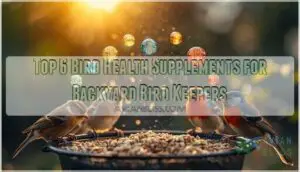
Most backyard bird keepers don’t realize their birds are slowly starving—not from lack of food, but from lack of nutrition.
Seeds fill the feeder, but they leave serious gaps in vitamins, minerals, and amino acids that birds need to thrive.
Over time, those gaps show up as dull feathers, weak bones, and shortened lifespans.
The fix isn’t complicated.
Bird health supplements for backyard bird keepers have come a long way, and today’s options target exactly what seed-heavy diets miss.
Knowing which supplements work—and why—can change everything for the birds in your care.
Table Of Contents
- Key Takeaways
- Why Bird Health Supplements Matter
- Essential Vitamins and Nutrients for Birds
- Top 6 Bird Health Supplements for Backyard Keepers
- How to Choose The Right Supplement
- Safe Supplement Practices for Backyard Birds
- Frequently Asked Questions (FAQs)
- What supplements are good for birds?
- What is a miracle meal for birds?
- Can supplements help birds recover from illness faster?
- How do seasonal changes affect supplement needs?
- Are supplements safe for breeding or egg-laying hens?
- How long before supplements show noticeable results?
- Can multiple supplements be given to birds simultaneously?
- Conclusion
Key Takeaways
- Seed-heavy diets leave backyard birds lacking key nutrients, leading to dull feathers, weak bones, and shorter lifespans.
- Supplements like multivitamins, calcium with D3, probiotics, and omega blends help fill these nutritional gaps and boost overall bird health.
- Choosing the right supplement depends on your bird’s species, diet, and seasonal needs, with natural options often providing better absorption and safety.
- Safe supplement use means careful dosing, regular health monitoring, and consulting an avian vet to adjust plans as your flock’s needs change.
Why Bird Health Supplements Matter
Most backyard birds don’t get everything they need from seeds alone.
They also need the right mix of nutrients, which is why checking out this guide to the best bird seed for backyard feeders can make a real difference in what shows up at your feeder.
Gaps in their diet can quietly lead to bigger health problems down the road.
Here’s what you need to know about why the right supplements can make a real difference for your flock.
Common Nutritional Gaps in Backyard Birds
Seed diet deficiencies are quietly common in backyard birds. Most feeders rely on sunflower seeds, but that’s not enough. Here’s what often goes missing:
- Vitamin A — crusty nares, swollen eyes, poor feathers
- Calcium‑phosphorus ratio — soft bones from too much phosphorus
- Vitamin D — indoor birds miss UVB light, weakening immunity
- Lysine scarcity and iodine deficiency — faded feathers, thyroid lumps
Nutritional balance starts with knowing the gaps. High seed diets cause Vitamin A deficiency in many backyard birds, as detailed in the high seed diets cause.
Risks of Vitamin and Mineral Deficiencies
Vitamin deficiency can snowball fast — poor avian nutrition leads to feather degradation, bone fractures, and respiratory issues within weeks.
Calcium shortfalls cause soft bones that break easily.
Low Vitamin A triggers immune suppression and blocked airways.
Reproductive failure affects laying hens on mineral-poor diets.
Bird health and wellness depends on catching these risks before they take hold.
Obese birds are especially prone to fatty liver disease risk.
Benefits of Supplementing Bird Diets
good news? Most of these risks are preventable.
The right vitamin supplementation can strengthen feather growth, give your flock a real immune boost, and support breeding success when the season comes.
Birds with better avian nutrition show more energy stamina and improved digestive health.
A smarter bird diet doesn’t fix problems — it stops them from starting.
Essential Vitamins and Nutrients for Birds
Your birds need more than just seeds to stay healthy and strong.
The right vitamins, minerals, and nutrients each play a specific role in keeping them at their best.
Here’s a closer look at what your flock actually needs.
Key Vitamins for Avian Health (A, D, E, K, B-complex)
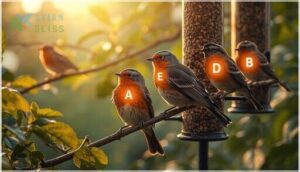
Think of vitamins as your bird’s internal crew — each one handling a different job.
Vitamin A covers vision support and keeps airways clear. Vitamin D drives bone calcification, which is especially critical for indoor birds with limited sunlight.
Vitamin E protects cells and improves feather pigmentation. Vitamin K prevents bleeding issues, while B-complex vitamins fuel metabolic energy and nervous system health.
A quality multivitamin covers all these bases for balanced avian nutrition and diet.
Vital Minerals for Bone and Feather Strength

Four minerals do the heavy lifting for your bird’s structure and plumage.
- Calcium-Phosphorus Ratio drives bone mineralization pathways — imbalance weakens bones fast.
- Zinc Feather Pigment promotes feather health and color vibrancy during molts.
- Manganese Tibia Density strengthens skeletal development in growing birds.
- Selenium Antioxidant Role pairs with Vitamin E to protect cells and feather quality.
Magnesium and Vitamin D round out the picture.
Role of Amino and Fatty Acids
Amino and fatty acids are the quiet workhorses of avian nutrition. Methionine and lysine drive feather development by building the keratin your bird’s plumage depends on.
Arginine gives the immune boost birds need to fight off illness.
Meanwhile, omega-3 fatty acids support skin integrity, energy metabolism, and egg production.
For bird health overall, these nutrients belong in every solid bird supplements plan.
Importance of Probiotics in Bird Digestion
Probiotics do more than help your bird digest food—they shape the whole gut environment.
Gut Flora Balance improves Nutrient Absorption, so your birds actually use what they eat.
They support Pathogen Inhibition by blocking harmful bacteria like Salmonella and driving Ammonia Reduction in enclosures.
For Immune Modulation and overall Digestive Health, products like Essential Planet Flora Bird Probiotic make a real difference in Bird Nutrition and Health.
Top 6 Bird Health Supplements for Backyard Keepers
so many options out there, finding the right supplement can feel overwhelming. These six products are well‑regarded among backyard keepers and cover a solid range of nutritional needs. Here’s a closer look at each one.
1. Nekton‑S Bird Multi Vitamin Powder
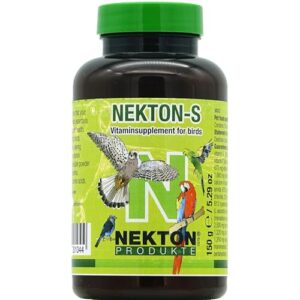
Nekton-S is a go-to multivitamin powder that avian vets have trusted for over 40 years. It packs 13 vitamins, 18 amino acids, and key minerals into one unflavored scoop — making it ideal if your bird eats mostly seeds.
Just mix 1 gram into 250 ml of fresh water daily.
The amino acids support healthy feathers, and the vitamin A and D3 levels help strengthen immunity and bones. It’s a simple, well-rounded supplement that fits easily into any daily routine.
| Best For | Bird owners whose pets live primarily on a seed-based diet and need a reliable daily vitamin boost to stay healthy. |
|---|---|
| Form | Powder |
| Supports Plumage | Yes |
| Age Range | All Life Stages |
| Brand | Nekton |
| Health Support | Feather, Stress |
| Easy to Use | Yes |
| Additional Features |
|
- Covers all the bases — 13 vitamins, 18 amino acids, and minerals in one simple daily dose
- Trusted and recommended by avian vets for decades
- Easy to use — just mix into drinking water, no flavoring to fuss with
- The small bottle opening can make scooping tricky without tweezers
- Tints the water yellow, which might throw some birds (or owners) off
- Dosing has to be accurate, so you’ll want to follow the instructions closely
2. Lafeber Avi Era Bird Vitamin Powder
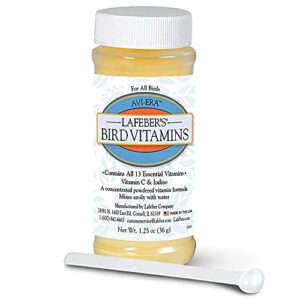
Lafeber’s Avi-Era is a solid choice if your bird is on a seed-heavy diet.
Seeds are tasty for birds, but they’re often low in vitamins A and D — and that’s exactly where this powder steps in.
It contains all 13 essential vitamins, including A, D3, E, and B-complex, formulated by avian veterinarians and nutritionists.
You can mix it into water or sprinkle it on food.
No artificial colors or flavors, either. Just straightforward nutrition that your bird actually needs.
| Best For | Bird owners whose pets are on a seed-heavy diet and need an easy way to fill nutritional gaps. |
|---|---|
| Form | Powder |
| Supports Plumage | Yes |
| Age Range | All Ages |
| Brand | Lafeber’s |
| Health Support | Feather, Energy |
| Easy to Use | Yes |
| Additional Features |
|
- Covers all 13 essential vitamins, including A and D3 that most seed diets miss
- Formulated by avian vets and nutritionists — not just a generic supplement
- Easy to use, just mix into water or sprinkle on food
- Needs to be used within 6 months of opening or it loses effectiveness
- Some buyers have received packages without the dosing scoop
- May take a bit of stirring to fully dissolve in water
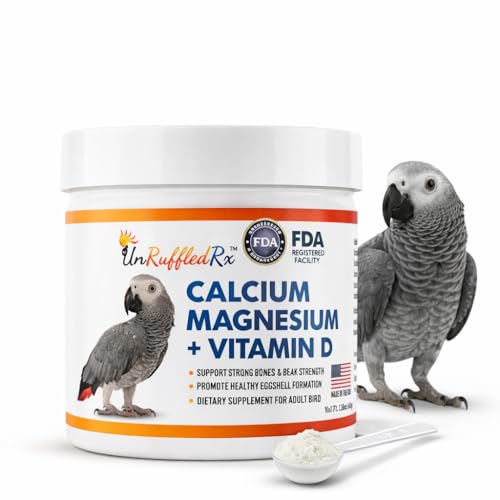
3. UnRuffledRx Bird Calcium Magnesium D3
 View On Amazon
Calcium might be the most underrated nutrient in backyard bird care. UnRuffledRx Bird Calcium Magnesium D3 covers that gap well.
It dissolves clear and tasteless in water, so your birds won’t even notice it’s there. The formula pairs calcium lactate with magnesium and vitamin D3 to support strong bones, sturdy eggshells, and healthy feathers.
It works for chicks, laying hens, and aging parrots alike. Just add a quarter teaspoon to eight ounces of water two to three times a week.
| Best For | Bird owners looking to support bone health, egg production, and feather quality in chicks, laying hens, or aging parrots. |
|---|---|
| Form | Liquid |
| Supports Plumage | Yes |
| Age Range | All Life Stages |
| Brand | Wild Harvest |
| Health Support | Growth, Conditioning |
| Easy to Use | Yes |
| Additional Features |
|
- Dissolves clear and tasteless in water, so even picky birds won’t skip their drink
- Combines calcium lactate, magnesium, and vitamin D3 for well-rounded bone and feather support
- Made in an FDA-registered facility with non-GMO, human-grade ingredients
- A bit pricey for the amount you get, especially if you’re supplementing multiple birds
- The container may arrive less than full, which adds to the frustration at that price point
- Results can take a while to show up, particularly in older birds
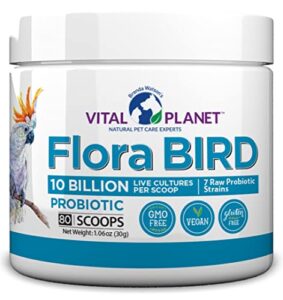
4. Vital Planet Flora Bird Probiotic
Strong bones are only part of the picture.
Your bird’s gut health matters just as much.
Essential Planet Flora Bird Probiotic brings 10 billion live cultures per serving across 7 clinically‑studied strains, including Lactobacillus acidophilus and Bifidobacterium animalis.
That’s real support for digestion, immune function, and crop pH balance.
The tasteless powder mixes right into food or water without fuss.
It works for all bird sizes and ages, making it a solid everyday addition to your flock’s routine.
| Best For | Bird owners of all experience levels who want an easy, everyday way to support their flock’s gut health, digestion, and immunity—regardless of bird size or age. |
|---|---|
| Form | Powder |
| Supports Plumage | Yes |
| Age Range | All Life Stages |
| Brand | Unbranded |
| Health Support | Bone, Feather |
| Easy to Use | Yes |
| Additional Features |
|
- 10 billion live cultures from 7 clinically-studied strains means you’re getting a formula with real research behind it, not just a generic blend.
- The tasteless, flavorless powder is a dream for picky birds—just mix it into food or water and you’re done.
- Works for all bird sizes, ages, and types, so one container covers your whole flock.
- Needs refrigeration to stay effective, which might be a hassle if you’re not used to storing supplements that way.
- The measuring spoon may not have markings, so getting a precise dose can feel like guesswork.
- Expiration dates can be a concern—if your birds go through it slowly, you’ll want to keep an eye on freshness.
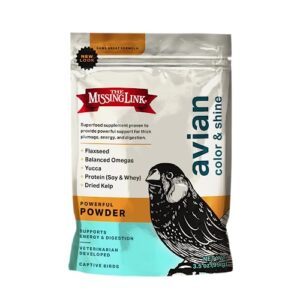
5. The Missing Link Avian Color Shine Powder
Gut health handled — now let’s talk feathers.
The Missing Link Avian Color Shine Powder is built on a fresh-ground flaxseed base, delivering omega-3 fatty acids, fiber, and antioxidants in every serving. Superfoods like dried kelp, yucca, and alfalfa round out the blend.
It’s veterinarian-formulated and non-GMO, so you know what you’re giving your birds. sprinkle it on seeds, fruit, or soft food daily.
Users consistently notice shinier, thicker plumage — especially during molting. It works for all captive birds, at any life stage.
| Best For | Bird owners who want to support feather health, digestion, and energy in captive birds of any species or life stage. |
|---|---|
| Form | Powder |
| Supports Plumage | Yes |
| Age Range | All Ages |
| Brand | Unbranded |
| Health Support | Digestive, Immune |
| Easy to Use | Yes |
| Additional Features |
|
- Fresh-ground flaxseed base delivers real omega-3s, fiber, and antioxidants with every serving
- Vet-formulated and non-GMO — you know exactly what’s going into your bird’s diet
- Users regularly see thicker, shinier feathers, especially during molting
- The ziplock bag can get caked with powder, making it tricky to reseal
- Not a great fit for birds that don’t eat seeds or have specific dietary restrictions
- A bit pricey compared to standard supplements, though most buyers say it’s worth it
6. Wild Harvest Molting Supplement
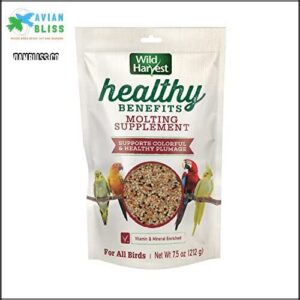
Feathers looking great? Now let’s make sure molting season doesn’t undo that progress.
Wild Harvest Molting Supplement is a seed-based blend — millet, oat groats, and canary grass seed — enriched with vitamins A, D3, E, and B12, plus minerals like zinc and calcium.
It promotes colorful, healthy regrowth during the molt while reducing pin feathers and patchy down.
Just add it alongside your bird’s regular food daily.
It’s suitable for all life stages and bird sizes.
| Best For | Bird owners looking to support their feathered friend through molting season with a vitamin-enriched seed supplement. |
|---|---|
| Form | Powder |
| Supports Plumage | Yes |
| Age Range | All Life Stages |
| Brand | The Missing Link |
| Health Support | Energy, Digestive |
| Easy to Use | Yes |
| Additional Features |
|
- Blend of millet, oat groats, and canary grass seed packed with vitamins and minerals to support healthy feather regrowth
- Helps reduce pin feathers and patchy down during molting, with added sheen for iridescent feathers
- Works for birds of all sizes and life stages — just mix it in with their regular food
- Not a complete diet on its own, so you’ll still need their usual food alongside it
- Packaging can be tricky to open and reseal, and some orders have arrived with crushed seed powder
- May not be the best fit for larger birds with bigger nutritional demands
How to Choose The Right Supplement
Not every supplement works the same way for every bird.
A few key factors can help you narrow down what actually fits your flock. Here’s keep in mind before you buy.
Factors Based on Bird Species and Diet
Not every bird thrives on the same supplement.
Species-specific protein needs vary widely — finches need 12–15% protein minimum, while bluebirds depend on insectivore nutrient needs like mealworm-based protein for breeding.
Seed diet calcium gaps hit hard since seed diets run an 8:1 phosphorus-to-calcium ratio.
Hummingbirds need nectar sugar balance support, and parrot iron tolerance matters too — especially for lories prone to iron storage disease.
Natural Vs. Synthetic Supplements
Regarding bird health supplements, the natural vs. synthetic debate really matters for your flock.
Bioavailability differences are significant — natural vitamin E absorbs twice as efficiently as synthetic forms. Toxicity risks are real too; synthetic vitamin A can damage livers at high doses.
Natural vitamin E absorbs twice as efficiently as synthetic, while synthetic vitamin A risks damaging your bird’s liver at high doses
Key avian nutrition considerations:
- Natural supplements offer health synergies through 46+ antioxidants
- Stability profiles favor natural plant additives in storage
- Cost comparisons favor naturals long‑term, saving 20–30% on vet bills
- Backyard Boost uses proprietary natural ingredients for safer supplementation
Consulting Avian Veterinarians
Don’t just guess regarding bird’s supplements — reach out to Avian Veterinarians who specialize in Bird Health and Nutrition.
Finding Certified Vets through the AAV directory gets you access to Nutrition Assessment Protocols and Diagnostic Lab Referrals customized to your species.
Many now offer Telehealth Avian Consults, making Veterinary Care more accessible.
Follow-up Care Plans help you track real progress over time.
Safe Supplement Practices for Backyard Birds
Giving your birds the right supplement is only half the job. How you use it matters just as much as what you choose.
Here are a few simple practices to help you get it right.
Proper Dosage and Administration Methods
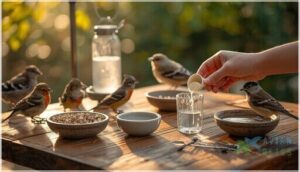
Getting the dose right is half the battle in bird care. Too little, and your bird misses out—too much can cause real harm. Here’s how to give supplements properly:
- Water Mixing Ratios – Mix Nekton‑S at 1 g per 250 ml daily.
- Soft Food Integration – Blend powders into food your bird fully consumes.
- Dropper Precision – Use drops directly for liquid calcium supplements.
- Seasonal Dosage Adjustments – Increase during molting or breeding periods.
Species‑Specific Measurements matter too—small birds need far less than large parrots.
Monitoring Bird Health and Side Effects
Daily observation is your first line of defense when using bird health supplements. Watch for behavior shifts like unusual quietness, daytime sleeping, or reduced appetite within the first few days.
Dropping changes—watery, discolored, or foul‑smelling—deserves immediate attention. Weight tracking with a small gram scale catches problems early. Log keeping ties everything together, helping you and your vet pinpoint supplement safety concerns quickly.
Integrating Supplements With Balanced Diets
Supplements work best when they’re built around what your birds already eat. Seasonal Nutrient Timing matters here—winter suet blends call for daily fat‑soluble vitamins, while summer fruit treats need them only every few days.
Moist Food Integration by stirring a Multivit powder into mealworms or soft foods. Natural Food Pairing, like crushed eggshells near feeders, rounds out a truly Balanced Diet.
When to Adjust or Discontinue Supplements
Your bird’s behavior tells you more than any label can. Watch for Toxicity Signs—swollen eyelids, watery droppings, or lethargy—and stop the supplement immediately.
Behavioral Changes, like feather plucking or reduced appetite signal something’s off.
Make Seasonal Adjustments as needs shift through molt and breeding.
Vet Monitoring every four to six weeks keeps your approach grounded in real Avian Health data, not guesswork.
Frequently Asked Questions (FAQs)
What supplements are good for birds?
What does your bird actually need? Good options include multivitamins, calcium with D3, probiotics, and omega blends. The right choice depends on species, diet, and seasonal nutrient needs.
What is a miracle meal for birds?
Miracle Meal is an all-natural soft food by Morning Bird,
human-grade ingredients like oats, quinoa, and omega-3 sources such as flaxseed — giving your birds balanced nutrition in every bite.
Can supplements help birds recover from illness faster?
Yes, they genuinely can. The right mix of electrolyte rehydration, antioxidant boost, and gut flora restoration gives a sick bird’s immune system real support — often cutting recovery time noticeably.
How do seasonal changes affect supplement needs?
Each season shifts your birds’ needs.
Winter Energy demands more fat and calories.
Spring Protein fuels nesting.
Summer Hydration prevents heat stress.
Molting Nutrients and Breeding Calcium round out the year.
Are supplements safe for breeding or egg-laying hens?
Most supplements are safe, but dosage matters. Too much calcium or vitamin D3 can harm kidney health and hurt eggshell quality. Stick to guidelines, and your hens will thrive.
How long before supplements show noticeable results?
Onset of Benefits depends on the supplement and your bird’s needs. Visible changes like energy or feather growth often appear within 1–3 weeks.
immune system support and full improvement timeframe, expect result lag up to four weeks.
Can multiple supplements be given to birds simultaneously?
Giving birds multiple supplements at once can boost Pet Bird Wellness and Immune System Support, but Supplement Overlap Risks and Toxicity Monitoring are essential.
Careful Dosing Strategies and Veterinary Evaluation keep Bird Nutrition and Health safe, following Interaction Guidelines.
Conclusion
Imagine your birds thriving like knights at a round table, feasting on more than just seeds. Bird health supplements for backyard bird keepers are the missing link—filling nutritional gaps that basic feed leaves behind.
With careful choices, you’re not just feeding; you’re fortifying. Watch for brighter feathers, stronger wings, and livlier songs.
The right supplement turns ordinary care into stewardship. When you listen to your flock’s needs, you give them the best chance to shine, season after season.
- https://petfoodpassion.co.uk/2025/02/12/when-and-how-to-use-supplements-for-cage-and-aviary-birds/
- https://johnstonandjeff.co.uk/new-superfood-to-ensure-wild-birds-get-enough-calcium/
- https://allnaturalpetcare.com/blog/2013/04/20/15-natural-feed-supplements-birds-exotic-poultry-pigeons-waterfowl/
- https://fidarfeed.com/additives/probiotics/probiotic-caged-birds-the-key-to-a-healthier-companion/
- https://avitechnutrition.com/electrolytes-through-feed-a-preferred-approach/