This site is supported by our readers. We may earn a commission, at no cost to you, if you purchase through links.
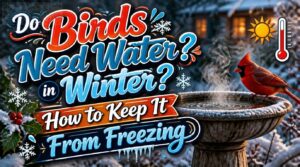
A cardinal can survive brutal cold snaps, but three days without water will kill it faster than starvation. Snow might blanket your yard in a thick, glittering layer, yet it does almost nothing to solve a bird’s thirst. Melting it costs precious body heat that a chickadee simply can’t spare when temperatures drop below freezing.
So yes, do birds need water in winter? Absolutely, and the reasons run deeper than most backyard birders realize. Dehydration creeps in quietly, straining kidneys and throwing off the electrolyte balance birds need for coordinated flight.
Understanding why liquid water matters this time of year, and how to offer it safely, could mean the difference between a thriving flock and a struggling one outside your window.
Table Of Contents
- Key Takeaways
- Do Birds Need Water in Winter?
- How Long Can Birds Go Without Water?
- How Do Birds Drink When Water Freezes?
- How to Provide Safe Water for Birds
- What to Avoid When Watering Birds
- Frequently Asked Questions (FAQs)
- Should I put water out for birds in the winter?
- How do birds drink water when everything is frozen?
- Why should you put pennies in a bird bath?
- How long can birds go without water in winter?
- Do all bird species use birdbaths equally?
- Can birds get enough water from berries?
- Do birds prefer moving water over still water?
- Should I offer water during summer months too?
- How do birds find water sources in cities?
- Conclusion
Key Takeaways
- Snow doesn’t solve a bird’s water needs since melting it burns energy birds can’t spare in freezing temperatures, so liquid water remains essential even when snow covers the ground.
- Birds can survive weeks without food but only a few days without water, since dehydration disrupts kidney function, electrolyte balance, and flight coordination faster than starvation does.
- Providing a shallow, heated birdbath kept between 35°F and 40°F, placed 3 to 5 feet from cover, gives birds safe, reliable access to water without the risk of frozen feathers or predator exposure.
- Common shortcuts like antifreeze, glycerin, or pennies either harm birds directly or fail to prevent freezing, so plain water and a proper heating element are the only safe, effective solutions.
Do Birds Need Water in Winter?
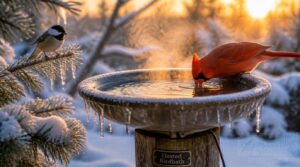
Yes, birds need water in winter just as much as they need food, and often more urgently. Snow might seem like a natural substitute, but it doesn’t work the way you’d think. Here’s what’s really going on beneath the frost.
Melting snow costs birds precious energy they can’t spare in freezing temperatures, which is why setting up a heated bird bath for winter makes such a difference to their survival.
Hydration Beyond Food Sources
Even without a single drop of standing water, birds pull moisture from surprising places. Metabolic water production during digestion, fruit pulp, seeds, and plant sap all supply fluid. Still, these sources rarely cover full needs.
Proper electrolyte balance and humidity levels during respiration also shape hydration status, which is why relying on food alone leaves birds vulnerable in harsh winter conditions.
Why Snow Isn’t Enough
A snowy yard might look like a birdbath, but it isn’t one. Melting it costs metabolic energy birds can’t spare when they’re already burning calories for warmth.
Dry winter air also invites sublimation, turning snow straight to vapor before it’s ever useful. So while snowpack helps soil moisture come spring, it does little for preventing dehydration in birds right now.
Water’s Role in Survival
Metabolic water production helps, but it’s never enough on its own. Birds still need liquid water for cellular hydration, nutrient transport, and kidney function, since concentrated urine from dehydration stresses those organs fast.
Proper hydration is key because water transports essential nutrients to cells throughout the body.
Electrolyte balance suffers too, affecting muscle coordination birds rely on for flight and foraging. That’s why reliable water source management remains as important as feeders when you’re serious about winter bird care.
How Long Can Birds Go Without Water?
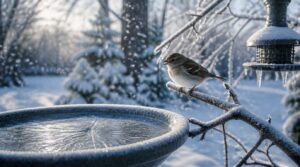
Water doesn’t stay optional for long once temperatures drop, and the clock starts ticking faster than most people realize. Understanding what happens inside a bird’s body during this stretch helps explain why the stakes climb so quickly. Here’s what dehydration actually looks like, and how you can spot it before it’s too late.
Dehydration Risks Explained
A chickadee can survive weeks without food but only days without water. Cellular metabolic water from digesting seeds helps some, yet respiration fluid loss in dry winter air quickly outpaces it. Thirst suppression from cold further delays drinking.
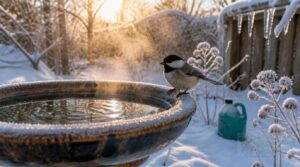
Since even brief freezes can cut off a chickadee’s only reliable water source, keeping a bird bath thawed and safe in winter can make a real difference to their survival.
A chickadee can survive weeks without food but only days without water
- Frozen ponds
- Dry indoor-style air
- Suppressed thirst cues
- Rising energy costs
- Faster decline than hunger
Signs of Water Stress
What does a dehydrated bird actually look like? Watch for lethargic bird behavior, fluffed feathers with a dull texture, and reduced activity around feeders.
Weight loss becomes noticeable too, since birds burn reserves faster while chasing scarce moisture. These avian dehydration symptoms often appear before birds show obvious hunger, making early water access critical for winter survival strategies that keep your backyard visitors healthy.
How Do Birds Drink When Water Freezes?
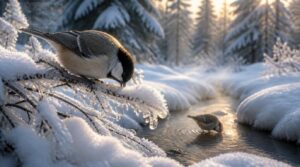
When streams and puddles freeze solid, birds don’t just give up and wait for spring. They fall back on a few clever, energy-conscious tricks to find moisture. Here’s what that looks like in the wild.
Natural Winter Drinking Behavior
Ever watched a cardinal peck at a frosty puddle around noon? That’s no accident. Birds time their drinking to midday thaws, when brief warmth frees pockets of liquid water.
Some species even guard these spots, chasing off competitors.
Between sips, respiratory water loss climbs in dry cold air, pushing birds toward every fleeting, unfrozen opportunity nature offers during winter foraging.
Melting Snow Energy Costs
Turning snow into drinkable water costs a bird real calories, energy it needs for avian thermoregulation instead.
The math mirrors engineered snowmelt systems, which require:
- 50–150 watts per square foot during snowfall
- Higher demand as snow depth increases
- More energy loss in wind exposure
- Efficiency drops without proper insulation
A bird’s tiny body faces the same heating efficiency problem, minus the boiler.
Why Liquid Water Helps
Here’s the payoff: liquid water skips the energy tax entirely, going straight to work on avian thermoregulation and survival.
It hydrates blood for efficient heat distribution, keeps joints lubricated for icy-perch landings, and moistens respiratory tissue against harsh, dry air.
Well-hydrated birds also stay sharper, alert enough to spot hawks or slick branches, which matters more than it sounds when you’re preventing hypothermia in birds one cold morning at a time.
How to Provide Safe Water for Birds
Now that you know why birds need liquid water so badly in winter, let’s talk about how to actually provide it safely. A few smart choices in equipment and setup can mean the difference between a helpful water source and an accidental hazard. Here’s what you need to know to get it right.
Choosing Heated Birdbaths
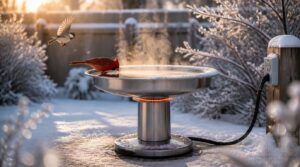
Not every heated birdbath is built the same, and picking wisely keeps your backyard visitors safe all winter.
- Thermostat efficiency: cuts power once temps rise, saving energy
- Electrical safety: GFCI outlets, sealed connections, grounded plugs
- Basin material: stainless steel or UV-resistant polyresin resists cracking
- Heating element type: embedded or rimmed, avoiding hotspots
- Stable base: non-slip, weather-resistant construction
Choose a unit balancing these features, and you’ll protect both birds and your investment.
Ideal Water Depth and Temperature
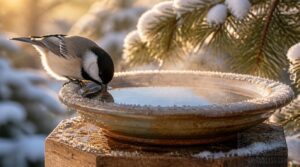
Depth and temperature matter more than most backyard hosts realize. Aim for a shallow wide dish, about 1 to 2 inches deep, so smaller species can drink without submerging.
Keep water tepid or lukewarm, between 35°F and 40°F, to prevent freezing while avoiding scalding. This range slows surface ice management issues and keeps hydration reliable through seasonal temperature shifts.
Best Materials for Cold Weather
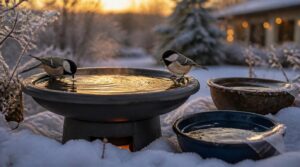
Material choice determines whether your birdbath actually works. Metal conducts cold fast and cracks in freezing temps, so stick with nonmetallic grille designs or ceramic.
Best options:
- Heated birdbaths with a built-in bird bath heater
- An immersion-style water heater dropped into existing basins
- Thick plastic or resin bowls that resist cracking
These choices prevent freezing without scalding visiting birds.
Placement Near Cover and Safety
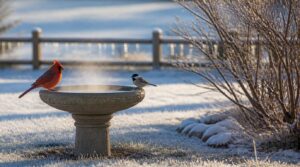
Where you place the water matters as much as the bowl itself. Set it 3 to 5 feet from shrubbery, giving cover without hiding an outdoor cat’s ambush.
| Do | Avoid |
|---|---|
| Sheltered spot near cover | Open sky exposure |
| Clear escape routes | Dense brush hideouts |
| Safe landing zones | Direct line to pets |
| Good predator sightlines | Blocked visibility |
Good placement balances bird bath safety with easy, unguarded access.
Cleaning and Maintenance Tips
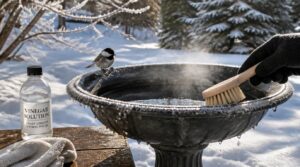
A safe location won’t stay safe if the water turns cloudy or grows algae.
Sanitization frequency matters most here: scrub weekly during mild spells, daily in heavy use or extreme cold. Rinse with clean water, then wash using diluted vinegar or a bird-safe soap—never harsh chemicals. Check heaters and seals for wear each time.
Clean, accessible water keeps birds coming back, safely.
What to Avoid When Watering Birds
Setting up water for birds takes more than just filling a bowl, since a few common habits can do real harm. Some well-meaning shortcuts, like household fixes people use for their own pipes, don’t translate safely to a backyard birdbath. Here’s what you’ll want to steer clear of this winter.
Dangers of Antifreeze and Additives
Antifreeze might stop your car’s radiator from freezing, but it’s toxic to birds in even tiny amounts, causing metabolic acidosis and kidney failure. Glycerin causes similar harm, matting feathers and disrupting blood sugar. Skip both, along with salt or sugar.
Spills also contaminate soil and groundwater. Stick to plain water — the only truly bird-friendly hydration source.
Why Pennies Don’t Prevent Freezing
Ever heard that a penny left in a freezer tells you if it’s cold enough? That trick doesn’t work for birdbaths either. Coin movement comes from heat conduction errors, not real temperature data — freezer microgradients and normal thermostat cycling create false readings.
Skip the folklore. A heated birdbath with a reliable bird bath heater actually prevents ice buildup and keeps water unfrozen.
Risks of Wet Feathers Freezing
When water’s cold enough, wet feathers can freeze solid, and a cardinal or starling caught in that moment may drop mid-flight. Freezing plumage causes insulation loss, sparks thermoregulation shock, and drains metabolic energy fast.
Skip glycerin, hot water, or overfilled baths. Stick to properly heated, shallow water, so feather insulation stays intact and birds conserve energy instead of fighting frostbite.
Frequently Asked Questions (FAQs)
Should I put water out for birds in the winter?
Yes — and skipping it could cost more lives than skipping food. Snow won’t cut it; birds need liquid water for drinking and preening. A reliable winter birdbath helps with hydration, insulation, and survival when natural sources freeze solid.
How do birds drink water when everything is frozen?
Birds seek out moving water near streams or drips, dig micro ditches in snow, and rely on fat oxidation for metabolic water. Heated birdbaths offer reliable unfrozen access when natural sources lock up completely.
Why should you put pennies in a bird bath?
Pretty pennies plunked into a bird bath release copper ions that curb algae growth—pre-1982 coins work best. Still, this trick won’t stop ice buildup; pair it with a bird bath heater or dark stones for real freeze protection.
How long can birds go without water in winter?
Only a day or two, sometimes less. Evaporative loss and thermoregulation energy costs drain hydration fast, and without metabolic water from food, dehydration sets in quickly—often faster than starvation—especially for small passerines braving frigid, dry winter air.
Do all bird species use birdbaths equally?
Not even close. Species water preferences vary widely: sparrows, finches, and robins bathe often, while woodpeckers mostly drink.
Depth matters too, shallow water draws small birds, deeper basins favor larger species, shaping avian hydration and winter survival strategies overall.
Can birds get enough water from berries?
Ripe berries offer real but partial hydration—about 70-90% water—supporting frugivorous species like waxwings.
However, frozen or dried berries lose moisture, and fruit sugars affect gut water balance.
Berries supplement, never replace, reliable liquid water for winter survival.
Do birds prefer moving water over still water?
Ripples catching sunlight, soft dripping sounds carrying through cold air—these audible water cues draw birds in. Yes, they favor movement: it signals freshness, deters mosquito larvae, and works well with heated birdbaths keeping unfrozen water flowing reliably all winter long.
Should I offer water during summer months too?
Absolutely, and it matters more than many realize. Summer heat exhaustion is real, so cooling through bathing keeps birds comfortable during high metabolic needs. Place a shaded bird bath to slow evaporation—you’ll attract diverse species while supporting their health all season long.
How do birds find water sources in cities?
Where nature falls short, concrete steps in: birds tap urban runoff, condensate drains, and decorative fountains for hydration. Landscaped planters, plaza ponds, and gutters become makeshift oases, proving city birds are resourceful hydration foragers, even without natural sources nearby.
Conclusion
A heated birdbath works like a lifeline thrown to a struggling swimmer: small, simple, yet critical.
Once you understand do birds need water in winter, the answer stops feeling like trivia and starts feeling like responsibility.
Your backyard can become a dependable refuge when every other puddle turns solid.
Fill it, keep it thawed, and check it often.
That small effort, honestly, costs you little.
For the chickadee outside your window, it means everything.
- https://thebackyardnaturalist.com/wordpress/resources/wild-birds-winter-water
- https://www.wbu.com/3-ways-you-can-help-birds-survive-winter
- https://sawyergardencenter.com/blog/68717/winter-care-tips-for-wild-birds
- https://blog.nature.org/2022/01/31/should-you-provide-birds-water-in-winter
- https://www.harvestwildlife.com/winter-water-for-birds