This site is supported by our readers. We may earn a commission, at no cost to you, if you purchase through links.
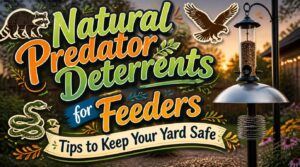
A raccoon can rotate its wrists almost like a human hand. That’s how it strips a "squirrel-proof" feeder clean in under ten minutes, baffle and all. Toss in hawks circling overhead, snakes gliding up poles, and deer standing on hind legs for a snack, and your feeder starts looking like a buffet line for the whole food chain.
Here’s the good news: you don’t need traps or chemicals to fight back. Natural predator deterrents for feeders work with smart placement, simple barriers, and scents animals already avoid in the wild. Get the setup right, and you’ll spend less time refilling seed for raccoons and more time watching the birds you actually put it out for.
Table Of Contents
- Key Takeaways
- Strategic Feeder Placement for Predator Safety
- Physical Barriers That Block Climbing Predators
- Choosing Predator-Resistant Feeder Designs
- Natural Scents and Sensory Deterrents
- Yard Upkeep That Discourages Predators
- Frequently Asked Questions (FAQs)
- How to keep birds of prey away from feeders?
- Why should you sprinkle coffee grounds around your bird feeder?
- Why put a potato in your bird feeder?
- What keeps predators away?
- How often should I clean my bird feeder?
- Can weight-activated feeder ports be adjusted for sensitivity?
- Do reflective deterrents lose effectiveness with prolonged use?
- Is it safe to mix multiple deterrent methods together?
- How long does capsaicin treatment last on birdseed?
- Conclusion
Key Takeaways
- Placing feeders 5-6 feet high, at least 7 feet from structures, and 10-12 feet from dense shrubs blocks most climbing predators while keeping birds safe from ambush.
- Properly sized baffles (10 inches for raccoons, 17-19 inches for cone styles) and 8-inch stovepipe guards mounted on graphite-coated poles stop climbers cold, while undersized versions do nothing.
- Natural scent deterrents like coffee grounds, predator urine, and capsaicin-treated seed (which birds can’t taste but squirrels flee) cut unwanted visits without harming birds when reapplied every 7-10 days.
- Layering multiple defenses—barriers, scents, visual deterrents, and regular yard cleanup—works far better than any single trick, and federal law under the MBTA makes proper feeder upkeep a legal responsibility, not just a courtesy.
Strategic Feeder Placement for Predator Safety

Where you hang a feeder matters just as much as what it’s made of. A few smart choices in placement can shut down most predator attacks before they start. Here’s what to think about before you pick a spot.
If you’re still weighing your options, this guide to the best finch feeder styles for predator-proofing can help you pair the right design with the right spot.
Ideal Distance From Structures
How far can a squirrel actually jump? Up to 10 feet horizontally, which is why your bird feeder placement matters so much.
Keep feeders at least 7 feet from fences, decks, and walls. Give windows a wide berth too—either under 3 feet or past 10 feet prevents deadly collisions. Skip the shrubs within 10 feet; that’s prime predator ambush territory for cats waiting to pounce. You can also follow the 5-7-9 rule to maintain the best safety and distance from potential threats.
Best Feeder Height Off Ground
Height is your next line of defense. Raccoons stroll right up to a 4-foot feeder—5 to 6 feet keeps them guessing.
- Squirrels/raccoons: 5-6 feet minimum
- Deer: 6 feet (they browse on hind legs)
- Ground-feeding species: low platforms, open sight lines
Match feeder type to target species accessibility, and you’ve built real predator height rules into your yard’s safe feeding altitudes.
Overhead Cover for Aerial Threats
Height keeps ground predators guessing, but hawks strike from above. That’s where overhead baffle heights of 4-5 feet and UV-stabilized netting come in.
Diamond mesh protection breaks up a hawk’s dive path entirely. Reflective objects—CDs, flash tape—add visual deterrents that spook aerial predators before they commit.
Canopy installation over feeding stations gives real predator avoidance for vulnerable birds below.
Balancing Cover and Open Sight Lines
Cover cuts both ways. Too little, and birds have nowhere to flee. Too much, and you’ve built a predator ambush zone right next to the buffet.
The fix is layered refuge options: dense shrubs 10-12 feet out, escape cover within 11.5 feet. This spacing grips sight lines, blocks solar masking tactics hawks use, and keeps strategic placement working for bird safety, not against it.
Physical Barriers That Block Climbing Predators
Placement only gets you so far. Squirrels and raccoons are natural climbers, so you need hardware that stops them cold. Here’s what actually works.
Cone and Dome Baffle Systems

Squirrels can leap 4 feet up and 8 feet out, so your baffles need real size to win that fight.
If baffles alone aren’t cutting it, pairing them with one of these caged bird feeders designed for apartment balconies can shut squirrels out for good.
Cone baffles work best at 17-19 inches wide, mounted 4-5 feet high on smooth poles. Dome-shaped tops hang 5-6 feet above ground with 8-10 feet clearance from jump points.
Galvanized steel or polycarbonate builds resist rust, impact, and UV damage for years.
Stovepipe Guards for Snakes
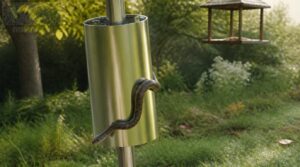
Rat snakes climb straight up poles hunting eggs and nestlings, so stovepipe diameter matters more than most guards realize — go 8 inches, not 4-inch PVC, which does nothing.
Build it right:
- Fit hardware cloth circles inside, edges crimped down
- Bend four tabs inward at the top
- Mount 6 inches below the entrance
- Let it wobble slightly
That wobble stops climbers cold.
Smooth Poles and Low-Friction Coatings
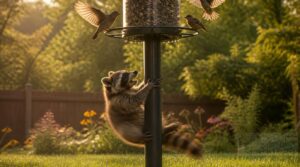
Grease can’t compete with graphite. A one-inch metal pole coated in graphite drops climbing friction by 70-80%, and it stays slick for 3-5 years—no reapplication needed.
| Feature | Benefit |
|---|---|
| Graphite coating | Lasts years |
| Dark surface | Absorbs heat, deters snakes |
| Cleaning | Soap and water |
| Safety | Won’t harm feathers |
| Durability | Mohs 5-6 hardness |
Sizing Baffles for Raccoons and Squirrels
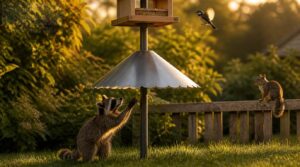
Bigger isn’t always better—except with baffles, where it usually is. Best baffle diameters run 10 inches for guaranteed raccoon defense; 6-inch versions only stop squirrels.
Mount baffles at least 5 feet up, since squirrels jump 4-4.5 feet. Scalloped edges kill their grip.
Match pole diameter compatibility (0.5"-1.75" typical) before buying long baffles or stovepipe guards.
Choosing Predator-Resistant Feeder Designs
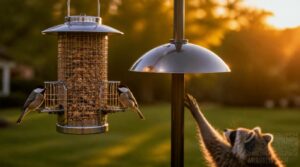
Baffles and distance only get you so far. The feeder itself needs to pull its weight too. Here’s what to look for when you’re shopping for one that actually holds up.
Cage Feeders With Small Openings
Think of a cage feeder as a bouncer for your yard: small birds get in, everyone else stays out. Mesh wire specifications around 1 inch or smaller keep squirrels out entirely, while entrance hole sizing near 1.3 by 1.76 inches favors chickadees and finches.
- Confirms target species access
- Blocks raccoon entry points
- Simplifies maintenance access features
That’s real predator prevention, built right into the design.
Durable Metal and Polypropylene Builds
Squirrels don’t gnaw through what they can’t dent. Durable metal and polypropylene builds pair 12-gauge steel with UV-stabilized plastic that shrugs off sun, frost, and teeth alike.
Powder coated aluminum resists rust for decades, while polypropylene experiences thermal stress without cracking.
Look for modular replacement parts too—when one piece wears out, you swap it, not the whole feeder.
Matching Entrance Holes to Species
A quarter inch matters more than you’d think. Chickadees need 1.125-inch holes; go up to 1.5 inches and red squirrels squeeze right in. Bluebirds want 1.5 inches, screech owls need 2.5, wood ducks demand a full 4-inch oval.
Mount holes 6-8 inches above the floor. Round openings suit wrens; slots stop sparrows from enlarging access during nesting season.
Natural Scents and Sensory Deterrents

Predators don’t just see and climb, they smell and sense danger too. You can use that against them with a few simple tricks around your feeding station. Here’s what actually works, backed by scent, sight, and sound.
Coffee Grounds Around The Feeder
Brewing up a simple fix? Used coffee grounds work through olfactory deterrence, overwhelming a squirrel’s nose and masking birdseed scent entirely.
- Ring grounds 2-3 inches wide, within 12 inches of the base
- Reapply every 7-10 days, sooner after rain
- Keep grounds off feeders—caffeine harms birds
- Bonus: adds soil nitrogen for nearby plants
Rain cuts effectiveness fast, so stay consistent.
Capsaicin-Treated Birdseed Benefits
Here’s a trick that sounds backwards but works: heat that birds can’t even feel.
Capsaicin-treated seed burns squirrels away while birds, immune to its heat, feed on undisturbed
Birds lack capsaicin receptors, so pepper-treated seed passes through unnoticed while squirrels flee the burn. Cornell research found 70-80% fewer squirrel visits, with birds germinating seeds safely afterward.
| Species | Reaction | Result |
|---|---|---|
| Birds | No response | Normal feeding |
| Squirrels | Burning sensation | 52.5 min less feeding |
| Raccoons | Avoidance | Reduced visits |
Predator Urine and Scent Signals
Predator urine works like an invisible fence, tricking small mammals into believing a coyote or fox is on patrol.
It comes in liquid, gel, or granule form—gels last longest, resisting rain best. Reapply every 7-10 days, sooner after storms.
Squirrels, raccoons, and rats all steer clear, since evolution taught them that scent means danger nearby.
Reflective Objects and Owl Decoys
Ever notice how a spinning CD in the sun looks almost alive? That flash is exactly what spooks birds and small mammals off your feeder.
Holographic eye patterns and sunlight-activated flashing mimic a predator’s gaze, while wind-driven sound from bells adds an audio warning. Look for acrylic decoy durability rated for years outdoors, and mount owls at best mounting heights of 3-15 feet for real deterrent effect.
How to Keep Birds of Prey Away
Hawks hunting your feeder aren’t villains—they’re just doing what hawks do. Combine Motion Sprinkler Defense covering 1,000 square feet with owl decoys and reflective flash tape for layered visual deterrents.
Add sound deterrents like wind chimes, then handle windows separately: proper Window Decal Placement, UV Reflective Film, Parachute Cord Barriers, and Silhouette Decal Spacing every 2 inches. Together, this multi-sensory approach keeps avian protection solid year-round.
Yard Upkeep That Discourages Predators
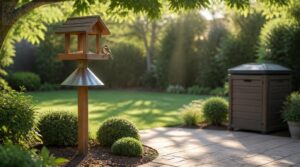
A clean yard is a safe yard. Predators follow food and mess straight to your feeder, so keeping things tidy takes away their reason to show up. Here’s what that upkeep actually looks like.
Why Put a Potato in a Feeder
Old-timers swore raw potato chunks kept squirrels out of feeders—the hard, bitter texture triggers taste aversion. But raw potatoes carry solanine, toxic to birds, causing vomiting, tremors, even convulsions. Skip that "trick" entirely.
Cooked potato offers real benefits instead: quick energy, vitamin C, potassium. Serve it plain, cubed small, cooled fully. It won’t repel squirrels, but it won’t poison your birds either.
Clearing Spilled Seed and Debris
A messy feeder base is basically a dinner bell for rats and raccoons. Rake or vacuum spilled seed weekly—monthly at minimum. Seed catcher trays cut cleanup time and stop weed growth underneath. Choose mesh or perforated designs you can hose off fast.
Pavers under feeders beat grass or mulch, since seed won’t burrow into bare surfaces. Clean stations mean fewer uninvited guests.
Trimming Nearby Vegetation for Visibility
Overgrown shrubs aren’t cover, they’re predator ambush zones. Keep a clear sight line by trimming brush within 10 feet of feeders.
- Cut vegetation height below 3 feet nearby
- Prune shrubs to create see-through gaps
- Trim tighter (15-20 ft) each winter
- Re-check growth every 3 months
Strategic pruning near feeder placement keeps visibility open, so birds spot danger before it strikes.
Legal Considerations for Protected Wildlife
Federal law backs up your feeder setup, whether you know it or not. The MBTA protects over 1,000 species, so harming birds through neglect creates liability.
| Rule Type | Risk If Ignored |
|---|---|
| MBTA compliance | Fines up to $25,000 |
| State feeding bans | Local citations |
| Municipal ordinances | $50–$500 fines |
| Endangered species liability | Up to $50,000 |
Stay compliant. It protects both birds and you.
Frequently Asked Questions (FAQs)
How to keep birds of prey away from feeders?
Block the view, break the pattern, buy your birds time. Reflective objects, rotating owl decoys, and motion-activated lighting disrupt hawk hunting. Add yellow deterrent tape, and consider temporary feeder closures for 7-10 days when raptor activity spikes.
Why should you sprinkle coffee grounds around your bird feeder?
That bitter smell triggers squirrel scent aversion almost instantly. It also boosts soil nitrogen, works as a natural insect repellent, and stays safe if kept off seed—avoiding caffeine toxicity while keeping your yard’s deterrents working hard.
Why put a potato in your bird feeder?
Skip this old trick—raw potato relies on unproven solanine taste aversion, not real defense. It’s grandma’s remedy, backed by folklore, not science.
Squirrels aren’t reliably deterred, and cooked potato offers birds zero nutritional value—stick to proven barriers instead.
What keeps predators away?
A mix of physical barriers, scent deterrents, and visual deterrents. Baffles, predator urine, coffee grounds, and reflective objects all send clear signals: this yard’s too much trouble. Combine a few nonlethal deterrents together, and predators usually look elsewhere for an easier meal.
How often should I clean my bird feeder?
A dirty feeder feeds birds while slowly poisoning them. Clean seed feeders every two weeks, suet weekly, and hummingbird nectar every three to five days—more often in heat, wet weather, or if you spot sick birds nearby.
Can weight-activated feeder ports be adjusted for sensitivity?
Yes. Turn the green dial clockwise for heavier birds like cardinals, counterclockwise for chickadees. Check spring tension each season—temperature shifts over 20°F change sensitivity, so recalibrate to keep your predator-resistant feeder blocking squirrels while welcoming your target species.
Do reflective deterrents lose effectiveness with prolonged use?
Their shine doesn’t last—UV degradation and habituation kill effectiveness within weeks. Cheap tape fades in 6-8 weeks; birds learn static reflections are harmless. Without wind-driven movement, deterrents become just scenery, not scares.
Is it safe to mix multiple deterrent methods together?
Combining methods works well—layering defense strategies boosts results. Pair capsaicin seed with baffles and reflective tape for real multi-method efficacy.
Just avoid overkill near cover; balance scent, barriers, and sight lines so birds still feel safe approaching.
How long does capsaicin treatment last on birdseed?
Expect 5 weeks of solid protection under normal conditions, though heavy rain or intense sun speeds up breakdown. Humidity cuts potency 30-40% within a week. Oil-based coatings outlast powder in wet weather—reapply every 2-3 weeks for best results.
Conclusion
That raccoon eyeing your baffle tonight? He’s testing every trick you’ve learned. Will the feeder hold, or will he find the one gap you missed? Natural predator deterrents for feeders aren’t a single fix—they’re a system: smart placement, sturdy barriers, sharp scents, a tidy yard. Master each layer, and your feeder stops being easy prey.
Being easy prey. Watch closely tomorrow morning. The real proof sits in an untouched seed tray.
- https://www.domyown.com/squirrel-baffles-c-953_581_623.html
- https://newsroom.unl.edu/announce/stories/63687
- https://www.kingsyard.com/blog/how-to-keep-squirrels-off-bird-feeders
- https://barrie.wbu.com/problem-solving-hot-pepper
- https://www.birdsandblooms.com/birding/attracting-birds/feeding-birds/squirrel-proof-bird-feeders