This site is supported by our readers. We may earn a commission, at no cost to you, if you purchase through links.
Most bird owners don’t realize their pet is slowly starving—not from lack of food, but from the wrong kind.
Seed mixes look generous in the bowl, yet they’re often loaded with fat and stripped of the vitamins and minerals a bird needs to thrive.
Vitamin A deficiency alone can cause nasal discharge, dull feathers, and a weakened immune system before you notice anything’s wrong.
The good news: small, targeted changes to your bird’s routine can reverse these gaps fast.
Knowing which bird health supplements beginner bird owners should prioritize—and how to use them safely—makes all the difference between a bird that survives and one that genuinely flourishes.
Table Of Contents
- Key Takeaways
- Why Bird Health Supplements Are Essential
- Identifying Your Bird’s Supplement Needs
- Safe Supplement Practices for Beginners
- Top 6 Bird Health Supplements for Beginners
- Tips for Choosing Quality Bird Supplements
- Frequently Asked Questions (FAQs)
- What supplements do birds need?
- What is a good beginner bird to own?
- Can supplements interact with prescribed bird medications?
- How should supplements be stored after opening?
- Are human vitamins ever safe for pet birds?
- Do organic supplements outperform synthetic bird vitamins?
- Which bird species need the fewest supplements overall?
- Conclusion
Key Takeaways
- Seed-heavy diets leave most pet birds with serious vitamin and mineral gaps, especially vitamin A and calcium.
- The right supplements—like Nekton-S, Lafeber Avi-Era, and probiotics—quickly boost immunity, feather quality, and bone strength.
- Safe supplement use means careful dosing by weight, pairing with a balanced pellet diet, and watching for signs of overdose or deficiency.
- Consulting an avian vet before starting supplements helps you avoid mistakes and tailor nutrition to your bird’s age, species, and health needs.
Why Bird Health Supplements Are Essential
Most pet birds live on seed-heavy diets — and that’s where the trouble starts.
Studies show that up to 80% of pet birds develop nutritional deficiencies when seeds make up the bulk of their diet.
Seeds alone can’t cover everything your bird needs to thrive.
Here’s what’s actually missing, what can go wrong, and how the right supplements make a real difference.
Common Nutritional Gaps in Pet Bird Diets
Most seed mixes look filling — but they’re quietly starving your bird. Common nutritional gaps include:
- Calcium‑Phosphorus Ratio imbalance from sunflower-heavy mixes
- Vitamin A Deficiency causing nasal discharge and poor feathers
- Iodine Shortfall triggering thyroid swelling in budgies
- Protein Deficiency slowing feather regrowth and muscle repair
- Fiber Deficiency disrupting healthy digestion
Bird supplements exist because avian nutrition gaps are real — and fixable. Providing a high-quality pellet diet helps prevent these deficiencies.
Risks of Vitamin and Mineral Deficiencies
Those gaps don’t just cause dull feathers — they snowball fast.
Vitamin deficiency can trigger immune suppression, leaving your bird vulnerable to infections it can’t fight off.
Mineral deficiency, especially calcium, leads to bone fragility, seizures, and reproductive failure in laying hens.
Neurological issues show up when nutrition gaps go ignored too long.
Bird health and nutrition aren’t optional — they’re the whole game.
Bird health and nutrition are essential—getting them right is the foundation of your bird’s wellbeing
Adequate vitamin D supports bone strength in captive birds.
Key Benefits of Supplementing Bird Nutrition
The right supplements flip the script fast. Here’s what consistent avian nutrition actually delivers:
- Immune Boost — Vitamins A, E, and B complex sharpen your bird’s immune system, aid against respiratory and digestive infections.
- Feather Quality — Omega fatty acids and multivitamins produce tighter, richer plumage during every molt.
- Bone Strength — Calcium with D3 prevents fractures and aids bone health in indoor birds.
- Digestive Health Management — Probiotics stabilize gut bacteria, improving nutrient absorption and dropping consistency.
- Energy Vitality — B vitamins fuel metabolism, keeping your bird active, singing, and sharp.
Identifying Your Bird’s Supplement Needs
Not every bird needs the same supplements — and that’s where a lot of new owners get tripped up. The right support depends on your bird’s species, age, and current health.
Here’s what to look at before you buy anything.
Assessing Species-specific Dietary Requirements
Not every bird eats the same — and that shapes everything about supplement selection.
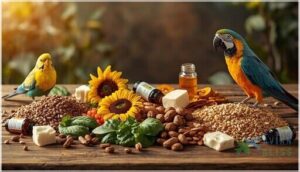
A budgie’s seed-pellet ratio sits around 50–60% pellets, while a macaw needs more fat from nuts. African greys have notable calcium needs, and indoor birds often miss vitamin D3 sunlight entirely.
Understanding your bird’s species-specific dietary requirements and natural foraging behavior is where smart avian nutrition always starts.
Recognizing Signs of Nutritional Deficiencies
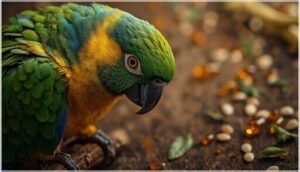
Spotting nutritional deficiencies early can save your bird real suffering. Watch for Feather Dullness, Beak Crusting, or sudden Weight Loss — these aren’t cosmetic quirks, they’re red flags.
Lethargic Behavior and Respiratory Wheezing often signal deeper Nutritional Gaps in Avian nutrition.
Bird health declines quietly, so trust what you see.
Addressing deficiencies fast — with proper Supplement Safety and Efficacy in mind — matters.
Considering Age, Health, and Lifestyle Factors
Your bird’s age, health, and daily lifestyle all shape what supplements actually work.
- Juvenile Nutrition — Young birds need extra calcium and vitamin D3 for bone growth.
- Senior Immune Support — Aging birds absorb nutrients less efficiently; targeted supplements help.
- Indoor UVB Management — Indoor birds need D3 supplementation to cover sunlight gaps.
- Active Bird Energy — High-flyers burn more nutrients and need diet adjustments accordingly.
Safe Supplement Practices for Beginners

Starting supplements is the easy part — using them safely is where most beginners trip up.
Dosage, timing, and how you pair them with food all make a real difference in whether your bird thrives or struggles.
Here’s what you need to know before giving your bird anything new.
Proper Dosage and Administration Methods
Dosage isn’t something to eyeball. Weight‑Based Dosing matters here — a finch weighing 20 grams needs a fraction of what an African grey gets.
Water‑Mix Ratios, stick to label specs like 5g per liter, and refresh it daily.
Food Sprinkling Techniques work best with small, fully eaten portions.
Direct Oral Drops, place them gently at the beak’s edge.
Overdose Prevention starts with reading every label carefully.
Integrating Supplements With a Balanced Diet
Think of supplements as the finishing touch, not the whole meal.
Pellet‑Supplement Synergy works best when pellets cover 60–75 percent of your bird’s diet — that foundation covers most avian nutrition needs.
Seed‑Diet Fortification fills remaining gaps with vitamin powders sprinkled daily.
Add Fresh Produce Pairing with leafy greens for natural nutrient boosts.
Nutrient Ratio Optimization — especially that 2:1 calcium‑to‑phosphorus balance — keeps a balanced diet truly balanced.
Monitoring Health and Adjusting as Needed
Your bird can’t tell you something feels off — so you have to watch closely. Track these five signals to protect avian wellness:
- Weight Tracking — Weigh weekly; a 10% drop signals trouble.
- Dropping Changes — Loose or watery droppings mean digestive stress.
- Behavior Shifts — Quiet, hunched birds often feel unwell first.
- Over-Supplementation Signs — Lethargy or swelling? Stop immediately.
- Adjustment Timeline — Give supplements 4–6 weeks before evaluating results.
Consulting an Avian Veterinarian for Guidance
Only 1 in 10 owners get veterinary advice before supplementing — and that’s where most mistakes happen.
An avian vet runs diagnostic testing, catches nutritional deficiencies early, and builds custom dosage plans specific to your bird’s species and age.
| What Vets Provide | Why It Matters | How You Benefit |
|---|---|---|
| Certification credentials | Ensures bird-specific expertise | Safer, targeted care |
| Diagnostic testing | Reveals hidden deficiencies | Accurate supplement choices |
| Telehealth consultations | Remote follow-up scheduling | Convenient ongoing support |
Top 6 Bird Health Supplements for Beginners
Now that you know how to use supplements safely, let’s get to the part you’ve been waiting for.
These six options are beginner-friendly, vet-recommended, and cover the most common nutritional gaps.
Here’s what’s worth keeping in your cabinet.
1. Nekton‑S Bird Multi Vitamin Powder
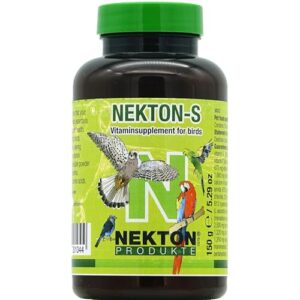
Nekton-S is a go-to for birds stuck on seed-heavy diets. It packs 13 vitamins, 18 amino acids, and key minerals into one unflavored powder — simple to use and easy on picky birds.
Just mix 1g into 250ml of drinking water daily. During molting or stressful transitions, double the dose.
Avian vets recommend it regularly, and for good reason — it visibly improves feather quality and energy.
One small caution: don’t exceed the recommended amount, especially given its high vitamin D content.
| Best For | Bird owners whose pets are on a seed-heavy diet and need a simple daily supplement to fill nutritional gaps. |
|---|---|
| Form | Powder |
| Life Stage | All Life Stages |
| Feather Support | Yes |
| Mix Method | Water or Food |
| Bird Size | All Sizes |
| Immune Support | Yes |
| Additional Features |
|
- Packs 13 vitamins, 18 amino acids, and minerals into one unflavored powder — no fighting with picky birds
- Avian vets recommend it, and it shows real results like better feather quality and improved energy
- Easy to use — just mix into drinking water daily
- The small bottle opening can make scooping tricky — you might need tweezers
- Tints the water yellow, which some birds (or owners) might find off-putting
- Vitamin D content means you really can’t eyeball the dose — you have to follow the instructions closely
2. Lafeber Avi Era Bird Vitamin Powder
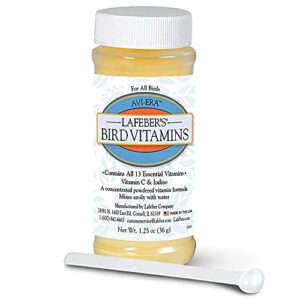
If Swiss Army knife of bird vitamins felt like the Swiss Army knife of bird vitamins, Lafeber Avi-Era is its friendlier cousin — made specifically for beginners. Formulated by avian vets and nutritionists, it covers 13 essential vitamins, including A and D, which seed diets almost always miss.
Mix 2 small scoops per ounce of drinking water daily, or sprinkle directly on food. No artificial colors or flavors either. Just keep it stored below 72°F, and use it within 6 months of opening.
| Best For | Beginner bird owners who want an easy, all-in-one vitamin boost for birds of any age. |
|---|---|
| Form | Powder |
| Life Stage | All Life Stages |
| Feather Support | Yes |
| Mix Method | Water or Food |
| Bird Size | All Sizes |
| Immune Support | Yes |
| Additional Features |
|
- Covers 13 essential vitamins including A and D — the ones most seed diets skip
- Flexible use: mix into water or sprinkle right on food
- Formulated by avian vets and nutritionists, so you know it’s the real deal
- Needs to be used within 6 months of opening or it loses effectiveness
- May not dissolve quickly in water, which can be a little annoying
- Some buyers have received their order without the dosing scoop included
3. Vital Planet Flora Bird Probiotic
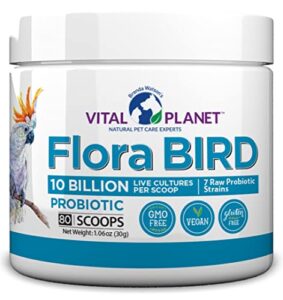
Vitamins cover what’s missing from the diet — but what about what’s happening inside the gut? That’s where Essential Planet Flora Bird Probiotic comes in.
It delivers 10 billion live cultures per serving across seven probiotic strains, plus prebiotics to keep those good bacteria thriving. The powder is tasteless and flavorless, so mixing it into food or water is easy. Dosing scales by weight — small birds get as little as 1/8 scoop daily. One tub goes a long way.
| Best For | Bird owners who want to support their pet’s gut health with a simple, no-fuss probiotic that works for any breed, age, or size. |
|---|---|
| Form | Powder |
| Life Stage | All Life Stages |
| Feather Support | Yes |
| Mix Method | Water or Food |
| Bird Size | All Sizes |
| Immune Support | Yes |
| Additional Features |
|
- 10 billion live cultures across 7 clinically-studied strains — that’s solid coverage for digestive and immune support
- Tasteless, flavorless powder that blends right into food or water without any hassle
- One tub packs 80 scoops, so it stretches a long time even with daily use
- Needs refrigeration to stay fresh, which isn’t always convenient
- The measuring spoon doesn’t have markings, so dosing accurately takes a bit of guesswork
- Expiration dates can be a concern depending on how long the product sits before purchase
4. The Missing Link Avian Color Shine Powder
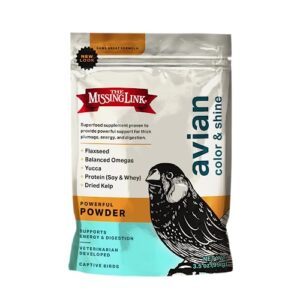
If your bird’s feathers look dull or frayed, The Missing Link Avian Color Shine Powder targets exactly that.
Built on a fresh-ground flaxseed base, it delivers omega-3s, fiber, and antioxidants daily. Yucca and dried kelp support digestion and nutrient absorption — two things seed-heavy diets often shortchange. Soy and whey proteins help grow thicker, fuller plumage over time.
Just sprinkle a small pinch onto moist food daily. It’s vet-formulated, non-GMO, and works across all bird species and life stages.
| Best For | Bird owners whose captive birds struggle with dull feathers, low energy, or poor digestion from seed-heavy diets. |
|---|---|
| Form | Powder |
| Life Stage | All Life Stages |
| Feather Support | Yes |
| Mix Method | Food |
| Bird Size | All Sizes |
| Immune Support | Yes |
| Additional Features |
|
- Fresh-ground flaxseed brings a solid daily dose of omega-3s, fiber, and antioxidants — nutrients most bird diets are missing
- Vet-formulated and non-GMO, so you know someone actually thought through what’s going into your bird
- Works for all captive bird species and life stages, so no need to switch products as your bird ages
- The ziplock bag can get gunky with caked-on powder, making it tricky to reseal
- On the pricier side compared to basic supplements, though most users still say it’s worth it
- Not a great fit for birds with specific dietary restrictions or those that avoid seeds altogether
5. Wild Harvest Molting Supplement
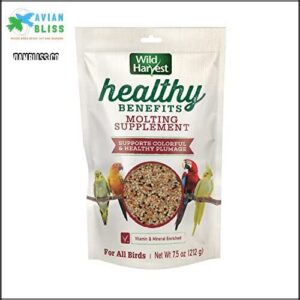
Molting season is rough on birds — and their nutritional needs spike quickly during it. Wild Harvest’s Molting Supplement fills that gap with a seed-based blend of millet, oat groats, canary grass seed, and soy grits.
It’s enriched with vitamins A, D3, E, and B12, plus key minerals like zinc, manganese, and iodine. Sprinkle it alongside your bird’s regular food daily.
It promotes healthy feather regrowth, reduces pin feather issues, and adds real sheen to iridescent plumage.
| Best For | Bird owners looking to support their feathered friends through molting season with extra vitamins, minerals, and a seed blend that promotes healthy, vibrant feathers. |
|---|---|
| Form | Seed/Granule |
| Life Stage | All Life Stages |
| Feather Support | Yes |
| Mix Method | Food |
| Bird Size | All Sizes |
| Immune Support | Yes |
| Additional Features |
|
- Packed with vitamins A, D3, E, and B12 plus key minerals to fuel strong feather regrowth
- Works as a simple daily topper — just sprinkle it alongside their regular food
- Suitable for birds of all sizes and life stages
- Not a standalone diet, so you’ll still need their usual food on top of this
- Packaging can be tricky to open and reseal without making a mess
- May not deliver the same results for larger bird species
6. UnRuffledRx Bird Calcium Magnesium D3
 View On Amazon
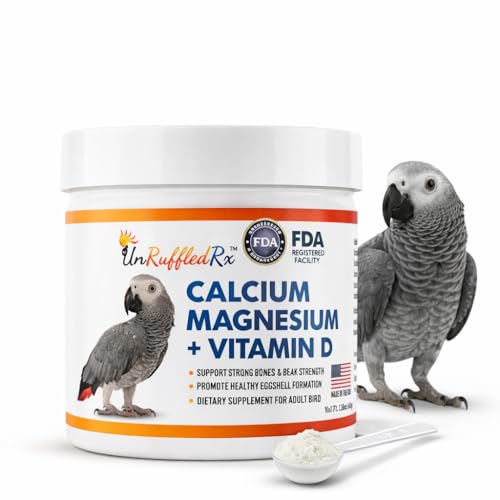
Bone health doesn’t get enough attention until something goes wrong. UnRuffledRx Bird Calcium Magnesium D3 fixes that before it becomes a problem.
Mix 2 level scoops into 8 oz of water, no more than three times a week — it dissolves clear and tasteless. Your bird won’t notice it; their bones will.
Calcium lactate, magnesium taurinate, and cholecalciferol work together to prevent egg binding, splayed legs, and weak immunity.
Formulated by an avian nutritionist and made in an FDA-registered facility, it’s one you can trust.
| Best For | Bird owners — especially those raising chicks, egg-laying hens, or aging parrots — who want an easy, trusted way to support bone health before problems show up. |
|---|---|
| Form | Liquid Drops |
| Life Stage | All Life Stages |
| Feather Support | Yes |
| Mix Method | Water |
| Bird Size | All Sizes |
| Immune Support | Yes |
| Additional Features |
|
- Dissolves clear and tasteless in water, so even picky birds won’t skip a beat
- Combines calcium, magnesium, and D3 in one formula for real, well-rounded bone and muscle support
- Made in an FDA-registered facility with non-GMO, human-grade ingredients — solid peace of mind
- A bit pricey for what you get, especially given the 45-serving count
- Some buyers have received containers that weren’t fully filled
- Results can take a while to show, particularly in older birds
Tips for Choosing Quality Bird Supplements
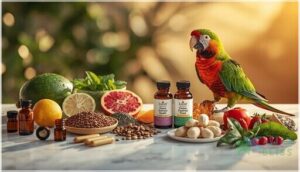
Not all bird supplements are created equal, and the wrong choice can do more harm than good.
A few key factors can help you sort the good from the not-so-great.
Here’s what to look for before you buy.
Evaluating Ingredient Safety and Efficacy
Not every supplement on the shelf is worth bird’s trust.
Toxicity Screening and Purity Verification matter more than flashy labels.
Look for:
- No avocado, onion, or garlic — these damage red blood cells
- Vitamin A capped at 5,000 IU/kg for safe Avian Nutrition
- NASC or GMP seals confirming Dosage Accuracy and Clinical Efficacy
Supplement Safety and Efficacy starts with reading before buying.
Selecting Supplements for Natural Absorption
Not all supplements absorb the same way. Chelated minerals, for instance, enter the gut far more efficiently than basic inorganic salts.
Vitamin D3 bioavailability beats D2 every time — especially for indoor birds.
Prioritize powdered food application over water delivery for more reliable intake.
Probiotics and prebiotic balance support digestive health so your bird actually uses what you’re giving it.
When to Adjust or Discontinue Supplements
Knowing when to stop is just as important as knowing when to start. Here’s when to reassess your Bird Health Supplements routine:
- Signs of Overdose — flaky skin, swollen eyes, or appetite loss signal excess fat-soluble vitamins
- Seasonal Diet Shifts — switching to pellets means daily multivitamins often become redundant
- Post-Illness Recovery — discontinue probiotics once droppings and appetite stabilize
- Egg-Laying Phase ends — scale calcium back to maintenance levels
Veterinary Blood Test Results confirm when Nutritional Deficiencies are resolved — that’s your green light to adjust.
Frequently Asked Questions (FAQs)
What supplements do birds need?
Your bird needs fat-soluble vitamins A, D3, and E daily — plus calcium, B-complex, probiotics, and amino acids.
Seasonal nutrient needs shift too, especially during molting protein boost phases or breeding calcium support cycles.
What is a good beginner bird to own?
Budgies and cockatiels top the list for beginners. Both are manageable in size, moderate in noise level, and fit most spaces. Expect a lifespan commitment of 10–20 years.
Can supplements interact with prescribed bird medications?
Yes, they can. Calcium causes Antibiotic Calcium Binding with doxycycline, reducing its effectiveness. Vitamin K Anticoagulant Interaction affects clotting drugs. Always get Veterinary Advice and Guidance before mixing anything.
How should supplements be stored after opening?
place for everything, and everything in its place.
Store powders cool and dry, seal oils in the fridge, and track opening dates — temperature control and moisture protection preserve every supplement’s shelf life.
Are human vitamins ever safe for pet birds?
Rarely — and only under veterinary supervision. Toxicity thresholds differ sharply by species metabolism. Dosage accuracy is nearly impossible at home. Safer bird-specific alternatives exist, so skip the human vitamins entirely.
Do organic supplements outperform synthetic bird vitamins?
Organic and synthetic bird vitamins both work — neither automatically wins.
Mineral Chelation boosts bioavailability differences meaningfully, but products like Nekton‑S and Lafeber Avi Era reliably cover baseline needs with consistent, safe doses.
Which bird species need the fewest supplements overall?
Budgies, cockatiels, and canaries top the low-maintenance species list. On pellet-based diets, their nutritional gaps nearly vanish — calcium-only needs, met simply with a cuttlebone.
Conclusion
They say an ounce of prevention is worth a pound of cure—and that’s never truer than in bird care. The right bird health supplements for beginner bird owners aren’t optional extras; they’re the foundation of a long, healthy life for your pet.
Start with one or two targeted supplements, watch how your bird responds, and adjust from there. Small, consistent choices made today are what separate a bird that merely survives from one that genuinely thrives.
- https://www.avianandanimal.com/bird-nutrition.html
- https://theaviaryparrotfood.com/blogs/parrot-diet-and-nutrition/symptoms-of-vitamin-a-deficiency-in-parrots
- https://zoomed.com/avian-calcium/
- https://birdsupplies.com/blogs/news/141311047-bird-vitamins-5-essential-nutrients-your-parrot-needs
- https://global.foodmate.net/news/list.php?page=4&areaidc=401%2C403%2C440%2C400&areaidi=10%2C8%2C4%2C9